
Time to Read:
|
This Shark’s Tooth Golf Club Course Review is based on a round played on April 1, 2023 (AM)
Shark’s Tooth Golf Club is a private course that is part of the Watersound Club in Panama City Beach, FL. The maximum guest fee is around $195/round.
F1C’s Final Score: 59/80 (Best-in-State Contender)
Learn More: How We Rate Courses
The Panama City area of Florida is an interesting locale. Long ago, PCB became a destination for spring breakers and family vacations largely due to geography. The Florida panhandle is the closest beach to many of the states in the mid-south. Naturally, PCB has developed into a more cost-friendly vacation destination for people in the mid-south. The overall vibe of PCB is . . . well . . . redneck. I say that with a heart full of adoration for rednecks. You see, I am from the southern hills of Appalachia and identify as a close cousin of the redneck: a hillbilly. We hillbillies are good at identifying other hillbillies and our brethren rednecks, and to me, the Florida panhandle seems to have more cultural commonality with southern Appalachia than with the rest of Florida.
This may be due to the cultural erosion that inevitably happens as multitudes of hillbillies and rednecks descend on Panama City Beach’s wide shores for vacation every year. Its needless to say – but, there isn’t a Ritz-Carlton in Panama City Beach. In fact, a Hyatt Place might be the fanciest accommodations you’ll find. That’s because PCB isn’t about fancy – its about being a budget vacation destination for families, college students, and the like.
Immediately upon getting out of the car at our cut-rate hotel, the familiar aroma of marijuana filled my nostrils, in public, just outside of the hotel lobby. The offender was 14-years old, and his mother just inside the lobby. I’ve been to PCB plenty of times, but this particular experience made it extra special. My special realization was that PCB is the vacation spot for people who can’t afford a vacation – and that is fine, because largely, those are my people, regardless of my elitist attitude through these first few paragraphs.
Little did I know, my elitist attitude would be well served, if not trumped in my near future. Shark’s Tooth Golf Club is part of the Watersound Club, which owns several upscale properties in the western half of PCB, including Camp Creek Golf Course. Shark’s Tooth, as you might have guessed from the name, is a Greg Norman design, which I – rather controversially – typically enjoy. Shark’s Tooth has a large gate at the end of a long private drive in order to enter the property. Unbeknownst to guard manning the gate, they accidentally let a hillbilly through the gate while we were there. The hillbilly was me, because I had a tee time, proving the gate was an ineffective measure of keeping hillbilly and redneck vacationers out of the Watersound Club.
The First Tee
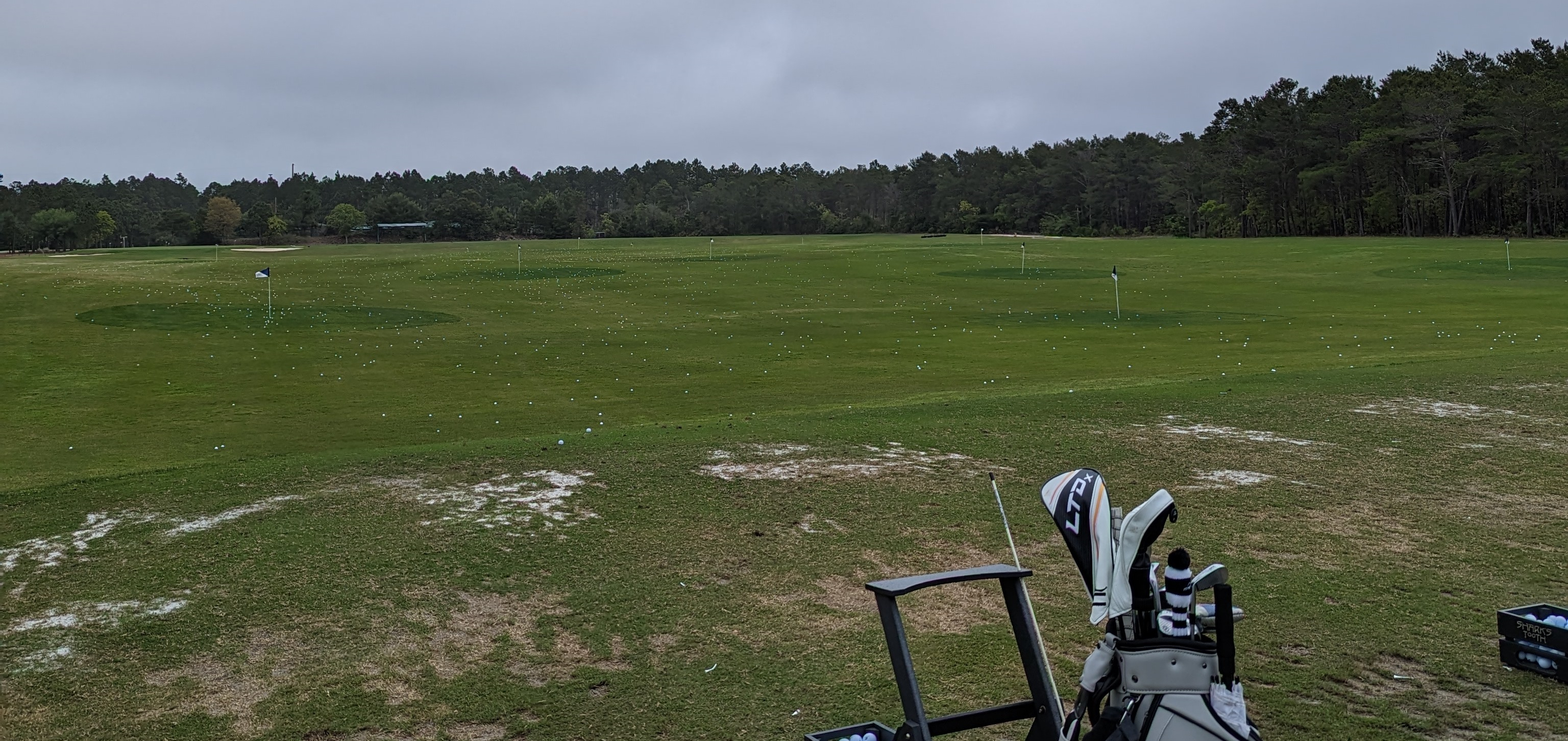
After a warmup on an expansive practice range, we arrived at the first tee – and the first tee may well be the most intimidating tee shot on the course if you struggle with solid contact.
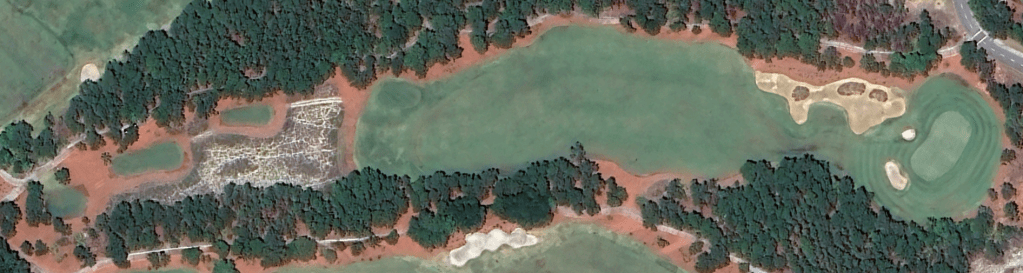
This intimidation is mostly bark and little bite, as the carry to the fairway is only 133 yards from the back tee on this mid-length par-4, but it looks further than that, and tighter from the back tee than exists in reality. Truly, this is a very forgiving tee shot into a fairway that is nearly 60-yards wide at 300.
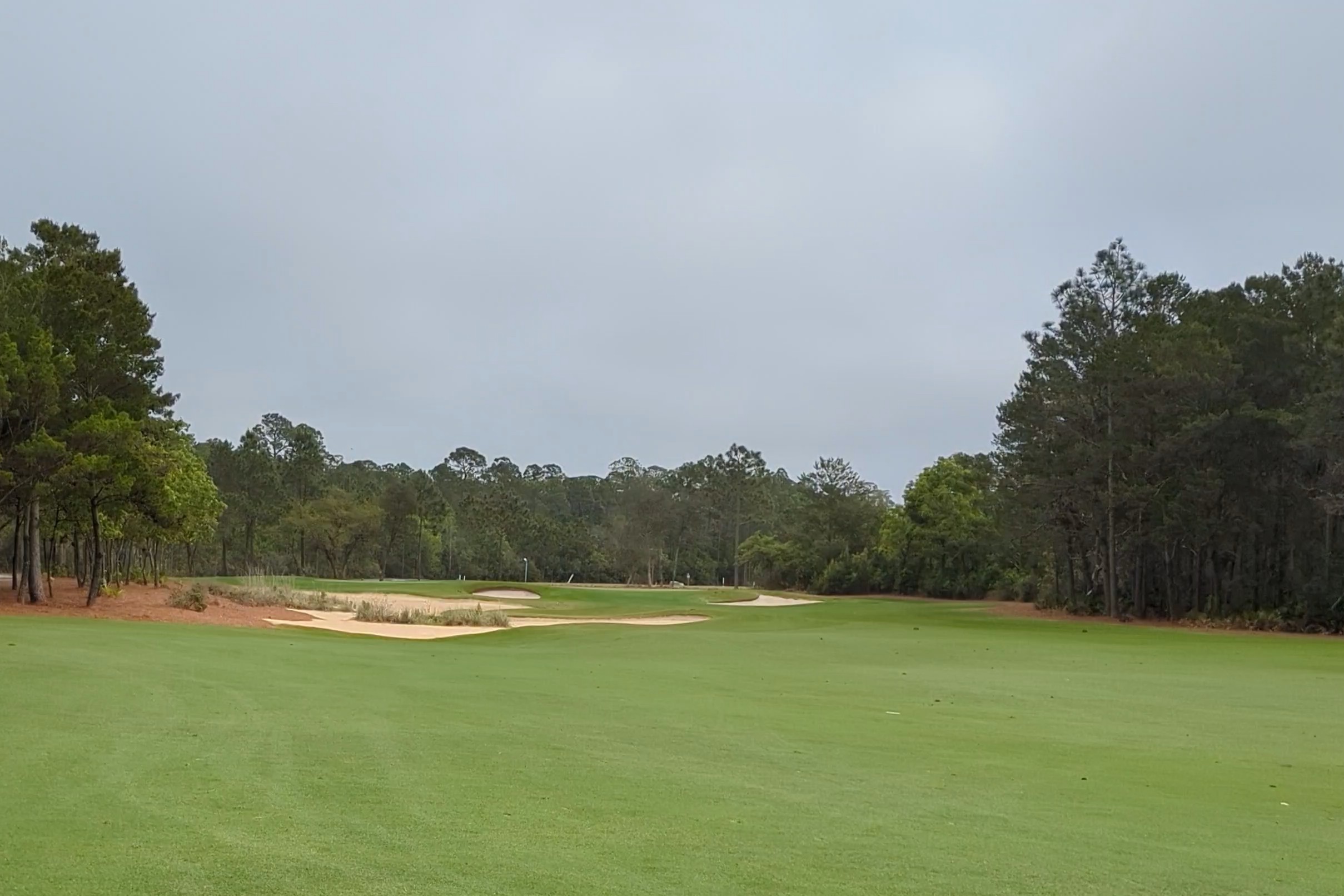
The approach shot on the first is a simple one, over the waste area and centerline greenside bunker to an elevated green. The green is very wide but deceptively narrow at only 16-yards front to back, placing a premium on distance control rather than accuracy.

The irregularly shaped greens continue on the second hole as a the mid-length par-3 plays into an oppositely oriented green that is 42 yards long but only 15 yards wide at its widest. The second properly tests your accuracy, regardless of which club you choose. Due to the width of the green, the bunkers that flank the green on either side make for a very difficult up-and-down – a miss here is inevitably short-sided, because there is no long-side to this green.
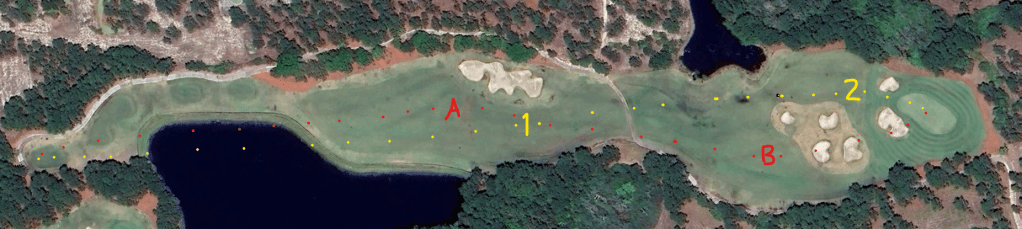
The third hole is a mid-length par-5 that has an extremely awkward second shot. How the player intends to play the second shot will dictate their strategy off the tee:
- The lettered strategy represents less-than-driver off the tee and around a 190-yard layup in front of the collection of bunkers in the fairway short of the green. This leaves around 100 yards into a relatively large par-5 green. However, a three-wood off the tee certainly brings the flanking lake on the right more into play on the tee shot, and the layup needs to be faded a bit to maximize the available layup distance.
- The numbered strategy represents a driver off the tee. If successful, the player may have the opportunity to play to the fortified green, or to try to squeeze a shot into the gap short left of the green with a fairway wood. A good driver will leave something in the low or mid-200s into the green, but represents a far riskier second shot considering the bunkers around the green and tightening pine straw.
The third is a strong par-5 that is really built for the longer hitters to challenge the mess of bunkers near the green, but I’m relatively certain the strategy resulting in the lower scoring average for most players would be the lettered route.
The fourth hole was a longer, connecting par-4 that worked around some trees on the left, but was relatively uninspiring. However, that would be put on hold, because the next few holes were some of the strongest at Shark’s Tooth.
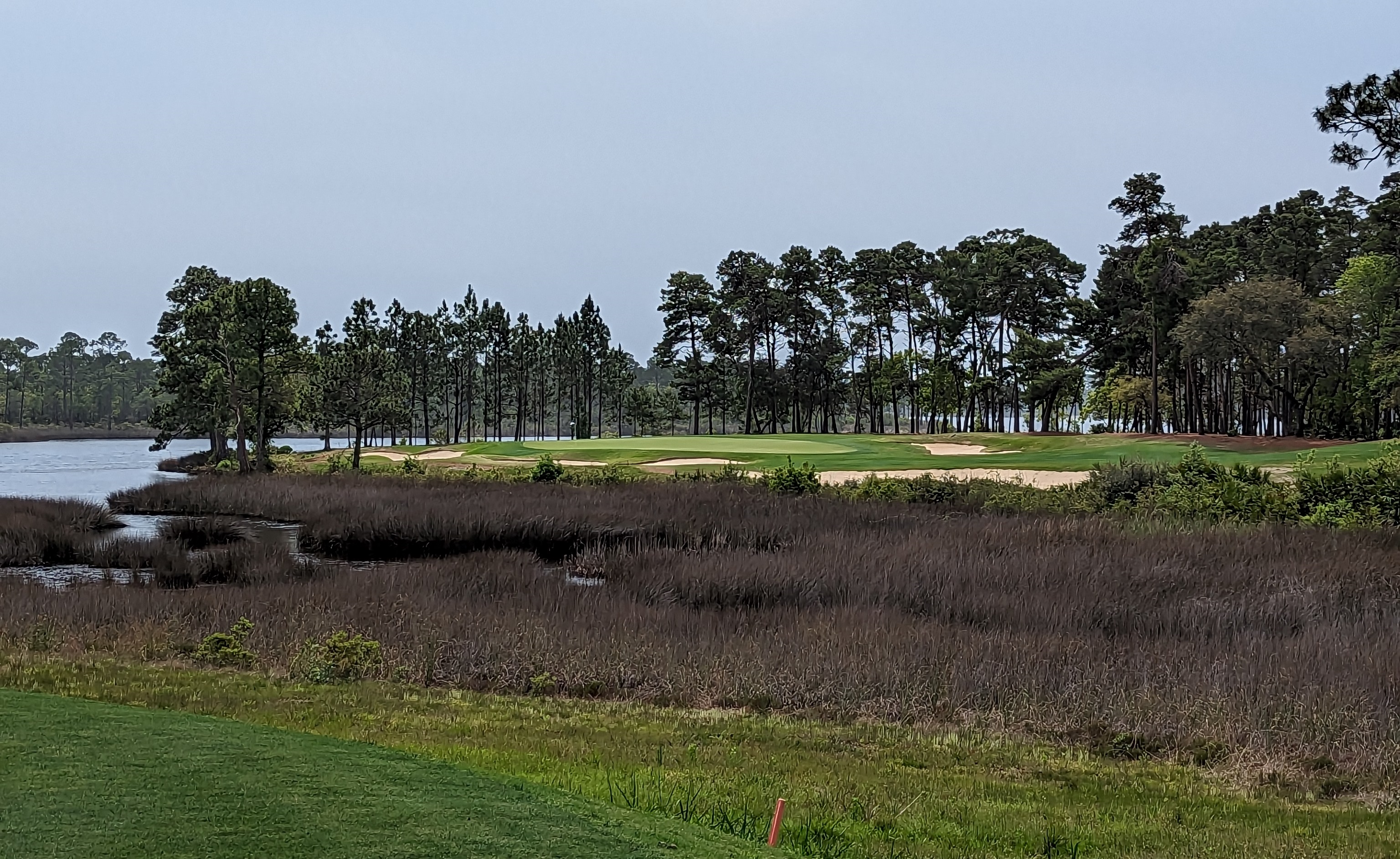
The fifth is strong both visually and physically, as the extremely long par-3 forces a wide carry over an unmaintained watery landscape to a green protected on all sides by bunkers. The green slopes towards the water from right to left. The wind played into us on the day we played, requiring the services of my three wood to reach the putting surface.
The sixth hole is a medium length par-5 that is apparently controversial among the membership. As we started towards the first tee, my host said: “You’re going to really enjoy this course. We have 17 good golf holes and a par-5.” This is that par-5; but, I think for all the reasons that the membership hates the hole, I actually loved it.
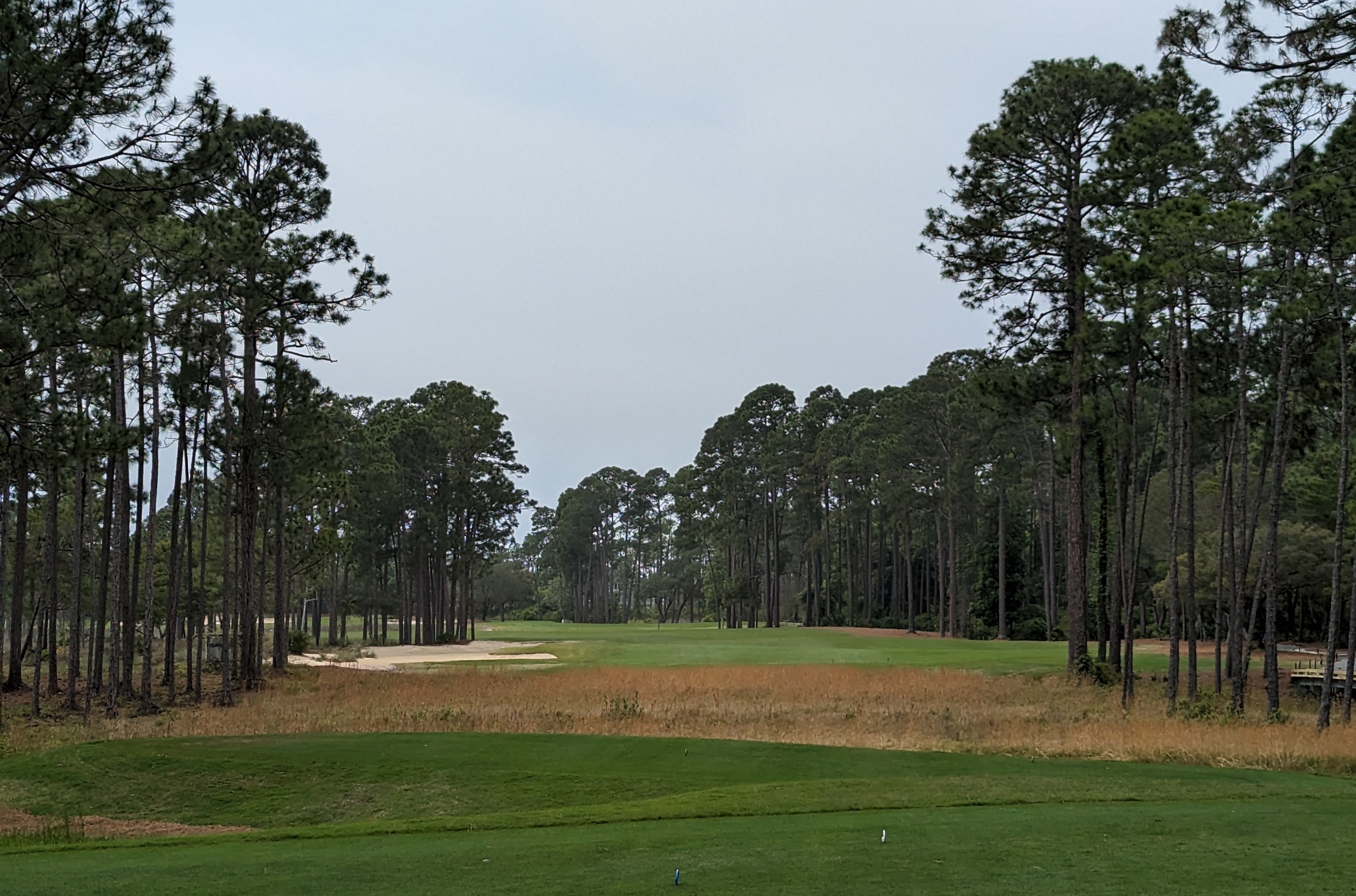
First, the tee shot is quite aesthetically pleasing, as the drive plays narrowly between the tall, skinny pines. Both the tee shot and approach shot are deeply awkward, due to the lack of width and the dogleg to the left.
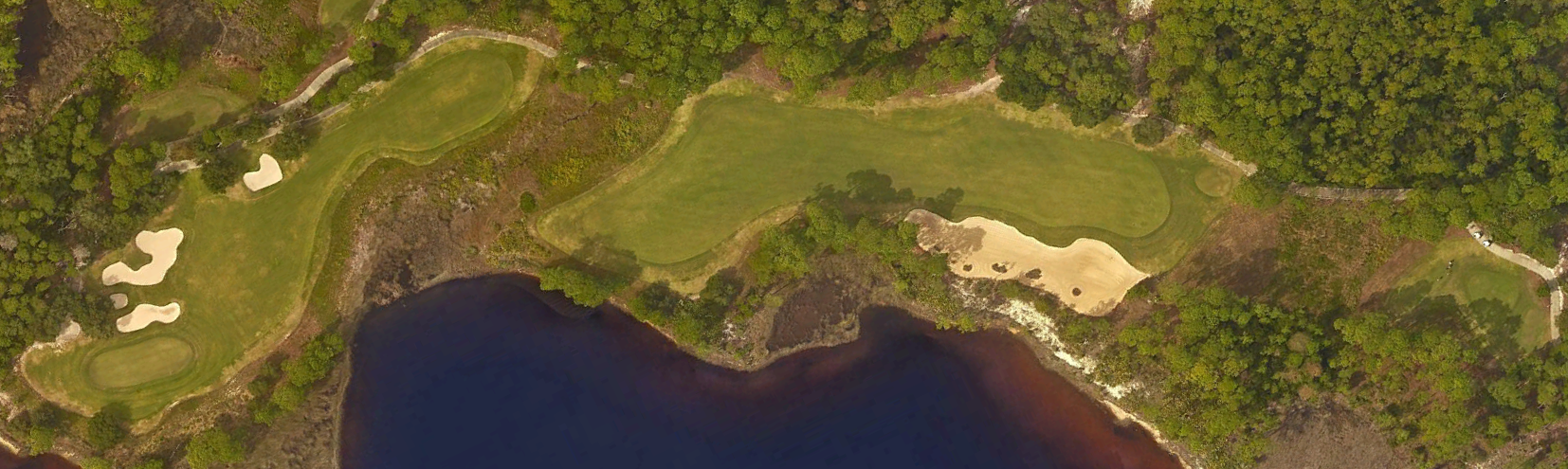
At its narrowest, the fairway is 31 yards wide, but that is the area that a three wood would play into for the better player. The longer player can get closer to the green by using the dogleg of the fairway, but a draw around those tall skinny pines on the left is required to reach this area; an area that is significantly wider than the landing area for the layup.
Then the approach shot, which is very awkward and must be played into a relatively narrow (front-to-back) strip of fairway or green, depending on the target chosen. The bunkers serve as aiming points to lay up in front of, but the further left the target, the longer the carry of the wetland.As you can see, there is little visual depth for your layup shot and the option with the most usable depth is aiming at the green. As I’ve mentioned on other Greg Norman courses, Norman seems to have a penchant for incorporating a par-5 hole into his designs that presents players with numerous strategic options, all of which possess significant risk. There’s simply no low-risk way to play the sixth.
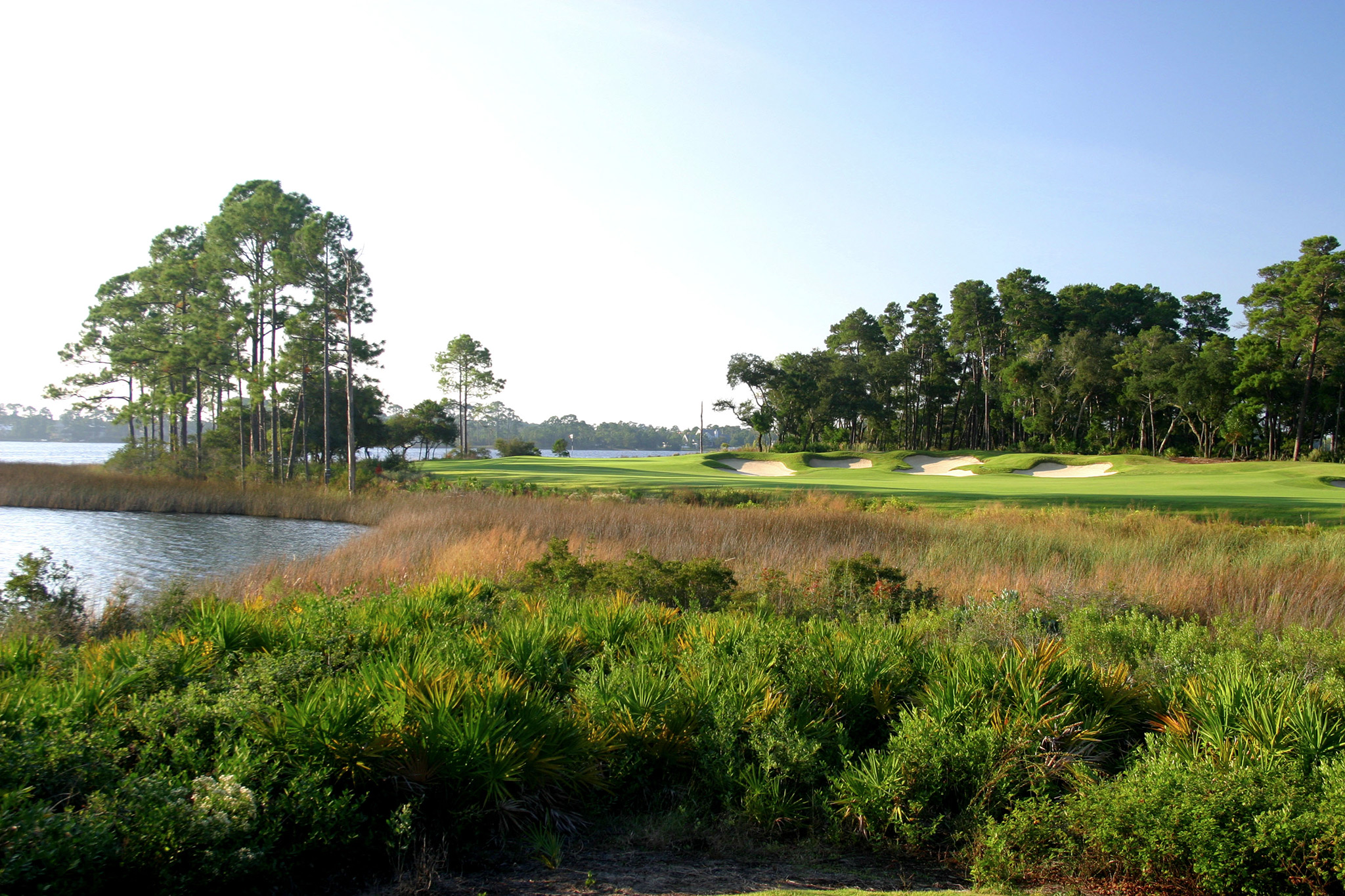
The seventh hole begins a four-hole stretch of par-4 holes, and the seventh is a longer, relatively hazardless par-4 that gains its difficulty from its length and narrow green that is angled at a 45-degree angle to the fairway. That fairway is flanked on the right by an expansive waste bunker that hugs the inside corner of a right dogleg. The seventh, by Shark’s Tooth standards, is one of the more mundane holes on the course.
The eighth, however, is a pretty good strategy hole with a number of options. The short par-4 isn’t quite drivable, even for the longest hitters. However, the hole has a number of options from the tee.

- Option A represents a driver from the tee into a fairway that tightens to 33 yards and runs out into the first greenside bunker at around 310 yards. A well struck driver past the last fairway bunker will leave your shortest wedge into the green.
- Option B and Option C would be less than driver off the tee to lay up in the wider 44-yard and 46-yard area respectively, but taking any club less than driver is complicated by the lack of depth of the green. The green is only 16-yards in depth at the eighth.
The last hole on the front nine, the ninth, is a relatively mundane par-4 that chicanes slightly to the left. This hole certainly falls into the mundane category and clearly is designed to connect back to the driving range and first tee.

Making the Turn
After a short stop at the turn shack, the cart path tunnels under the main road to the tenth tee, the last of this par-4 stretch
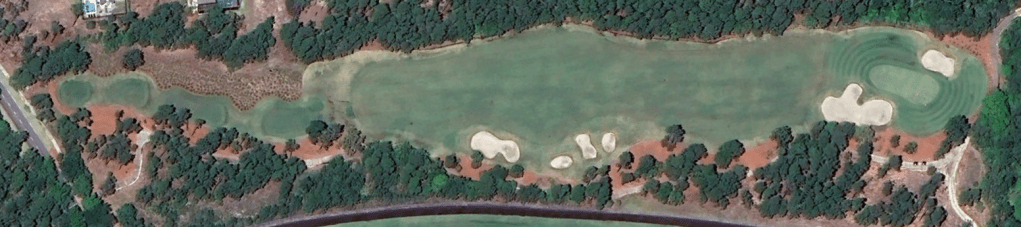
The tenth hole is one of the simpler par-4s on the course. Nothing is strategically required other than a drive tightened by fairway bunkers on the right. The hole plays over a small ridge that bisects the middle of the fairway perpendicular to the tee, meaning the green cannot be seen from the tee box. The tee shot plays gently uphill while the approach falls gently back down the small rise.
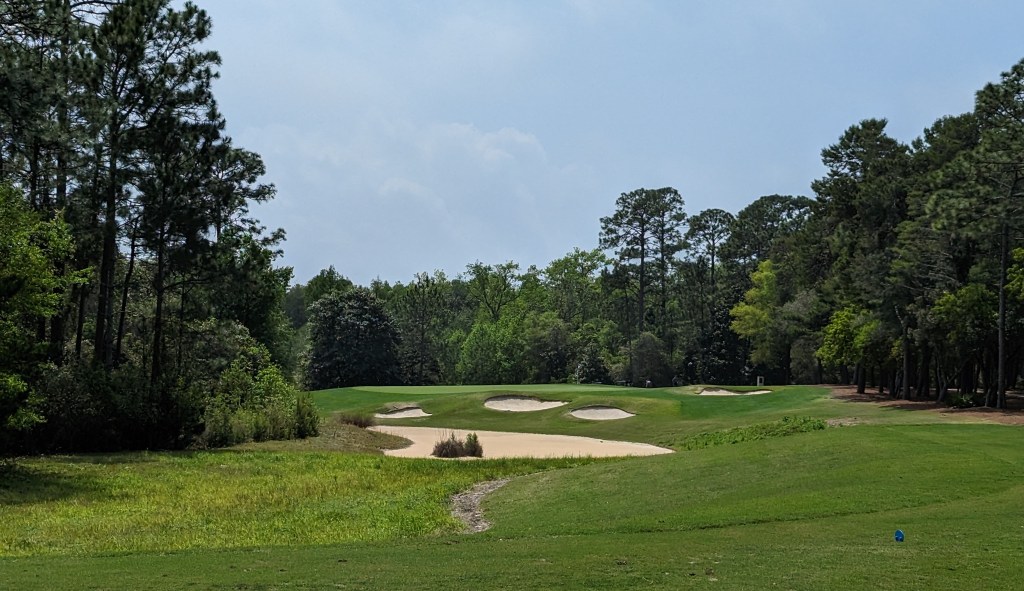
The eleventh is the first par-3 on the back and is the third of a very strong set of par-3 holes at Shark’s Tooth. The elevated green on the eleventh is protected by a collection of frontal bunkers as well as a flanking bunker to catch a faded ball.
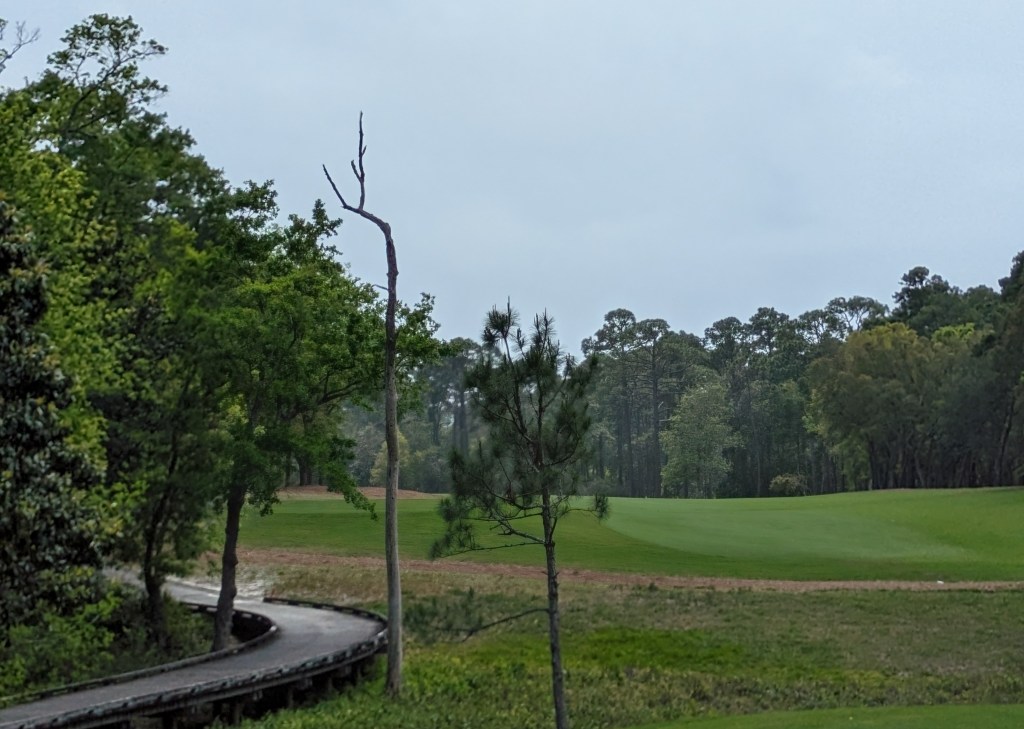
The twelfth hole turns slightly and begins the march towards the holes that sit along Phillips Inlet and Powell Lake, an inter-coastal lake that connects to the Gulf of Mexico. The twelfth is a stout par-4, playing through a narrower passage through the tall pines, with the tee shot playing gently up the slope of a plateau and over an unmaintained landscape to the beginning of the fairway. There only exists around 50-yards between the tree lines on this hole, so accuracy off the tee is at a premium (for reference, most average holes feature 60-70 yards between tree lines).

Once at the top of the plateau, the hole is flat to a green protected by an expansive bunker that protects the front-right quadrant of the green. Looking through the trees on the right provide the first view of the water if you look hard enough.
The thirteenth is a shorter par-5 that is essentially straight and commits a golf design sin that I often complain about: trees blocking a view. I referenced this in my Hermitage Golf Course review, but they have done a bit of clearing lately to remedy the issue. Another course that I will eventually review (Gaylord Springs) in the Nashville area commits this sin in the worst way.

Why are these trees here? They block the view of the water almost entirely on the thirteenth. Sometimes, golf courses do not own the shoreline – rather the local wildlife agency owns the area and prevents the trees from being removed. So that may well be the case here, but if not, this hole could be made so much better, both aesthetically and from a golf design perspective. It would be a far better hole if the tee was relocated and the trees removed along the shoreline, like the illustration below.
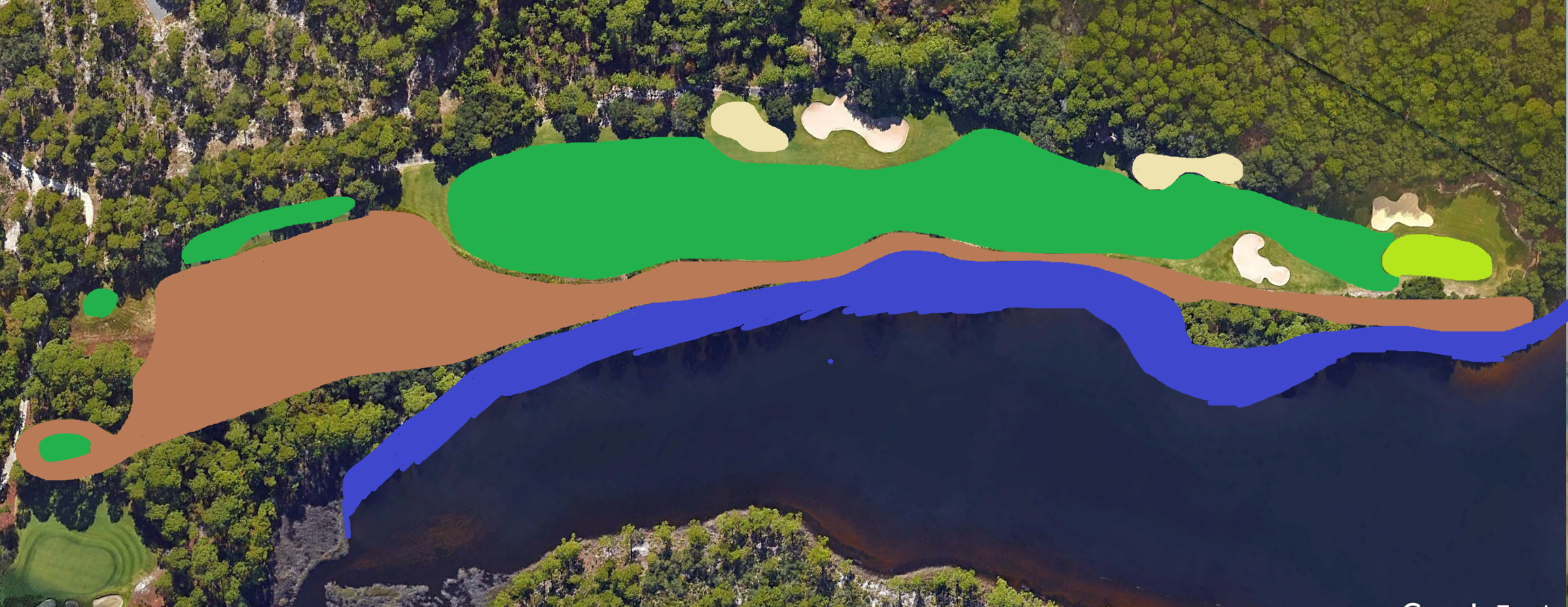
Regardless, the thirteenth hole does provide some view of the water and is an exciting par-5 being somewhat reachable in two shots, yet narrow.
The fourteenth turns 90-degrees and plays as a mid-length par-3 bordering the lake. Again, small pine trees block a clear view of the lake. The fourteenth is a good par-3, but is somewhat unremarkable.
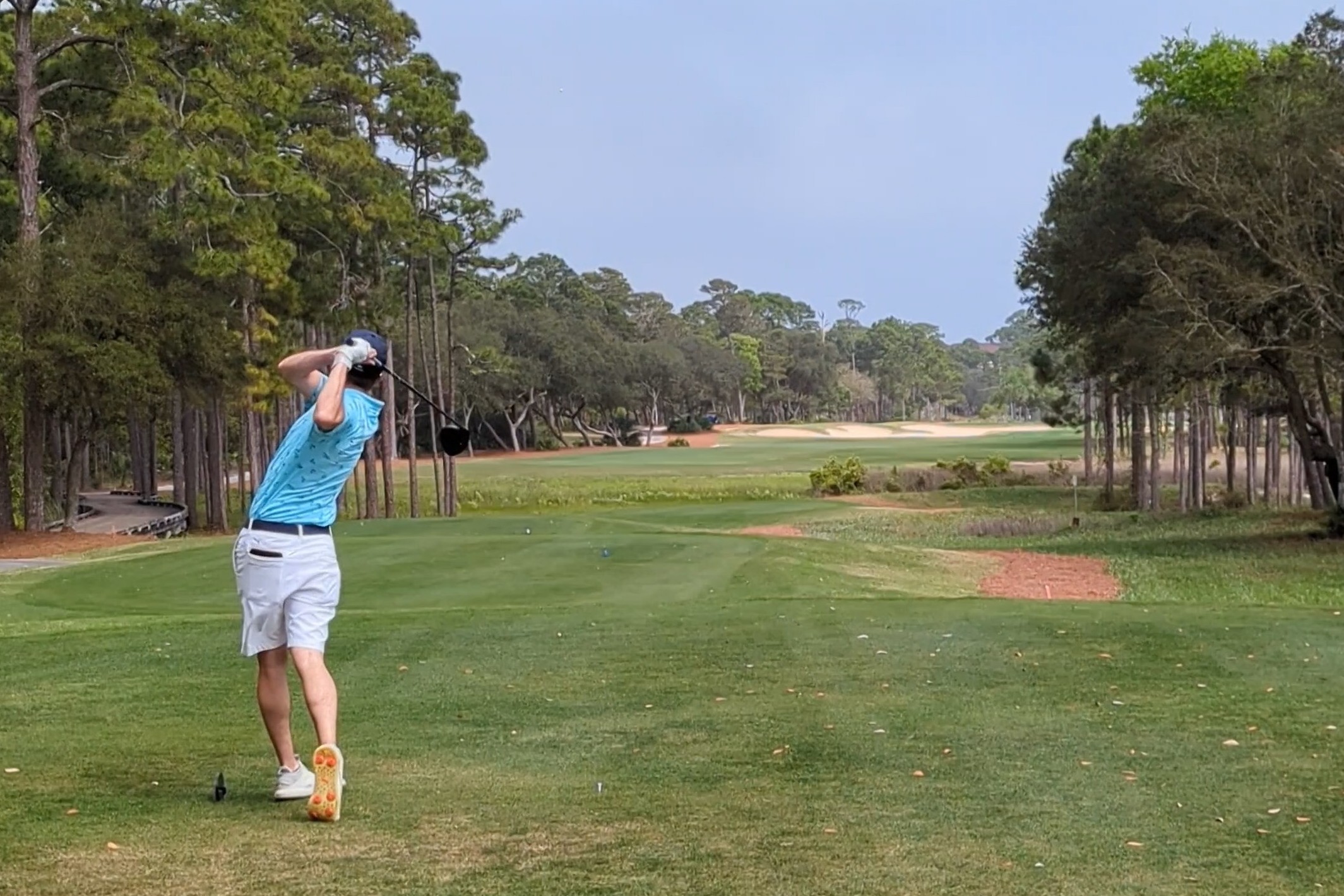
The fifteenth is the best hole on the course, a mid length par-4 that provides some good views of the lake. The drive plays across a unmaintained marsh to a wide fairway. I love the optical illusion on this hole. This hole is maybe slightly dogleg-ed to the right, but from the tee, the illusion of the bunker moving from left-to-right plays tricks on the player’s eyesight, making it appear that fade will be required off the tee.
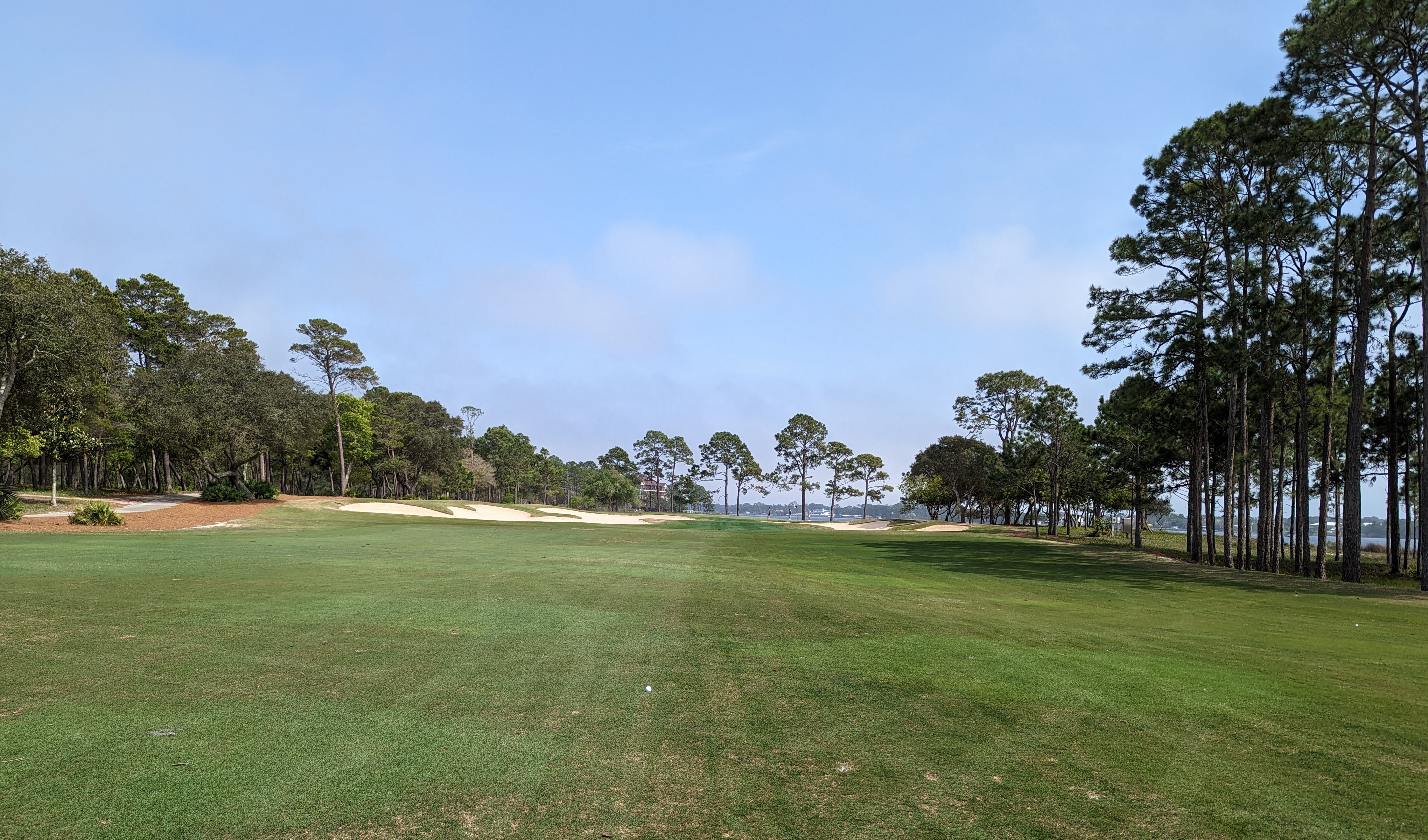
Once you are in the fairway, you realize, that bunker is not reachable and actually plays as a quasi-cross bunker to the green, a green that is angled significantly to the fairway and backs up to the lake. No fade is required off the fifteenth tee, but the optics of the left bunker’s angle influences golf balls to finish in the right trees.
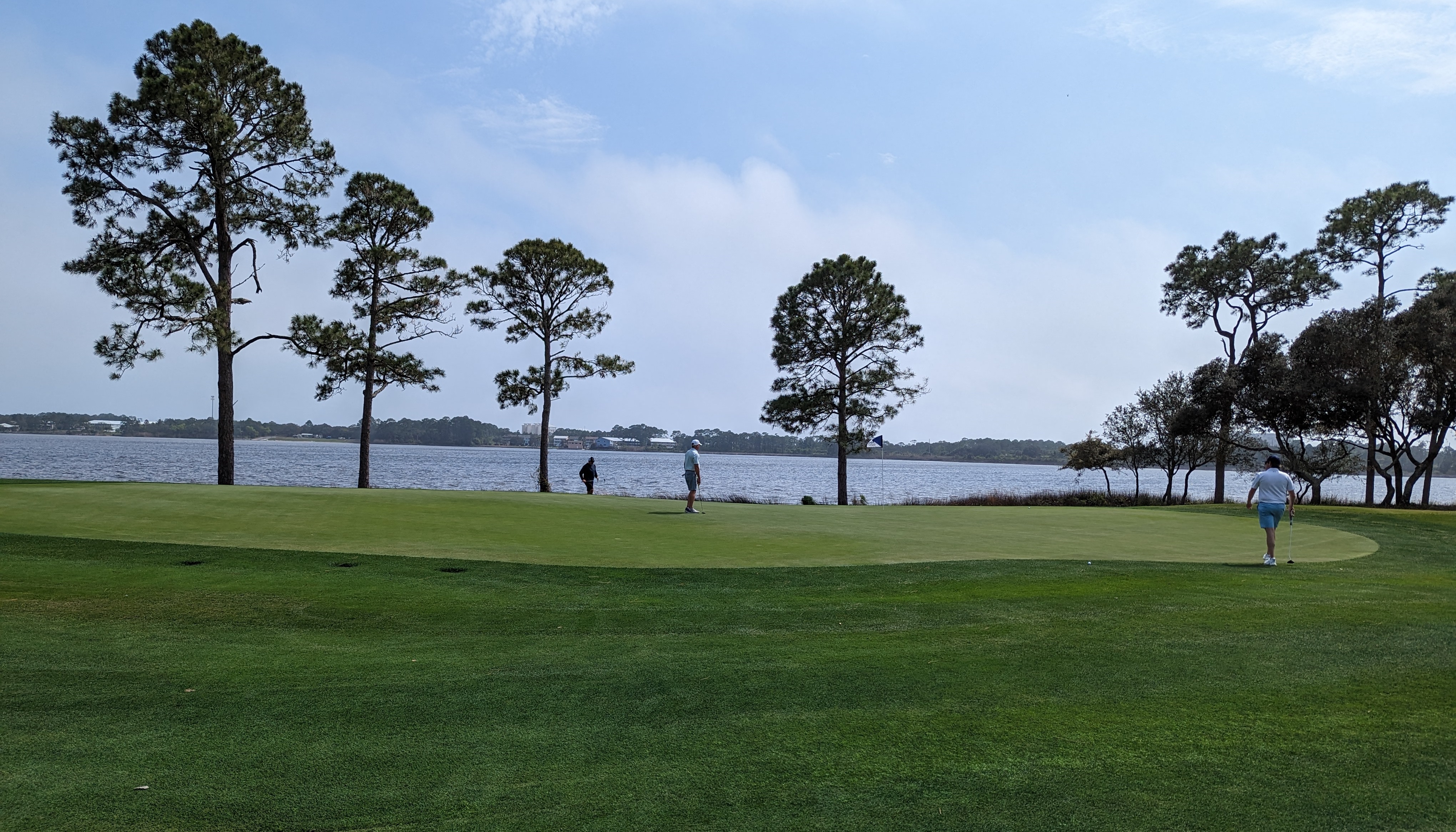
The walk to the green from the cart path may provide the best view on the course, but these types of views could be abound from the twelfth through the fifteenth holes if some of the dense foilage was removed or thinned.
Sixteen through eighteen are interesting from a routing perspective. The eighteenth is a strong hole, and so is the fifteenth, but I think Norman may have just ran out of space a bit on his routing and decided to squeeze some parallel holes into this area to connect the fifteenth to the eighteenth.
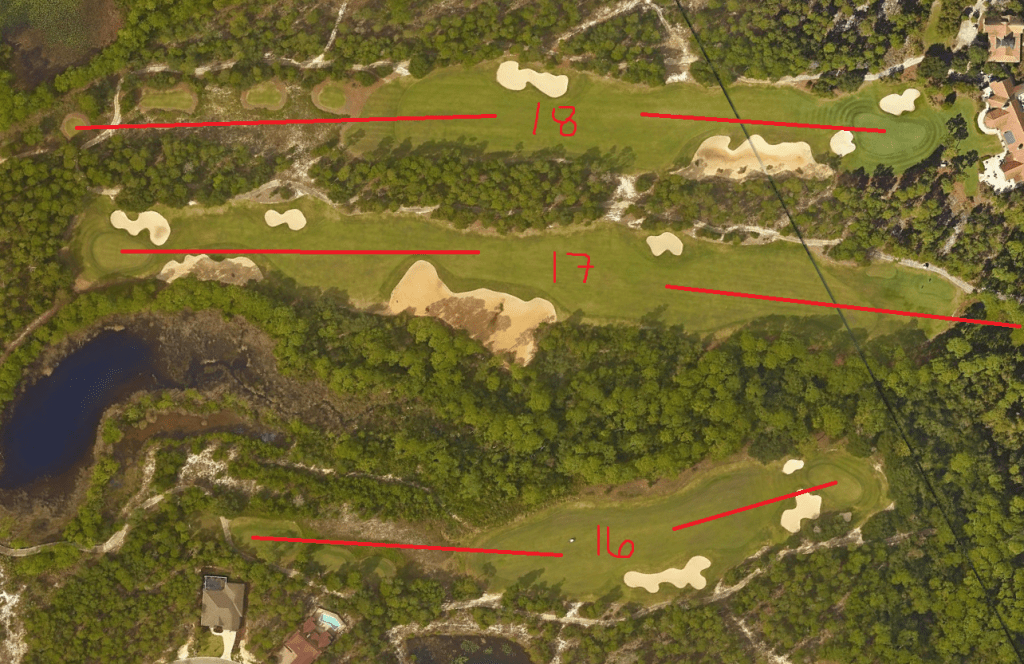
I think Norman tried to add interest to these holes with some interesting bunkering, but I largely found the par-4 sixteenth and par-5 seventeenth to be the weakest holes at Shark’s Tooth.
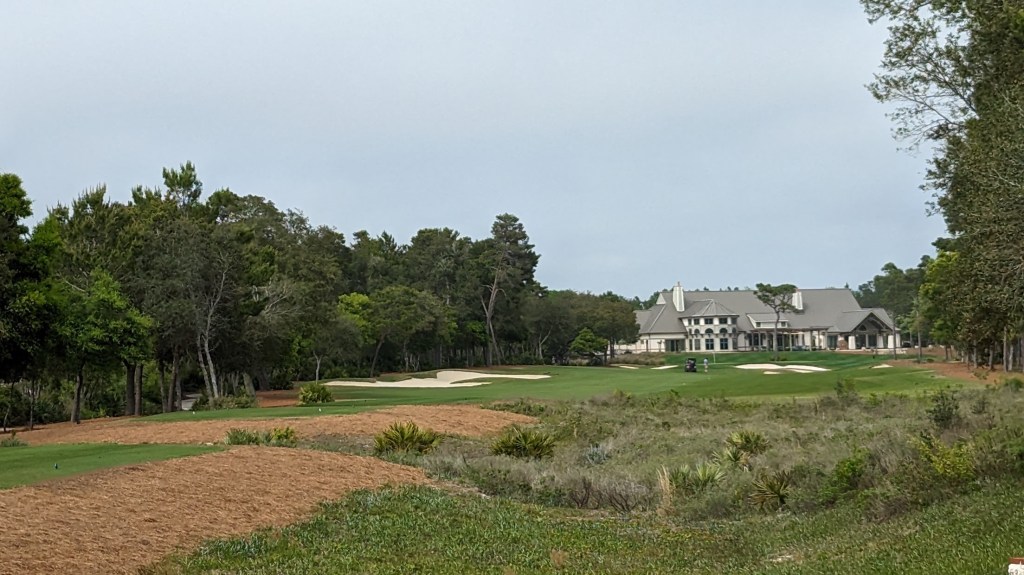
However, as we turned to the eighteenth, I quite liked this hole from a visual perspective. I think maybe I enjoy eighteenth holes that work right up to the shadow of a golf courses’ clubhouse.
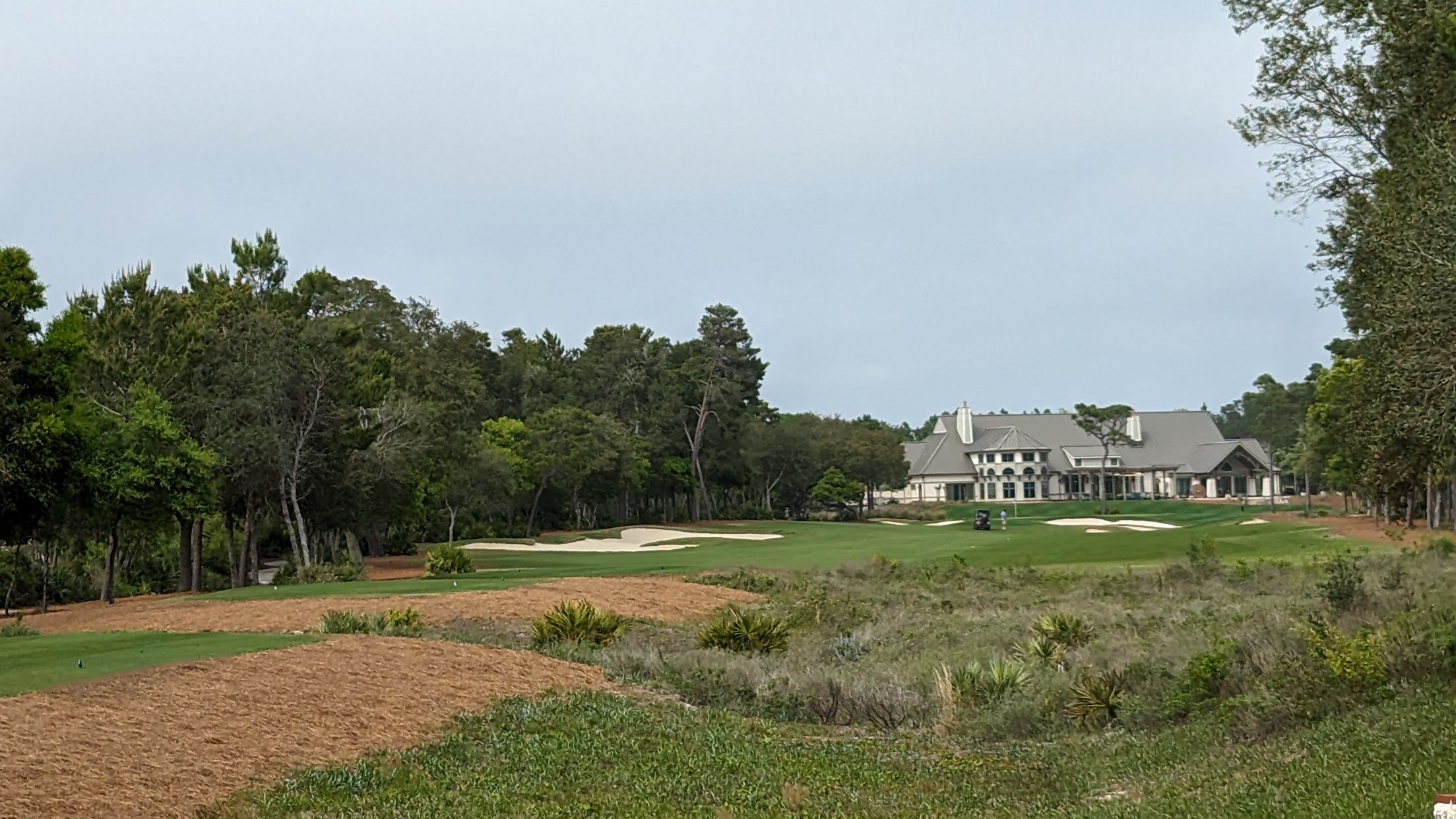
The mid-length par-4’s expansive bunker on the right frames the tee shot’s landing area while the large clubhouse overlooks the play on the eighteenth hole. The area between the trees is a touch narrow making for a tough tee shot.
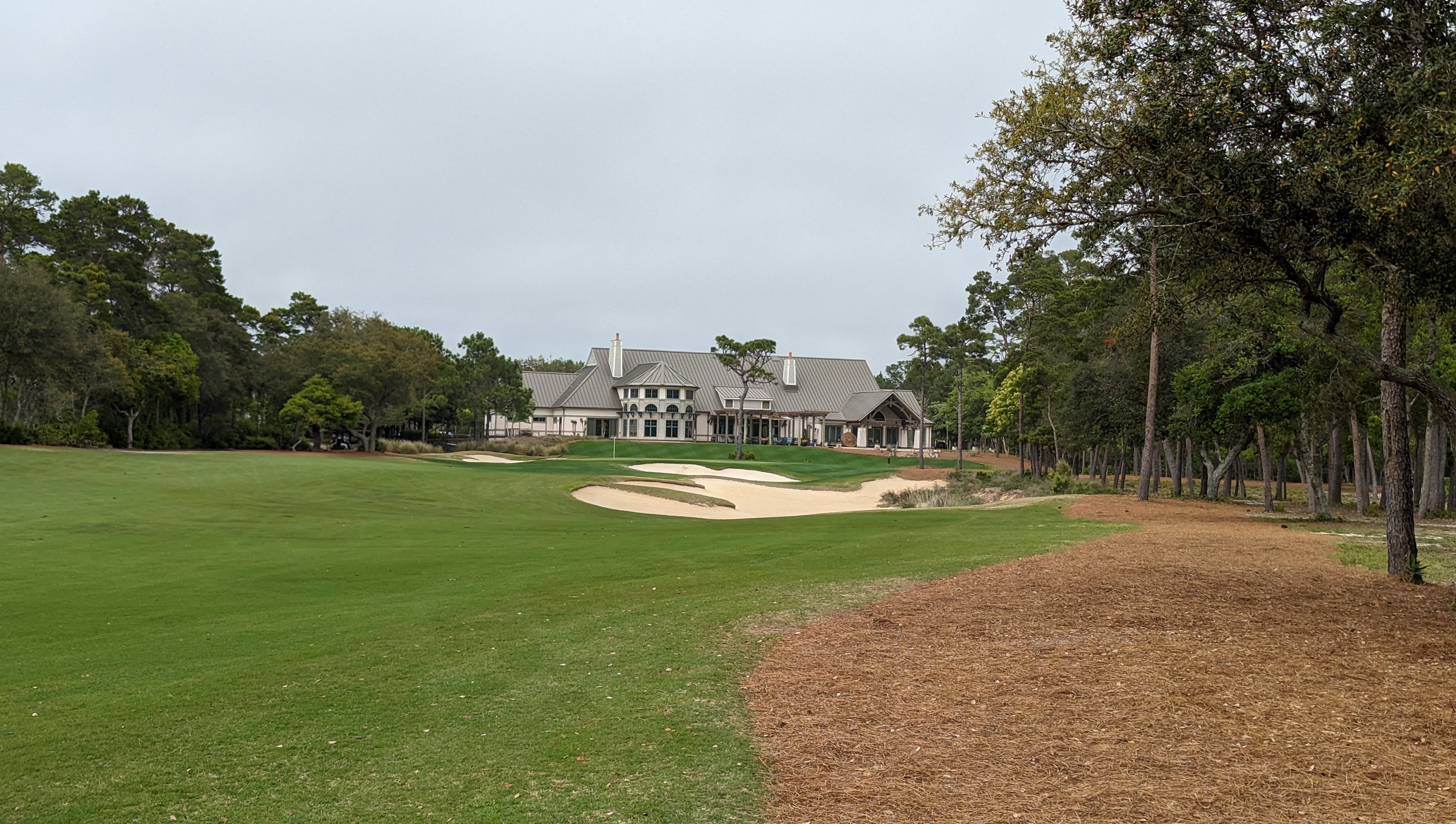
The second plays over a waste bunker which flanks the right of the fairway for the last 100 yards and the green has two greenside bunkers for protection. All in all, a strong finishing par-4 that could decide a close match.

Final Thoughts
Shark’s Tooth and Panama City Beach are not synonymous. Shark’s Tooth was a first class facility, had a great clubhouse with seating and eating overlooking the eighteenth hole. The course conditioning was quite good for April first in the panhandle, and everyone we met was very accommodating. I would highly recommend this course, and while I wouldn’t consider it a championship level course or test of your game, it is certainly a solid round of golf that is worth your time if you are in the area and receive an invite. It is the best course I’ve played to date in the panhandle of Florida, and while there isn’t as much high level golf in the area, golf courses are abundant in the PCB/Destin area.
We had a great, classy dinner in the Watersound area as well, and drove around the Watersound development a bit before departing. I have my questions about whether the upscale, exclusive Watersound Club development will work in the long-term in an area known for its accessibility and lack of pretension. I think it will be successful long-term, mainly because the competition in the area is limited and the area still is one the closest to many large cities with affluent residents, like Nashville, Birmingham, Huntsville, St. Louis, Memphis, etc. However, I wouldn’t exactly be surprised if there isn’t quite enough demand for the upscale niceties in the Watersound area offers for their ownership to truly realize the company’s long-term development goals for the area.
F1C’s Final Rating:
Shot Options: 7
Challenge: 6
Layout Variety: 7
Distinctiveness: 8
Aesthetics: 7
Conditioning: 8
Character: 7
Fun: 8
Total: 59/80
Read More: How We Rate Courses
Rating Scale Details
> 70: Top-50 U.S.
65-70: Top-200 U.S.,
60-65: Best-in-State List
57-60: Best-in-state List Contender
53-57: Very Good
48-53: Good
40-48: Average
> 40: Poor
Author: Jaxon MacGeorge
Jaxon is the founder and lead course reviewer at First1000Courses.com. Jaxon has been playing golf for over twenty years, is a scratch handicap, and actively competes in USGA and Tennessee Golf Association (TGA) amateur events. By trade, Jaxon is an attorney and lives in Gallatin, TN, a suburb of Nashville.

 First 1000 Courses
Leave a reply to Course Review: The Course at Wente Vinyards – First 1000 Courses Cancel reply