
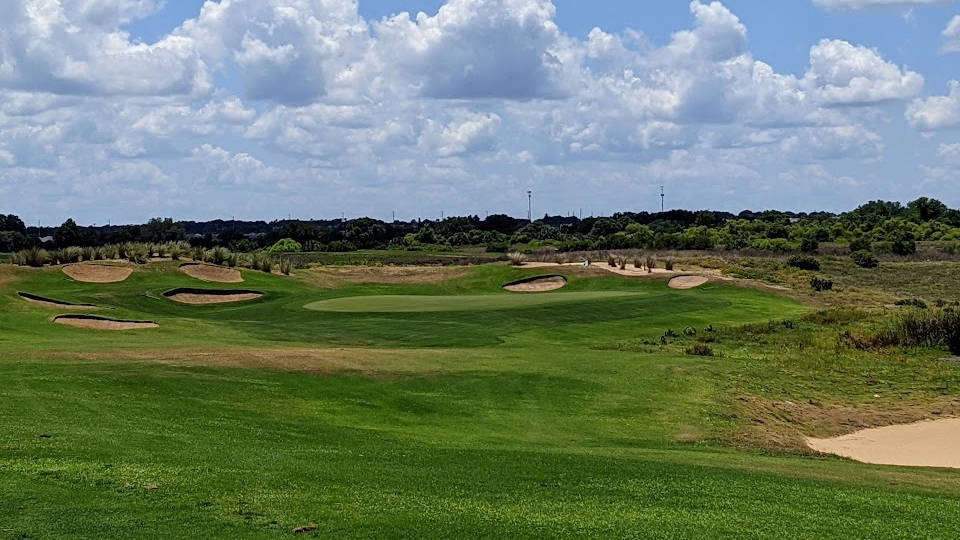
ChampionsGate Golf Club – International Course is a public course in Orlando, FL.
This ChampionsGate Golf Club’s International Course course review is based on a round played on May 2, 2022 (AM)
F1C’s Final Rating: 58/80 (Best-in-State List Contender)
Learn More: How We Rate Courses
Where to stay? -> Check out F1C’s Orlando Golf Travel Guide
Ah, Greg Norman. Is that name persona non grata in today’s golf world? Or will history remember Norman as a revolutionary of professional golf? I can’t say for sure, but I can say that before Norman was the controversial figure of the modern professional golf landscape, he was a controversial golf course designer. Discussions of the “worst” modern golf course designers often include Norman’s name, and despite the design of nearly 40 U.S. golf courses, including at some good resorts, Norman’s courses are largely absent from Top-100, Top-100 Public, or Best-in-State lists. Perhaps his most notable U.S. course is Medalist (with Pete Dye), but although the professionals seem to love it (many PGA Tour guys are members at Medalist), Top100GolfCourses ranks Medalist as just 16th best in Florida. However, professional golf has had some interest in his designs, with the Ritz Carlton – Grande Lakes course hosting the annual father-son PNC Championship for the past few years, Tiburón Golf Club in Naples, FL hosting the newly minted Grant Thornton Invitational in 2023, and the Valero Texas Open being hosted at Norman’s Oaks Course in San Antonio. TPC Sugarloaf has also hosted some Champions Tour events.
So the takeaway appears to be that Norman’s courses provide a professional golfer a proper challenge, but do not seem to satisfy the requirements of those that rank golf courses professionally. ChampionsGate’s International Course is cut from that same cloth, particularly on the “proper challenge” point. By course rating, the 7,363 yard courses posts a particularly high course rating of 75.5 with a significant slope rating as well. However, true to Norman’s designs and with the stiff competition in the State of Florida, this course isn’t the type I’d consider one of the best in State. However, if you like a firm challenge, at a first-rate facility, I am willing to put it on my “Best on Vacation” rankings, if you’re in the area.
The practice facility here is very large and has plenty of area for warmup. So nice in fact, that renown teacher David Leadbetter has made the facility his academy’s home for some time. On my visit, the range was in great shape with plenty of balls and plenty of grass to get ready for my round.
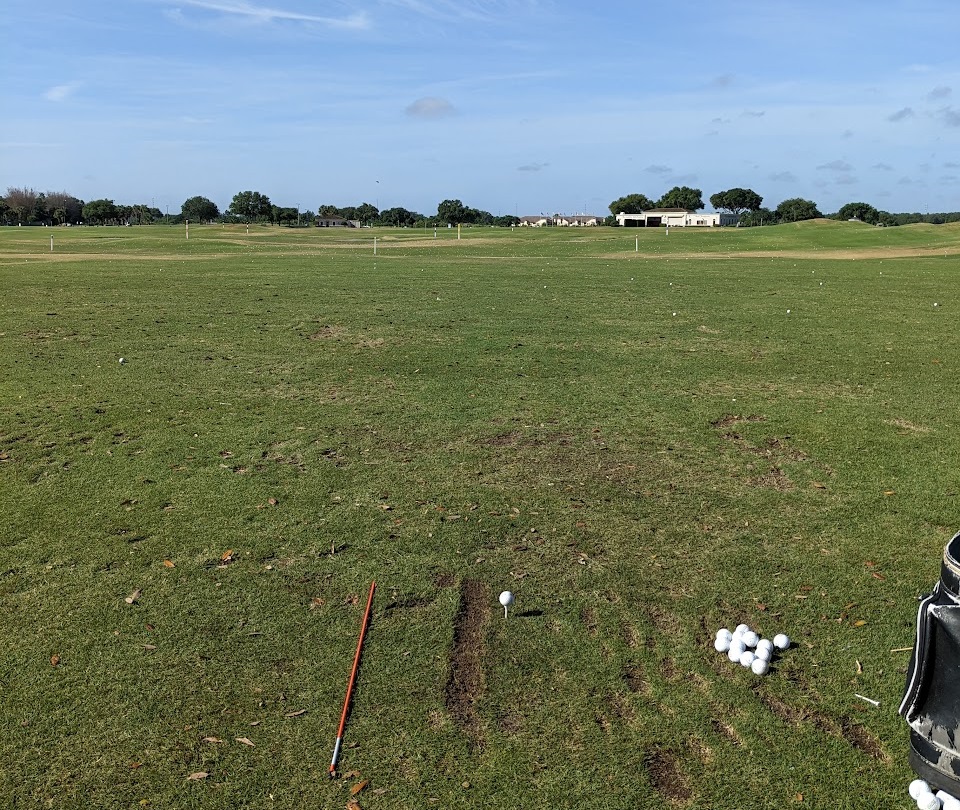
The First Tee
The first hole at the International Course is actually relatively difficult to find for the uninitiated, as the first tee sits behind the tenth green and behind the driving range.
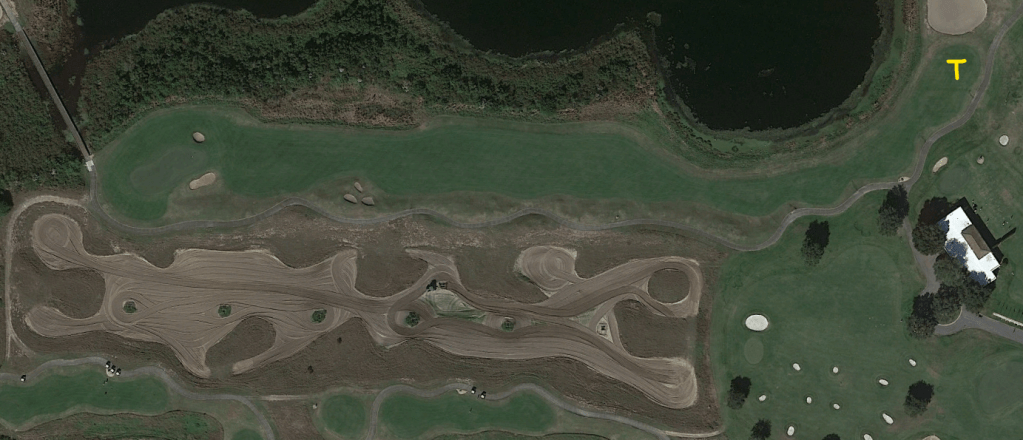
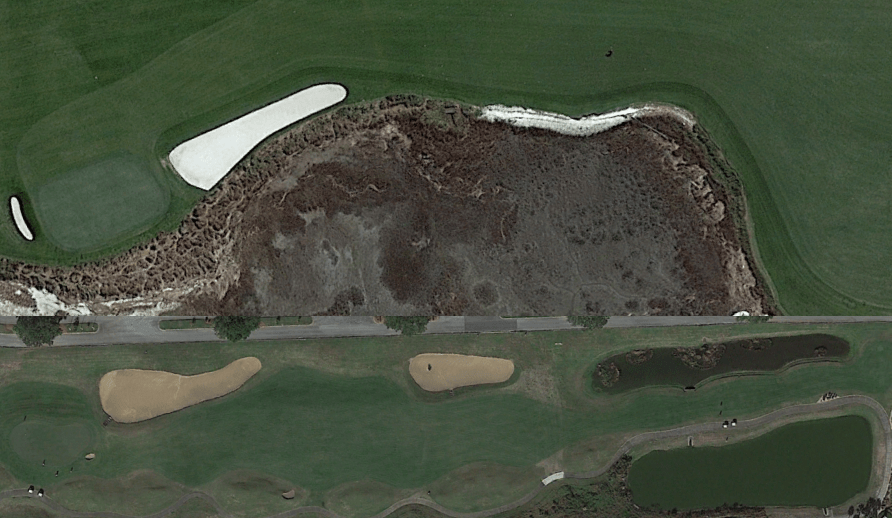
The first is basically a dead straight chute, which is always a touch disconcerting when we are talking about the first drive of the day. Like most holes at this course, due to its length, its driver off the tee, and from the tips, the bunkers on the left are pure eye candy as they are around 340-yards from the tee. Further, if anyone can explain to me what the large, clearly manufactured sandy swath is to the left of the hole, feel free to comment. I have no idea it’s purpose, but it certainly is interesting from overhead.
The second hole is a long par-3 with a large green that forces a carry over a small bunker that fronts the front edge of the green. The only option on this hole is aerial.
The third is a medium-length par-5 that is certainly an interesting design and is the first hole at the International Course that makes a player think.
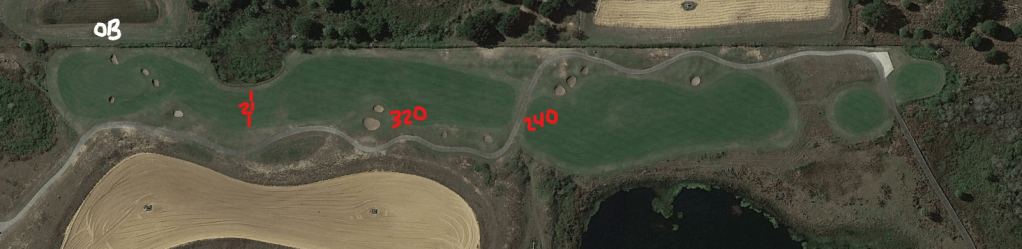
From the tee, the hole presents a few options, but forces you to show your hand to the dealer. Either the player intends to play the hole as a three-shot affair, or go for it in two, provided the player has decent length. Neither option is a very good option.
– Laying up from the tee: The cart path crosses at 240 yards, and before this point, the landing area is wide, albeit protected with an array of buckshot style bunkers on the right. In this landing area, the player has about 70 yards with which to work. If the player safely navigates into the landing area, a largely blind shot awaits to a very narrow landing area, narrowing to just 21 yards and protected by the lake. That lake corners in between around 160-200 yards from the tee shot’s landing area. A very awkward blind second shot. Typically, not the best option.
– Driver from the tee: If electing to use driver, the player has to navigate across the cart path to an area that is narrowing to just 45-yards between the bunker on the left and the Out-of-Bounds area right of the hole. If the player is successful on the drive, the second shot is still difficult to negotiate. Again, largely blind, and around 190 to carry the frontal bunkers that deter any ability for a player to run a ball on the green. Out-of-Bounds flanks tight to the right of the green, meaning a wiped fade to the a back pin is likely the last time the ball will be seen.
The third is a risky proposition, and Norman forces you to take a risk, like parachuting from a crashing plane. You can jump, you can ride it out, but either way there’s risk, and the player is forced to decide which option they find less risky (or more rewarding).
The fourth is a connecting short dogleg par-4 with some Pete Dye styled miniature bunkers quartering the hole at a 45-degree angle from the left. Avoid the trouble and this should be a birdie look.
The fifth starts a run of more scenic holes from the fifth to the eighth. However, we are talking Orlando scenic here. The course is largely manufactured small hills dumped on relatively flat land; the term scenic here is largely relative to the location. With that being said, the fifth is the best looking hole on the course, and is certainly some challenge being over 200 yards.

The sixth hole may have more of a strategy element if it were not for its sheer length at 496-yards from the back tee. As I stated earlier, it seems that Norman defaults to designing challenging holes rather than great holes, and this is an example of why so few of Norman’s courses end up on those coveted lists.
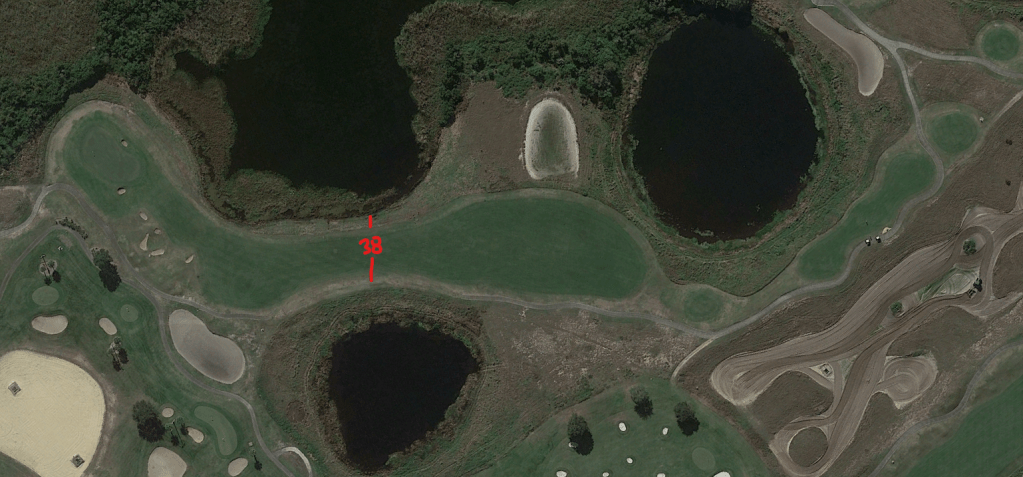
The sixth hole narrows to just 38 yards between penalty hazards, and if the yardage were more proper, would force a player to choose to fit it into this 38-yard gap for a better angle and shorter approach. The hole with the green angled at a 45-degree angle to the approach shot, over water, this could produce an optically intimidating shot for those that elected to lay further back into the much fatter area behind the ponds. At the appropriate yardage, this would force the player to choose, does he want the pain on the tee shot, or does he want the pain on the approach shot.
But at 496 yards, every player gets the pain on the approach, because the narrowing occurs around 325 yards from the back tee. Rather than a choice, every player will hit driver aim for the fat-but-slightly-narrowing part of the fairway. The approach is challenging for each player, and the drive a simple one – there’s simply no avoiding a 200+ yard approach into this angled green.
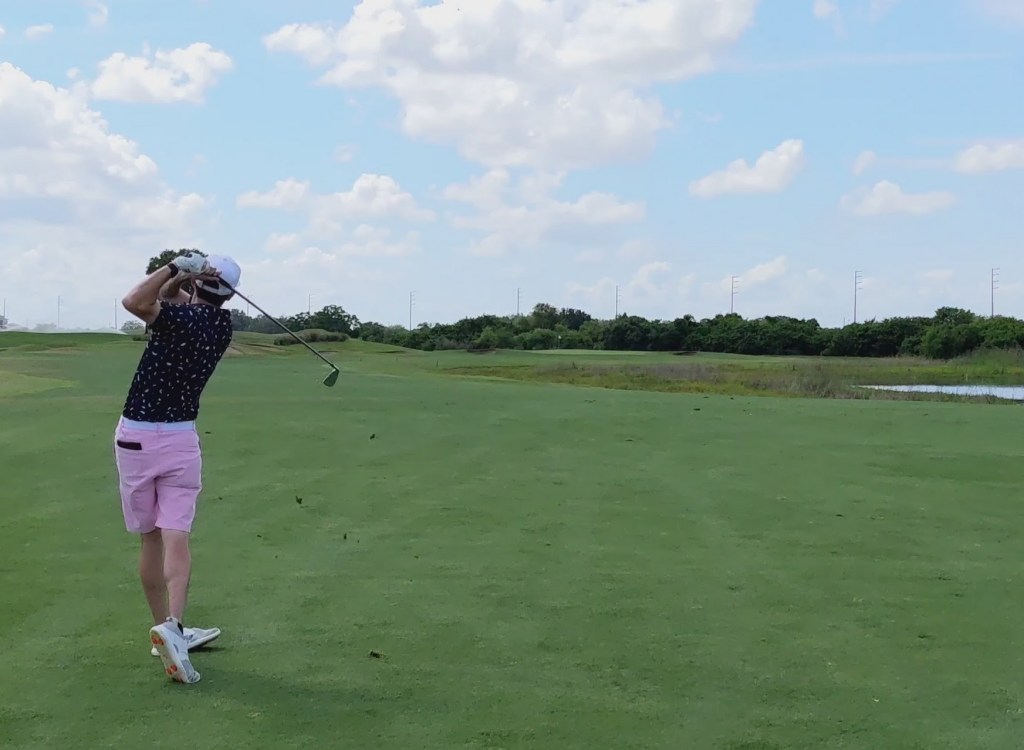
While aesthetically I enjoyed the hole, it would be unquestionably be a better, more engaging golf hole if 40 or so yards shorter. It would yield more birdies to non-professionals though, which may just be a non-starter for Norman.
Maybe Norman atones for bad golf design on the sixth with good golf design on the seventh, as a man-made lake divides this medium-length par-4 into two halves: the drive, with water on the right, water long, and a bunker left and the approach, with water left, a bunker right, and a tricky green complex.
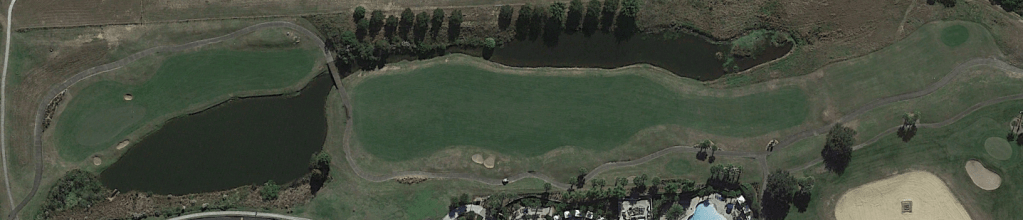
The eighth is another very Pete Dye inspired hole with groups of bunkers on the left of a par-5 bordered by a small lake for the entire length of the hole. The green is angled an creates a bit of an optical illusion that makes the wedge shot into the hole rather uncomfortable.
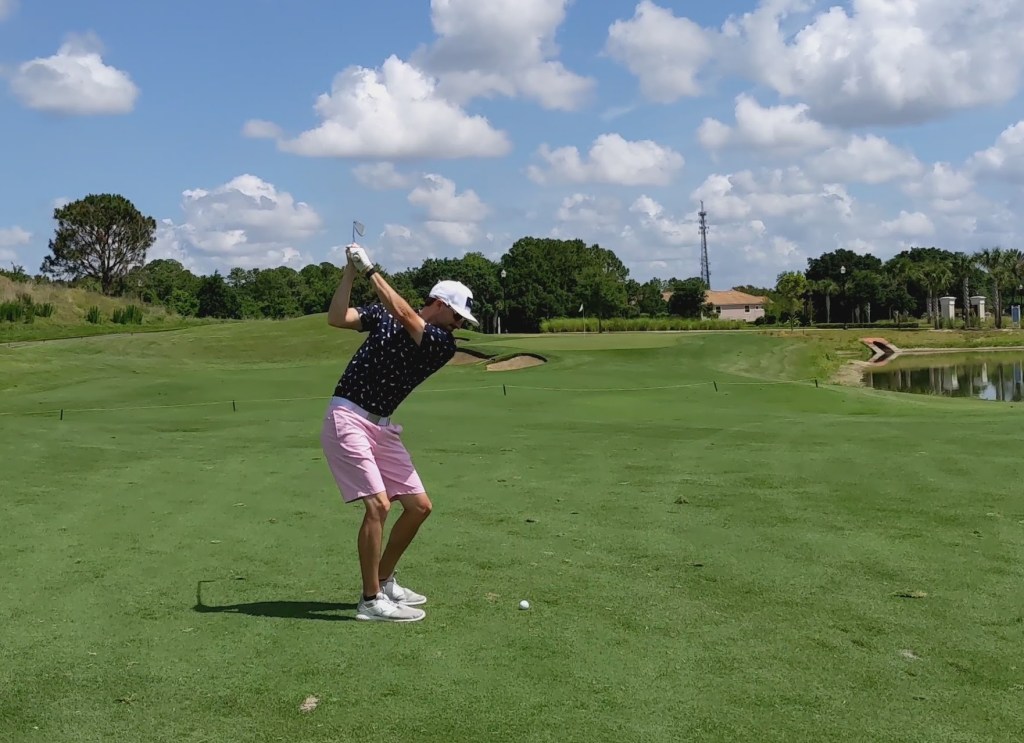
The ninth feels a bit out of place here at the International Course, because it starts to feel like Norman is exploring which Pete Dye he wants to be: does he want to be Harbour Town Pete Dye or is he Whistling Straits Pete Dye. There’s nothing objectively wrong with the hole, its fine; but, lets take a look at this.
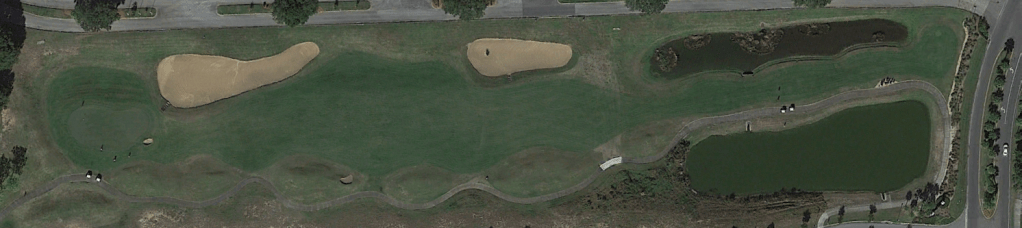
The overhead of these bunkers makes me question what we are doing here, when in reference to the last hole, the eighth.
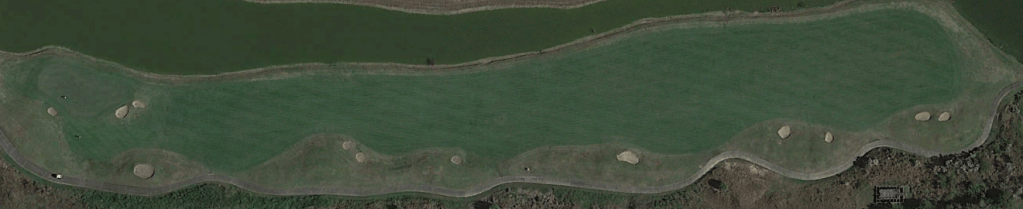
The bunkering style on the eighth hole is classic Pete Dye, with the small random pot-like bunkers steering a player away (and towards the water), due to their sheer volume. Much like Whistling Straits in Kohler, WI or the Pete Dye River Course in Radford, VA. Its a strategy Pete Dye made a career out of, and one from which Norman is clearly drawing inspiration.
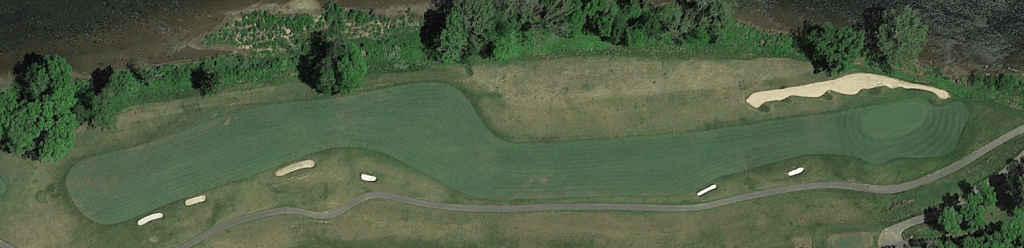
But this ninth hole’s bunkering style is a sudden departure from that, looking like a Myrtle Beach World Tour Course (Pete Dye edition), as Norman abruptly switches bunkering style for a style more reminiscent Pete Dye’s earlier work.
Making The Turn
The International Course’s bunkering style returns with the tenth hole, which is oddly placed right outside of the clubhouse, and I am sure more than one visitor has accidentally played the tenth hole as their first hole before realizing their mistake. Hey, probably a good way to get free golf! The tenth is an attractive mid-length par-4 that plays to another angled green from a wide landing area that narrows the further the player drives their tee shot.
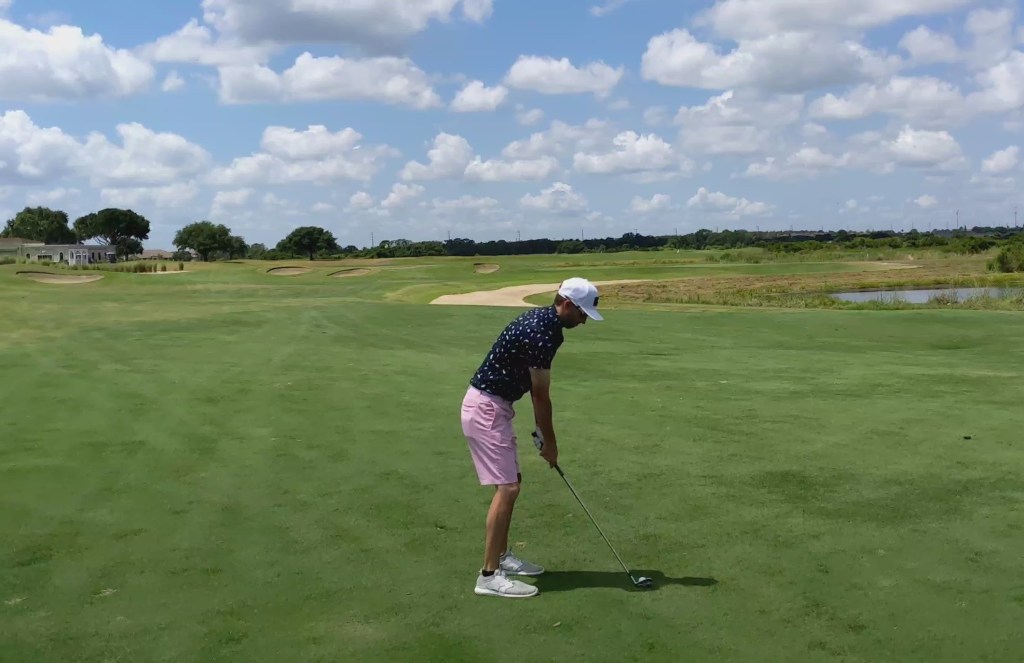
The eleventh hole is largely a flipped version of the eighth, with water on the left and rows of small pot bunkers down the right to influence a player to the water. This par-5 should allow for some scoring under normal conditions.
The twelfth is another opportunity to score, as the hole is a par-4 measuring around 340 yards.
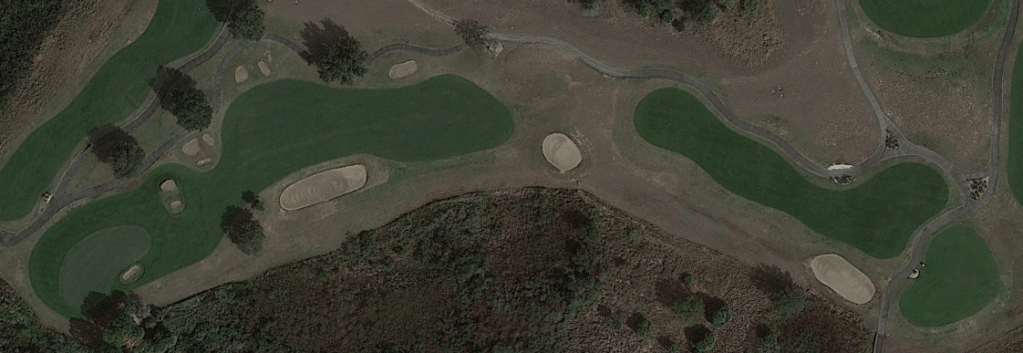
The chicane-style narrowing occurs directly in the landing area for most drivers, and a tree blocks off a direct route to the green from the tree, but a simple lay up should leave a reasonable wedge, and the longer players on a well shaped shot may be able to get the ball up near the green with plenty of bailout room to the right of the green.
The thirteenth is an unremarkable straightaway par-4, the fourteenth an extremely long 231 yard par-3 (that was directly into the wind the day I played), and an interestingly hilly par-4 fifteenth that presents two small cross bunkers in the middle of a wide fairway. All decent holes, but all visually uninteresting, except for the fact that the fifteenth hole does have some elevation (not much, but enough to be remarkable for this course).
The sixteenth hole was a decent hole, with a fairway that split with a crossing patch of rough at the end of the landing area. The longest players may take less than driver off this tee to avoid the rough patch between the two fairways.
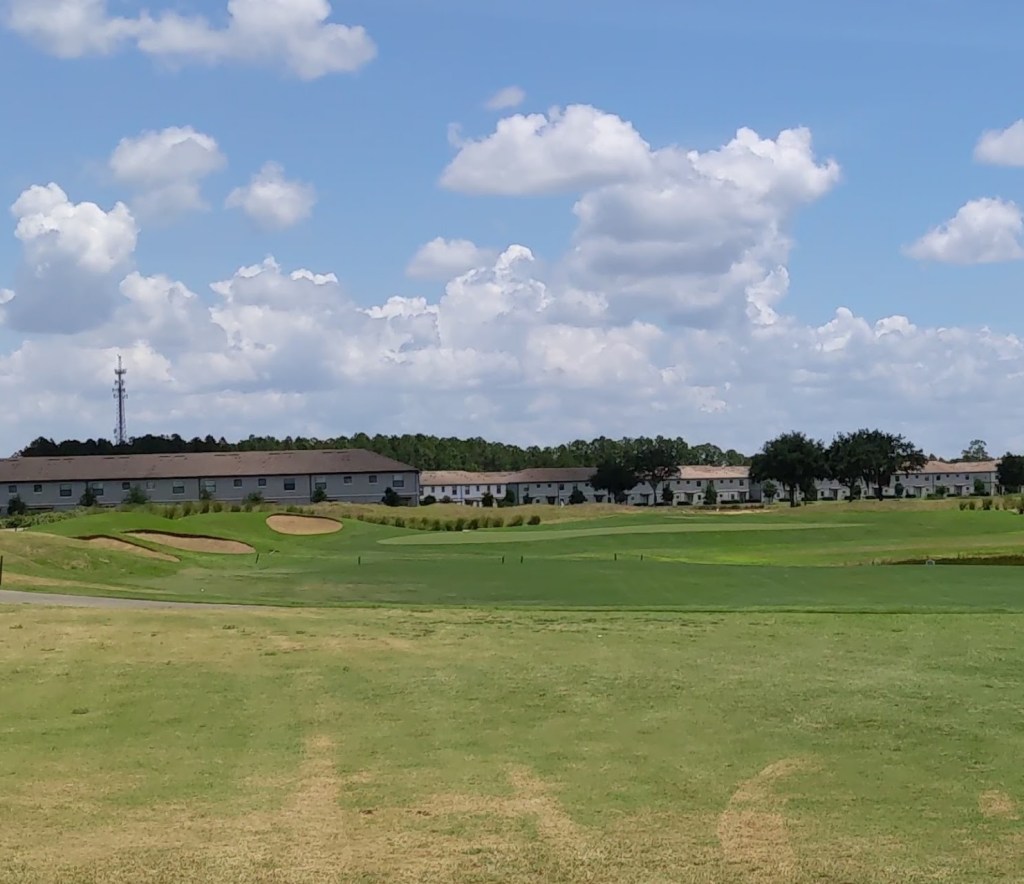
Some manufactured hills on the left of the sixteenth green frame this hole nicely, and the large, kidney-shaped green is one of the more interesting on the course. I’m not sure I would want to miss into that left greenside bunker.
The seventeenth hole is the best par-3 on the course, and perhaps the best hole if you appreciate a short par-3. At less than 150 yards, the hole is visually appealing, and a bit distracting, making the hole play a bit harder than the yardage. Again, Norman is designing with plenty of inspiration from Pete Dye here, with random, out of play bunkers intended to distract you, and push your shot closer to the actual hazard: the short-right pond.
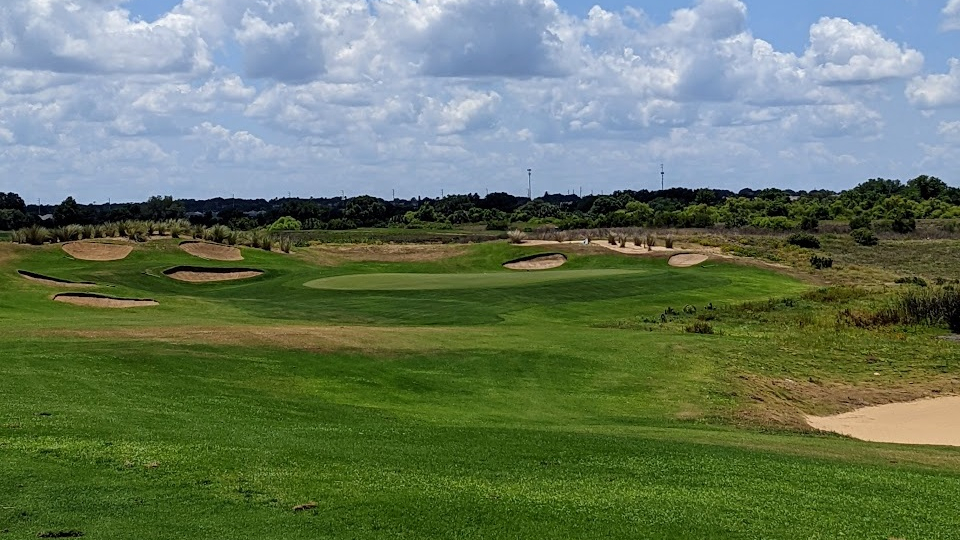
The eighteenth is a reachable par-5 in which Norman again using the bunkers on the left, just by their sheer volume, to make the player shift focus to the right, where a pond lie in wait to collect any fades forced by the sand.
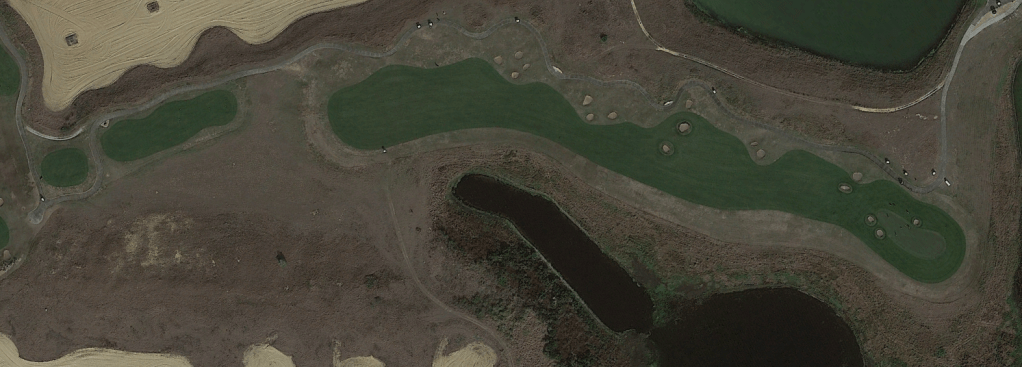
However, navigating the tee shot correctly should result in a decent birdie opportunity with a good wood or wedge to all but the front pin location. The front pin location requires a layup shot, as a shot to the right of the green has to go over two deep bunkers into a green that is a mere 6-yards wide. For a front pin, Norman has forced a left hand layup to have any chance of hitting one close enough to secure a birdie.
In conclusion, the course was a great vacation course, with nice facilities, a great staff, a solid free valet system, and the course presented a challenge in so many ways that most resort courses do not. In my opinion, its a must play while on an Orlando vacation, due to its uniqueness, and is a relatively good value play for the area. The course is miles ahead of some competitors of a similar price in the area (Shingle Creek among others) and is miles behind some of its competitors in price (Ritz Carlton Grande Lakes, looking at you).
Overall, strong recommend for vacation in Orlando.
F1C Final Rating
Shot Options: 7
Challenge: 9
Layout Variety: 7
Distinctiveness: 7
Aesthetics: 7
Conditioning: 7
Character: 7
Fun: 7
Total: 58/80
Read More: How We Rate Courses
Rating Scale Details:
> 70: Top-50 U.S.
65-70: Top-200 U.S.,
60-65: Best-in-State List
57-60: Best-in-state List Contender
53-57: Very Good
48-53: Good
40-48: Average
> 40: Poor
Author: Jaxon MacGeorge
Jaxon is the founder and lead course reviewer at First1000Courses.com. Jaxon has been playing golf for over twenty years, is a scratch handicap, and actively competes in USGA and Tennessee Golf Association (TGA) amateur events. By trade, Jaxon is an attorney and lives in Gallatin, TN, a suburb of Nashville.

 First 1000 Courses
Leave a reply to Course Review: Shark’s Tooth Golf Course – First 1000 Courses Cancel reply