

Time to Read:
|
Pasatiempo Golf Club course review is based on a round played on July 9, 2025.
Pasatiempo Golf Club is a semi-private golf course (one that sets aside certain tee times each day for public play) in Santa Cruz, CA. The green fee is around $465.
F1C’s Final Score: 66/80 (Top 200 U.S.)
Learn More: How We Rate Courses
I’ve waited nearly six months to digest Pasatiempo in a way that would allow me to write something that would meaningfully and respectfully express my thoughts regarding this course. Playing at Pasatiempo was an emotional experience for me, blending anticipation, disappointment, appreciation, and veneration for Pasatiempo and for what it stands.
Famously, Pasatiempo was designed by Dr. Alister MacKenzie. Obviously, he felt so emotionally attached to the gravity of Pasatiempo that he decided to live, and die, there. Augusta National might have been his star child, but Pasatiempo was his baby. That baby is currently ranked as GolfDigest’s 93rd best course in the United States and the 15th best public access course in the nation. Other publications agree that Pasatiempo is a Top 100 course in the U.S., with Golf.com ranking it as the 67th best, LINKS Magazine placing it 94th, and Top100GolfCourses marking it as 63rd best. Pasatiempo also just went through a significant restoration right before we played. The designer, the accolades, and the reputation of Pasatiempo make it a bucket list destination for golfers.
The reason Pasatiempo is a destination is its public access. I deeply believe in the European model, where even the greatest courses allow some form of public play, and I wish that approach were far more common in the U.S. The fact that only 16 public-access courses appear in America’s Top 100 is embarrassing. Too many of the country’s finest courses are locked behind six-figure initiation fees and exclusive invitations for the ultra-wealthy, and golfers, both collectively and individually, are worse off for it.
High-priced public tee times can subsidize member play while still giving everyday golfers the chance to experience bucket-list courses. Golf loses part of its soul when its best experiences sit behind gates that grow higher as wealth inequality widens. And unlike many resort courses, Pasatiempo does not lure visitors with world-class golf only to exploit them with overpriced rooms and mandatory packages.
Pasatiempo is the trend-breaker. It is a stand-alone golf course that offers world-class golf to a golfing public, with the ability to schedule certain days and times in advance (looking at YOU, Bethpage Black) for a fee. The U.S. needs ten times as many courses operating with the same model as Pasatiempo. I was proud to play Pasatiempo, support the club, and had no issue with the fee, as it funds the continuing public access of such an important place in golf.
However, I don’t review vibes or values; I talk about golf courses. Veneration aside, Pasatiempo’s actual golf course is an emotional experience. Some will write absolutely glowing reviews about the course, and this review probably will represent a departure from that narrative; a devil’s advocate of sorts. Of course, these are only my opinions, and yours will likely be different than mine. But I digress.
Pasatiempo has some amazing golf holes; Pasatiempo also has some very, very poor golf holes. It was emotional for me, because I wanted to love Pasatiempo, and I loved some of it. But, I really disliked Pasatiempo sometimes, too. Some of the corridors at Pasatiempo are tight to the point of it being a safety concern. Slight misses can be severely punished, big misses are often preferable, and there are gimmicks abound. Too often at Pasatiempo good shots aren’t rewarded proportionally, and bad shots are not punished proportionally.
Much of that stems from the simple reality that Pasatiempo sits on too little acreage, less than 110 acres (including a driving range) by my measurement on Google Maps which is very small. For comparison, SFGC (also tightly packed) is placed on around 150 acres, Pebble Beach has around 190 acres at its disposal, and Mayacama from our last review has around 200.
From the longest tees, Pasatiempo is 6,400 yards long, which is excessively short. To make up for this lack in distance, Pasatiempo is a slog of tricks, gimmicks, and tightness to add difficulty. I am not a huge fan of tricks, gimmicks, nor tightness. As always, I will walk through my thoughts hole-by-hole to explain how extraordinary some of Pasatiempo is, yet how flawed some of it is.
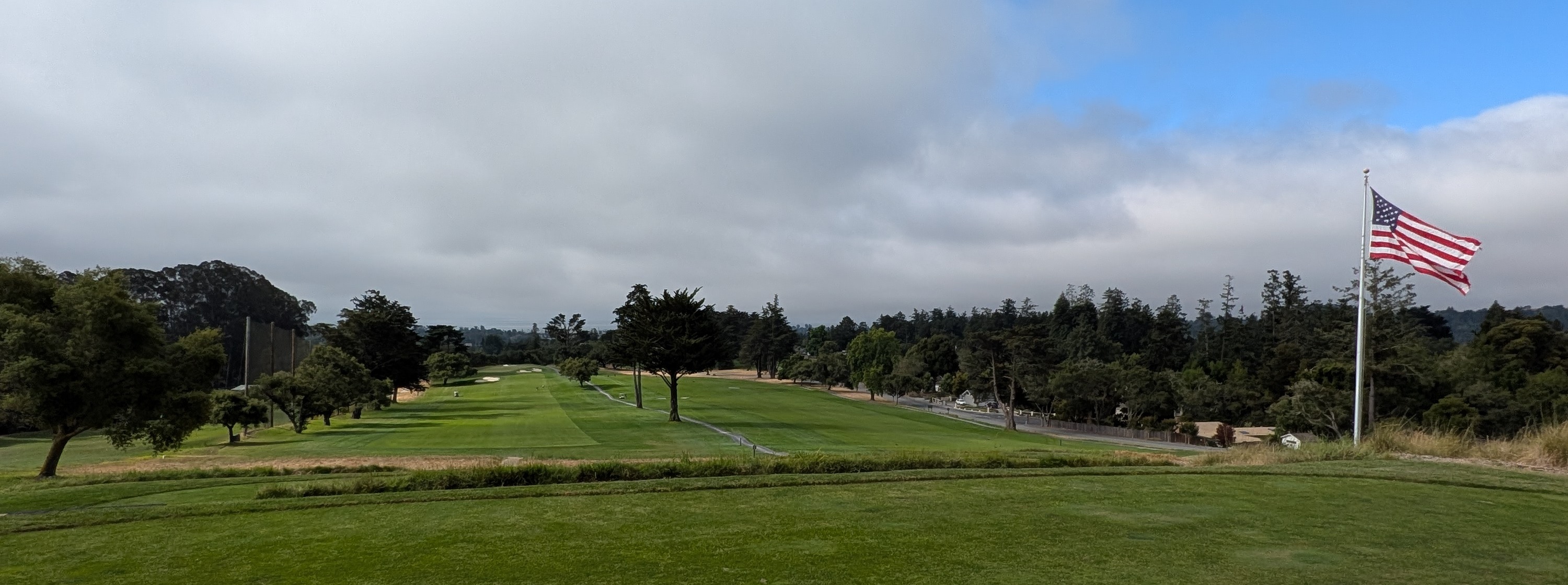
The First Tee
The first hole is a fantastic starting hole. The mid-length par-4 plays from an elevated tee right in front of the clubhouse in a beautiful setting. No tricks here; the hole is basically dead straight, lined by tees left and a couple of lone trees on the right.
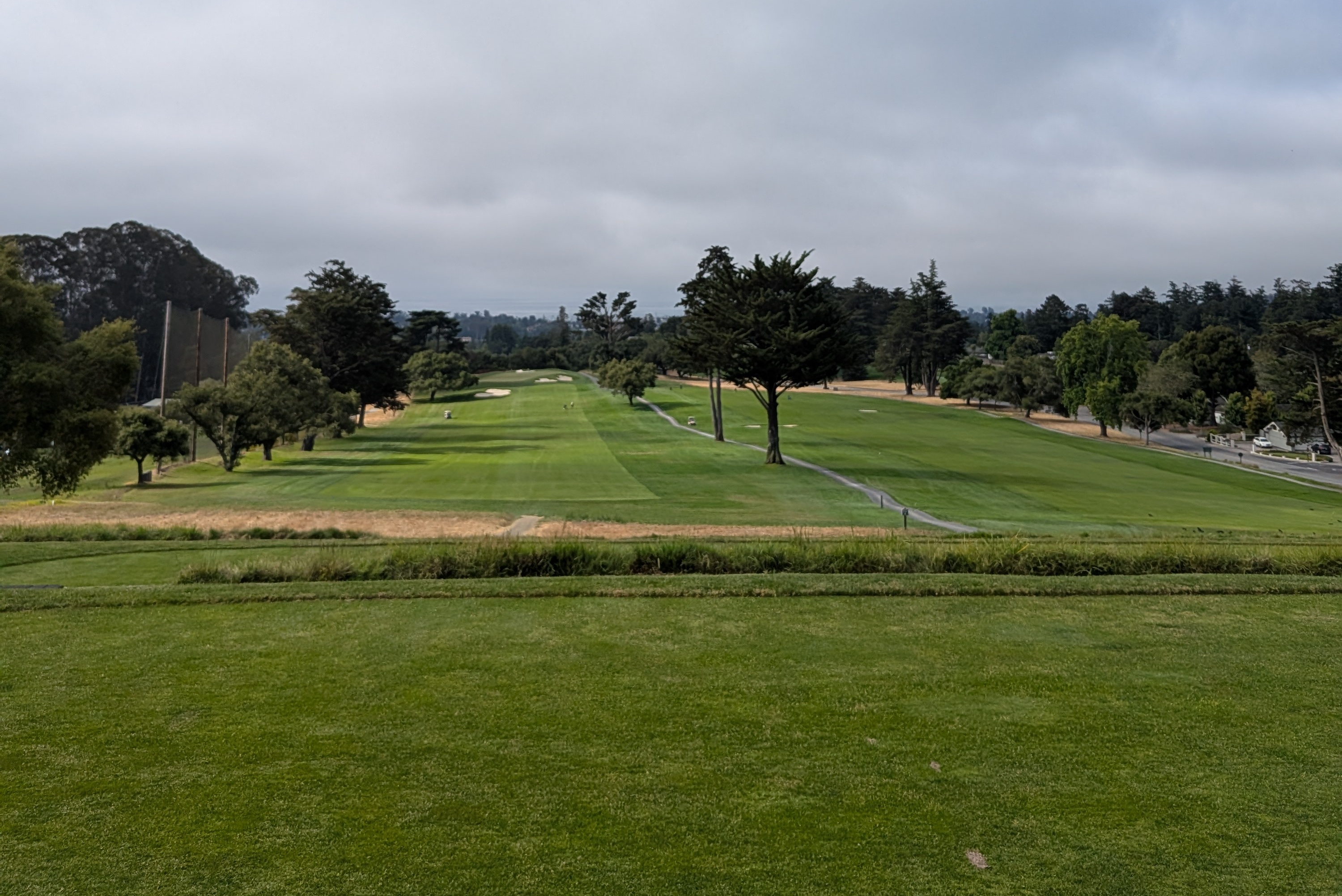
The only challenge here is the tightness of the hole, which is alleviated by the bailout area to the right (the ninth fairway) being open and accessible for a wiped fade or push.
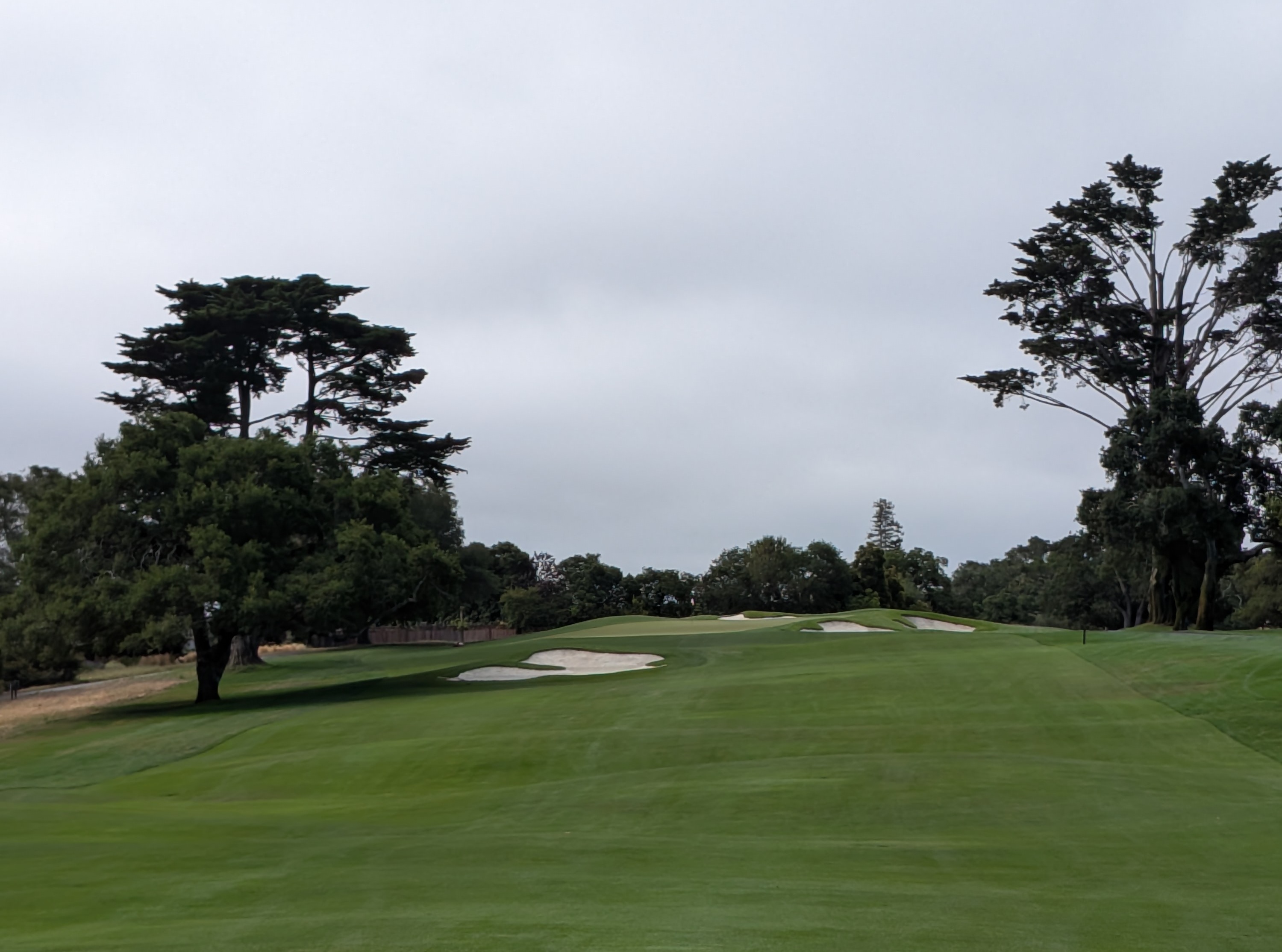
Once in the fairway, MacKenzie leaves for a classic look with two bunkers protecting the putting surface on the short right. This green mostly slopes back-to-front and right-to-left, making accessing pin positions behind the right bunkers a bit challenging. To enhance the challenge, a small catch bunker is located behind the green on the right to catch any pulled shots that are aimed at that back right section. Also notably, the bunker short-left of the green is just eye-candy, and sits some 65-yards short of the front edge of the green.
The second hole is another mid-length par-4, also played straight downhill, this time with a blind tee shot on a hole that turns ever so slightly to the right from the back tee box. The challenge on the tee shot is the blindness, as it is quite open from the tee, but the best line may be a bit tough to distinguish the first time around.
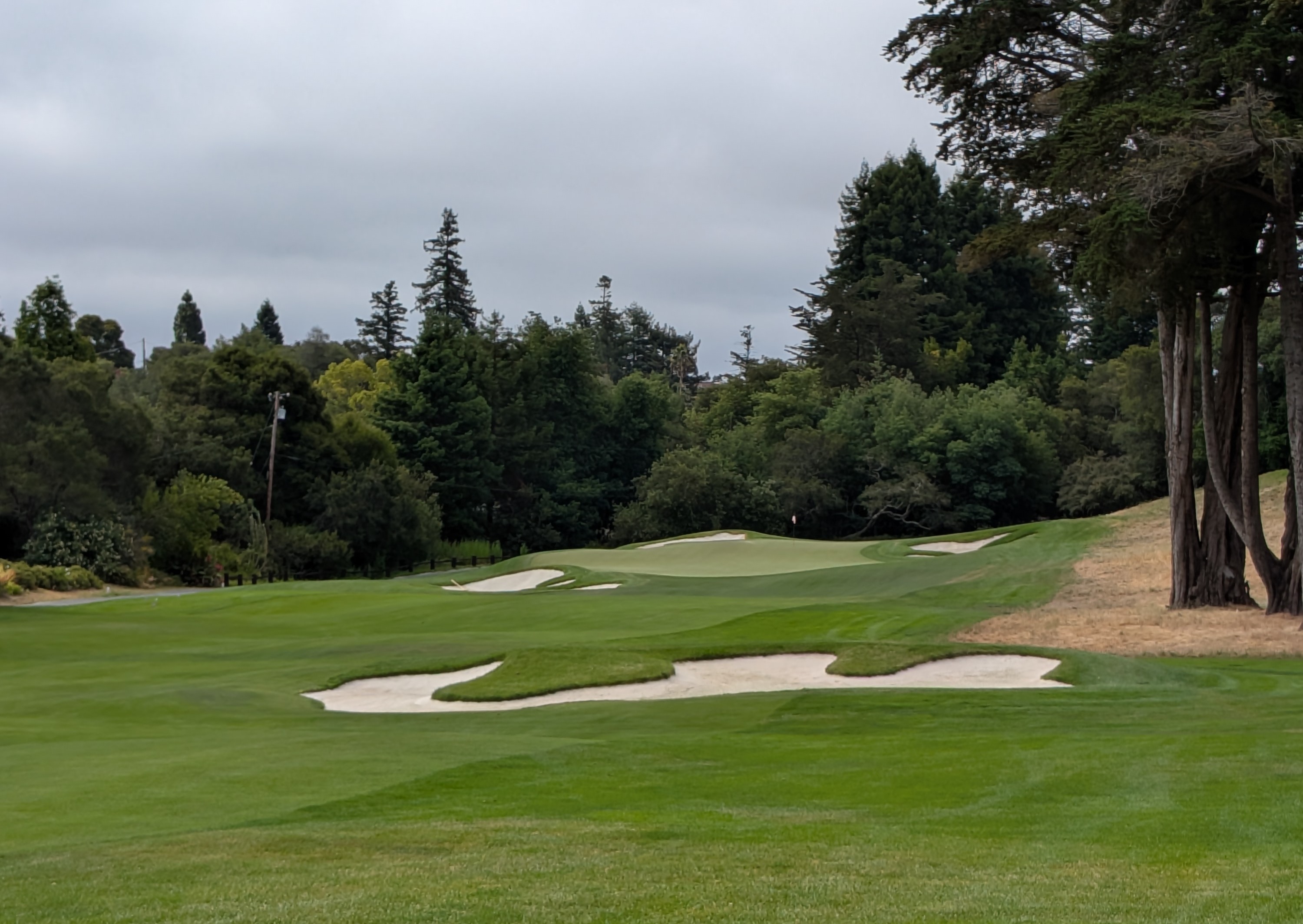
Once in the fairway, a reasonable approach remains to a heavily fortified green with trouble looming on all sides. The deep trouble is long and left, as there is no bunker to save a pulled shot from imminent out of bounds. The green also has significant undulation, which is a theme at Pasatiempo. No harm, no foul on the first two holes.
The third. Oh, the third. Perhaps the most famous hole at Pasatiempo is the forever long par-3 third, effectively a par-4 for most players, stretching up to 235 yards from the back tee playing straight uphill. If I remember correctly, I shot an adjusted yardage of 240, straight into the breeze. First things first, the hole may be one of the most beautiful inland par-3 holes ever constructed.
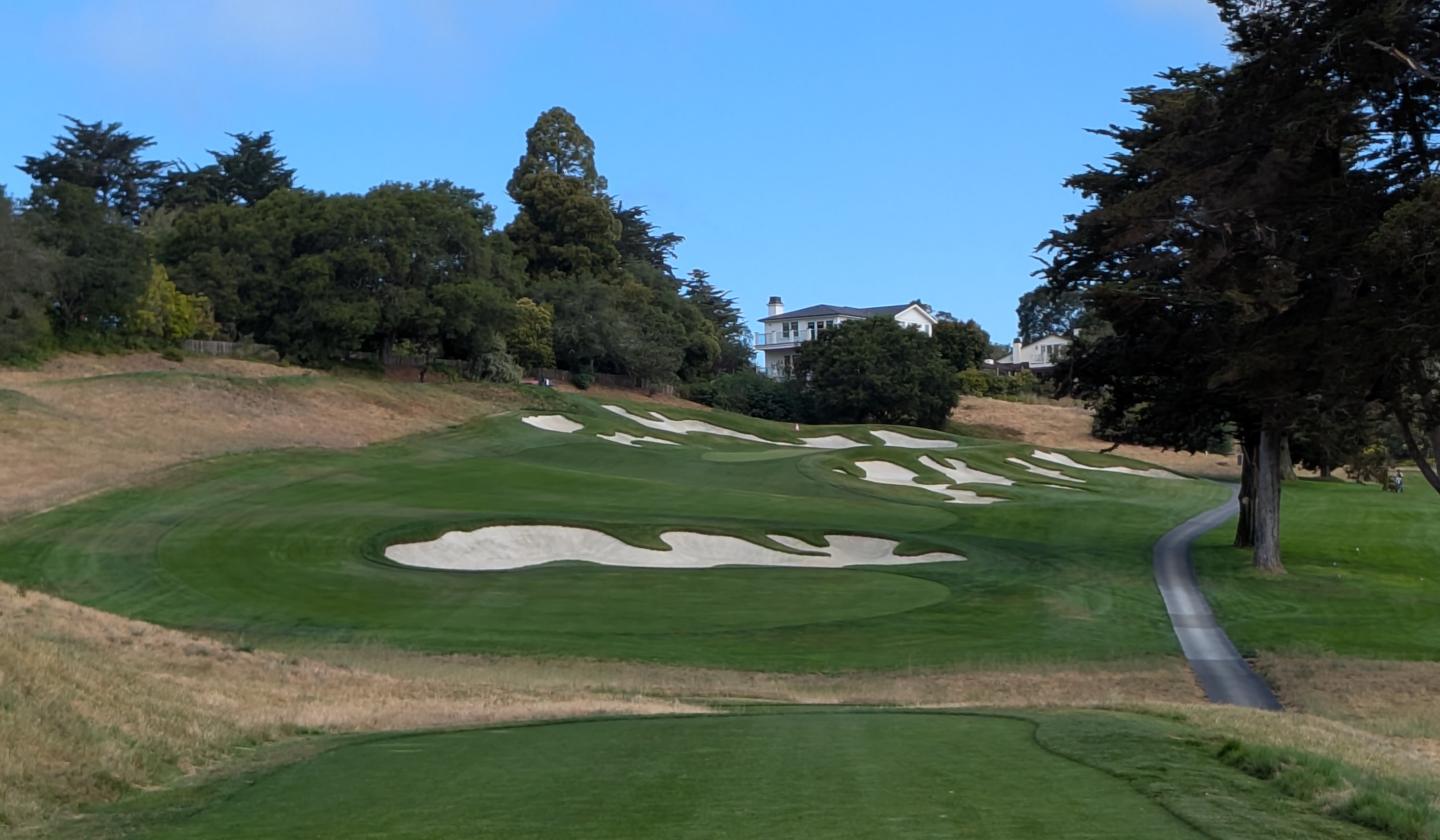
I thought this hole was very unfair for a few reasons. First off, its brutally long because of both yardage and slope. I am a fan of the par 4.5, but I’m not sure I am a fan of the par 3.5, generally. Normally, extremely long holes may play into a large green – not the third. The green is 18 yards wide at it’s widest and is so heavily fortified with deep, deep bunkers that any miss is a guaranteed demise. Contrast that with the eighth at Oakmont (another famous long par-3), which plays into a green 32 yards deep and 28 yards wide on the line of the back tees, with flat bailout room short and right.
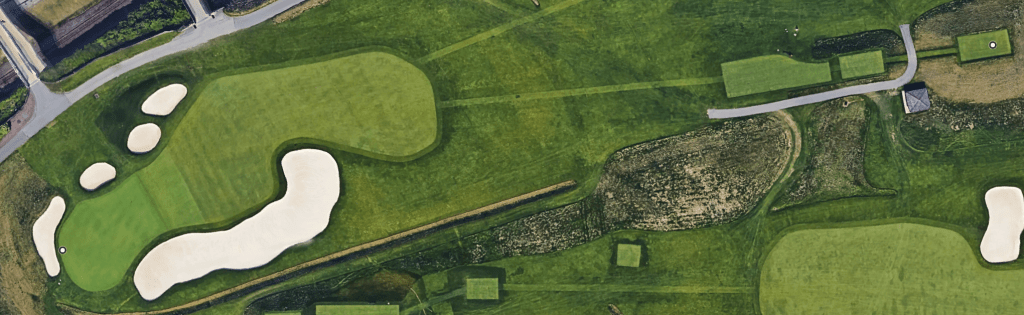
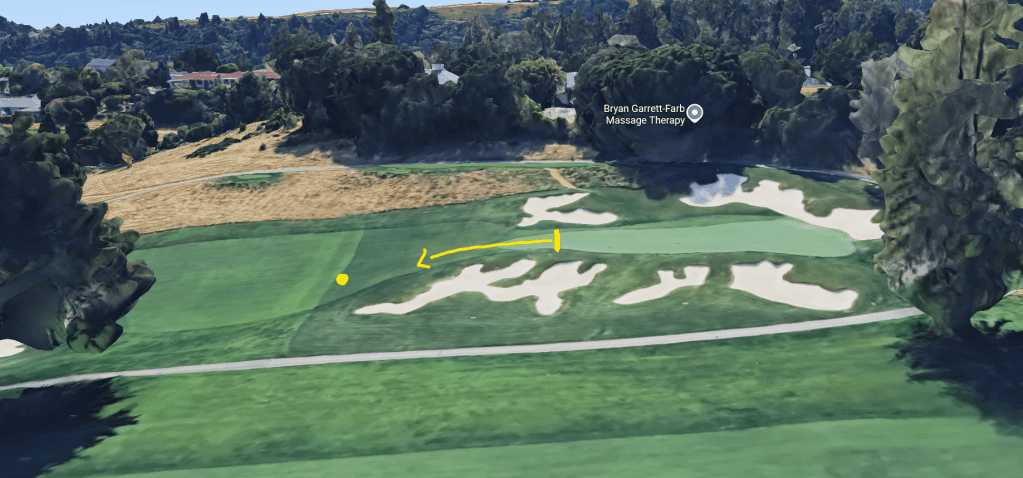
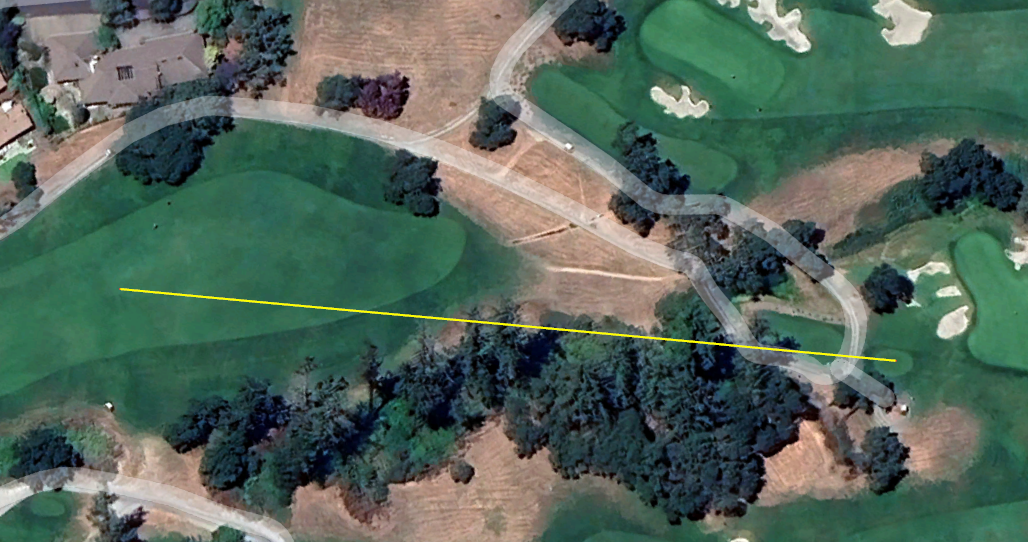
The green also has a severe false front, so much so that my chip from the fringe rolled down that false front, and left me nearly 50-yards into the green for my next shot. My playing partner, who hit his tee ball there, chipped the ball and hit the pin – the momentum of that shot repelled the ball back down that hill some 40-yards. Another playing partner was stuck on the hill to the left and also left with double bogey. This slope means, effectively, there’s no bailout room at the third that would leave a reasonable chip. Any ball short of this yellow line will feed all the way down the hill.
Our foursome had a combined handicap of around 10. The four of us took a combined 22 strokes (+10) on this hole, most of it due to the fact that the third is punishing well beyond what feels fair. Nobody hit a bad tee shot, considering we were all hitting fairway woods from effectively 250 yards. We were faced with a series of impossible shots, unfortunate bounces, and gimmicks that ran the score up.
I think, perhaps, it may be better to play the hole as a de-facto par-4, laying up into the “fairway,” pitching past the pin, and trying to two-putt. Given the choice again today, that is what I would do. This hole cannot be fun for 10-20 handicappers. If I had to guess, the third at Pasatiempo has the highest “Did Not Finish” rate of any hole in Northern California. The tenth at Riviera on slower greens would be an easier par-3 than the third at Pasatiempo on fast greens. A beautiful, absolute devil of a golf hole, and one I’m glad to not have to play again.
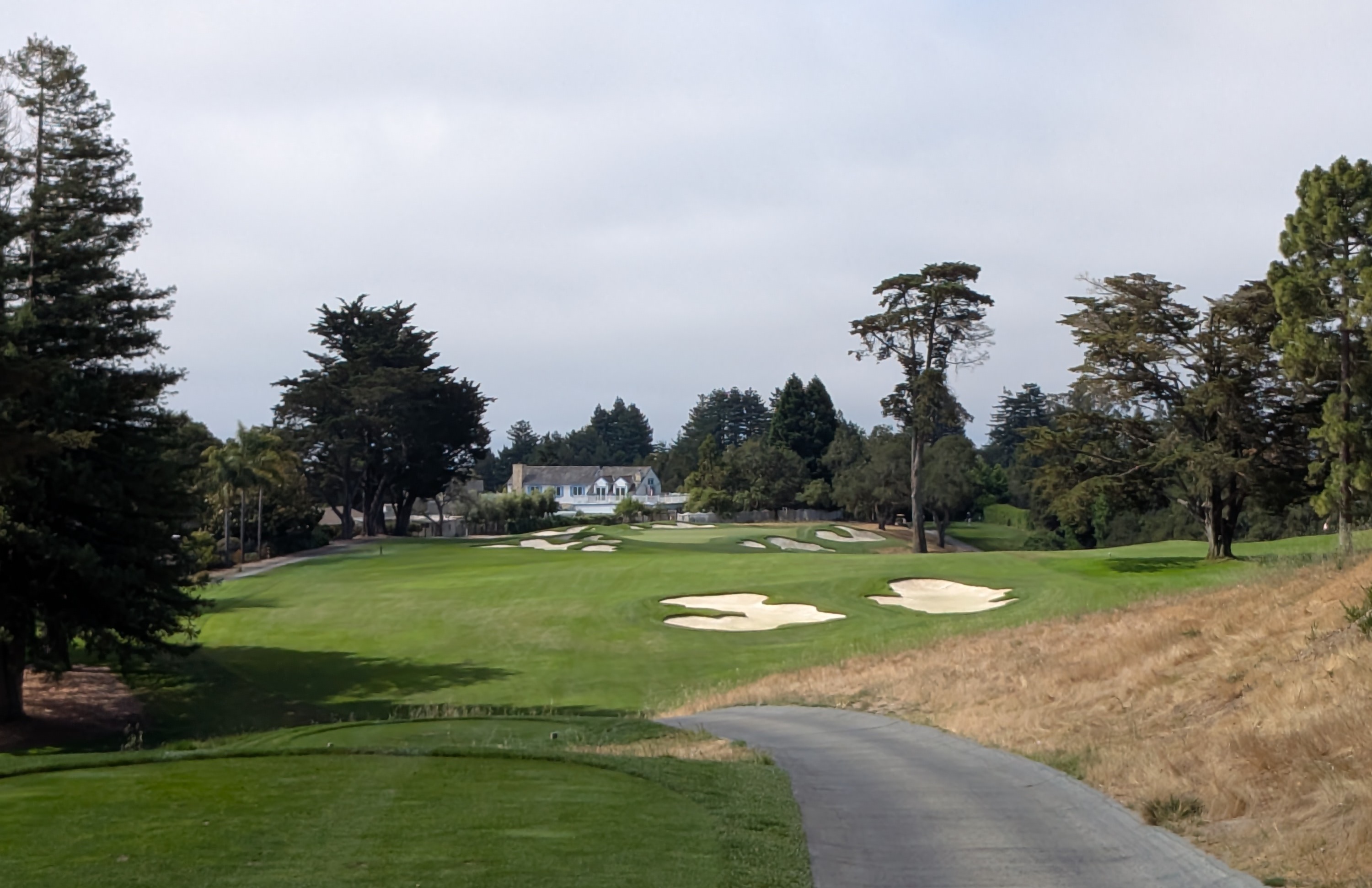
The first four holes at Pasatiempo, like many older courses, march directly out to the far end of the property, with the first, second, and fourth all flowing the same direction away from the clubhouse. Five through nine then work back towards the clubhouse. Only the third and seventh run opposite of those trends. The fourth is the last of the march to the end of the property, a short and fun par-4 with plenty of options to try to drive the ball close to the green or lay back a bit for a full wedge. The near fairway bunkers are in flyover territory, and the real hazard from the tee is the crossing bunker on the left, that eats up only the best drives.
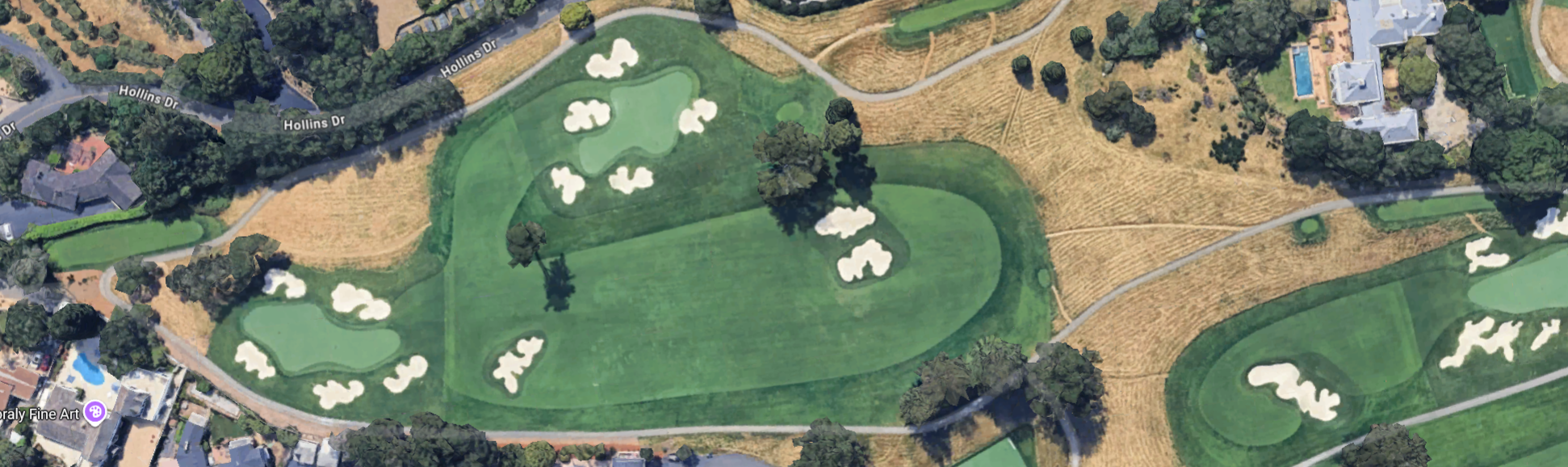
More aggressive players may play down the right side of the fairway, between the bunker and the last tree to attempt to bounce it close to the green. But, more conservative players can create a great angle into the green by placing the ball down the left with an iron or fairway wood. The green is long with a few tongues that can create a variety of different, interesting pin positions. The fourth is a fun, charming par-4.
The fifth turns back towards the clubhouse as a mid-length par-3. I will say, for a course as short as Pasatiempo, the par-3 holes are not short. The third was obviously very long, and the fifth and eighth required at least a mid iron into well protected greens. All three par-3 holes on the front (and four of the five par-3 holes at Pasatiempo) play in the exact same direction on the compass (NNW), which means that basically no thought was given to wind management as modern designers would do when constructing a new course. I still quite liked the fifth hole, with a large, well-protected, and quirky green, again abound with ridges and tongues which allow for spicy pin placements and tend to make big greens feel small.
The absolute weakest pair of holes on the course, and quite possibly, the weakest pair in the Top-100 are the sixth and seventh at Pasatiempo.
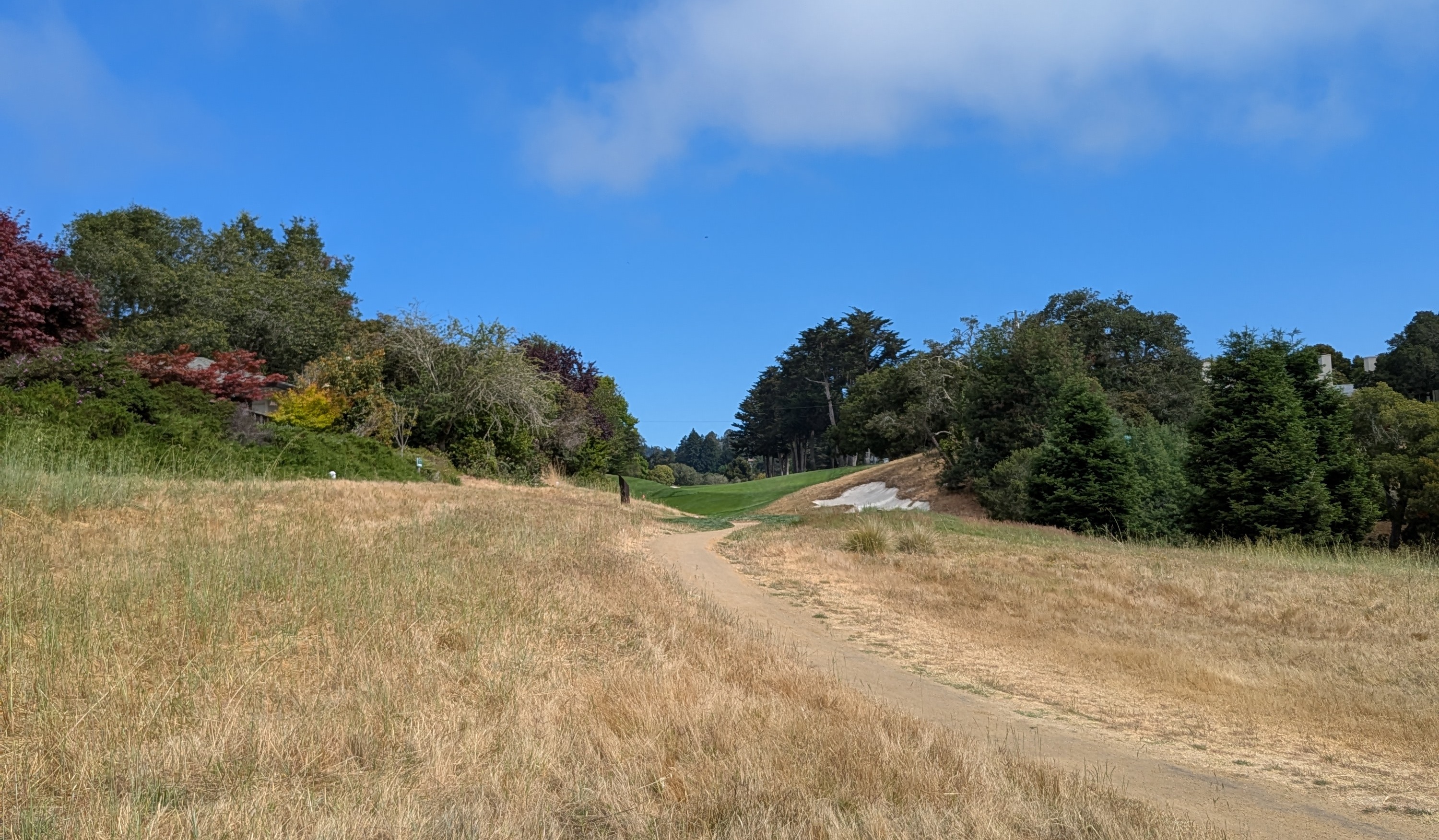
The sixth, a long, mostly unreachable par-5 plays uphill through a very narrow corridor that the sixth, seventh, and eighth holes play through. Not only did these holes feel very cramped to me, they honestly felt unsafe. I saw my ball, and many other folks playing these holes have their balls, careening off of trees, into other fairways, etc. If someone told me they got hit with a golf ball in Santa Cruz, and offered me money to guess where, I’d say between the sixth and eighth holes at Pasatiempo.
Let’s start with the poor design of the tee shot at the sixth. The hole plays significantly uphill from the tee, meaning a 300-yard tee shot might go 280-yards. At 280 yards, the fairway is 23 yards wide, and the entire hole from out of bounds left to tree line right is about 60 yards wide. Should a player choose to lay back with something less than driver, let’s say at 250 yards, the entire hole is 50 yards wide. Taking less than that does not avail a player to any more safety, but rather, similar narrowness and a very long second and third shot.
The tee shot is ill-conceived, but even if the fairway is found, the second shot must be played into an area that is around 30 yards between out-of-bounds and tree line. Again, exceptionally narrow. The industry standard is 65 yards at most courses. When folks have less than 65 yards of width, trees start getting hit regularly. When they have 30 yards, tree strikes and lost balls become a cost of doing business even for the best of players.
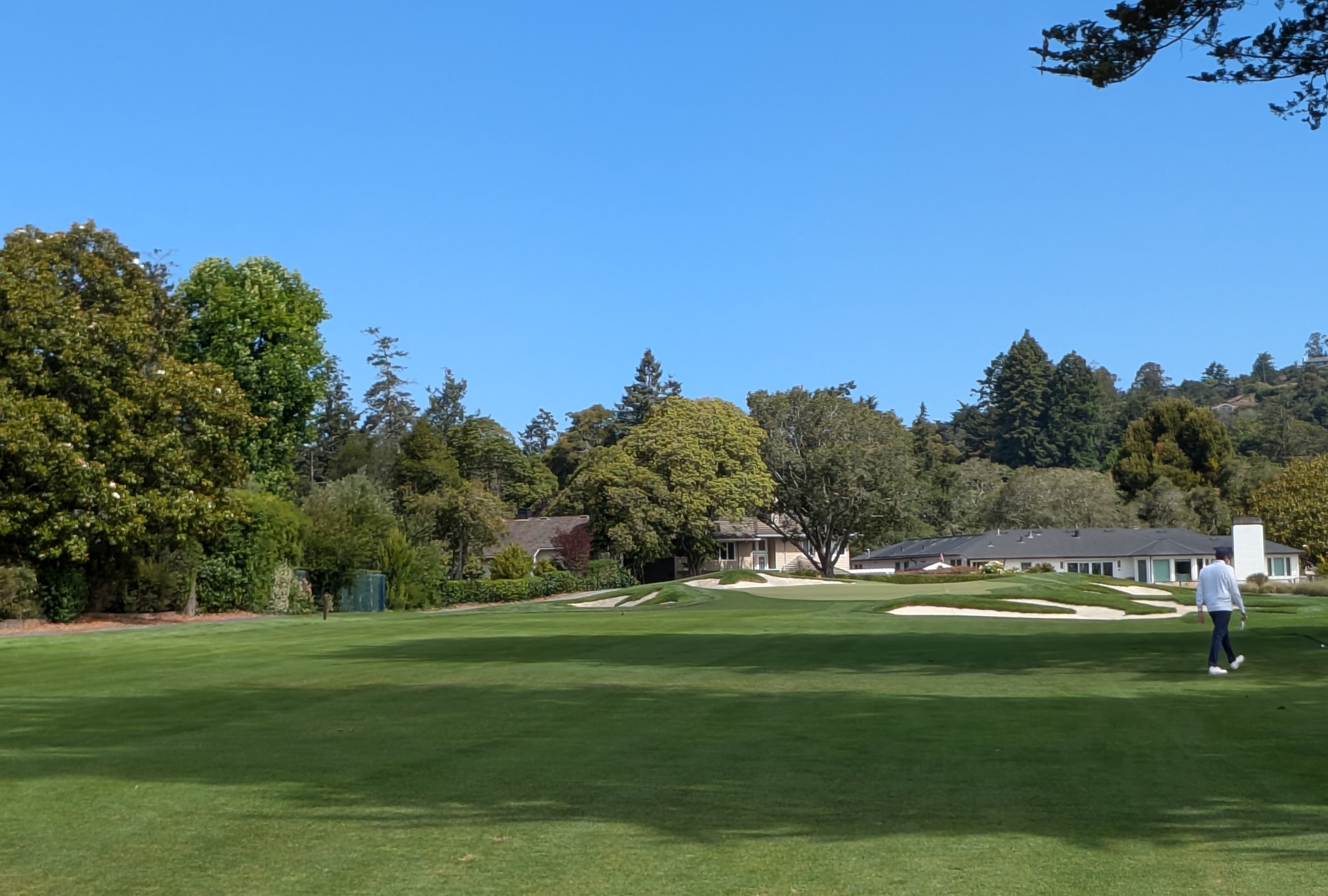
Lastly, to finish the sixth off, the green is likely one of the largest on the course, which also makes little sense, because its not reachable. 99% of players will be approaching this green with a wedge – a smaller green would make more sense here than one of the largest on the course.
This is where I started to think that Alister MacKenzie and I might not see the game of golf the same way. He liked this hole so much, he decided to live on it.
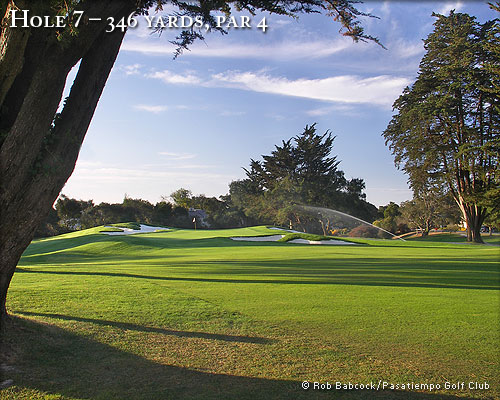
The seventh is, somehow, worse than the sixth. A mid-length par-4 that plays straight uphill through another incredible narrow chute. This time, the seventh gives you a 19-yard gap through the trees to play the tee shot through. The fairway widens to 30 or so yards in the landing zone, but the slightest push or pull will result in certain tree impact, and leave nearly 200 yards into the hole. The green is triangular with the long back side flowing straight into the greenside bunker. Words cannot accurately convey how little I enjoyed this hole: it is a safety hazard, there isn’t enough room for a golf hole here, a 19-yard chute is not enough to play a shot through, etc. etc. The issue is that the corridor that the sixth and seventh play through is exactly wide enough for one golf hole, yet it houses two holes.
Pasatiempo then begins to pick itself up off my proverbial mat. Through seven holes, I’ve found three of them deeply unenjoyable. Not a great start to a Top 100 experience. However, the strongest stretch of holes comes from the eighth through the thirteenth.
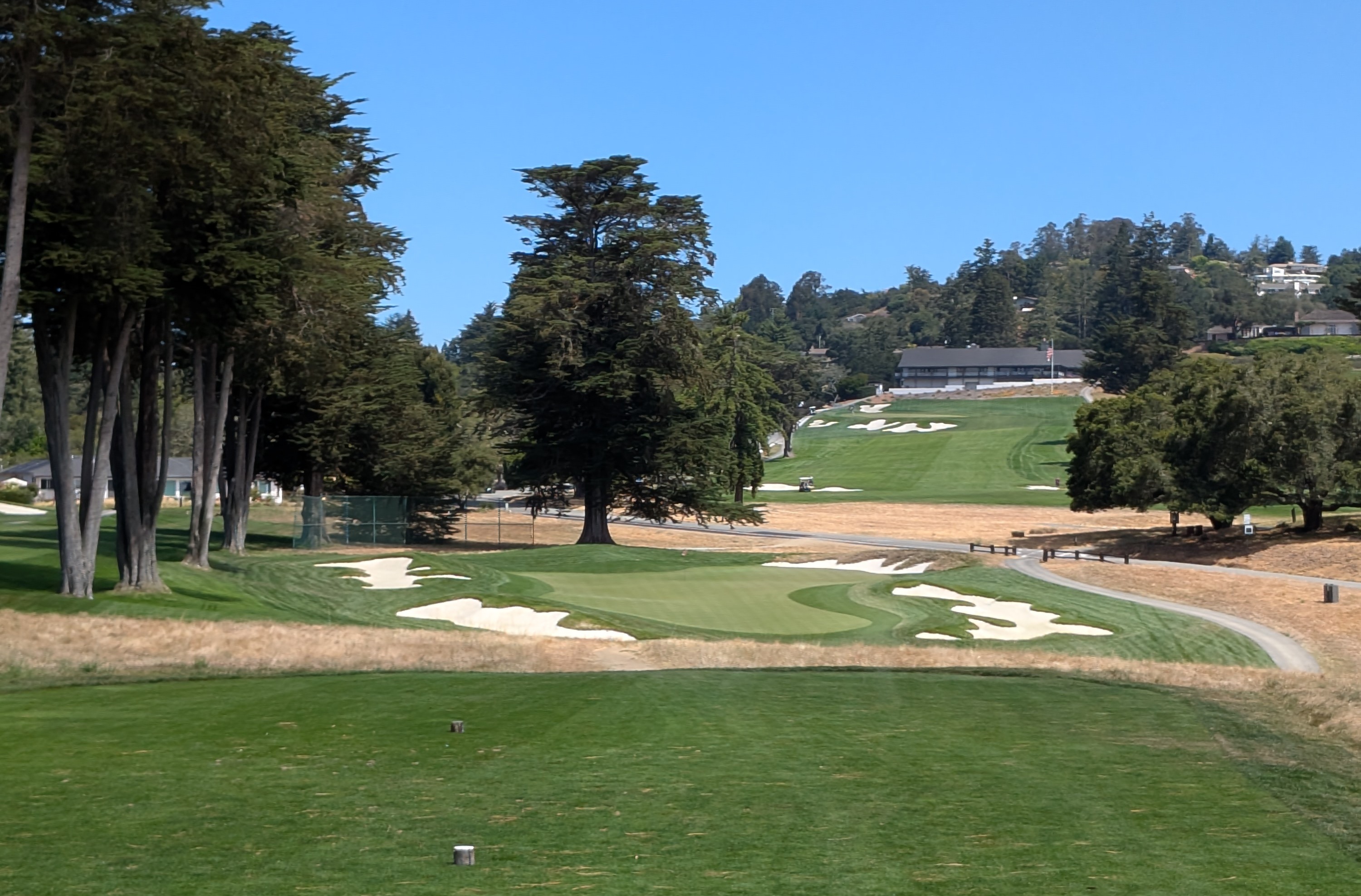
The eighth is the third par-3 hole, and the best on the front nine, playing from a slightly elevated tee to a wide but devilish green with fun undulation and slope from which a ball can be moved along the ground. MacKenzie clearly believed that a miss on approach should almost mean a guaranteed bunker, and I can’t say I disagree with that theory generally, so this is another heavily fortified green. The eighth green also happens to be right along the road that leads to the clubhouse, and is the first glimpse of Pasatiempo an arriving golfer gets to see. A great first sight indeed.
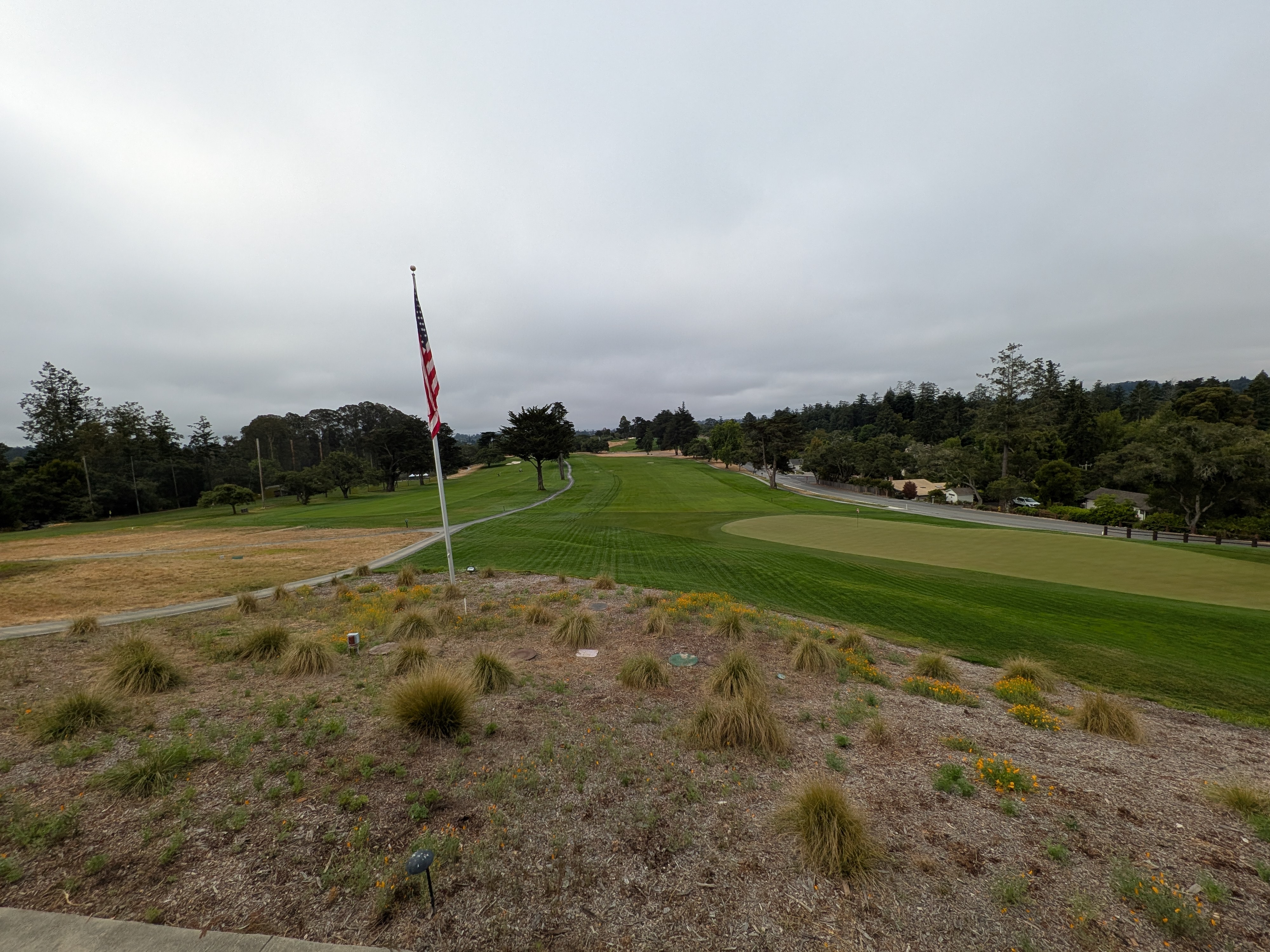
The ninth probably should be a really long par-4, but actually is a short par-5. I suspect the par-5 was decided mostly due to the uphill nature of the hole. There are very few good uphill holes in the world, but this is one of them. The par-5 plays essentially straight uphill into a green that is built like a large tabletop into the hillside in which the clubhouse sits. The green runs from short right to long left (the easier direction), and the slope behind the green can repel a lucky ball back onto the putting surface. The putting surface is the main defense here, as it, like the hill it sits on, is steeply sloped generally from right to left. This green is probably high in three-putt-ability when the green speeds are high.

Making the Turn
The tenth starts with a blind tee shot on this mid-length par-4 that winds down a hill to the left.
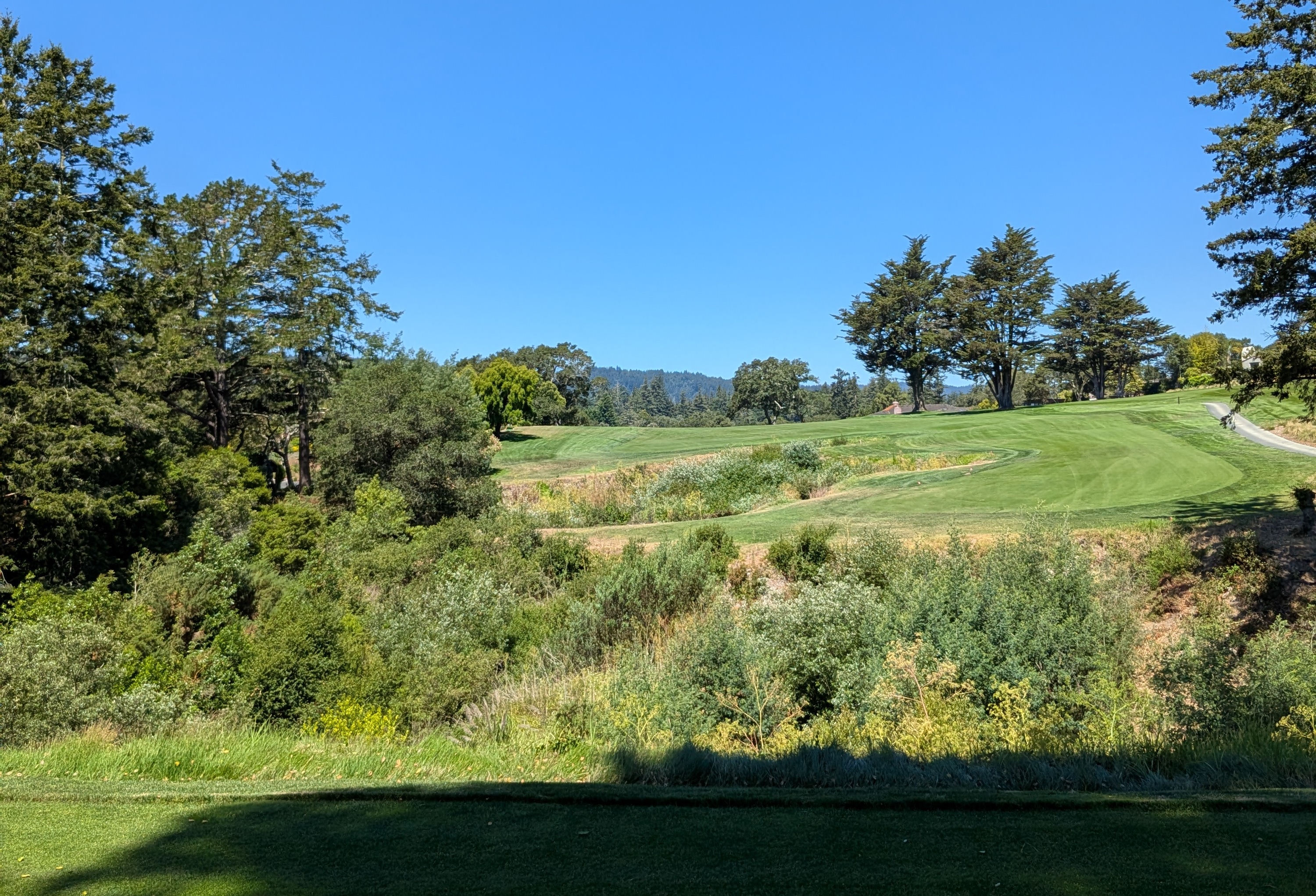
This view from the tee is a bit out of character at Pasatiempo, but the blindness is not, as the landing area is blind to the tee shot on the second, sixth, tenth, and sixteenth.
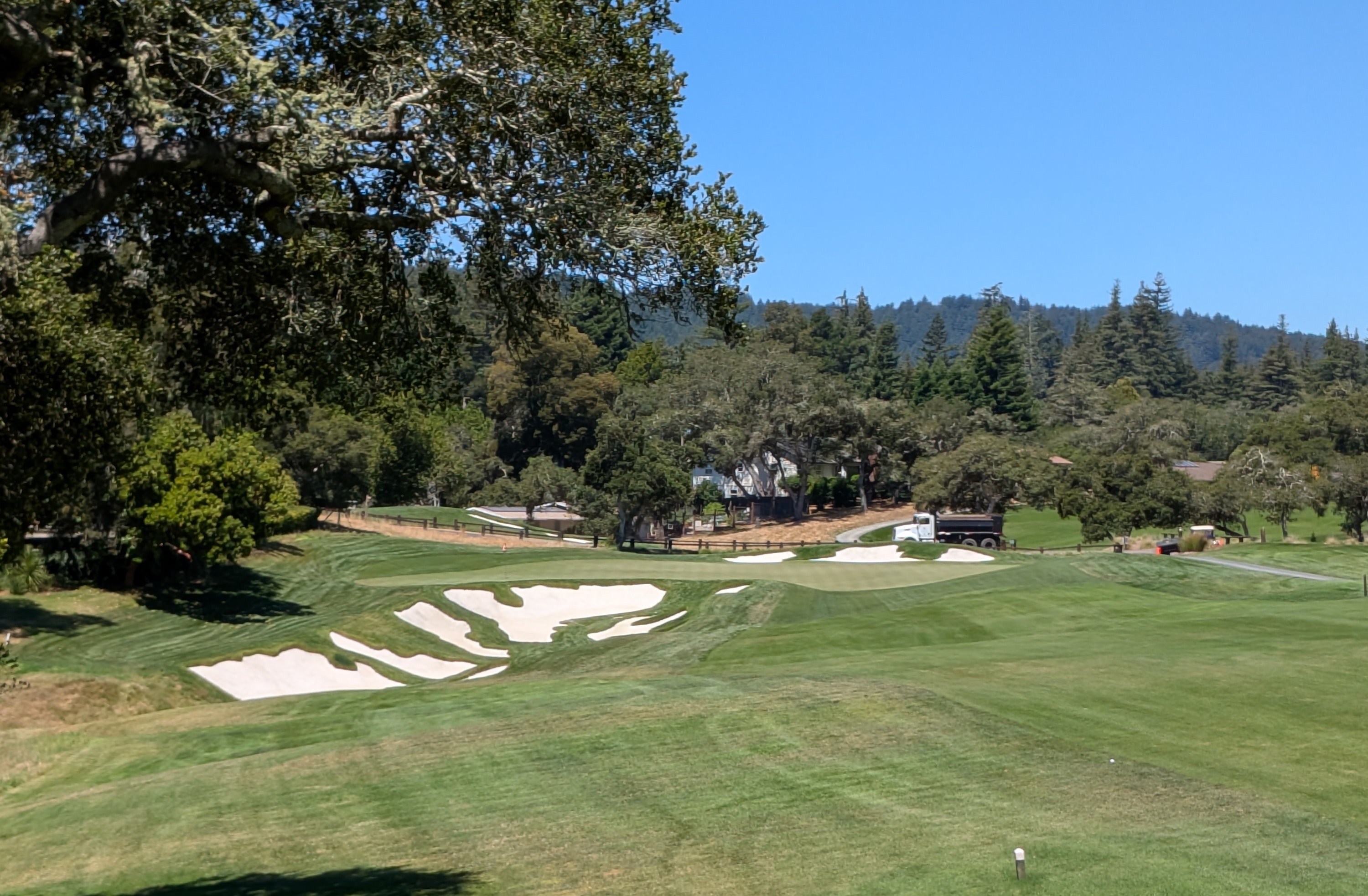
Once in the fairway, a devilish approach awaits to a very wide green that significantly narrows on the left. The expansive bunker in front of the green is one of the deepest greenside bunker arrays I have ever encountered. The difficulty of this hole is determined by the pin position. When the pin is right, I see this being a birdie opportunity, as the right side of the green is a bit defenseless, but for a bit of a false front. However, pins left are incredibly difficult, as the green is just 5 to 10 yards deep on that left tongue of the green.
I have to give credit to the recent renovation here too, as the bunkers look amazing, and the tongue on the left side of the green was extended to add this difficult pin position.
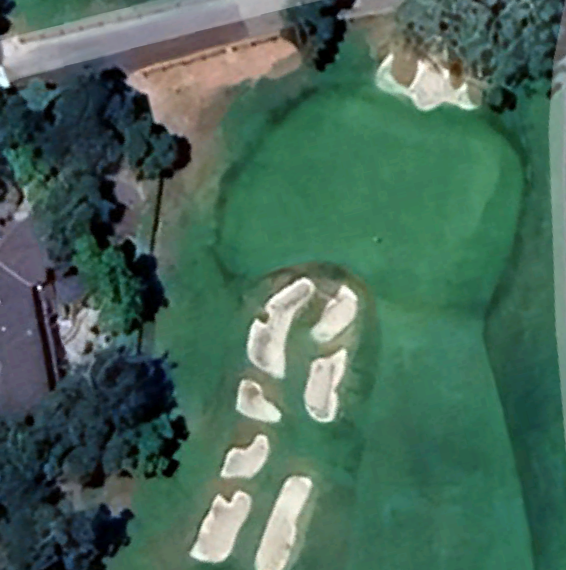
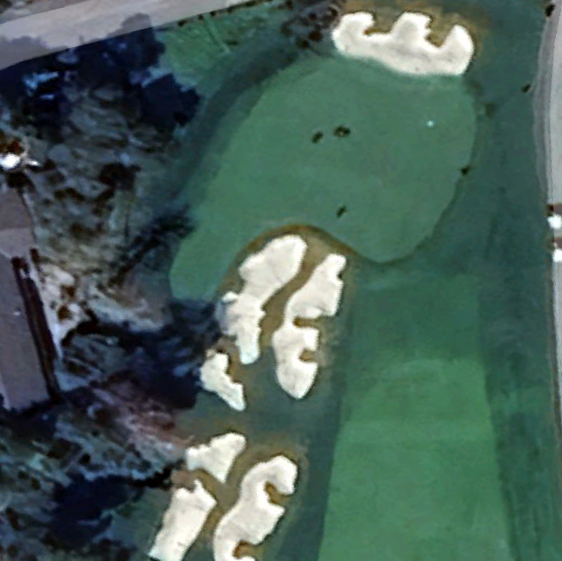
The eleventh and twelfth are a fun but difficult pair of holes that parallel each other as dueling par-4s. They are similar in length, but the eleventh plays up the significant hill, and the twelfth plays back down the same hill.
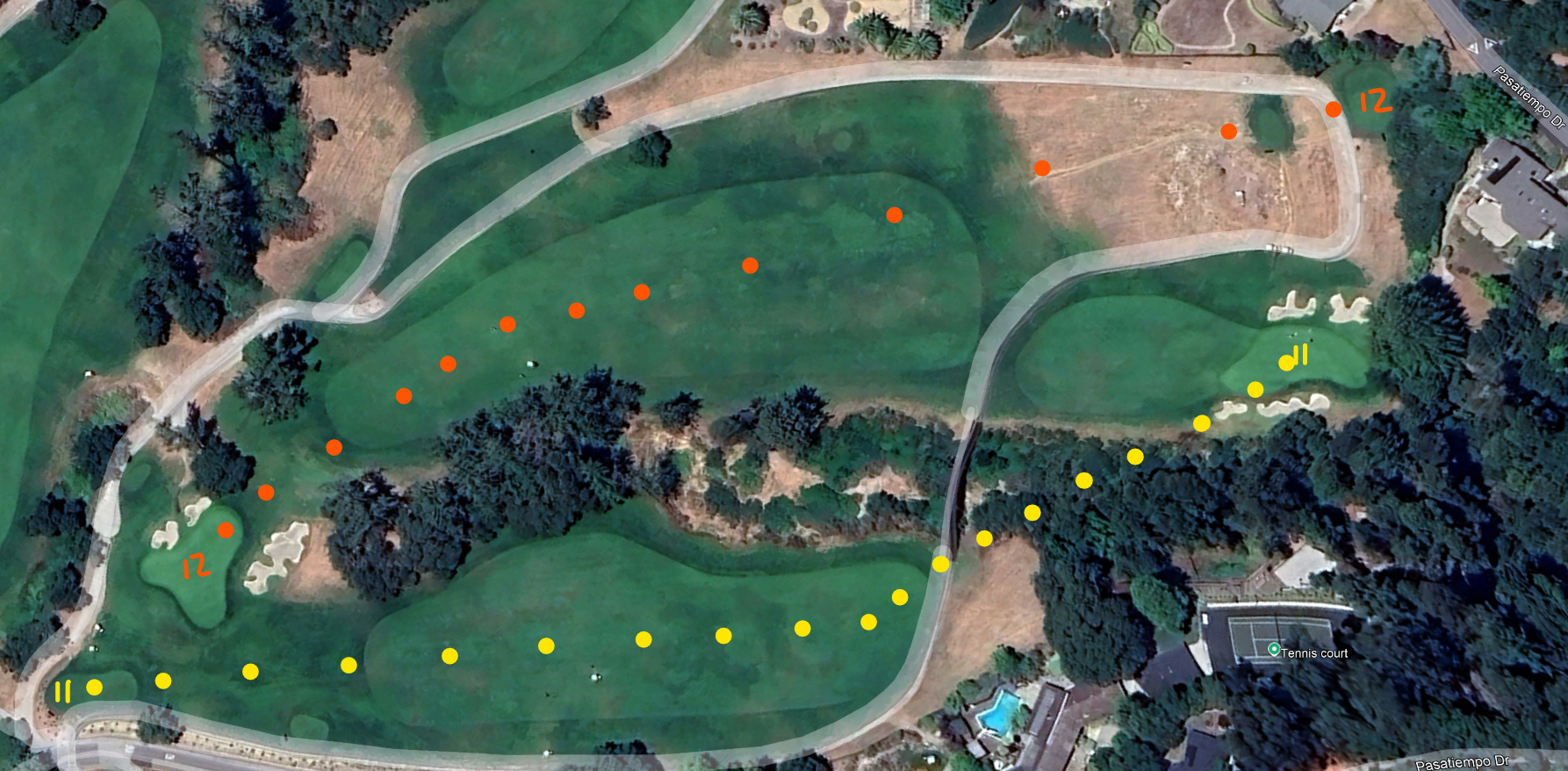
The eleventh, although uphill and longer, forces a layup short of the path and bridge, and leaves a long, uphill approach shot to a smaller green. This putting surface is perhaps the most aggressive and undulating putting surface at Pasatiempo, with multiple heavy undulating ridges that make getting up and down a creative adventure.
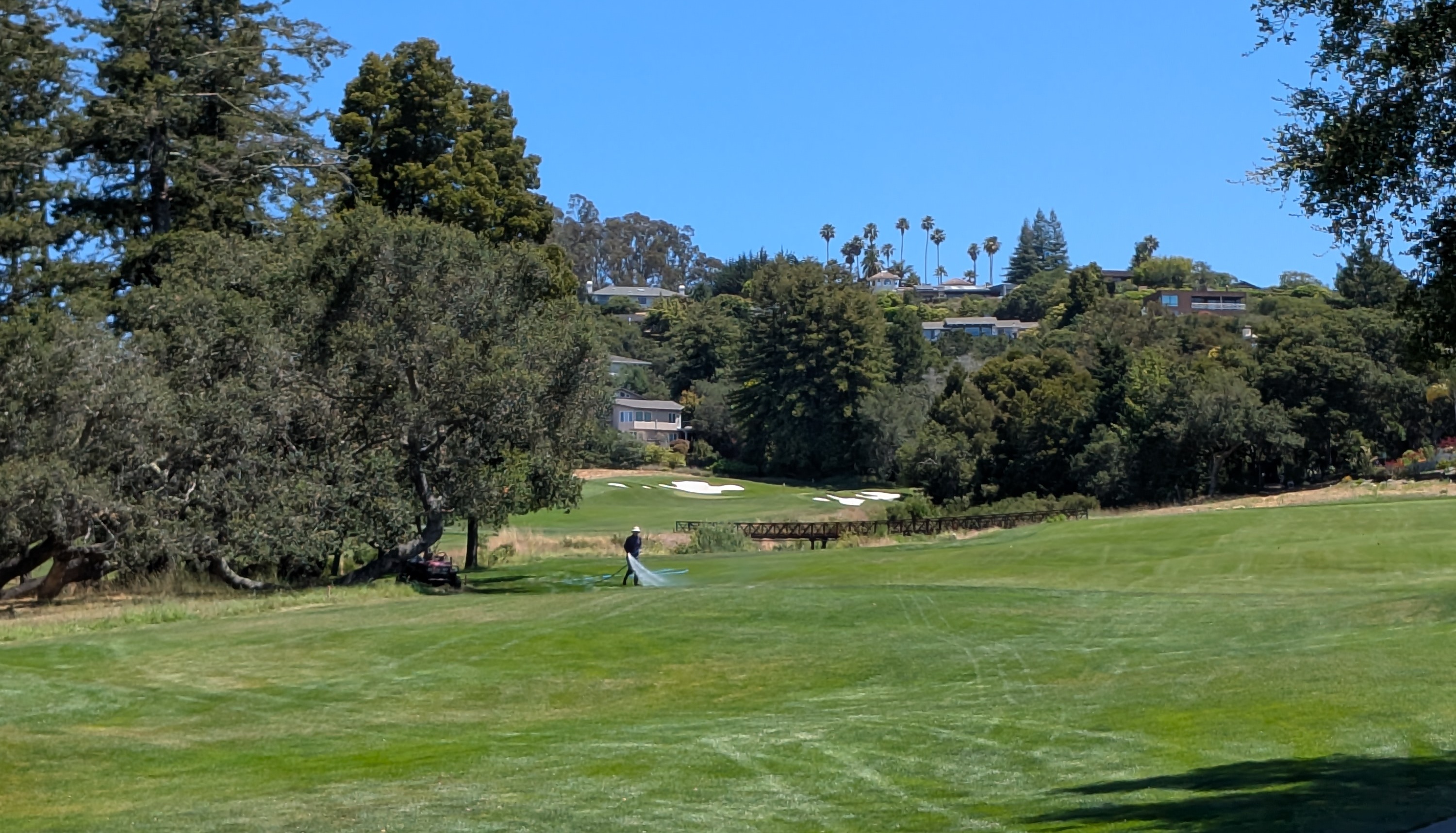
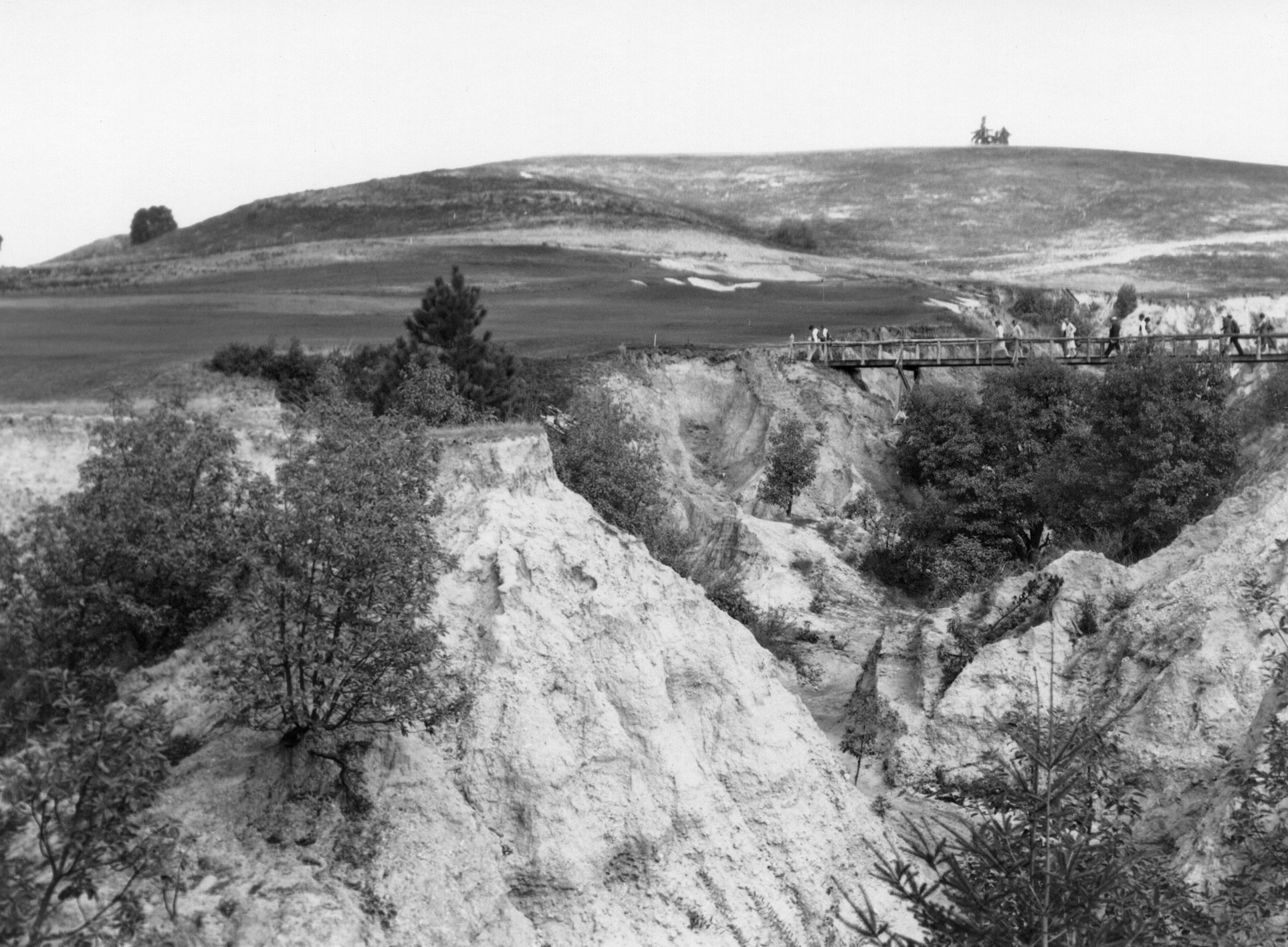
While the barranca and shot over it were picturesque, it was also a difficult shot, as I had laid a bit too far back. I found a historical picture of the eleventh on Pasatiempo’s website, and honestly, I think it would have been even better if they removed some of the vegetation from the barranca and make it look more like it did in the historical past.
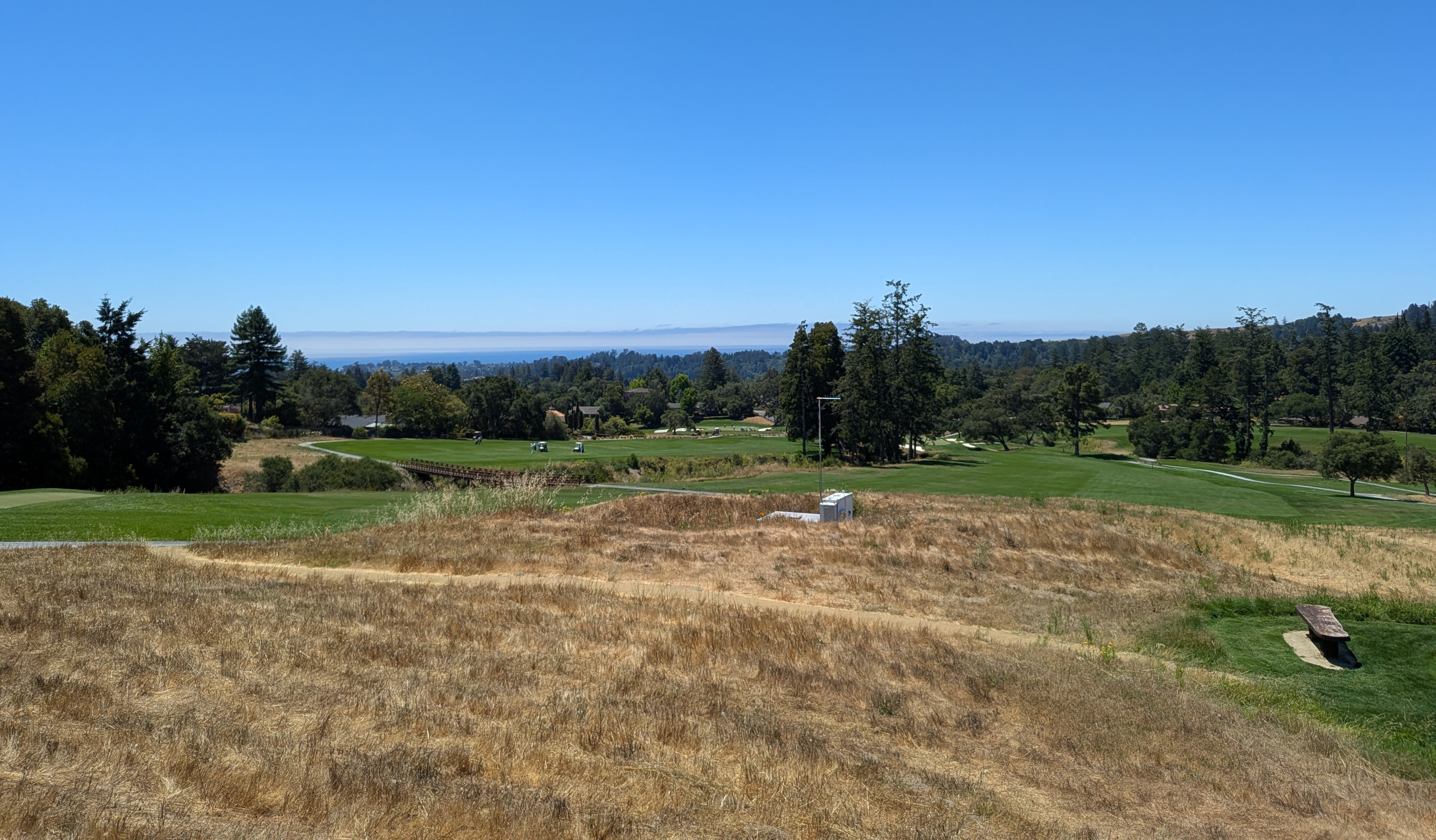
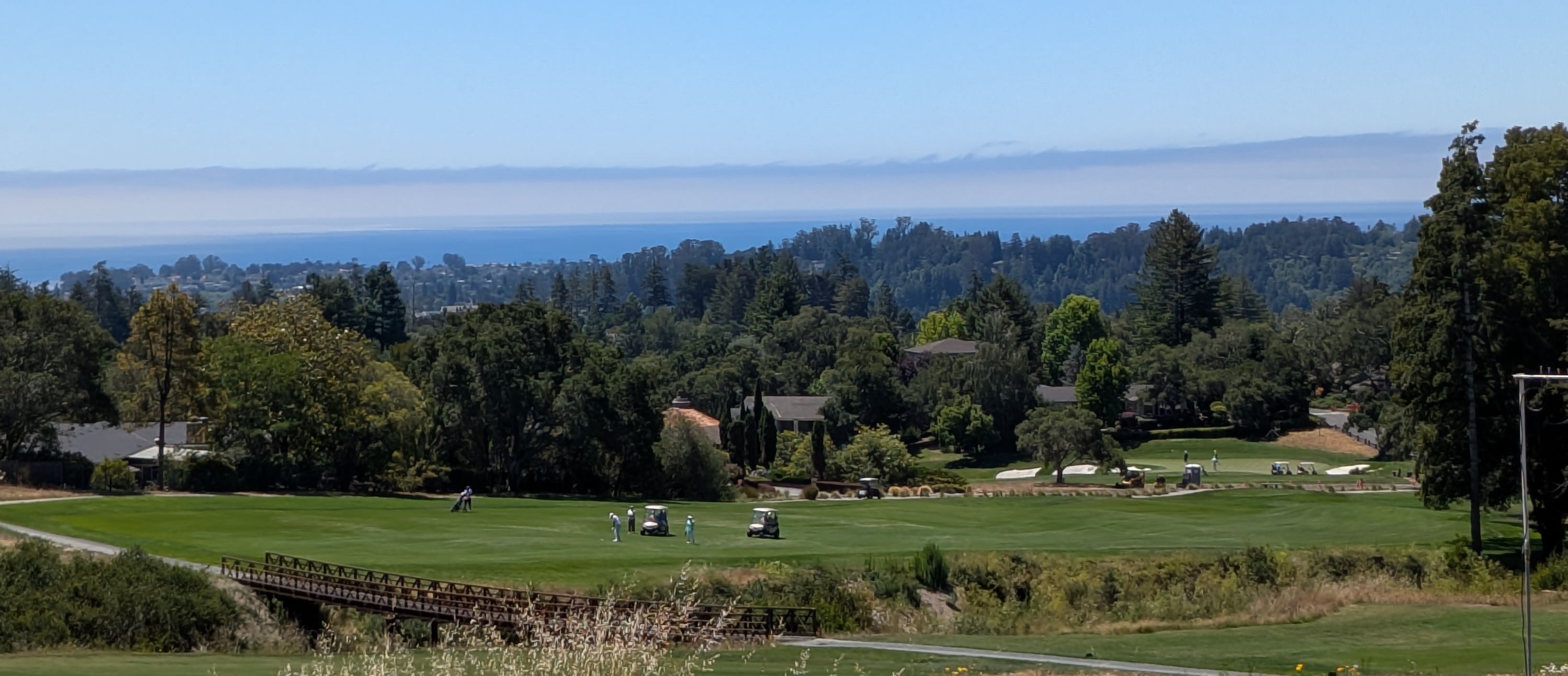
The twelfth tee, to my knowledge, provides the only view of the Pacific Ocean at Pasatiempo, looking straight over the city of Santa Cruz. The ocean is about 4 miles from the tee box, but if you look closely, you can see it peak through under the fog on the horizon.
The twelfth is a pretty straightforward par-4, complicated ever so slightly by the pinching of the fairway the closer you get. The green sits perched on the other side of a shallower bit of the barranca, and is elevated above the surrounds, which includes two bunkers left and one right.
The tee box on the thirteenth is a short walk to the last hole in this great stretch of holes from eight to thirteenth, and the stretch finishes with a par-5 that is moderately reachable for two good shots. The tee shot is among the most open at Pasatiempo (80+ yards between OB and tree line) which encourages a player to give a good rip to try to get home in 2.
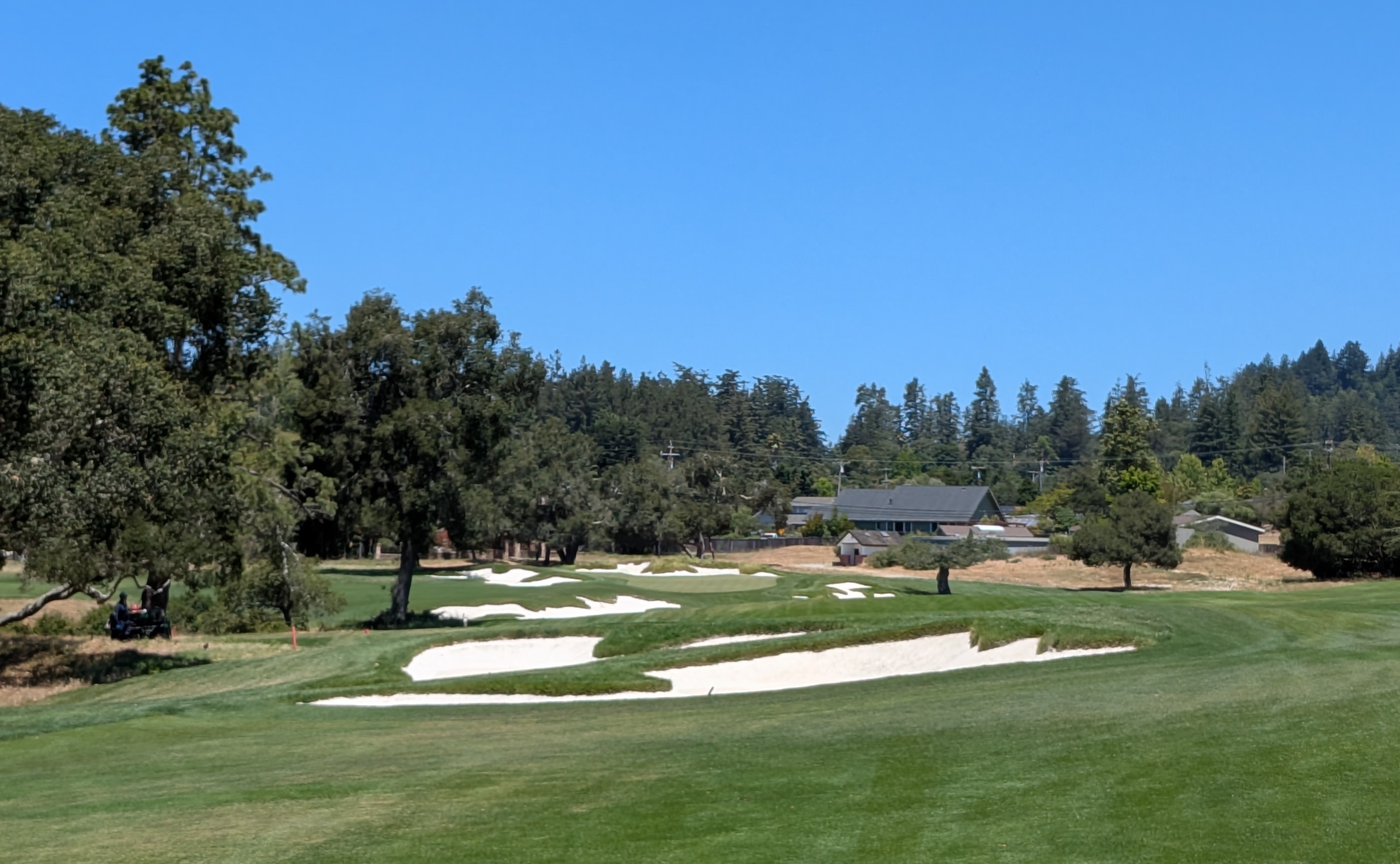
Once in the fairway, MacKenzie uses a cascade of bunkers to create deception and uncertainty. The green is very heavily fortified, with five large bunkers surrounding the odd shaped green. Particularly, players that go for the green will be required to carry it all the way there, as three bunkers block any ability to chase the ball onto the green. Going for it or laying up to wedge distance are both viable options, and the hole should yield a birdie opportunity to most rounds.
I have praised this stretch of holes, and rightfully so, because the eighth through the thirteenth are as good as any stretch of inland holes in golf. They contained less gimmicks (but for the eleventh green) than Pasatiempo as a whole. Unfortunately, I cannot say the same about the fourteenth through the sixteenth. Sixteen is a famous hole at Pasatiempo, perhaps the signature hole. Alister Mackenzie said it’s “the best two-shot hole I know.”
___________________________
The fourteenth begins this stretch. An otherwise pedestrian mid-length par-4 plays through (you heard that right, directly through) a barranca.
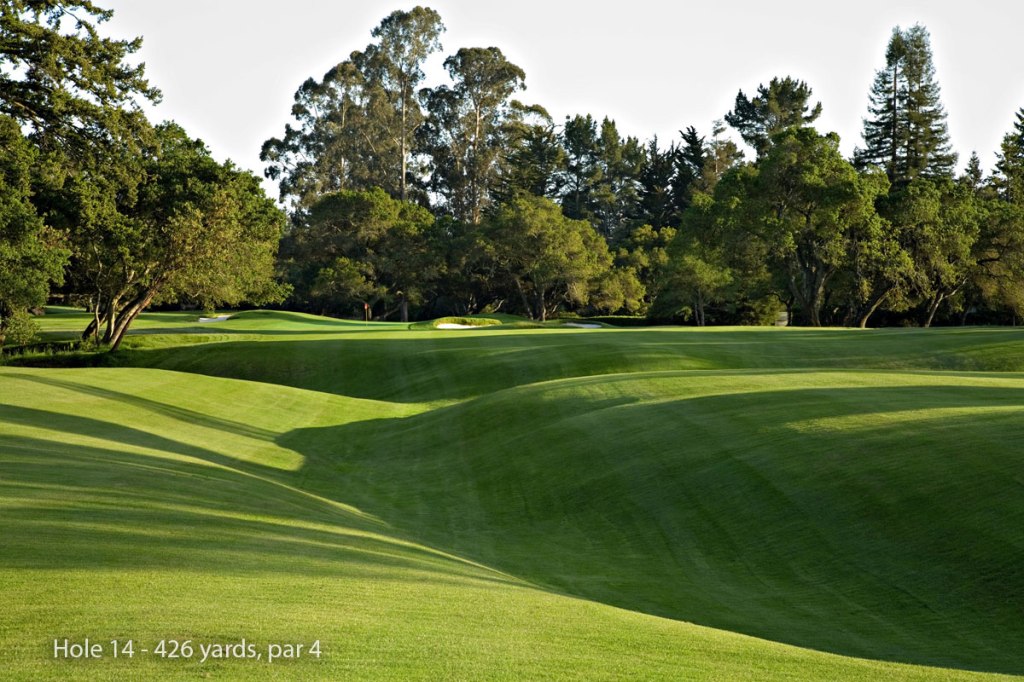
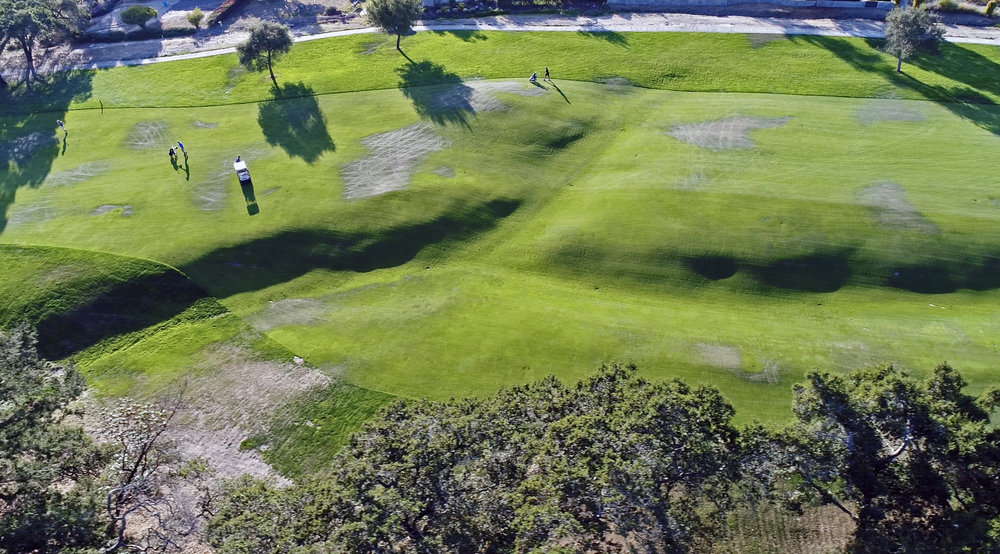
I know this barranca has its defenders, most notably The Fried Egg’s argument that the barranca introduces meaningful decision-making and preserves MacKenzie’s original character. Theoretically, I agree that centerline hazards, when executed well, can add tremendous strategic value. They force choices, reward angles, and can create tension without relying on length alone. The issue is not the idea of a barranca—it’s the placement, scale, and proportionality of it relative to the shot it influences.
The barranca sits directly in the middle of the fairway, not as a diagonal, not as a hazard that rewards a particular angle. It simply occupies a significant portion of the fairway of the hole. It doesn’t reward a bold line or punish a timid one; instead, it introduces a binary outcome that depends almost entirely on carry distance rather than intention.
For a player struggling with the tee shot as I was on this day, to finally hit a good shot down the center of an otherwise open fairway, only to find myself with a worse punishment than a bad miss. The punishment feels arbitrary. A well-struck ball that stays on line but lands a few yards short of clearing the whole thing doesn’t find a subtle depression or a run-of-the mill challenging lie; it disappears eight feet down into a chasm. The fourteenth at Pasatiempo is not an example of a successful centerline hazard. It is an example of a concept that is theoretically appealing yet flawed in practical execution.
“The aggressive and ideal line off the tee is up the far left edge of the fairway and close to the ravine that guards the left. This requires a near 300 yard carry from the back tee, but it provides the ideal angle to approach the narrow and well-protected green. . . MacKenzie gave the less adventurous a bypass for both the swale and the greenside bunkers. While players who choose to avoid the swale are unlikely to get home in two, they are allowed a safe and hazard free route to the green.”
Lets talk about these options:
- Carry the ball 290+ yards – Maybe 1-2% of golfers worldwide have this ability, maybe less. Is this really a strategic option? Was anyone in MacKenzie’s day carrying the ball 303 yards down the left side? I’m struggling to understand how that is an option for anything but a professional or college golfer.
- Hit less than driver, perhaps fairway wood or an iron, into an area of the fairway that is 27 yards wide (estimate no more than a 50/50 success rate on this layup option due to the narrowness, and have 170-190 yards into the green.
- Hit a mid-iron off the tee around 170 yards behind the barranca, and have 250-yards into the hole, on a par-4.
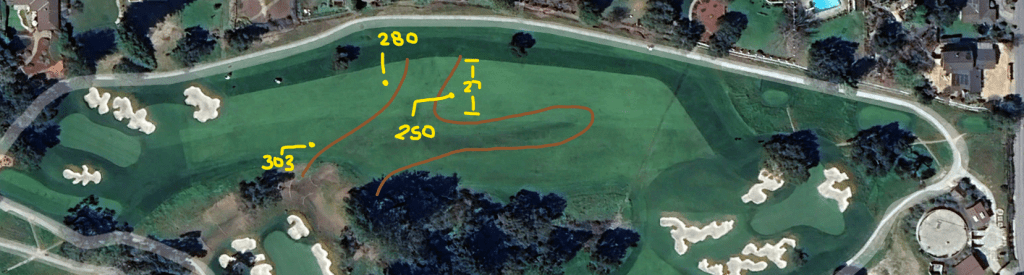
Nobody that understands course strategy is choosing either of those last two options, because the penalty of being in the barranca is less than the penalty of laying up, once adjusted for the fact that the layup from the tee is narrow and the approach shot is longer. The Fried Egg argues that MacKenzie offered a “safe” route around both the barranca and the greenside bunkers. But “safe” is not meaningful if it produces a higher expected score than intentionally hitting into the hazard.
So, if you understand course strategy, your options are binary: you either carry the barranca or you don’t. That isn’t good design; it is, in fact, the opposite. In practice, it functions as a forced carry disguised as strategy, removing width, removing decision-making, and imposing a disproportionate penalty at precisely the wrong moment in the round.
___________________________
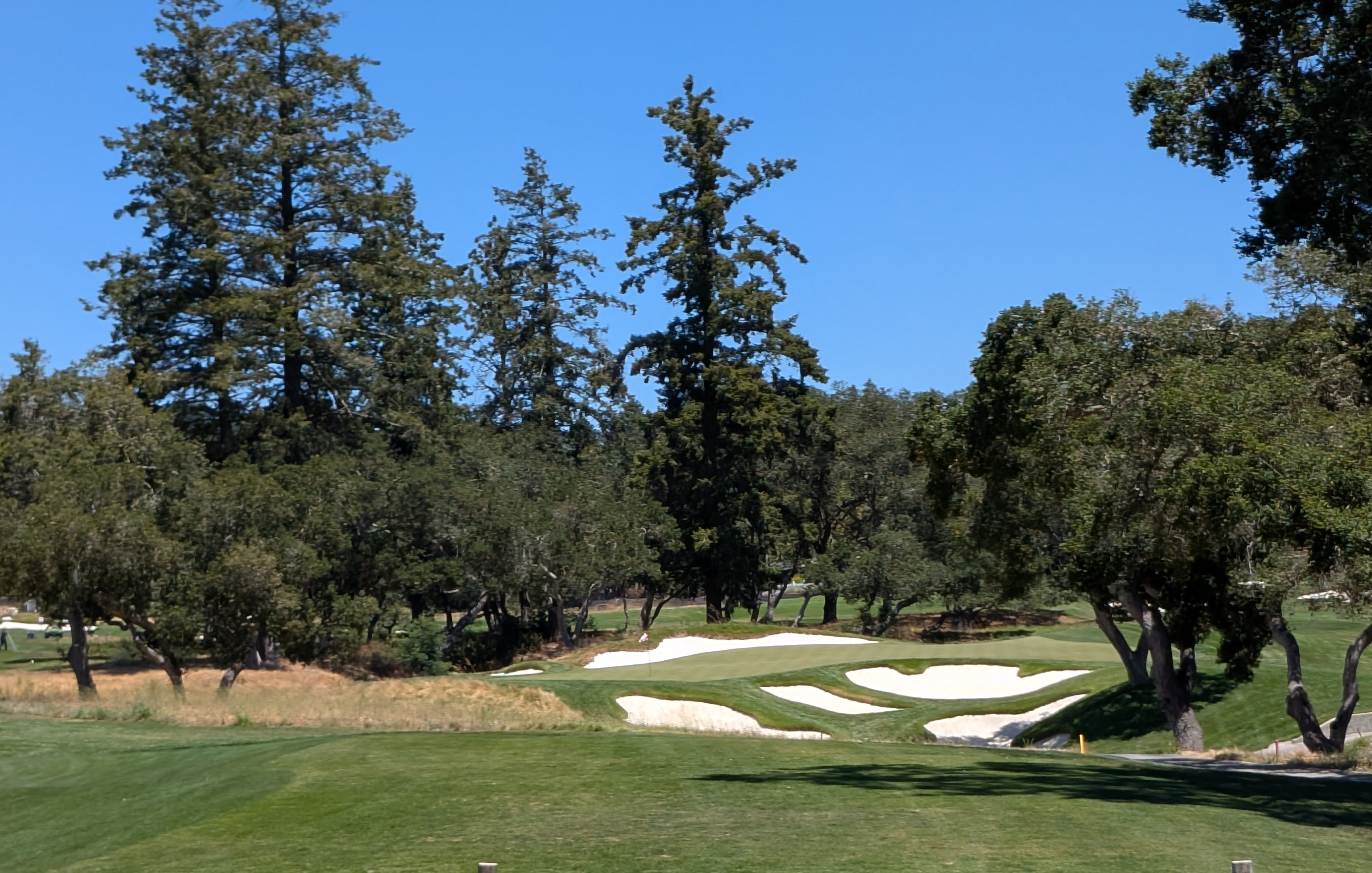
I have nothing bad to say about the fifteenth, the shortest par-3 on the course with a large enough green and plenty of bunker trouble should you miss the green. I love the look of the fifteenth and have nothing against it, other than it being sandwiched between two bad golf holes.
___________________________
Which leads me to the sixteenth hole. I expect to get heavy disagreement here, which is fine. These are solely my opinions.
The sixteenth, in my view, is the weakest hole in the Top 100 courses in the U.S.
Let’s break that down.
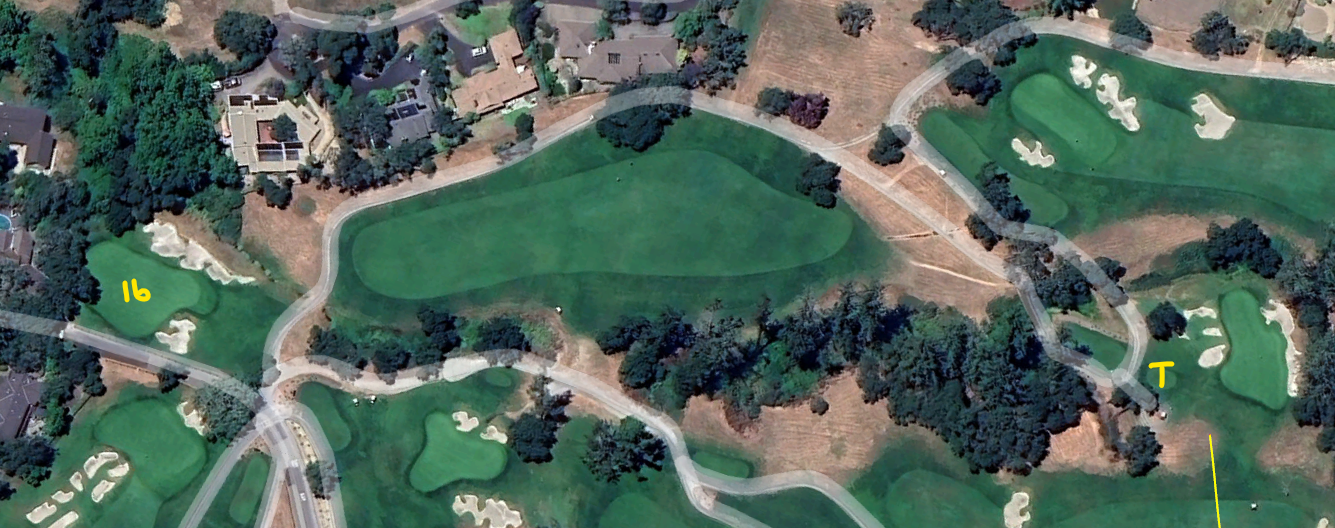
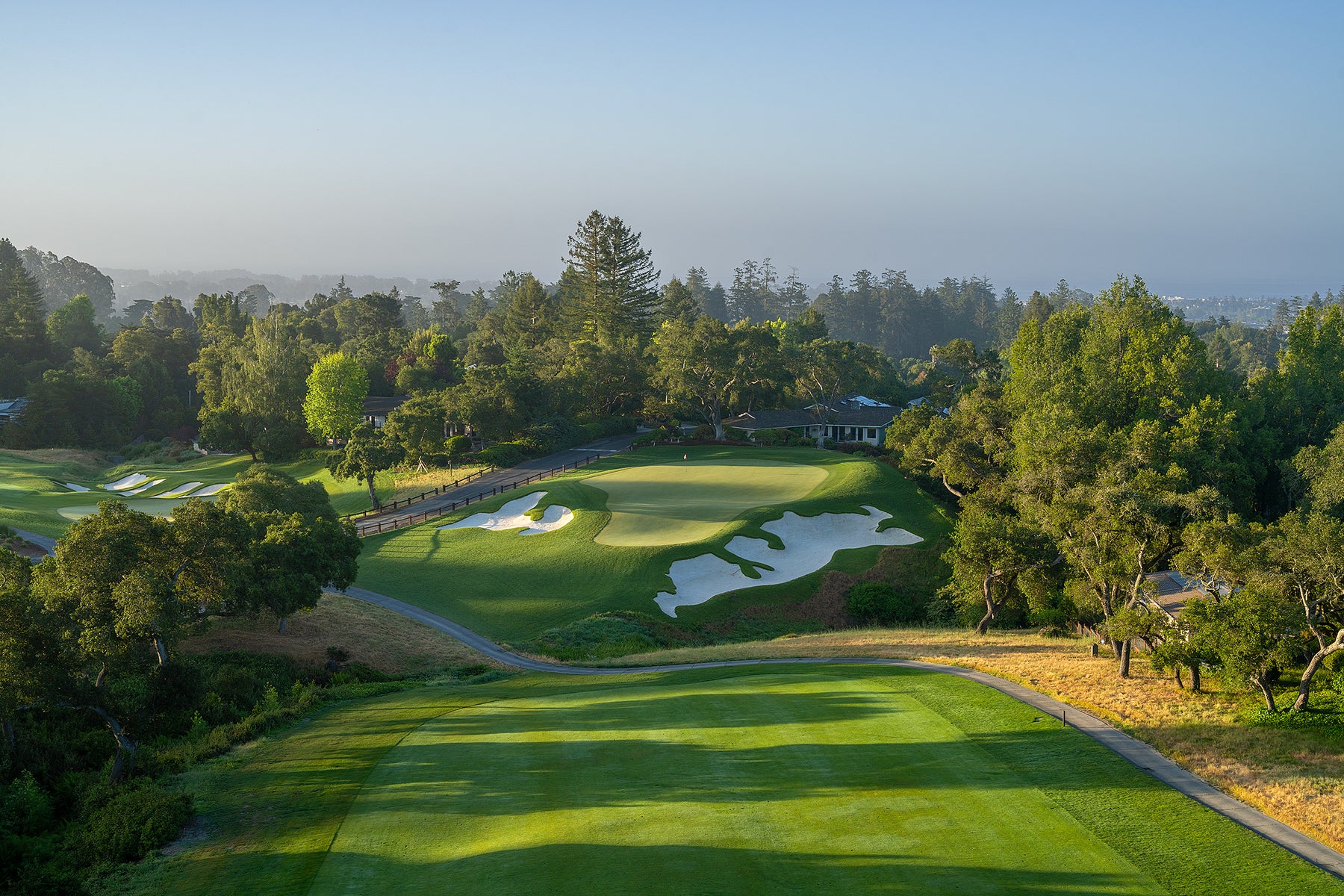
First, the tee shot at the sixteenth is completely blind, uphill, to a fairway that works away and left. The sixteenth green is the most photographed feature of Pasatiempo, and you’ll recognize it when you see it, but ask yourself: have you ever seen a picture of the tee shot at the sixteenth?
The answer is no. And there is a reason. The view is of the side of a hill. Perhaps a golfer from Florida may find intrigue in a hillside, but I did not. You’re asked to hit into a hillside with trees tight on the left and a fairway that is not visually aligned with the tee box. To find the fairway you have to shape a draw around the trees; anything fading risks finding someone’s backyard, roof, or family garden.
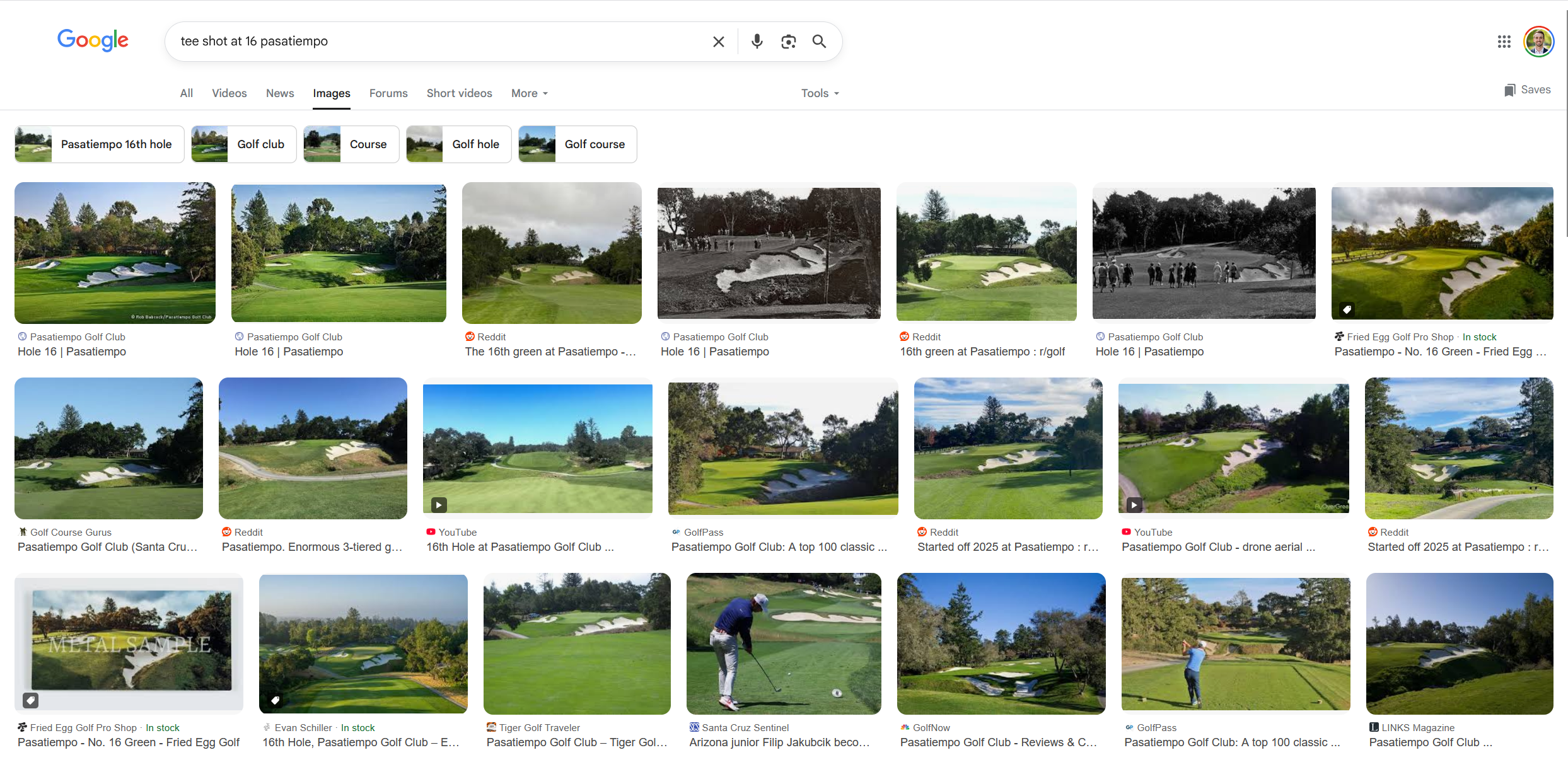
I couldn’t find a single image on Google of the tee shot. Not one. In the internet era, that says something. One of the two shots on this “best two-shot hole I know” (as MacKenzie famously called it) has almost no aesthetic value; nobody in the internet era has thought “I should take a picture of this.”
The hole also creates an awkward puzzle of distance and shape. Because the shot climbs and then runs out quickly around 300 yards from the back tee, driver is mostly eliminated.
Let’s say you want to hit a 220-yard safe ball out to a wide part of the fairway.
Oop, you can’t. You would still blocked out by the trees. That means hitting a controlled draw with a long iron simply to find a playable angle. Even if you pull it off, you will be leaving yourself 170+ yards into the green.
Okay, let’s hit the fattest part of the fairway to the right that won’t force a significant shot shape. The club I have to choose is: a 6-iron (185 yards). Awesome, so when I arrive to my ball, I have just (checks notes) 215 yards (4-iron or hybrid) to the green! That’s a good hole? 6-iron, hybrid?
Well, maybe the second shot is kind of easy and you can get away with a long approach?
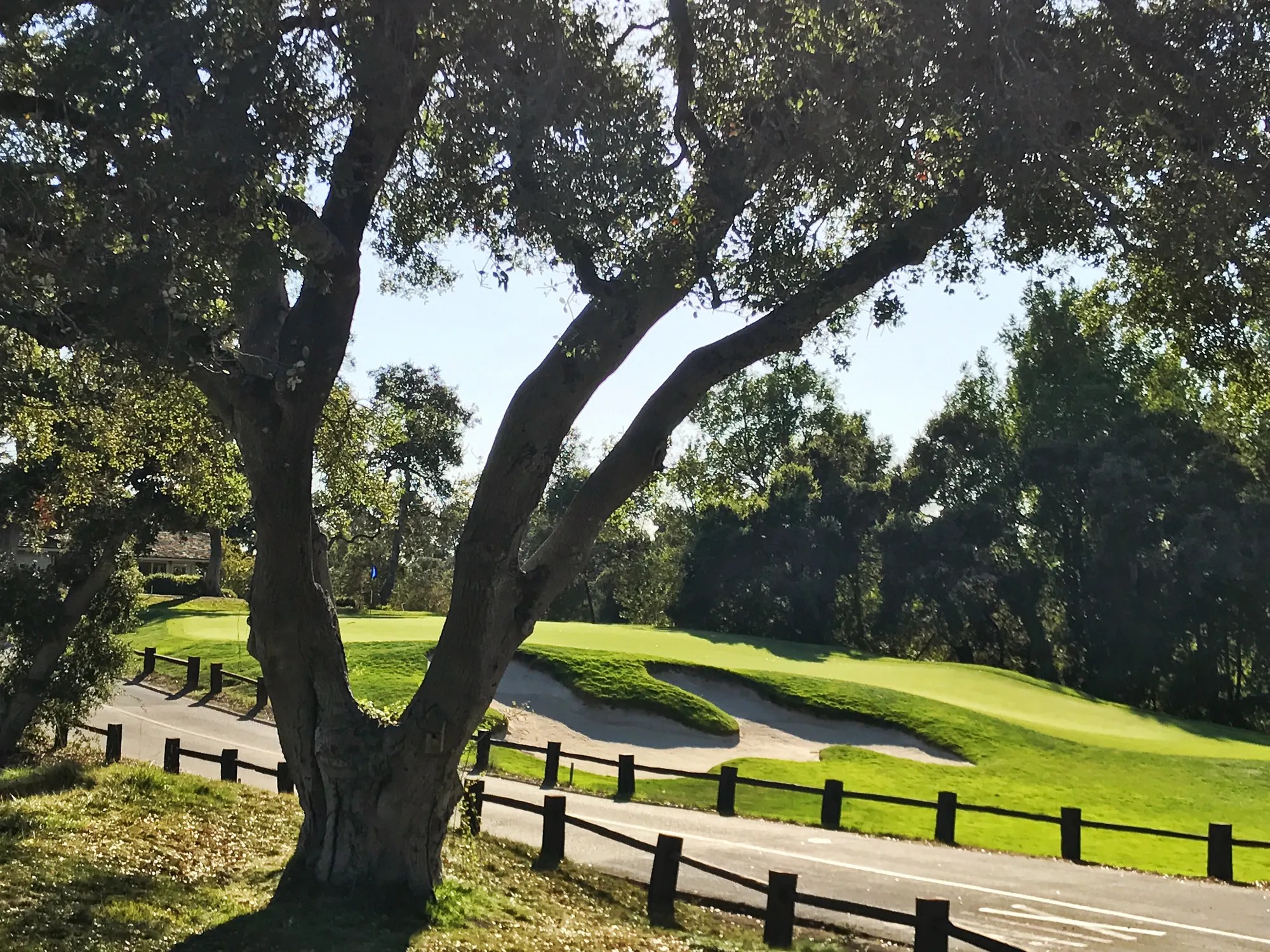
Nope, the green is instead heavily fortified with the deepest greenside bunker that you’ll ever see operating as an on-line carry bunker from the right. Oh, and the green is also four-tiered and massive.
The vertical separation between the front and back of the green is dramatic; someone standing on the back tier is 12–15 feet higher than someone at the front. It’s visually stunning, but strategically unforgiving.
The sixteenth is a design that simply does not work. It feels like an incoherent blend of forced features layered onto what would otherwise be a fairly ordinary golf hole. If MacKenzie thought this was a great “two-shot” hole, then myself and the great Alister MacKenzie, at least on this particular occasion, have different ideals about what golf was, is, and should continue to be. I would rather have played a perfectly flat, straight, bland golf hole than have been forced to navigate the sixteenth.
___________________________
The seventeenth is the pedestrian hole of which I speak. A shorter par-4 that plays directly up a hill. Straight and without much character, the approach on the seventeenth plays to a a long, narrow, bunkerless green. The seventeenth is not a great hole, just a bland one, but feels like a reprieve after the gimmicks and gotchas of the fourteenth and the sixteenth.
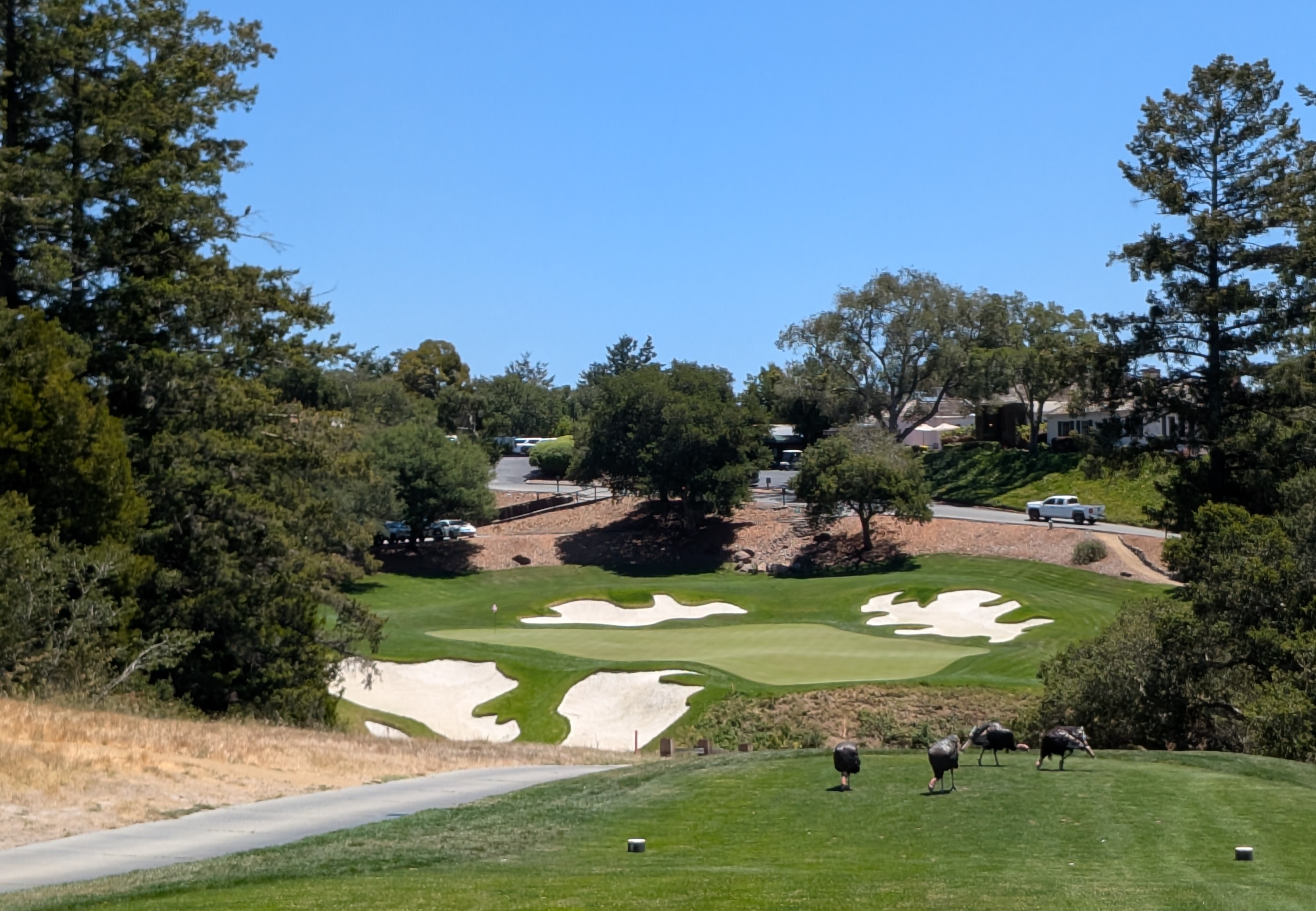
The eighteenth is not without its gimmicks. A beautiful, straightforward par-3 of mid-length, the hole gets its difficulty from having a forced carry of a natural hazard (one of the few at Pasatiempo, along with the eleventh) and a putting surface with significant undulation and danger. Many people complain about a closing par-3, but I love the closing par-3 as a concept. It is a unique way to end a round, particularly when the hole is not overly long, and just requires a mid-iron to reach. The eighteenth is among the most beautiful holes in California.
Final Thoughts
Few courses can provoke such visceral reactions. Golf is something I care deeply about, and Pasatiempo made me feel everything: annoyance, admiration, frustration, delight. It might be the only course that made me viscerally dislike it for an hour, absolutely love it for two hours, fundamentally hate it for another hour, and enjoy it for the last thirty minutes. That emotional volatility means something. Pasatiempo forced me to think harder about golf architecture than any other course I’ve played this year. Perhaps that alone is the true challenge of a designer: to make you reconsider what you value.
Rather than give me what I wanted, or give me a predictable challenge, MacKenzie gave me a design cluttered with choices I would have never made myself, greens that I could have never thought were fair, and holes that were downright not enjoyable. Yet somehow, it was mixed with choices I found brilliant, fair, and genuinely beautiful.
Pasatiempo is an enigma. Moreso than any other course I’ve played. If that is to be valued, and I believe that it is, then MacKenzie accomplishes his objective. MacKenzie was a design genius, just one who occasionally let a truly wild concept or two escape onto the property. Perhaps just a bit too much for my personal preference.
On some other notes, the course conditions were superb, among the best public golf course conditions that I have ever played. The facilities and clubhouse were average or slightly below, but the practice area was functional and nice, on par with what I had expected, but below what would be expected of a private Top-100 golf course, which is okay. The staff was excellent, welcoming, and conversational.
Pasatiempo is a publicly accessible Alister MacKenzie that has been restored and maintained with care; there are few like it. Pasatiempo gets so many things right, and I’d encourage everyone to play it because of its historical significance and to support the value of world-class, public access golf. But it’s also okay if Pasatiempo isn’t your cup of tea.
F1C’s Final Rating:
Shot Options: 7
Challenge: 7
Layout Variety: 7
Distinctiveness: 10
Aesthetics: 10
Conditioning: 10
Character: 9
Fun: 6
Total: 66/80
Read More: How We Rate Courses.
Rating Scale Details
> 70: Top-50 U.S.
65-70: Top-200 U.S.
60-65: Best-in-State List
57-60: Best-in-State List Contender
53-57: Very Good
48-53: Good
40-48: Average
> 40: Poor
Author: Jaxon MacGeorge
Jaxon is the founder and lead course reviewer at First1000Courses.com. Jaxon has been playing golf for over twenty years, is a scratch handicap, and actively competes in USGA and Tennessee Golf Association (TGA) amateur events. By trade, Jaxon is an attorney and lives in Gallatin, TN, a suburb of Nashville.

 First 1000 Courses
Leave a comment