
Time to Read:
|
This Mayacama Golf Club course review is based on a round played on July 11, 2025.
The Mayacama Golf Club is a private golf course in Santa Rosa, CA.
F1C’s Final Score: 64/80 (Best-in-State List)
Learn More: How We Rate Courses
Now that golf season is coming to a close, I finally have time to sit down and reflect on some of the golf I was able to play this season. I haven’t been playing particularly well, and accordingly, have been trying to be a bit more present and in the moment, rather than taking pictures on my phone and pondering the efficacy of a bunker’s placement. I won a charity auction for a threesome at Mayacama Golf Club while on my California trip this year, and couldn’t have been more excited about it. San Francisco has some fantastic golf, and because of those high ranked clubs in the city (think Olympic, SFGC, Cal Club, Lake Merced, and to some extent even major-hosting TPC Harding Park), the courses north of the city tend to be a bit forgotten about. Meadow Club (ranked 197th in Golf Digest’s Top-200, and which I was unable to figure out a way to play) and Mayacama might as well be secrets outside of the Bay Area, because golf nerds not from the Bay Area get a bit star-struck when thinking about Bay Area golf. I got the feeling that Mayacama members feel like an underdog, because Mayacama’s resume puts it at a level deserving of more national awareness than it has. Mayacama is ranked as the 147th best course in the U.S. according to Golf Digest. Further, it was a Top-100 course for 14 of the last 20 years. But, Mayacama just gets lost among the national conversation, as it is the 19th best in California according to Golf Digest (20th according to Top100GolfCourses), and realistically, probably the 5th or 6th best course within a two hour drive (after SFGC, Olympic, Cal Club, Pasatiempo firmly and debatable with Lake Merced and Meadow Club).
To be transparent, I won the charity auction for $1,700 for a threesome. The same thing at Olympic Club or Cal Club would probably run north of $5,000. At SFGC, maybe more like $12,000, if such a thing even exists. Supply and demand dictate those charity auction prices, and for whatever reason, Mayacama just has less demand than those similarly ranked San Francisco stalwarts. Regardless, Mayacama still has an undeniable prestige. I’m not sure anyone there was giving off the impression that they were at the 6th best course in a 90-mile radius. Rather, there was a bit of a chip on the shoulder, perhaps born from the disrespect of being left out of the national consciousness of the best Bay Area golf courses to all but the nerdiest of the golf nerds.
Knowing what I knew, I was excited to see how Mayacama would really stack up. Let’s start at the clubhouse: fantastic place, from the locker rooms to the dining rooms, everything was first-class, with a beautiful view. Mayacama easily wins my “best golf course shower of 2025” and would place very highly in “best lunch” category. The last of my Mayacama superlatives would be “course in which I almost accidentally drove my car down the cart path and onto the first tee” (the parking lot was a bit confusing). Mayacama has a fantastic driving range, with a nice chipping green as well. So, all in all, the facilities were about as first class as you could desire – firmly within or exceeding expectations for a course ranked near the top-100. I couldn’t wait to find out whether the course would prove that it belonged in the greater conversation regarding the top courses in the Bay Area, or whether it being overlooked was justified.
Santa Rosa in July is warm, and Mayacama is a walking only course with caddies working double bags. Our party from the very humid south found it very comfortable in a 85-90 degree (but very dry) heat, but the locals we were with weren’t quite cut out for direct sunlight at that temperature. But overall, it wasn’t that tough of a walk, but for just a few holes – as long as someone else is carrying your bag.
The First Tee
Mayacama is a Jack Nicklaus design and, by modern standards, is quite short. We played the back tees, and it only stretches to 6750 yards and a course rating of 74.1. For a scratch golfer, that is about as short and tame as you’ll find an elite golf course from the tips, as they often skew difficult or long. However, like my last review at Primland, the slope rating is a very high 154, meaning Mayacama is very difficult for a mid-handicapper or higher. This is likely due to elevation changes and a number of long, forced carries and tough chipping areas.
I normally play the tips wherever I go, so long as they are under 7200 yards or so. But, as a complete aside, I hate when it happens at a course I’ve never played AND with someone I’ve never played with and/or caddies. I’d imagine the nerves and pressure of hitting the first tee shot, after boldly declaring “I’ll play the tips” to someone who has never seen you swing a golf club, has to be right up there with a PGA Tour event. Because, they expect a PGA Tour player when you say that, but in reality, its a 6700 yard golf course and I’d like to hit more than pitching wedge for the $1700 charitable contribution.
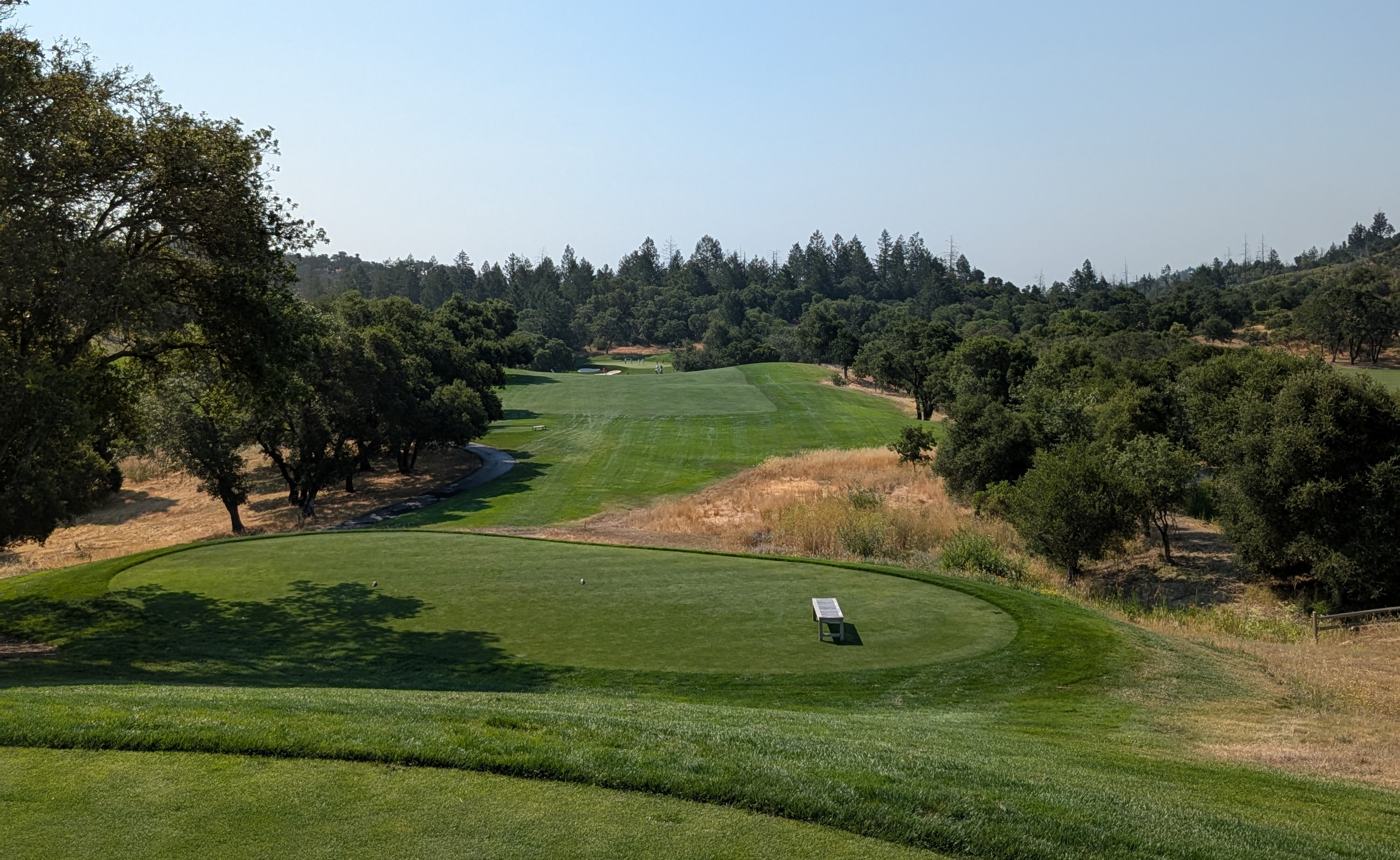
Fortunately, the first hole at Mayacama is quite inviting and certainly one of the easier tee shots of the day, played into a wide cooridor and over a small hill. A well struck drive into the wide fairway will leave a ball on top of, or just over, this hill, revealing a simple approach into a wide green on this mid length par-4.
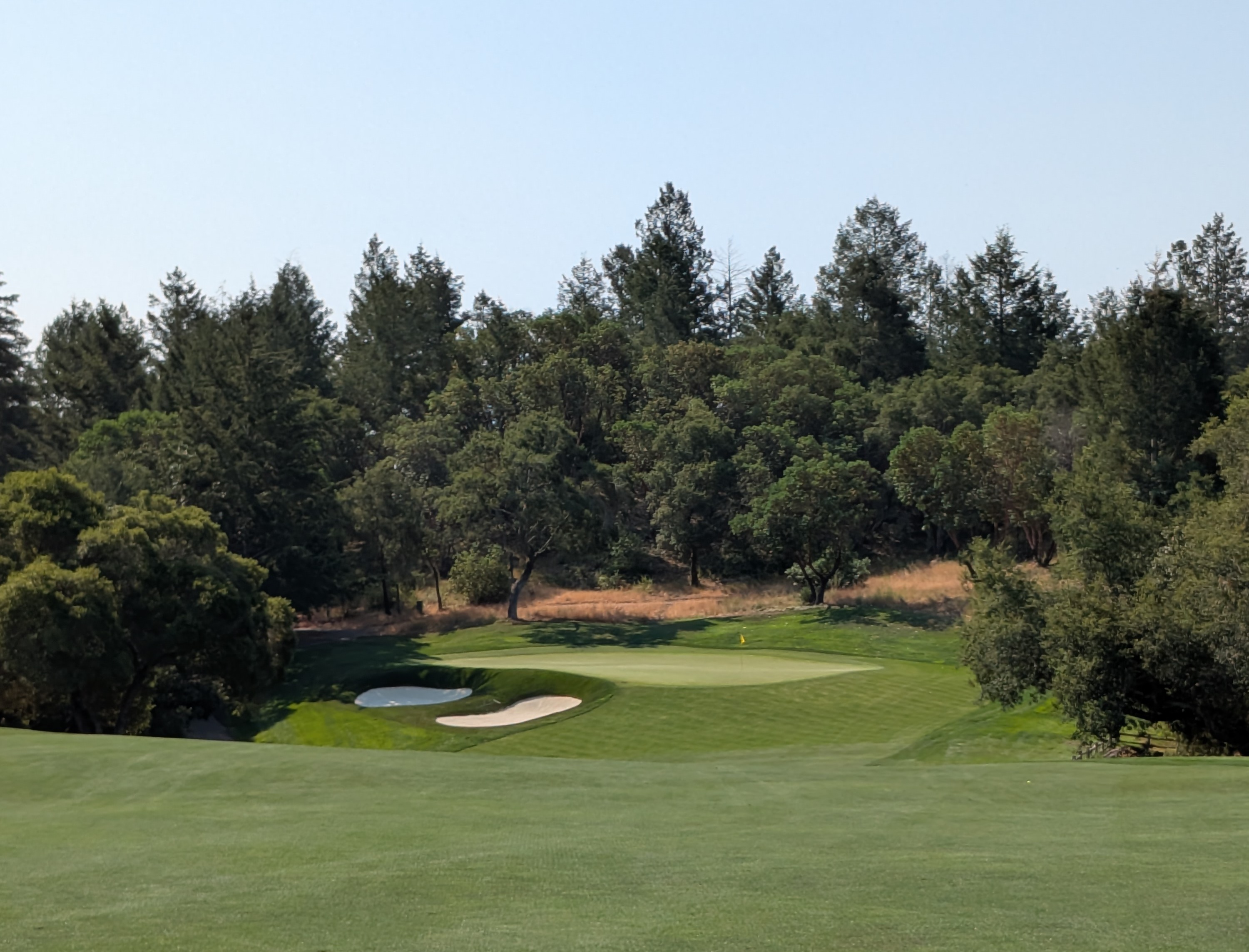
I am probably a sucker for simplicity, but Nicklaus starts you with probably the most classic look you could design. There’s a beauty in this simplicity. Nothing over complicated here, and if every hole had this approach, it would get boring fast. But on a first hole, it is certainly welcome to see something simple, inviting, and large to aim at.
What was not inviting was the rough at Mayacama, some of the thicker rough I’ve played and certainly the thickest I played this year. Mayacama was in very good condition for our round, and it was clear when I found the rough on my second tee shot, that the rough would be the main defense to this course.
The second hole is a long par-5, probably not reachable for all but the longest amateurs. The yardage might be doable for some, but the shape of the hole, and navigating the hills of the second, would make it difficult. I was not presented with the opportunity, however, as my ball was absolutely buried just a few feet off the fairway.
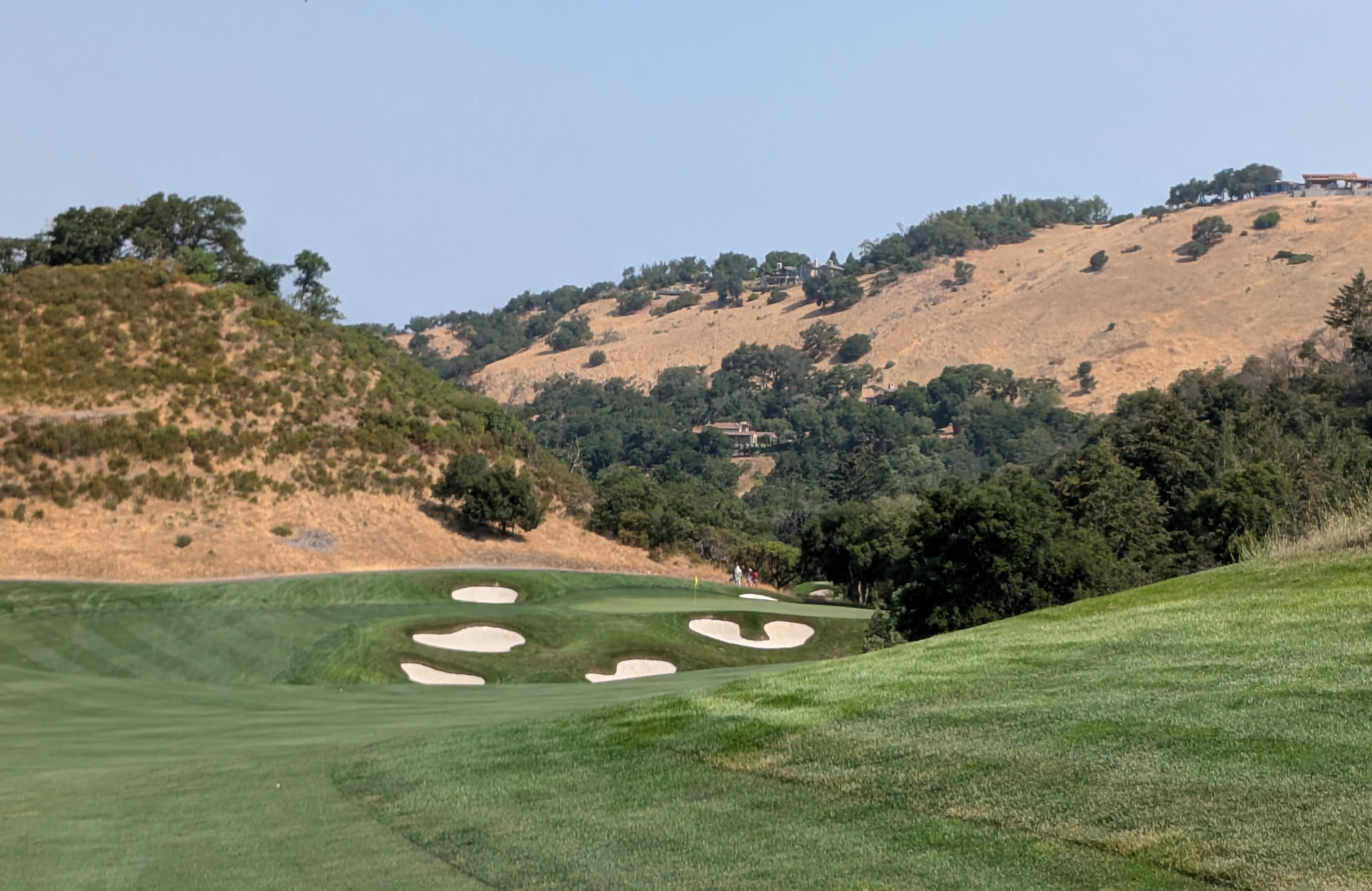
The approach into the second has a bit of an out and back design, with the fairway entering the narrow, triangular green from the left, wrapping around a bunker array designed by the random firing of a shotgun from 10,000 feet (probably). The trick to this hole is that the layup can’t get too close to the green, because the fairway slopes steeply down and then back up to the green, all within the last 100 yards of the hole, leaving a really awkward stance and wedge yardage for a ball traveling a bit further than intended on a layup. Theoretically, a long three-wood could reach with a well struck drive, but it is ALL carry and the green is not really shaped to take that kind of approach.
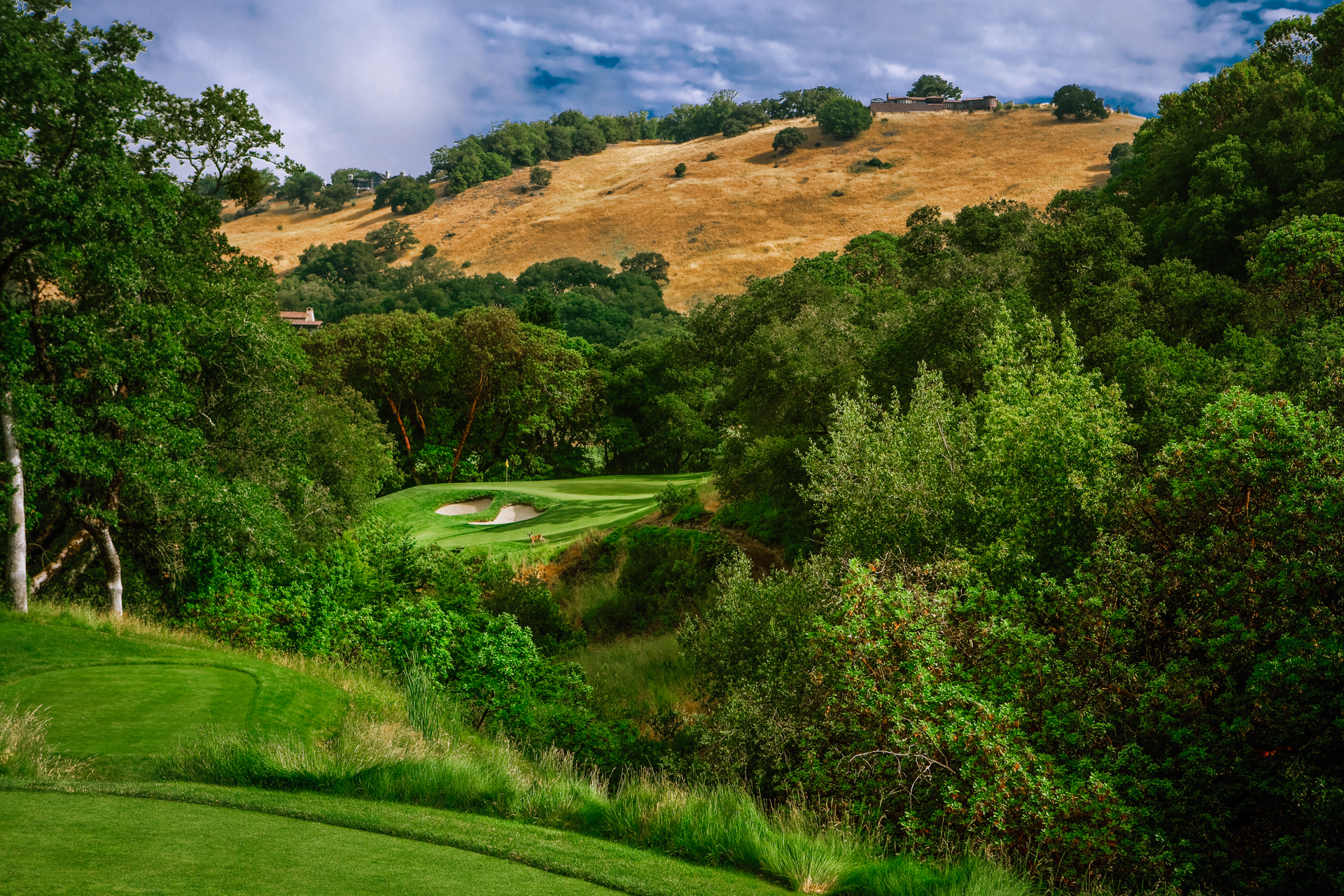
The third begins the set of par-3’s at Mayacama, and a pretty solid set of par-3 holes await. The first was perhaps the coolest, and also my least favorite. This mid-length par-3 plays a bit downhill, but the tee box is largely blocked out by trees on the right. I play a cut nearly 100% of the time, but my playing partner’s draw was heavily blocked out from the back tee. This is one of the few holes at Mayacama that forces a shot shape (at least from the back tee), and the forced carry made failure particularly penal. Aesthetically, this is a fantastic hole, but perhaps not as playable as I’d wish. The hole has a triangular green as well, and generally slopes right to left, leaving short-side right (the long side of the triangle) pretty much dead.
The fourth hole was a mid-length par-5 that centered around the navigation of two awkwardly placed trees. The key to scoring on this hole is effectively managing a tree off the tee, and once more on approach.
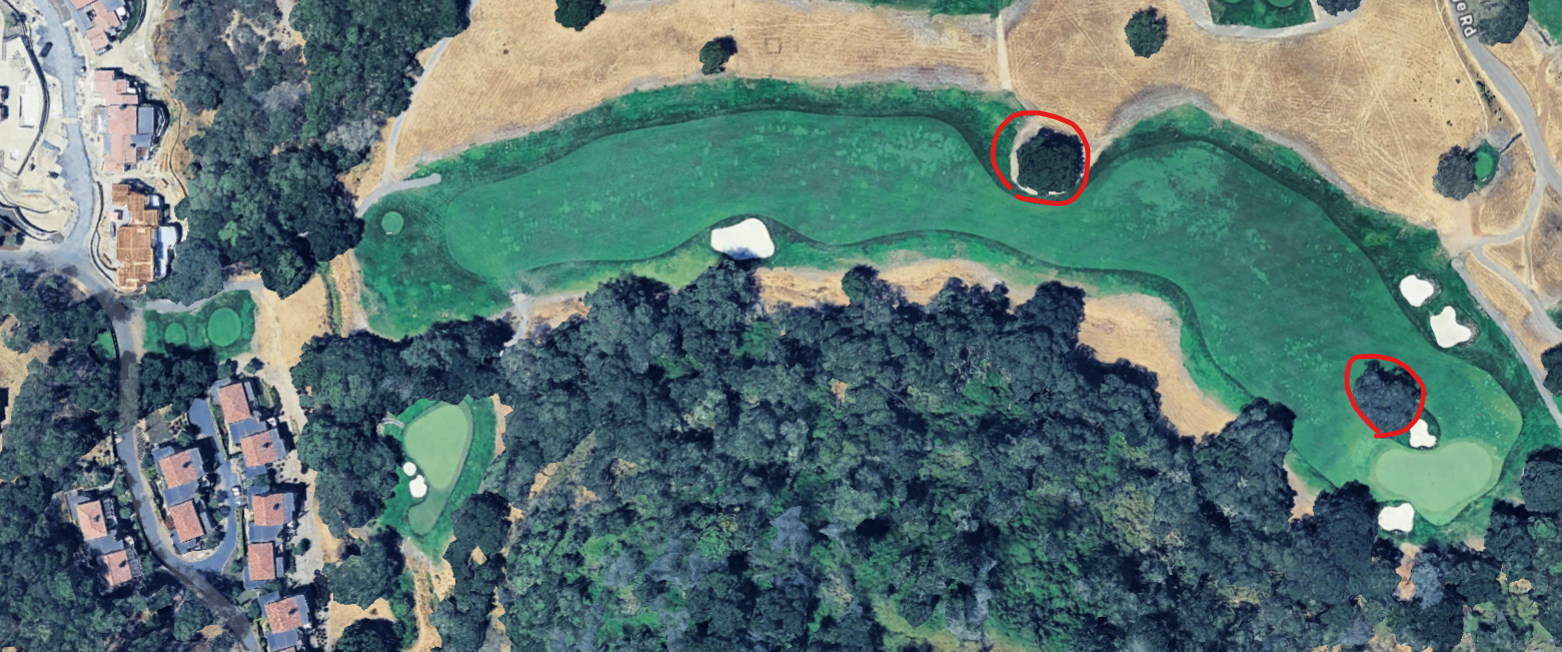
The tree on the left of the fairway pinches the fairway and complicates any layup from the left side of the fairway. To have any chance at reaching this shorter par-5, it is imperative to be on the right side of the fairway. Left is a double whammy, as not only will the green be blocked by the first tree, but also the greenside tree may block an approach left. Basically the trick to this hole is to stay as right as possible, but not too far right, because the fairway hugs a dry creek on the right.
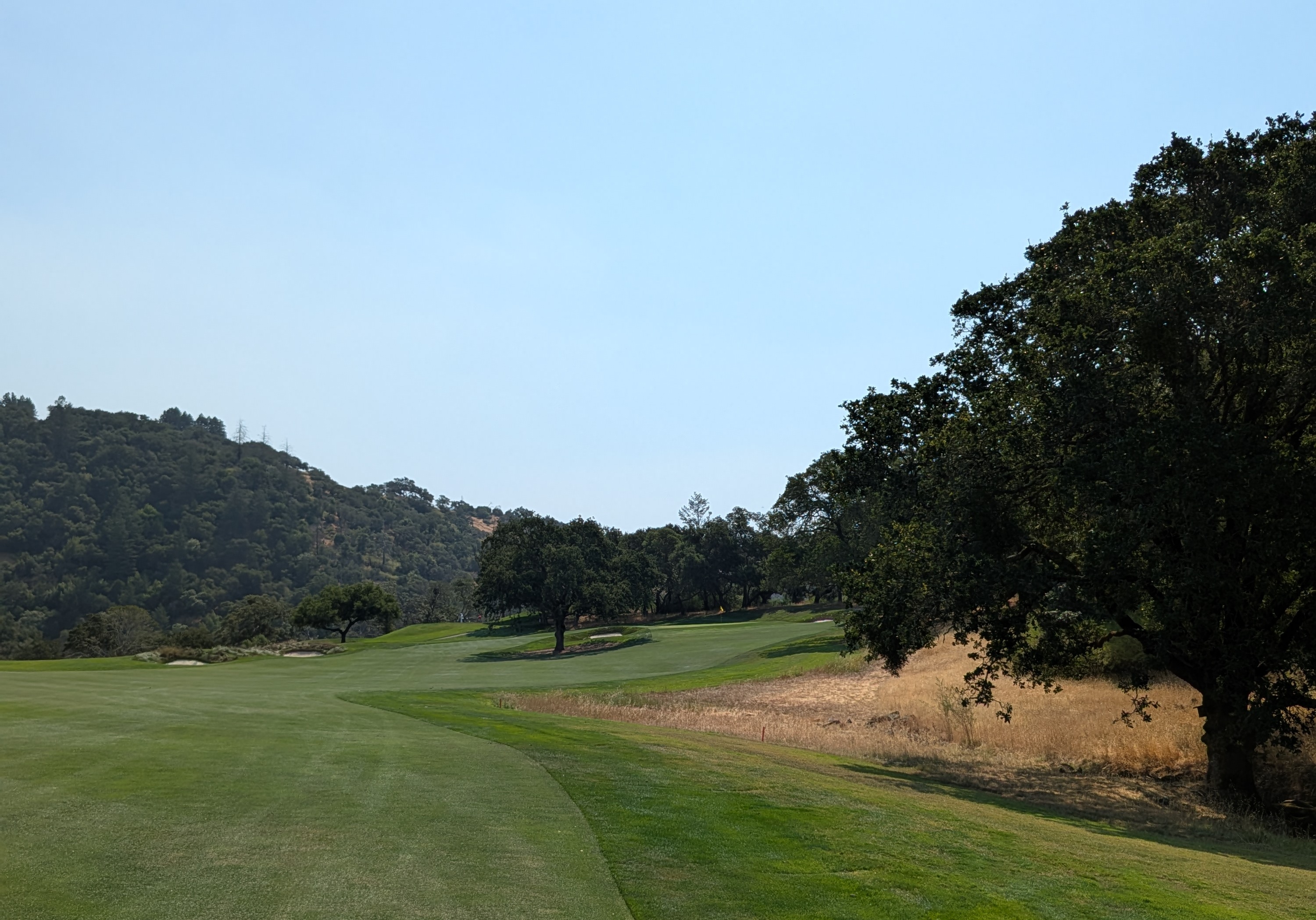
A fair criticism of both par-5 holes to this point in the round is that they lead to overly similar, undesirable shot sequences. After finding the rough, I laid up with a gap wedge, effectively playing driver, gap wedge, and pitching wedge on a par-5. This is because a layup too close to the green at the fourth risks being blocked out by the greenside tree; to ensure a third shot can be played with enough height to clear it, a player must stay well back.
The second hole mirrors this dynamic. Caddies will warn players not to play the layup too far because of a pronounced up-and-back slope. This means that the second shot on these par 5s is often a wedge or short iron designed merely to set up another of the same. I am not in love with that as a design philosophy generally, but it’s defensible once for variety’s sake. But, less so when it appears twice in the opening four holes. Realistically, this hole would work better if it were longer, allowing for a more meaningful layup with a mid-iron and making an aggressive attempt to reach in two require real precision to navigate the greenside tree with a fairway wood or hybrid.
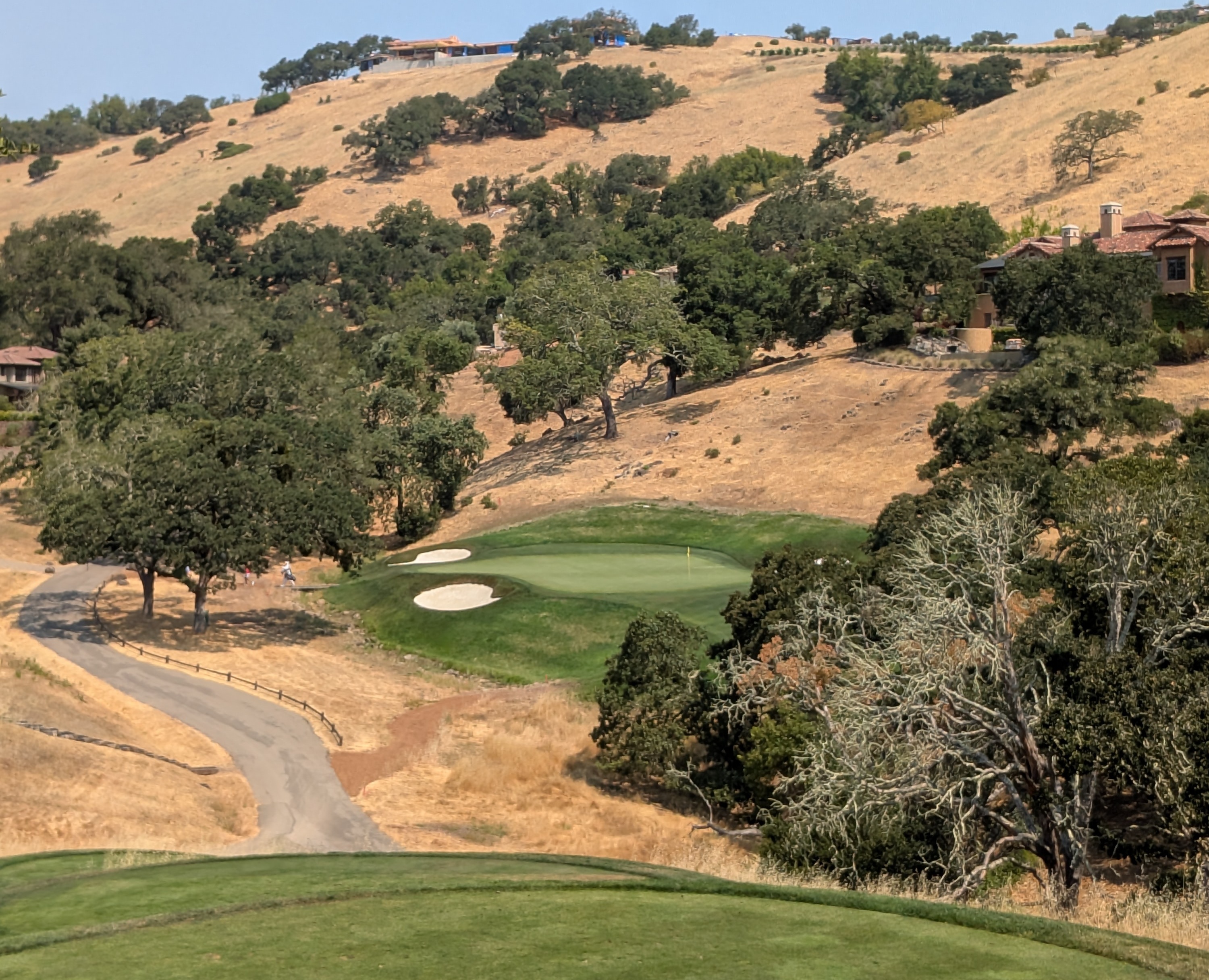
The fifth hole is the second par-3 hole, of a similar length as the third hole, but playing significantly downhill to a green built into the adjacent hillside. I loved this hole aesthetically and hit my best approach of the day here, so I have limited criticism to offer here. However, of note, this is the second hole that required a forced carry in the first five holes, and as I would come to find, the first of three straight holes with a forced carry.
The sixth hole is a great par-4, probably my favorite par-4 on the course. Just a mid-length par-4 that has two distinct options from the tee.
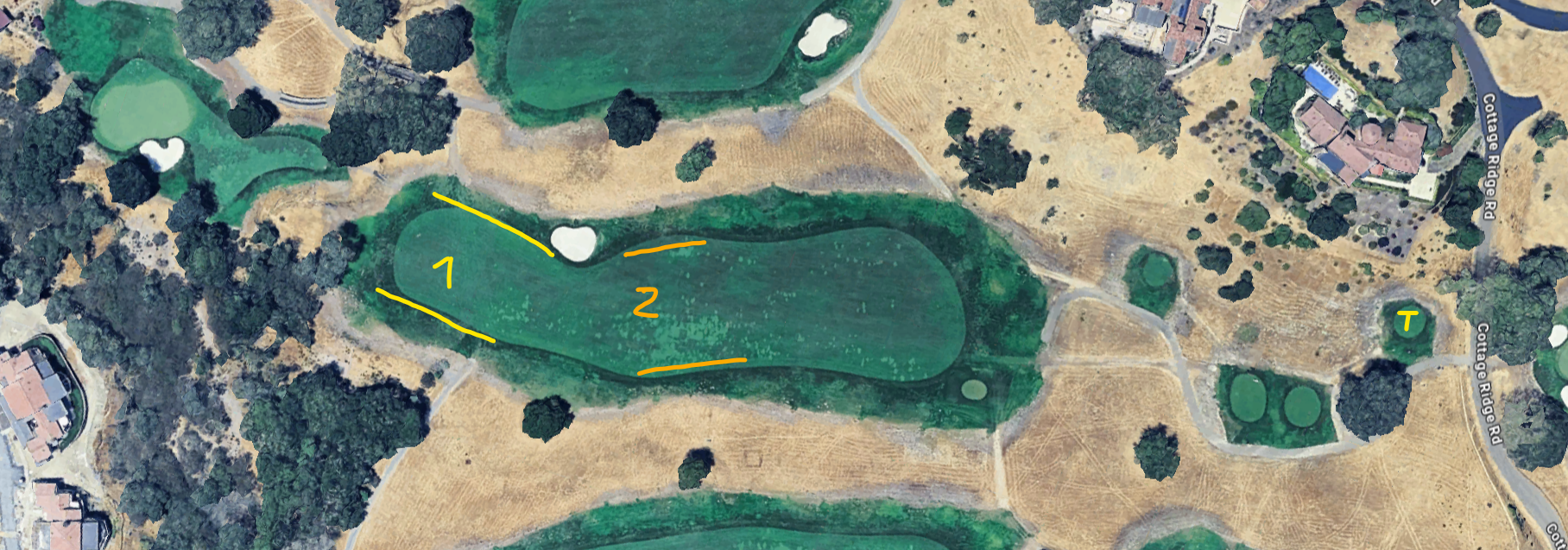
This tee shot is so much about angle. The first option is to hit driver into the area just past the fairway bunker. If successful, this would leave a short wedge approach over the waste area. However, it is a bit complicated, because the fairway past that bunker is significantly angled to the tee area, meaning the shot feels very tight on the left. While the fairway is wide, this angle reduces the effective landing area of the drive. The second option is to play less than driver to layup behind the fairway bunker, which is played into a less-angled area of the fairway, meaning there’s little concern about controlling the run-out. However, too far right, and the trees on the right of the waste area can come into play as a factor to an approach.
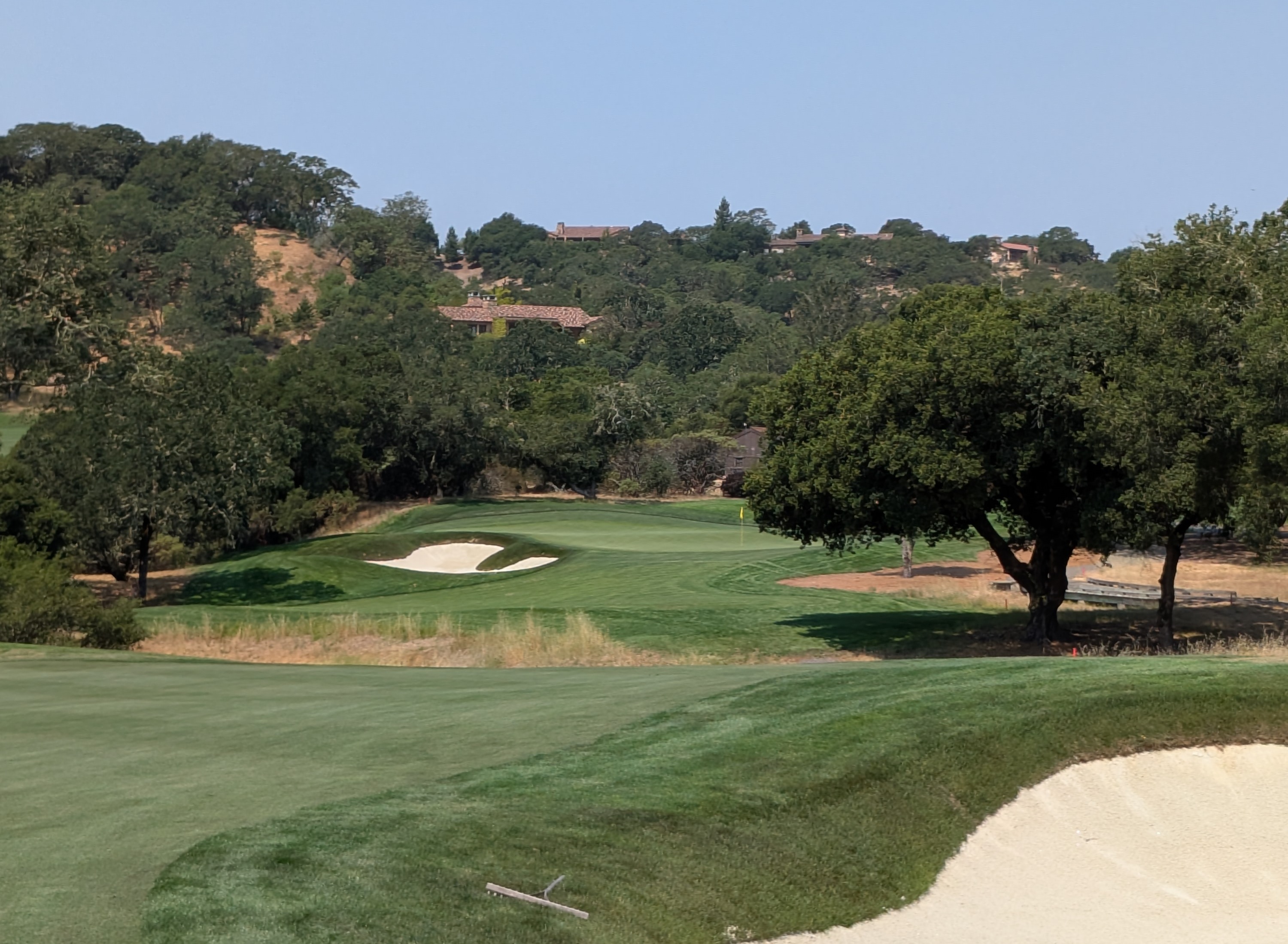
The beauty here is again in the simplicity. I found this to be too tough of a drive to reasonably attempt when the layup behind the bunker was so straightforward. The green is large and inviting with only one large bunker protecting the short left. I think this hole is what I like about golf design: simple options, no deception; just two very reasonable ways to play a hole that largely rely on execution.
The seventh hole makes a 180-degree turn and runs parallel to the sixth, and is Jack’s first risk-reward hole that is so central to his designs.
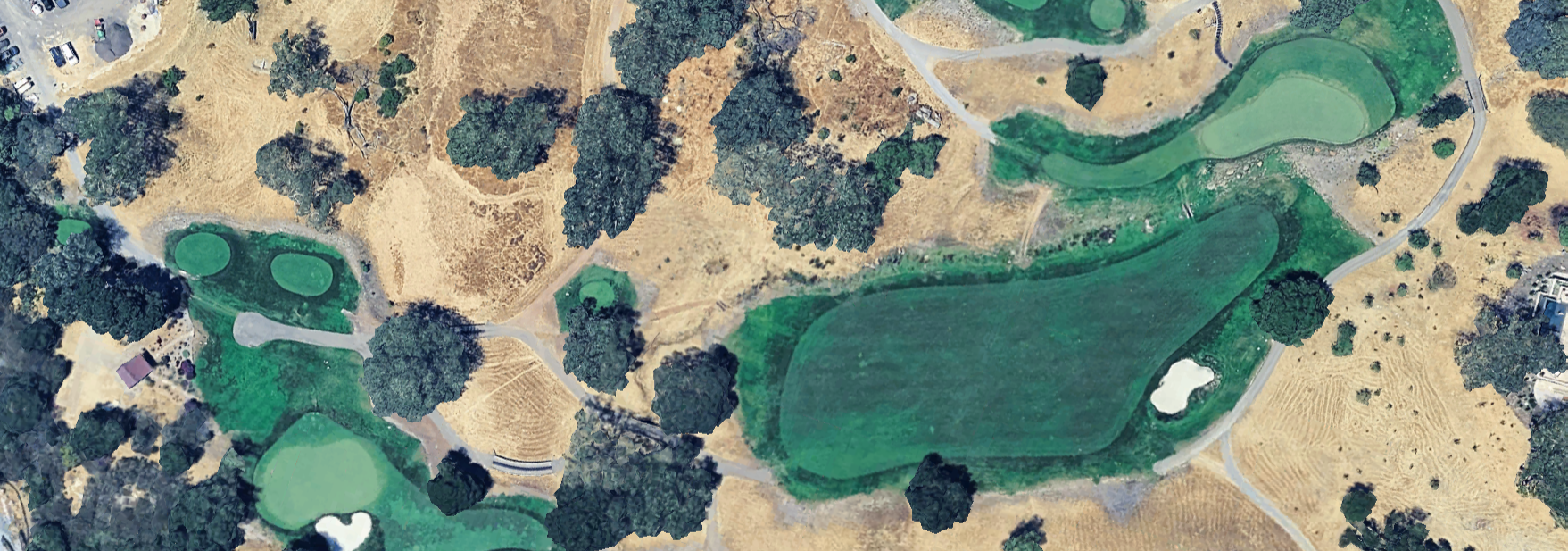
From the back tee, it is only around 285 yards to the front edge of the green, with a wide fairway out to the right that slopes towards another dry creek bed that is receptive to a long iron or fairway wood, narrowing closer to the green. Unfortunately, I’m not sure the risk is worth the reward here. First, there’s a few trees on the hill that completely limit the shot visually. If you do go for it, you will not see it land, which adds risk in a lost ball. Secondly, the green and accompanying “fairway” just aren’t wide enough; I estimate you have about 15 yards to land the ball in at 285 from the tee box. If the green were flipped, with the wider part up front, the risk might be worth it. If it is a 50/50 proposition, the risk might be worth the reward to me personally. But here, basically all of my bad shots are lost balls, and a significant portion of my good shots would also be lost, just due to the narrow and blind the landing area.
This hole actually reminded me of the third hole at Muirfield Village, Jack’s home. It is a bit like a miniature, risk reward version of that hole, with the green just moved 100 yards closer to the tee. The hole is just an adaptation of this hole caused by slightly different land forms.
The eighth hole at Mayacama was a pretty simple par-4 of mid-length. The hole plays a bit uphill and winds to the right, creating my ideal look for a tee shot as someone who plays a cut (or slice depending on the day).
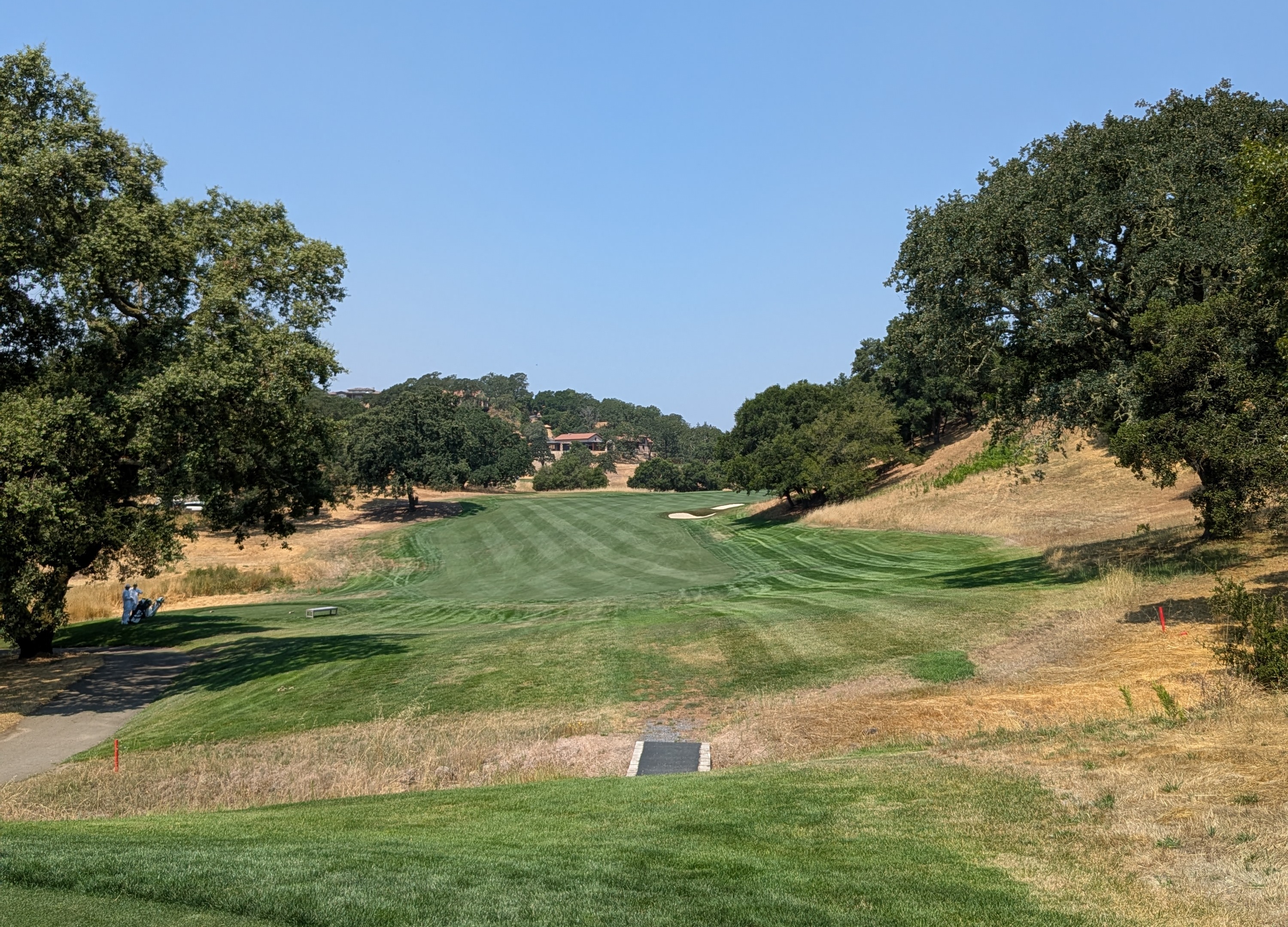
If every tee shot looked like this, I’d be a much better golfer than I currently am. Unfortunately, some golf holes bend the other way. Regardless the approach here is pretty straightaway to a smaller green atop a small rise, again protected by a bunker short left. If there’s anything to be said about this course being a bit repetitive, it is certainly greenside bunker placement. By my count, nine of the first ten holes are protected from a short left miss by a bunker or hazard.
The ninth is one of those holes, the longest par-5 on the property, and the third of five. The ninth is mostly straight, with a fairway flattened into a slope running from right to left. This is a three-shot hole for all but the longest hitters, and from the elevated back tee (a significant uphill stair cased walk from the eighth green), the fairway is actually a 220-yard carry to reach.
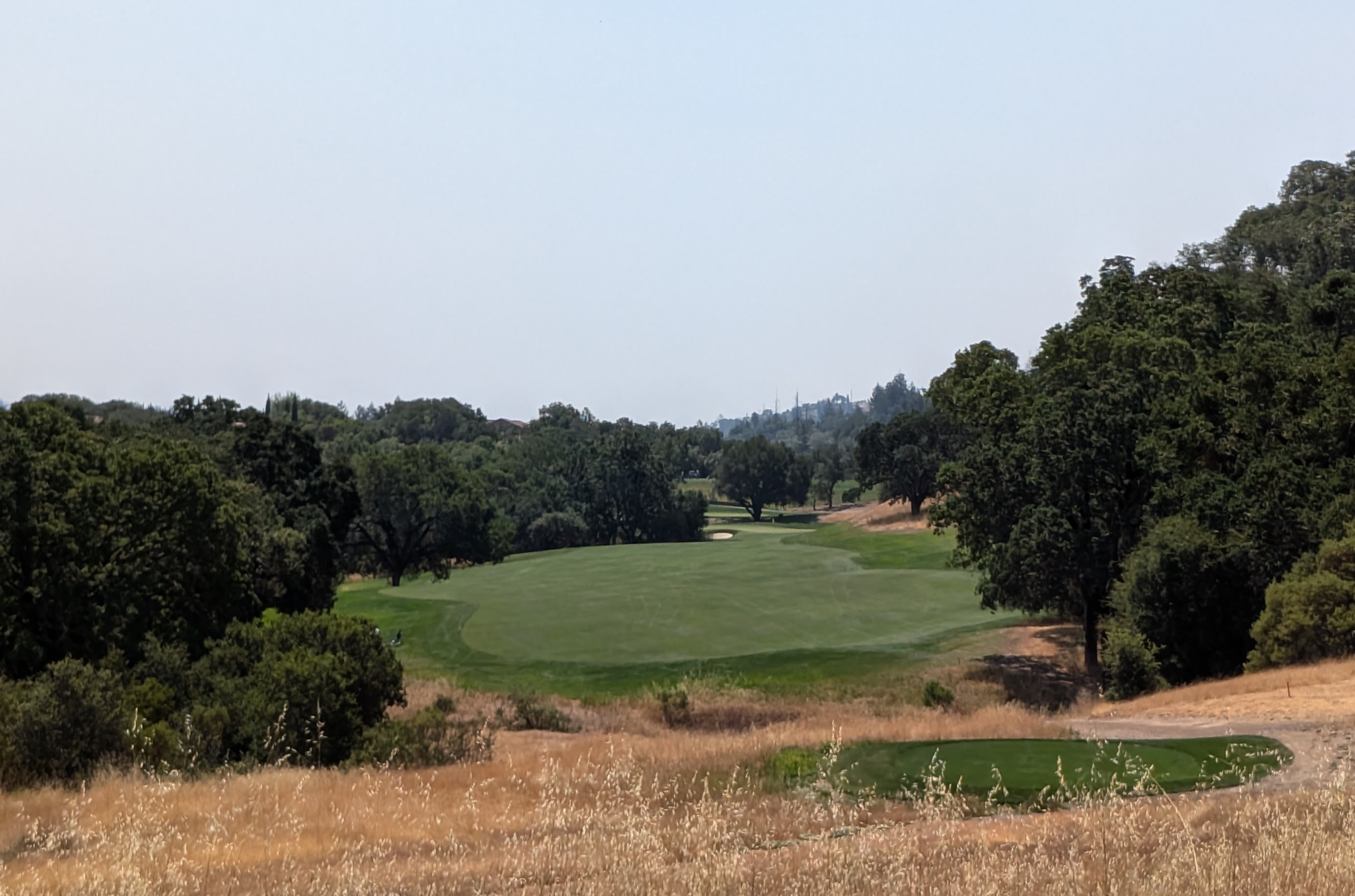
The fairway here is quite wide but generally narrows as the green approaches. A singular short left bunker protects a wide chipping area around the green. This front nine as a whole is pretty scoreable in my opinion, featuring three legitimate birdie opportunities on the par-5s, nothing over-challenging on the par-4 holes. Navigating the two par-3 approach shots and staying out of the rough are the real keys to this front nine; if successful, you should find yourself with a decent round brewing at the turn.
Making the Turn
After a transfusion at the turn, graciously provided by our host, we proceeded to the tenth. As I mentioned, it was hot, and somehow one of the other writers on this website who was in our group did not realize a transfusion was an alcoholic beverage. This, particularly strong, pre-breakfast transfusion, was finished by the 10th tee. Mine at least lasted until the 11th tee. This may not have been the best decision for our golf games, but it made the next few holes a bit more fun. Perhaps it was the walking, the heat, the lack of breakfast, or something else, but I feel like that transfusion hit me as hard as one drink possibly can. Be warned.
The tenth begins a section of the golf course that is a bit more difficult. I’d say the stretch from the tenth to the thirteenth is probably the most difficult on the course. The tenth is a par-4, just mid-length but turns aggressively to the left around two fairway bunkers. The difficulty is that the fairway is once again in a flattened area of a hill running right-to-left.
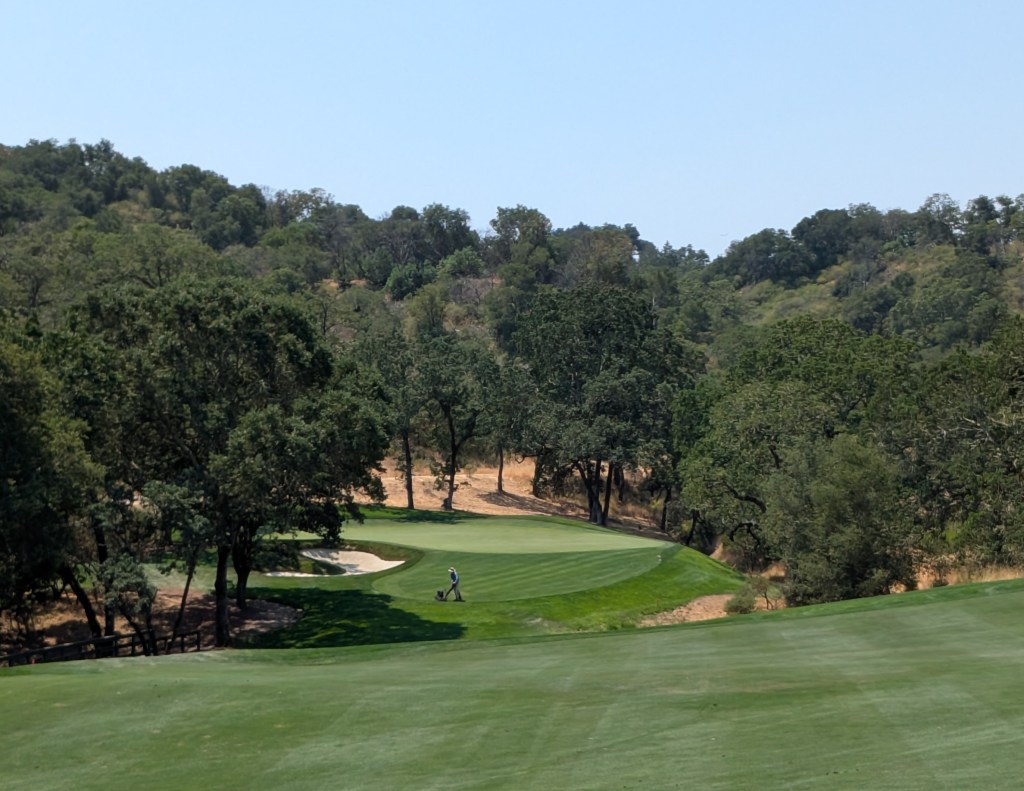
If the fairway is found, a low iron or wedge awaits. However, a forced carry over a break in the fairway presents some serious complications for those not finding the fairway, like myself. I found the right rough, and with the ball seriously above my feet and buried in the thick rough, I was unable to clear the barranca. The green slopes moderately aggressively from back-to-front as well, creating some tough up-and-downs for any fliers.
The eleventh hole turns 180-degrees back towards the clubhouse, and may rival the eighteenth for the best view of the Tuscan themed clubhouse.
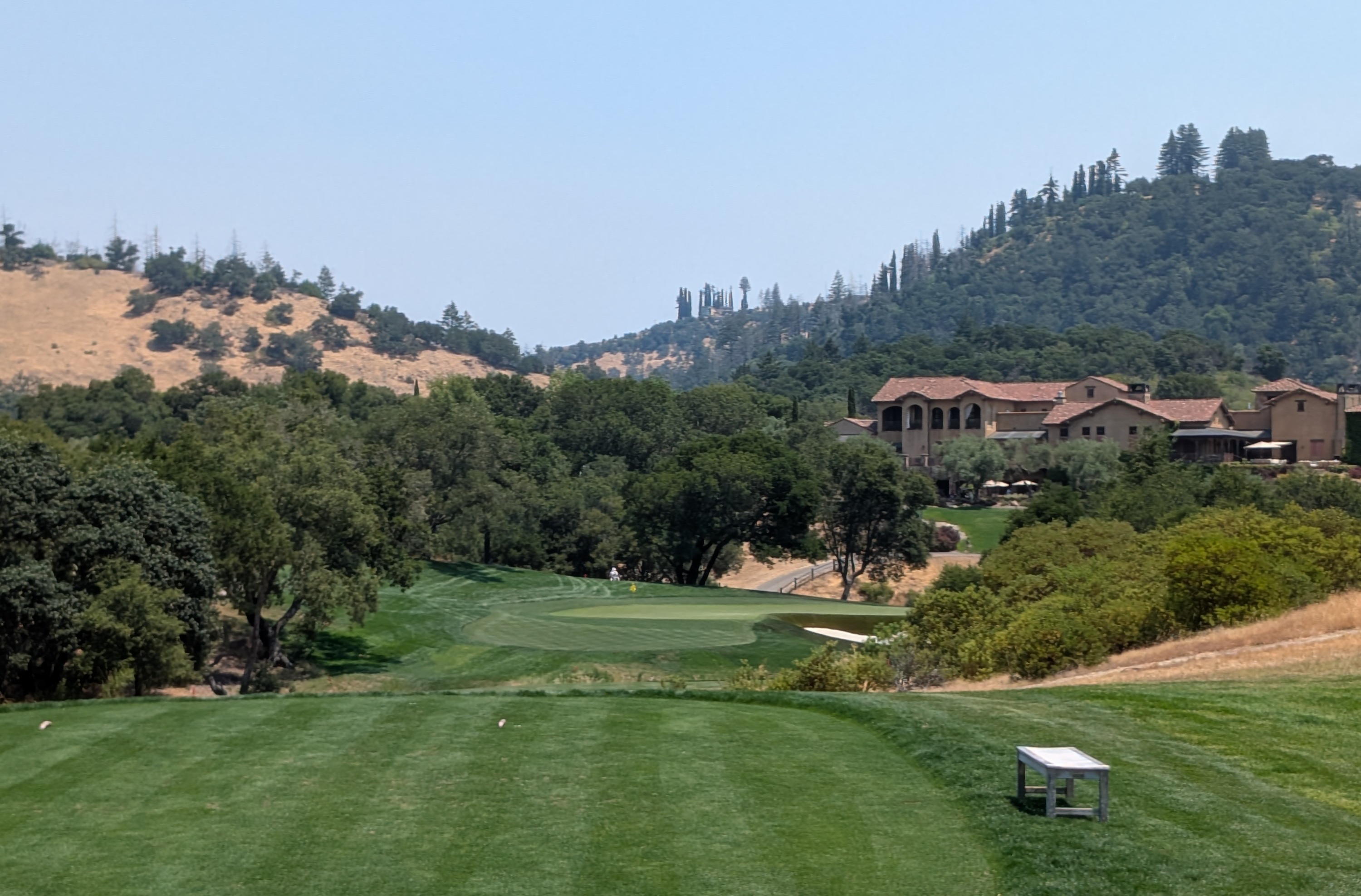
Here the longer par-3 has a bit of redan vibes, though muted, with a bit of a hill on the left of the green to run shots in off of as an option. However, this means left misses that find the thick rough are severely punished. Again, I was finding all the punishing areas, because that’s where I finished. To my groups surprise, I elected to putt out of the 3″ rough and onto the shortsided green, and it worked perfectly. But, I’m glad I tried that, because a chip may well have ended up in the greenside bunker (or too close for comfort). I enjoyed this hole, but I have to think my intoxication level influenced my decision to putt from the deep rough. Confidence is key.
The twelfth hole was once the most difficult hole on the course in my opinion, as the longer par-4 plays from an elevated tee into a very awkward fairway. But the recent loss of a tree has opened up the tee shot significantly.
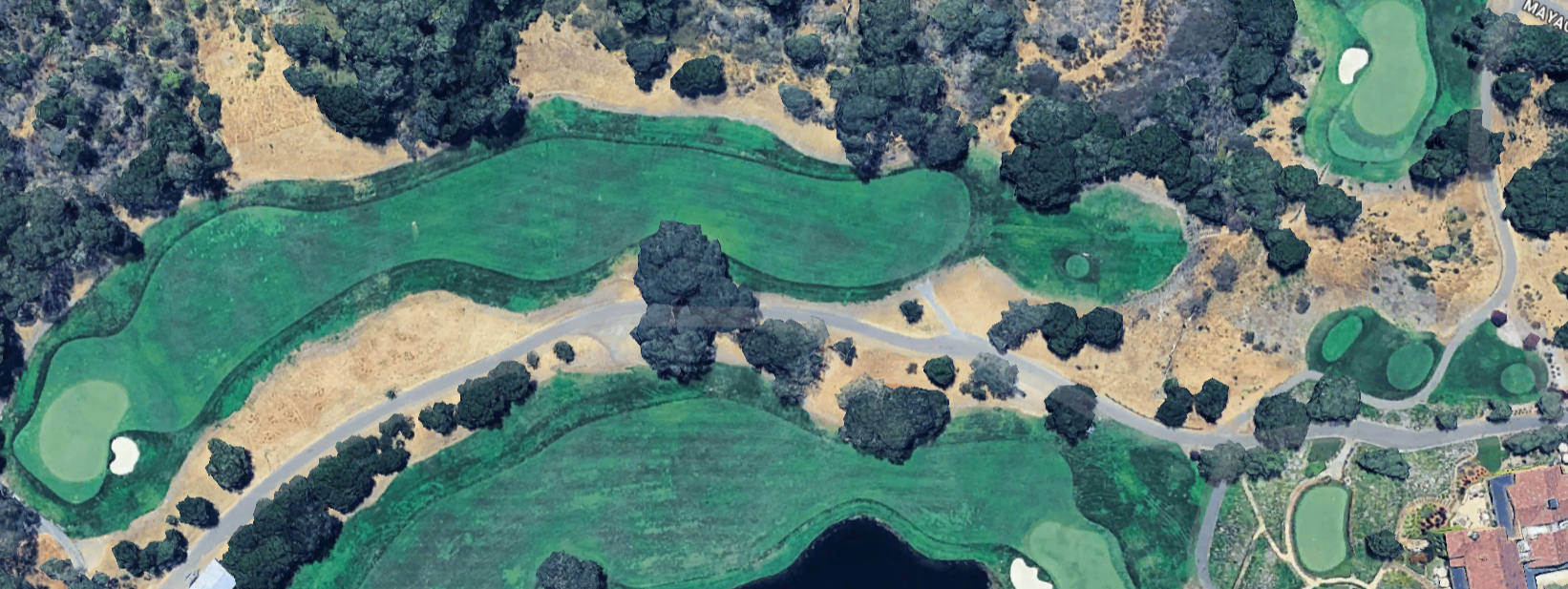
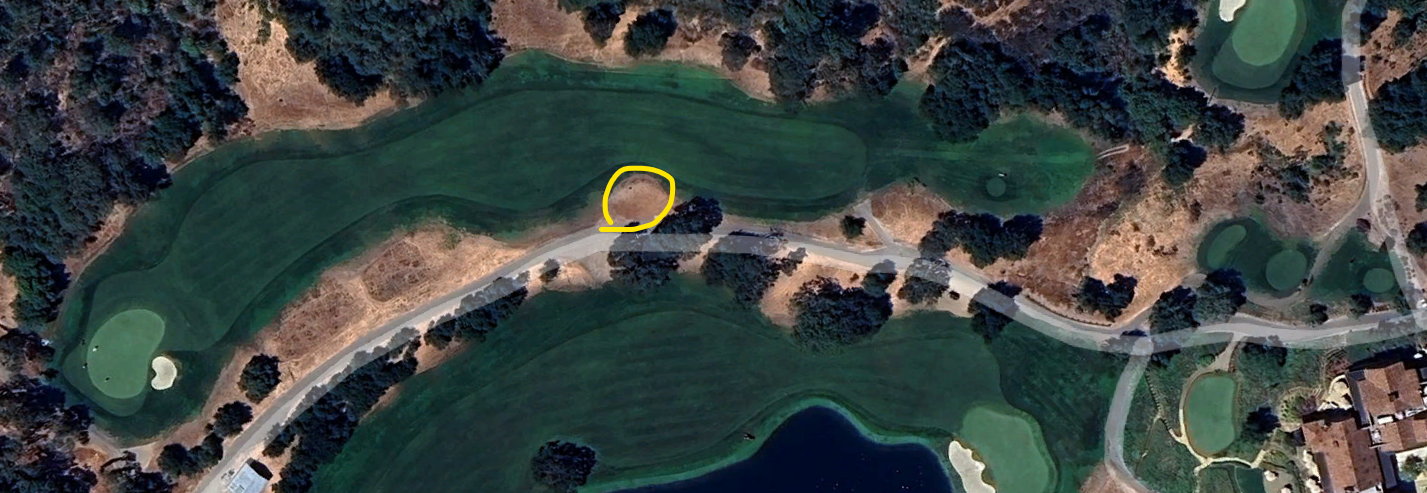
The dogleg left used to work around a large tree that really asked you whether you were capable of a draw into a tight landing area. I’d assume in the modern game, most players elected to layup with less than driver, leaving some 200+ yards into the green. The tree was simply too tall to clear with driver consistently on a straight ball, but this tree had been freshly lost when we played. Thus, the fairway was much more accessible and left a mid-iron into the large green. Still, the twelfth played difficult, but likely a shadow of the overly-difficult challenge the large tree presented.
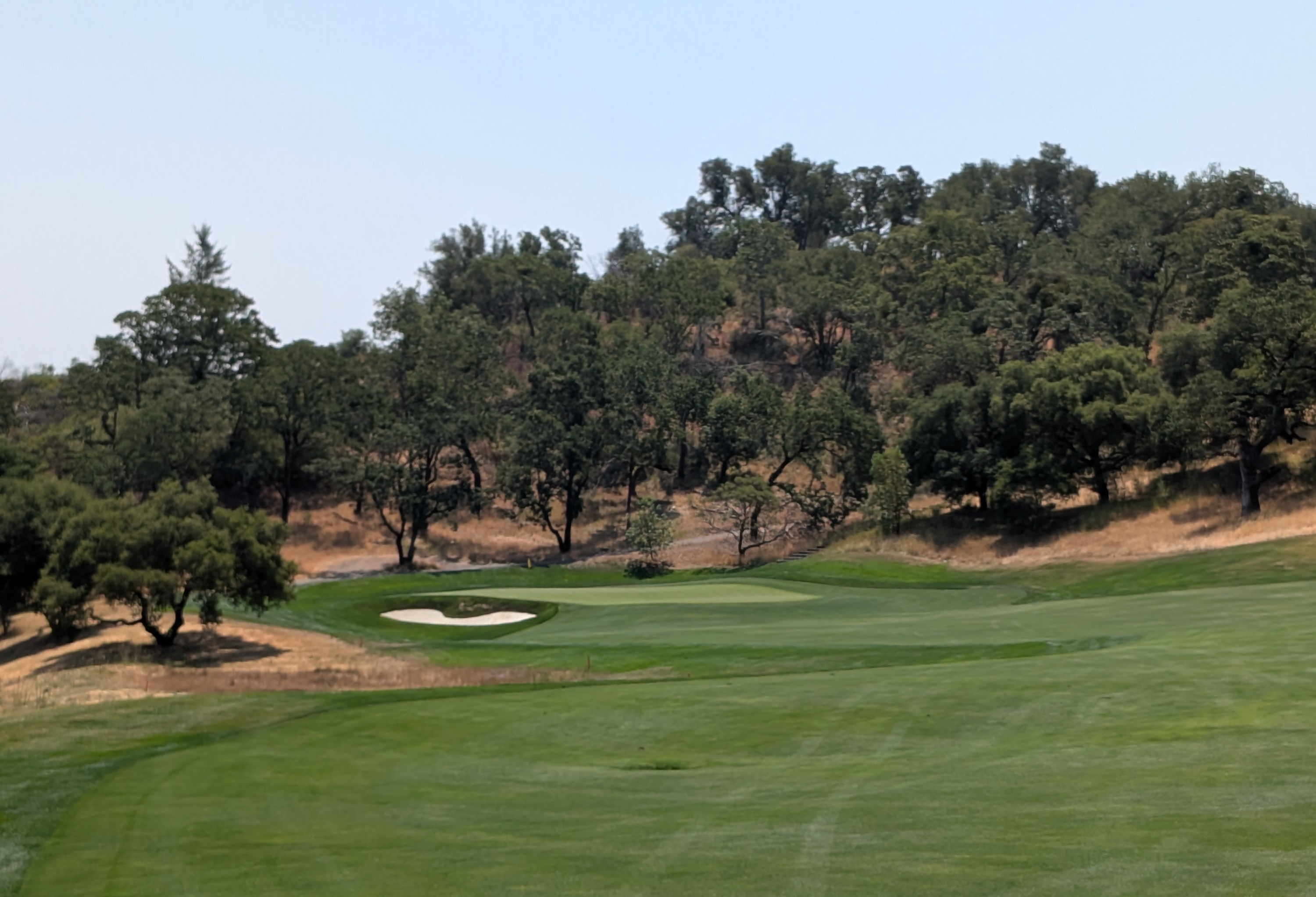
The most difficult walk at Mayacama is probably from the twelfth green to the thirteenth tee, but a golf cart was left for us to make the journey straight up the hill to the tee box. On top of that hill is the best par-4 hole on the back nine: the mid-length par-4 thirteenth.
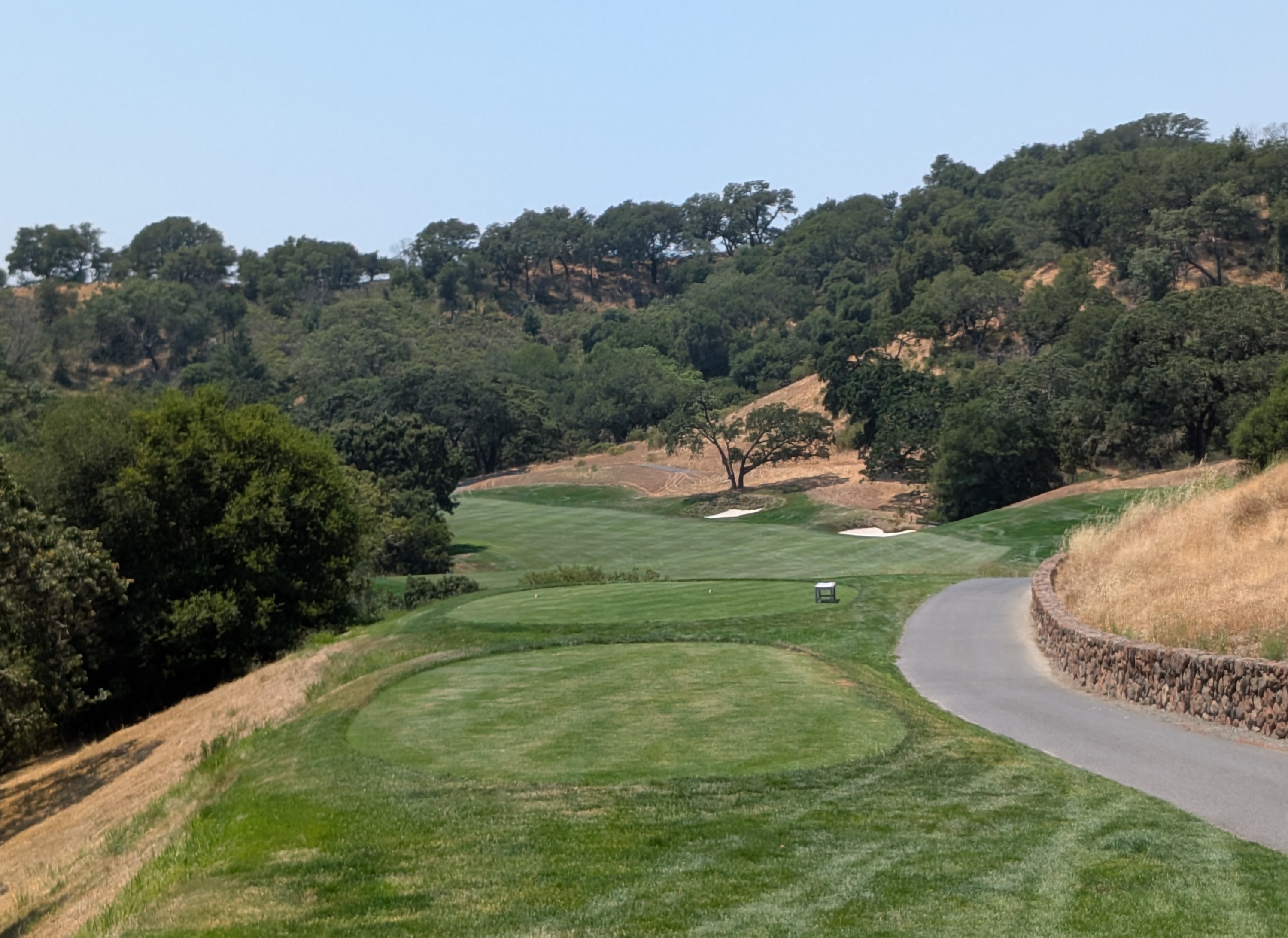
The thirteenth doglegs and narrows to the left, leaving plenty of options off the tee. For most players, one club less than driver is likely the play, unless you are comfortable with a tight draw. Left of the fairway is essentially dead.
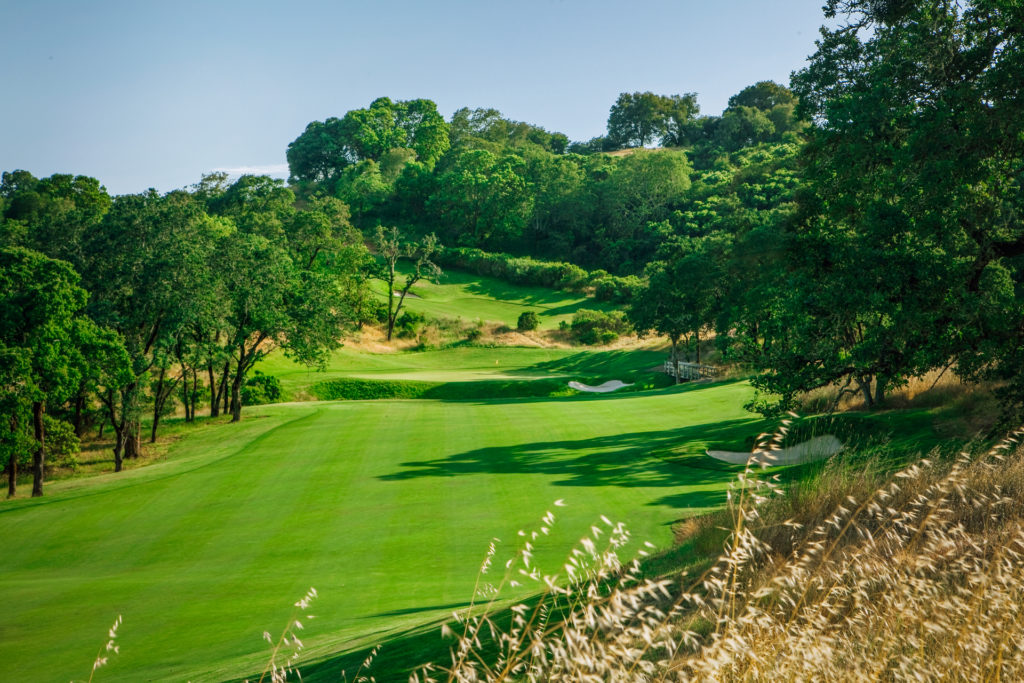
Once arriving in the fairway, the approach is played over another dry barranca to tabletop green that looks like Pete Dye built it, but left his railroad ties at home. I was a big fan of this hole, and that is saying something for a hole that goes left. Most holes that go left get a 0/10 from me. This one is at least a 9.
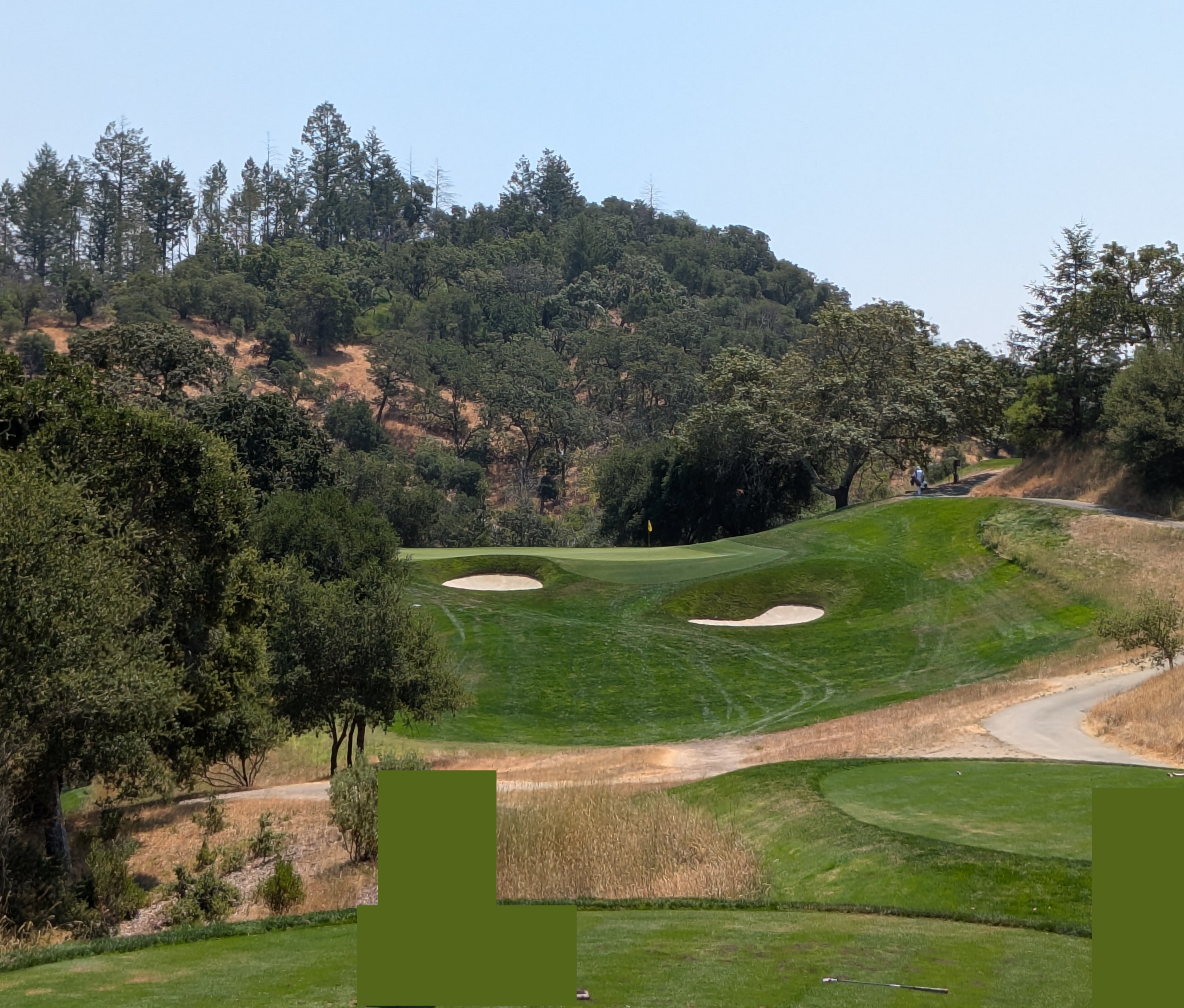
The fourteenth is a fun par-3 that shouldn’t create any trouble at just 155 yards, but a dramatic down and up approach to a creative green with lots of undulation could create trouble where there should be little. This short par-3 is target golf, and the punishment for misses long, left, short left and long right are all severe. Really, the only place to miss this green is short right. If Mayacama ever wanted to be particularly penal, shaving this hill in front of the green down to fairway length may present the membership with a difficult challenge, as short balls would repel many yards from and below the putting surface before stopping.

The fifteenth is a really fun par-5, probably the best on the course, played from a very elevated tee. The fairway looks almost like an infinity pool, and it is very difficult to gauge the runout. The longer hitters can challenge the bunkers on the left. After those bunkers on the left, the hole essentially dives a bit left and significantly downhill towards the green.
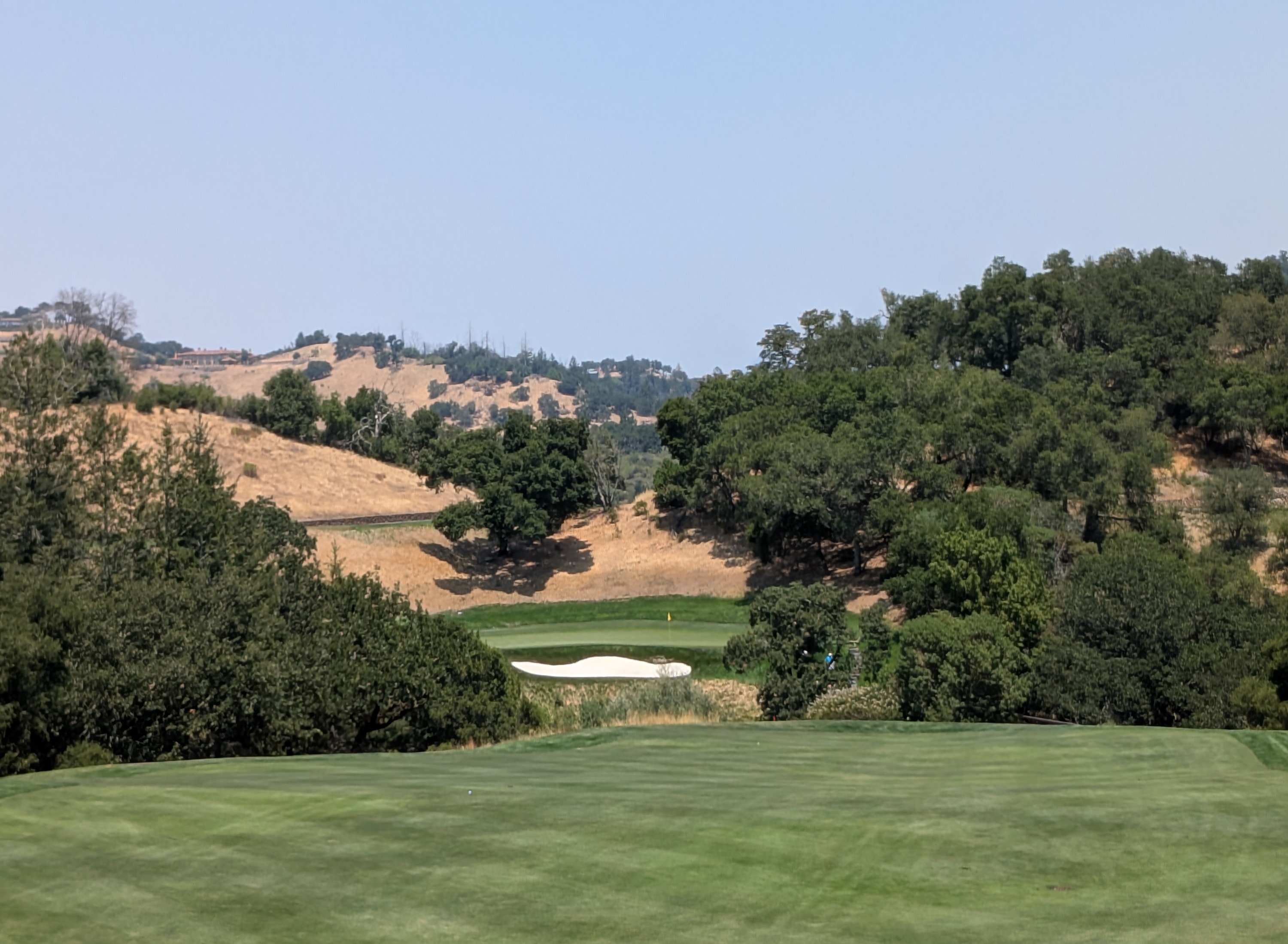
But before you get there, a significant forced carry awaits to reach the green’s surface. This is classic Nicklaus risk-reward heroic architecture. I was not the hero this day despite a perfect drive. This is the hole I’d most like to play again at Mayacama.
After making a score that should never be made on a short par-5, I was left mentally reeling a bit, and did not take a picture of the awkward and short par-4 sixteenth or the bland par-3 seventeeth. I do want to note the sixteenth though, because it was a bit interesting.
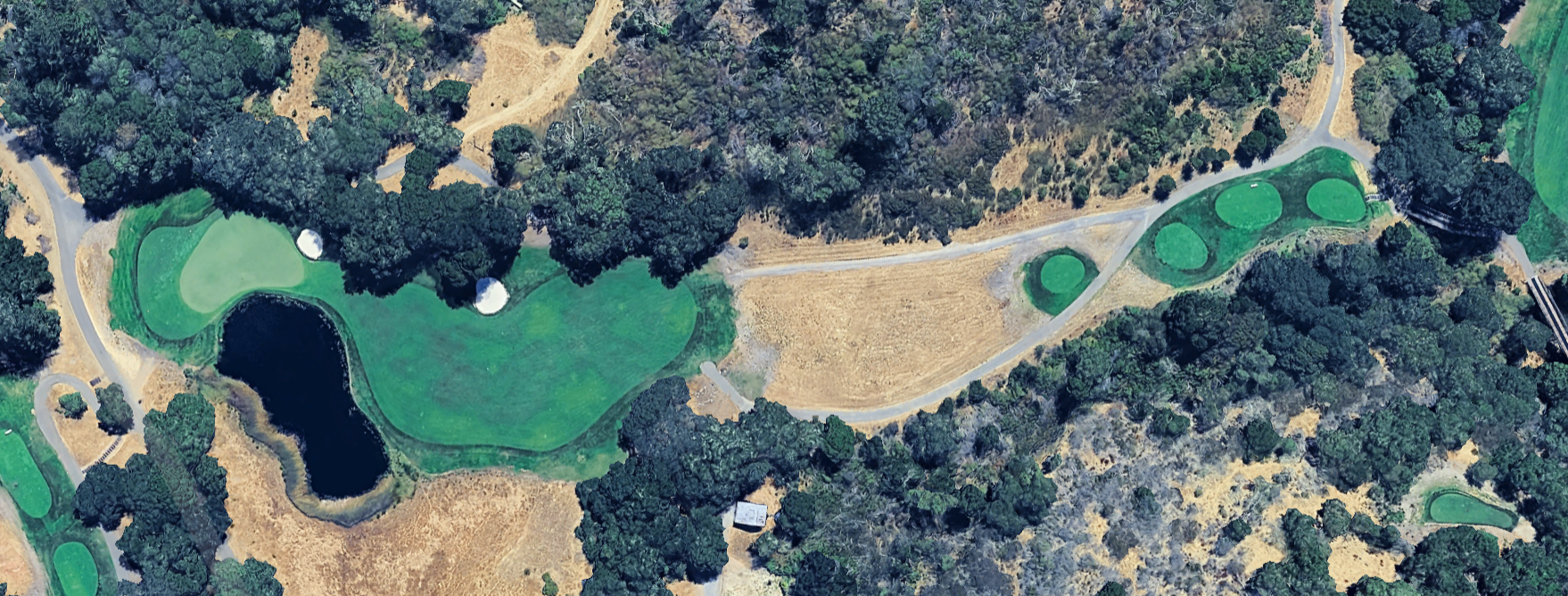
If you look at the bottom right of this picture, you’ll see the very elevated tee box we played from, which actually almost makes the hole straight and the green reachable at just around 300-yards. This was awkward because, this upper tee box, was a significant advantage when compared with the members tee, that was effectively completely blocked out. Playing from the lower tees means there really isn’t any options – basically just a mid or low iron into the fairway and a wedge over to the green. I think Jack (or someone in his design group) may want to revisit this hole at some future point. The tee boxes as they exist now make this kind of a neutered, boring hole. If at all possible, the tees should be moved to the top of the hill, or on that line, with a little tree clearing and flattening probably needed. Otherwise, the sixteenth is kind of a bad hole.
The seventeeth was also just a flat, straight, longer par-3 protected by a lion’s mouth bunker. Nice addition for variety, but nothing crazy or noteworthy.
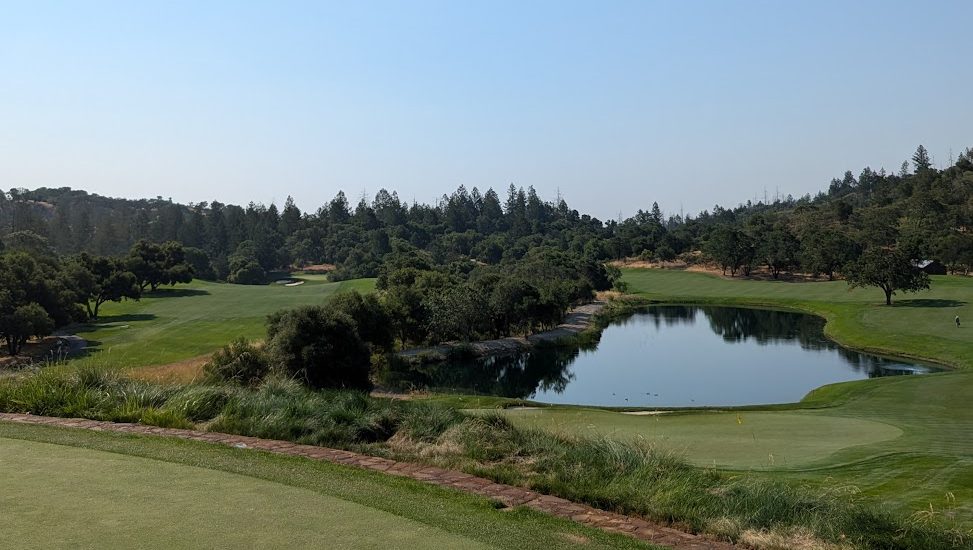
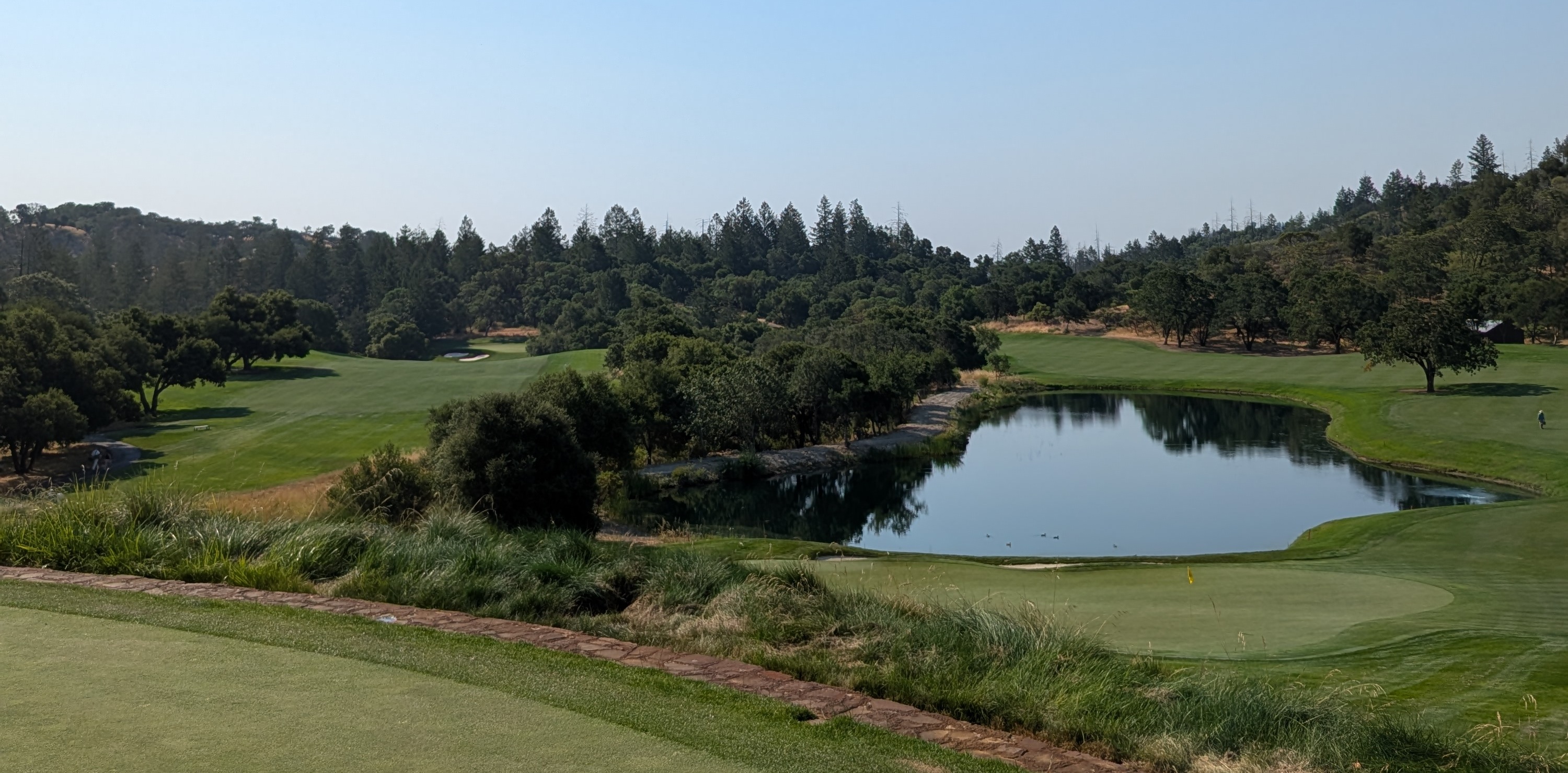
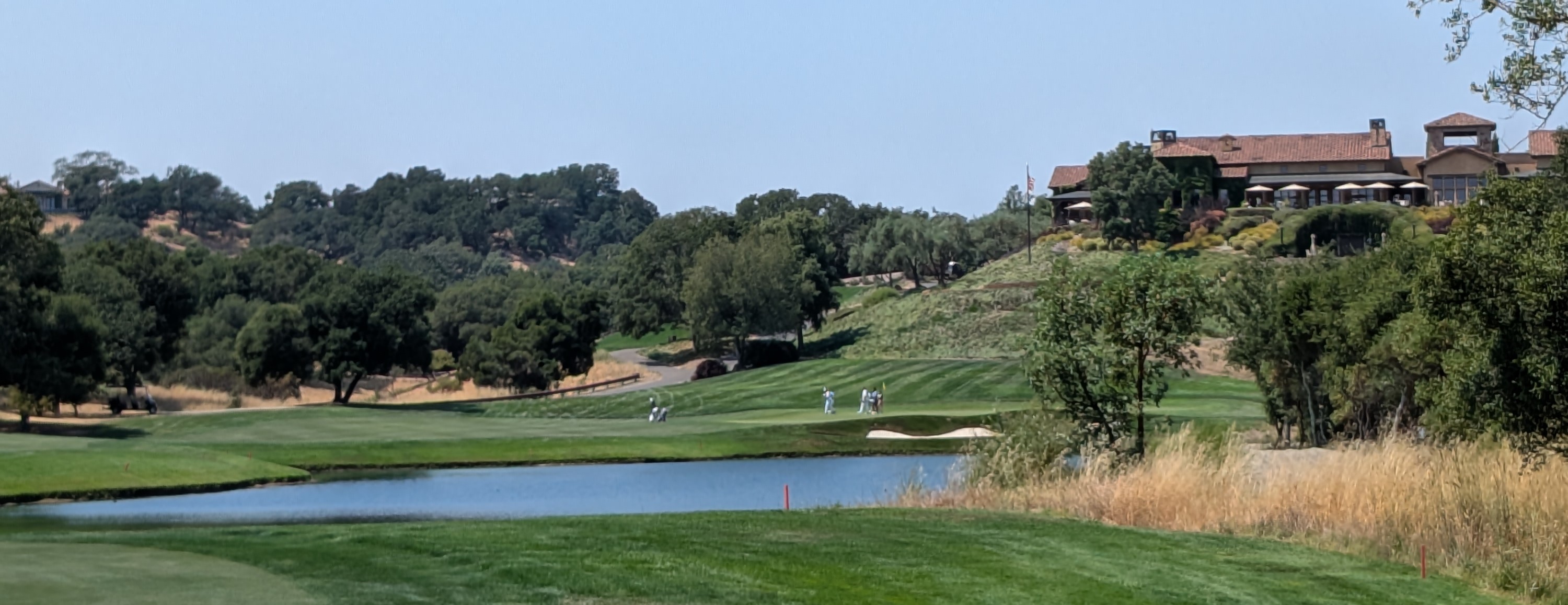
The eighteenth arrived, along with a bit of sadness that the round was nearly over. The eighteenth is another risk reward par-5, working around a pond on the inside of a right-hand dogleg.
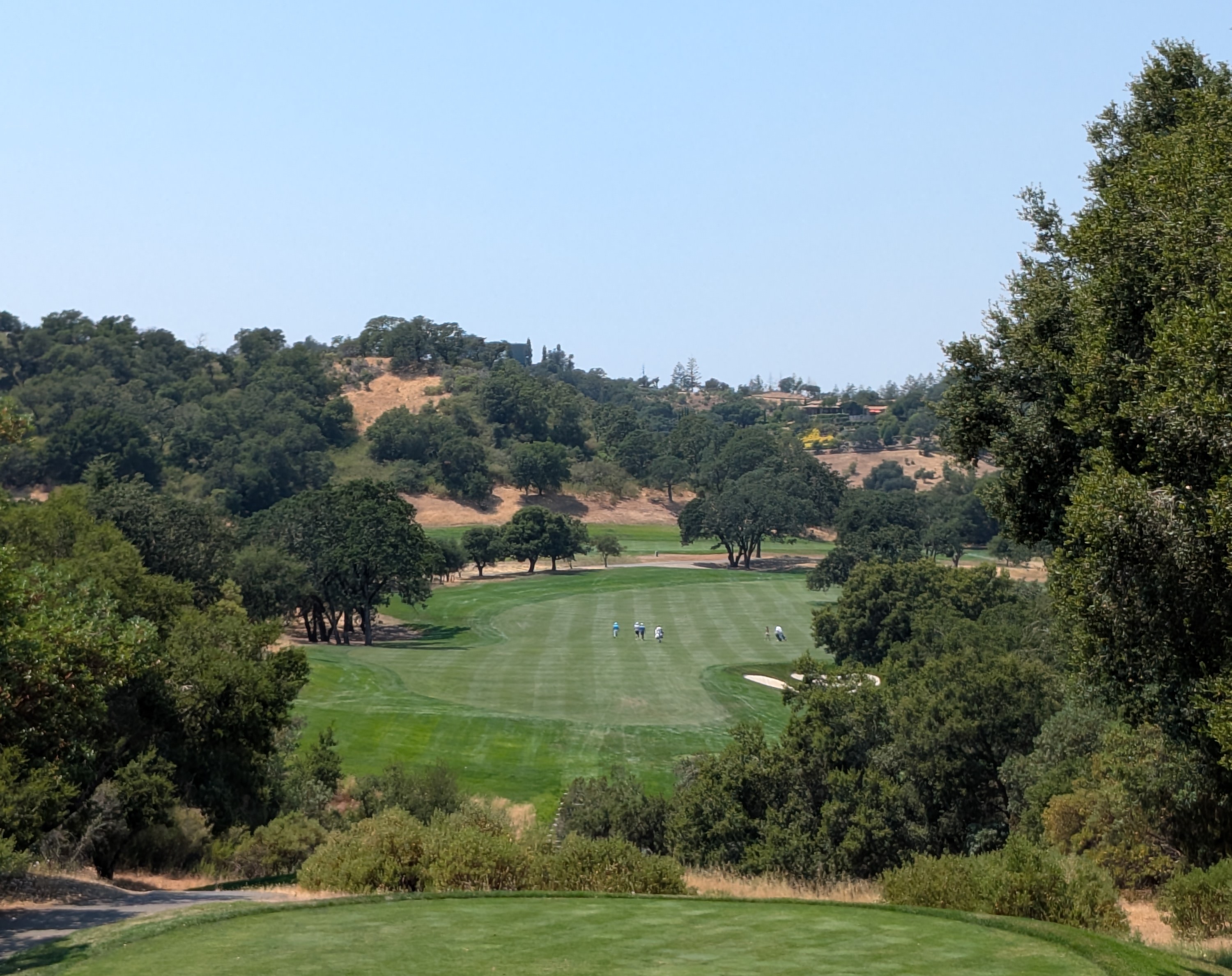
The tee shot is very inviting, elevated, and into a very wide fairway; just a pair of fairway bunkers to avoid from the tee box. But once in the fairway, a player has a couple of choices. On well struck drives in the fairway, the most enticing option is to go for the green over the large pond. But a player could also layup. There is a tree positioned in the middle of the fairway just short of the layup zone, so contending with that is the true challenge. Lastly, because the fairway works in from the left, an accurate but less aggressive approach could simply aim for laying up pin high left, which takes a significant amount of water carry out of the equation.
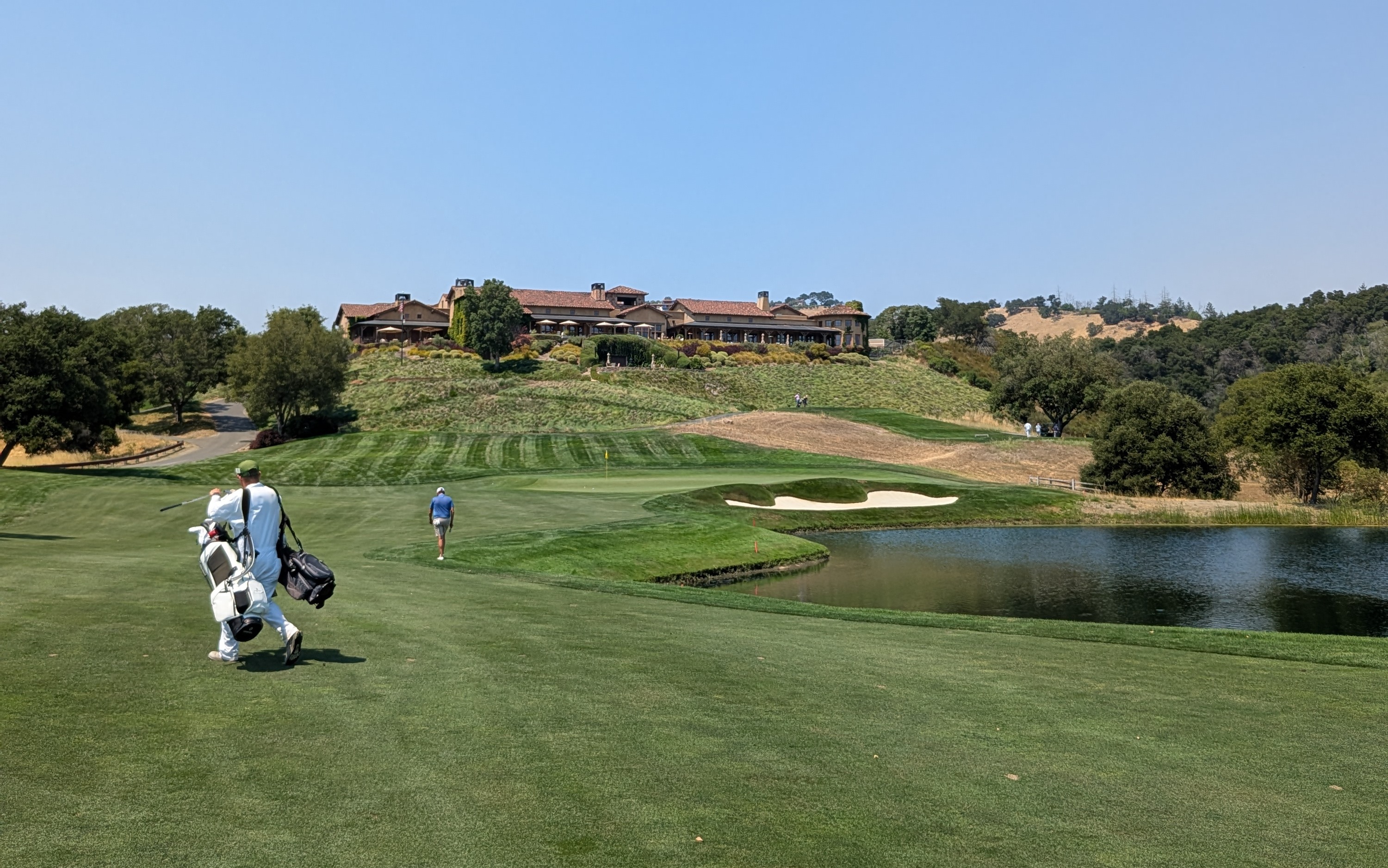
The walk up the eighteenth is fantastic, and as I’ve mentioned before, I love an eighteenth green that works just under the overlooking clubhouse. Mayacama nails that part, which gives the hole a bit of grandiose theater.
Final Thoughts
Mayacama is certainly a fantastic club, with great amenities, architecture that fits the wine country setting, excellent conditioning, an elevated walking-only ethos, and occasional vistas. So, does Mayacama belong more in the national conversation about the incredible golf in the Bay Area? Yes and no, but don’t worry, I’m not going to sit on the fence.
Mayacama deserves more recognition than it gets from everyday golfers, golf nerds, and architecture enthusiasts. But, I’m not convinced that the course actually belongs in the Top 200 in the U.S. I came away thinking that Mayacama was a wonderful club with gracious members and first-class facilities, but the actual golf course was considerably less than Top 100 quality. The course was a bit repetitive, didn’t wow me with any signature or “can’t miss” holes, and generally felt very similar in design to Wente Vineyards that we had played a day prior. Mayacama, unlike Wente, doesn’t really take advantage of any amazing vistas or postcard moments. The design feels muted, overly conservative, and, at times, bland. If it belongs in the Top 200, it would have to be near the bottom.
Of course, that is a rankings discussion when comparing it to the very best of the tens of thousands of golf courses in the U.S., and it doesn’t reflect my feelings on the overall club. Mayacama was once a Top 100 course, and its facilities still carry that pedigree. I enjoyed the golf course, but I may have enjoyed the shower, the locker room, and the dining room more. Mayacama is, without question, a ten-out-of-ten place to spend time. But I rate golf courses, not clubhouses, and I left unsure that Mayacama’s course alone deserves a spot inside the Top 150 in the country.
F1C’s Final Rating:
Shot Options: 8
Challenge: 7
Layout Variety: 6
Distinctiveness: 8
Aesthetics: 9
Conditioning: 10
Character: 8
Fun: 8
Total: 64/80
Read More: How We Rate Courses
Rating Scale Details
> 70: Top-50 U.S.
65-70: Top-200 U.S.
60-65: Best-in-State List
57-60: Best-in-State List Contender
53-57: Very Good
48-53: Good
40-48: Average
> 40: Poor
Author: Jaxon MacGeorge
Jaxon is the founder and lead course reviewer at First1000Courses.com. Jaxon has been playing golf for over twenty years, is a scratch handicap, and actively competes in USGA and Tennessee Golf Association (TGA) amateur events. By trade, Jaxon is an attorney and lives in Gallatin, TN, a suburb of Nashville.


 First 1000 Courses
Leave a comment