
Time to Read:
|
This Streamsong Resort course review is based on rounds played between April 7, 2025 and April 9, 2025.
Streamsong Resort is a public golf resort in Bowling Green, FL outside of Tampa, FL. They boast three unique 18-holes courses: Red, Black, and Blue. The green fee is around $325/round for each course
F1C’s Final Scores:
Streamsong Red: 66/80 (Top-200 U.S)
Streamsong Blue: 67/80 (Top-200 U.S)
Streamsong Black: 62/80 (Best-in-State)
Learn More: How We Rate Courses
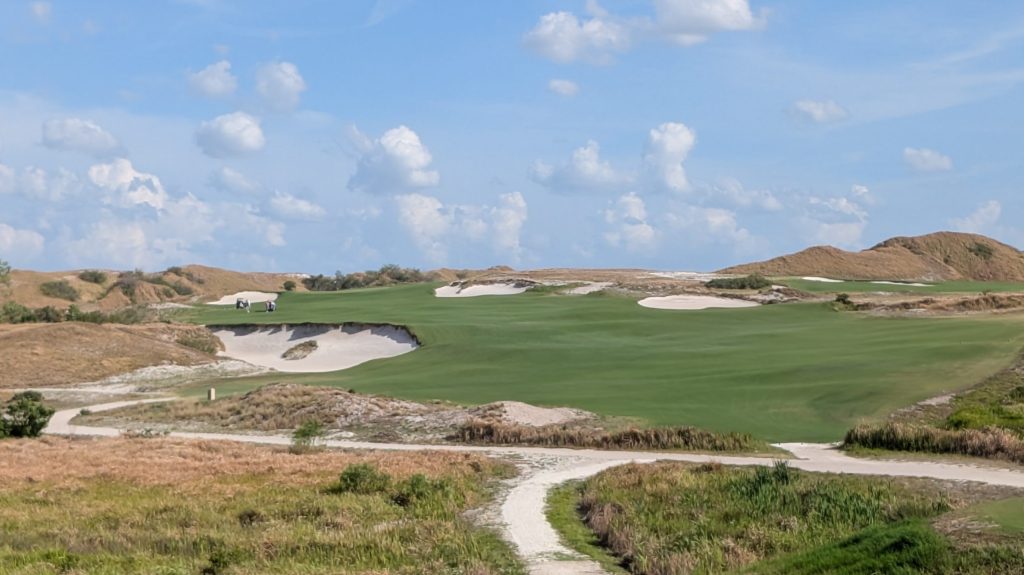
Streamsong Resort is everything Central Florida is not. Streamsong feels like in enclave of another place – the moon, perhaps – inside of the desolate nothingness of south-central Florida. But after the backroads end, and the property is located, you temporarily step out of Florida and into one of the more unique places in the State. First, the topography – Florida, for all it is known for, is not known for its hills. Yet, the manmade hills built on the old phosphate mines at Streamsong rival the most mountainous of courses. By the second hole (of whichever course you choose to play first) it becomes obvious that “Florida resort golf” and all of your associated prejudices or assumptions regarding that can be thrown out of your mind’s metaphorical window. Secondly, this unqiqueness comes from its quality. This is not just unqiue for Florida but the U.S. as a whole, that the same quick golf trip can enable a patron to play three of Golf Digest’s top-200 courses in the U.S. Bandon Dunes is the only other place in the U.S. where that is possible. The normal resort model (Kiawah, Kohler, Sand Valley, Pinehurst, etc.) typically give you one really good course, perhaps a top-200 course or top-100 public course. After that round, you typically get a few substandard resort courses (Kiawah) or maybe some best in state courses (Kohler). Not here; our two-night trip saw us check off three bucket list courses in very short order.
The only catch: it is not cheap. During peak seasons, rooms are expensive (and the only place to stay within an hour), walking is required during certain times (caddie expenses), and incidentals like food and drink are a bit expensive (my breakfast was $30 for a buffet and a High Noon was $10), as they are serving a captive audience.
However, I wanted to know if it was worth the trek to Streamsong considering the travel and expense for the opportunity to play three highly billed courses. Below are my findings, in what will be a more summarized review than my normal articles, due to there being three courses.
Streamsong Red
Streamsong Red is a Coore & Crenshaw design. The more I play Coore & Crenshaw courses, the more I think Bill Coore might be a genius. However, I had a little trouble understanding the genius here. I feel like it is a course that may be too smart for me, but maybe it is too smart for everyone. Let’s dig into what I mean.
First, I must start off by saying that aesthetically, Streamsong Red is the crown jewel of the entire property. As a whole, Coore & Crenshaw show an incredible ability to craft gorgeous holes. My concern is about the actual playability of some of the holes; but from an aesthetic point of view, Bill Coore is a genius. To take flat land and craft some of the dramatic and picturesque elevation changes takes a level of vision and execution that so few people on planet Earth possess. After playing Point Hardy at Cabot Saint Lucia, I understood that Coore & Crenshaw were capable of creating a course with immense beauty – but there, God gave them the beauty. Saint Lucia is just an incredible venue for golf, and I’m positive I could have come up with something incredibly beautiful if I were the course designer. A course of municipal quality would look incredible on that site. Streamsong Red is different, because this property is not beautiful…its central Florida. If God blessed the site of Cabot Saint Lucia, He damned this one. Yet, man has made it absolutely gorgeous. Let’s go through some of these aesthetic holes.
The first hole at Streamsong Red starts you off with a stunner, mere feet from the clubhouse.
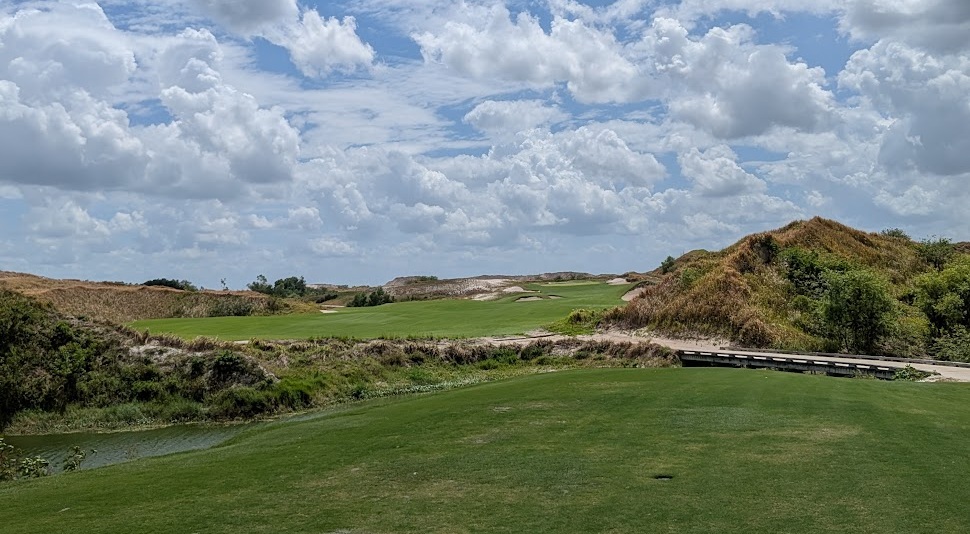
Two centerline bunkers shade the landing area left while a large bunker perched behind a hill protect the right side of the fairway. The approach plays significantly uphill to a green fortified by sand throughout. A beautiful hole to start an amazing golf trip for us. Unfortunately, those centerline bunkers were not in play on our date of play, as the hole played directly into a 25mph wind. I had 4-iron into the first green – a rude awakening, given the caddies stated this was the typical wind direction during the busier seasons.
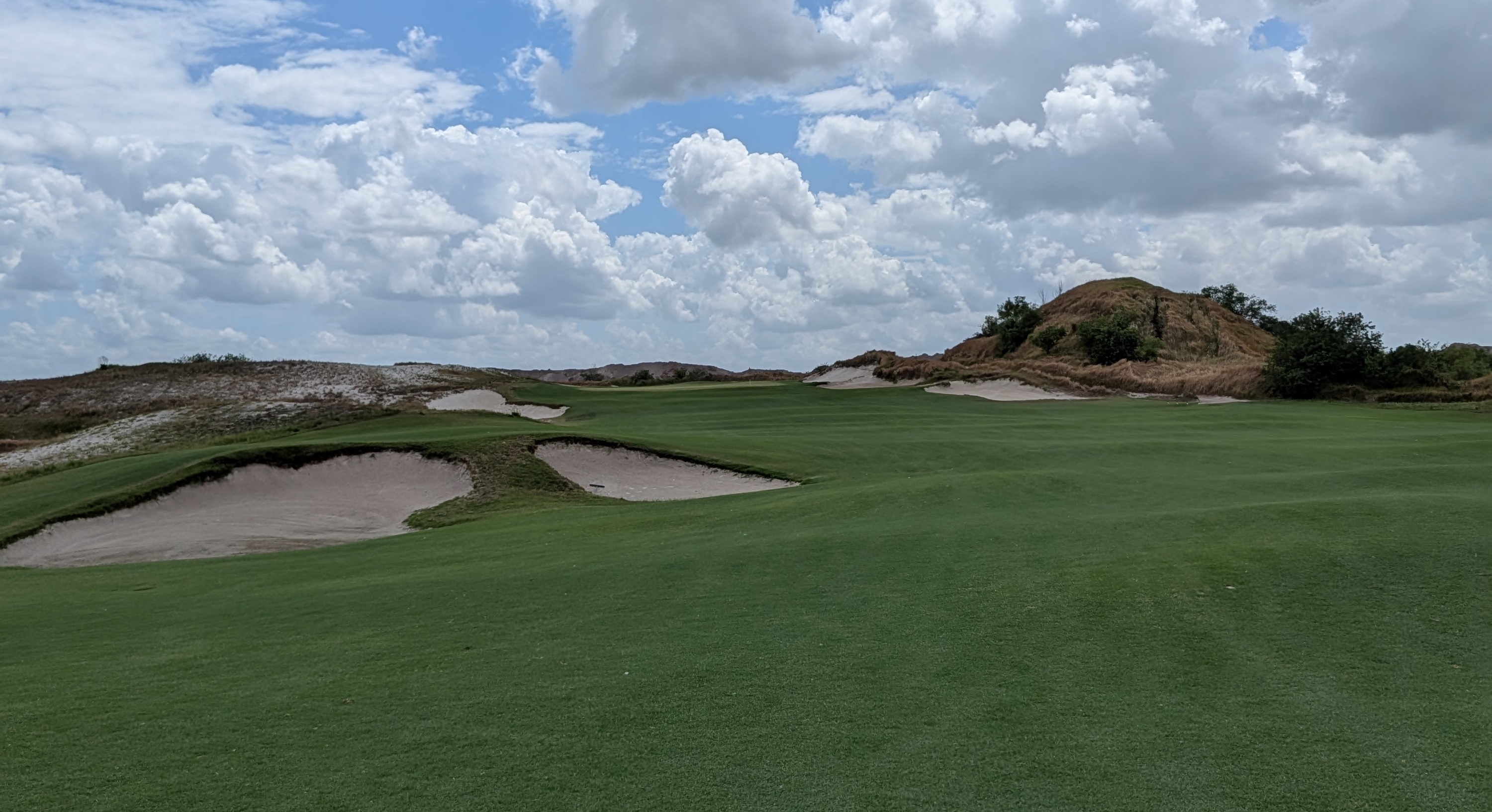
I think this is an incredibly aesthetic opening hole. But the length, wind management, and severity of the green instantly gave me playability concerns. With these courses crafted to draw the masses to spend money, they must possess a degree of uniqueness. What I think designers may struggle with is the constant need to keep making their designs more severe and crazy – for lack of a better term – to draw interest. My observing eye was already on the lookout from the first hole to answer a basic question: is this course tricked up to be unique for the hell of it? Or is this designed to be a good, playable golf course with some quirks? For the first hole, I was still in the ladder camp.
By the third, my mind may have been slightly starting to change. Again, the hole was as aesthetic as anything I’ve seen in my life.
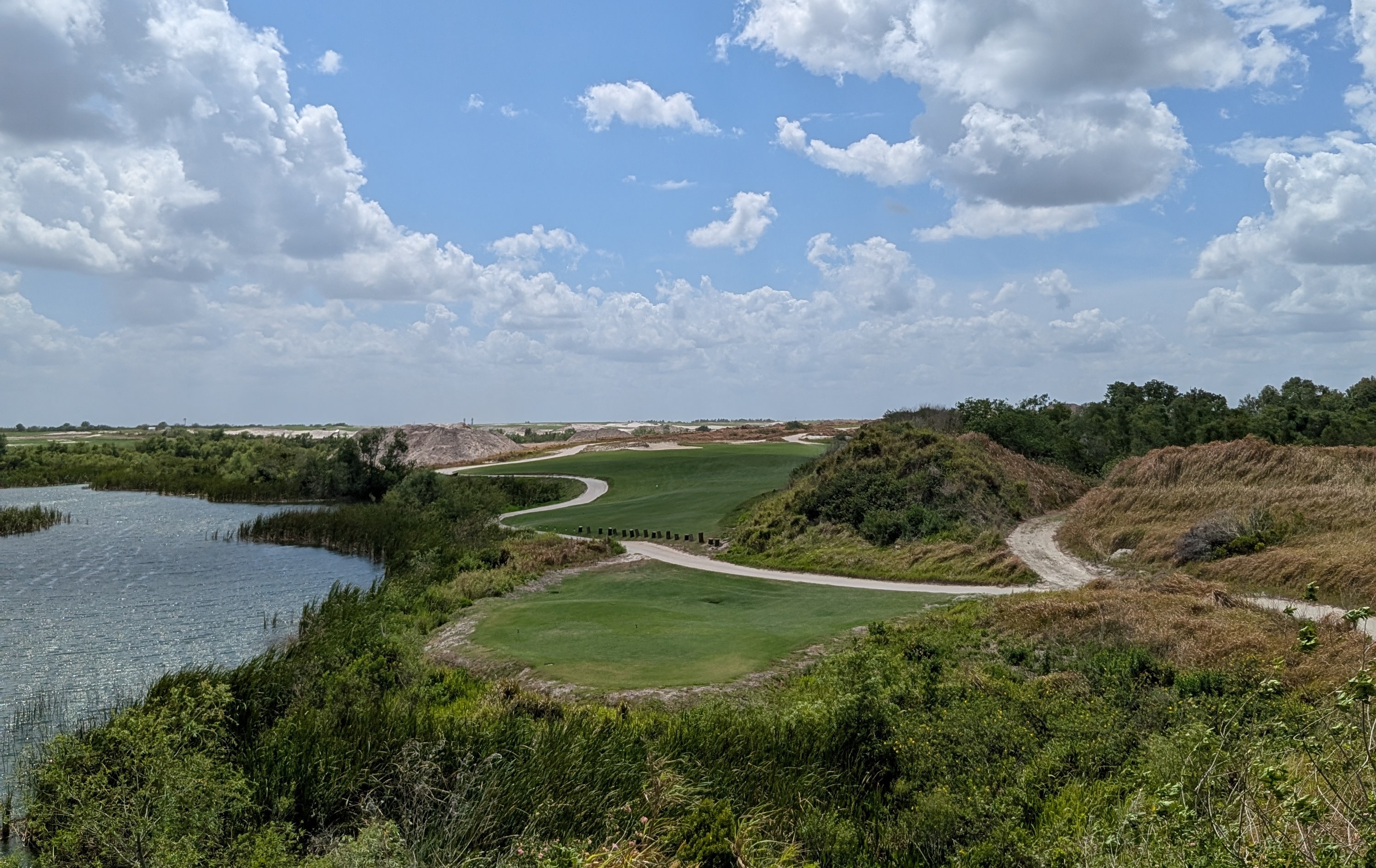
The third at the Red course is a mid-length par-4, again uphill to a semi-blind landing area, and again straight into the teeth of a howling wind. Bunkers protect both the left and right of the somewhat narrow fairway.
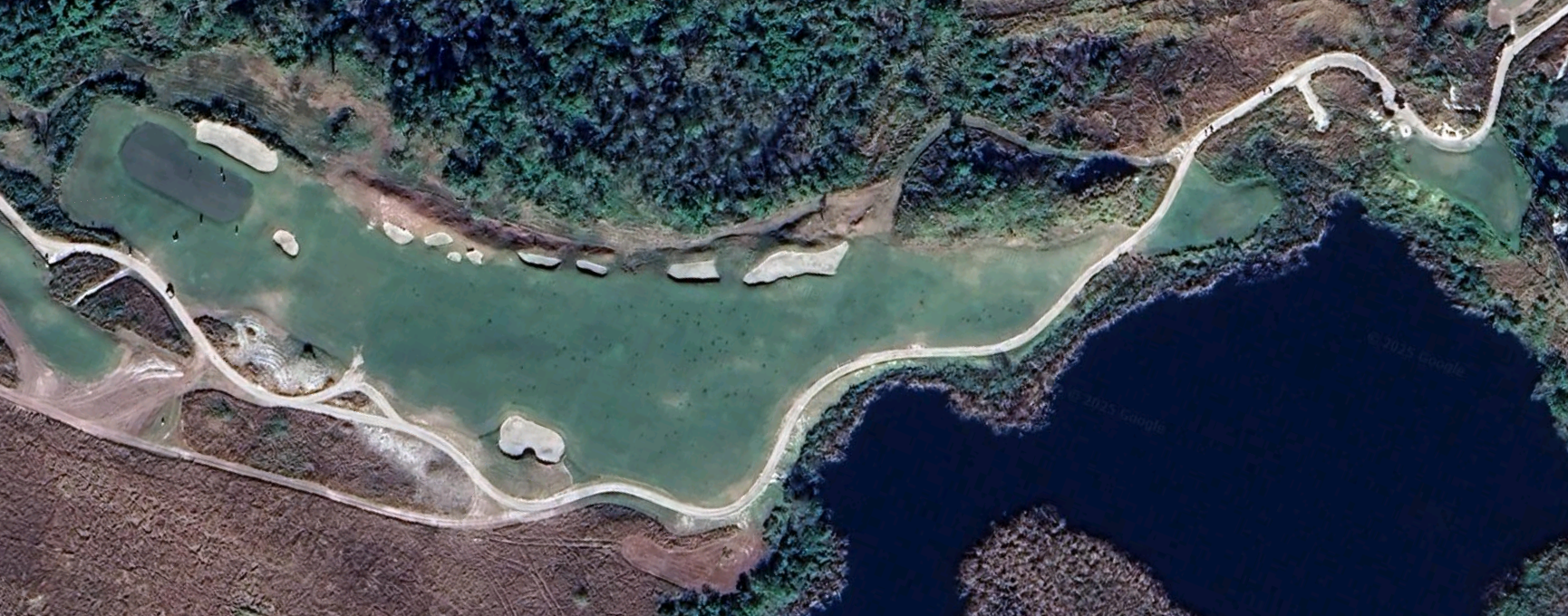
The approach to the third green is also semi-blind, depending on your positioning, and the green is a long, narrow, intentionally tricked up green. I missed this green just a few feet left and was left with an impossible chip, which is a bit penal for an uphill, into the wind, semi-bling approach to a green just around 13-yards wide. I’d argue this was my least favorite hole on Red and started to give me a theme for Streamsong Red: Beauty and the Beast. From an aesthetic view, beautiful. From a playability standpoint, an ugly beast.
The first par-3 on the Red course was quite enjoyable, and one of the better par-3s on the property at Streamsong.
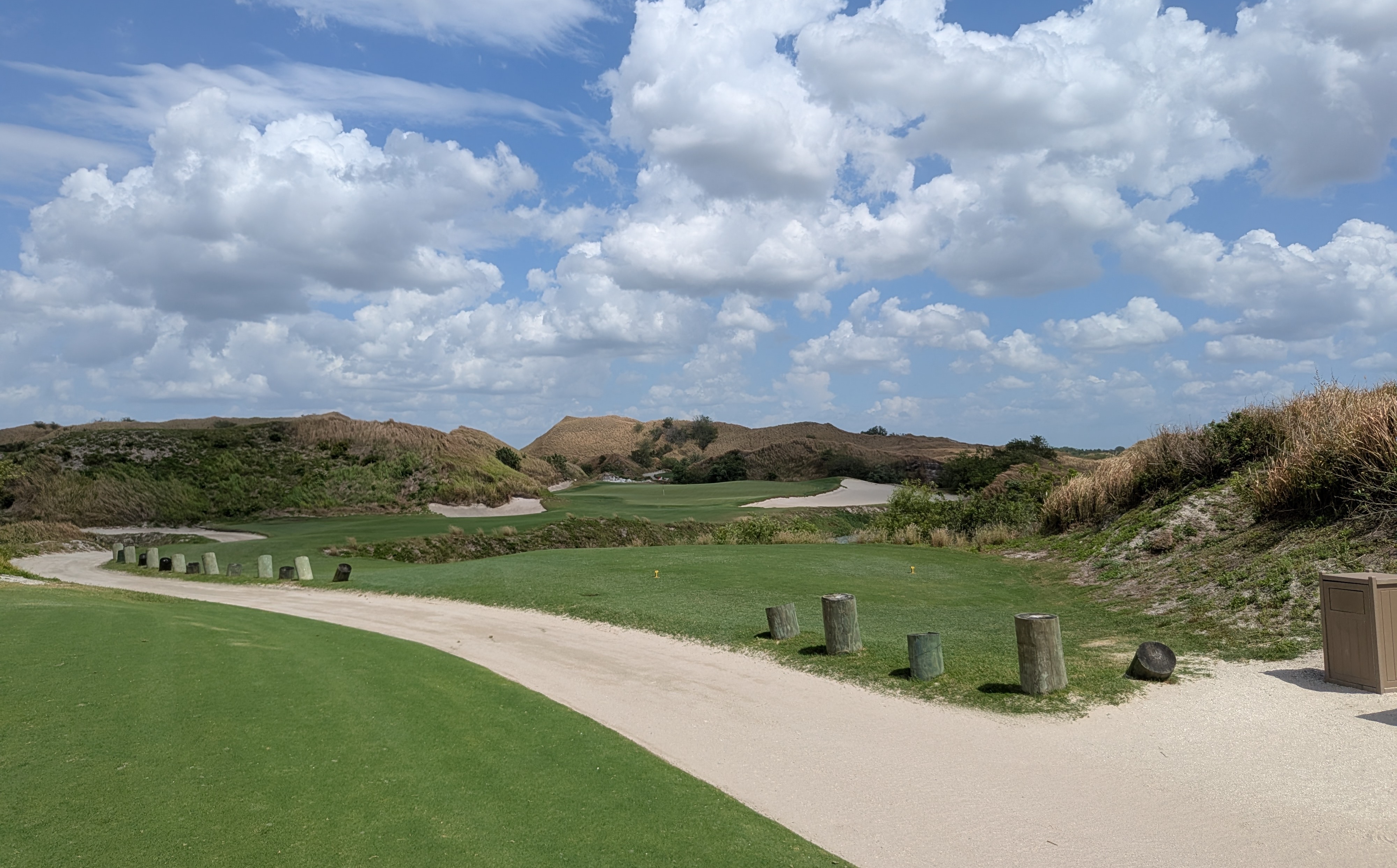
The sixth hole at Streamsong Red was a shorter par-3, with a large bunker protecting the long, triangular green. A large hill with a bunker at the base also protects the front left of the green in a rather unique, aesthetic manner.
The eighth however, while nice in design, was to the number the same length as the sixth as a mid-length par-3 and felt shoved into the corner of the property.
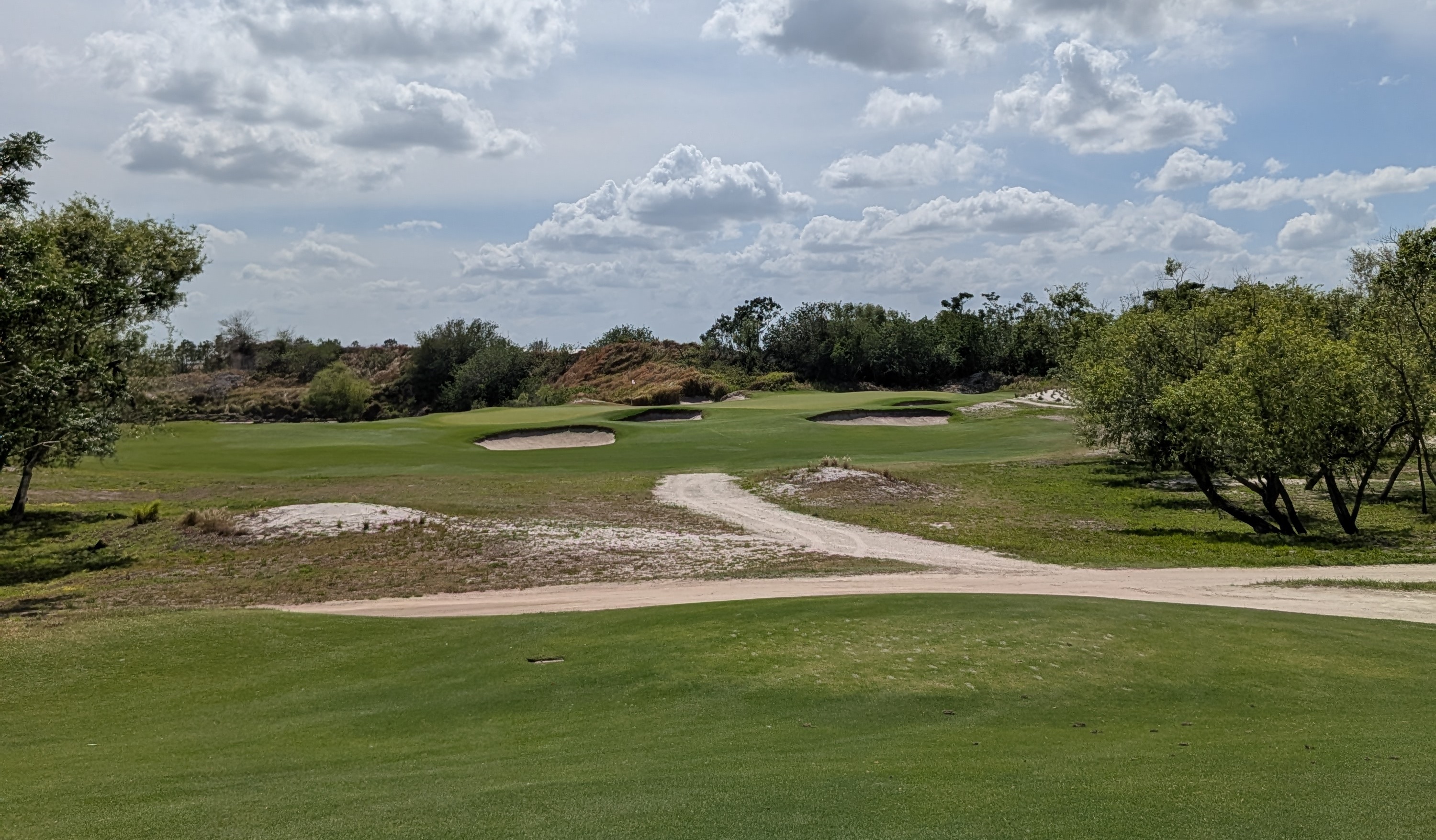
I’m not sure if the eleventh at St. Andrews’ Old Course was the inspiration here, but it would be an incredible coincidence if not. The actual playable structure of the hole is identical.
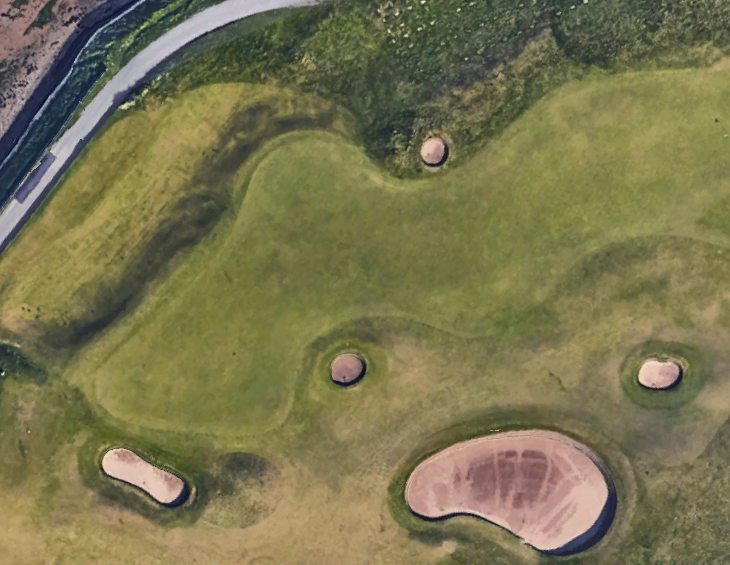
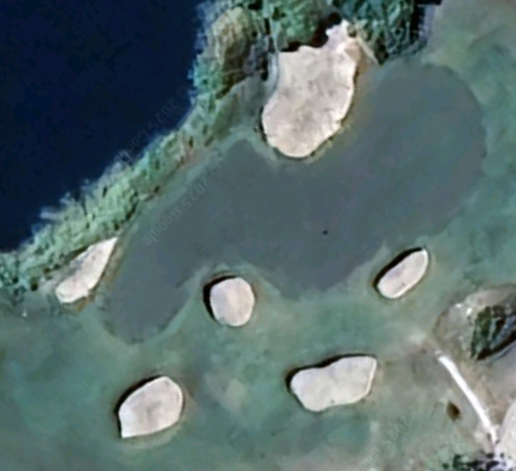
However, what St. Andrews gets right, and Streamsong Red gets wrong, is the width between the back edge and the frontal bunker. A missed green short leaves an impossible up and down to any left-handed pins, due to the narrowness of the green. I give this an A for effort (even if plagiarized) and a B for aesthetics, but a D- for execution due to the playability concerns caused by the narrowness of the green, and lack of bailout area long left (like St. Andrews).
The back nine has it’s share of tricks as well. The stretch I want to highlight is a gorgeous stretch of golf from the thirteenth through the sixteenth holes at Streamsong Red. This stretch starts with another uphill hole, a medium length par-5 in which the tee shot works around a centerline bunker.

Once in the fairway, the approach shot is basically completely blind and plays over some large sand dunes. It is a really pretty hole for an uphill hole, but not without its beast.
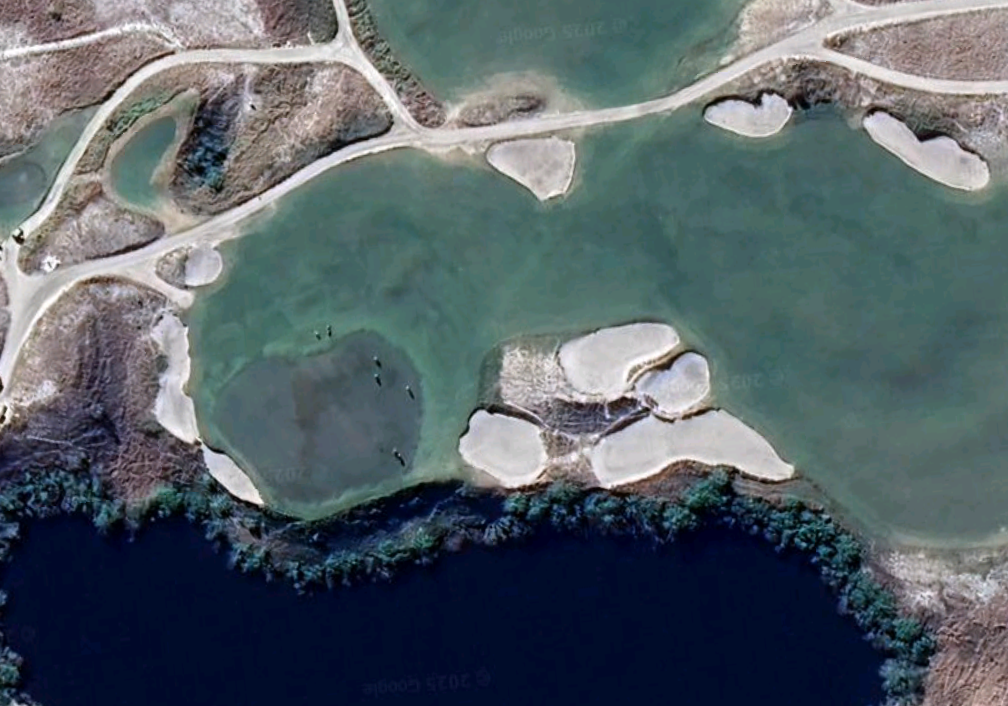
As you can see here, the green is heavily fortified. What you can’t see, is the depth of the fortification. Normally, I am perfectly fine with a deep bunker surrounding a green, but here, the entire back of the green is protected by a cavernous bunker – I’d estimate 12-15 feet deep in spots. And its completely blind to the approach. The water? Blind to the approach. The landing area right? Blind to the approach. I am fine with all of these elements in solitude. But a deep bunker or water protecting a purposefully blind green (these bunkers photographed above were clearly designed to obscure a view of the green) feels purposefully tricky, and a test not of the player’s skill, but of the caddie’s ability to convey danger.
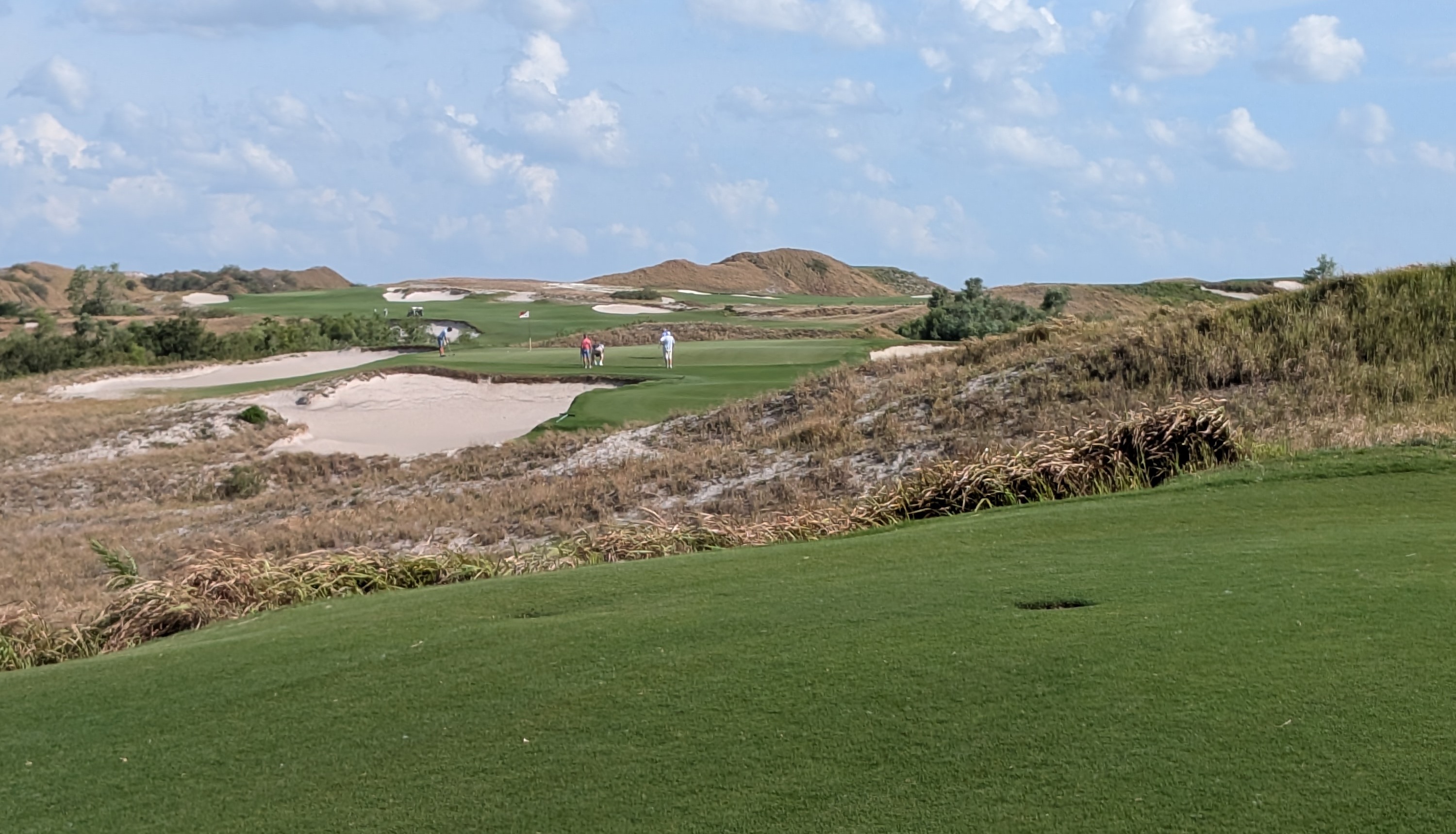
The fourteenth is a very attractive mid-length par-3 with the fifteenth on the horizon. This par-3 doesn’t have as many tricks up its sleeve, but it does have to very deep bunkers protecting the green short and left of the green that are to be avoided.
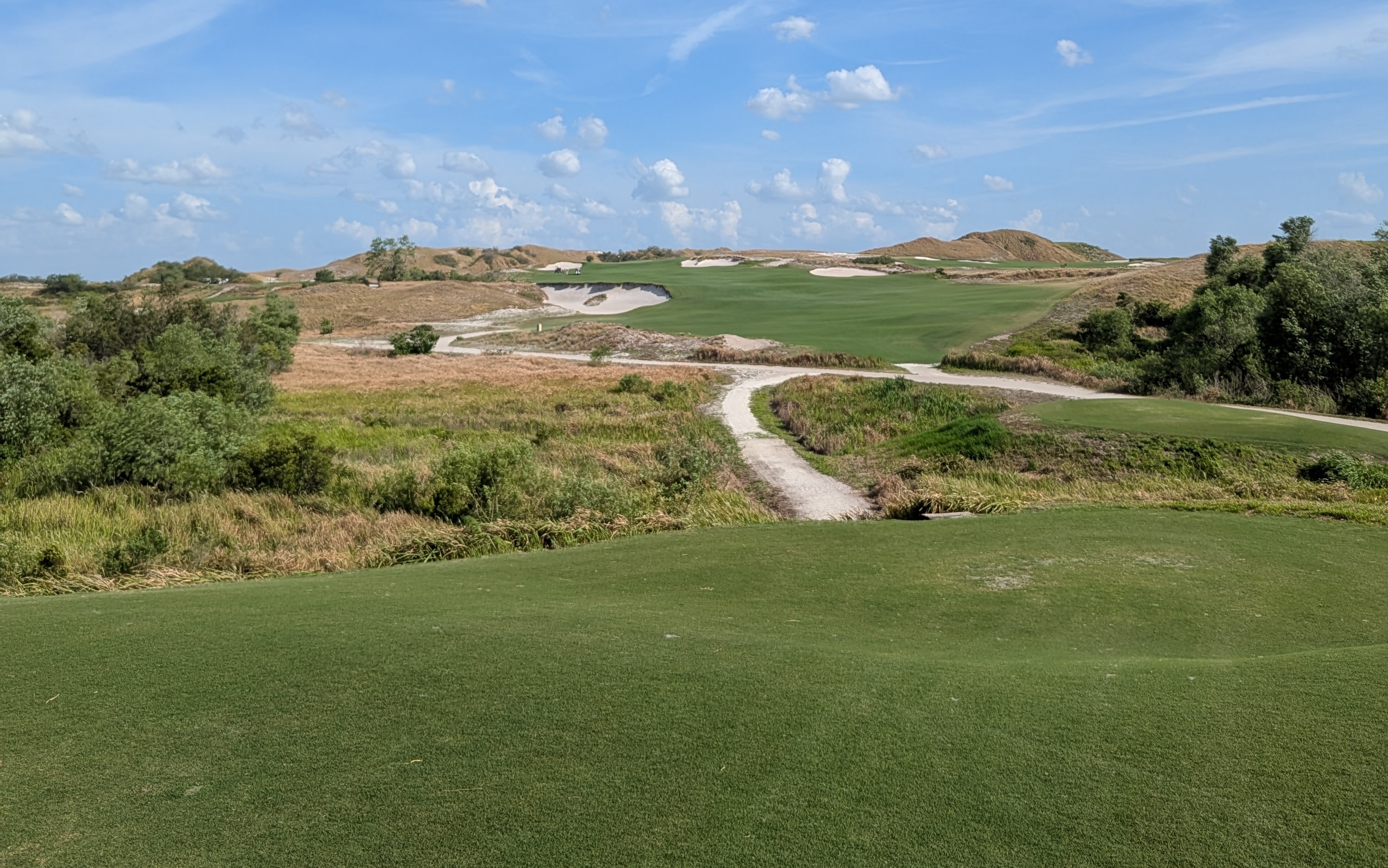
The fifteenth is the hole I most want to highlight at Streamsong Red, because it is the hole that best encapsulates the course. To my eye, the fifteenth was the most attractive hole on the property. The long par-4, playing directly into the teeth of the wind, was almost illusory in its beauty. I initially asked my caddie if the hole was drivable; it would take my best drive of the day and one of the best three-woods I have ever hit in my life to hit the green in this strong but prevailing wind. For what it’s worth, I believe that on flat ground with no wind, my drive and three-wood would have totaled something like 570 yards. But on this hole, I didn’t make it pin high.
The fifteenth is massively uphill. My caddie said its often referred to as the “caddie killer” due to the steep incline of the hole so late in the round. My calves were burning as well, even with no bag. Incredible that such a hole exists within the state of Florida. The fifteenth at the Red Course is the most attractive hole on the property.
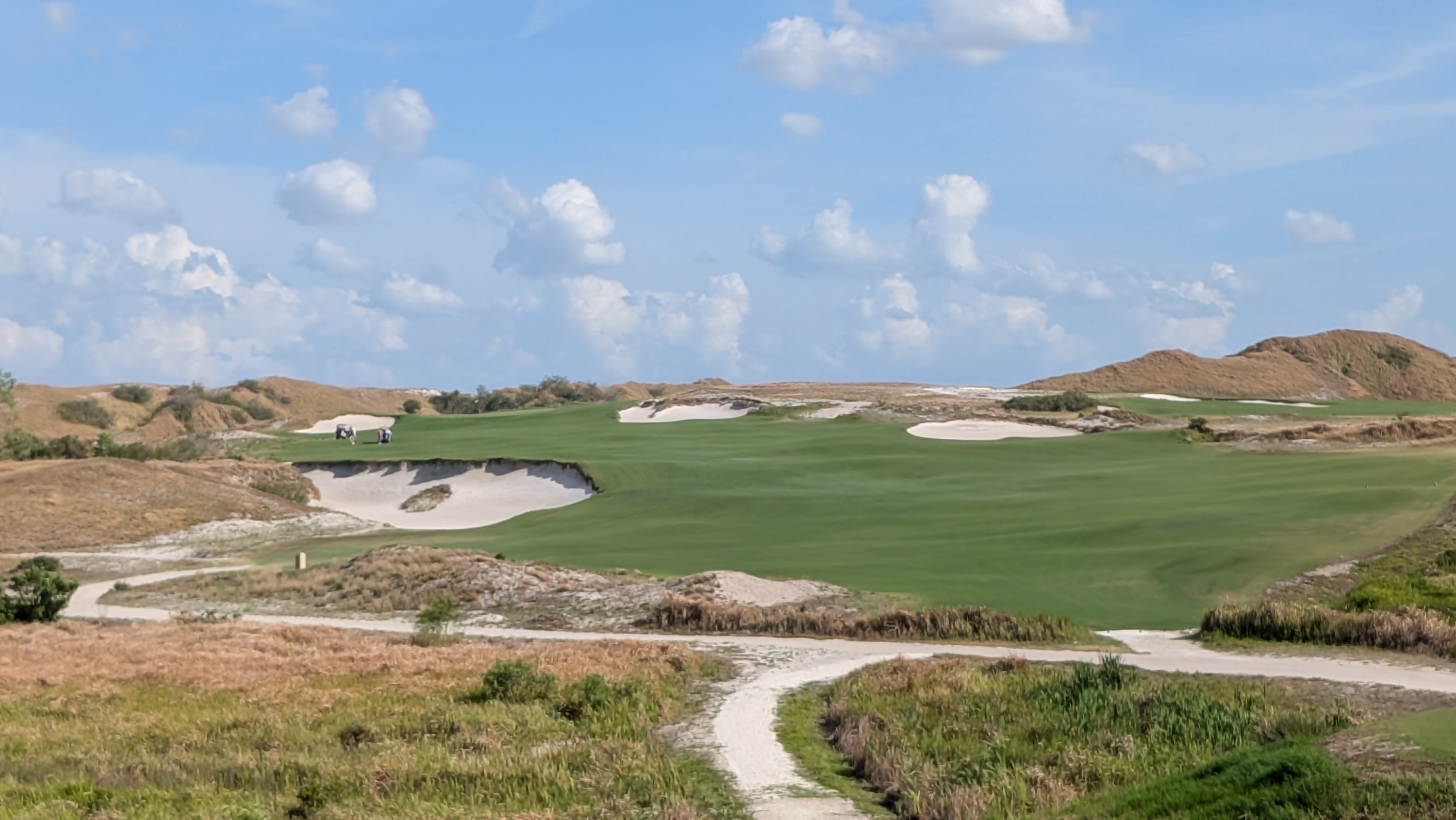
But uh, the elephant in the room is….what are we doing here? This hole is ENTIRELY too difficult and gives the impression that it was designed to be played downwind. There are very few worse than scratch golfers that would average better than 5 on this hole into the wind, with 6s and 7s being much more common than 4s. A giant, deep bunker protects the left side of the fairway – consider your admission to this bunker a free ride to a double bogey. The beauty and the absolute beast. Perhaps I am just not seeing the genius here, or maybe the genius is just the beauty of the place, because this hole was neither an enjoyable walk or an enjoyable play, only an enjoyable photograph.
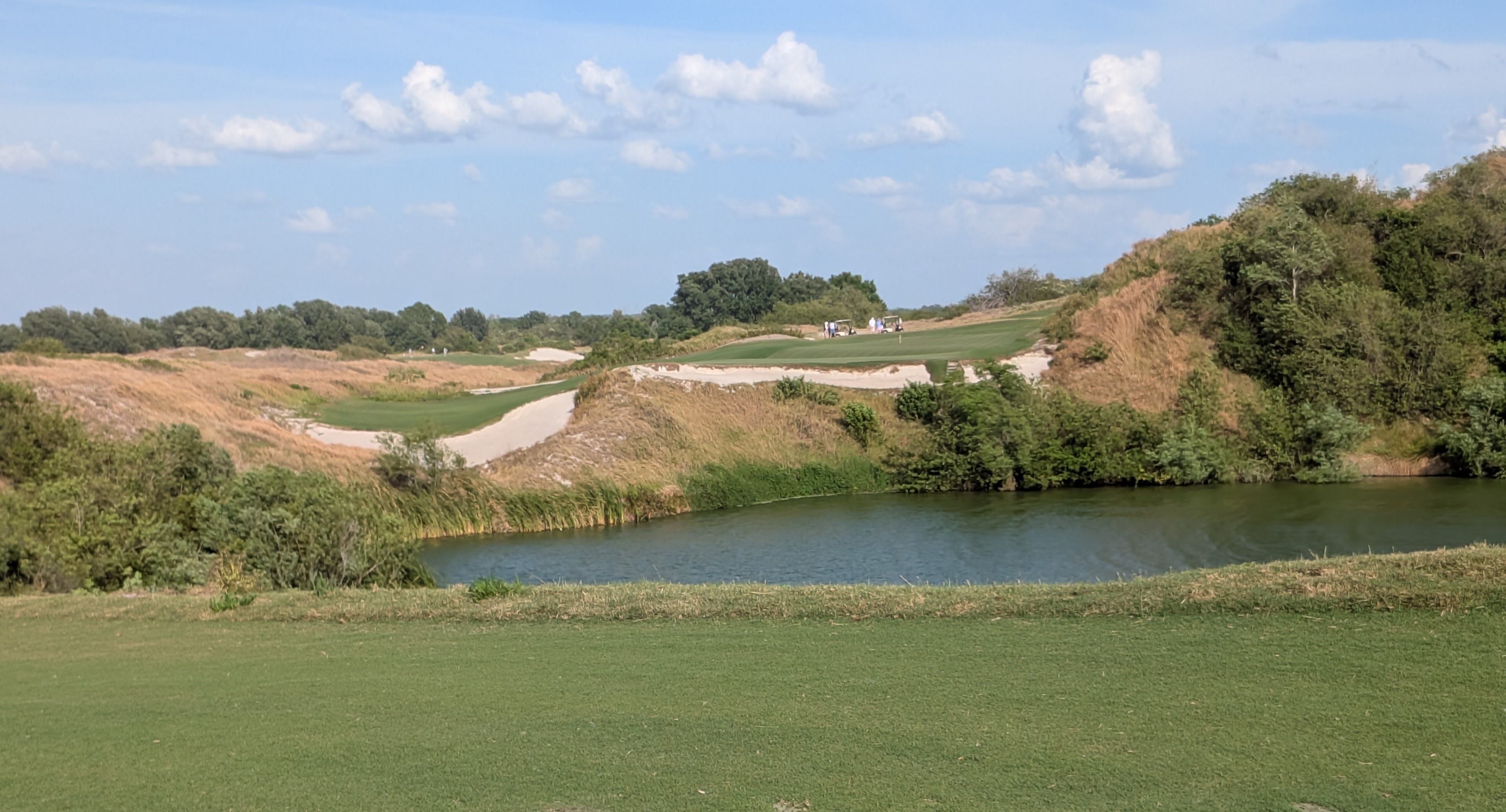
Lastly, the par-3 sixteenth is a longer par-3 that is a biarritz style green, with an approach played over water. The biarritz is incredibly steep on the back end and requires precise placement of the ball to avoid funneling to the middle. Again, perhaps a bit too purposefully tricked up for my taste, considering the hole was nearly 200 yards into the wind. A left miss was severely punished with a chipping area, tightly mown, some 10-feet below the green surface.
All-in-all, the bones of this course are not incredibly difficult, its the intentional trickery, blindness to hazards, and green contours that I found were taking away my enjoyment of the course. This is one of those courses where if you’re hitting it well, you probably can squeeze around without noticing difficulty very much, but as you slightly veer off the straight and narrow, you’ll find some pretty unfair scenarios that detract from the overall experience. Of the Coore & Crenshaw I have played, this one seemed the most intentionally gimmicky, from designers that I can’t say I have seen that style of design from often, if ever.
However, with that being said, Streamsong Red is undeniably one of the best 200 courses in the United States. I think it would be even more highly regarded if some different playability choices were made in the initial design, but you cannot argue with the aesthetic appeal of this course. It is far and away the most dramatic, spiritual experience that Streamsong has to offer, and has the ability to play unbelievably tough in the wind.
F1C’s Final Rating:
Shot Options: 9
Challenge: 9
Layout Variety: 7
Distinctiveness: 7
Aesthetics: 10
Conditioning: 8
Character: 9
Fun: 7
Total: 66/80
Streamsong Blue
Streamsong Blue is a Tom Doak design and winds in the interior of the Red course. Inevitably, these courses were going to be compared to each other. This was a certainty from the beginning, so I will get that part out of the way as quickly as possible before I move to analyzing the course on its own merits.
Streamsong Blue is much more refined than Streamsong Red. Tom Doak knows how to design a proper golf course, and he delivers a course that has aesthetic appeal, memorable holes, and is very playable. While tough, Doak has designed a course that is much more approachable for low and high handicaps alike. The elevation changes are managed in a much more appropriate manner, and there is almost no approach blindness. It objectively is not as aesthetic as the Red Course, and I expect that is why Golf Digest ranks the Red higher than the Blue course. However, I do not believe the aesthetic appeal is more important than the golf, and the golf is better at the Blue course. The slopes are just as severe (if not more so) on the greens, the elevation change is MORE than the Red course in totality but is managed so much better. Doak shows his own genius at the Blue course – you’ll invariably leave with less photos in your phone, but more satisfaction in the round you’ve just played.
Let’s talk about some holes I really liked, starting with the first hole at Streamsong Blue, a lovely par-4, short (but into the wind), presenting a plethora of ways to attack.
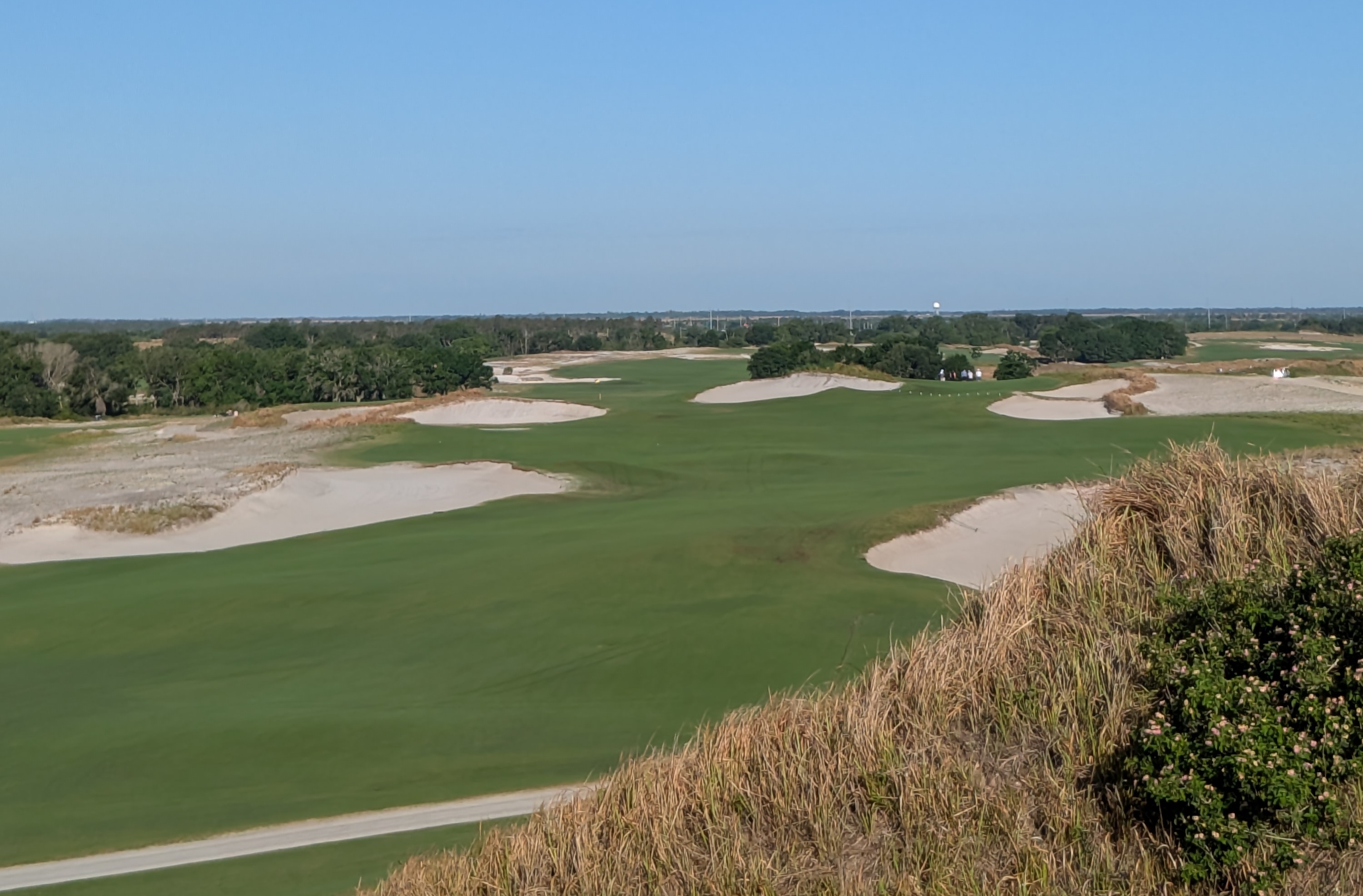
With the right wind, and the exposed tee box on top of the hill overlooking the entire property, it would be feasible to drive the green. However, the prevailing wind will probably necessitate taking the perfect club to lay up in front of the bunkers that pinch the front of the green. However, other options exist from this first tee, if a player is targeting a specific approach number. The perching of the tee box makes this one of the more awe-inspiring places on the property.
The second hole is also a fantastic par-5, longer but could be attacked in the correct wind.
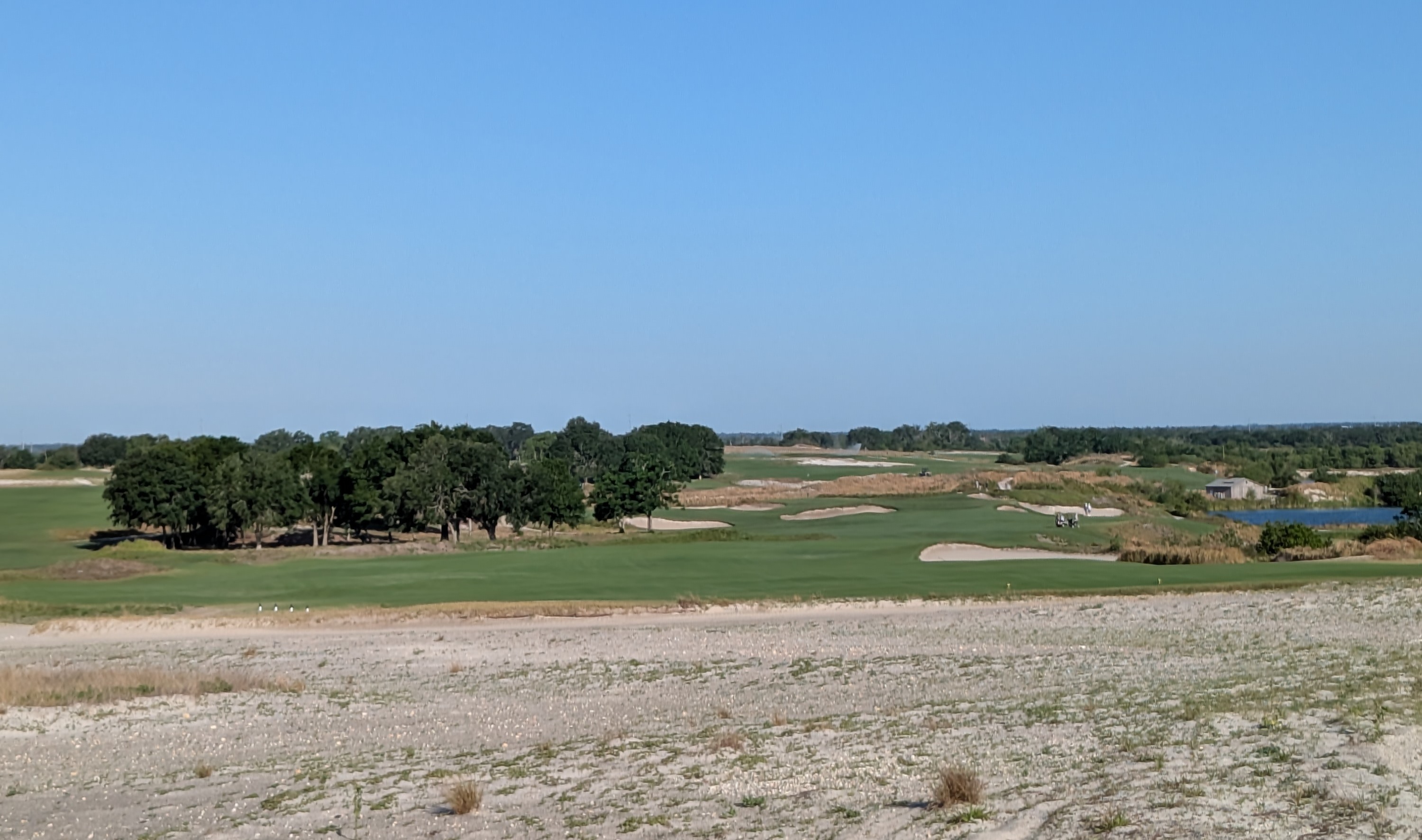
I particularly like this hole because of the converging fairway left of the hole gives the player plenty of bailout space on the tee but makes the hole considerably longer. Shade left for safety, shade right for aggression.

Once in the fairway, a player can choose to give the green a run, but has to negotiate a ravine close to the player, and close to the green, a centerline bunker and two flanking bunkers. Laying up on the right side yields the best angle into this triangular green. The green is well protected but massive, especially for a par-5.
I really enjoyed all of the holes on the front nine and found the opening stretch of this golf course to be the perfect balance of difficulty and opportunity. The par-3 fifth hole was a unique hole to highlight because of its exceptionally long and narrow green.
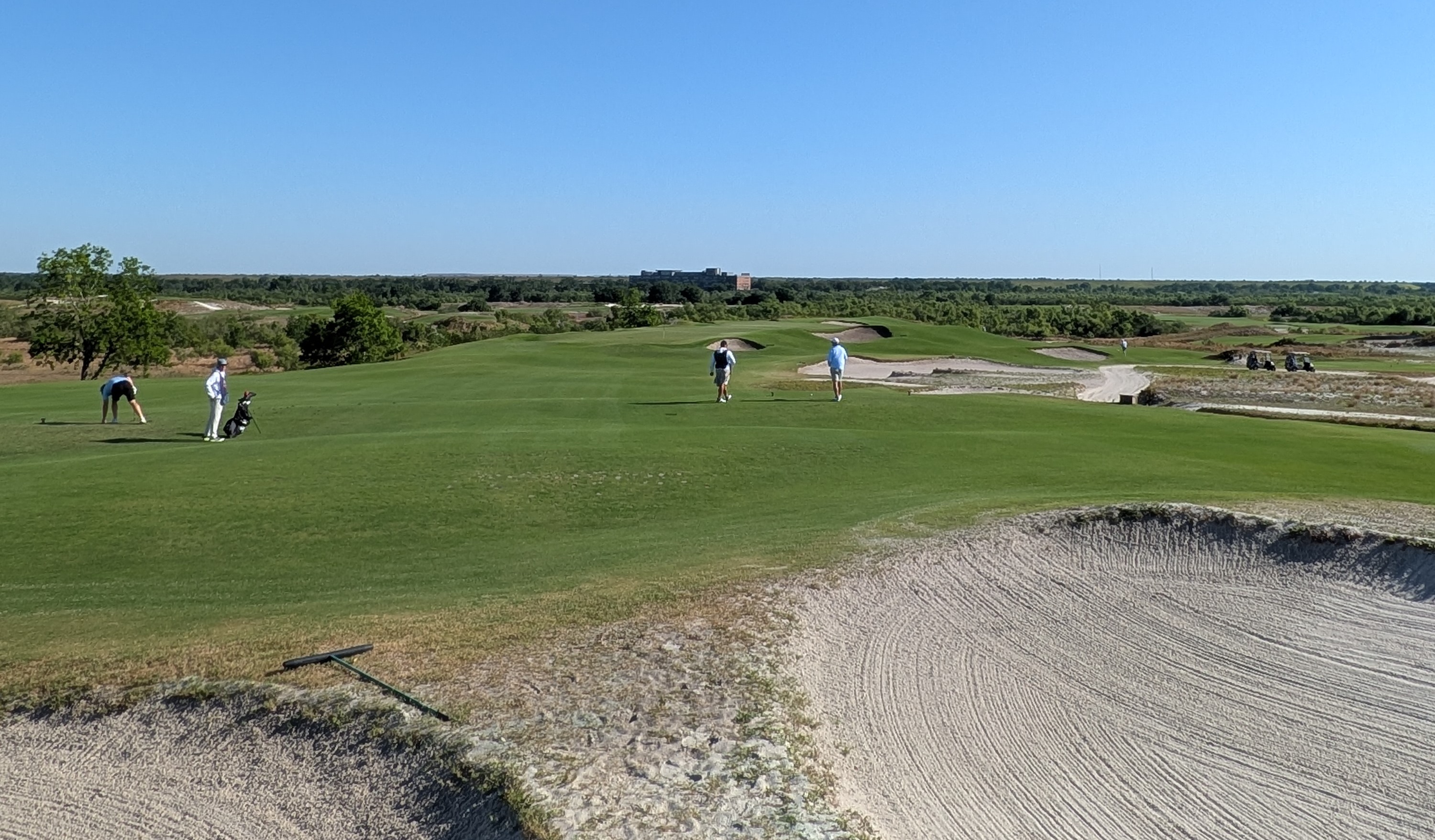
The green here is 75 yards long, so the length of the hole is largely dependent on the pin location. However, wherever pinned, the hole is well protected by pot bunkers. The entire hole is also very exposed to the wind, as it sits on the top of maybe the highest point at Streamsong. The hotel (the lodge) is visible in the background and is nearly a mile away from this tee box, which is an incredible hill for the state of Florida.
The sixth is a really fun short par-4, but the star of the show, and perhaps the whole Streamsong Resort, is Doak’s par-3 seventh.
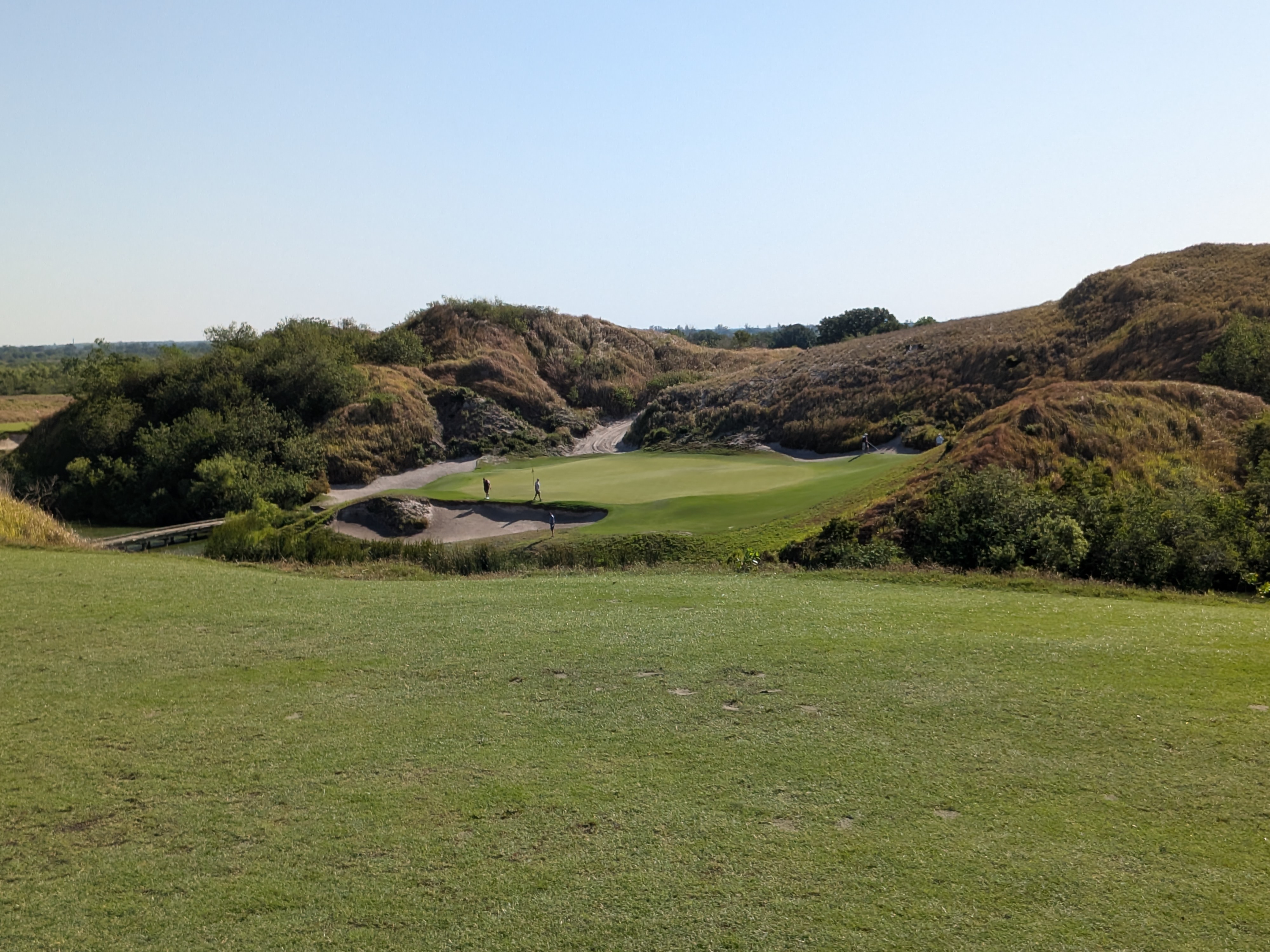
The seventh is a mid-length par-3 that plays over a lake, filled with alligators, down to a green carved in a man-made hillside, with a deep (and I mean deep) frontal bunker. The green largely slopes from right-to-left, back-to-front, allowing balls to funnel a bit to a front left pin. This is undoubtedly the most photographed hole on the property.
While I thoroughly enjoyed the totality of Doak’s Blue Course, for brevity, I will only highlight one more stretch that I found quite enjoyable – the twelfth and thirteenth holes at Streamsong Blue.
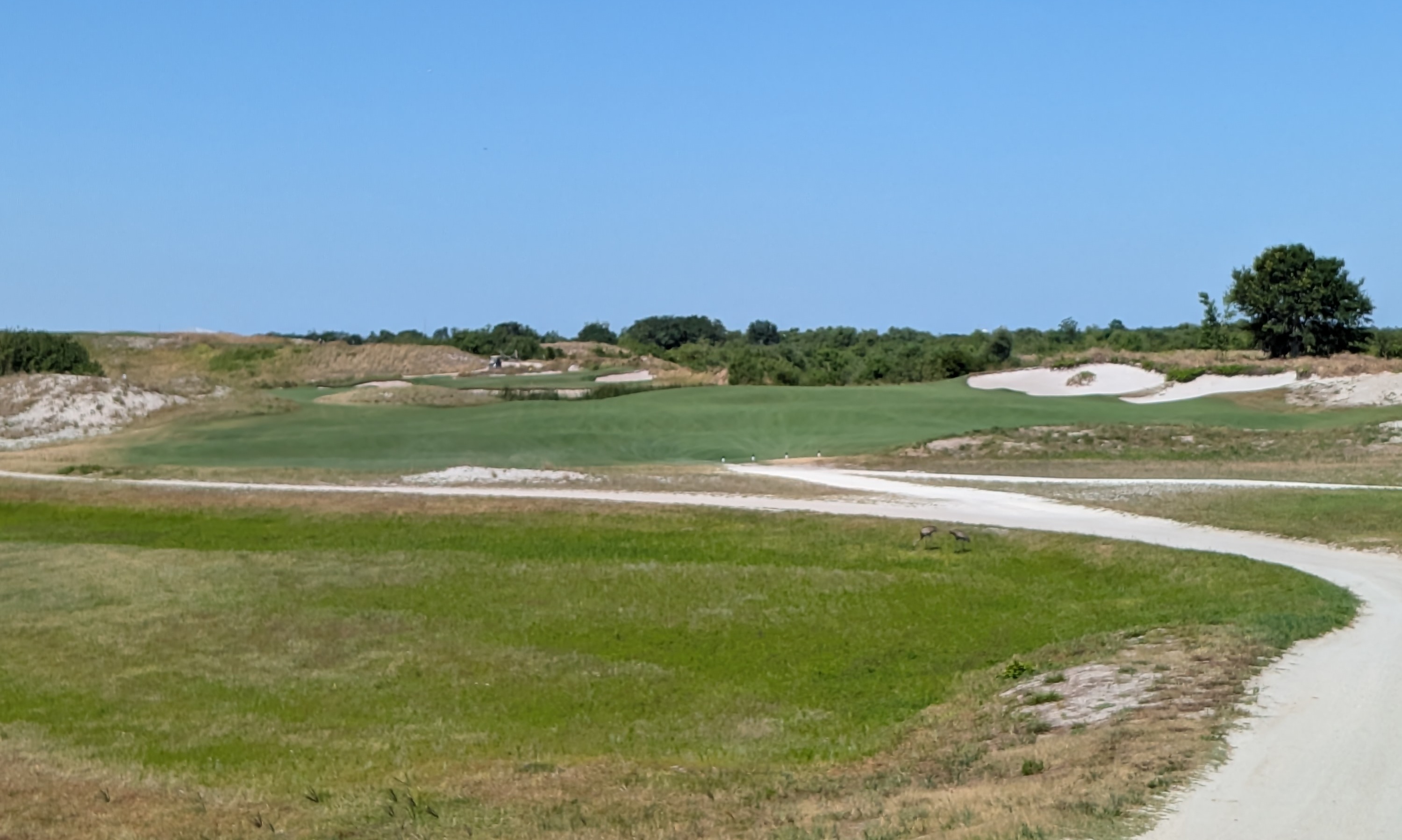
The twelfth is a mid-length par-4 with options abound off the tee, and a hidden lake straight away, but fortunately, out of reach for all but the longest golfers. I see two distinct options on this hole
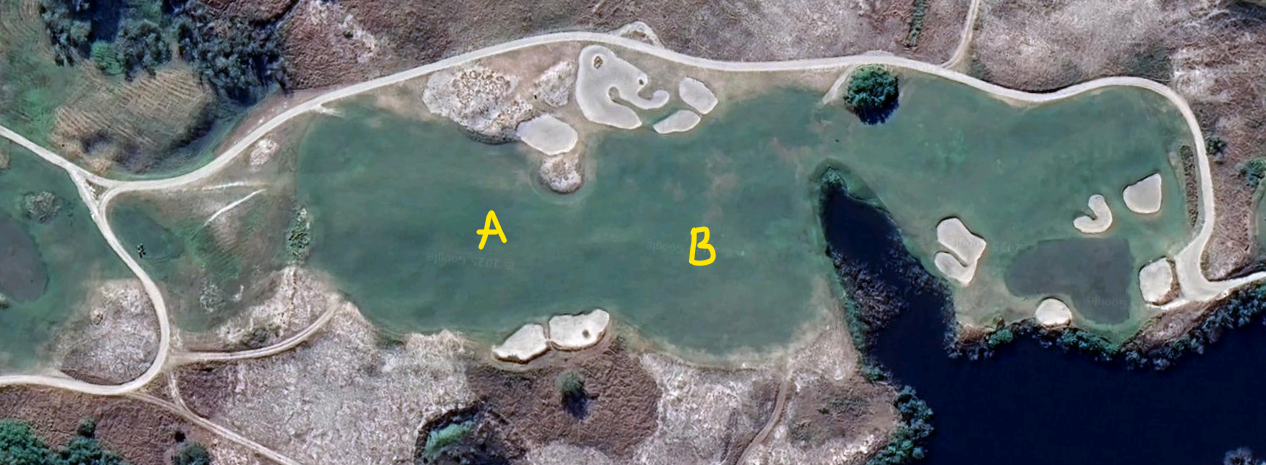
First, a player could lay short of the pinching bunkers and take nearly all of the trouble out of play off the tee. The danger here is leaving a longer, but manageable, shot of over 170 yards into a green that is very well protected by water short and right, and dotted by bunkers all over the landscape. Alternatively, and perhaps more popularly, a player can elect to carry the trouble with Driver; however, the hole begins to move downhill after the pinching bunkers, bringing the lake into play on extremely well hit drives, and the family of bunkers left and right into play on mishits. The reward? A wedge into an extremely aggressive green with all sorts of hills and backstops – a truly fun shot awaits for those who play aggressive and hit a good drive.
The options don’t end there, as the short, extremely undulating par-4 thirteenth is next. From the tee, a player could attempt to drive the narrow green, or layup with an iron. If the layup is chosen (which it probably should be), the player has to be careful. The left side of this fairway is some 15 feet below the right side, separated by a ridge.
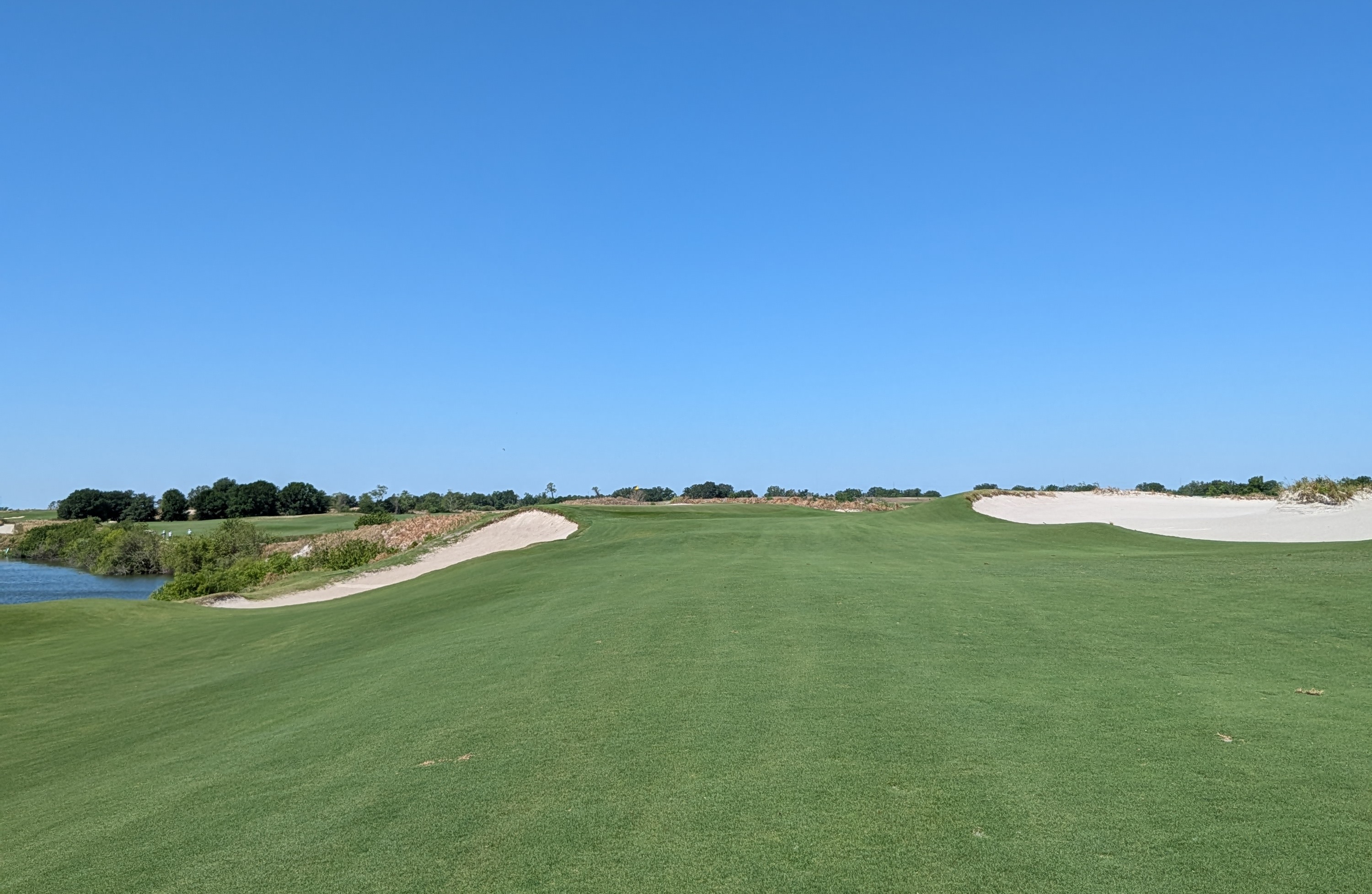
The left side will leave a very blind approach over sand to a green that aggressively slopes front-to-back and right-to-left. A very tough green to hold or chip onto due to the aggressive grade, a player will want the shortest approach possible from the right side of the fairway. This hole on the scorecard appears to be about power but is actually Doak’s test of precision and execution.
Streamsong Blue has a fantastic finishing two holes as well, with a forever long par-5 and an up-and-down par-4 eighteenth. Blue is a masterclass in elevation management, wind management, and playability. The only place it lacks is aesthetics. It is clear that Doak, consistent with his philosophy, was not concerned with moving earth to create drama or fodder for landscape photography, but rather with making a great golf course. I could play Streamsong Blue daily and enjoy it, a rare feat among golf courses, and despite its comparative lack of visual intrigue, is the best *golf* to be had at Streamsong, and quite possibly in the totality of central Florida.
F1C’s Final Rating:
Shot Options: 10
Challenge: 7
Layout Variety: 7
Distinctiveness: 8
Aesthetics: 8
Conditioning: 9
Character: 9
Fun: 9
Total: 67/80
Streamsong Black
Streamsong Black is a changeup; a design by perhaps the hottest name in golf design – Gil Hanse. Whereas Red & Blue are intertwined, Black is built at a separate location and is distinct in character from Red & Blue. Comparing Black to the other two courses is an exercise in futility, as the objectives are clearly not the same. Red and Blue are serious, championship golf courses which happen to be on a resort. Black is a deeply, deeply unserious golf course in almost every way, designed more with beer in mind than championships. Not that there is anything wrong with that at all, and on a secluded resort in central Florida, perhaps more of the vibe I expected.
Our caddie told us that most people grow to love the Black course more and more with each play, because each time around, you play a new golf course. That may be true; but, once was enough for me. You see, Streamsong Black has very large greens. How large? Well, by square footage, the largest in the entire United States of America. Streamsong Black is where putts are measured in yards, not feet and greens in regulation a stat made for post round clubhouse jokes. Streamsong Black is not the type of golf that myself, nor anyone else, is used to, and while it possesses a certain novelty, its unseriousness should certainly exclude it from the Top-200 courses in America. Golf Digest disagrees, ranking it 178th in the latest rankings. But, if you go in with the mindset that this is a Top-200 course, prepare for disappointment. But, if you head into Streamsong Black with the mindset of, ‘This is a putt-putt course where I I get to drink beer and hit drivers,” you’re going to have a much better time.” Fortunately, I quickly adapted my expectations and enjoyed Streamsong Black for exactly what it was – a fun time.
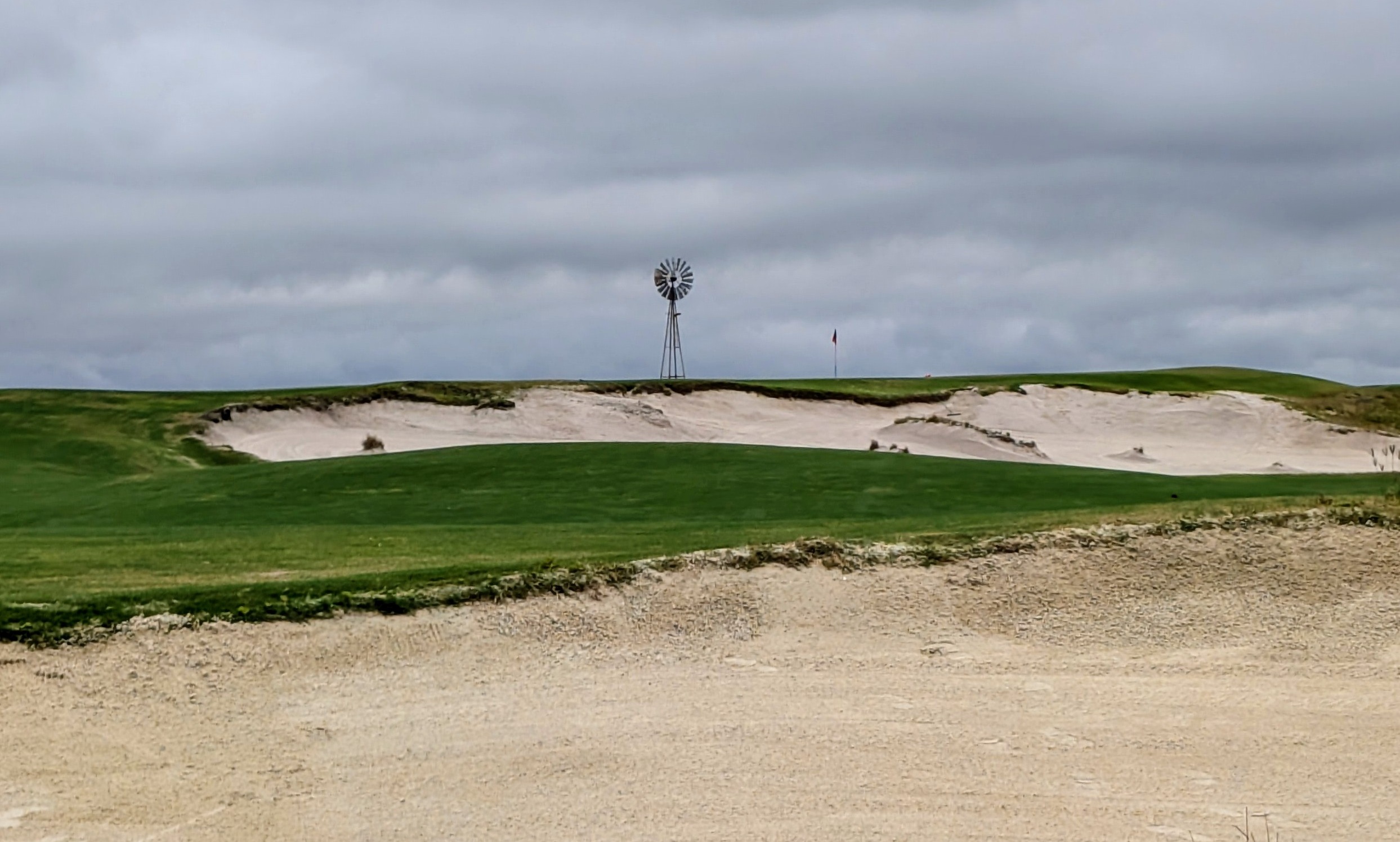
Some of the highlights of Streamsong Black were the short par-4 second hole, where a large, deep bunker protects the front of the huge green. It bears repeating that the uphill nature of the approach shot is very unique in Florida. The conditioning at Streamsong Black was not quite up to the standard of the other two courses. The waste areas operated a bit more traditionally, waste areas encroaching into the playing area a bit more and forming into the bunkers with no transitions.
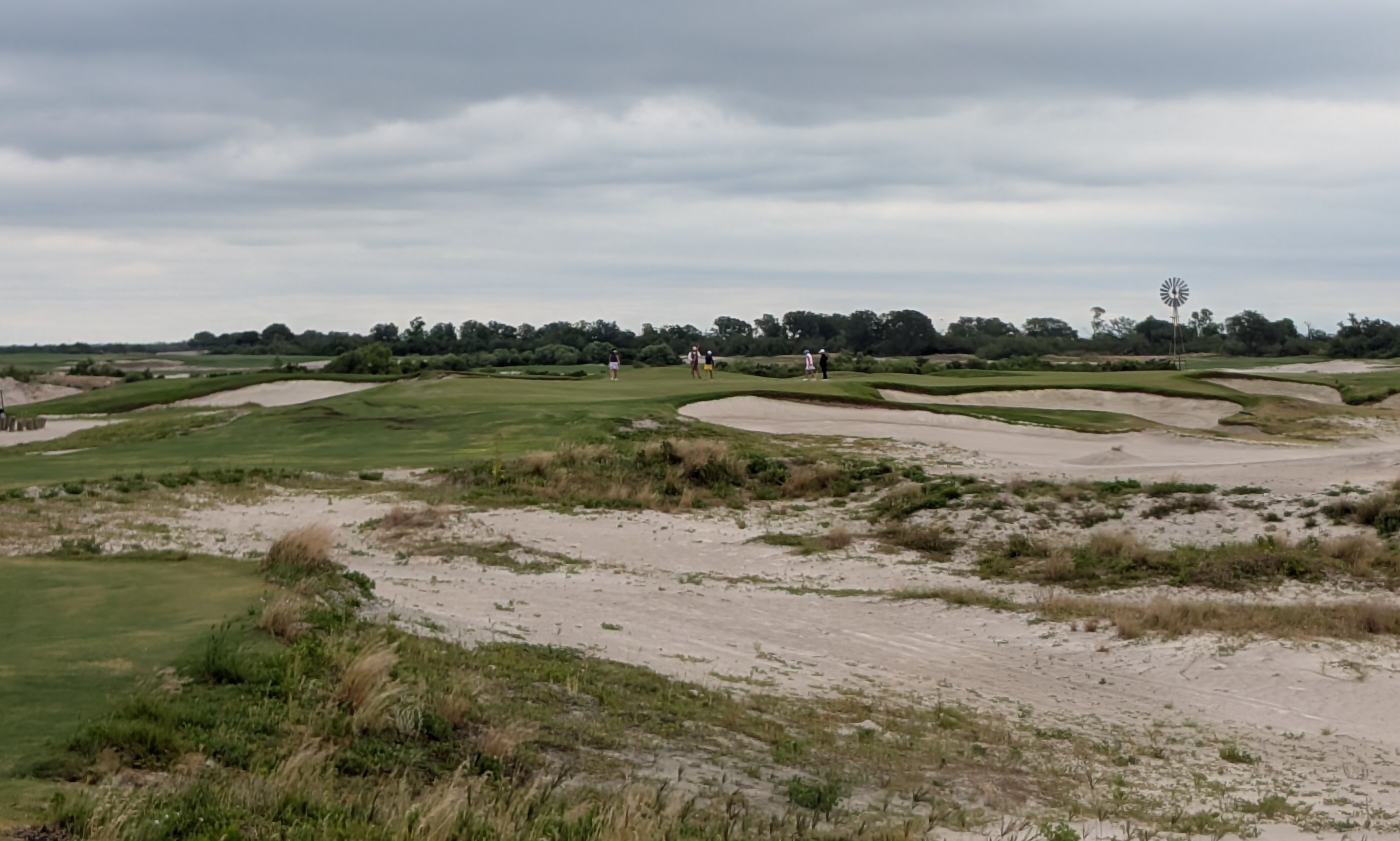
This was the most obvious on the par 3 holes, which as a set were quite nice. The sand and weeds merged seamlessly into the greenside bunkers around the large, undulating greens. I particularly liked the look of the par-3 fifth and seventh holes, and all of the par-3s had significant variety.
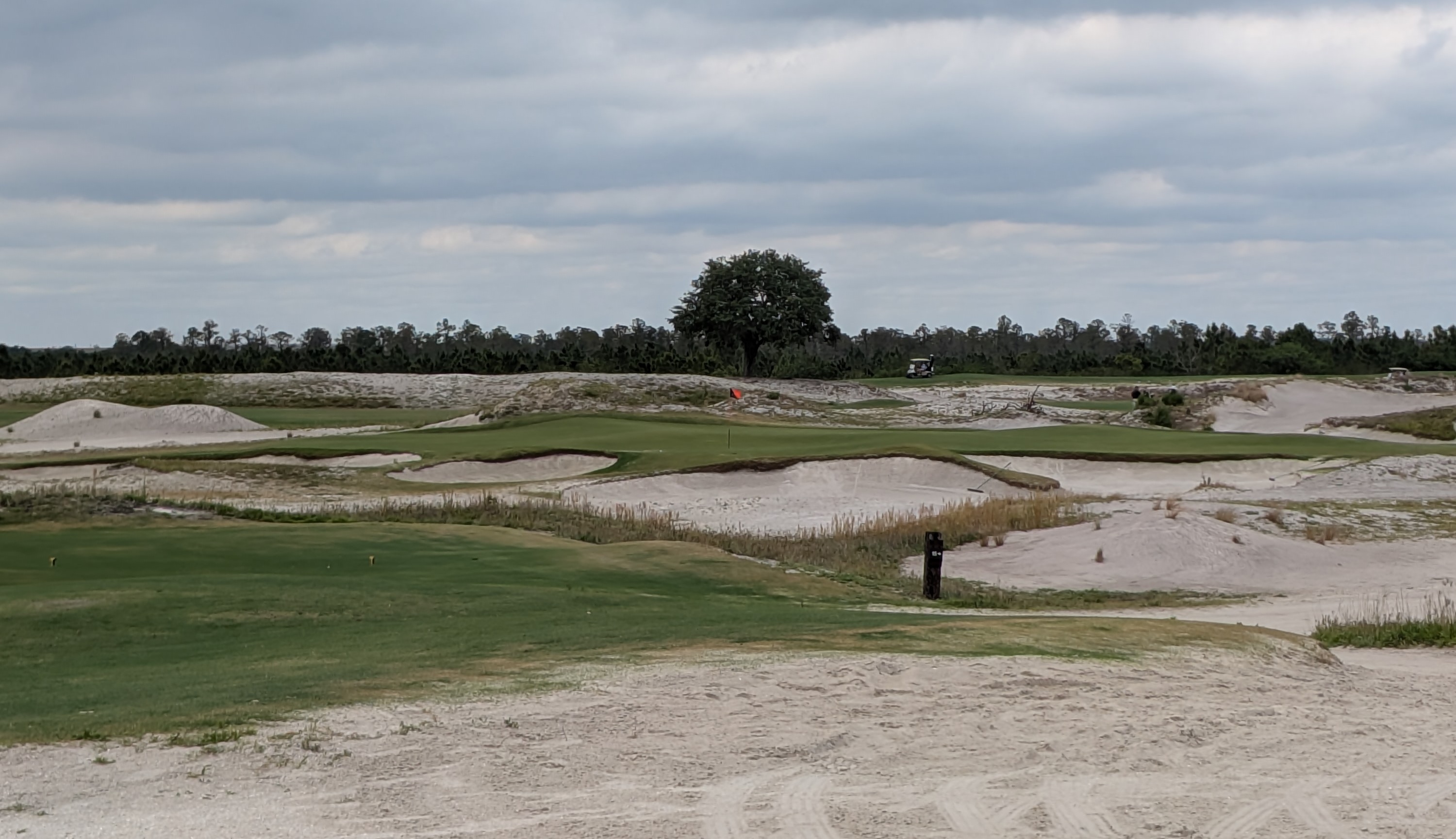
The most memorable hole was certainly the eighteenth hole, a closing par-5 on the par-73 course. The approach plays over a lake to a green of ridiculous size and is reachable for longer players.
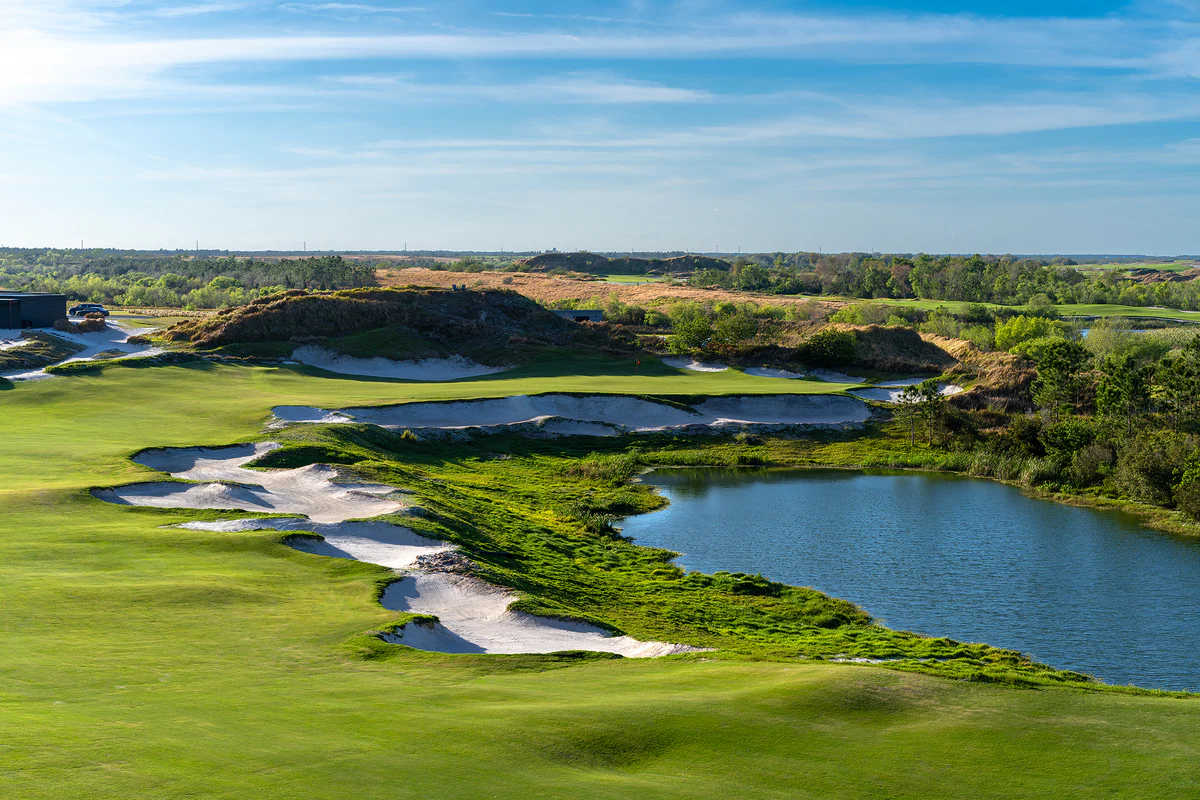
The size and scope of this green is not accurately conveyed by pictures. In fact, none of them are. They are more than putting surfaces, they are putting fields, on seemingly every hole. But, after the novelty wore off, I realized that Streamsong Black is a bit of a different game than golf on other courses. Every hole or two, you may be faced with a shot (mostly a putt) unique to only Streamsong Black. Its easy to be upset with a three-putt normally, but when its from 142 feet, it is hard to properly set expectations. Because all of the longest putts I’ve ever hit in my 25+ years of playing golf, were on this course, in this single round.
All of this sums up to fun and novelty, but your score may not reflect your adaptable skill at a normal golf course. I quite love the regular game of golf and would quite dislike it if every course were like Streamsong Black. But as a one-off, I suppose there is some fun to be had. However, I would not consider the conditioning, design, nor aesthetics to be ranked in the top-200 courses in the U.S.
F1C’s Final Rating:
Shot Options: 7
Challenge: 8
Layout Variety: 8
Distinctiveness: 9
Aesthetics: 6
Conditioning: 7
Character: 9
Fun: 7
Total: 62/80
Read More: How We Rate Courses
Rating Scale Details
> 70: Top-50 U.S.
65-70: Top-200 U.S.,
60-65: Best-in-State List
57-60: Best-in-State List Contender
53-57: Very Good
48-53: Good
40-48: Average
> 40: Poor

Author: Jaxon MacGeorge
Jaxon is the founder and lead course reviewer at First1000Courses.com. Jaxon has been playing golf for over twenty years, is a scratch handicap, and actively competes in USGA and Tennessee Golf Association (TGA) amateur events. By trade, Jaxon is an attorney and lives in Gallatin, TN, a suburb of Nashville.


 First 1000 Courses
Leave a comment