
Time to Read:
|
This RTJ Golf Trail at The Shoals – Fighting Joe course review is based on a round played on September 7, 2024.
The Fighting Joe course at The Shoals is a public course in Muscle Shoals, AL. The green fee is around $140/round.
F1C’s Final Score: 54/80 (Very Good)
Learn More: How We Rate Courses
Alabama public golf was blessed by Robert Trent Jones, Sr. and his “trail” that stretches the to various regions in Alabama. Rather uniquely, the Trail provides high quality golf courses at reasonable rates all throughout Alabama. The most northerly of these Trail courses, in Muscle Shoals, AL, is the “The Shoals,” a 36-hole complex working from a single clubhouse. The two courses, the Schoolmaster and the Fighting Joe, combine for over 16,000 yards of golf. That’s right, RTJ Sr. designed two 8,000 yard courses in northern Alabama, and located them hours from any type of substantial civilization. Muscle Shoals is a town of 15,000 folks; the nearest city of Huntsville, AL has around 200,000 people, but is over an hour away.
I’m gonna keep it real with you here folks – northern Alabama is not the type of population center, destination, or locale that should be able to support a first rate public or private golf course, sans the city of Huntsville. But yet, here they are – two of them. And they aren’t some run of the mill, local 5,000-yard courses with straight holes and round greens. They are two of the longest courses constructed in the U.S., and probably were the longest at the time of their construction. This place is for serious golfers in a place, largely, without serious golf.
There is a uniqueness to this concept. Typically, this concepts manifests as (1) a private golf course with a national membership, offering its members an exclusive “retreat” or (2) a public golf course built for golf trips, with multiple courses on site, all ranked in the top 100 public or best in state lists (think Bandon, Sand Valley, Kohler, etc.). The Shoals is neither of those things. It is largely a daily fee course, an expensive one at that. In an area with little golf (and based solely on demographics, likely little interest in golf), it is a true shock that this concept works. If I pitched this very idea to an investor tomorrow, I’d get laughed out of the room.
But The Shoals was plenty busy and bustling on both courses and in the clubhouse. Beverage carts made their rounds, rangers were ever present to keep the pace of play up, etc. There is no shortage of demand. Perhaps that is due to the folklore that the RTJ Trail has in golf circles. Some argue, for the money, the RTJ Trail courses throughout Alabama offer some of the best value in the nation. That folklore translates into demand for these courses, even absent a local population center to support them.
Robert Trent Jones, Sr., and his other family members, were prolific designers, but also somewhat controversial in golf design circles. I’ll leave that design critique for maybe a more famous RTJ in the future, but just keep in mind that the RTJ bunkering and design concepts can be a bit different than most other golf courses. With that in mind, we headed to the range to warm up (and found some very unique concrete range bunkers that were quite fun to hit at) and began our round. Only 18-holes for us today: the Fighting Joe, which is supposedly the better of the two courses. A return trip may be in order to see what we missed with the Schoolmaster in the future.
The First Tee
The first hole of a new (to me) golf course often lets me know exactly what I may experience throughout the round, and I particularly enjoy designers who introduce me to their design elements and ideas for the course through the first hole. That’s not the case here at the first, the long, straightaway par-5 is tree lined on both sides for most of the hole, and requires a somewhat accurate tee shot to find the fairway. This is unusual though, because the Fighting Joe is largely a course meant to be played in the wind – its long and doesn’t have a lot of trees. For most of the course, outside of the first, seventh, and seventeenth, the only trees that exist do so on the horizon.
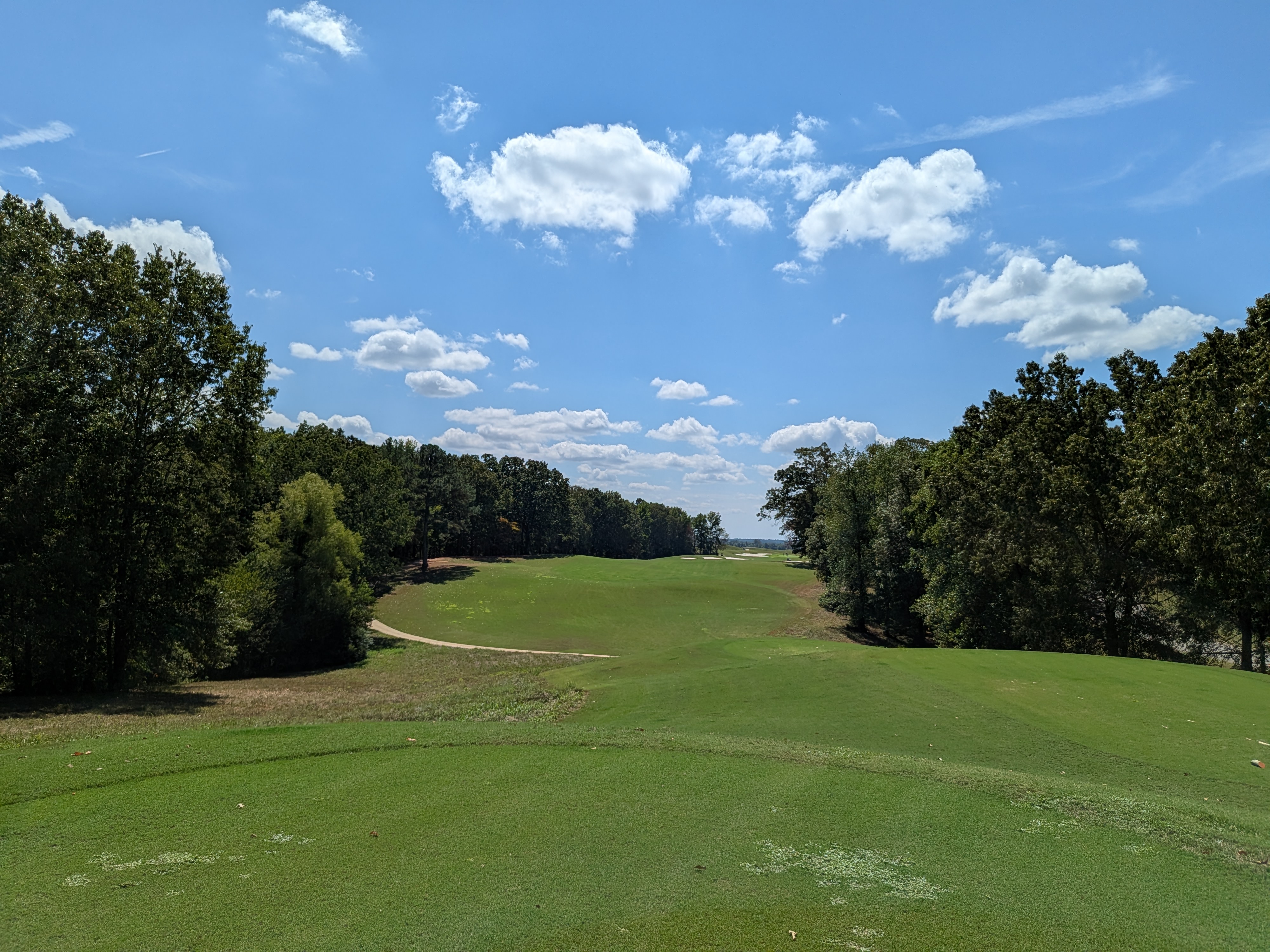
Here, the wide mouth of the trees narrows closer to the fairway. All of the bunkers are unreachable from the tee, so fire away. Once in the fairway, things get a touch more interesting.
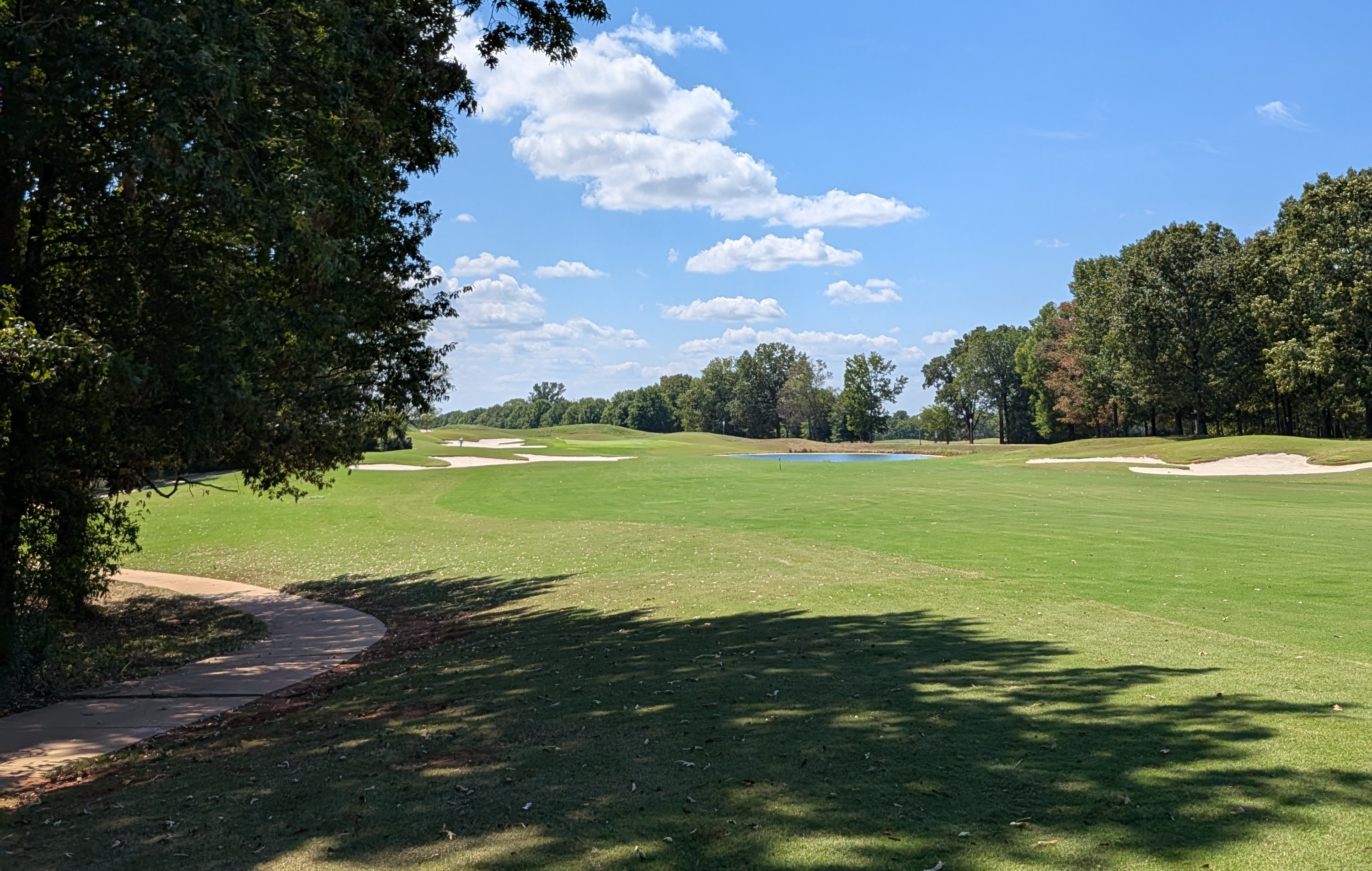
Any layup shot is particularly complicated by the bunker on the left, which begins around 125-yards short of the center of the green, and the pond on the right, extending for the last 90-yards to the green. Layups have a very tough choice – over the bunker on the left into a very narrow neck of fairway, or short of the bunker on the left leaving a strong wedge or more into the green. The green slopes significantly back to front here. We did learn quickly that, due to the greens being bentgrass, they were quite soft and a touch on the slower side. We also learned that the greens are quite large here at the Fighting Joe – the first is 43-yards deep.
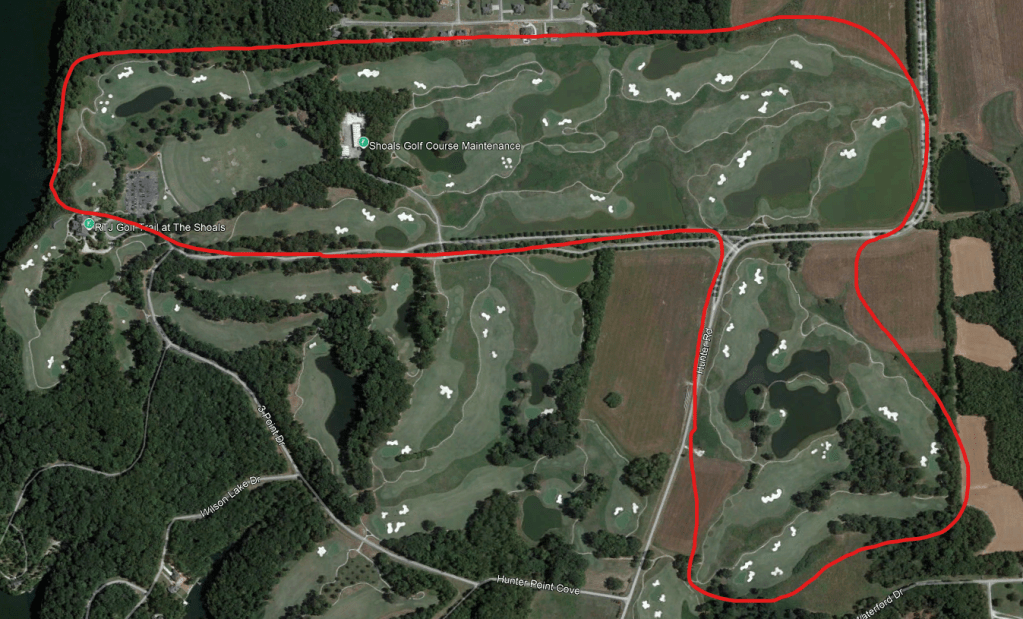
Not to keep harping on the deceptiveness of the first hole, but it really is out of character with the most of the other holes. I have circled the holes of the Fighting Joe course, and as you can see, most of this course is more American-links style. The course uses long fescue as the missed-fairway defense rather than tree-lines. Only a few of the holes (particularly those closer to the clubhouse and lake) use tree lines. While it didn’t affect my round in any way, I wonder if RTJ may have originally intended the first to go with the more densely tree-lined Schoolmaster course, and then made-do with it on the Fighting Joe course as a bridge between the clubhouse and the more open plains of what would become the Fighting Joe.
The second presents some sticker shock due to its openness and, well, forceful wind. As you can see, between the road and the tree line at the top of the picture, there isn’t a tree to be found after the first hole. The openness creates a wind tunnel in this area, off an already breezy lake. Without the trees to break up this lake breeze on the Fighting Joe, this course was windy; relentlessly blowing around 20-mph off the lake from left-to-right across the picture.
The wild length of this course, again over 8,100 yards, begun to make sense to me. This isn’t a course meant to be played at 8,100 yards, it is a course meant to host tournament golf and offer a variety of setup. The course is long enough where downwind holes are meant to be played all the way back, and into-the-wind holes meant to be played from the second or third tee boxes. Given the keys to the course, I am positive I could set this course up tough and fair, regardless of which wind direction or conditions I was given. Robert Trent Jones, Sr. provided that with the multiple teeing grounds. Without those, on downwind days, 480-yard par-4s become driver-wedge for the best players. Into that much wind, they become driver-three wood. The course’s length, much like Point Hardy in St. Lucia which also battles a 20-mph wind constantly, provides variety in setup for swirling wind. Undoubtedly, the Trail finds promotional benefits in having the course rated from 8,100 tee boxes – its fun. But the course is not meant to be played from that deep on every hole.
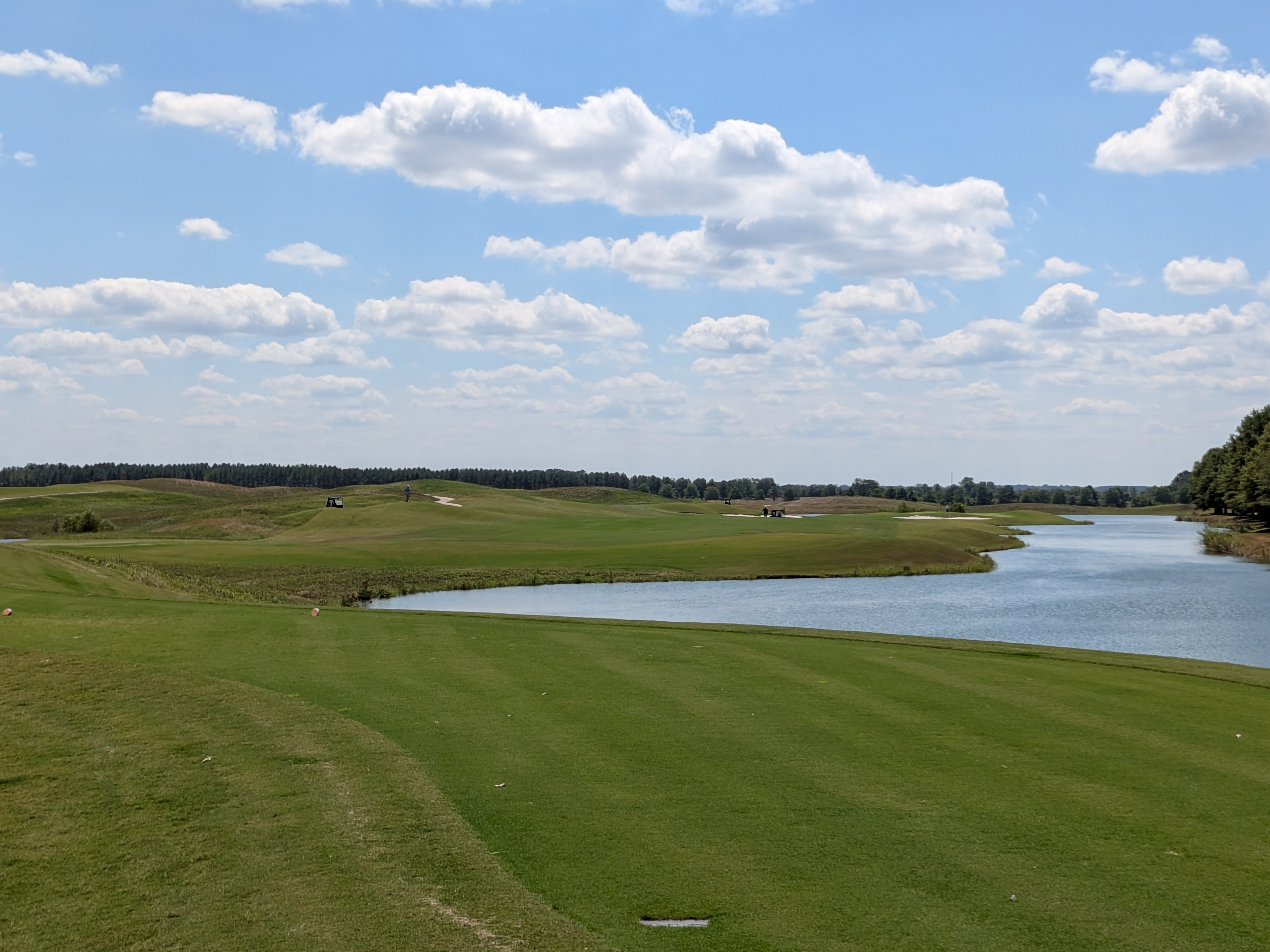
Okay, so with the fun 8,100 yard discussion aside, the second hole is a very open, yet very protected mid-length par-4, in which I’d imagine the prevailing wind plays straight down. A fairway bunker frames the tee shot and squeezes the longest tee shots, while the pond on the right runs the length of the hole.
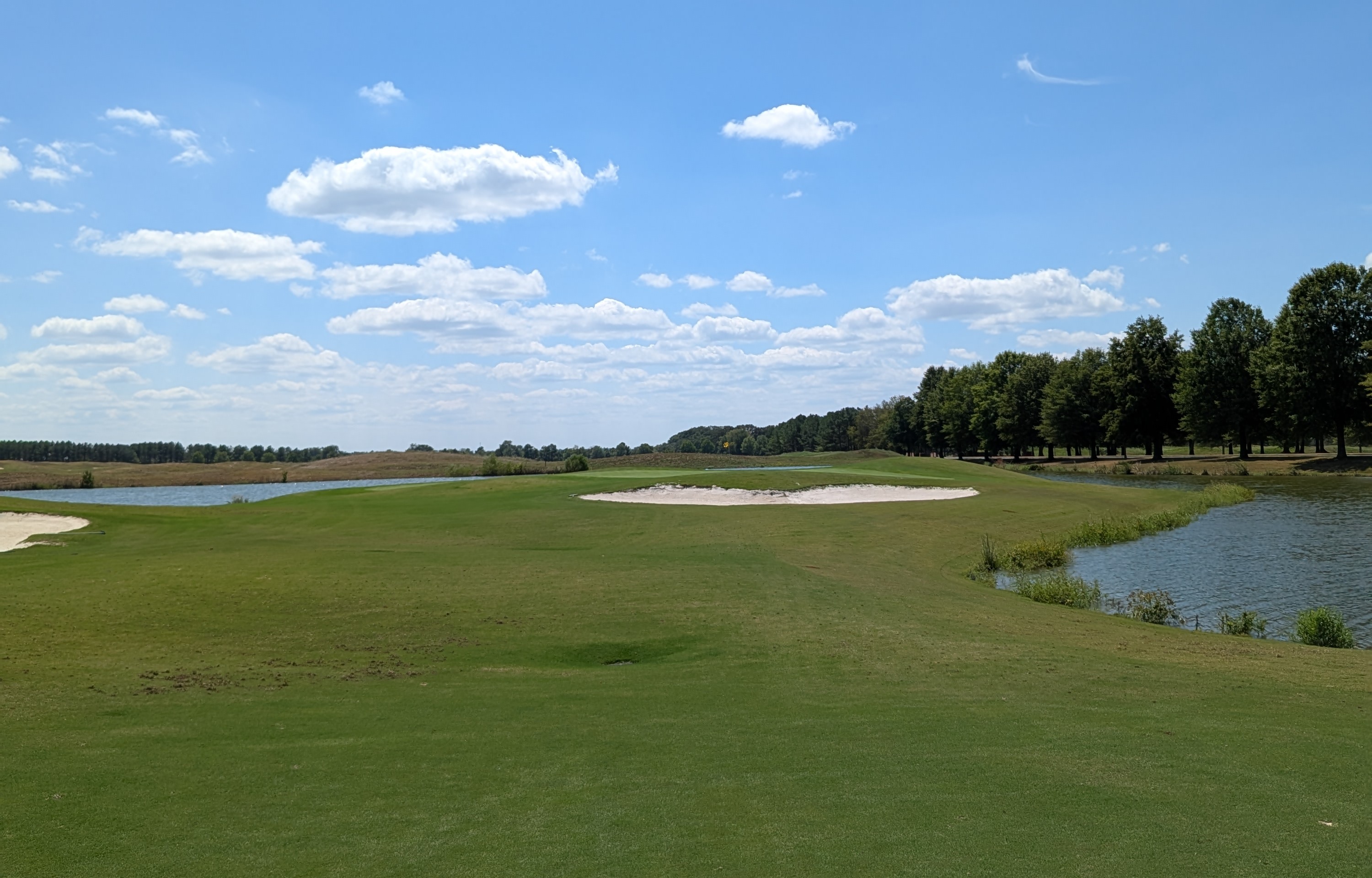
The second hole’s approach plays out to a wide peninsula over a frontal bunker to an oddly shaped green surrounded by water. The second is the introductory hole; not overly long or demanding, but introduces you to the real themes of Joe and what his fight will be: wind, length, and water. This is the true fight you’ll have with the Fighting Joe for the next 15-holes. The second hole should be the first hole and the routing should have been adjusted, but I suppose it is too late now.
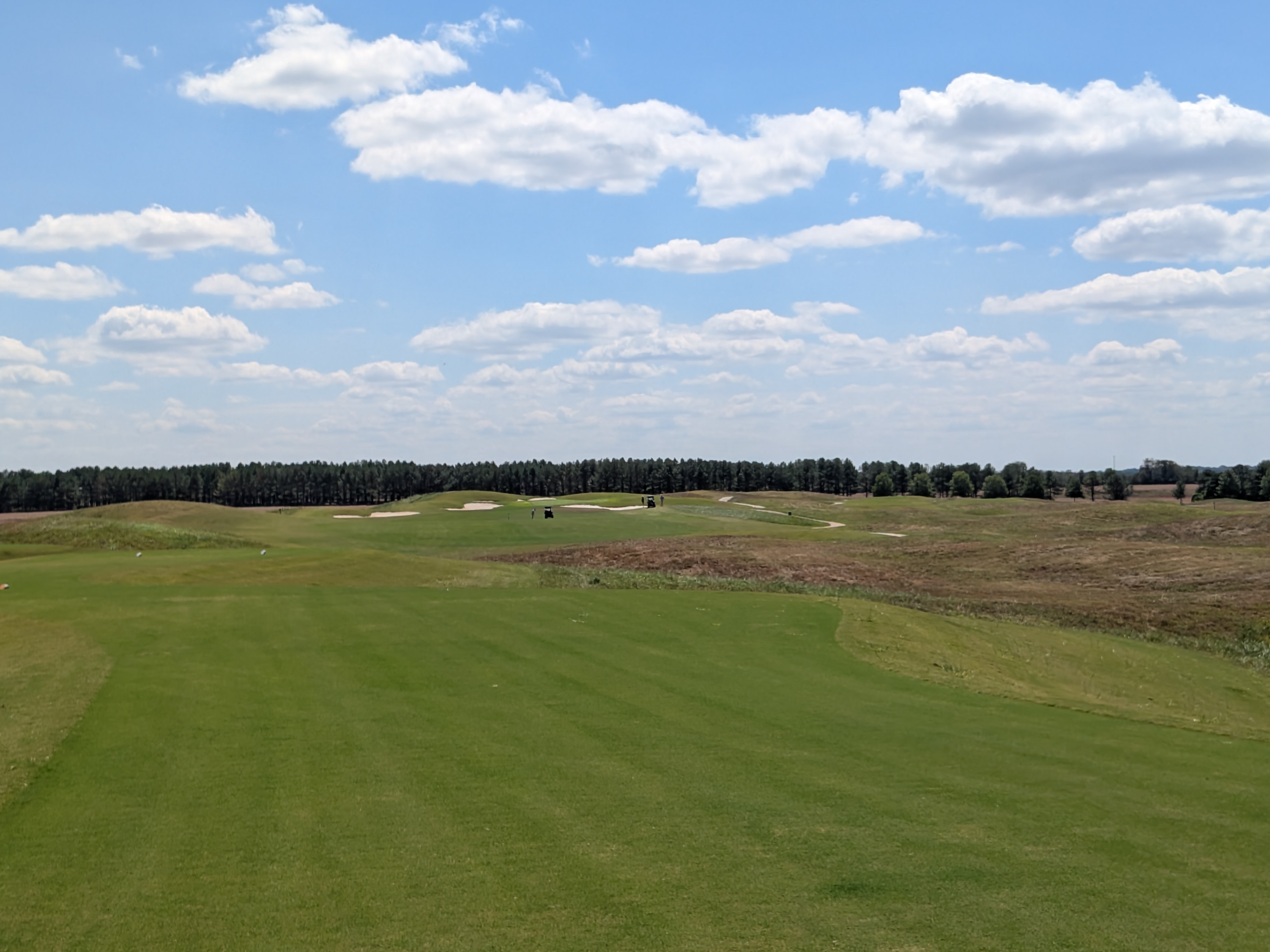
The third hole at Fighting Joe is a bit of a weird one, but very classic RTJ. As I stood in the fairway, I couldn’t help but say out loud, “well, that’s definitely Robert Trent Jones.” Four bunkers weave through this mid-length par-4 that runs the same direction as the first two holes; however, all of those bunkers are unreachable from the tee for all but the longest players. Only two of the bunkers, one behind the green and one short left, serve as a true greenside bunker. Mostly, the bunkers exist as eye candy: a large, wavy distraction to divert the eyes in flyover territory for all but the worm-burned.
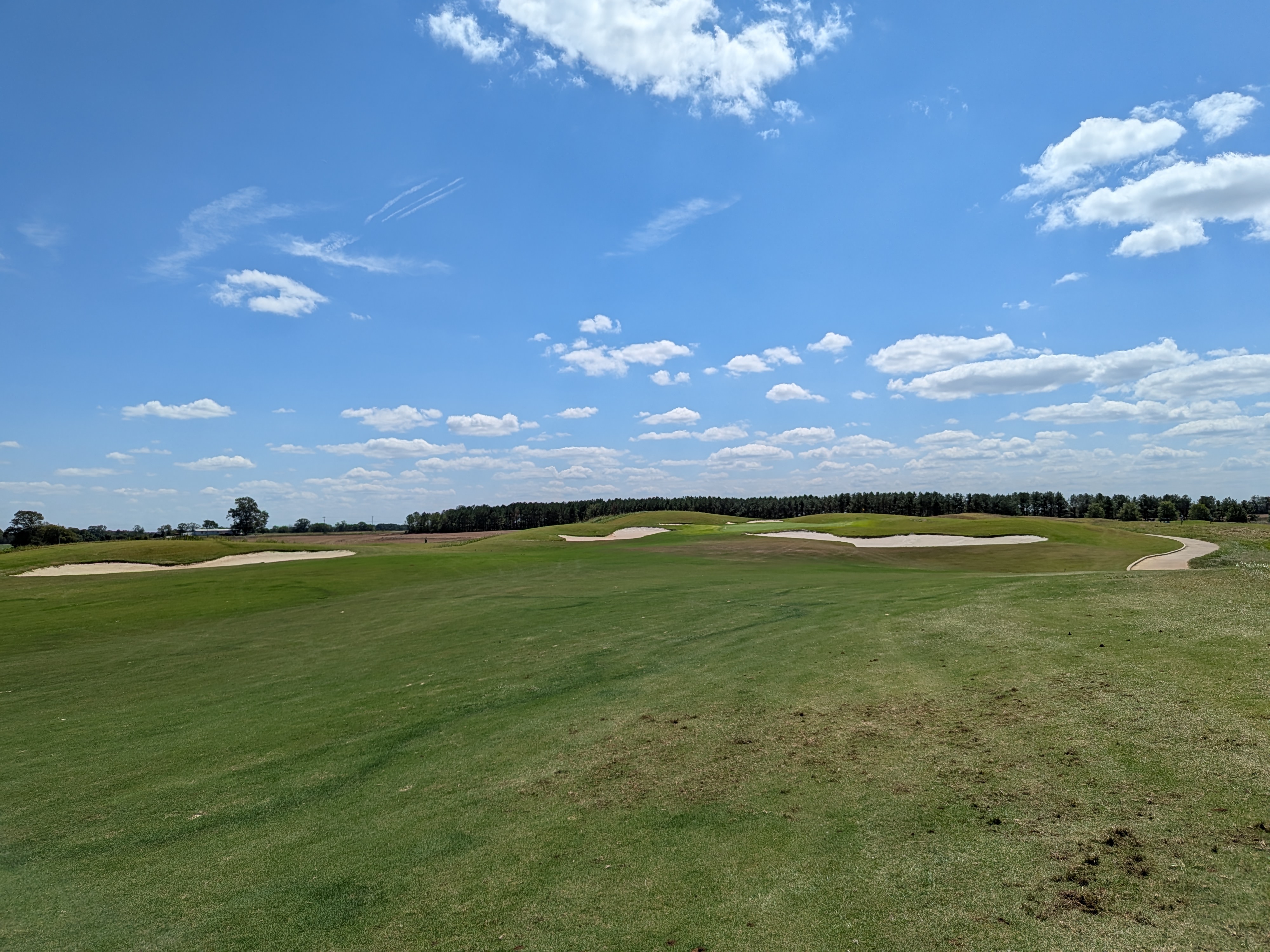
The third is an interesting exercise in target acquisition, as the green complex is a bit depth defying. However, the green complex is one of the most interesting on the course.The green is very long, some 50-yards front-to back, but somewhat narrow.
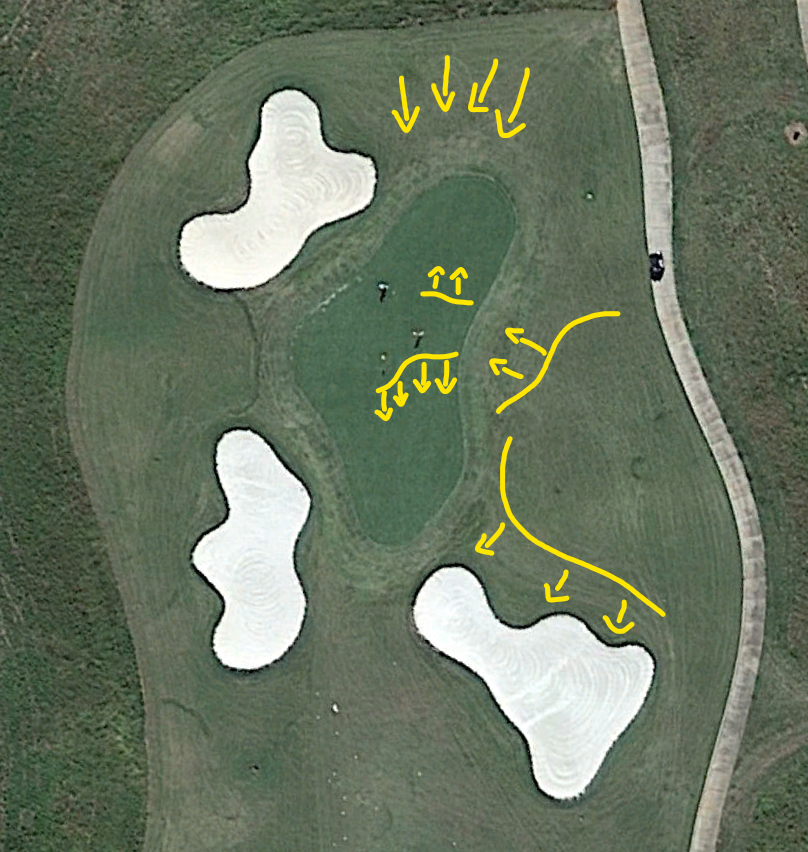
It could have just as easily been a double green, with the upper right section playing as one green, flattened and sloped from front to back, while the lower bit of the green is a steeply sloped back to front second that makes the hole play much shorter. The “middle of the green” strategy may not be best here, as simple chips are abound, but puts from the middle of this green to any edge will be complicated. While I liked the third’s theory, the execution of the design was not my favorite – for some reason that I cannot quite discern, the depth on this hole washed out on the landscape.
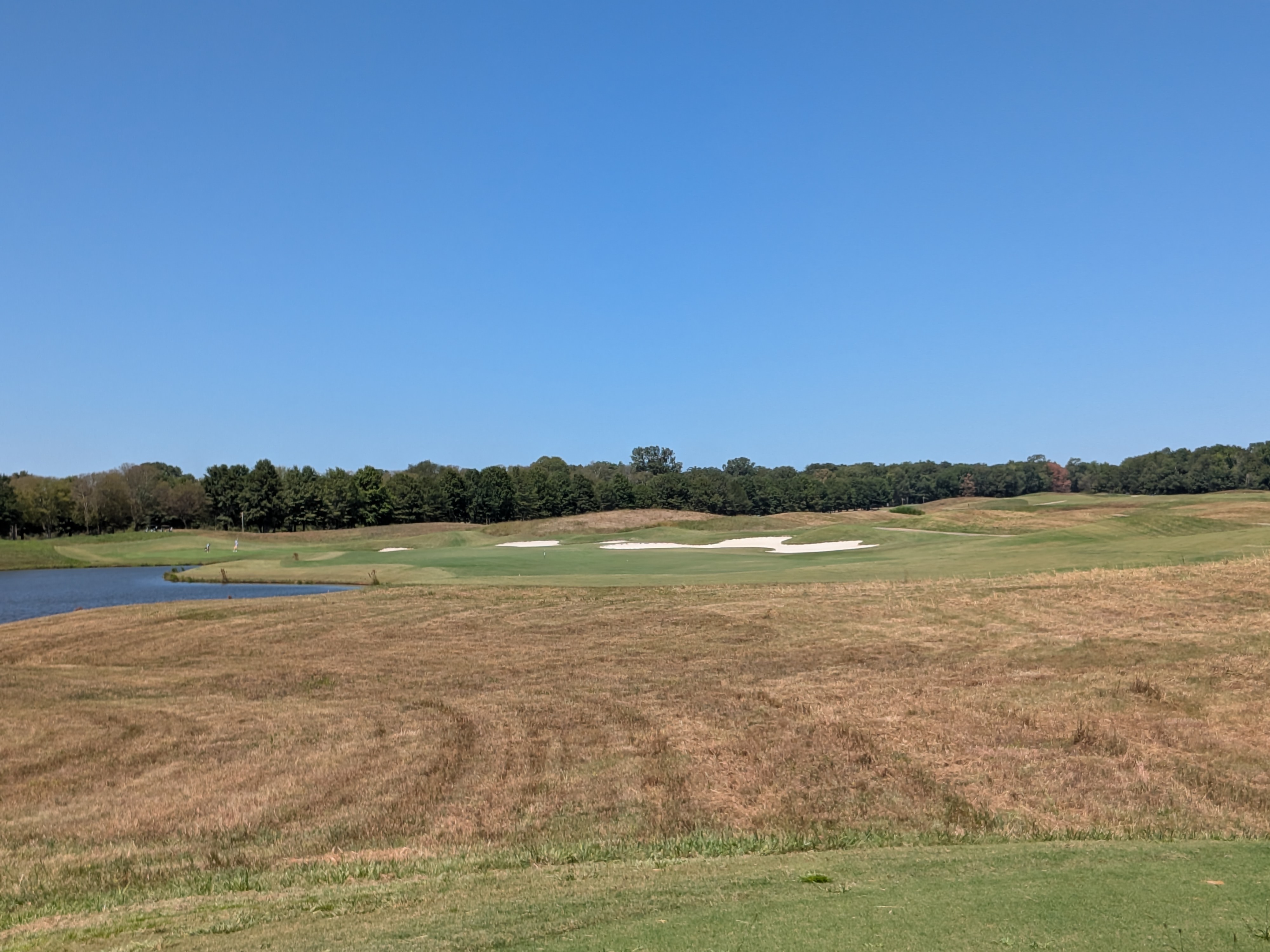
The fourth hole turns 90-degrees and plays as another mid-length par-4. For our group, this meant turning back into the fan, where 300-yard drives become 240-yard drives, and the holes become more challenging. The large fairway bunkers frame the drive with the natural hazard running the length of the hole left. This hole, from the tee, is a bit of a mirror of the second hole. Similar in length and demands, just flipped and running the opposite direction geographically.
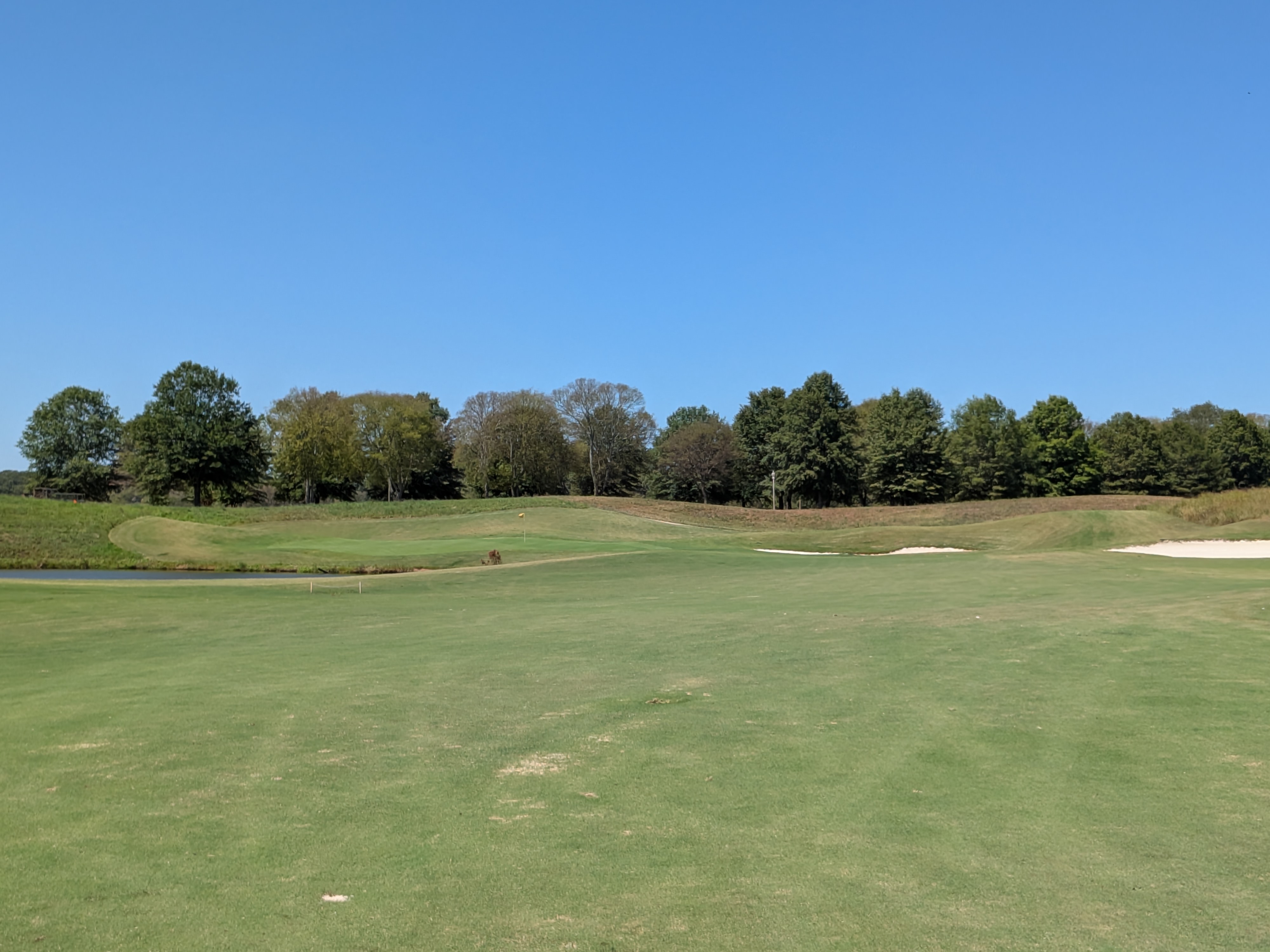
Fortunately, unlike the second, the water here stops short of the green, and the green sits largely unprotected, with only one greenside bunkers to navigate, hidden from view on the right, past the bunker that you can see. The green slopes back-to-front, complicating an overcooked approach, and the green features a bit of a ridge bisecting left from right.
The first par-3 comes at the fifth. To get to the fifth, the path takes you under a tunnel to the other side of the road, to an area with a bit more foliage. The next few holes would play in this bit of the course with a few more trees abound.
RTJ, Sr. had a particular style with par-3 holes, and each of them fit the standard mould here: long, water everywhere, and more water.
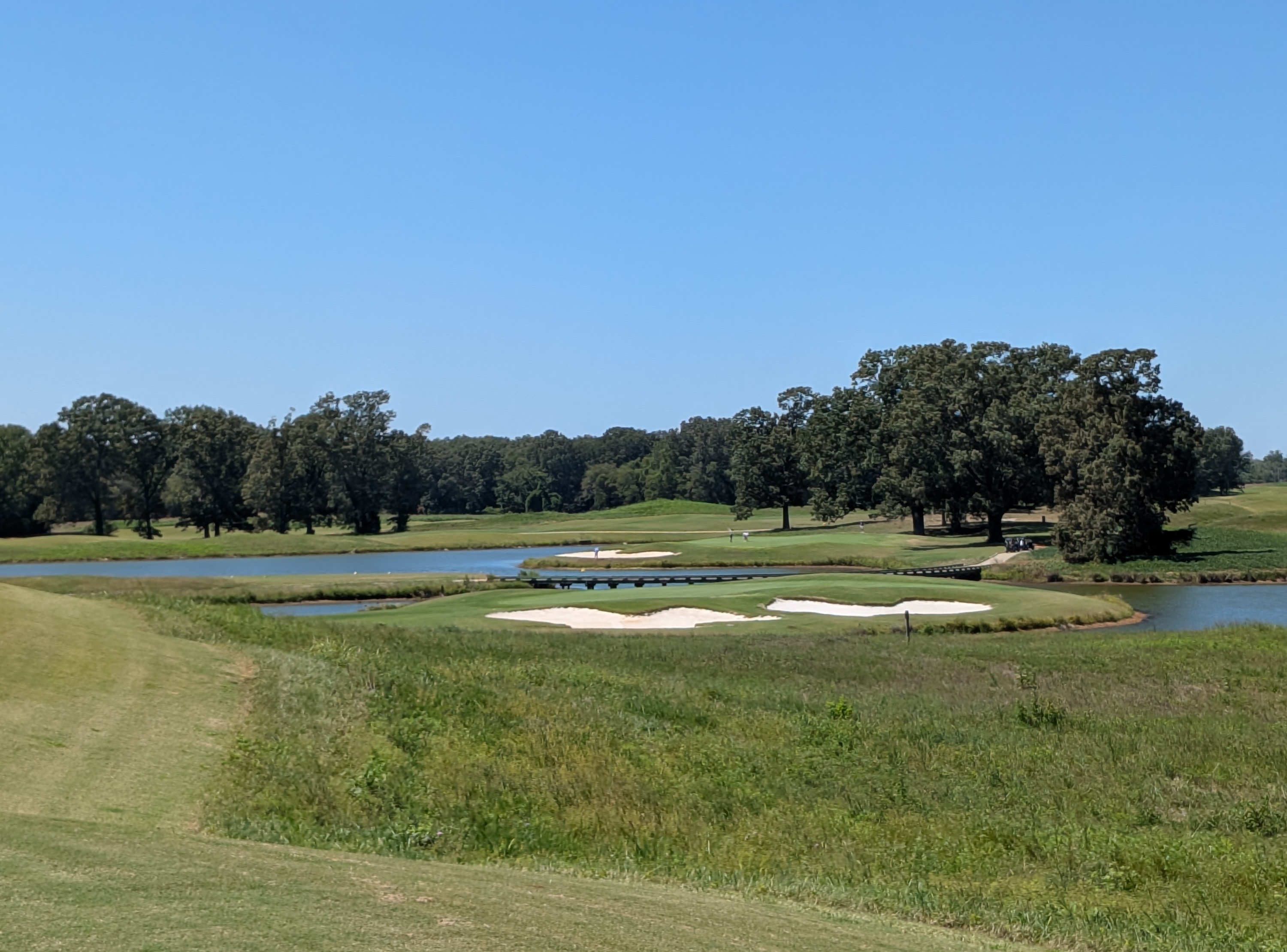
I have no problem with these designs, as they certainly add visual interest and intrigue to the round. However, it creates some demanding par-3’s, certainly in the wind. Club selection is paramount here, as two large traps protect the green that, unexpectedly, largely slopes from front-to-back. Recovering from the front traps will be difficult. The pond makes the green into a peninsula, and any miss that isn’t in the bunkers or pin-high left will likely find the water.
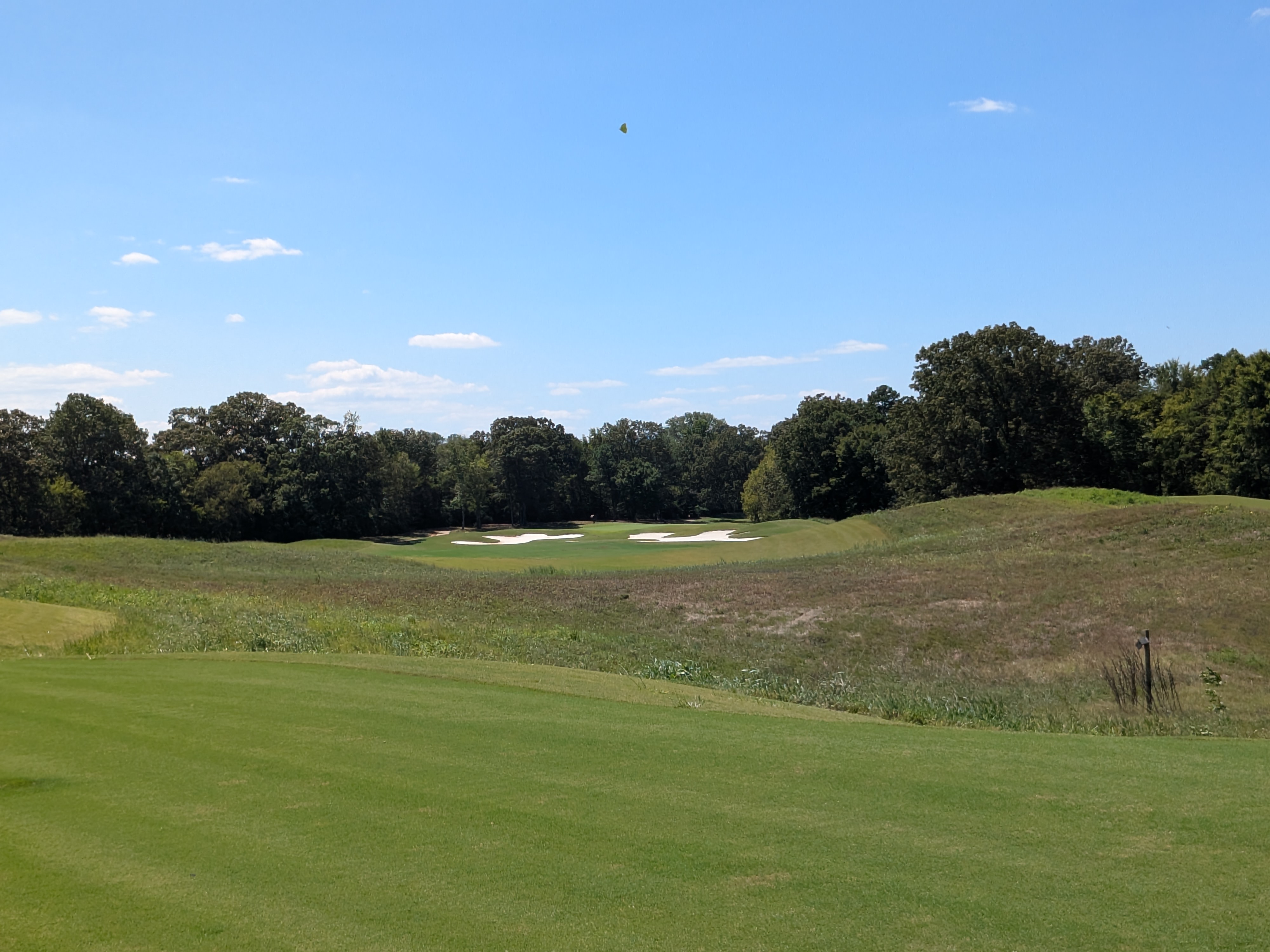
The sixth is a straight-away par-4 with a bit of visual deception from the tee, as there is quite a bit more space left than appears at first glance. The fairway bunker on the right frames the right edge of play, and cuts into the fairway a bit more than is visible from the tee box. The fairway runs a bit downhill, and long drives can catch a bit of a speed slot if they hit on the downhill face of the fairway just past the bunker. The green here is also very big, but severely angled so that the length actually plays mostly as width.
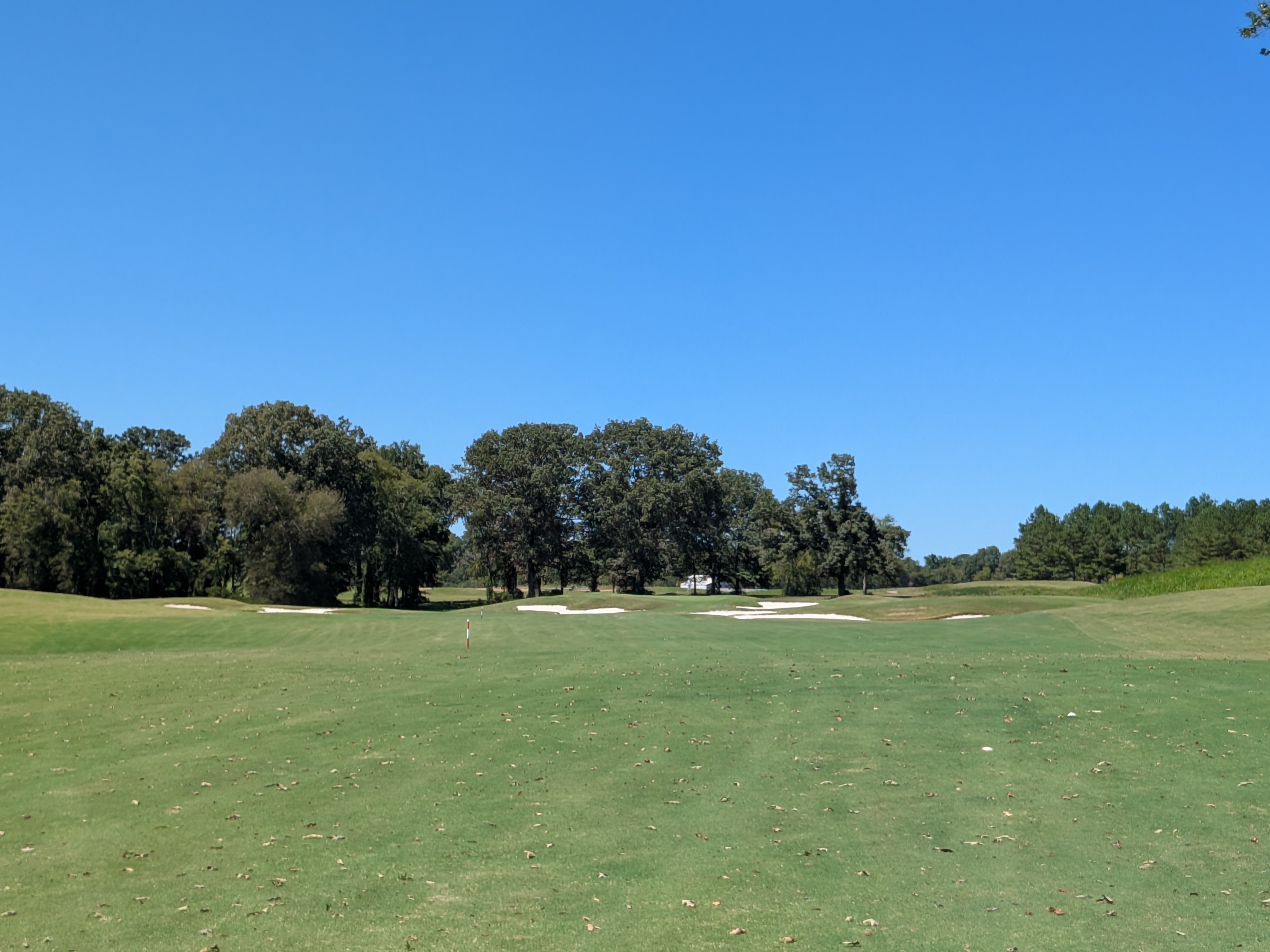
The seventh hole is a longer par-5 that moves to the left after a straightaway tee shot. The tee shot is somewhat mundane playing between two groups of trees, but the hole opens up around the corner to be a wide par-5 with a smattering of bunkers on either side dotting the hole all the way to the green.
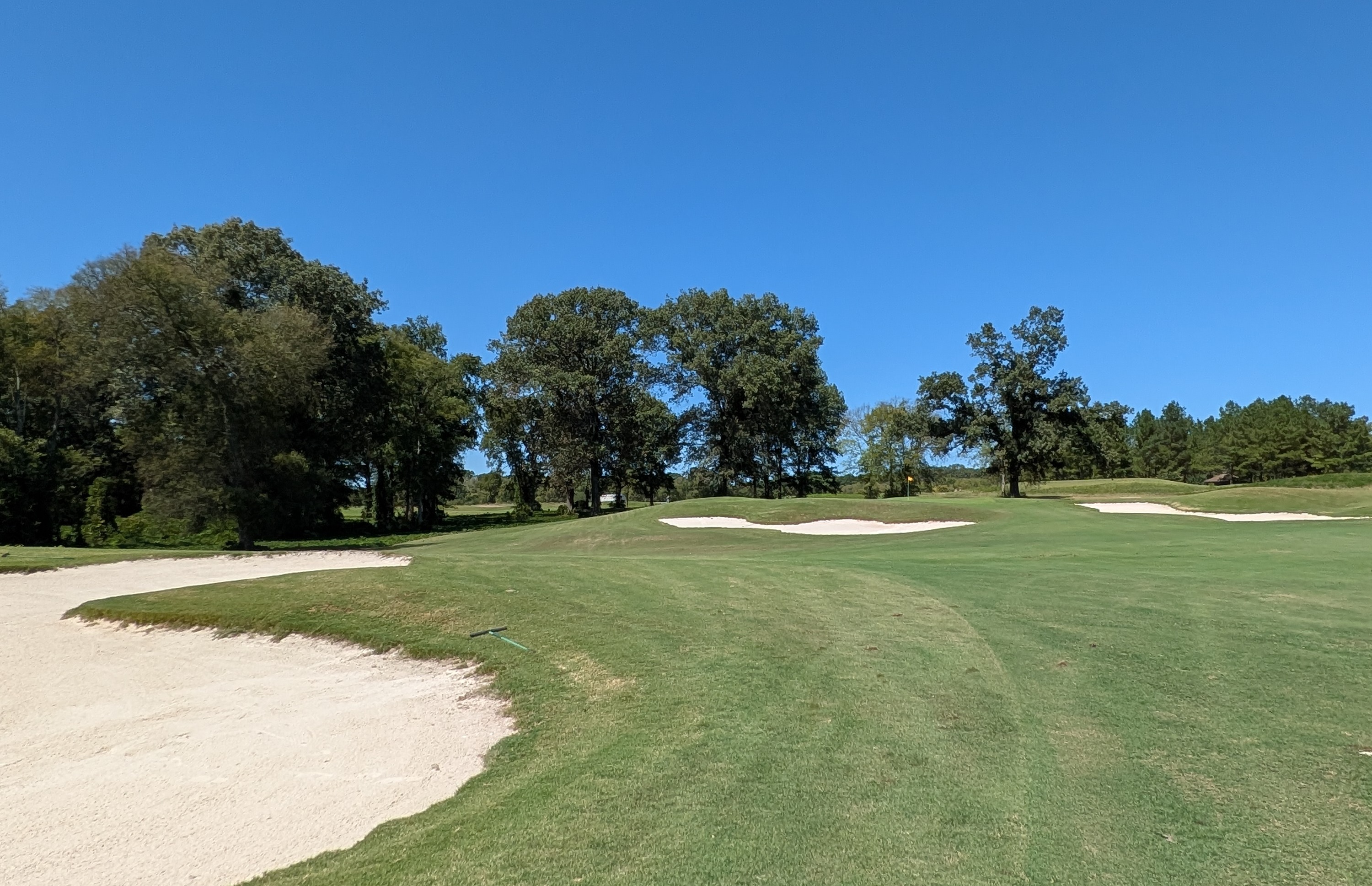
Two large, deep greenside bunkers protect both halves of the green that is very wide at the back, with a taper to the front edge between the bunkers. The green is largely sloped back to front and a putt back towards the fairway is one of faster putts on these bentgrass greens. On our day of play, this par-5 played directly into the wind as well, an unfortunate theme of the Fighting Joe. Three of the four par-5 holes play in exactly the same direction. Improper wind management in the design of most courses is an inconvenience, but in courses designed to play in this much wind, it is a bit of a barrier to enjoyment. Considering the openness, Mr. Jones should have given a bit more thought to the direction of these holes.
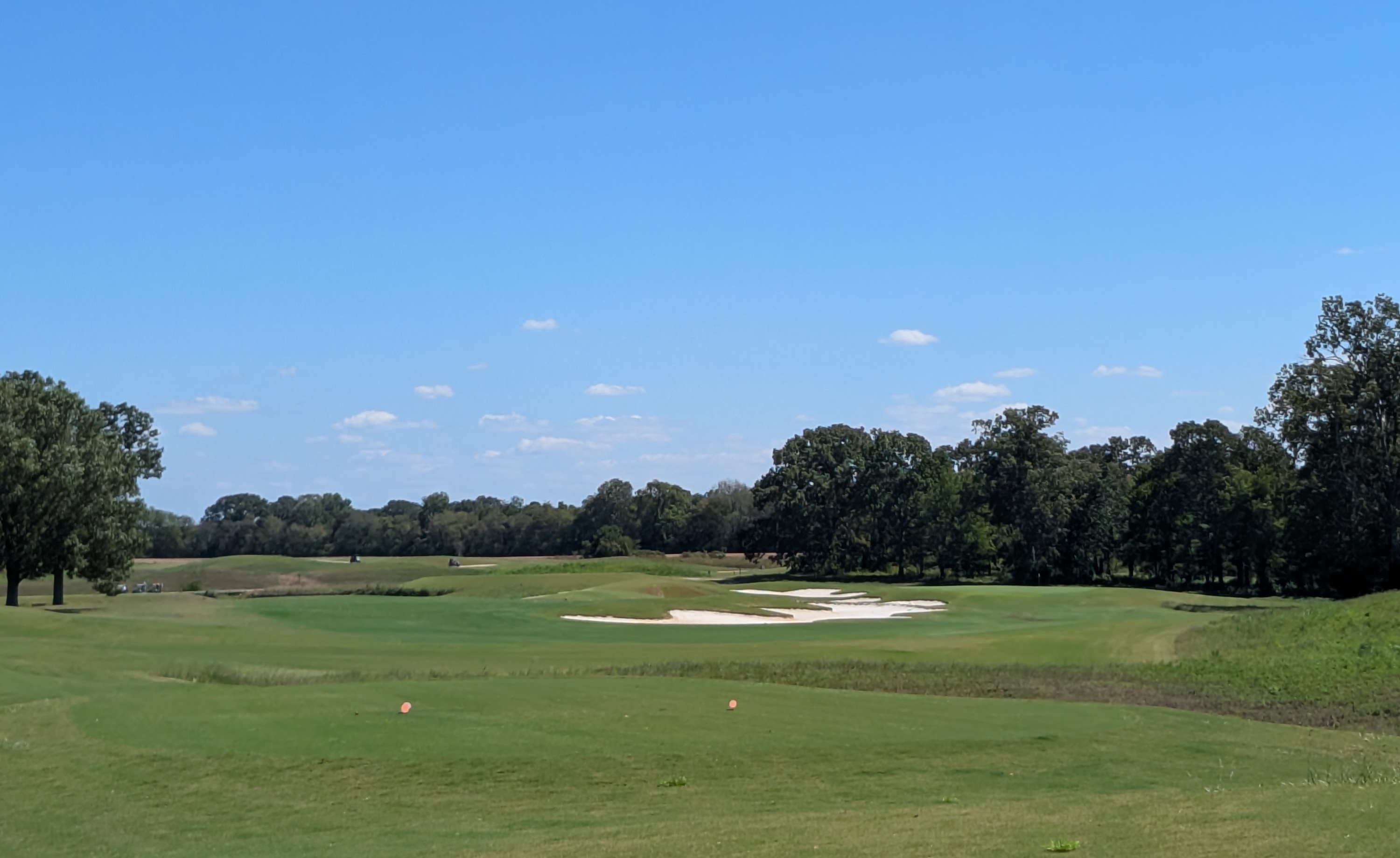
The eighth hole is one of the more interesting par-4s on the course; mid length with a large bunker splitting an upper left from a lower right half of the fairway. The bunker can be carried for longer hitters, and the rich will keep getting richer here, as a slope bounds the ball further down the merged fairway if the bunker is carried.
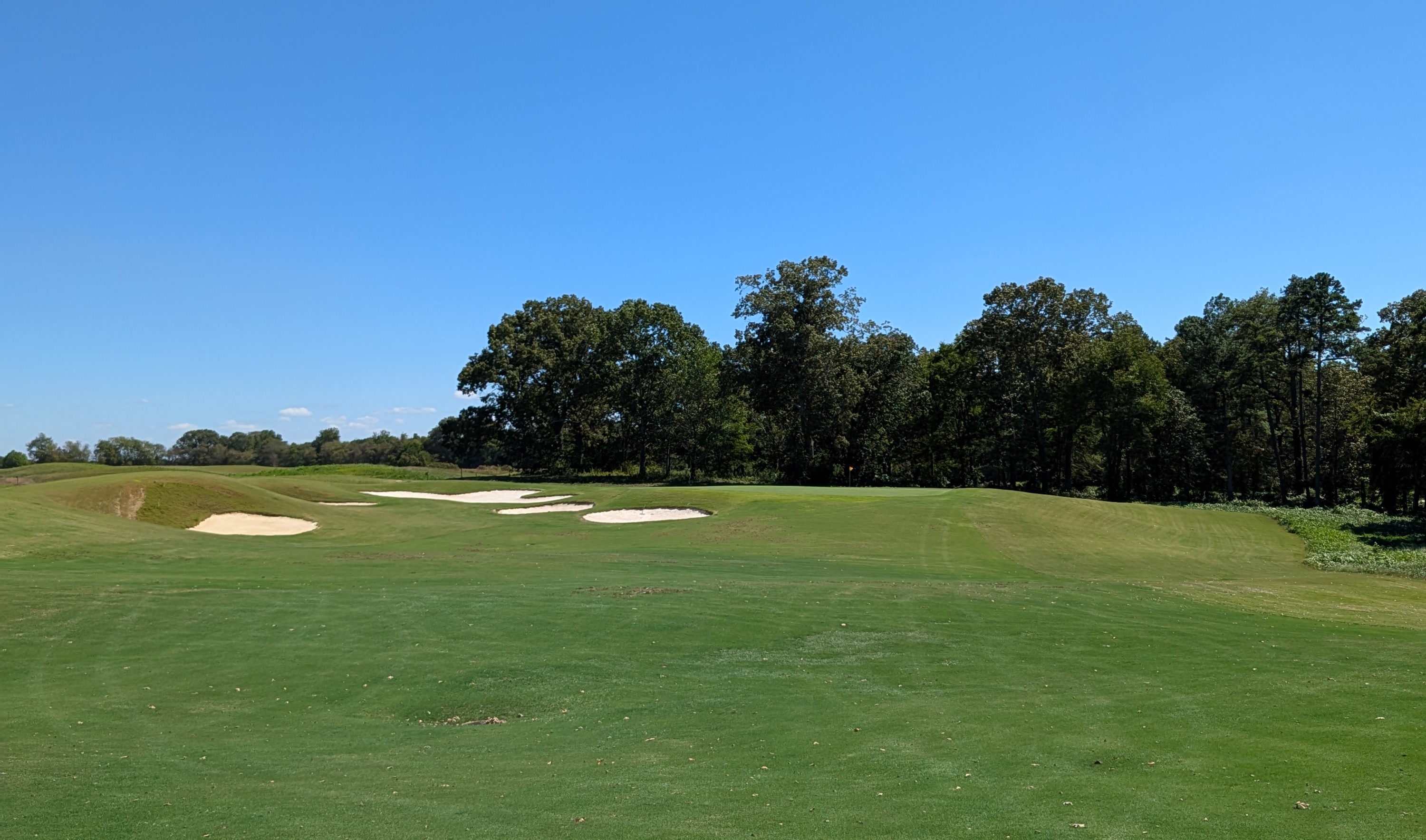
The second plays to a slightly elevated green protected on the left by several bunkers. Missing right here is a significant penalty, as the rough right of the green may create a hanging lie in the downhill bermuda rough.
The ninth is a bit of a featured, signature hole at the Fighting Joe. From the tips, this hole can play over 240-yards directly into the wind. While long, it is not necessarily uncommon to encounter such a long par-3, but it is uncommon for the hole to essentially be an island par-3.
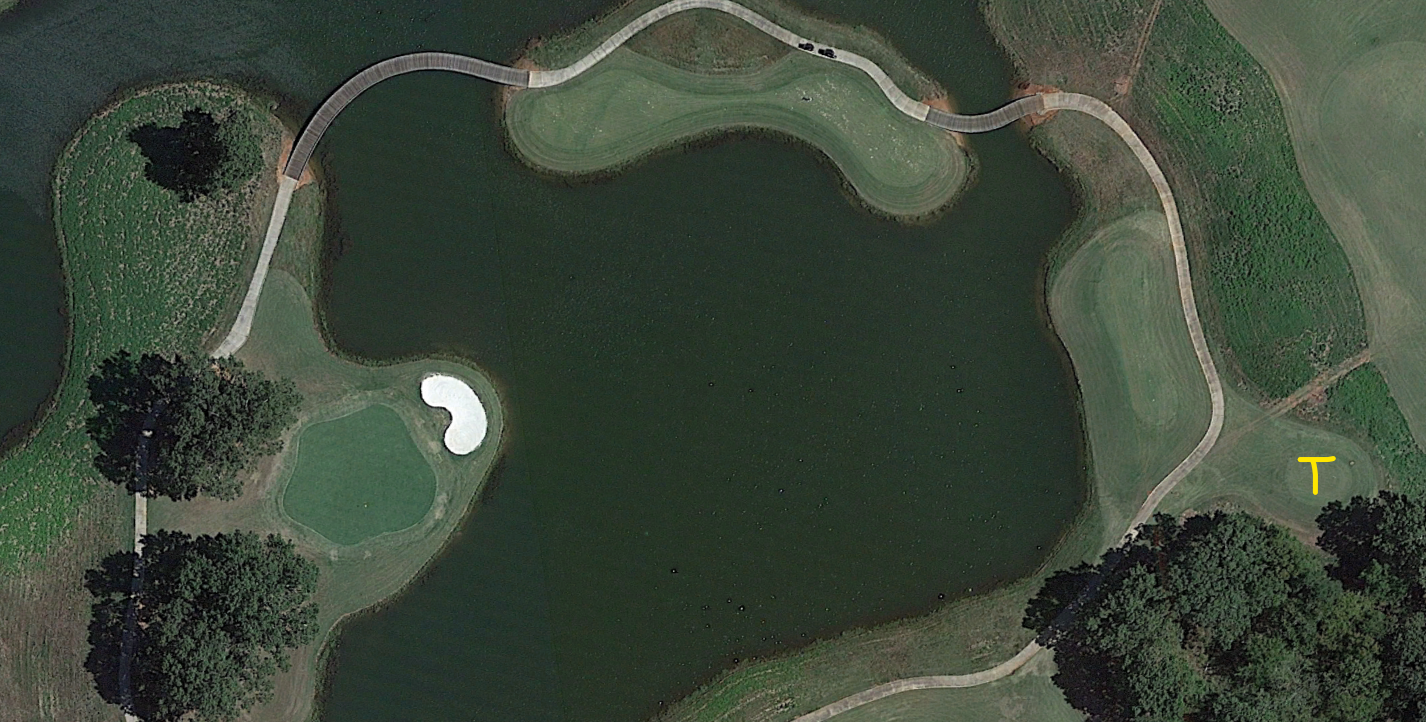
The ninth is a seriously punishing hole, with a rather large green, but fully protected on the front, left, and right by water. This is not the type of water that can be crossed and dropped on the other side; this is the type of water that can have you hitting your third (and fifth) shots from the same location. This par-3 hole does run at a 90-degree to the closely located par-3 fifth hole; the fifth runs south, the ninth runs west. Unfortunately, the back nine repeats this orientation, with the par-3s also running south and west. A slight inconvenience on some courses, but again, the wind here is significant and wind management would cause the par-3 and par-5 sets to play artificially hard or artificially easy depending on the day.
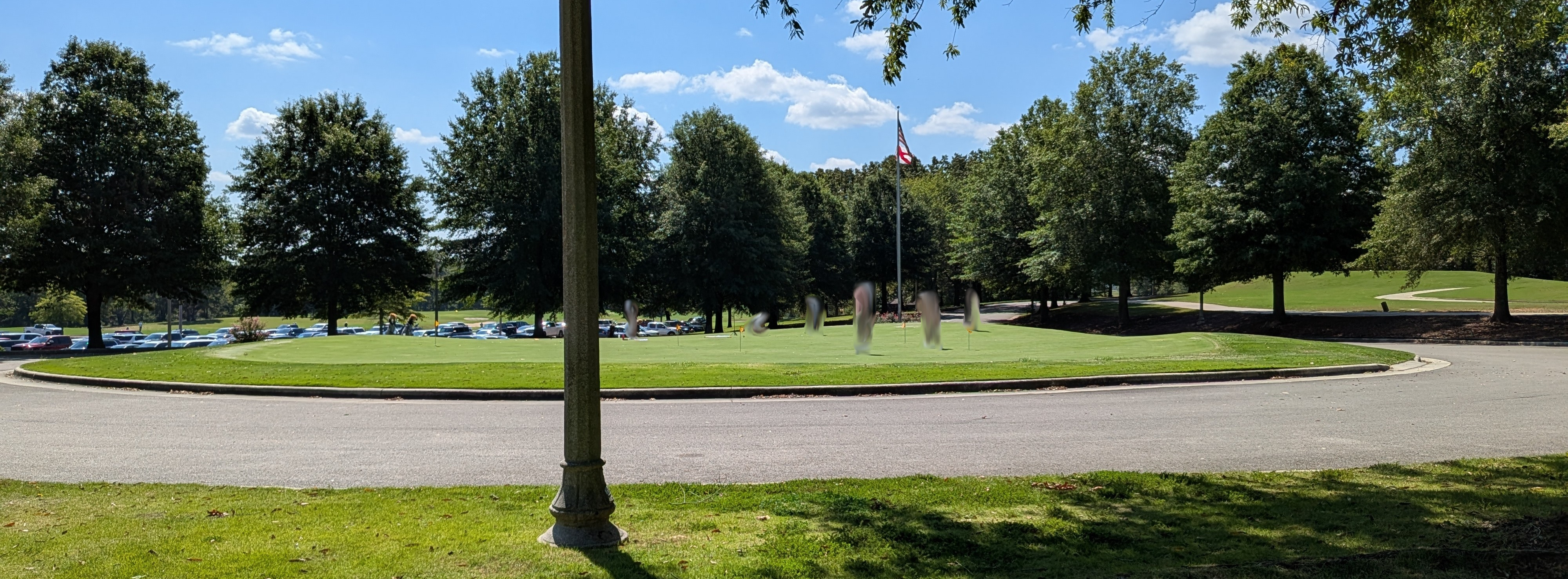
Making the Turn
This course does not loop back to the clubhouse, so the ninth green turns directly to the tenth tee with no halfway house, snack shop, etc. I think that may be a missed revenue stream for the course, but I digress.
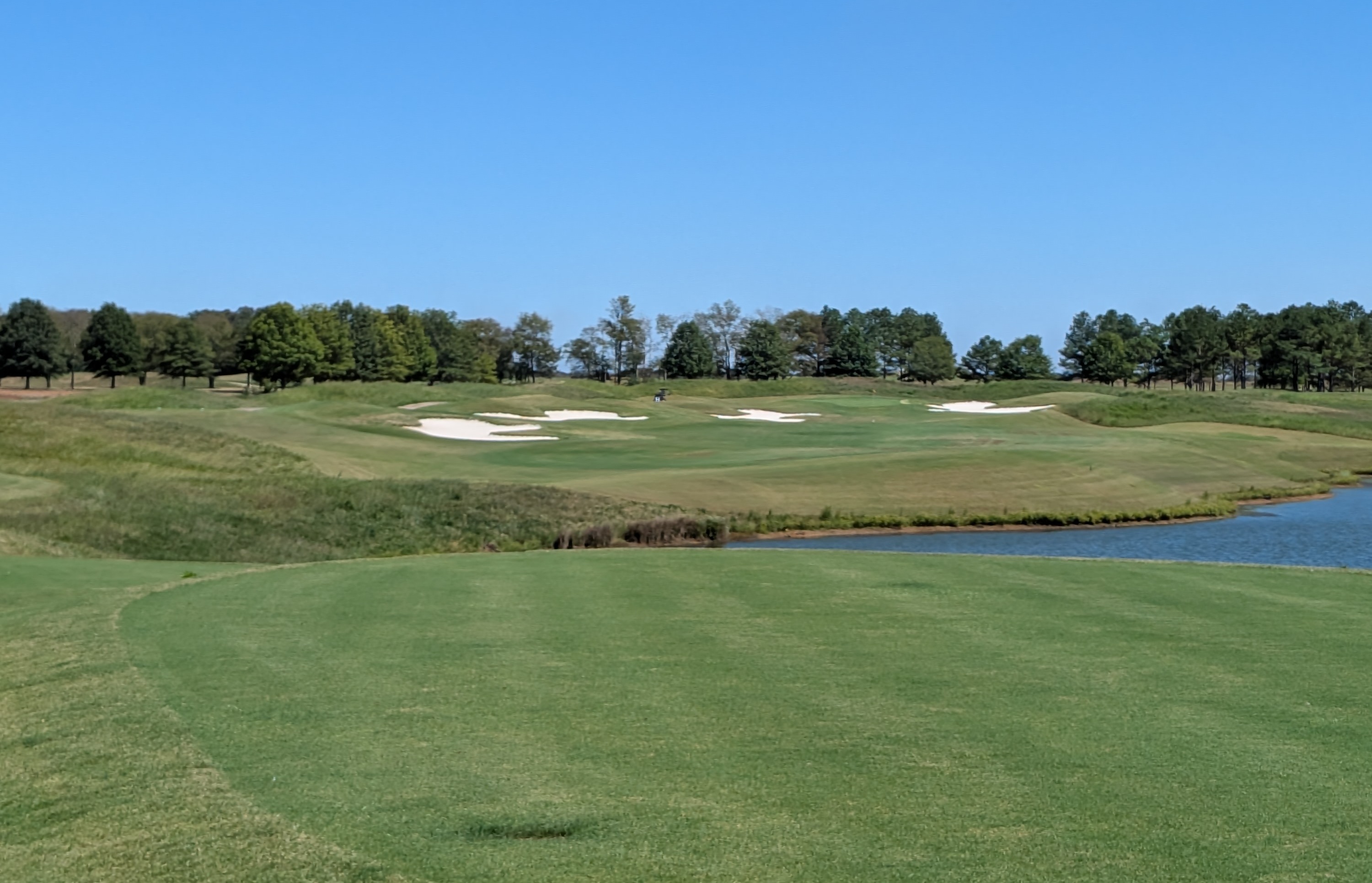
The tenth is a longer par-4 played from an rather aesthetic elevated tee box. The fairway here is wide, but is well protected by two large fairway bunkers and a lake on the right. There isn’t much for strategy on this hole, and really, on this course. Most of the Fighting Joe is truly a fight. It’s another hole, among the many, that largely dictate what strategy will be best – its up to the player to fight to execute the required shot.
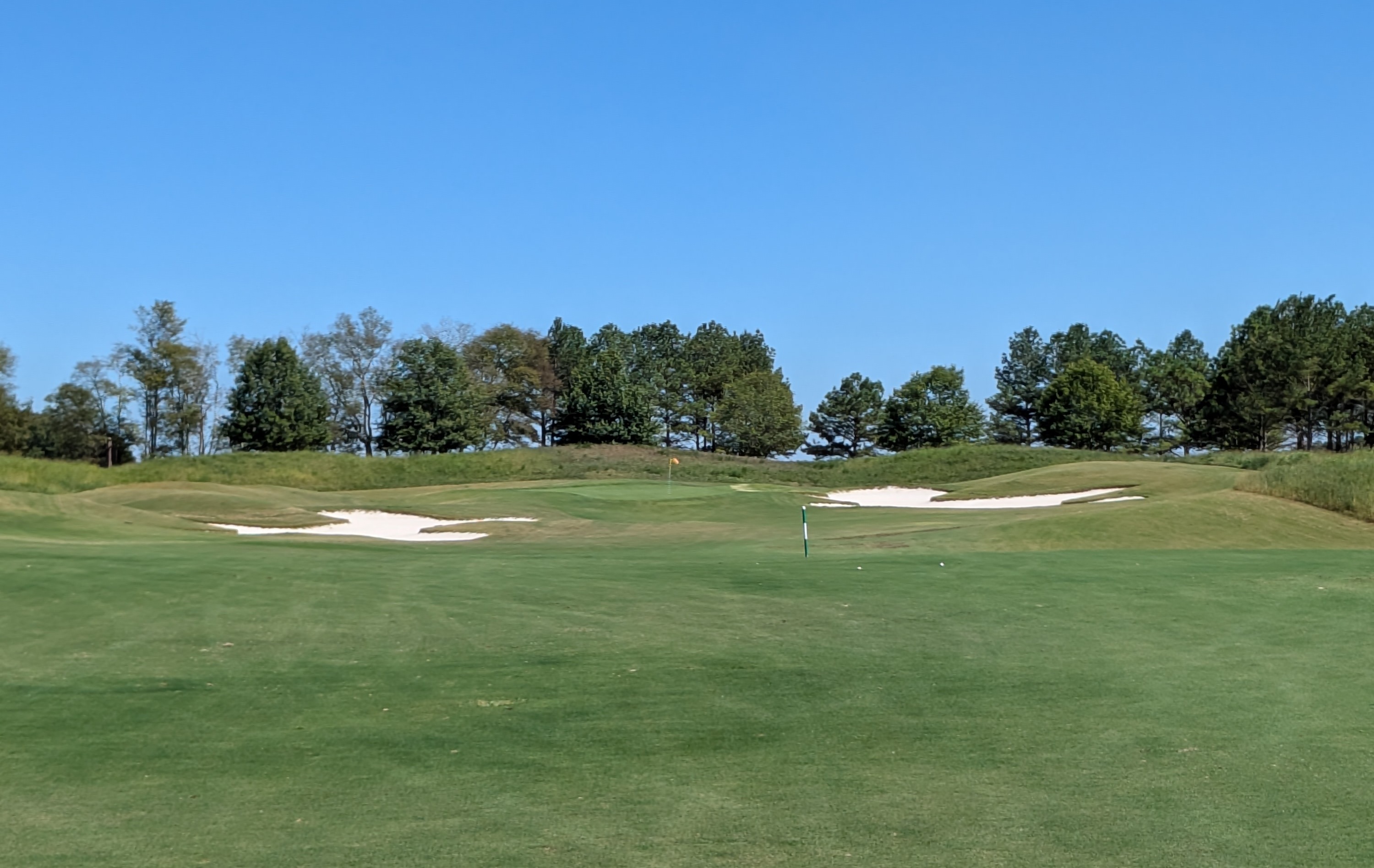
The second shot plays to a unique green, shaped like an upside-down pear. The front section, slammed between two bunkers, is very narrow; only around 9-yards wide. This makes recoveries out of the right bunker very difficult to front pins. Plenty of bailout area exists left of the pin, but I still felt this area was very unfair. The average approach would likely be from longer than 150-yards, into an area of the green less than 9-yards wide. Not sure what RTJ’s thoughts were here besides “I hate golfers.”
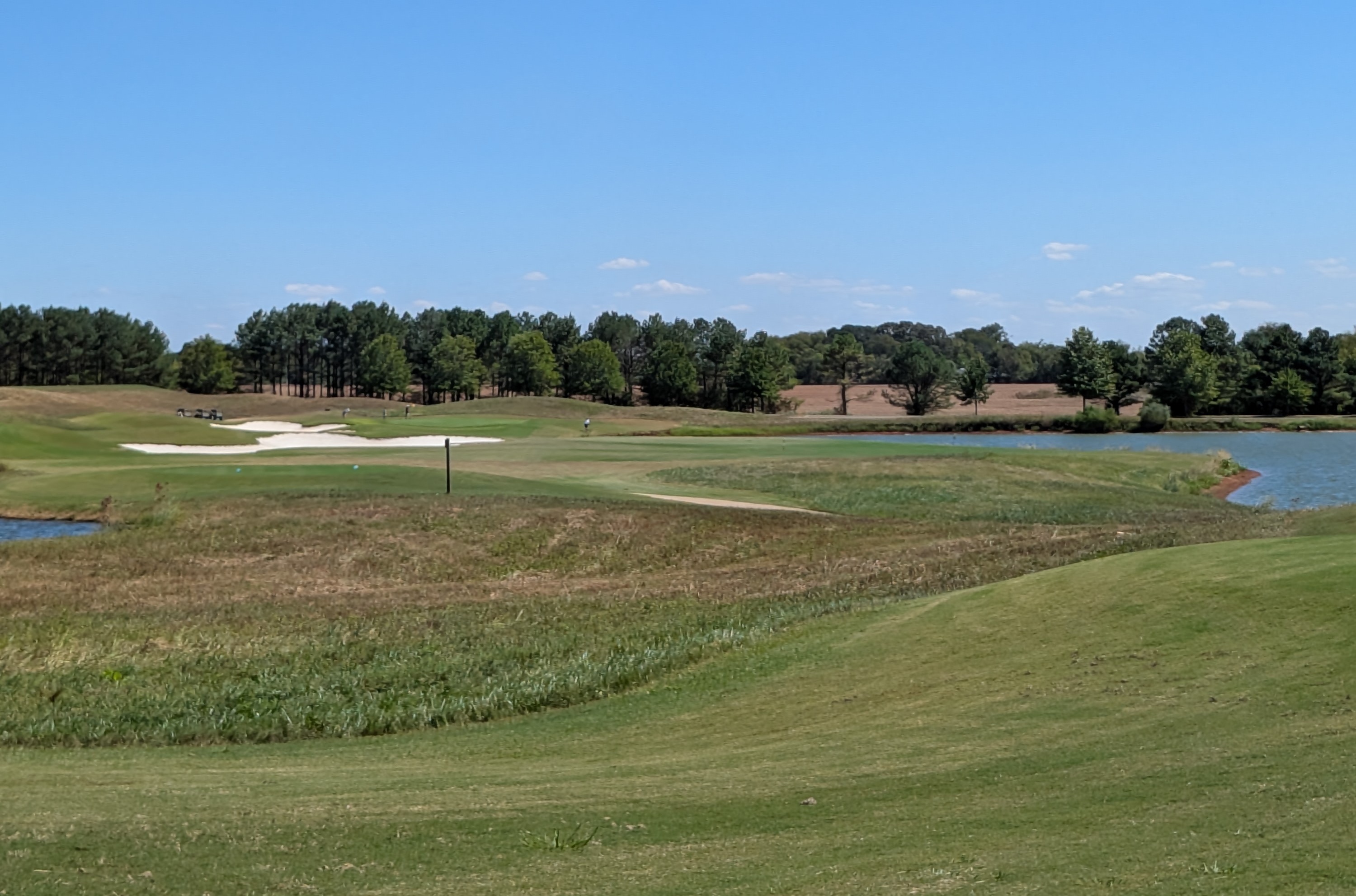
The eleventh hole leaves the area entered on the fifth, back under the same bridge from the slightly wooded area of the course to the flatter area of the course with no trees. The difference in foliage could be felt immediately; this area (1-4) & (11-18) is a bit more windy than the other area. The twelfth is a short par-4, perhaps one of the only of its kind (i.e. short) at the Fighting Joe. However, it plays a bit longer as most players will layup with iron from this tee box.
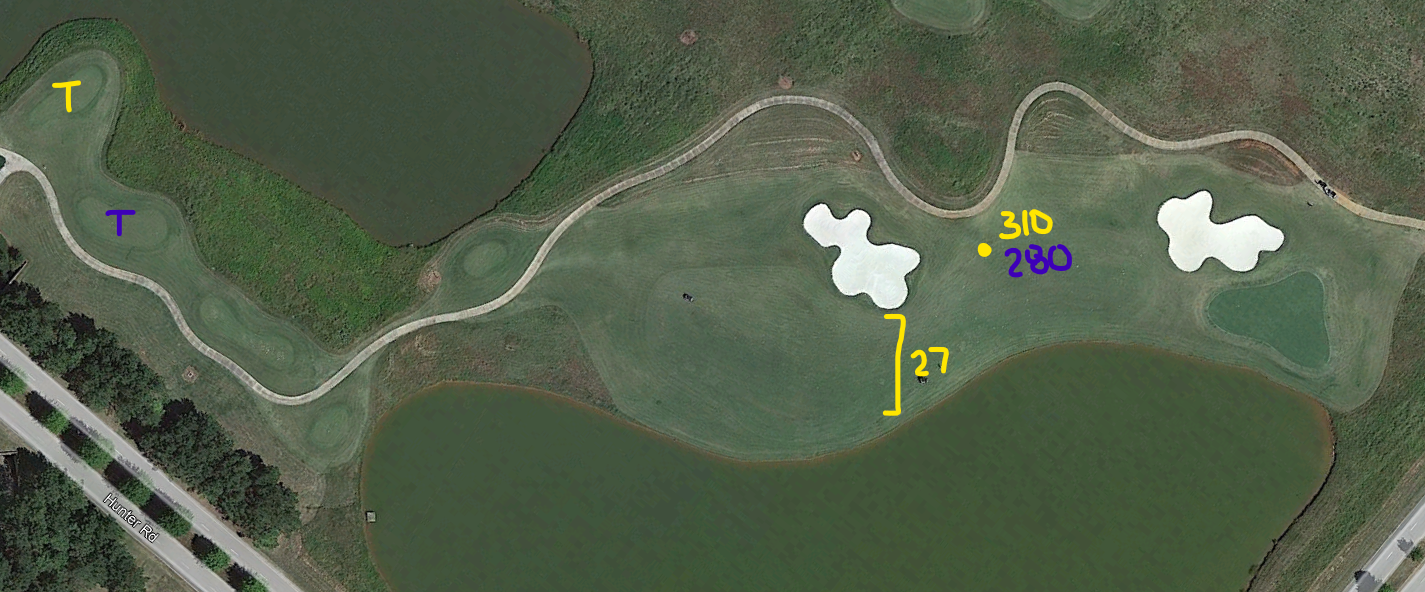
If the player elects not to layup off the tee, it is a bit of a distance to clear the bunker and get to the wider part of the fairway. What must be avoided is the choke point between the bunker and the water, narrowing the fairway to just 27 yards. Players can either take the risk of carrying the bunker, or play safely in front of it.
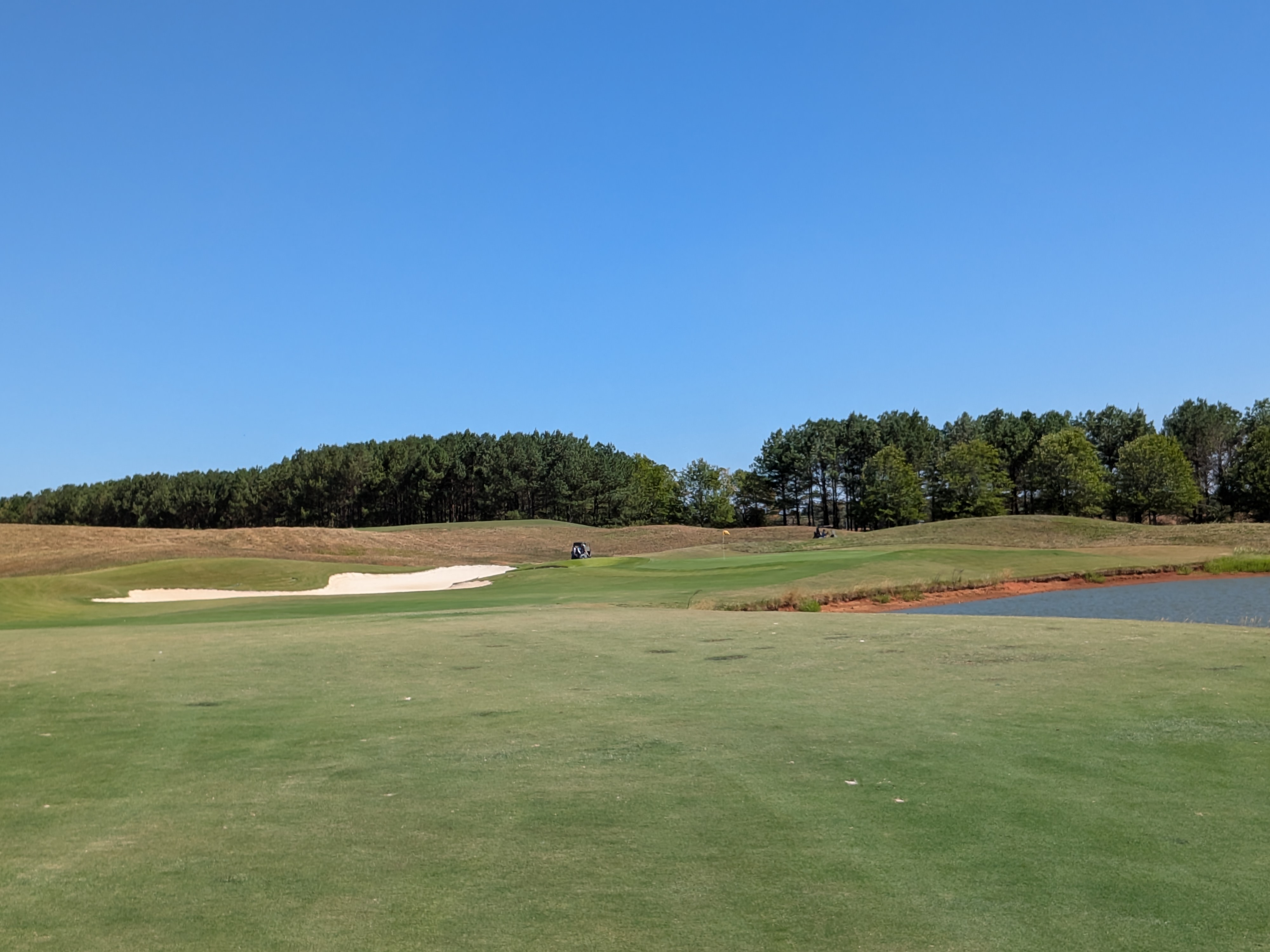
The layup may be more advantageous considering the risk, as the approach even from a layup is not very long. The green is also, uncharacteristically of the Fighting Joe, a bit exposed here, with the greenside bunker left and the lake right being set back a bit from the green. The eleventh is the most manageable par-4 on the course, and may provide a realistic birdie opportunity for most.
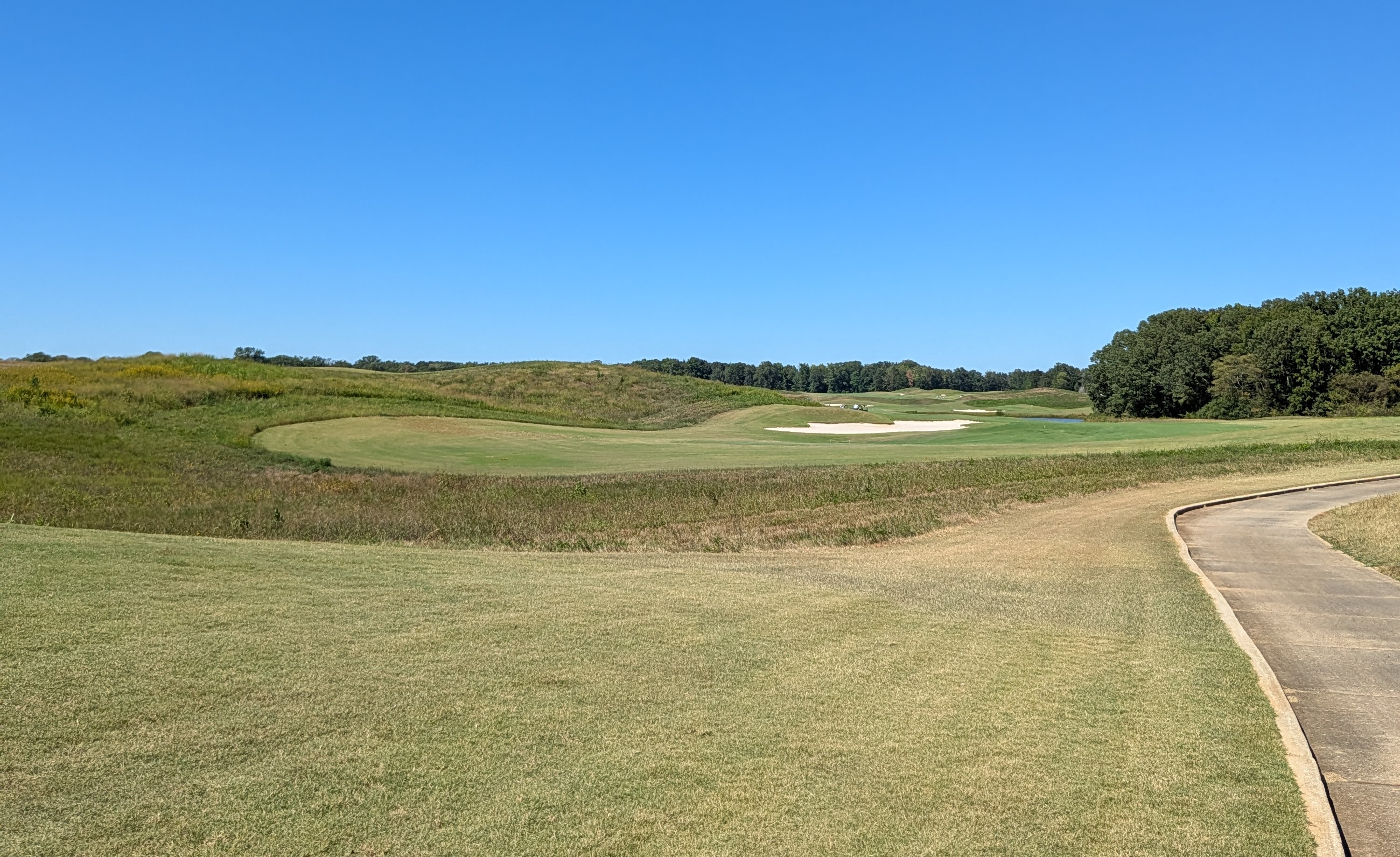
The fun stops here though, as the twelfth hole rains on the eleventh’s fun. The excessively long par-5 twelfth plays over 700-yards from the back tee box, and over 620-yards from the next box. For us, into the wind. I am not the longest hitter in the game, but I’m not a short hitter either. It took a well struck driver, my best driver off the deck, and a well struck four iron to carry the water in front of the green. Comical distance.
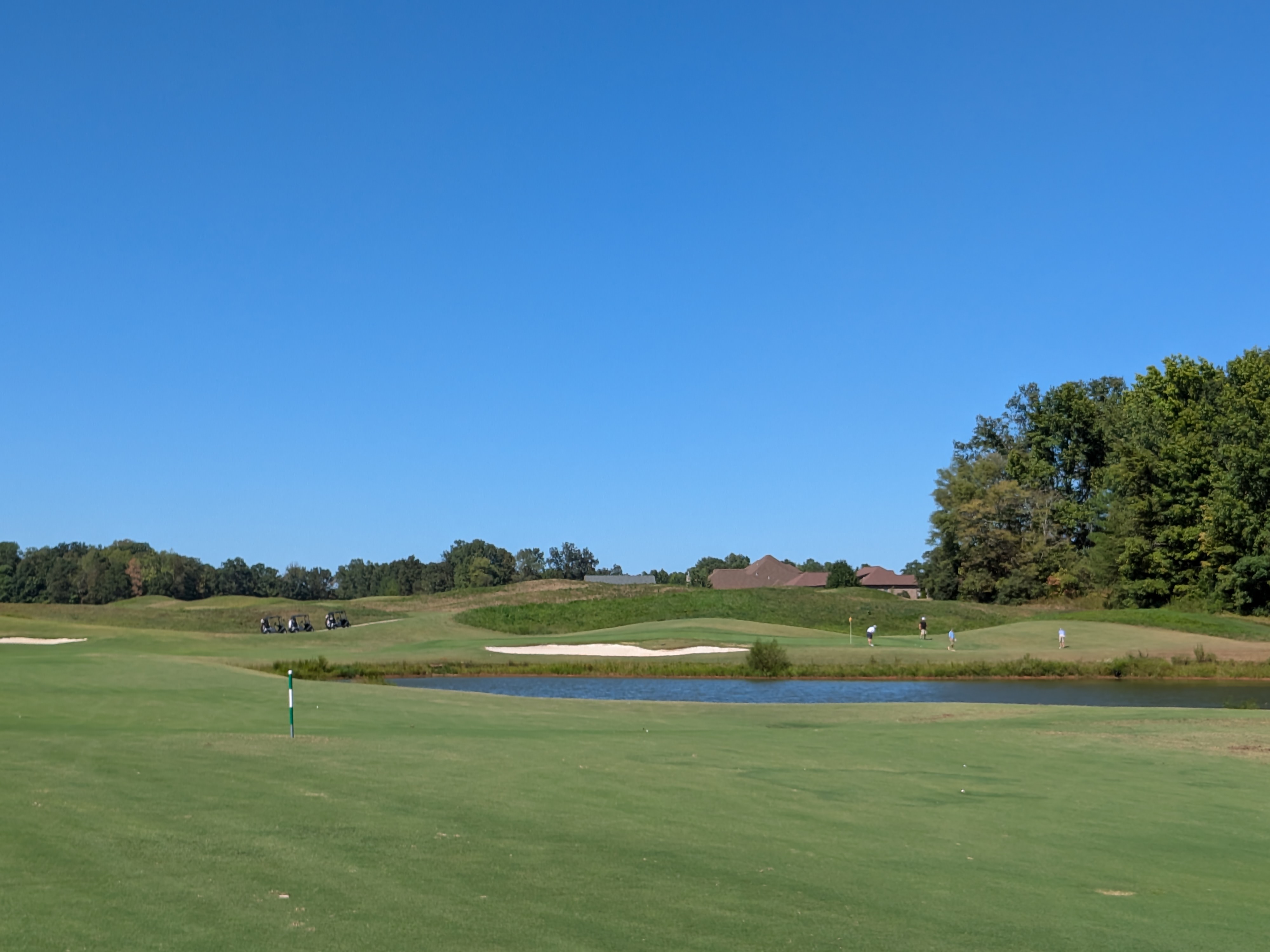
The strategy here? Hit the ball as hard as you can three times and hope you don’t find one of the bunkers that dot the left side of the hole, or the pond that extends for the last 200-yards down the right side of the fairway, and becomes a forced carry in front of the green. This is one of the most difficult par-5 holes I’ve played, and probably the dumbest. It may work downwind, its a terrible hole into the wind.
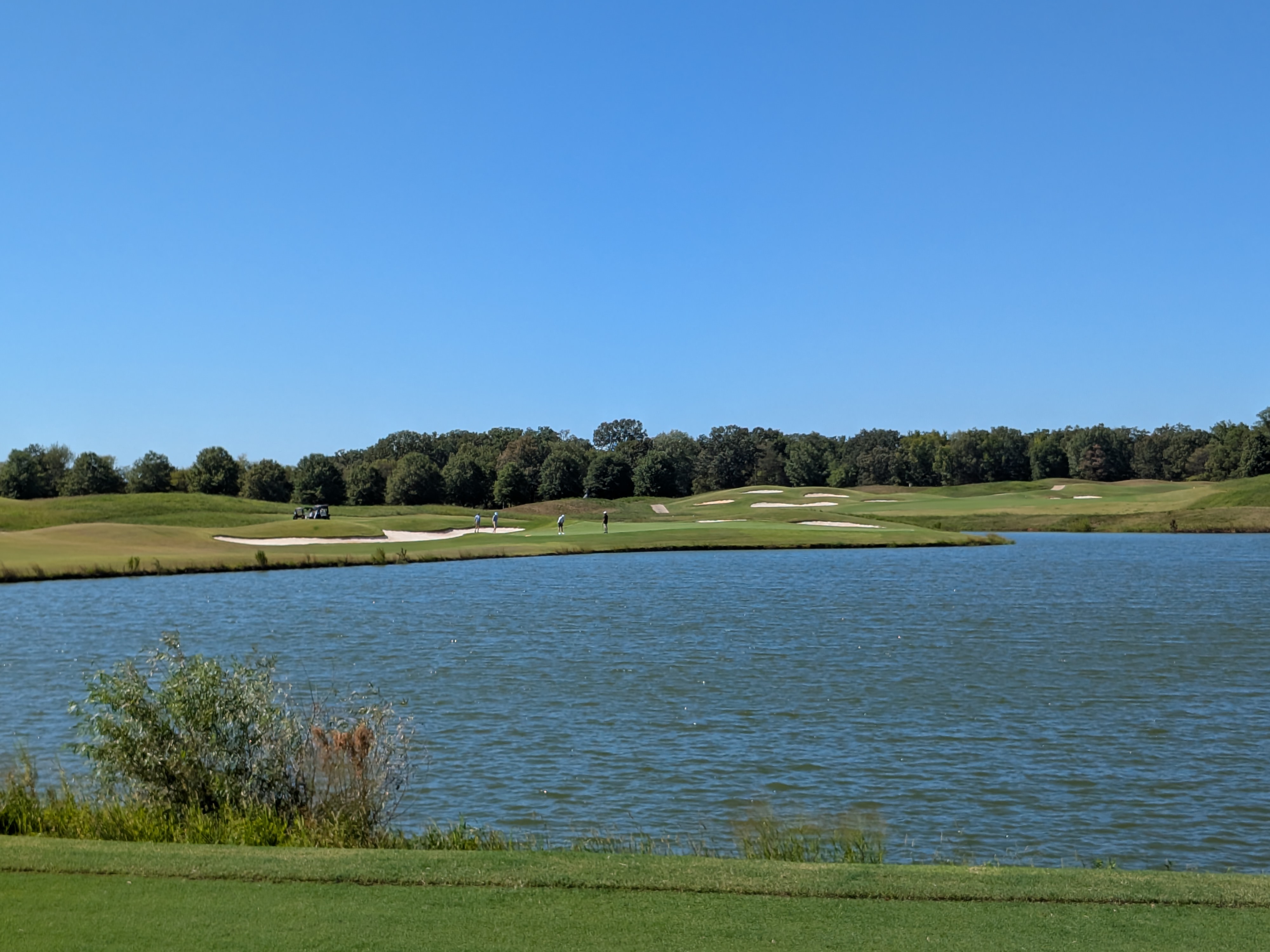
The thirteenth hole is another mid-length par-3 filled with liquid death, this time with the water surrounding the front and right sides of the green. The green is a bit of a triangle, with the longest side of the triangle fronting the water. This is another pretty par-3, but the long water carries on par-3 holes does start to get repetitive at this point in the round.
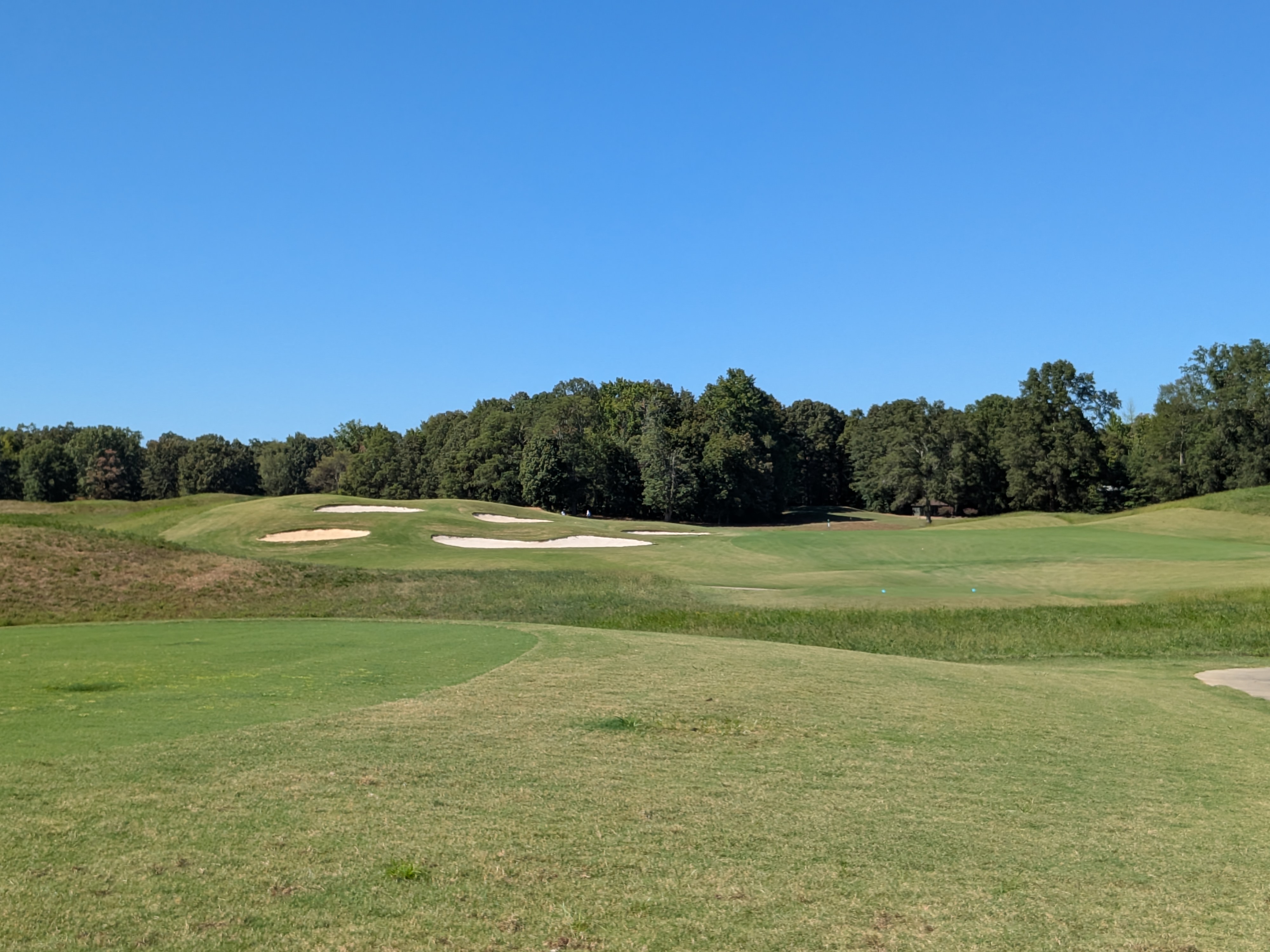
The fourteenth is a mid-length par-4 with a bit of a carry to reach the fairway, but not an unmanageable one. It is the third consecutive hole running in a westward direction. This hole doglegs around an interesting formation of bunkers that I can only assume is meant to pay tribute to the Fighting Joe; however, it could easily be mistaken as a paw print.
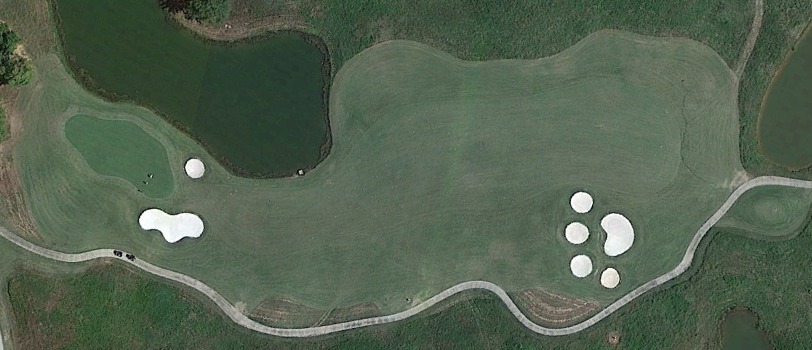
The “fist” bunker’s fingers are elevated to its palm, making for a difficult recovery and potential lip issues should a player find any of these five bunkers. The approach plays to a very long and somewhat narrow green, protected on the right by a lake. The green is flattened into a hillside that slopes from left to right, meaning recoveries from left of the green will be from an elevated position. The green slopes mostly from left-to-right, further complicating short-sided misses on the left. Of course, left misses are preferable to the a miss right.
The fifteenth turns 180-degrees and plays as a mid-length par-4 with a semi blind tee shot over a lake for the first 150-yards or so.
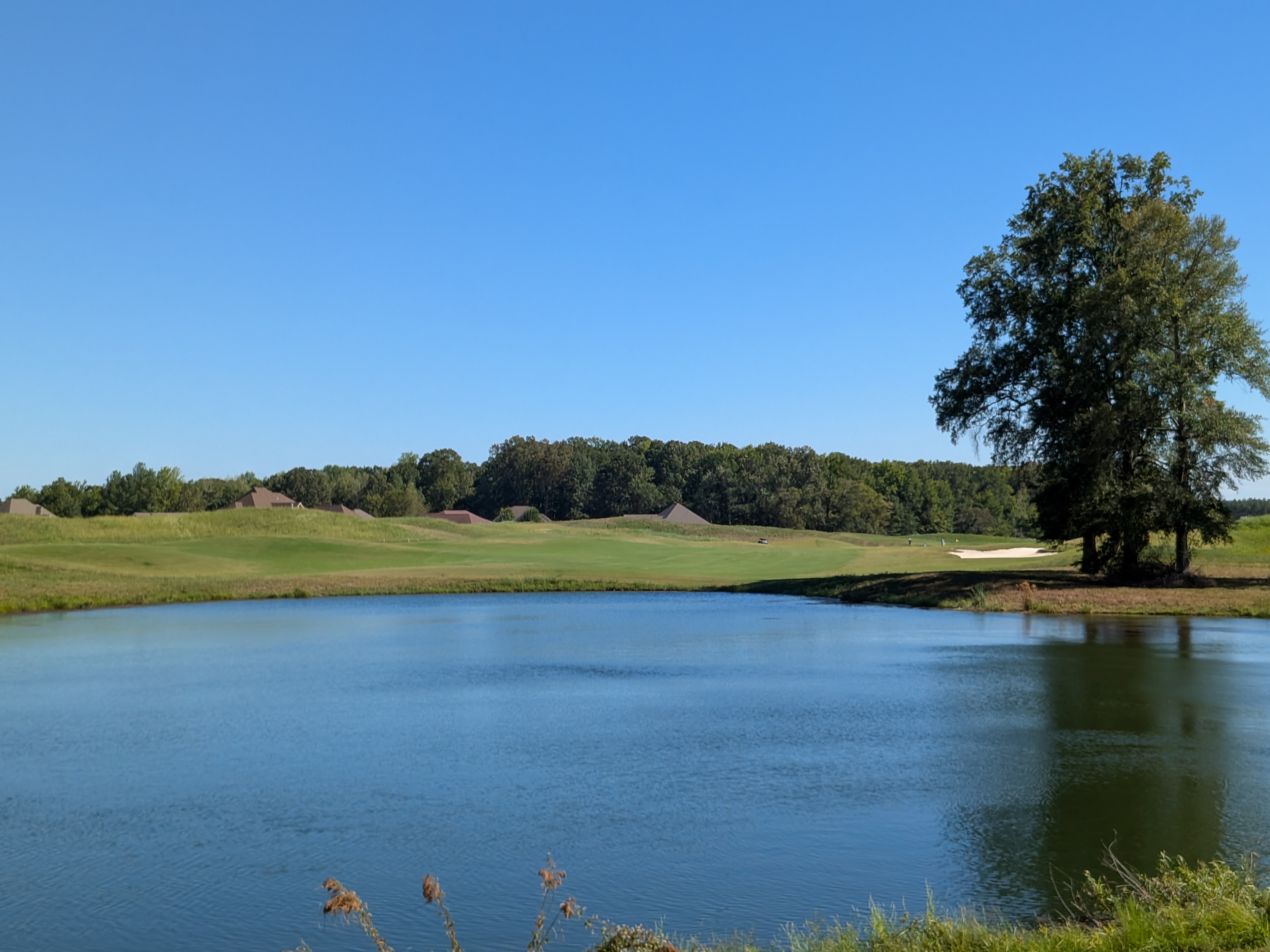
A bunker on the right of the fairway frames the visible approach, but what comes after is largely a mystery from the tee. The fairway here is somewhat wide and unprotected on the left. After the bunker on the right, a short strip of rough exists before the lake from the thirteenth pokes in and runs the final 110-yards of the hole.
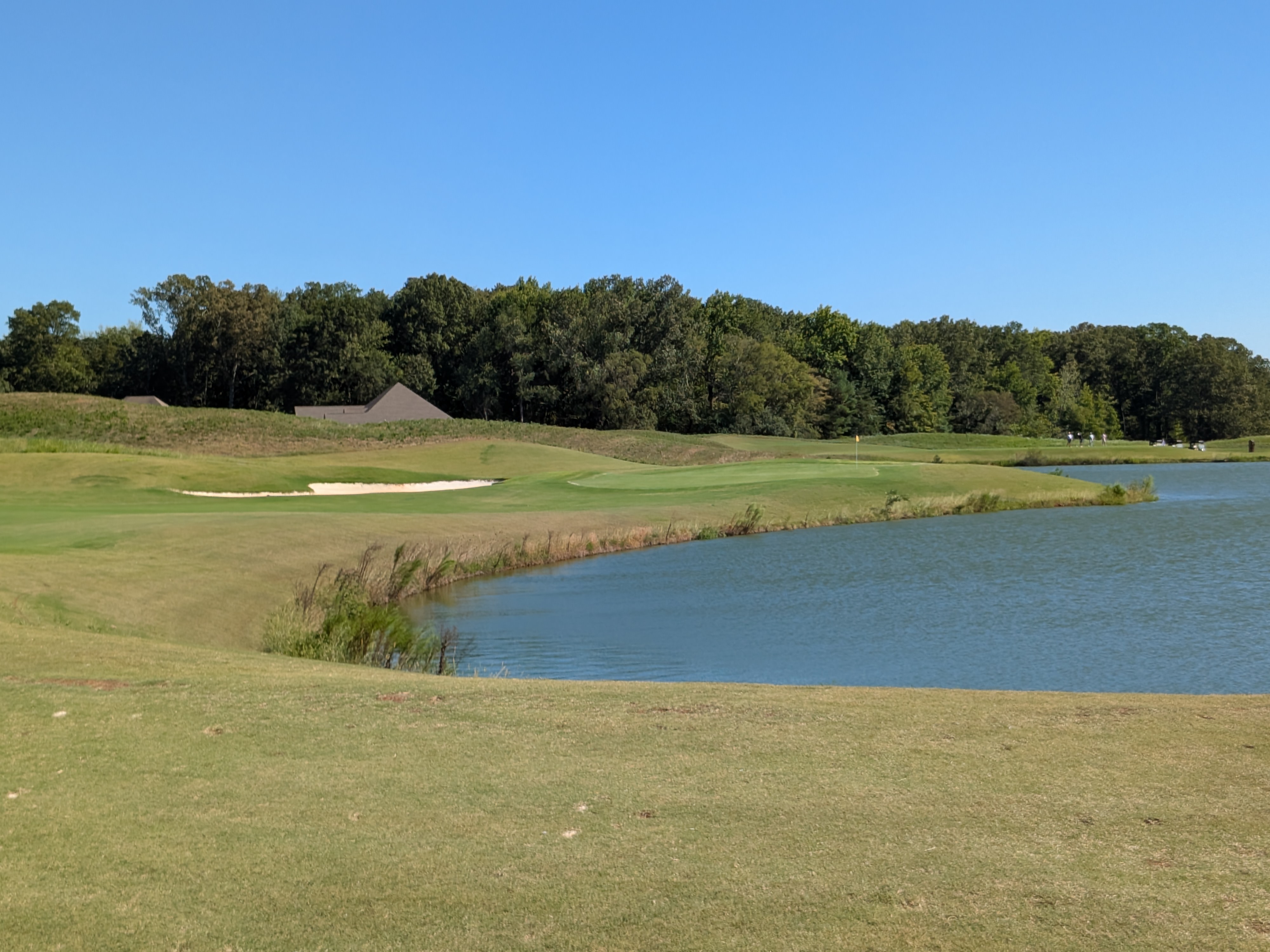
Only a singular, large bunker protects this green, and the putting surface is more of the more benign surfaces on the course. Provided the hazards are successfully avoided, the fourteenth will present a good birdie opportunity.
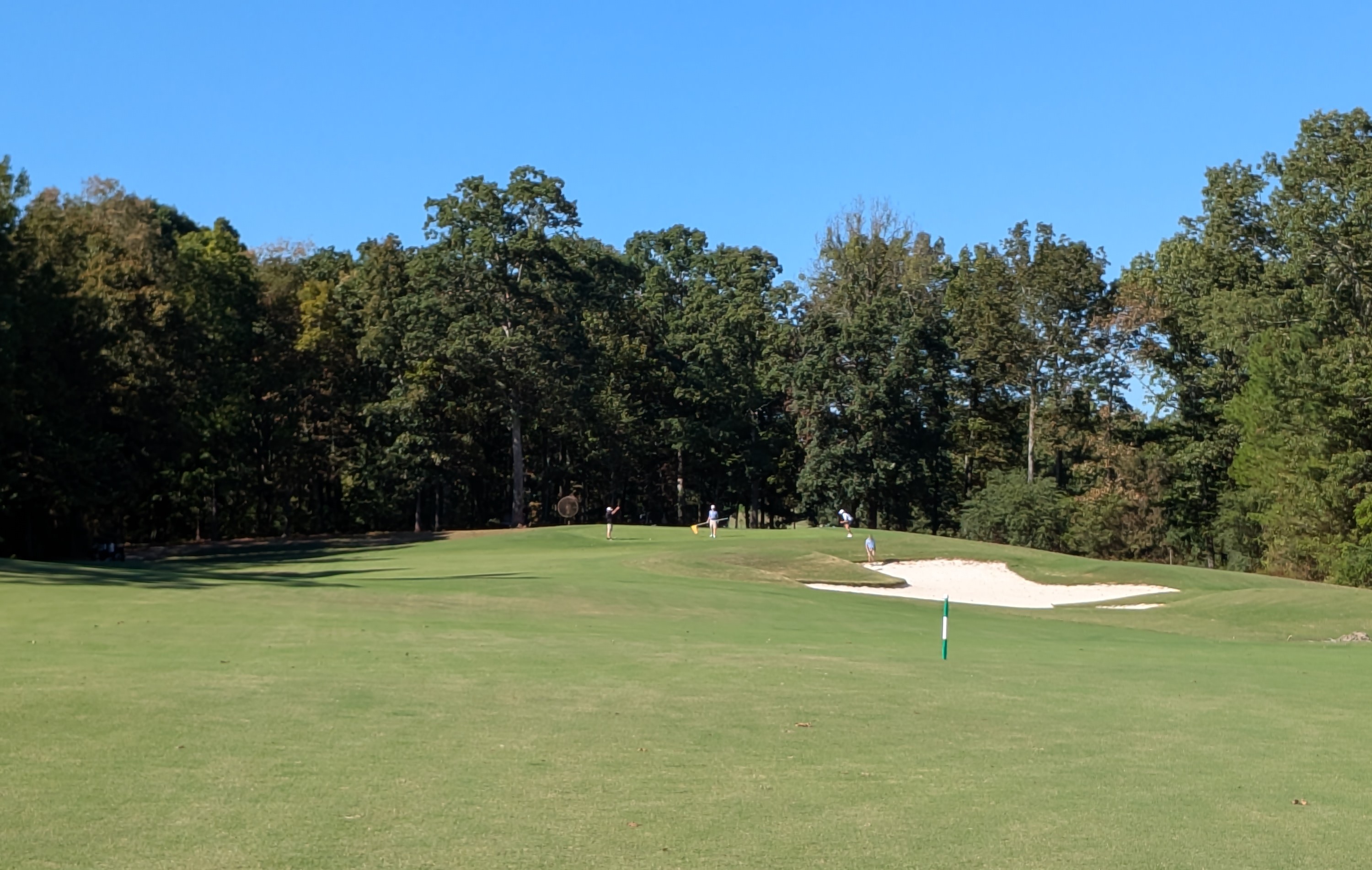
The sixteenth turns back again in the westward direction as the march to the lake begins. The sixteenth is a longer, straightaway par-4. The challenge here is the length, as only one fairway bunker frames the tee shot, and the green is unprotected. The greenside bunker is in flyover territory for most shots and stops short of the putting surface. This is another hole where very little strategy is required – managing the length is the objective. The putting surface here may be one of the smaller surfaces considering the length of the hole, over 480-yards from the back tee markers.
The seventeenth is the final par-5, a long one played from a slightly elevated tee. This tee provides the most aesthetic view to this point in the round.
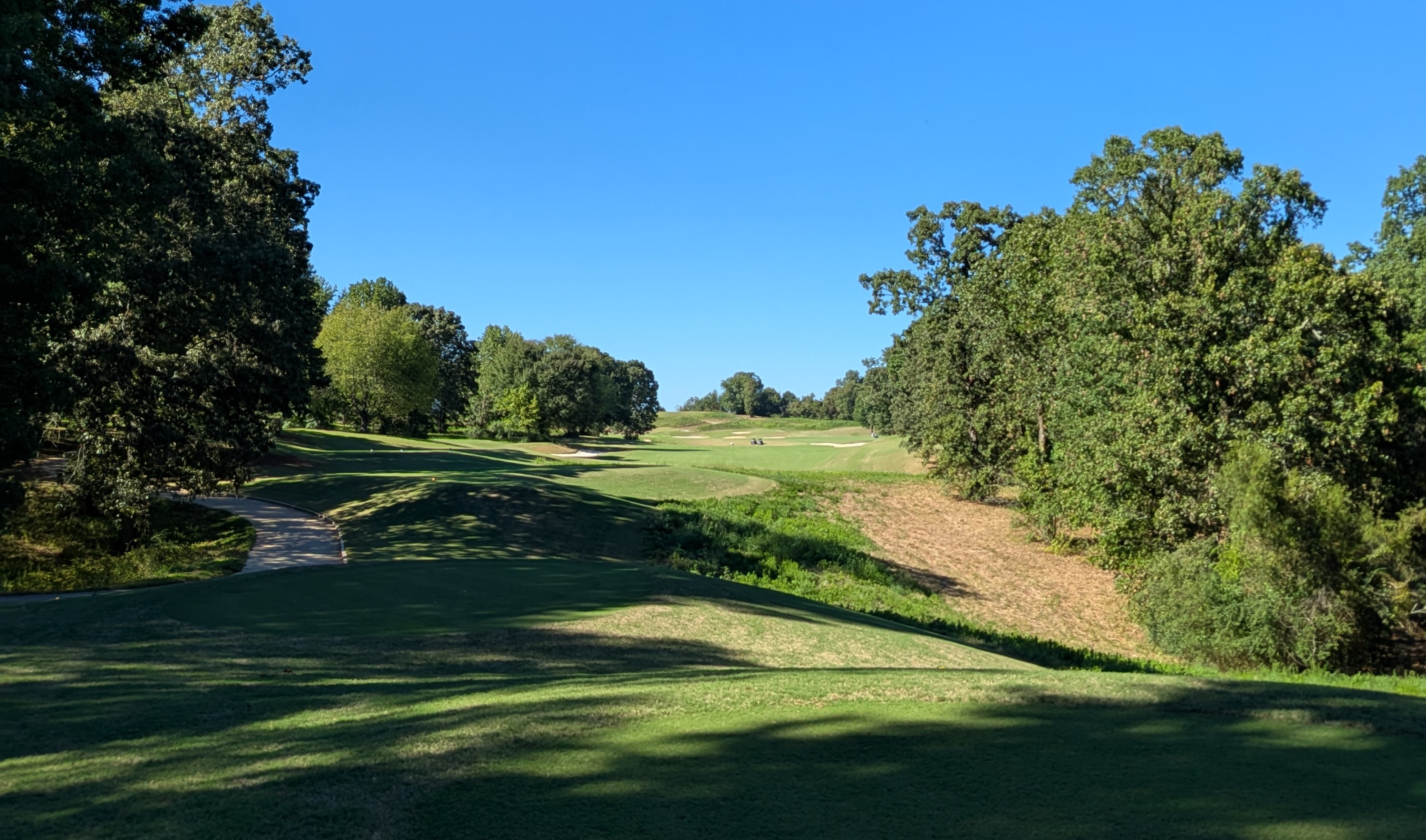
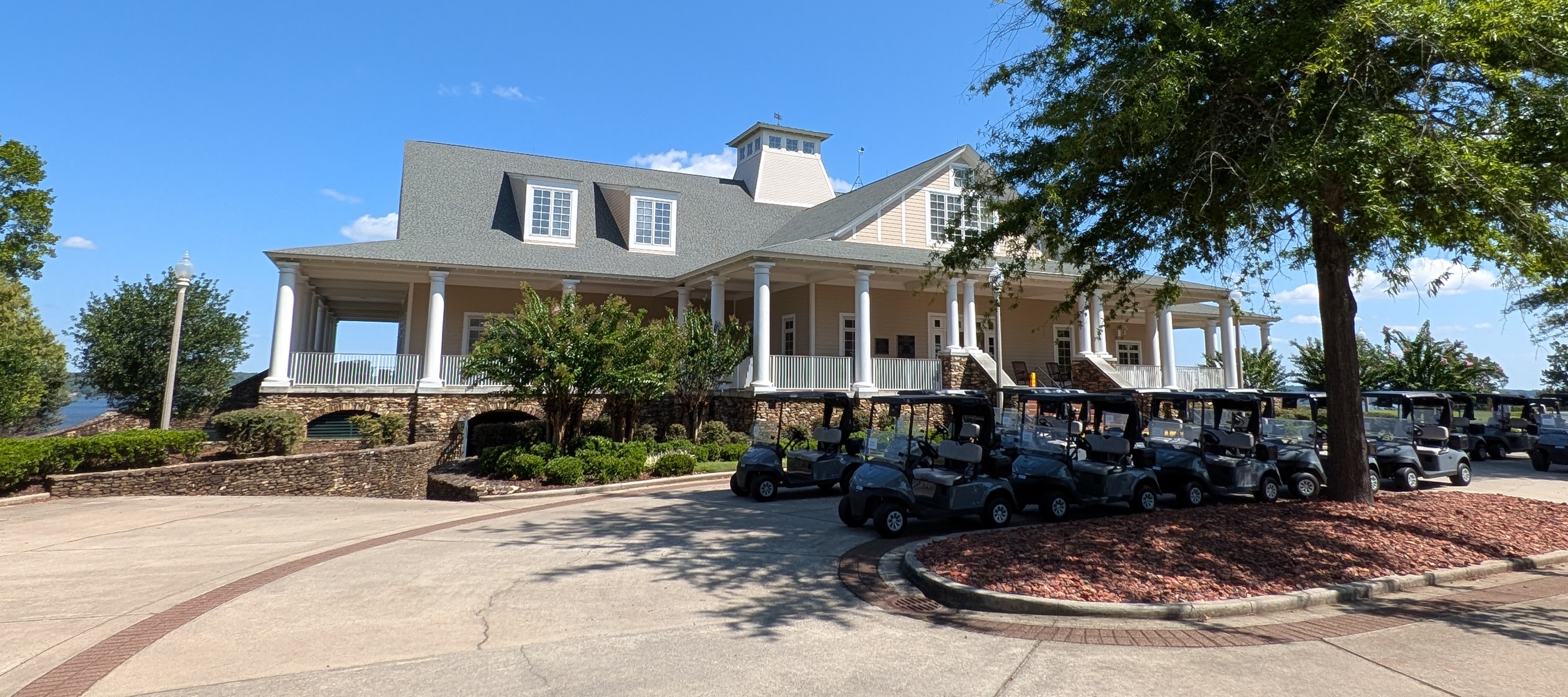
Something about shadows falling over a golf course does it for me; and the shadows return here as the seventeenth moves back into the area of the course near the lake and clubhouse, with trees! The seventeenth is one of those classic Robert Trent Jones designs that causes even the most novice of player to start asking, “why are those bunkers there.”
Two bunkers frame either side of the tee shot, but it starts to get a bit interesting on the second shot, which can either be played out to the right to safety, or for the longest hitters, taken directly over the small lake to the green.
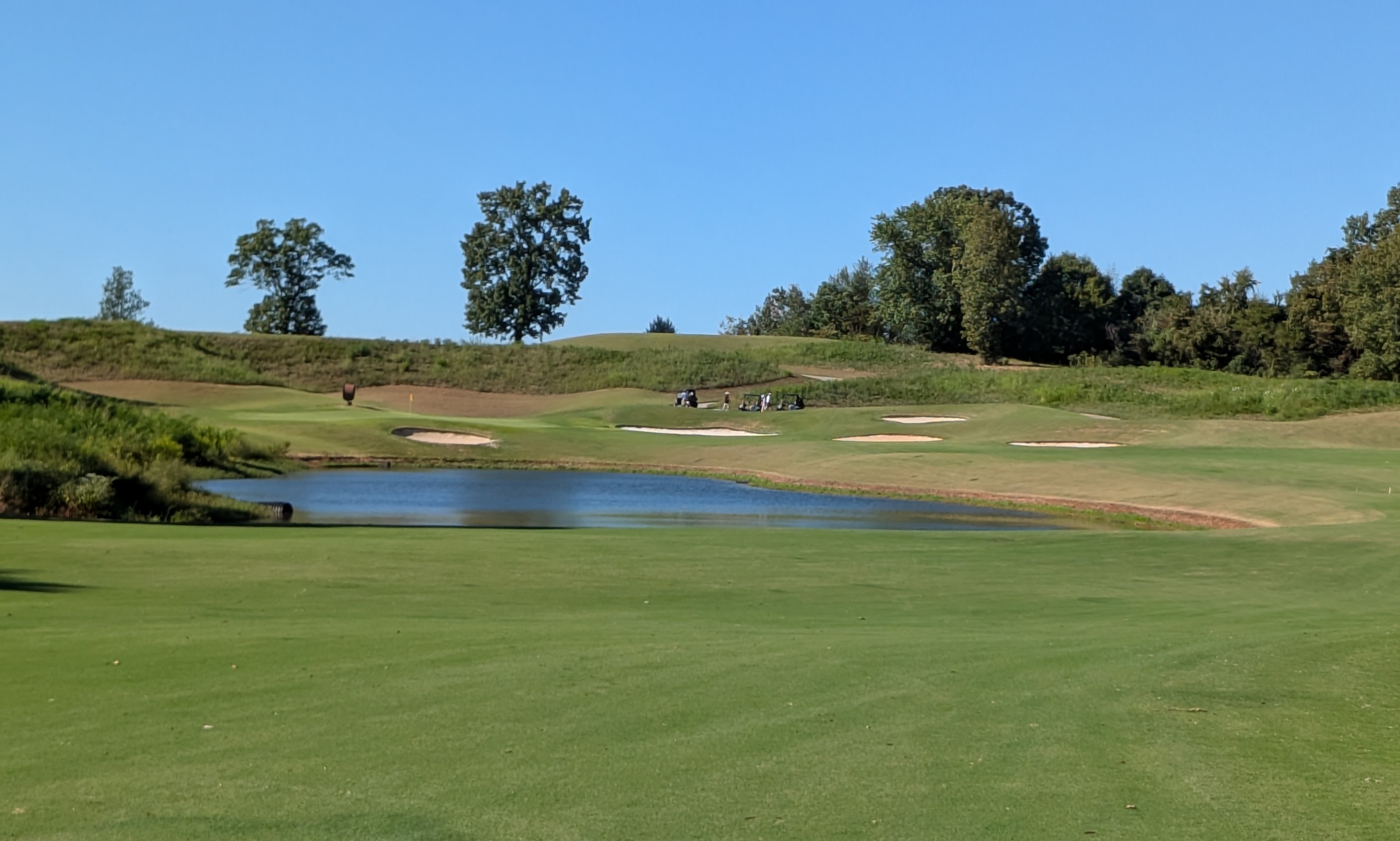
For some reason, I suppose for challenge, RTJ shut off the common play on this type of hole design. Most courses would allow you to play pin high right to create a preferable angle into the green without taking on the risk of going for the green over the water. Not here!
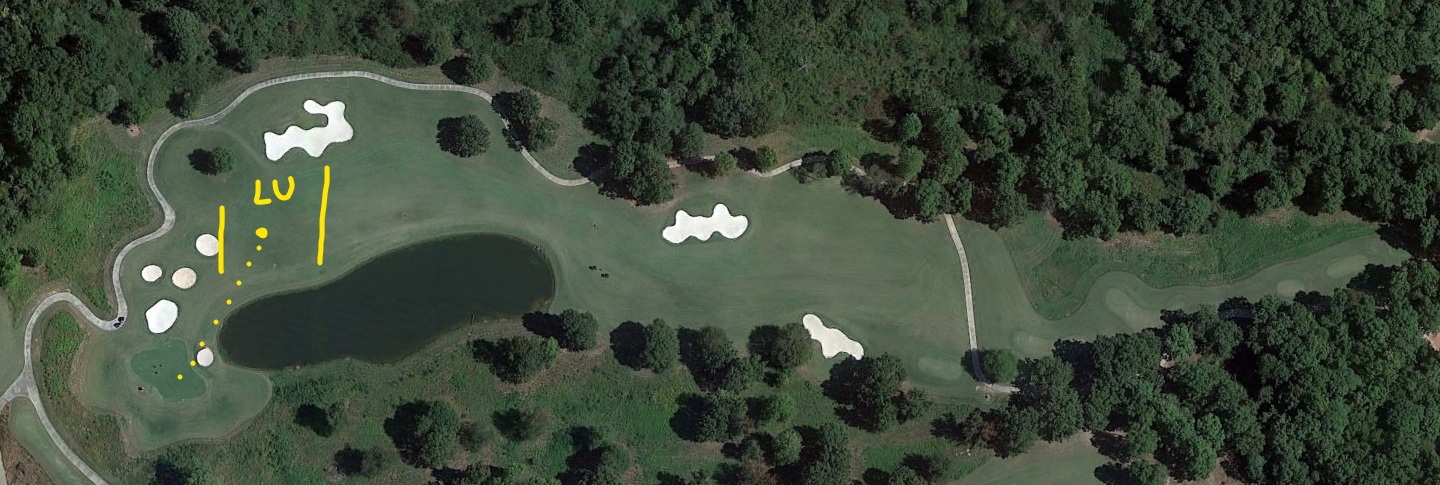
The layup zone is short of those four bunkers, and RTJ forces the player to take on at least some piece of the water by putting these flat bunkers to close off any angle play. Going at the green will require a hero shot, and with no bailout right or left, laying up is more disadvantageous than it otherwise would be. I don’t hate this design, but I’m also not crazy about these random, birdshot style bunkers that exist to close off the smart play.
To this point in the round, as you can tell, I was a bit on the fence about this course. It has things I disliked and things I liked. Mostly, I felt the course was maybe a touch overhyped. I’m not sure I’ve played any course in which my opinion was more influenced by an eighteenth hole than here. Because here, the eighteenth hole is pretty close to worth the price of admission.
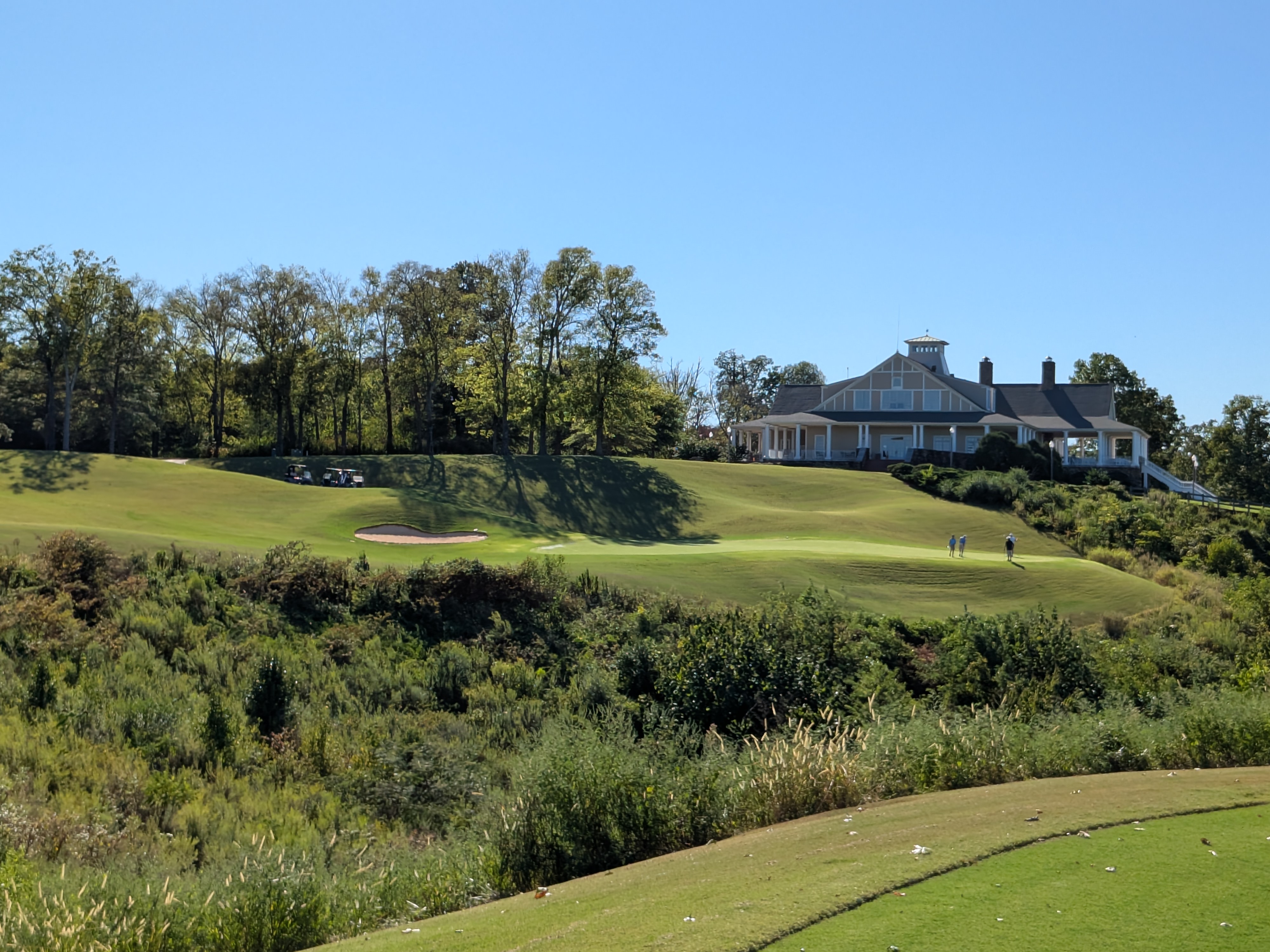
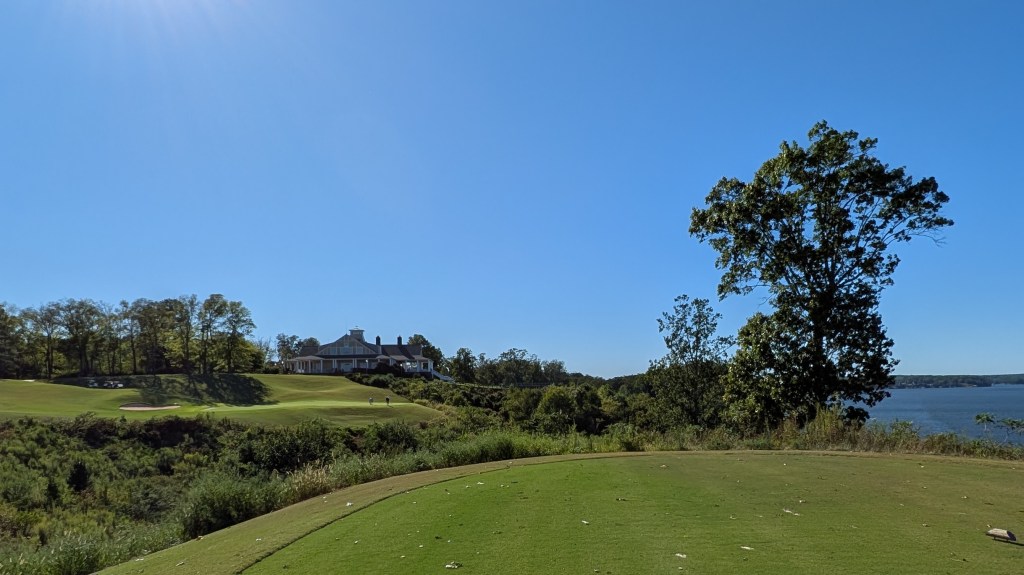
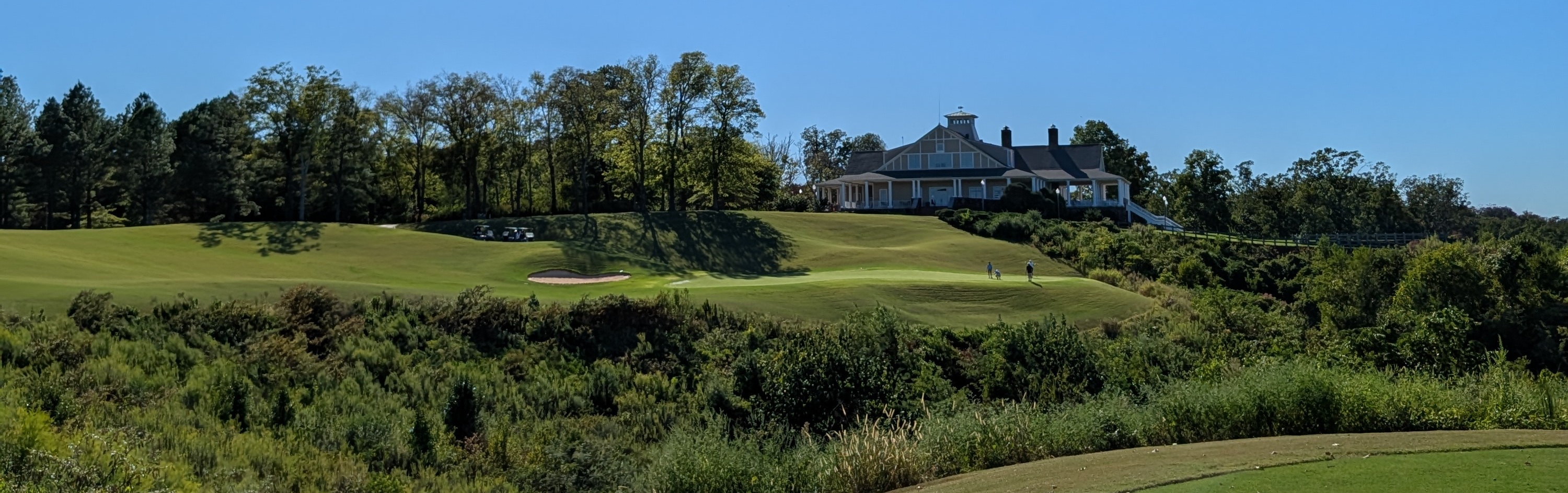
The eighteenth is a fantastic mid-length par-3, a closing par-3 at that, played to a very long and narrow green. Just right of the green is around a hundred foot cliff off to the lake below. The way the vegetation in front of the green frames the shot here is magnificent, and much more reflective of a golf course in the southeast than the holes before it. The view of the clubhouse and the lake are fantastic, but I really loved this hole because it broke the monotony. Par-3 holes with water features are cool, but its overdone. Holes like the eighteenth, without the bunker or water gimmicks, with natural beauty on a natural greensite – that is what makes a golf hole worth seeing.
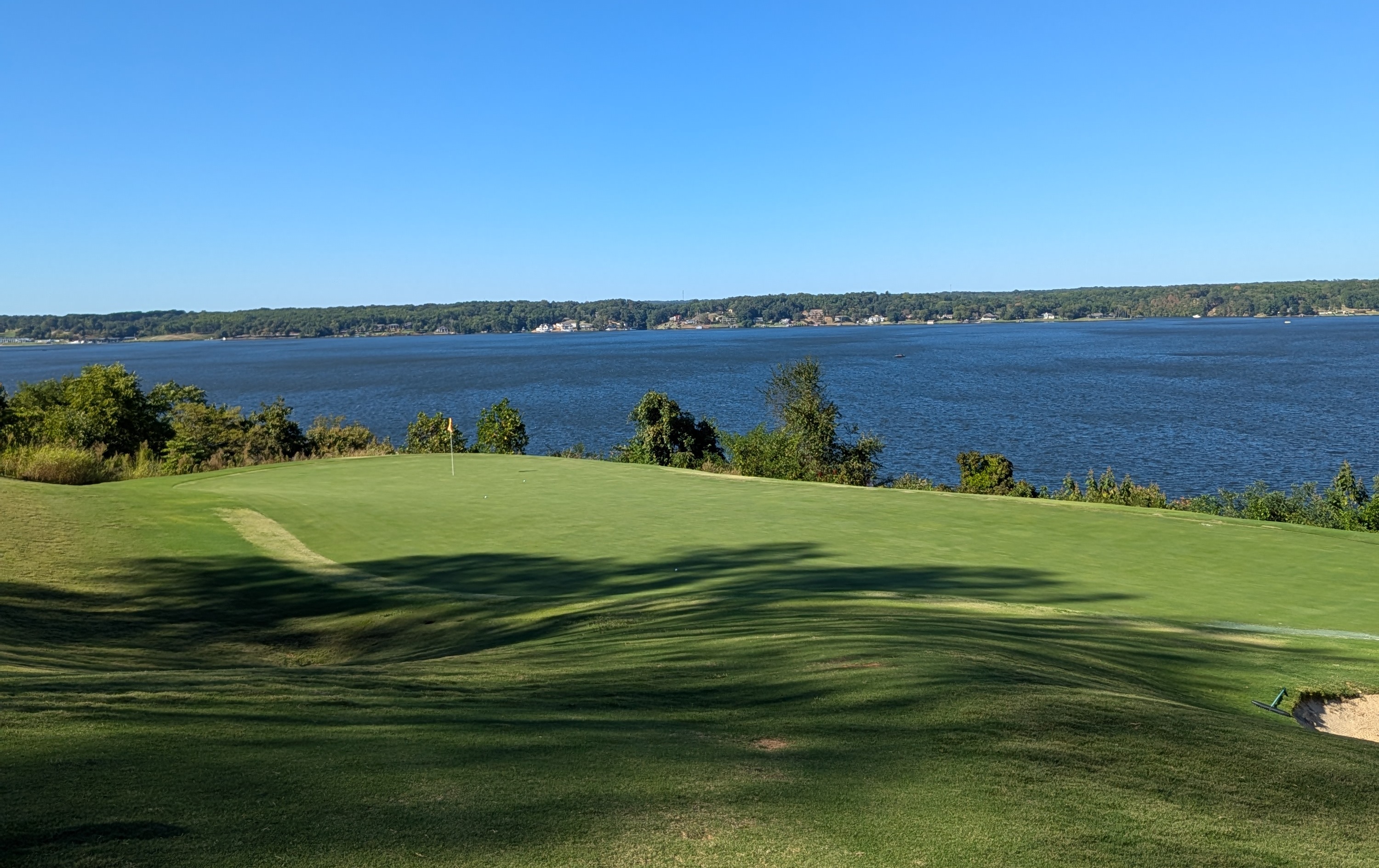
Apart from the view, the hole is pretty interesting too, and features a long, narrow boomerang shape green with a spine in the middle of the green that separates right from left. The green largely slopes back to front, and I’m positive that due to the complexity of the green here, many a round at the Fighting Joe has ended in a three-putt. One final punch from Joe and Jones.
Final Thoughts
Overall, I think the Fighting Joe is a fine public golf course. I cannot say I would go out of my way to play it, but if in the area, it would be worth a stop. The course feels repetitive, a bit punishing, overly long, but is redeemed by two strong finishing holes and one of the best views in Northern Alabama. Course conditioning could have been better, but was on par with other public courses I play regularly, and there were no conditioning issues that created any playability issues. The course is a nice public course, but it isn’t one that will find itself on any best-in-state lists anytime soon. It also is priced at a bit of a premium, being both public and part of the very popular RTJ Trail, and may not represent the best value.
After playing the eighteenth, I left the property feeling as if maybe the property was a bit misused and poorly routed. The property does have quite a bit of lake frontage on top of this bluff, but that frontage was divided between the two courses, with each finishing hole using this area. I can’t help but think this acreage should have been routed into a single course, in which two or three holes could have used this frontage, and a really great course could have been created. The view from this area of the course was truly spectacular.
Perhaps this is more of a life lesson than a golf course design lesson: when you have a choice between creating a great product or two good products, choose the great product.
F1C’s Final Rating:
Shot Options: 6
Challenge: 9
Layout Variety: 5
Distinctiveness: 6
Aesthetics: 7
Conditioning: 6
Character: 7
Fun: 8
Total: 54/80
Read More: How We Rate Courses
Rating Scale Details
> 70: Top-50 U.S.
65-70: Top-200 U.S.,
60-65: Best-in-State List
57-60: Best-in-State List Contender
53-57: Very Good
48-53: Good
40-48: Average
> 40: Poor

Author: Jaxon MacGeorge
Jaxon is the founder and lead course reviewer at First1000Courses.com. Jaxon has been playing golf for over twenty years, is a scratch handicap, and actively competes in USGA and Tennessee Golf Association (TGA) amateur events. By trade, Jaxon is an attorney and lives in Gallatin, TN, a suburb of Nashville.


 First 1000 Courses
Leave a comment