
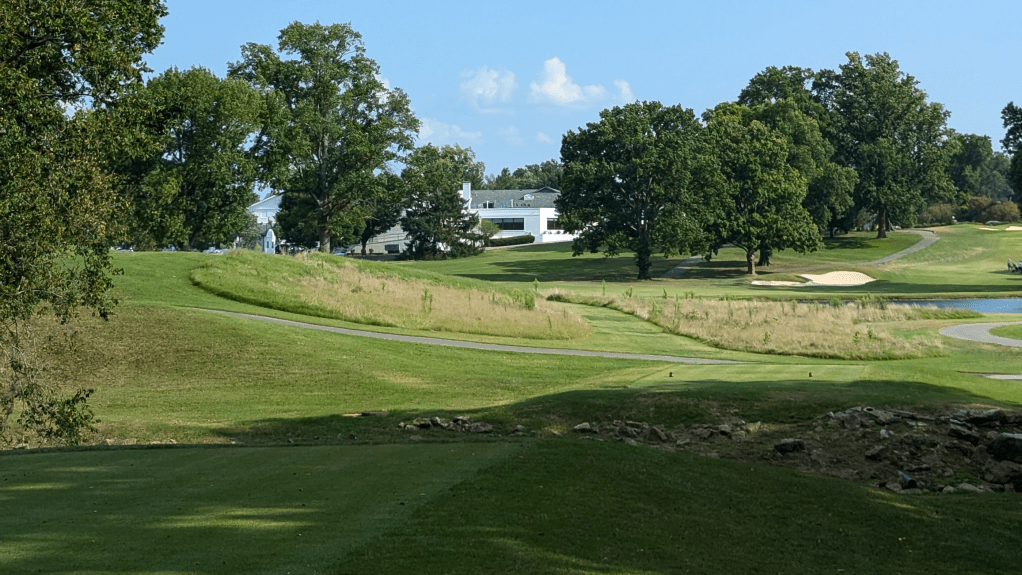
Time to Read:
|
This Big Spring Country Club course review is based on a round played on August 30, 2024.
Big Spring Country Club is a private course in Louisville, KY. The guest fee is around $125/round.
F1C’s Final Score: 55/80 (Very Good)
Learn More: How We Rate Courses
There are few feelings in golf better than waking up in the morning, putting on your golf attire, and knowing the course that awaits you for the day has major championship pedigree. Louisville is pivotal city in golf major championship history, and I – for one – could not wait to play course that has become synonymous with the PGA Championship.
Yeah, I know, this was the lede for Valhalla Golf Club; we were fortunate enough to play Valhalla on this day as well. Unfortunately, our host at Valhalla was a big fan of a three-hour golf round, leaving little time for picture taking and deliberation of design, and plenty of time for running, heavy breathing, and general dissatisfaction.
But damn it, I decided that I was going to be reviewing a major championship host in Louisville regardless. And instead of Valhalla with its recent major championships, I am referring to the 1952 PGA Championship held at Big Spring Country Club. The club actually hosted the first major in the Kentucky in 1952 after a 1951 remodeling, and it is my understanding that the bones of the course are still tied to this era.
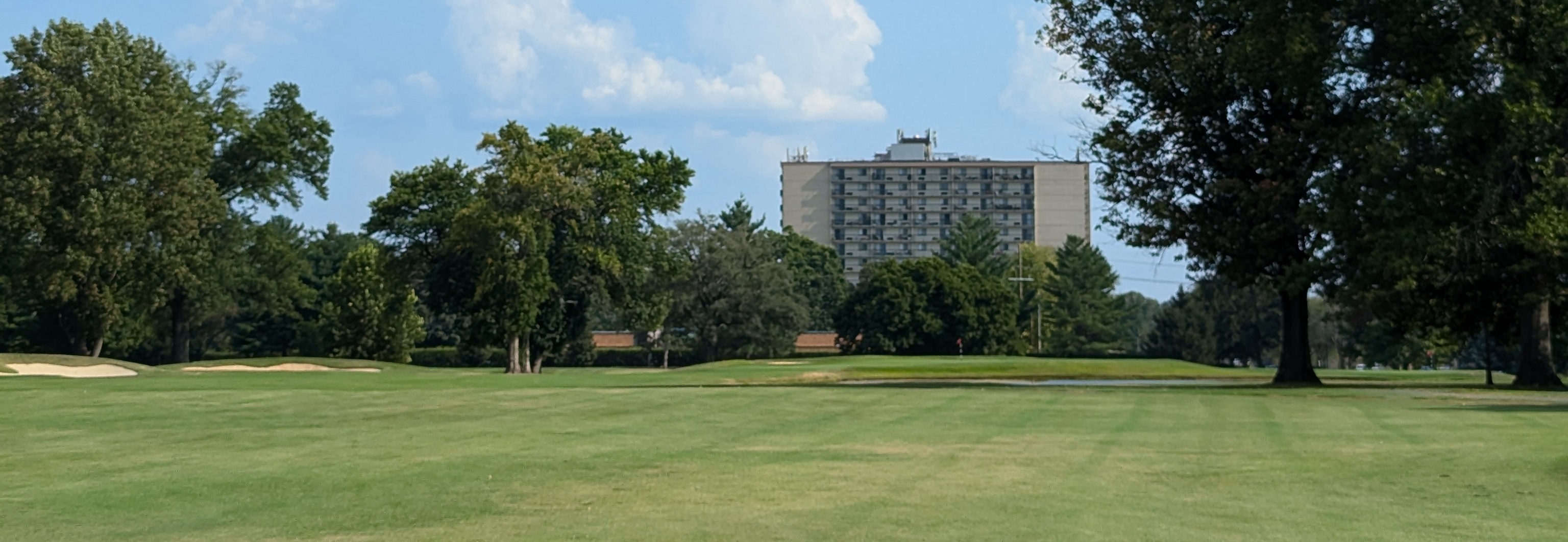
It has all the classic markings of a course built in the mid-century; evidence is abound. There are no houses intertwined between the holes, most of the holes are tightly packed together, the clubhouse is immaculate, the land it is built on is rather uninteresting and not the type of plot the modern designer would be interested in. Big Spring is in a not-as-desirable part of Louisville. The flight path for Runway 24 at the small, local airport is directly over a few of the holes, with small prop-planes and private jets landing mere feet from the fifth tee boxes. A HUD funded housing tower for the elderly overlooks a significant portion of the course on the skyline. And but-for a winding creek that meanders through the north end of the property, the plot of land has little for natural features, with the south end of the plot being close to dead-flat.
For some reason, many older clubs built in the mid-century exhibit similar characteristics. Most of them no longer find themselves in the upper echelon of golf ranking lists. They typically turn into old money clubs, where the value of the membership is mostly social and networking, and golf is secondary. Or they become lower priced country clubs for that local residents can join as a value play compared to higher priced, modern clubs in the area.
Big Spring doesn’t quite choose from this dichotomy. Big Spring is currently ranked as the #7 golf course in Kentucky according to Golf Digest, mainly for two reasons. First, and most obviously, the competition in Kentucky is weak. Don’t get me wrong – Kentucky has some fine clubs, but it is very top heavy: Valhalla, Olde Stone, and Idle Hour would contend for the top of the State rankings in any State. But after that, golf course competition is thin – especially in the public golf course space. There are no courses in Kentucky in the top-100 public lists. Big Spring unquestionably benefits from being in a state with lesser competition. As a neighboring Tennessee resident, I am pretty sure that Big Spring would not be ranked by Golf Digest if it were located in Tennessee. Secondly, unlike many of these mid-century clubs, it was clear to me that Big Spring was interesting in adapting. I saw multiple new tee boxes as evidence of the club’s interest in keeping the course a sufficient length for the modern game. The clubhouse was recently remodeled and features a fantastic pro shop, Trackman bays, a wonderful locker room, and all the amenities one would expect in a modern club.
That desire to adapt and grow with the game and a few very quirky, timeless holes has kept Big Spring in the conversation as one of the best courses in Kentucky.
The First Tee
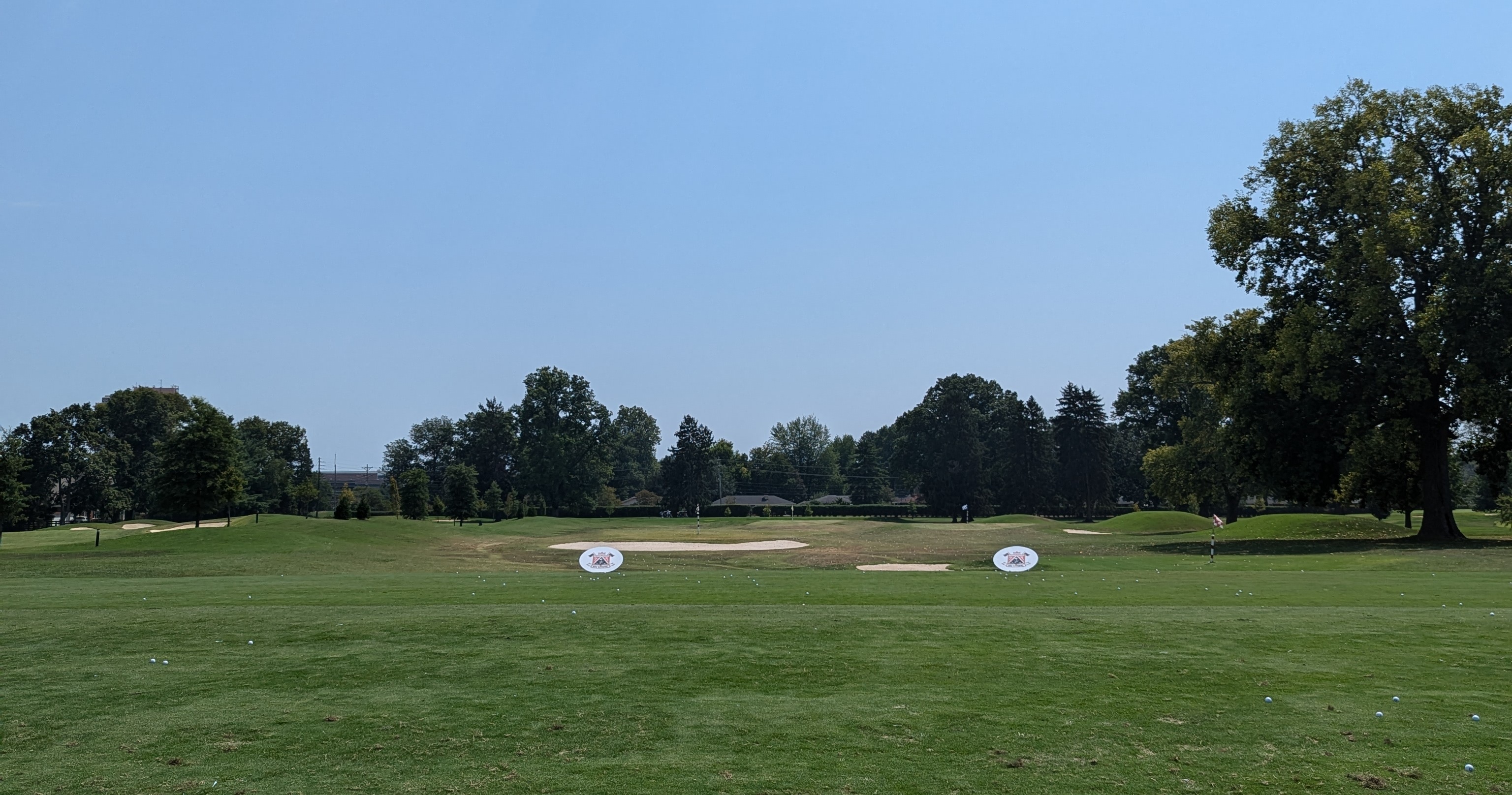
As Big Spring was our second round of the day, we had a short after-lunch warmup on a small but sufficient driving range, and headed across the street to the first tee. The first hole is a medium length par-5 that works left past the landing area of the drive. The hole is heavily guarded on the left by a tree line. A more sparse tree line lines the right of the hole that separates the first from the eleventh hole.
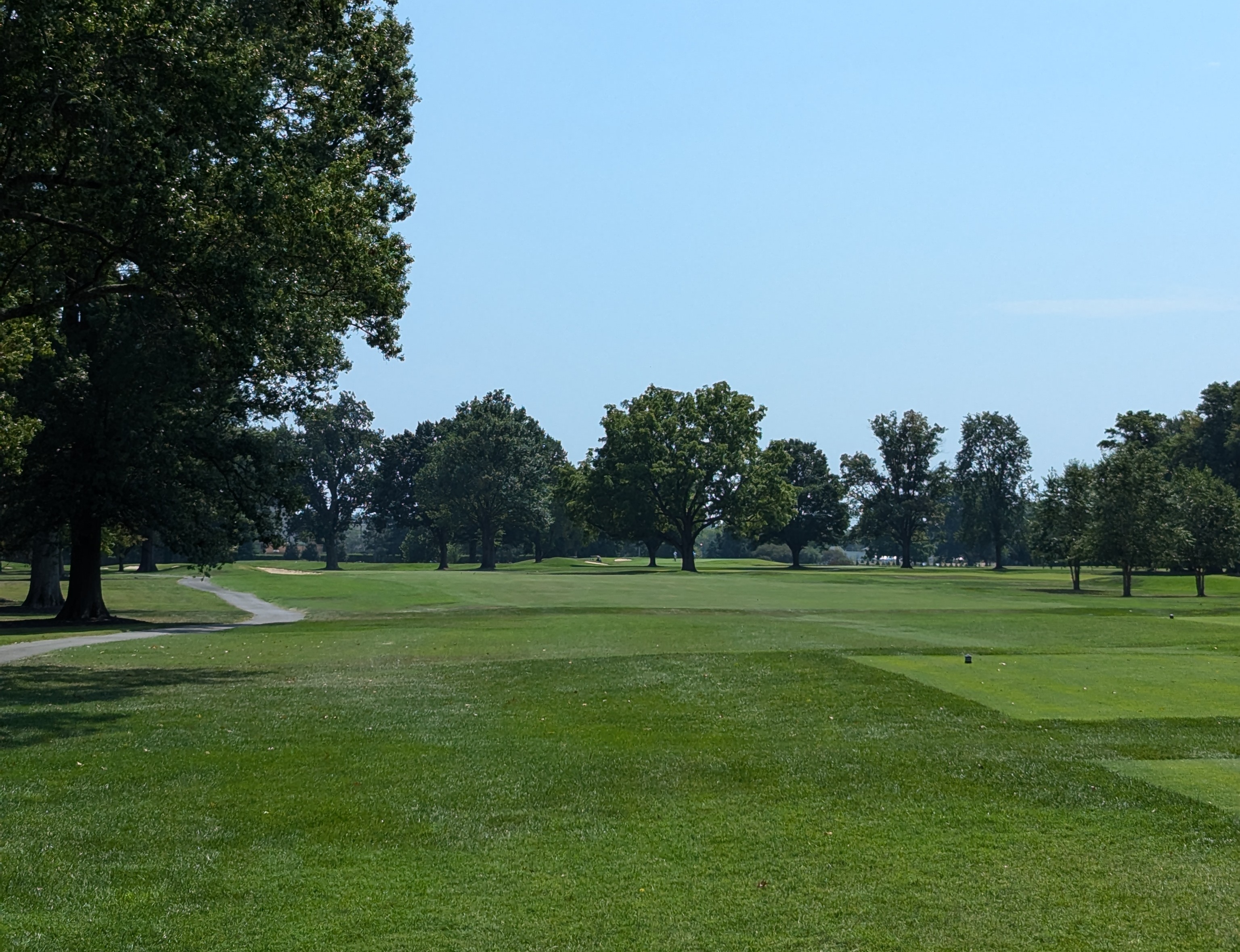
Being on the south end of the property, this hole is basically dead flat, and the landing area of the drive is only ascertainable by the left fairway bunker.
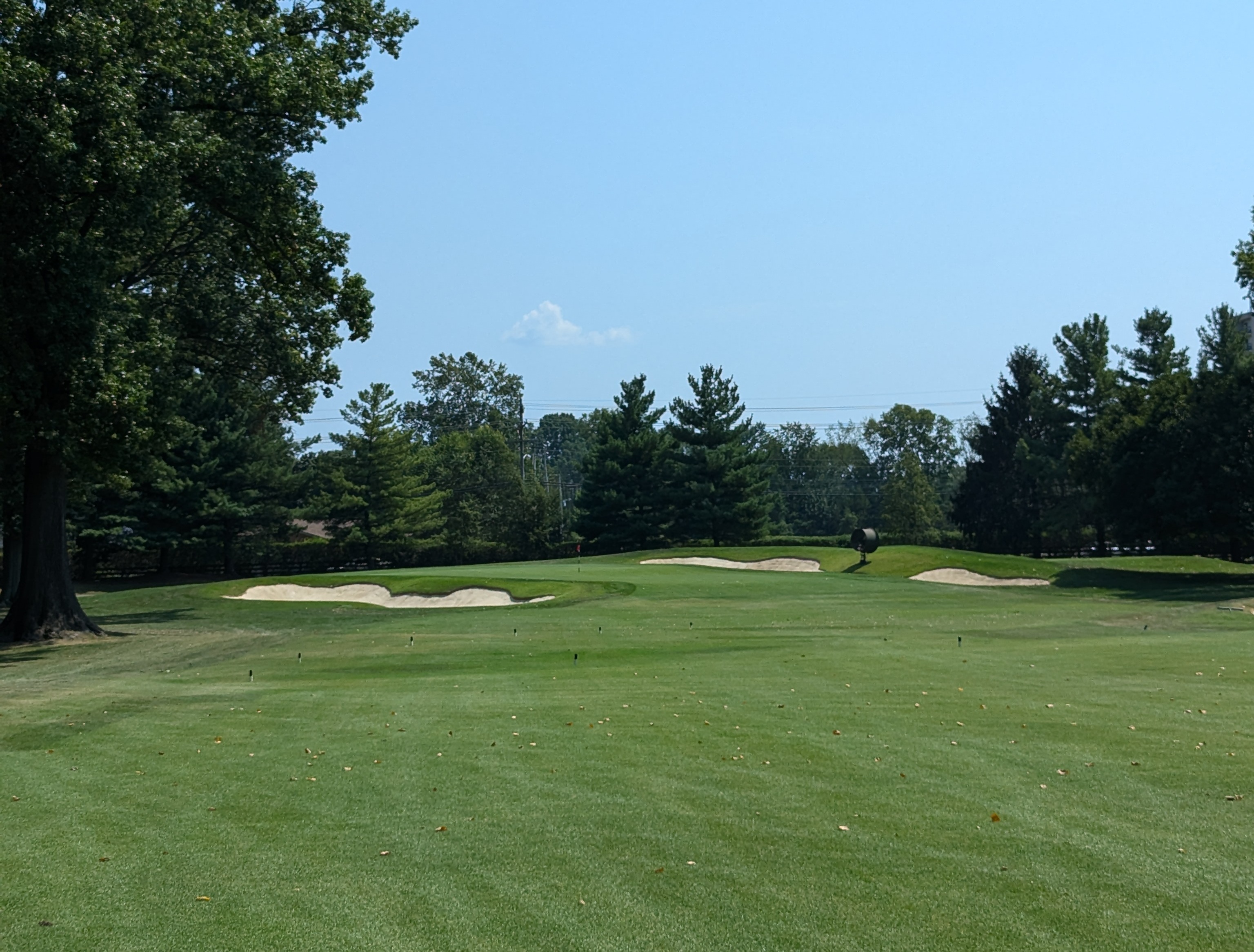
The approach is complicated, particularly from the left side of the hole, as the first requires a draw, and the bailout area is protected by a fairway bunker on the right around 80-yards from the green. The green runs from front right to back left, and largely slopes towards that front right area, somewhat uniformly, with some grade from the rear. Two large greenside bunkers protect either side of the first green.
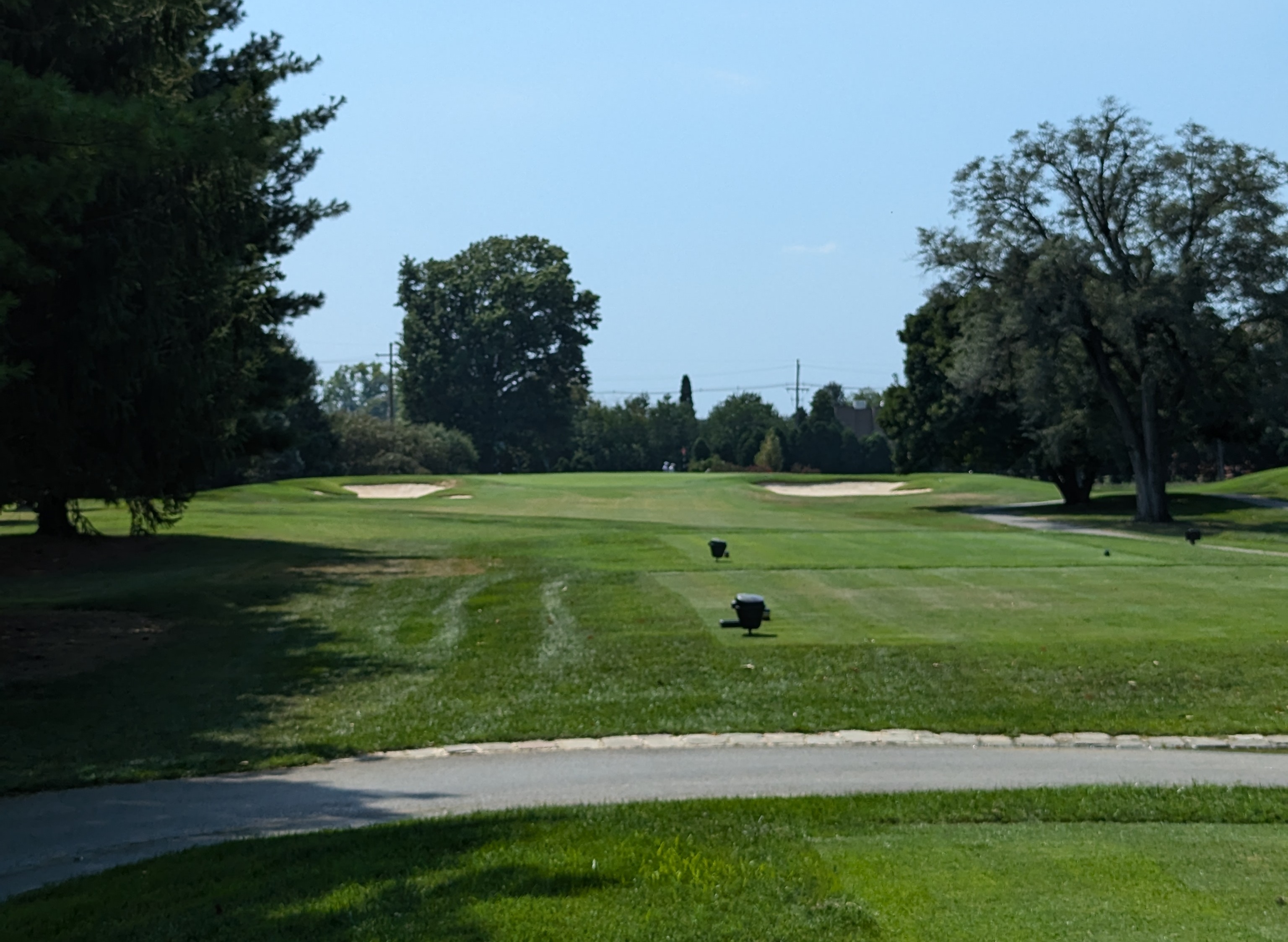
The second is a mid-length par-3, which makes for a unique par-5, par-3 start to the course. The second is a classic design: a relatively round green pinched by fronting greenside bunkers on either side. The routing is classic of mid-century courses, as the first comes from the clubhouse in the middle of the property to the property’s boundary. The next few holes frame the property’s boundary line, as the second turns 90-degrees to the south boundary, and the third, fourth and fifth run the same direction after another 90-degree turn to frame the west boundary.
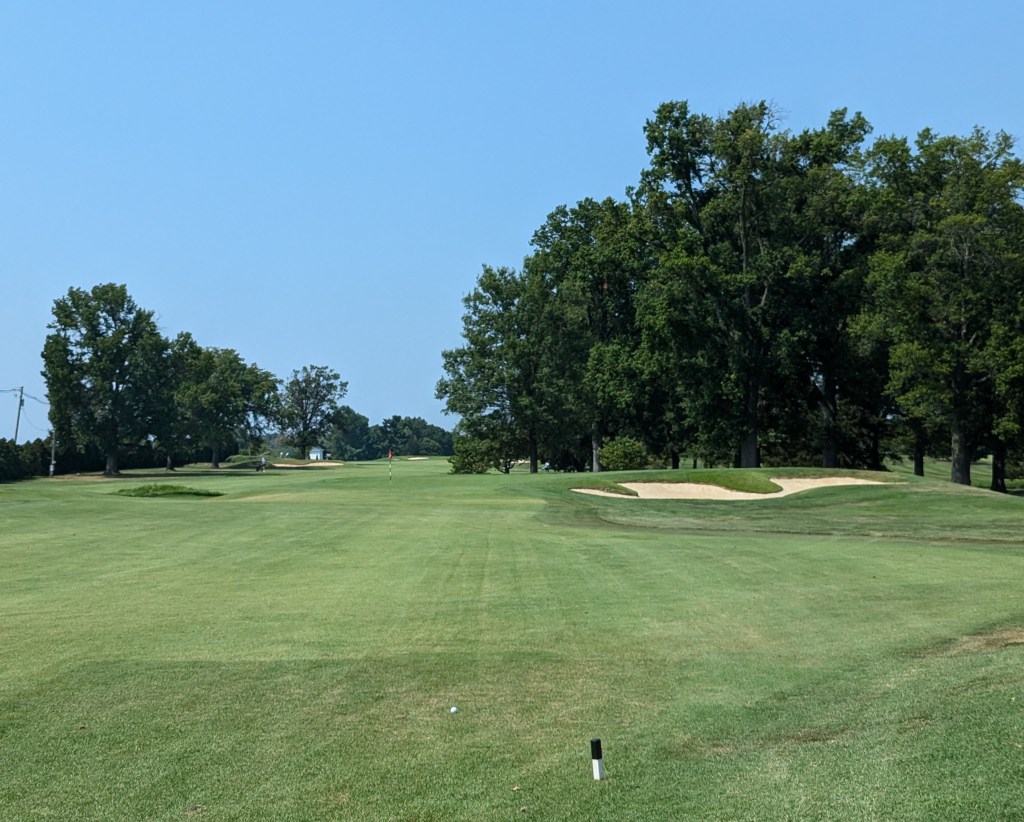
The third hole is a bit of an optical illusion, the shorter par-4 appears to be forever long from the back tees as the dead straight third and fourth form an optical illusion of a long hole. Out of bounds runs the length of the hole left, and two bunkers accompany the left side of the fairway, one in the landing area, and one greenside. Interestingly enough the green is slightly elevated related to a thumbprint depression left of the green, with a precariously small, round patch of deep weeds left of the green.
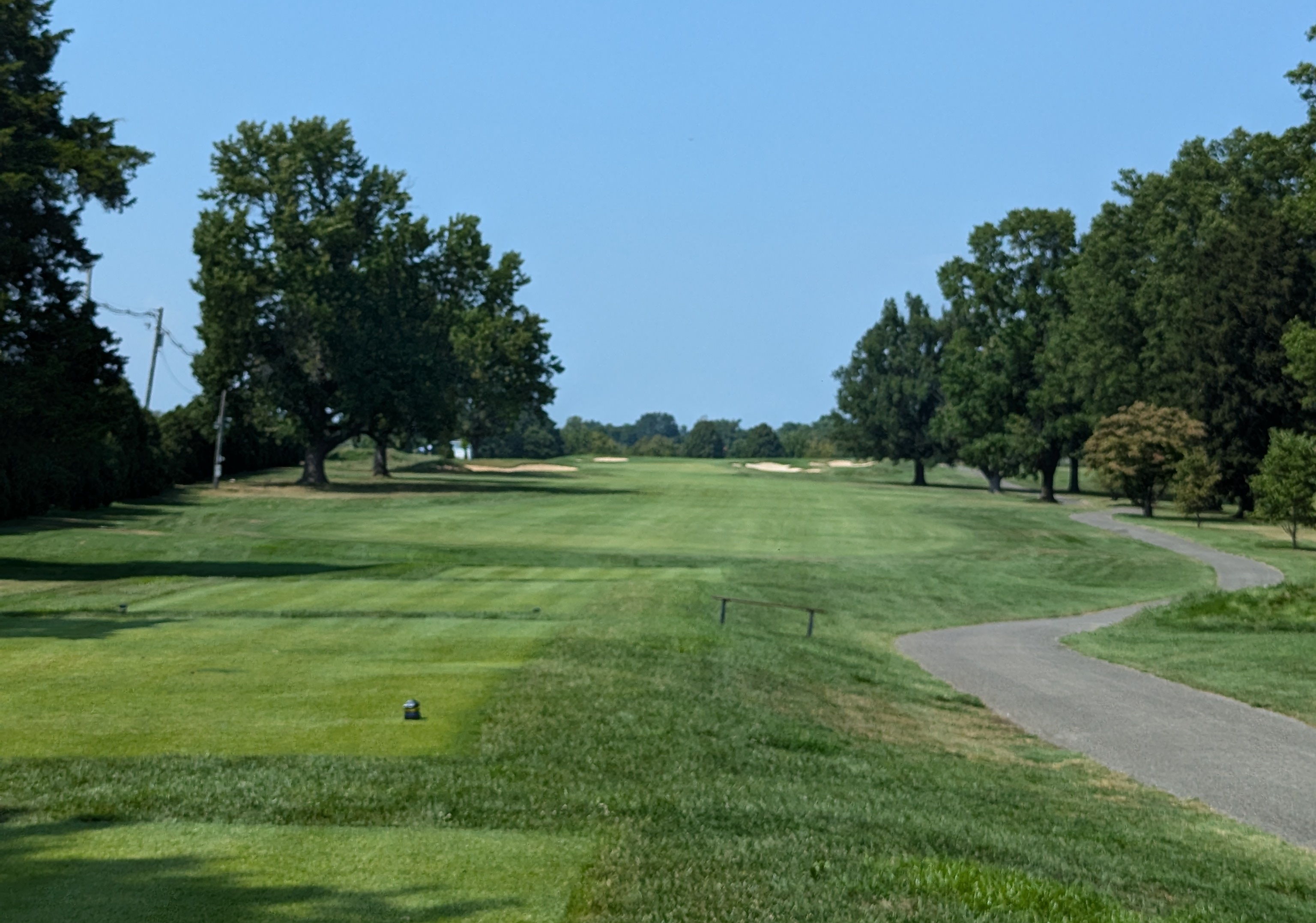
The fourth hole, another straightaway par-4, is a bit longer than the third, but somewhat similar. This time, the fairway bunker in the landing area is on the left, and one protruding tree on the right can complicate the approach of balls finishing right of the fairway. The green is well protected with bunkers horseshoeing around most of the left, back, and right of the green. On both the third and fourth, the mouth of the green is unprotected, giving players an option to play the mid-century way, along the ground.
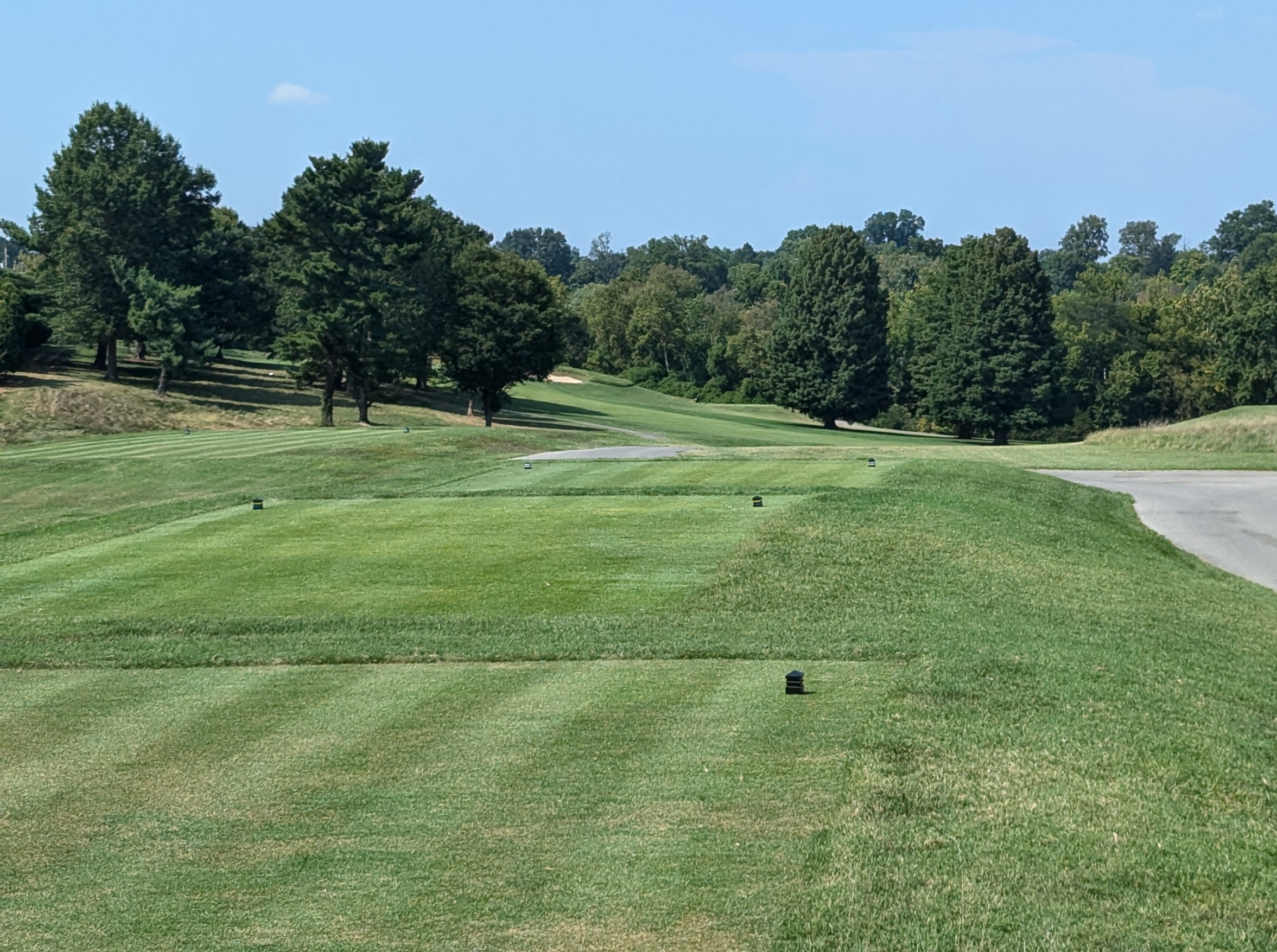
The fifth hole is one of the most interesting holes on the course. There are a few unique holes at Big Spring. The quirky fifth’s tee box is elevated above a working general aviation airport. Small aircraft and helicopters were continuously landing while we played in this area of the course. The tee box is also elevated in relation to the fairway and is the first hole on the course that features any elevation change. As previously mentioned, that elevation change is because the third, fourth, and fifth form the western boundary of the property, meaning that the fifth is now on the northern end of the property.
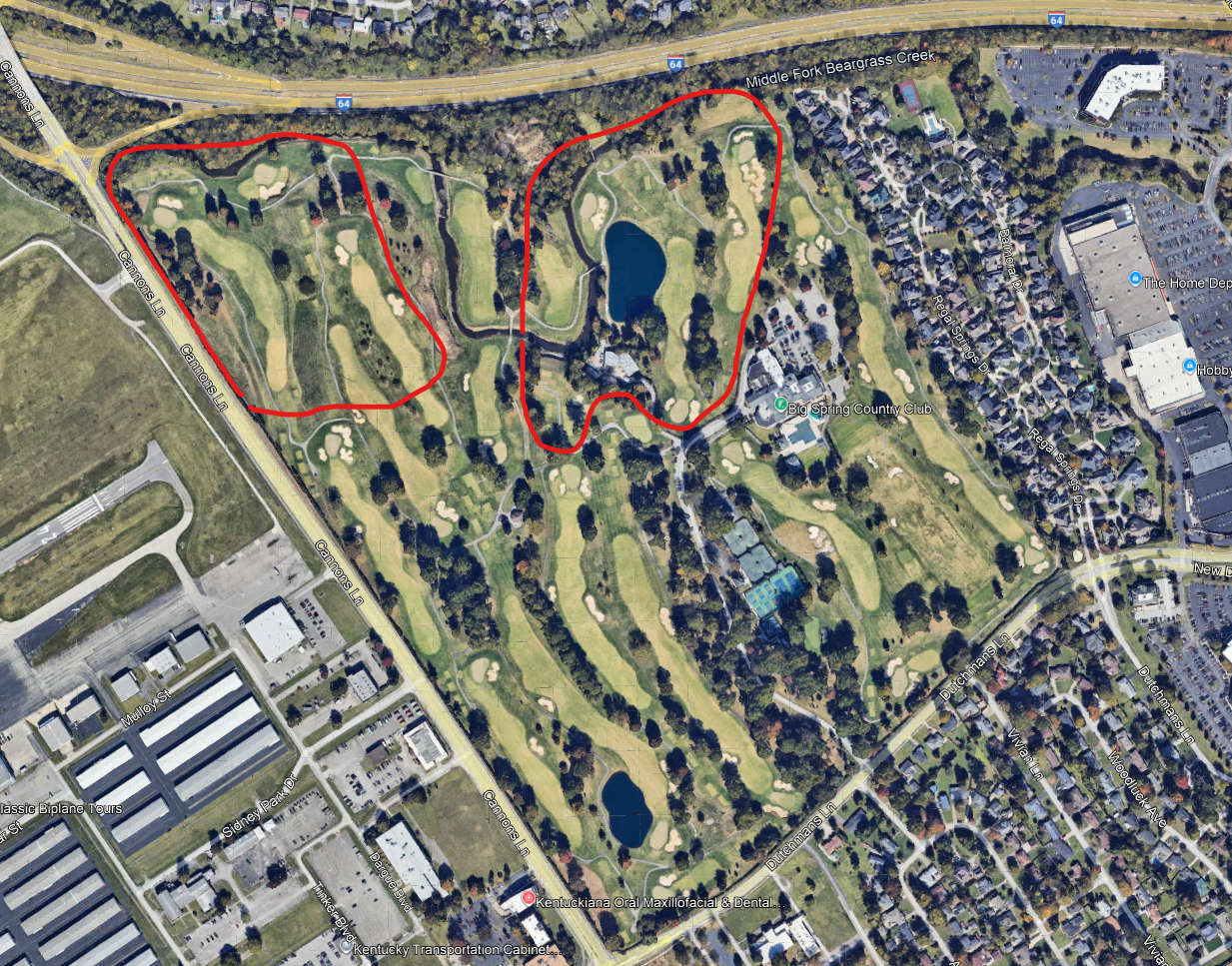
There are two hilly areas of the property on this north end that feature some rolling hills and elevation change, while the rest of the property is essentially dead flat, varying no more than a few feet. In the northwest corner, the fifth and sixth lay, and the fifth features an up-and-down hole – down from the tee box into the fairway, and then starkly back up to a green placed in a flat spot on the hilltop. A player has the option of multiple tee clubs here, and the key is to find the right half of the fairway to leave the clearest approach to the green. Two trees in the distance serve as target markers for the tee shot.
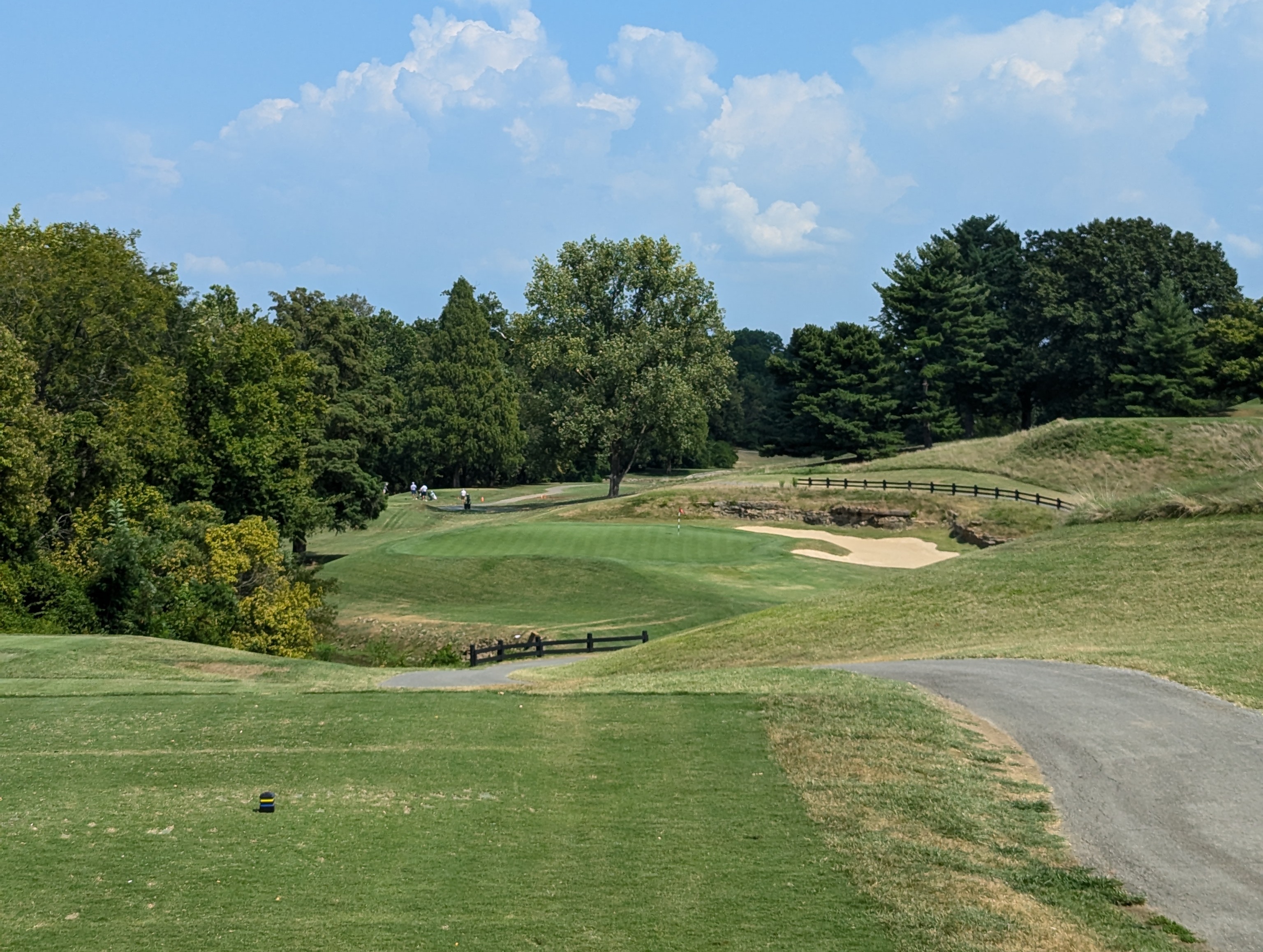
What goes up must come down, and the sixth falls back down the ridge that the fifth climbs as a medium length par-3. Two complexities exist on this hole: first the green is well guarded. In the flat to the right of the green, a large, complex bunker makes recovery difficult, and the front and left of the green is built up on a flat spot of the ridge, meaning balls short or left will bound significantly away from the elevated putting surface. The big spring (a creek) runs to the left of the green to catch balls wildly left or short. Hitting the green is certainly a stroke gained relative to missing here.
Secondly, the green is the wildest green at Big Spring, nearly out of character compared to the rest of the putting surfaces and deserves a breakdown of its own.
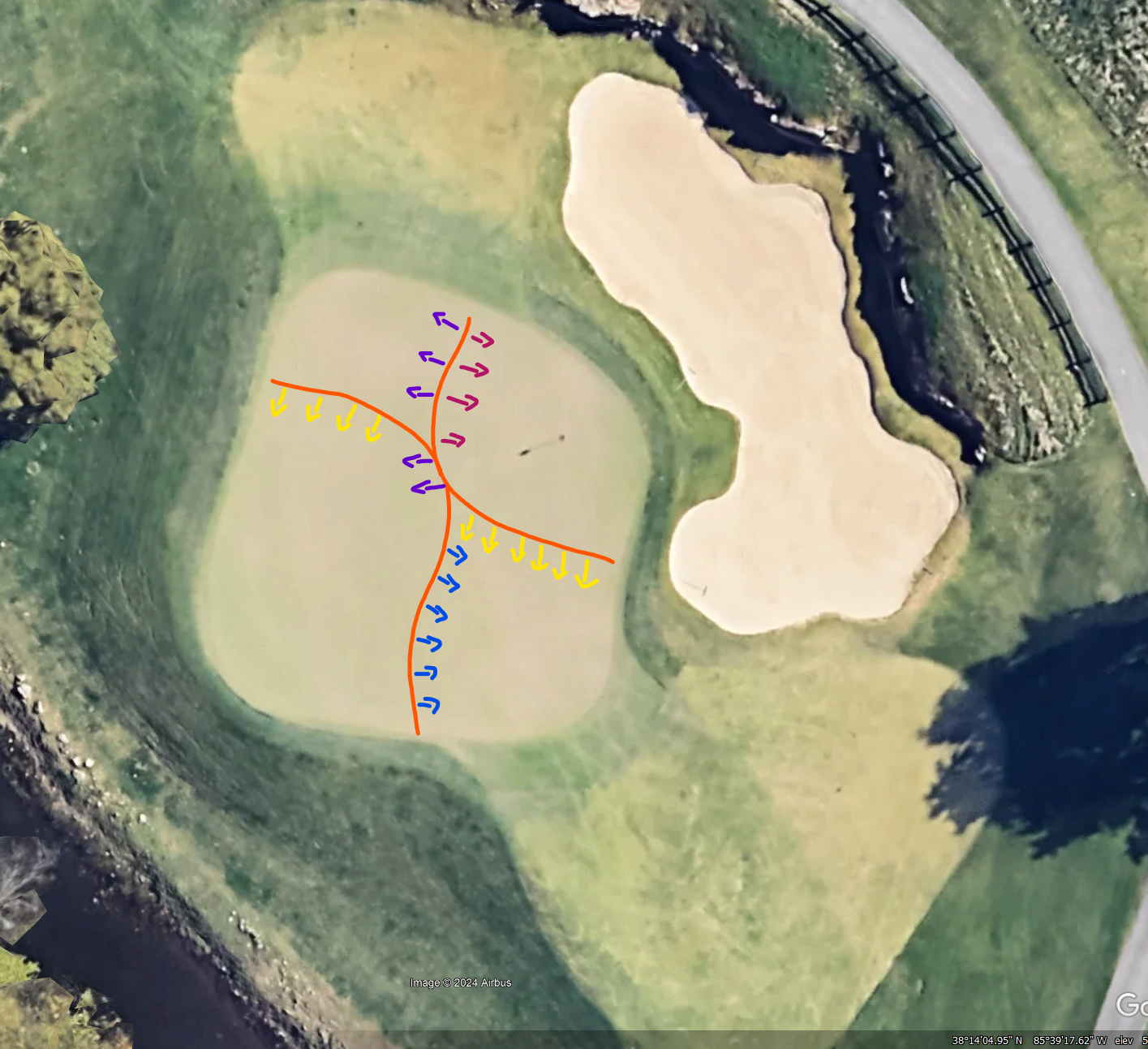
To the best of my memory, the green is a four quadrant green, with significant (6% grade or more) ridges between the four quadrants. The upper left quadrant was the smallest, and the green overall is graded from back-to-front somewhat significantly. Putting between the quadrants, as I did, was treacherous, and the putt from the lower left to the upper right was undoubtedly the most severely uphill and slowest putt at Big Spring. I am not proud to report that my putt made it almost all the way up the ridge to the upper right quadrant, but came back to the lower right quadrant (our pin was the same pin pictured).
The sixth is sneakily difficult, as it demands a precise tee shot and two good putts. Recovery shots are difficult from all areas around the green due to the undulation, and there’s truly not a comfortable putt on the putting surface. A player could hit three average shots here, and easily walk away with a four. The sixth is one of the best holes on the course.
The seventh hole is the second installment of Big Spring’s quirky holes: a shorter, headache inducing par-5 that necessitates some thinking.
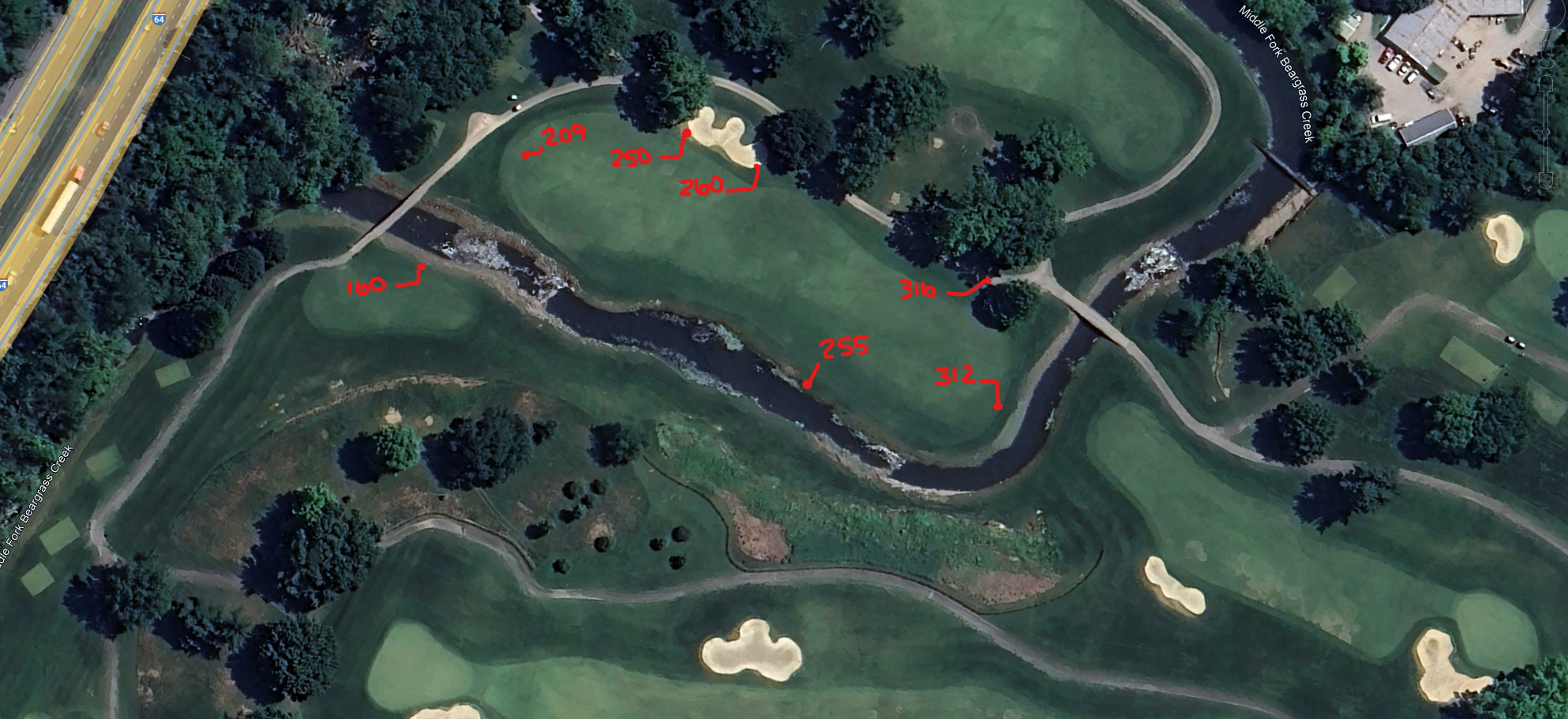
There are so many options off the tee on this hole: (1) Driver with a bit of a cut around the tee to a completely blind landing area, protected by water short and right; (2) fairway metal into a semi-bling area right of the bunker that will leave another fairway metal (or longer) into the green; (3) iron off the tee over the stream into the fat area of the fairway in front of the bunker; or (4) a short iron laid up in front of the stream, which leaves 200-yards to clear the lake and skip the second bit of fairway entirely. If the fairway is safely located, the green is accessible on the left, and is protected by a crescent moon bunker that encircles the right side of the green.
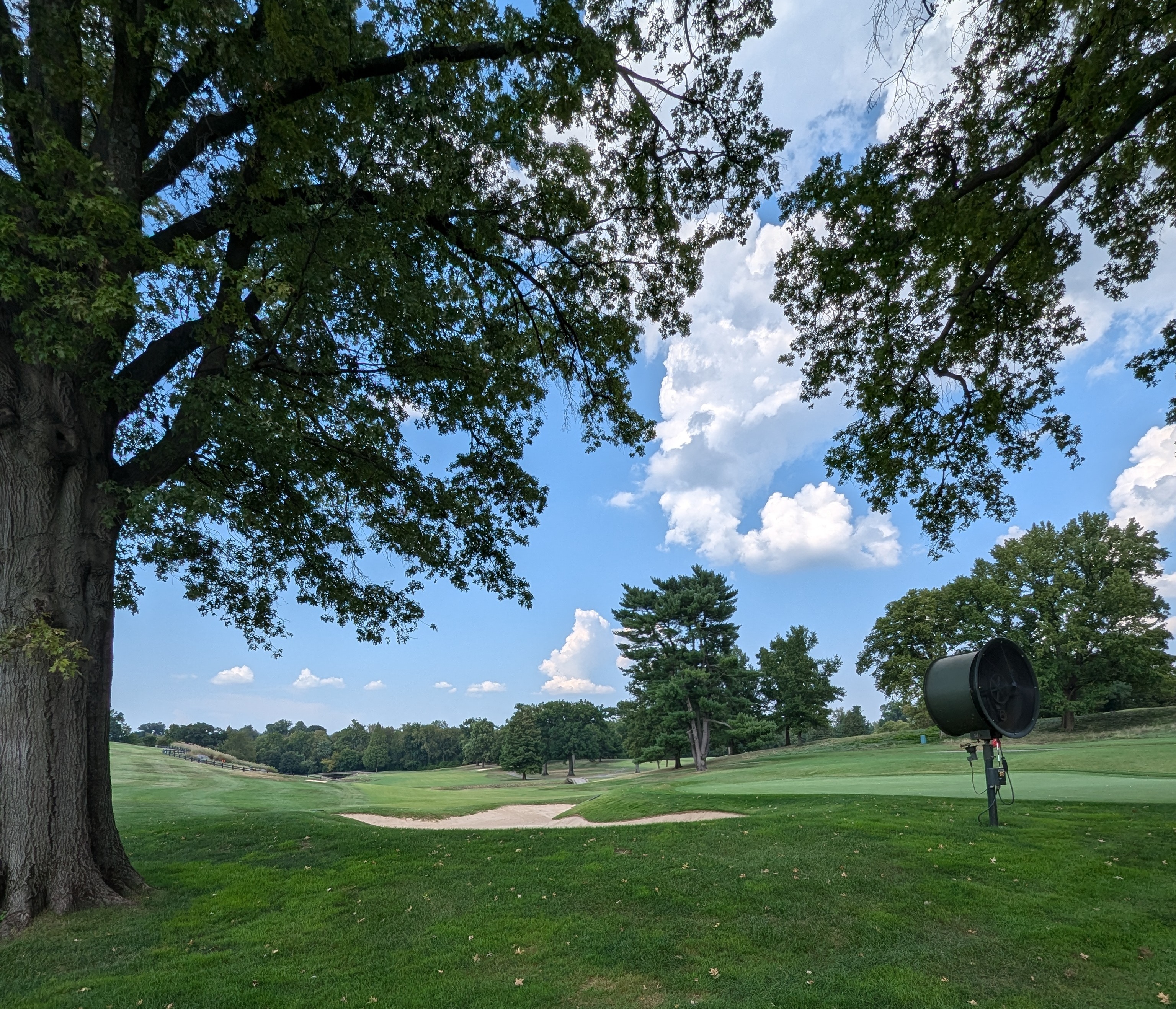
The approach from the fairway plays slightly uphill, and the putting surface on the seventh features a small ridge that separates the back from the front of the green. After the seventh, Big Spring has a nice halfway house stocked with drinks, as the course does not loop back to the clubhouse after nine. Rather, the halfway house is accessible after the seventh, ninth, and eleventh holes.
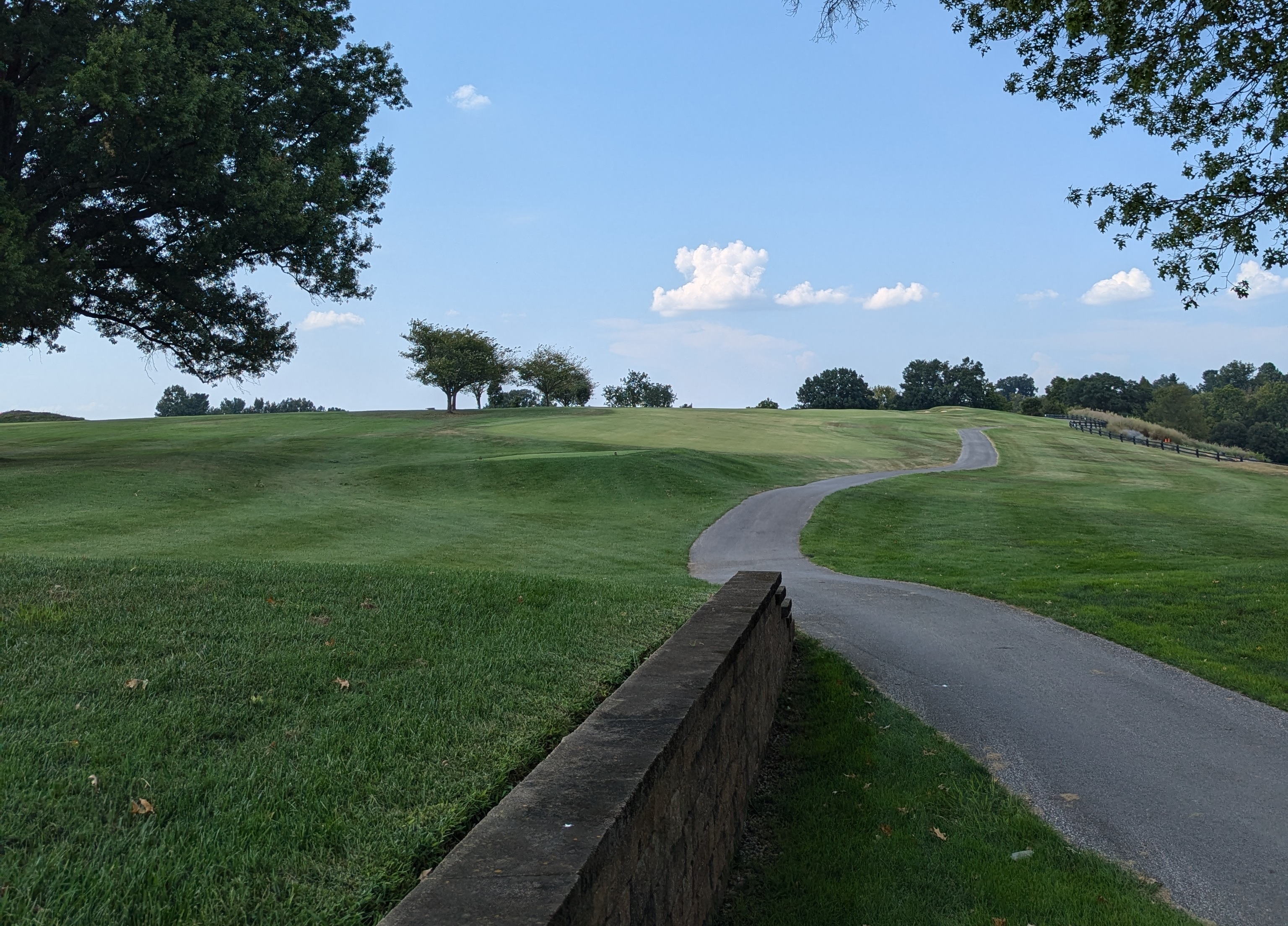
The eighth and ninth holes enter back into the hilly section of the property, and are probably the weakest two holes on the course. The eighth plays as a mid-length par-4, playing straight uphill to a fairway significantly canted from left-to-right. To no surprise, our entire group finished in the right rough. I would have to imagine this fairway is the least used grass on the golf course, as the grade is too severe for anything but the best ball to stay in the short grass.
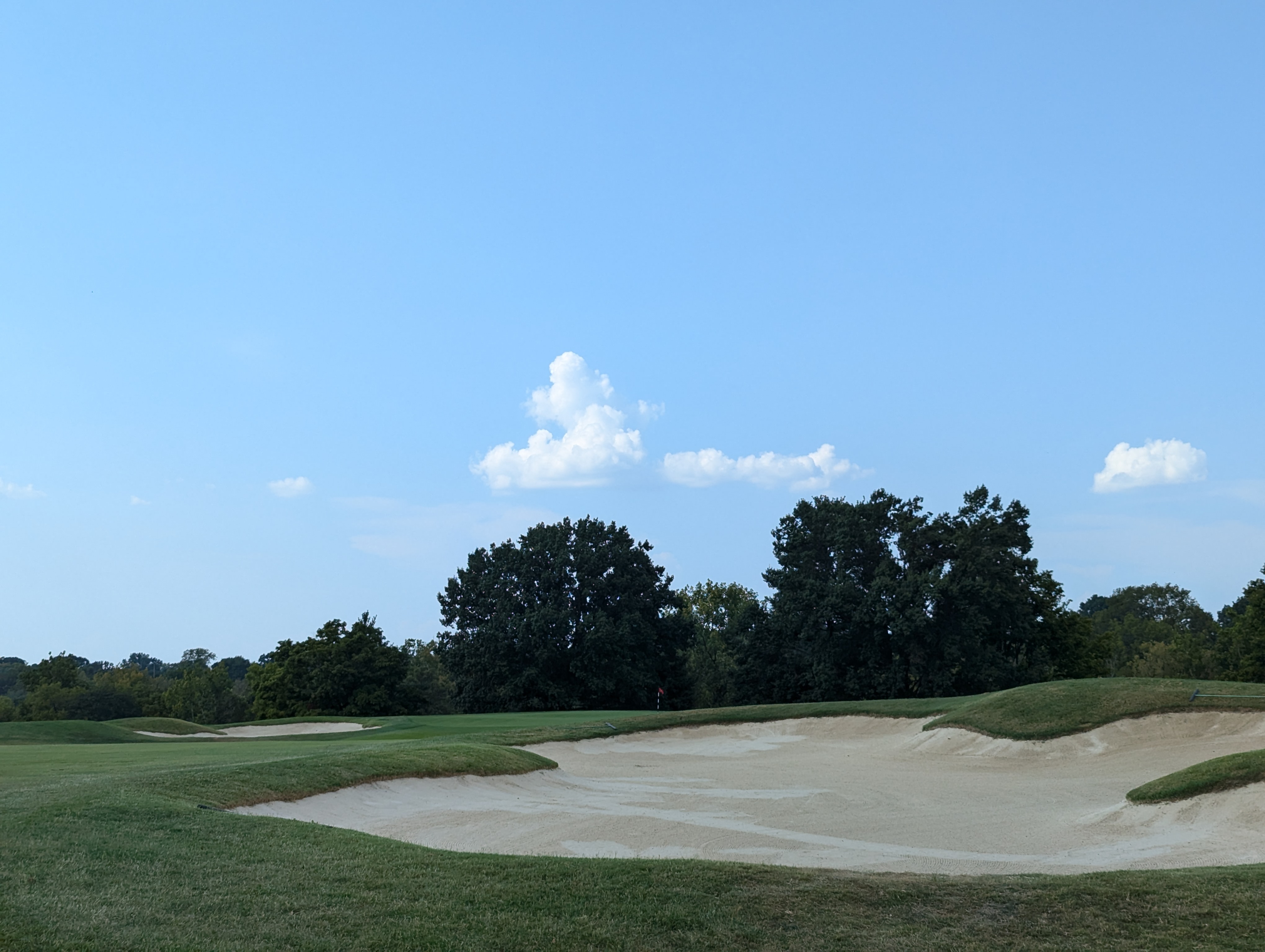
Once on the hilltop, the eighth is an acceptable hole with a short-iron approach into an interesting green. The green is protected on the right by a similar slope down the hillside and on the left by a flaking frontal bunker.
The eighth isn’t a great hole, and the ninth is probably worse. The ninth, a longer par-4, has a completely blind tee shot, with only the fairway bunker barely visible to the tallest players.
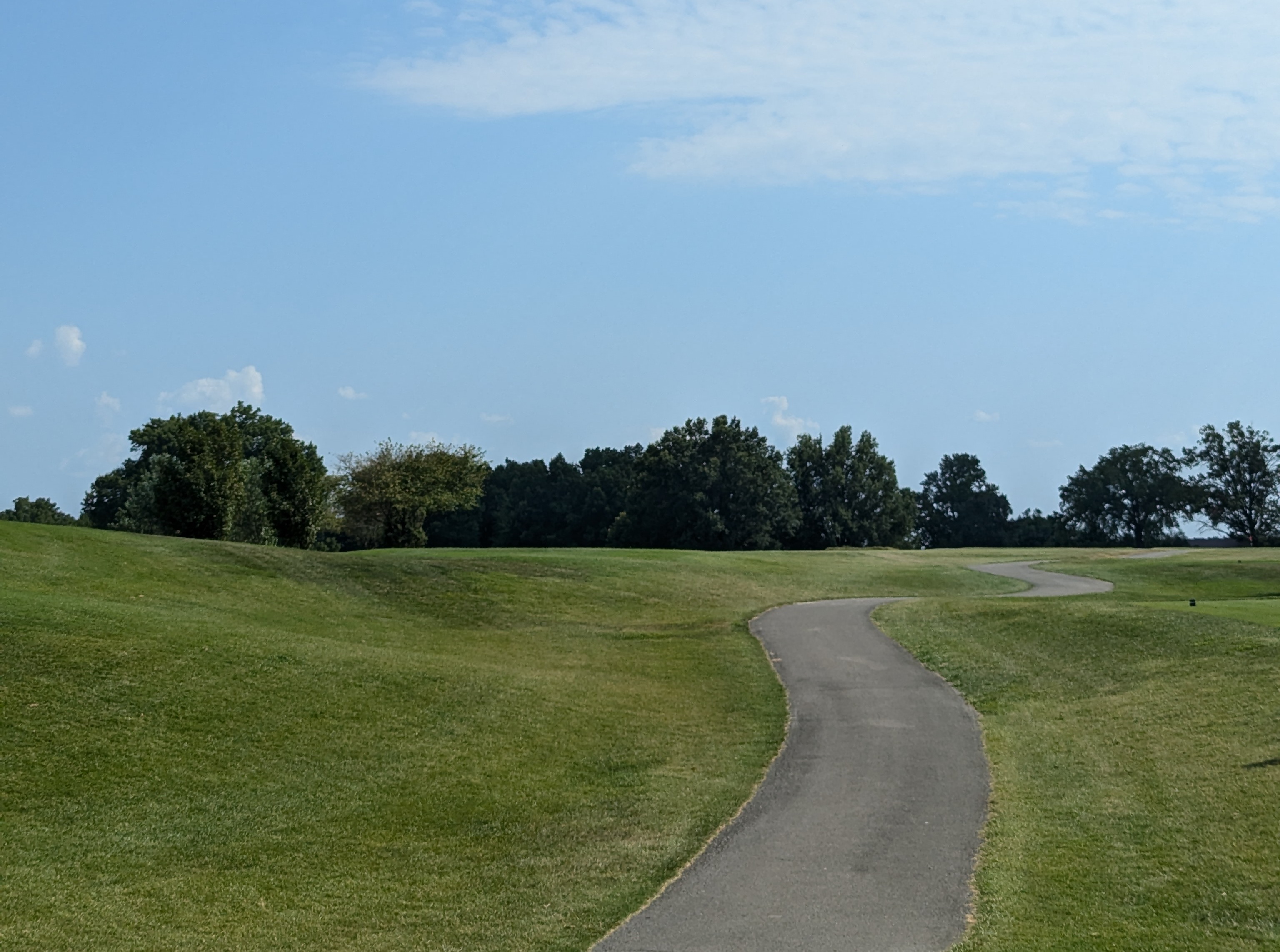
As you can see, the target is basically impossible to pick out without some guidance. As I often say, what goes up, must come down, and the ninth works down the same ridge that the eighth plays up. Again, the tee shots are the problem on these two holes, as once the fairway is located, the approach shot is acceptable – downhill and a touch longer.
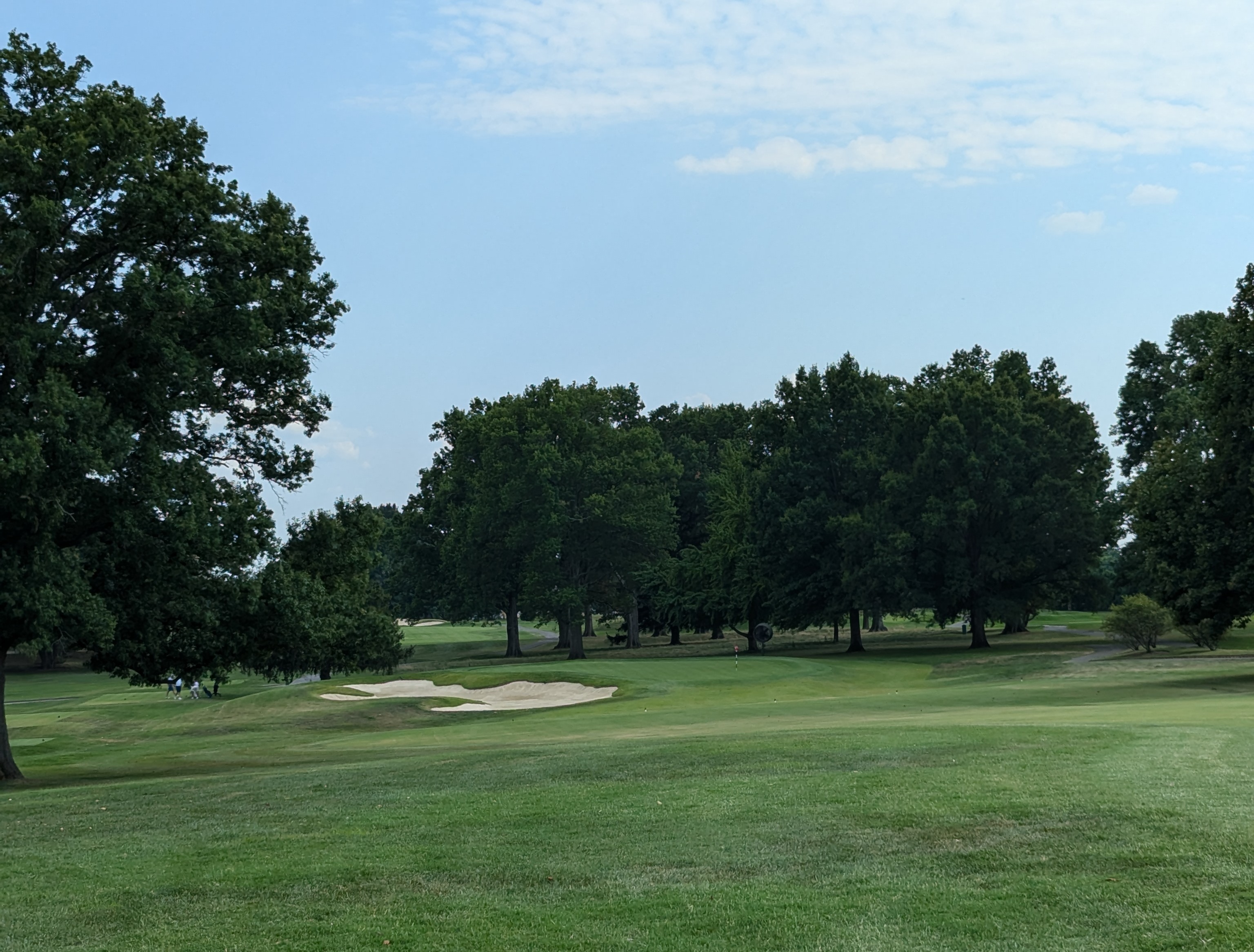
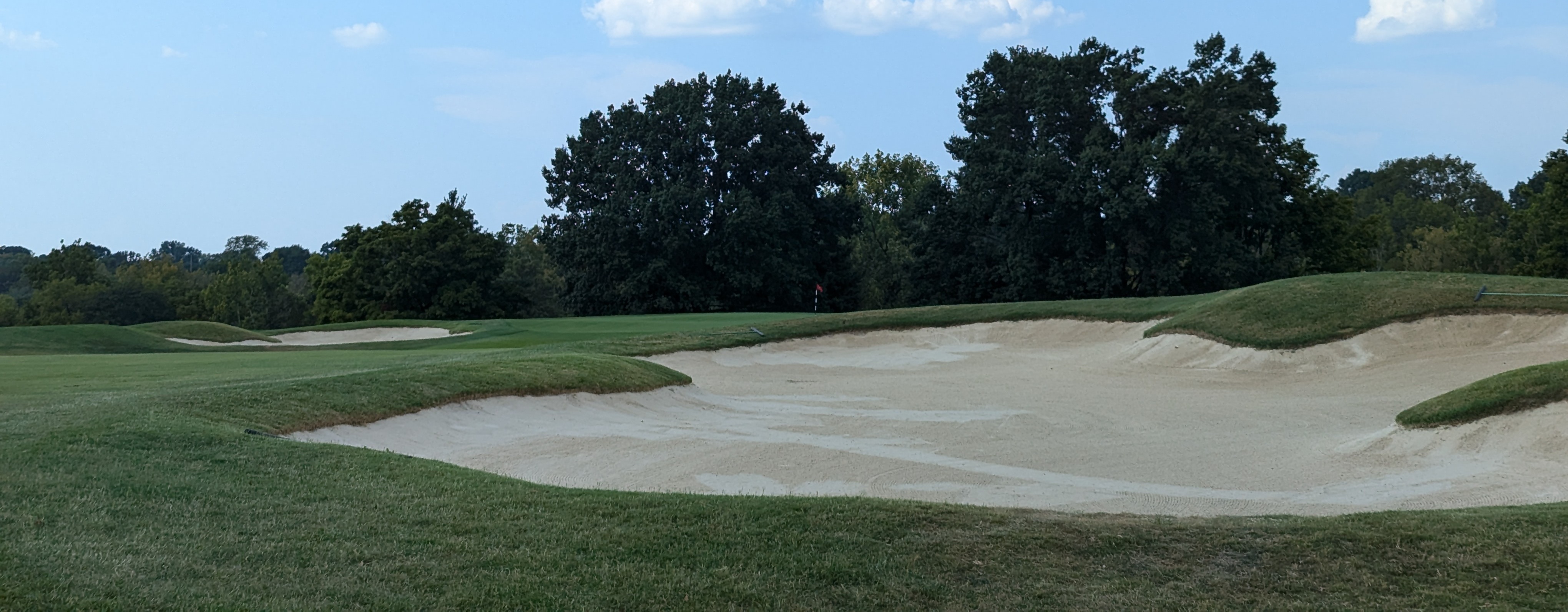
The green on the ninth is protected by a large bunker that runs nearly the length of the ninth green on the right. The putting surface is significantly sloped from back-to-front, making recoveries from long of the green complicated. After a second trip to the halfway house to restock for the back nine, we were on the tenth tee, just left of the ninth green.
Making the Turn
The back nine starts similarly to the front nine, with a medium-length par-5. This time, the tee shot is relatively straightaway, but the tenth snakes out to the left and back to the right around a pond that protects the front of the tenth green.
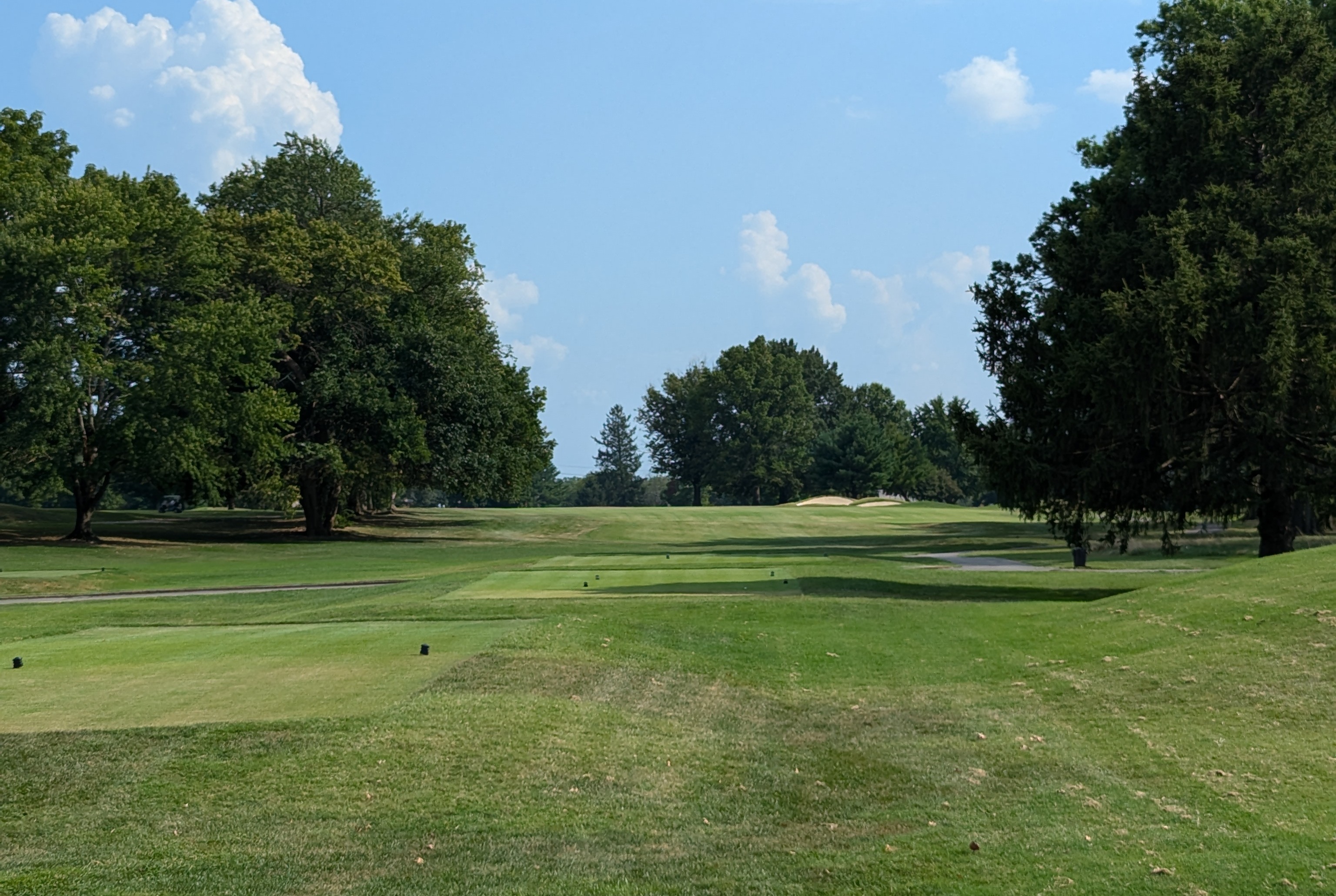
Two fairway bunkers frame the right side of the fairway, and the hole is mostly blind past these bunkers, as the tenth transitions from the hills of the north end of the property, back into the flatness of the south end.
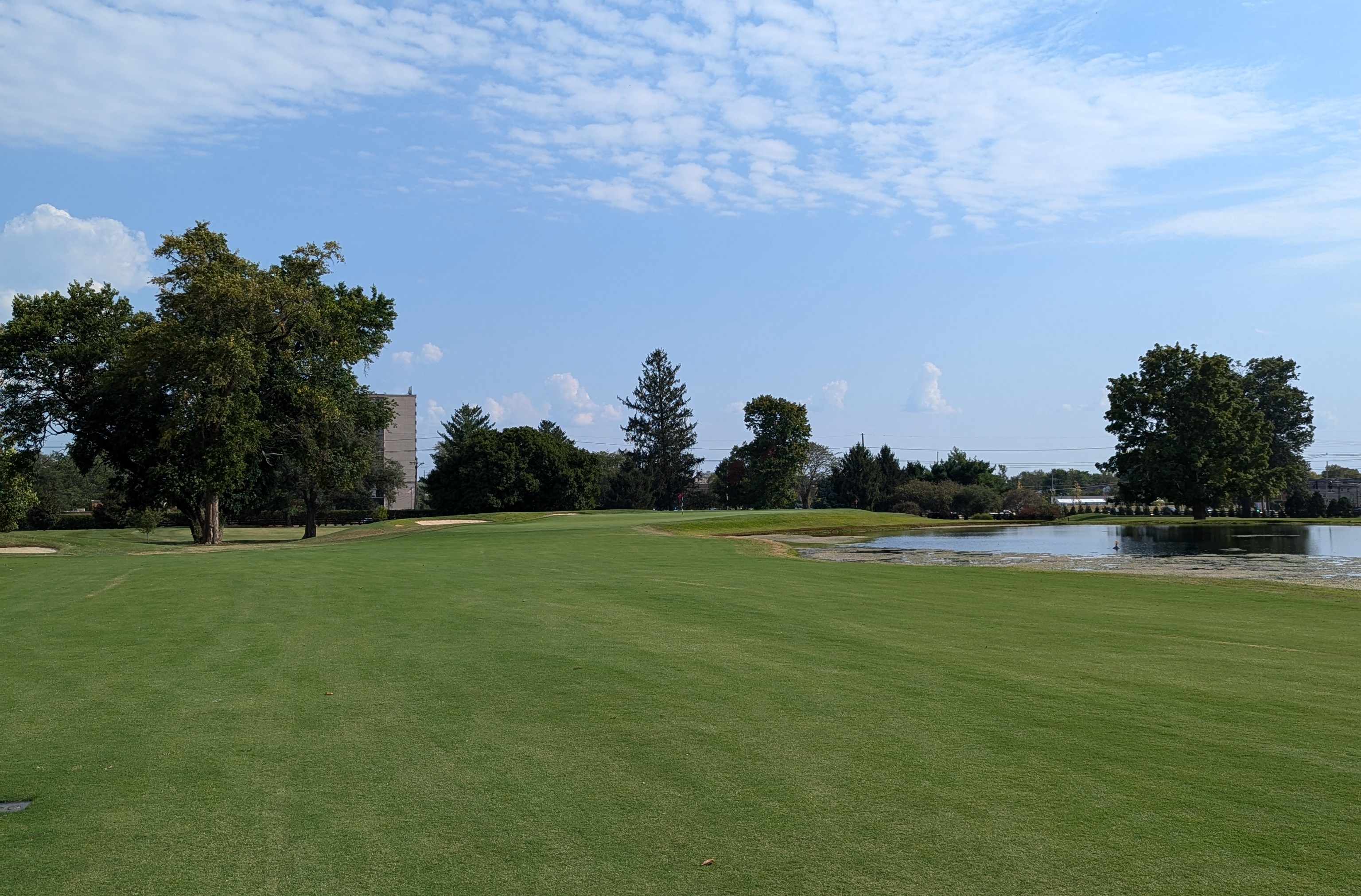
The snaking of the fairway out and back means that layup shots must be played at an angle away from the green, and layups are probably the appropriate shot choice here as the pond protects the entire right side of the small green up to 100-yards out. Fortunately, the fairway is wide in the layup area, and the angle from the layup area largely neutralizes the threat of water carry.
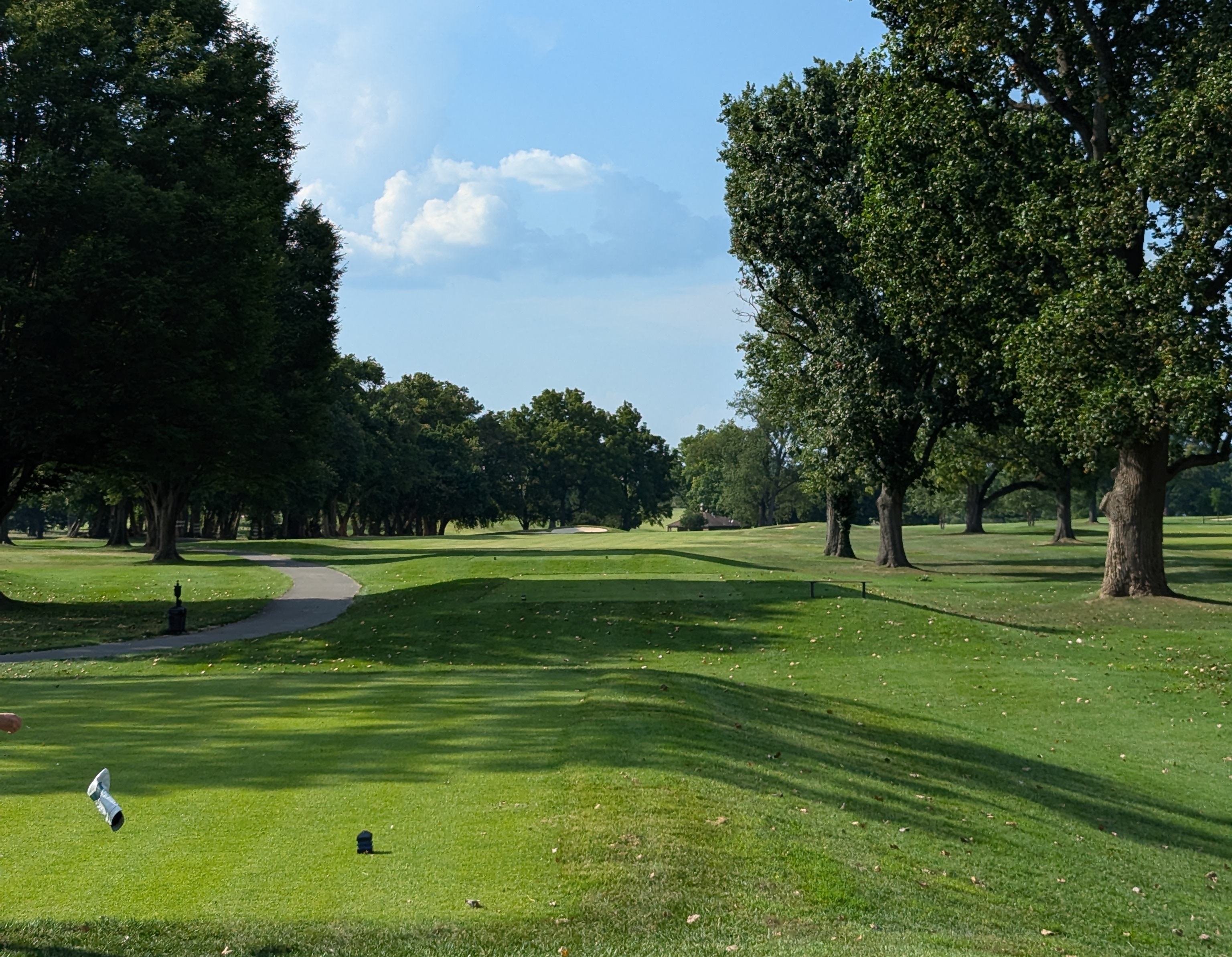
The eleventh may be the most difficult of the par-4 holes at Big Spring, measuring over 500-yards from the back edge of the back tee box. Due to the flatness of the hole, only the left bunker is visible from the tee, but bunkers are on both sides of the fairway that further complicate a hole that is already very long.
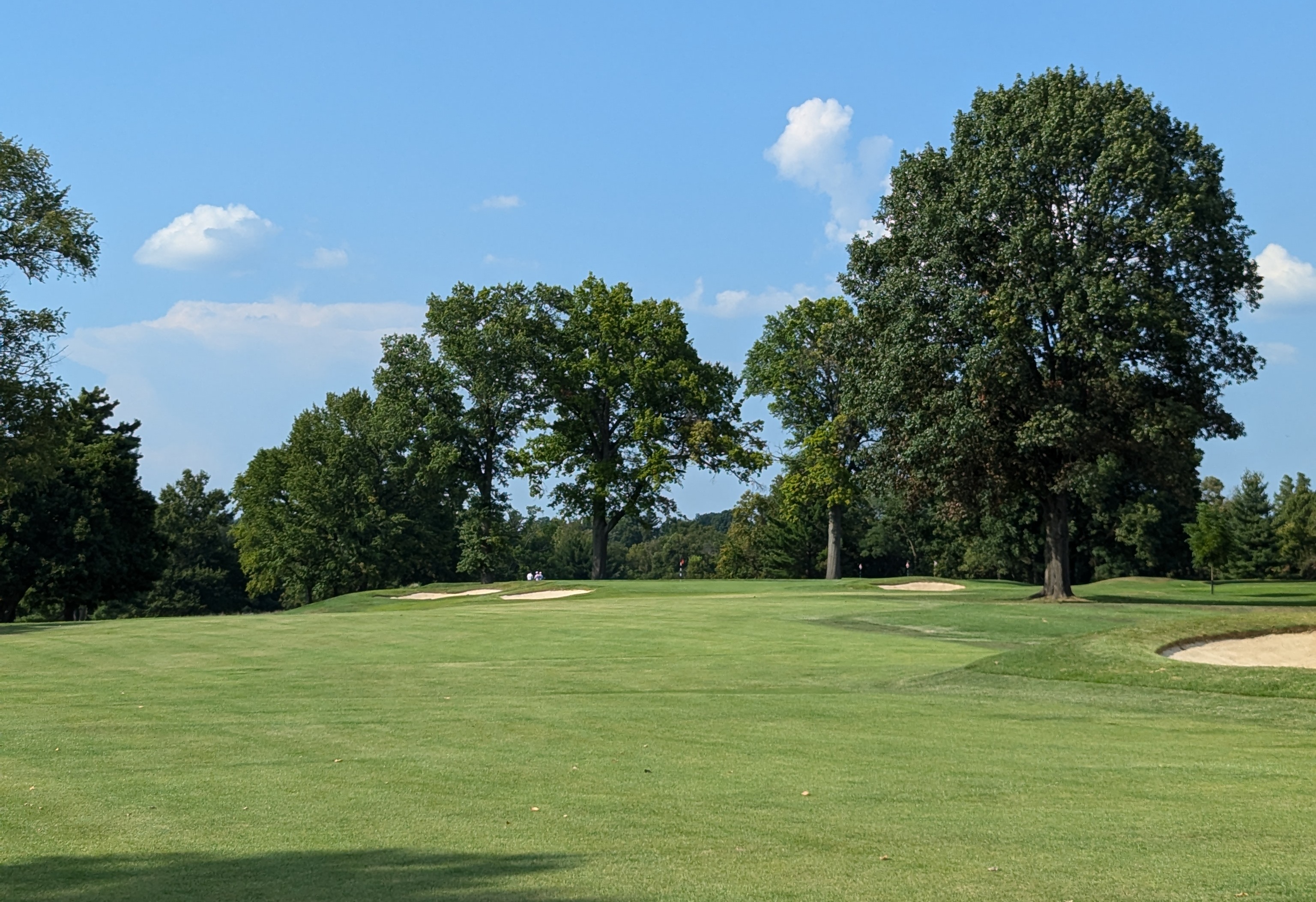
The approach plays into a well protected green with flanking bunkers on either side, and Big Spring’s only centerline bunker that protects the left-middle of the approach to the green. Its like they poured on the difficulty at Big Spring only into this hole. Objectively, to two good shots, the hole is not all that hard; but is any hole? For those slight misses, however, this hole could produce a bogey or double very quickly due to its length and numerous, deep traps.
Big Spring has a slight change in character for a few holes as the routing re-enters the hilly section of the property with the winding creek, and the twelfth hole may be the most fun hole on the course.
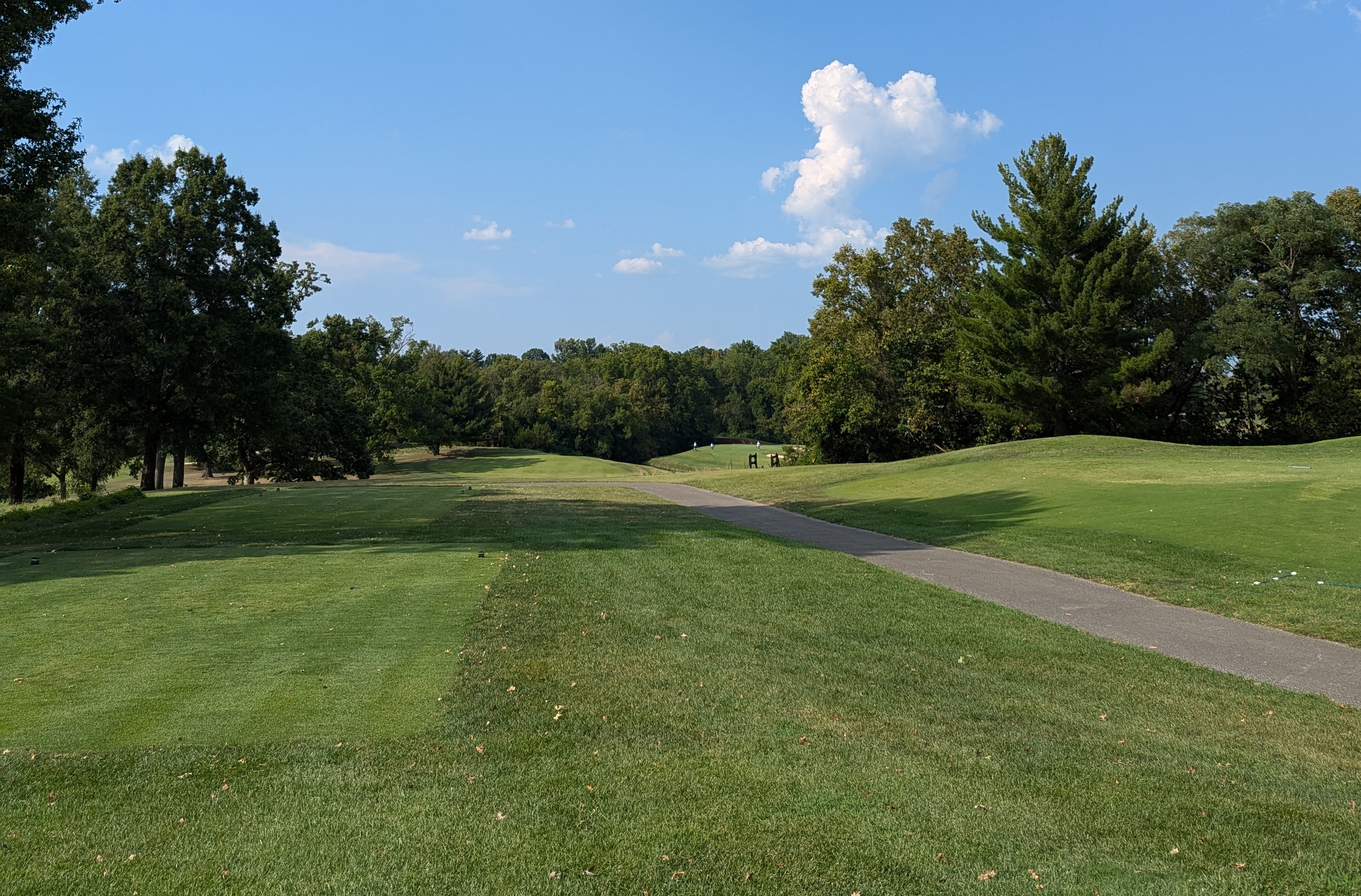
The twelfth is a short par-4, with a tempting green that should be reachable for players with above average distance. But whether you want to take on that risk is the name of the game here, as that reachable green is well protected.
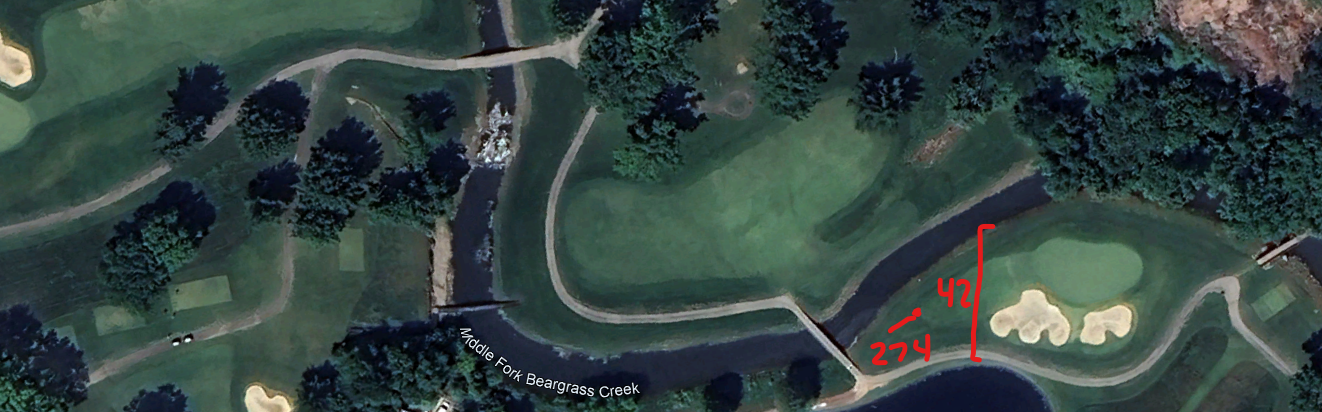
With water on either side of the green, and just 42 yards between the hazards, it is more than possible to be putting for eagle. However, a miss may result in a putt for bogey or worse. The water is just around 270 yards from the back tee to carry, and plays significantly downhill, meaning that longer players may be able to reach with just a fairway metal. But the risk is more than just water, the putting surface slopes significantly from right to left, meaning that short sided shots from the greenside bunkers are very difficult, and probably represent par at best. The more responsible play, and probably the play with the lower scoring average, would be to simply lay up before the creek with an iron off the tee, leaving less than 100-yards in to attack the pin.
The twelfth is certainly a fantastic hole that could be a 3 or a 6 on the scorecard each time through. After the twelfth, a long walk over a bridge back to the thirteenth tee awaits with its demanding tee shot.
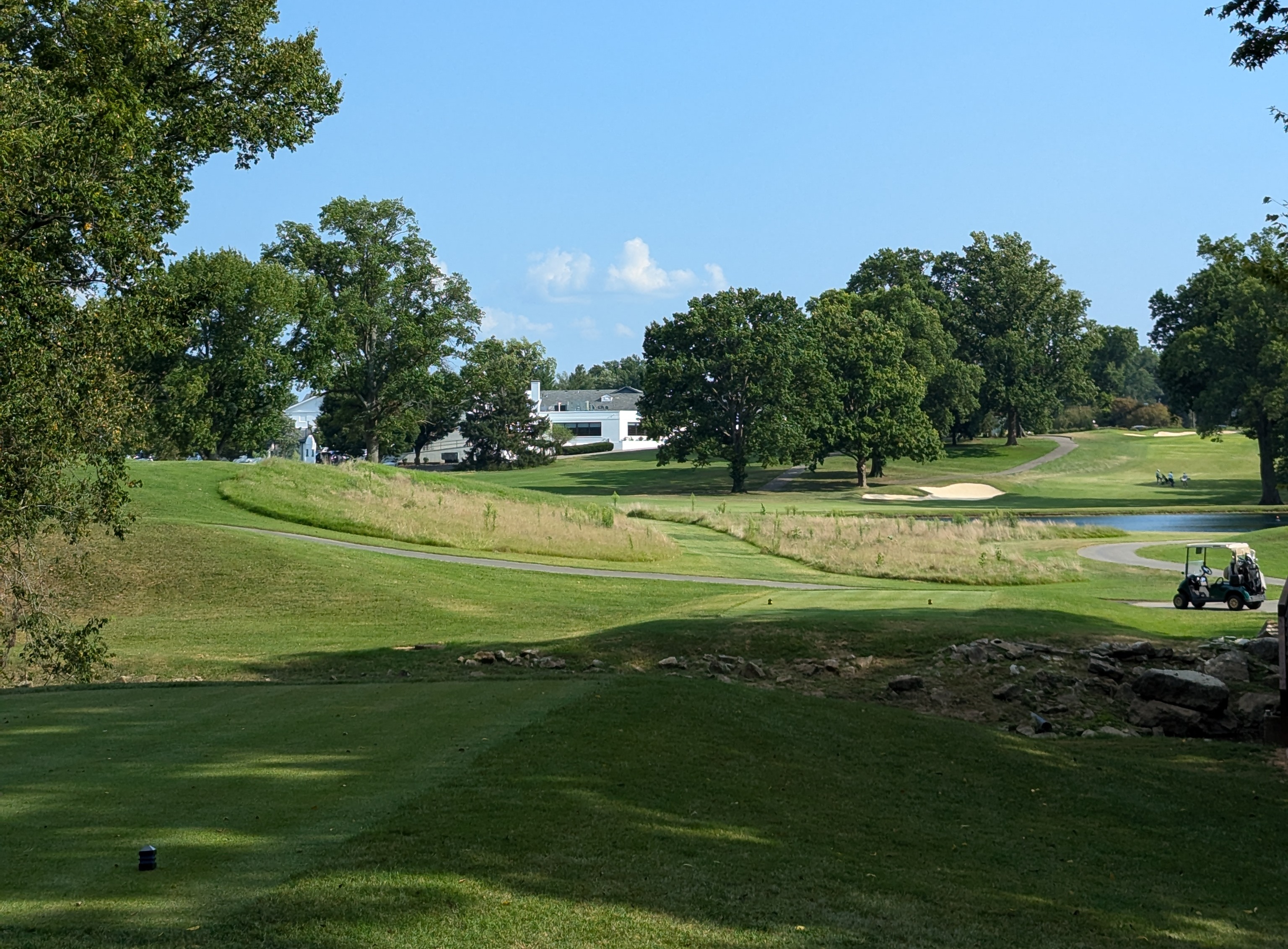
Perhaps the most attractive tee shot on the course, the thirteenth features a fairway bunker (unreachable for most players) to aim at, and a water carry that gets progressively longer the further right the intended line. Then, the approach to the thirteenth turns uphill to a green perched atop the same hill that the twelfth runs down. The semi-blind approach is one of the tougher on the course, meaning this hole is one of the more difficult at Big Spring.
It is almost as if the original design at Big Spring had thirteen holes, because the thirteenth finishes beside the first tee and the clubhouse. The course, to this point, is played exclusively in front of the clubhouse. The fourteenth through the eighteenth create a loop around the back of the clubhouse, but the thirteenth green may serve as a perfect off ramp to the clubhouse bar if things are going poorly.
What you’d miss out on, however, is another great short par-4 on the back-nine at Big Spring.

The fourteenth is one of the more visually appealing holes from the tee, as it plays slightly downhill into a multitude of bunkers. The green is not quite reachable for most players. I see this hole as a classic three-option hole.
- First, the player can elect driver to push the ball down into an area where a short pitch may await, But that short pitch may be from the large bunker to the right of the green for any inaccurate drive.
- The second option, and perhaps the riskiest, may be a fairway metal from the tee box, leaving a fuller wedge if successful and staying short of the right bunker. However, the left bunkers are brought into play, and the fairway is narrowest at this distance.
- Lastly, the third option would be to lay back with an iron off the tee, and leave a middle-wedge into the green. The fairway is widest here, but the green must be located with the second shot, as it is a very well protected green.
The fourteenth ends at the north end of the property, and the course turns south for the next two holes. The fifteenth and sixteenth form the eastern boundary of the property.The fifteenth and sixteenth holes are also the only holes in which houses are near the property. It seems as this area of the course has been developed as small upscale street called “The Springs,” an apt name for the view from these back yards.
The fifteenth hole is a beautiful mid length par-3 that has a wonderful look despite no natural hazard or feature.
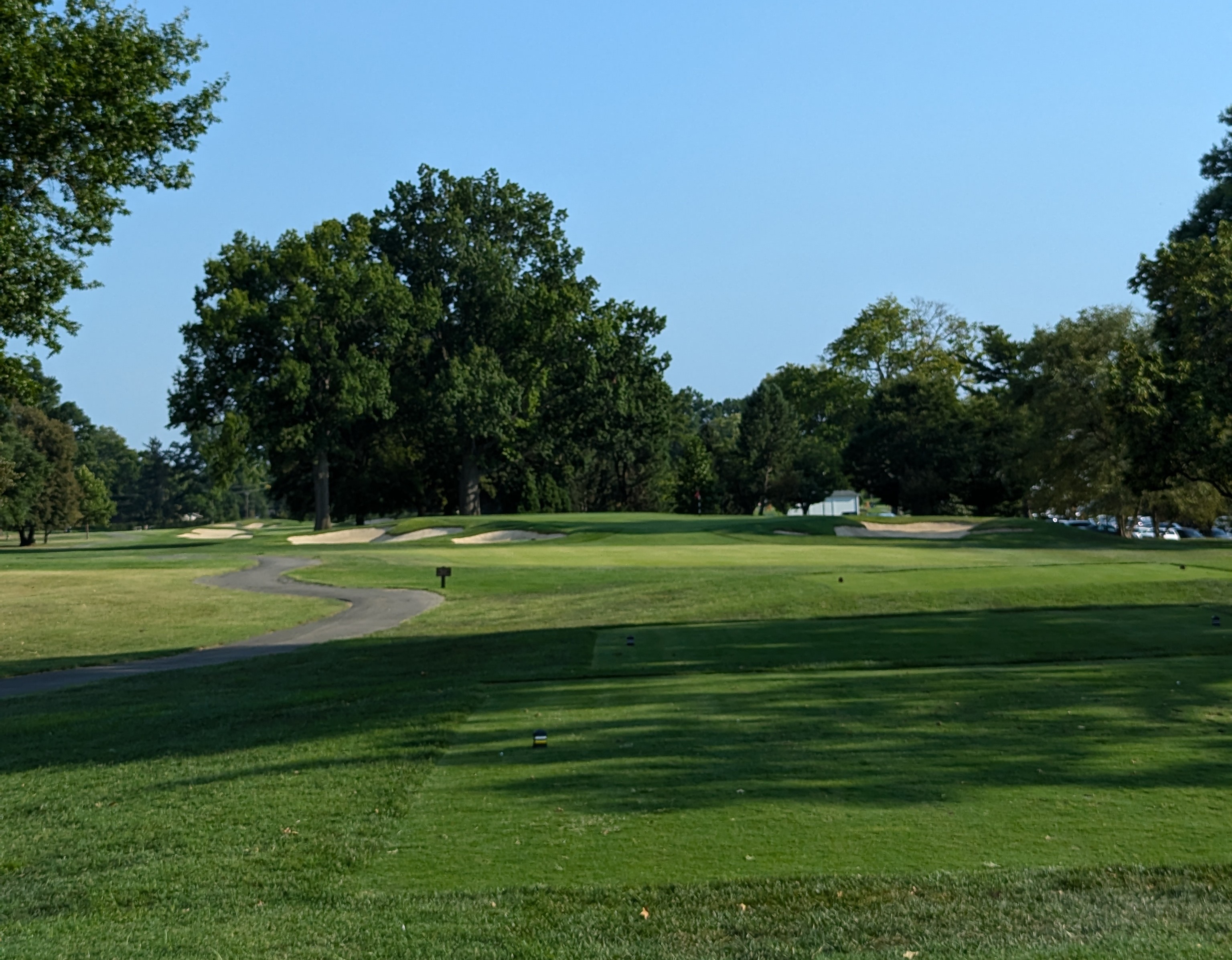
The putting surface is angled relative to the tee line, from short right to long left, making this green a touch easier to hit for right-handed players. The penalty for missing can be severe, as the three bunkers that protect the green at the fifteenth are some of the deeper greenside bunkers on the course.
The sixteenth is a long par-5 that spans most of the eastern property line, and features out of bounds left (houses) and right (clubhouse parking lot) from the tee. The hole is mostly straightaway and features five large fairway bunkers that ham-and-egg each side of the fairway. The green is well protected by three bunkers encircling the small green, but the green does have a narrow fairway opening through the middle. The green is significantly sloped from back to front, but a below-the-hole look here might equal birdie.
However, this north to south orientation is my only gripe with this par-5, or the other par-5’s., because of wind design. ALL of the par-5 holes at Big Spring play in the exact same direction, and therefore the exact same wind. Fortunately, the par-3’s do not repeat that same mistake, and play in three distinct directions. A small gripe that makes all of the par-5 holes artificially easy or difficult depending on the day.
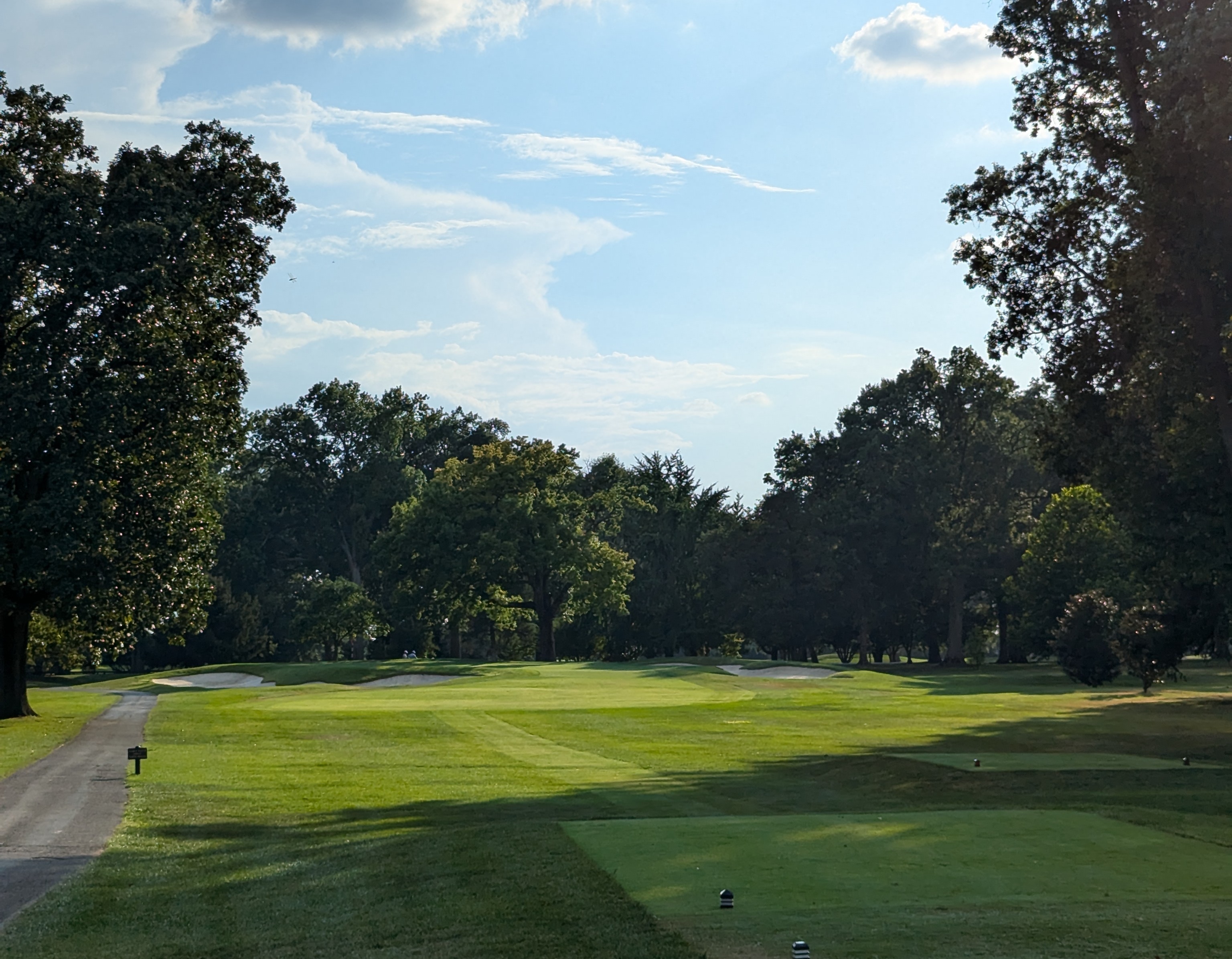
The two finishing holes at Big Spring are relatively tough. The seventeenth, the second par-3 on this back side, is a long par-4 with out of bounds to the left. The par-3 plays behind the driving range. The green is again well protected by bunkers on either side, and the entire greenside arrangement is again angled from short right to long left. This par-3 is mostly tough due to its length, but the putting surface is no slouch – again, significantly sloped from back to front.
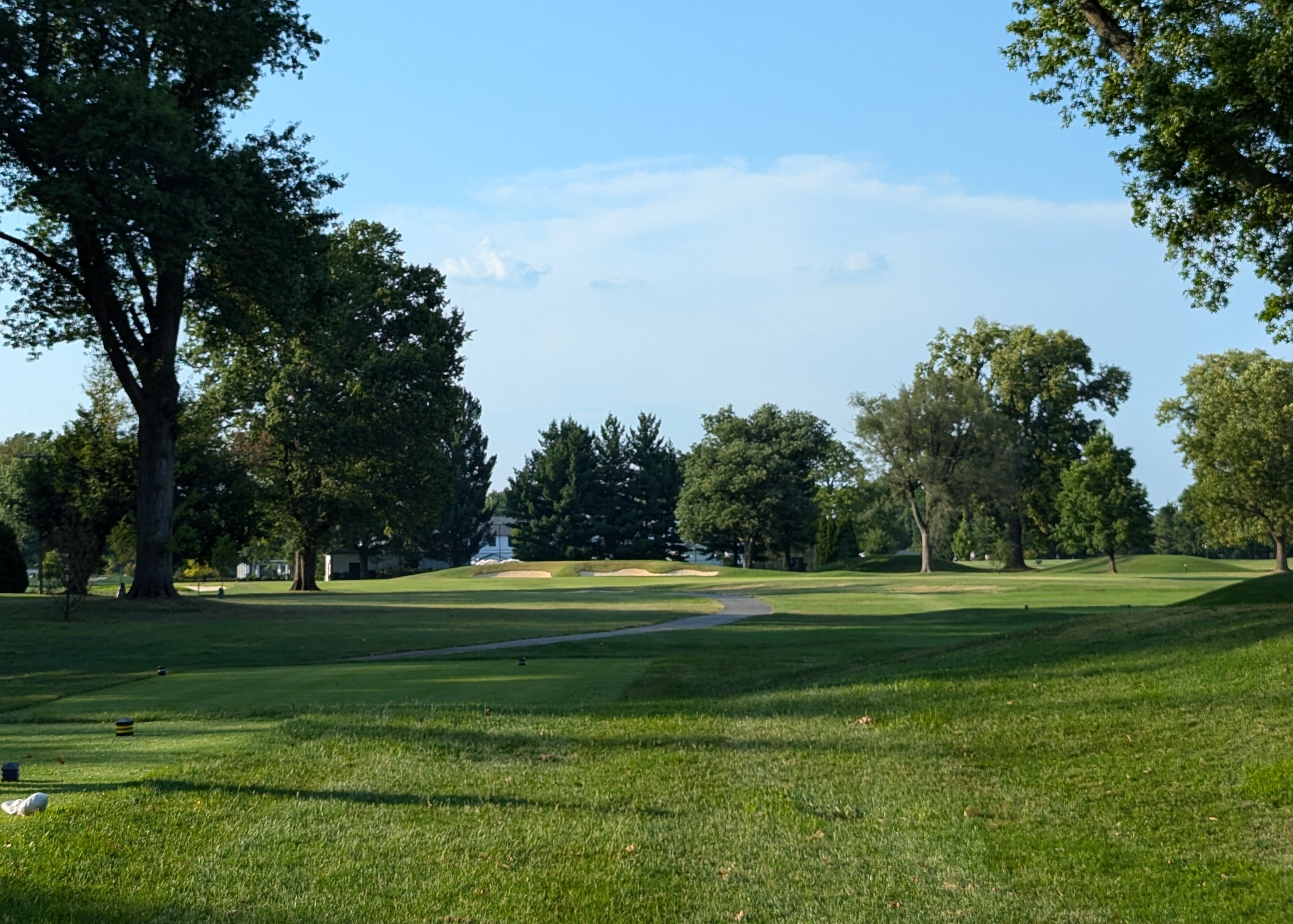
Lastly, the eighteenth, a mid length par-4 which has undergone some recent remodeling. A hard dogleg left par-4 of medium-length where something less than driver is required from the tee. The changes made at some point before the 2024 season, removed three fairway bunkers on the left in favor of a Oakmont-lite church pew bunker. The fairway was also significantly widened on the left.
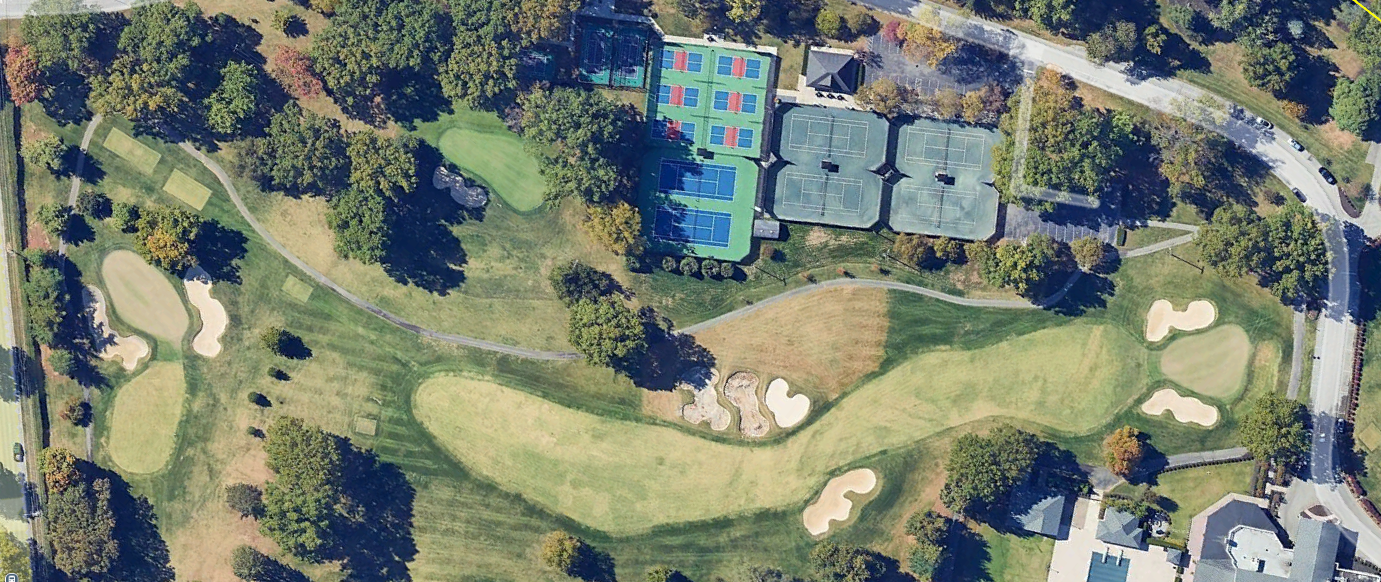

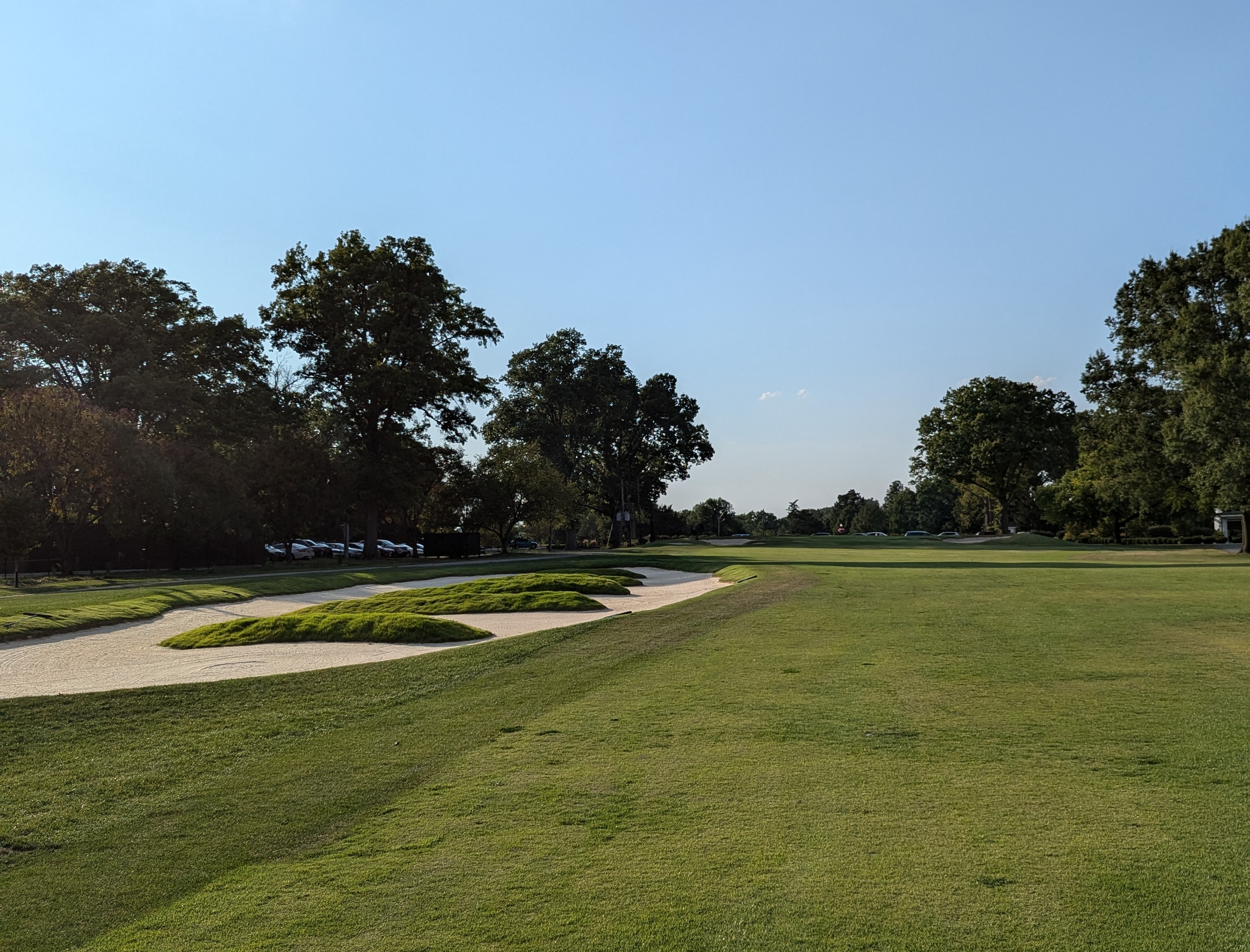
The eighteenth green remains well protected again by a few flanking bunkers that squeeze the triangular green to a head at the front. Due to the curvature of the hole, precision is demanded here, and the eighteenth is certainly a tough finishing hole to finish the day.
Final Thoughts
Big Spring is clearly committed to adaptation. The course is not tough, but new tee boxes were recently added to lengthen the course. The remodel of the eighteenth hole and clubhouse facilities show a commitment to keep the club in the modern era of the game of golf. The nice practice areas and range show a commitment to the better players at the club. Big Spring members certainly have it nice, with a nice golf course and nice facilities.
But, it is just nice. And while nothing is wrong with nice, Big Spring’s golf course isn’t great or special. There are a lot of clubs throughout many cities in the eastern U.S. that have similar property, similar characteristics, etc. But not all have such a clear commitment to adapt and to keep striving to deliver – it is clear that Big Spring has that desire.
There’s more to deliver. The conditioning, while perfectly acceptable, could have been better. A few holes may need to be redesigned, remodeled, or rebunkered as the eighteenth has recently undergone. The eighth and ninth holes could certainly be improved. Every course I review has opportunities for growth, but Big Spring may have the greatest opportunity for growth with some slight tweaks, more attention to conditioning, and continuing on the quest to lengthen and make the course more difficult. Additionally, the upcoming rollback of the golf ball may really help mid-century courses like Big Spring that are a bit too short for the modern ball and club technology.
Despite my slight criticisms, it is clear that Big Spring is doing much better than the average course built in 1950, and I cannot wait to see its continued evolution.
F1C’s Final Rating:
Shot Options: 7
Challenge: 6
Layout Variety: 6
Distinctiveness: 6
Aesthetics: 8
Conditioning: 6
Character: 7
Fun: 9
Total: 55/80
Read More: How We Rate Courses
Rating Scale Details
> 70: Top-50 U.S.
65-70: Top-200 U.S.,
60-65: Best-in-State List
57-60: Best-in-State List Contender
53-57: Very Good
48-53: Good
40-48: Average
> 40: Poor

Author: Jaxon MacGeorge
Jaxon is the founder and lead course reviewer at First1000Courses.com. Jaxon has been playing golf for over twenty years, is a scratch handicap, and actively competes in USGA and Tennessee Golf Association (TGA) amateur events. By trade, Jaxon is an attorney and lives in Gallatin, TN, a suburb of Nashville.


 First 1000 Courses
Leave a comment