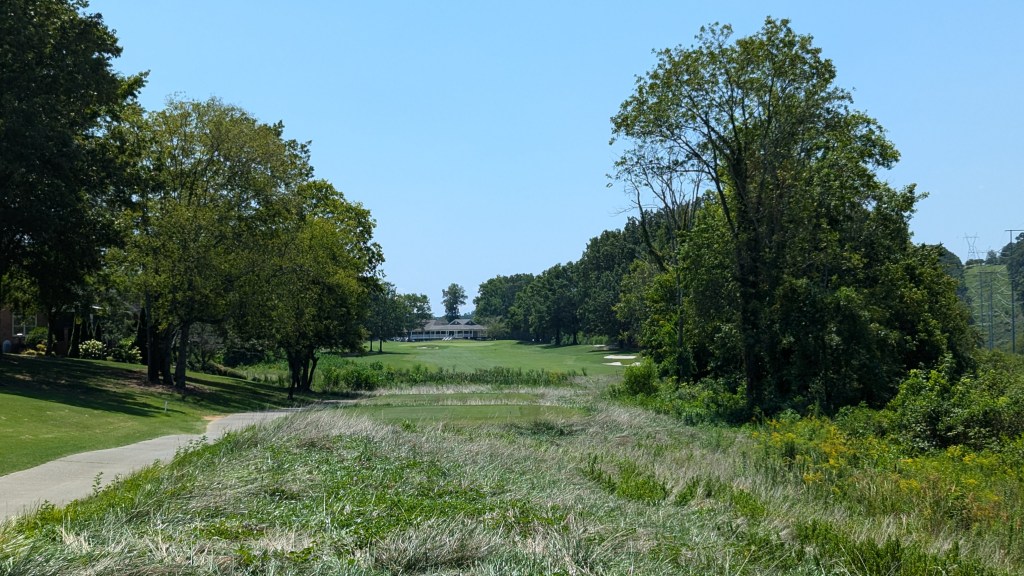
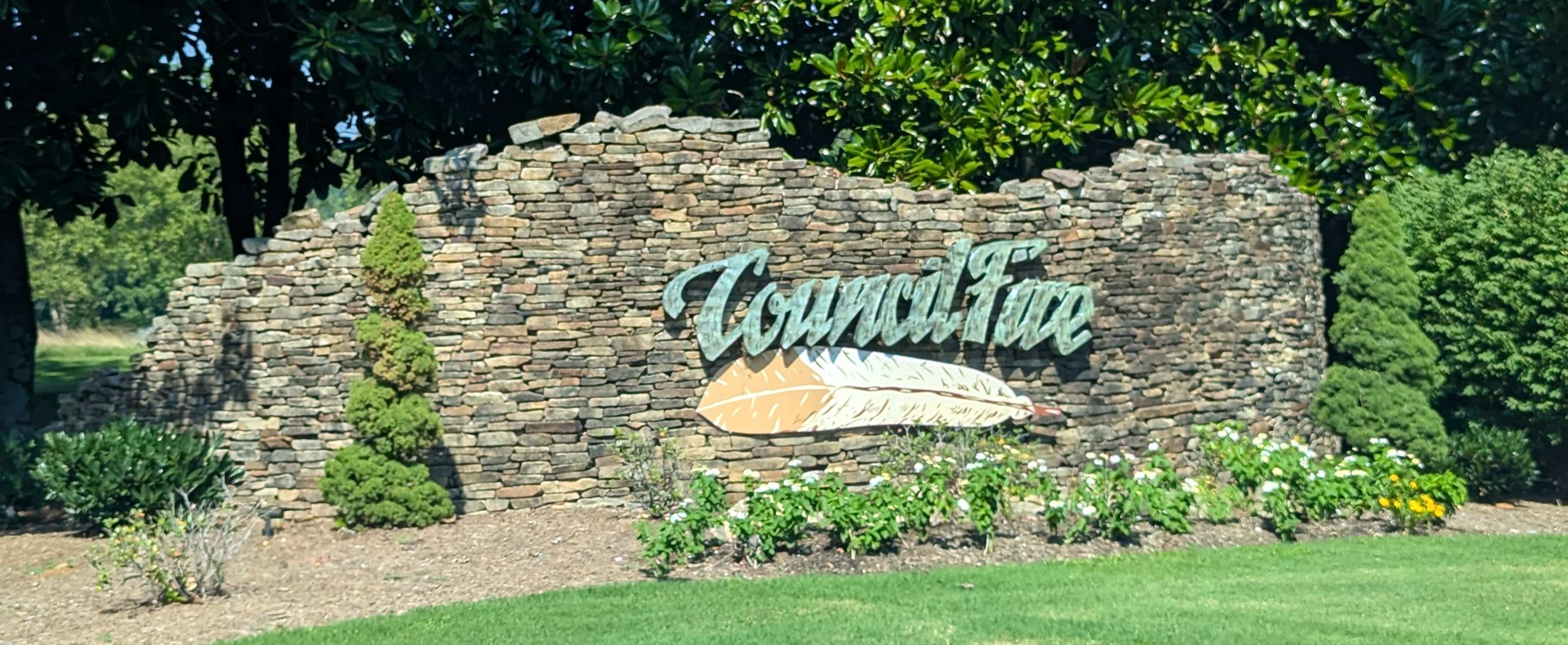
This Council Fire Golf Club course review is based on a round played on August 10, 2024.
Council Fire Golf Club is a private course in Chattanooga, TN. The guest fee is around $100/round.
F1C’s Final Score: 59/80 (Best-in-State Contender)
Learn More: How We Rate Courses
Half-par. A term that is typically used to describe a hole that plays somewhere between two pars. A tough par-4 may play to a scoring average of 4.5 on the PGA Tour, meaning that each time a player makes par, they are actually gaining half of a shot relative to the field. Long par-3 holes and short par-5 holes normally come into the conversation when discussing half par holes. Occasionally, a super long par-5 might even get caught up in the discussion of half-par holes. These holes are often some of the most iconic holes in golf: thirteen at Augusta National, a par-5 that feels like a birdie is making up ground, but a par is losing ground in the tournament. Perhaps the eighteenth at TPC Sawgrass, the long par-4 around the lake where par is a great score relative to typical scoring average.
There are plenty of other fantastic, memorable holes that I would consider half-par holes. Paired together, half-par holes can bring variety to a round. Mid-length par-4 followed by mild par-5 can often be a total of 9 strokes and two pars. Boring right? But make the mid-length par-4 a little longer and the mild par-5 a bit shorter, and you get 9 strokes with a bogey and a birdie, or a double and an eagle – invariably more exciting!
That is the story of Bob Cupp’s design at Council Fire. Many courses use a pair of succeeding half-par holes, but a majority of the eighteen holes at Council Fire are half-par designs. It creates an undeniably exciting round, with a plethora of birdie opportunities. It also gives plenty of opportunities to run the scoreboard up a bit. For those of us that struggle with the mental game, the ups and downs of Council Fire test more than just your physical abilities.
Council Fire is currently rated as #15 on Golf Digest’s best courses in Tennessee in 2024 – quite lofty considering Council Fire has many houses on the course. It is clear from the routing and development that it was always intended to be a residential country club. But early on, shortly after it was built, Council Fire hosted a PGA Tour event in 1992. So, absent the real estate, Council Fire apparently has the bones of a course that was once considered Tour worthy. Unfortunately, course raters typically hate courses with houses and rate them artificially low (not on this website though), and very few of the top-200 courses in America are residential country clubs. Honestly, in my experience, it has less to do with the course and more to do with the presence of houses – which is dumb. I digress.
Council Fire has overcome the dense housing obstacle in those Best-in-State lists, generally signaling that the course is so strong that it cannot be left off such lists. So it was time to embark on the journey. Surprisingly, despite being literally surrounded by Bob Cupp’s designed geographically, this was my first play of a Cupp design.
The First Tee
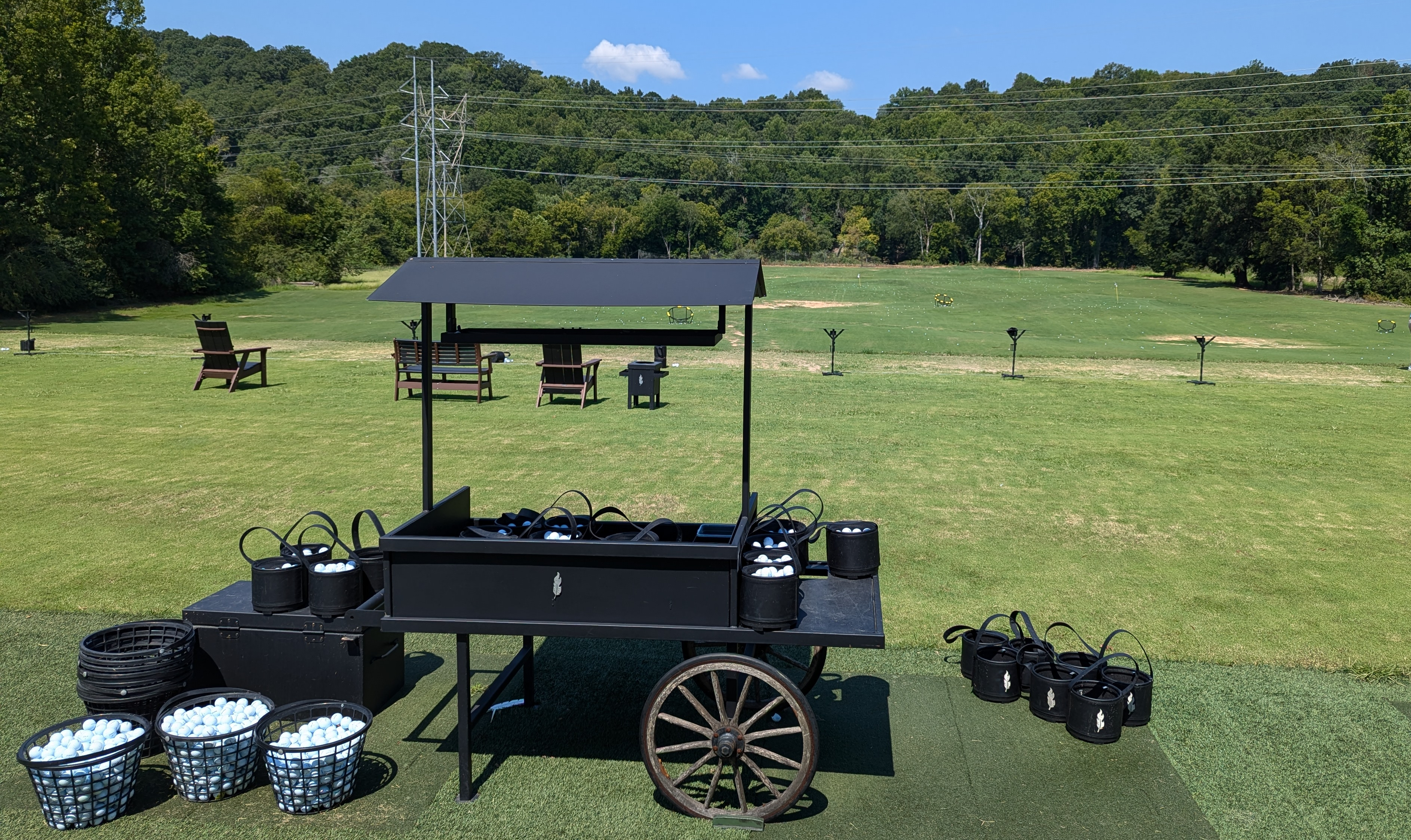
Before heading to the first tee, we warmed up on the practice range. Council Fire has two putting greens, and a nice chipping green. The wagon full of golf ball bags on the range also added a premium touch. But the range left a bit to be desired. My impression of Council Fire was more of a player’s club, as I saw a lot of practicing, particularly among those between 20-30 years of age. My host’s other guest, and playing partner for the day, was literally a professional golfer. This did not seem out of the ordinary at Council Fire. I mention this to say, the range and practice facilities at these “player’s” clubs can sometimes exceed the quality of the golf course, due to the importance the membership places on these facilities. The range at Council Fire is quite wide, but not very deep, and it is clear with the amount of practice occurring that turfgrass quality is a challenge. It appears a tee line of mats has been recently added, which may help things going forward. They also allow players to basically hit wherever on the range, forward of a rope, rather than in designated spots. Better range management would likely improve the turfgrass quality here, but I’m not a botanist, so I’ll move on.
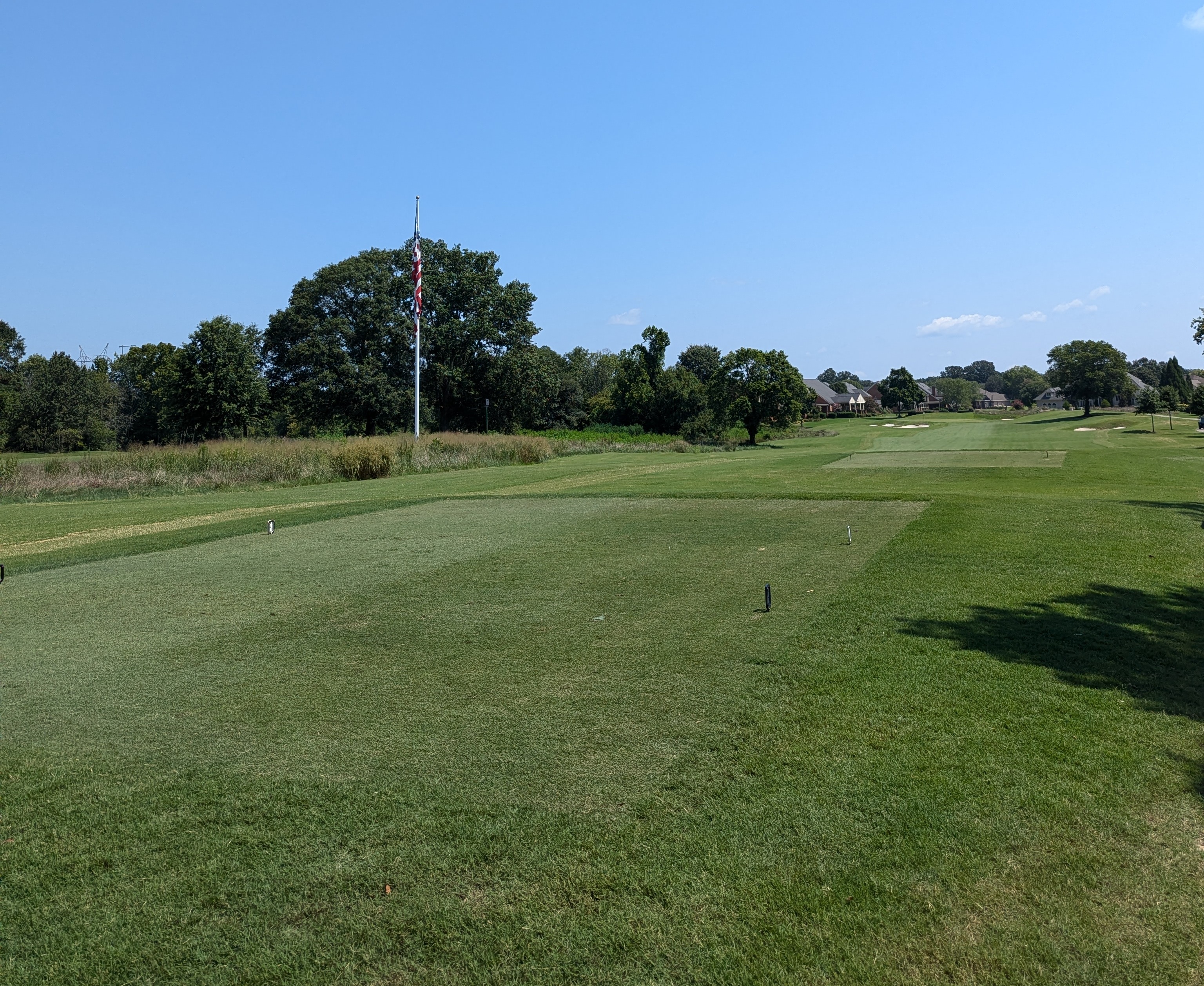
The first hole is a straightaway par-4 of shorter stature that created a bit of an optical illusion. Standing on the tee, the hole certainly looks long. My power driving playing partner nearly drove the green, and I wasn’t very far away myself. If you read my content, you know I often struggle with this on new courses, but this one was particularly deceptive, I believe due to the rolling hill that the first plays over. The tee and green are basically level, but the fairway runs through a slight depression, meaning the second plays a few yards uphill.
The first hole of any golf course often abruptly introduces you to important elements or characters of the golf course. The character of Council Fire, particularly this time of year of which I was quickly acquainted: a thick, matted bermuda rough. A golf ball has two options when encountering such rough: (1) it may sit on top of the rough, as my first ball did, meaning that the golf ball was some 2-3″ above the surface of the dirt. This made for a particularly hard wedge shot for me. Conversely, (2) it may bury in the rough, and if it does, all bets are off on the result (more on this later).
Secondly, I learned how receptive Council Fire’s greens would be. If you have experienced the pleasures of playing on most newer bermuda greens, they are often grainy and very firm. The firmness is the advantage to courses installing new bermuda putting surfaces as they are not as susceptible to ball marks and stay in better condition in the summer, due to less watering being required. This was not the case at Council Fire. The bermudagrass greens were smooth and very receptive – almost as receptive as bentgrass, but still left a lower profile ball mark that was easier to repair than bentgrass greens. If I could pick up Council Fire’s greens and put them on my home course right now, I would do it in an instant.
However, I must say, Council Fire is rated as a very difficult course, nearly a 75 course rating from the tips. With greens *that* receptive, I’m not sure this course currently plays to that difficulty rating. It would be more believable that the course was rated when the bermuda greens were newer and much firmer.
Okay, so I’ve rambled a bit, back to the first hole – the approach is protected by two fronting greenside bunkers and the green generally slopes from back left to front right, angled slightly in the same direction. The first is a nice gentle welcome to the round, which I always appreciate.
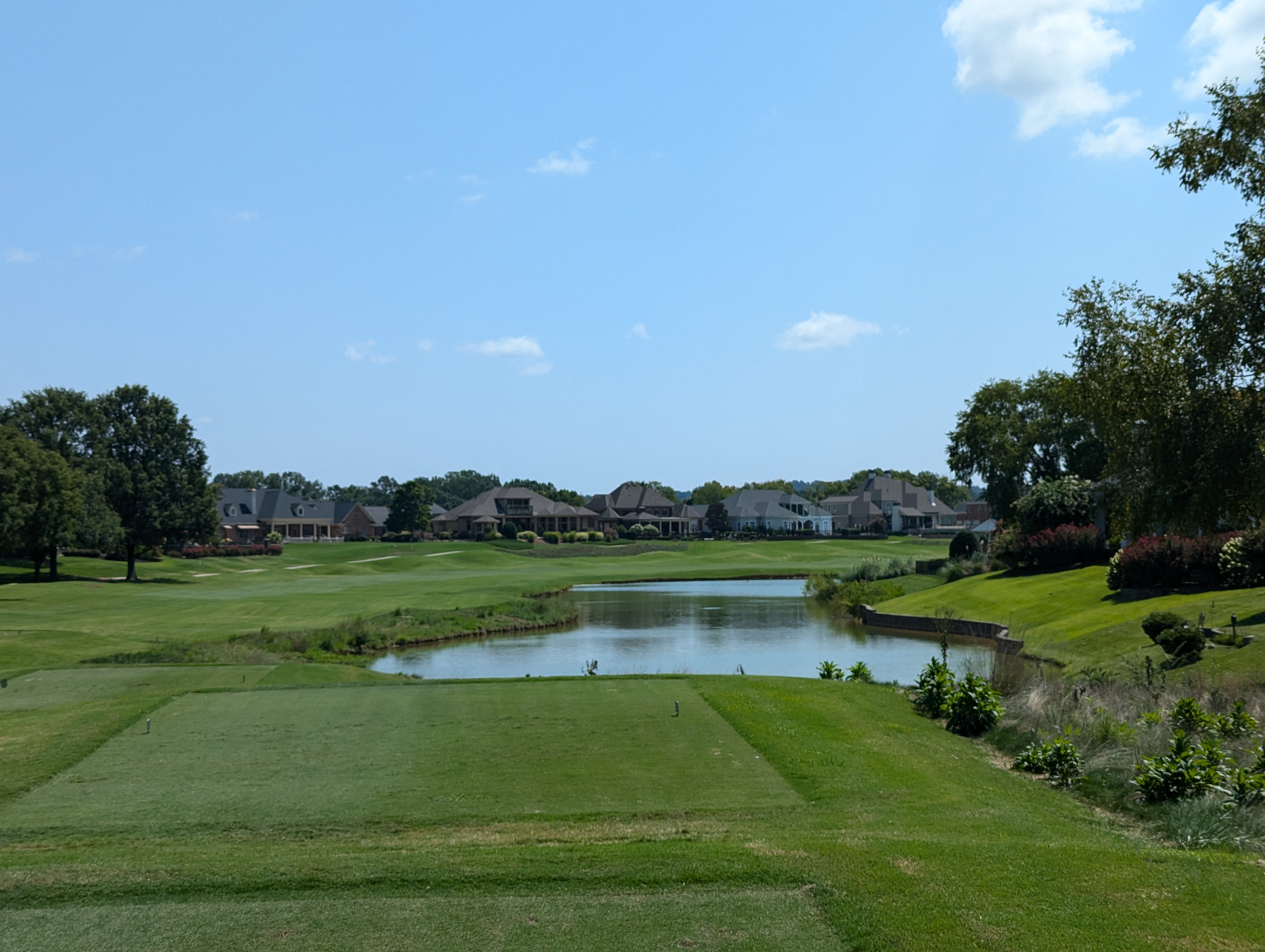
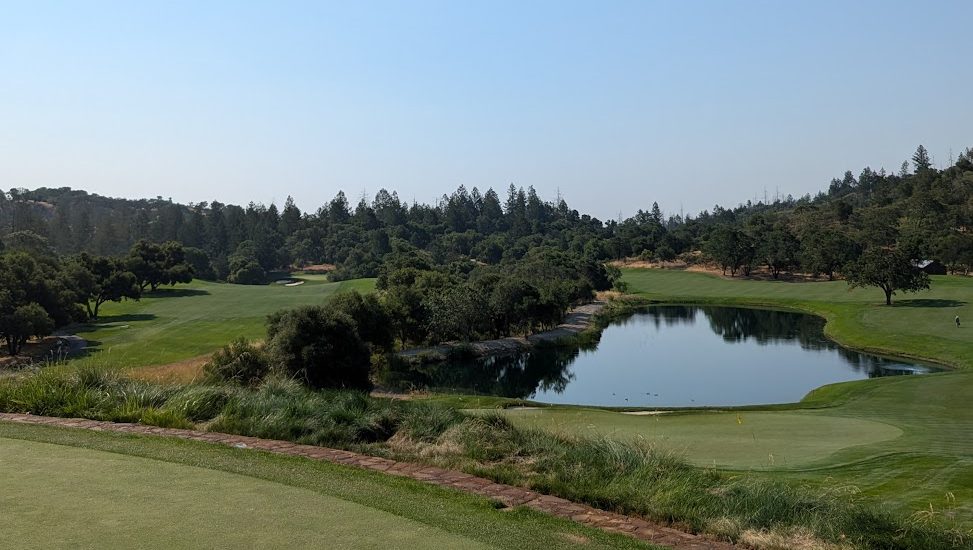
The second is a very visually appealing, and extremely scoreable short par-5. This is the first of the half-par holes, truly playing more as a par 4.5. The tee shot plays around a lake as the fairway swings nearly 90-degrees. When this hole was built, I’m sure it was a real par-5, but with the length of today’s players, this hole can be overpowered.
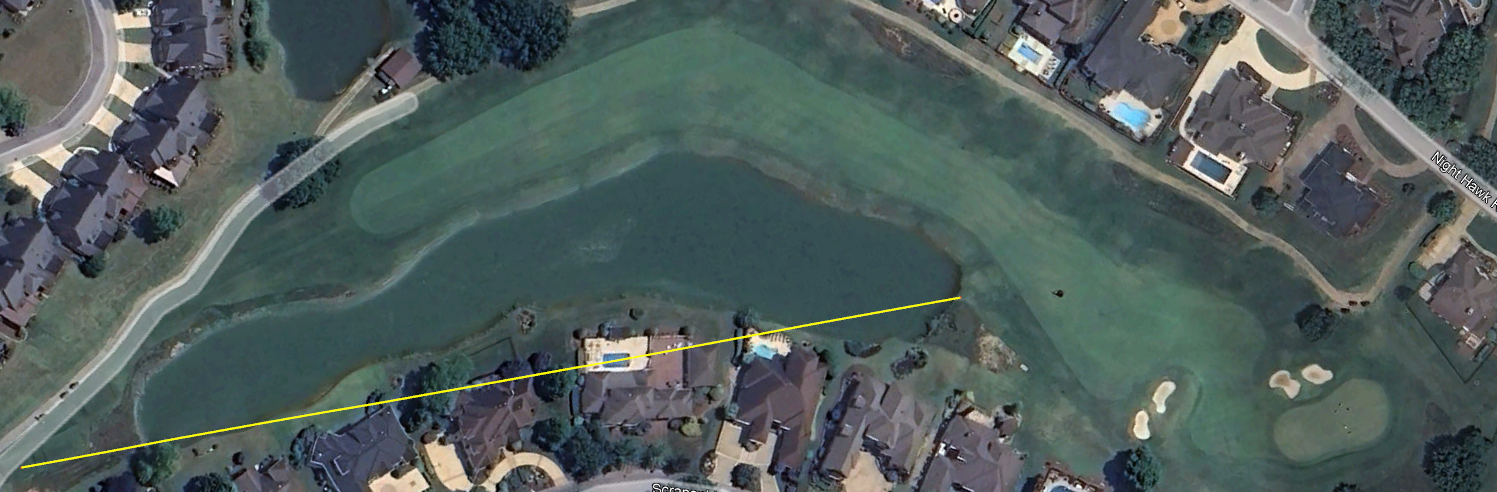
From the furthest back the hole can play, it is just 325-yards to cover the lake in its entirety. While that feels long to me, and probably many others, the length of today’s elite players means that nearly half of them, on a good tee shot, can carry this lake. And for those that play from a tee box up, they now can significantly challenge the lake carry. If the lake is indeed carried, the wedge shot remaining would be between 110-140 yards, depending on the angle and pin location, as the hole is only 440-yards in a straight line (a mid-length par-4 from the tips).
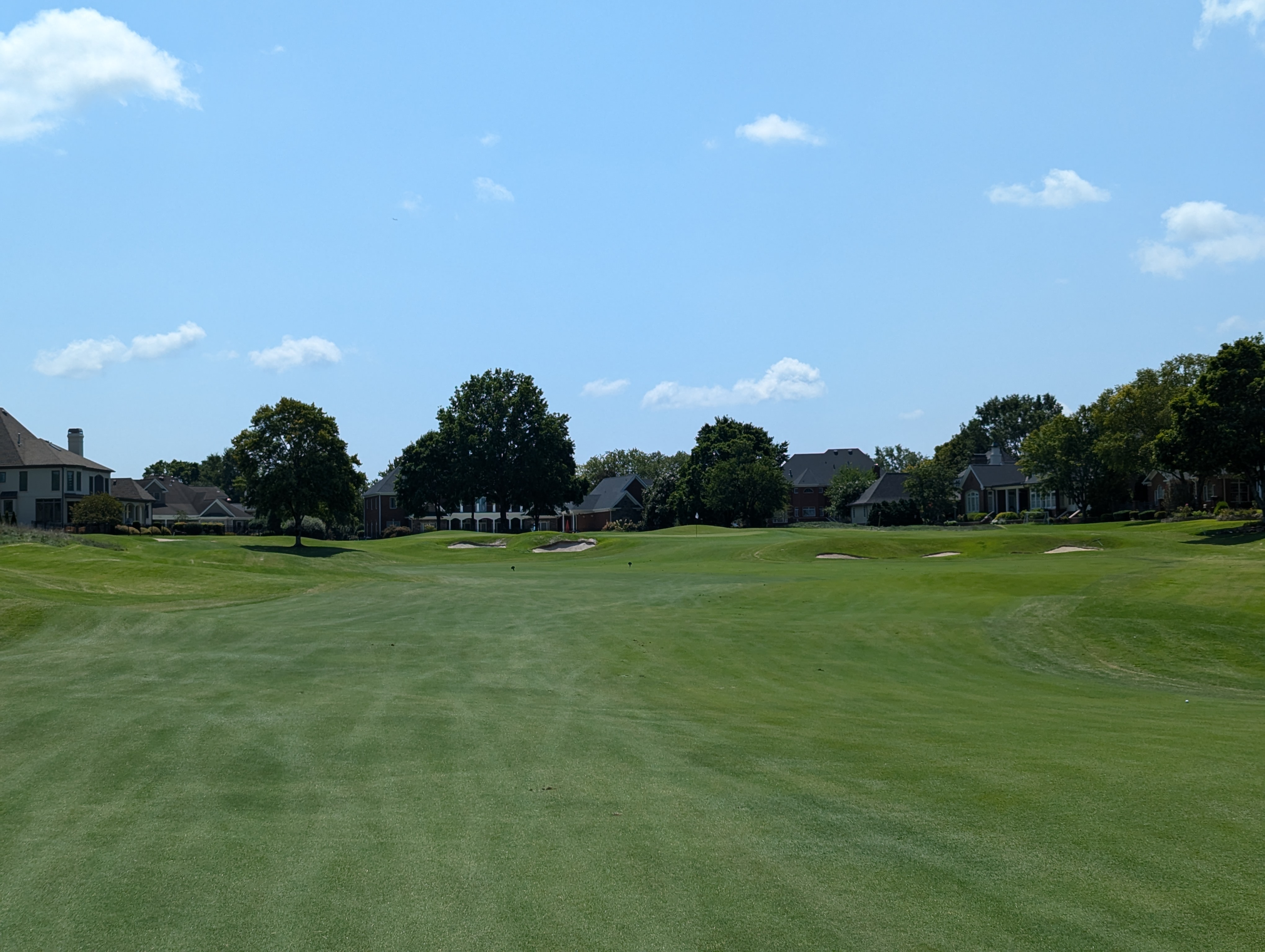
I took the safest route possible, so as not to derail my round on the second hole, and still faced just 215 yards to a green with plenty of run up area. However, two deep greenside bunkers do protect the left side of the green. The green is quite pitched, particularly on the front right edge, which at a very high green speed would function as a false front.
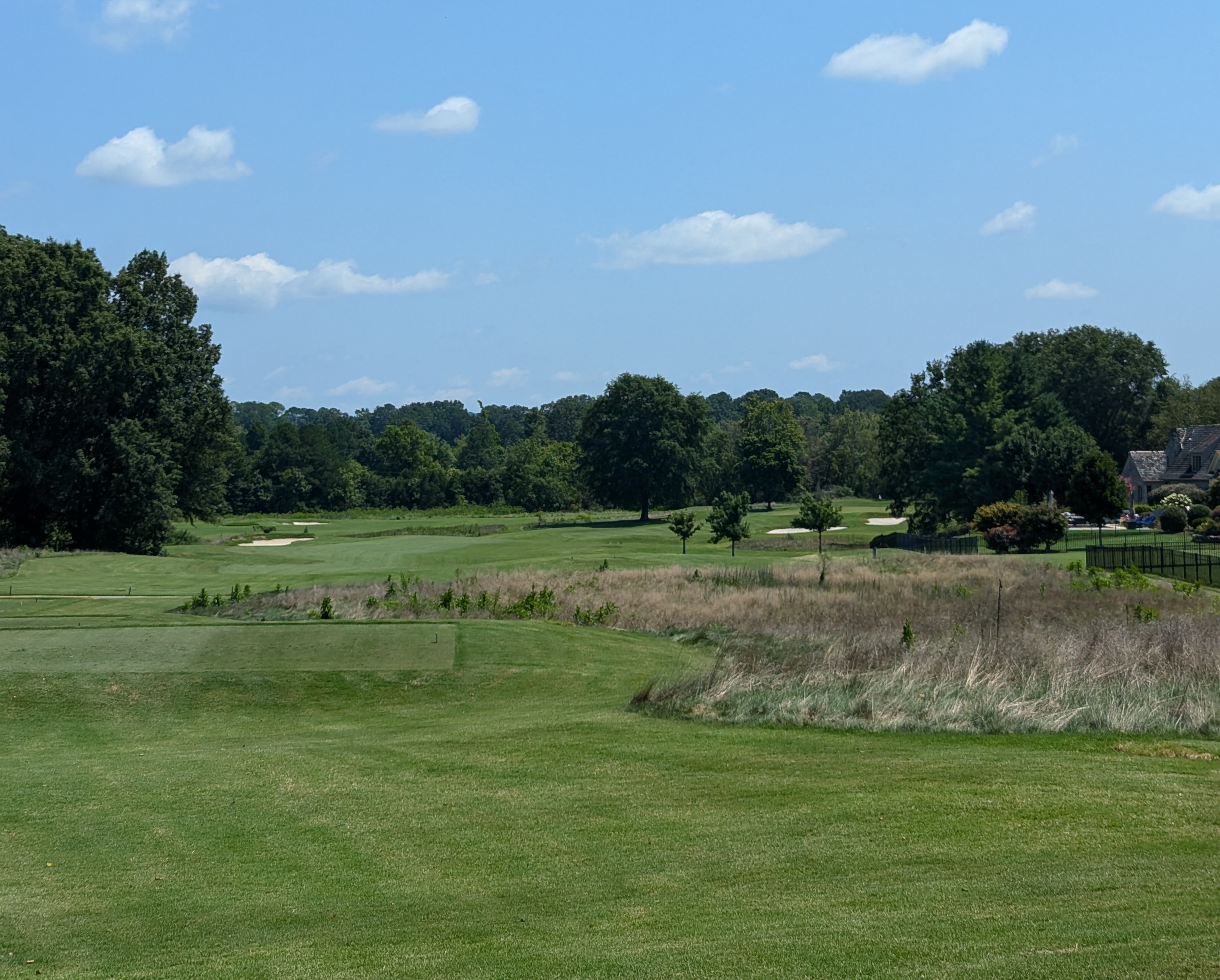
The third hole is another short par-4 that presents some options off the tee, but the option is more about simply finding the right club to adjust for the slight loss of elevation to safely find the middle of the fairway. A stream crosses the hole, with the fairway ending around 300-yards from the back tee, so the player is forced to manage the carry and roll out downhill. Anything greater than 230 from the back tee (or 200 from the next tee box) will leave a wedge into the green.
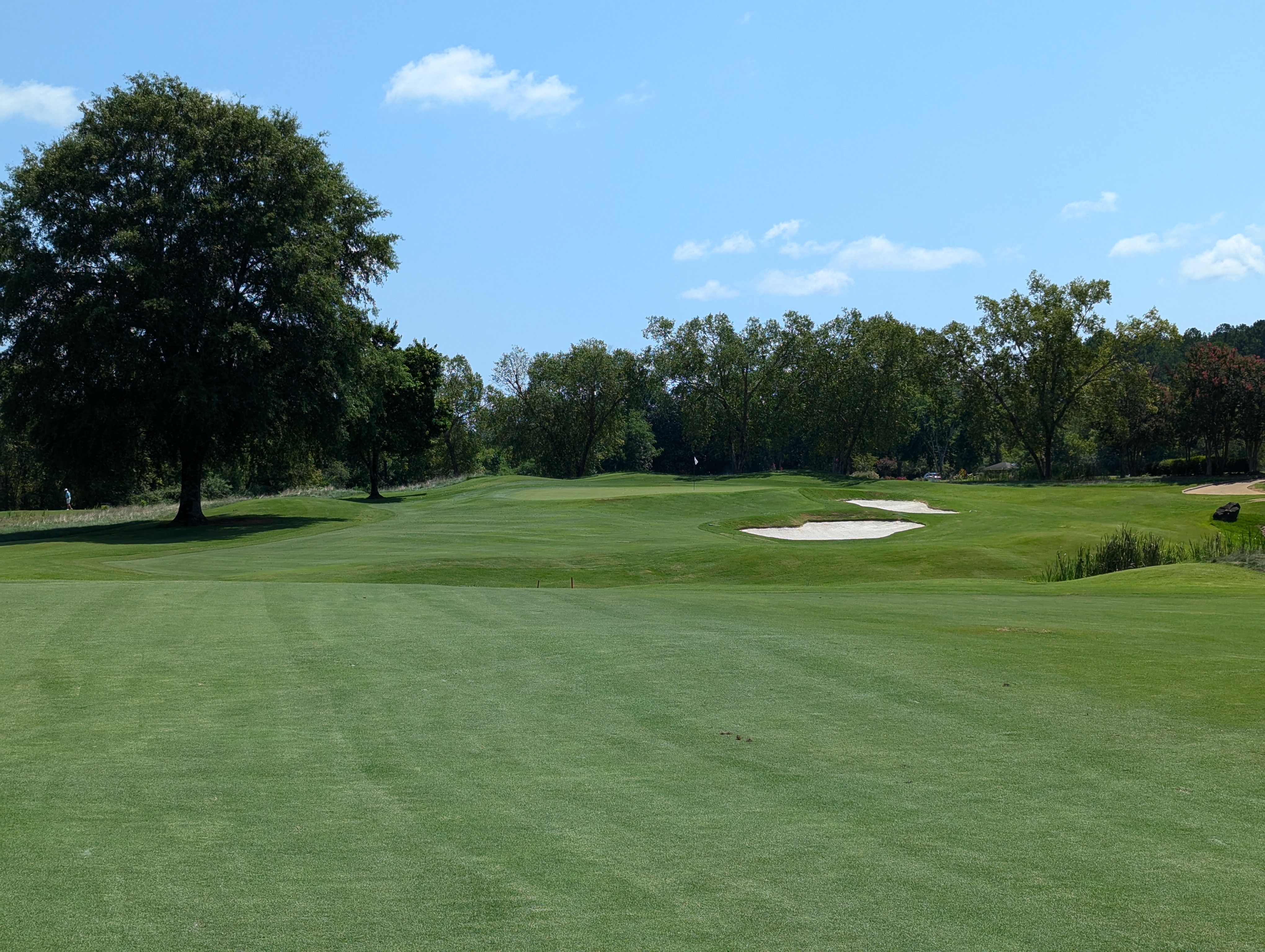
The green is protected by two bunkers on the right, the first of which is positioned slightly forward of the green. Council Fire’s greens have a touch more undulation than the usual residential country club course, and with the speed (particularly down-grain), it is easy to get in spots around the green where recovery is very difficult, if not impossible. Left of the third is one of these spots to a back-center pin. The green slopes dramatically from left to right on the back-left quadrant, and unfortunately a chip (or putt) down the grade has no intention on stopping where desired. That may be the challenge of Council Fire: missing correctly. And while I agree that nobody misses on purpose in any particular spot, there would be a significant advantage to knowing this course well, and knowing where those impossible spots are located. Simple chips were easy due to the receptiveness, but receptiveness will not save a ball tumbling down a 6-degree slope.
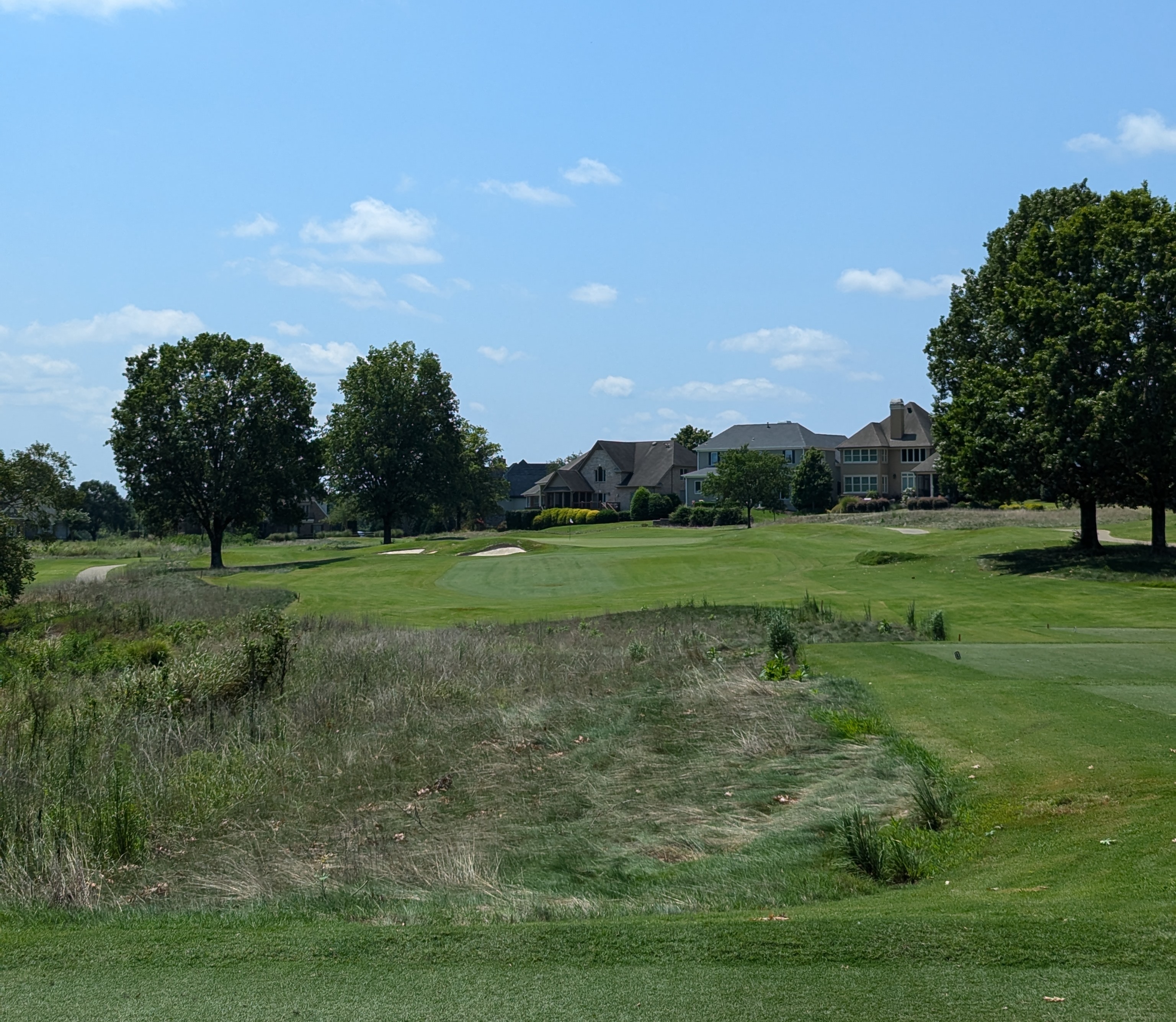
The fourth is kind of a half-par hole, a long, difficult par-3 playing around 230-yards from the back tee box to a green that works from long-left to short right. Two greenside bunkers dot the front left side of the green, and long left can get into a weeded area quicker than anticipated. Short and right most definitely the preferable misses here. When on the green, the right-quarter of the green possesses significant slope from right-to-left. Approaches may roll left once on the green, and chips from pin-high to the right of the green are next to impossible if short sided.
The creek that works across the third hole meanders back into play separating the tee boxes from the fairway on the fifth, another half-par hole, a short par-4 that should yield a reasonable birdie chance.
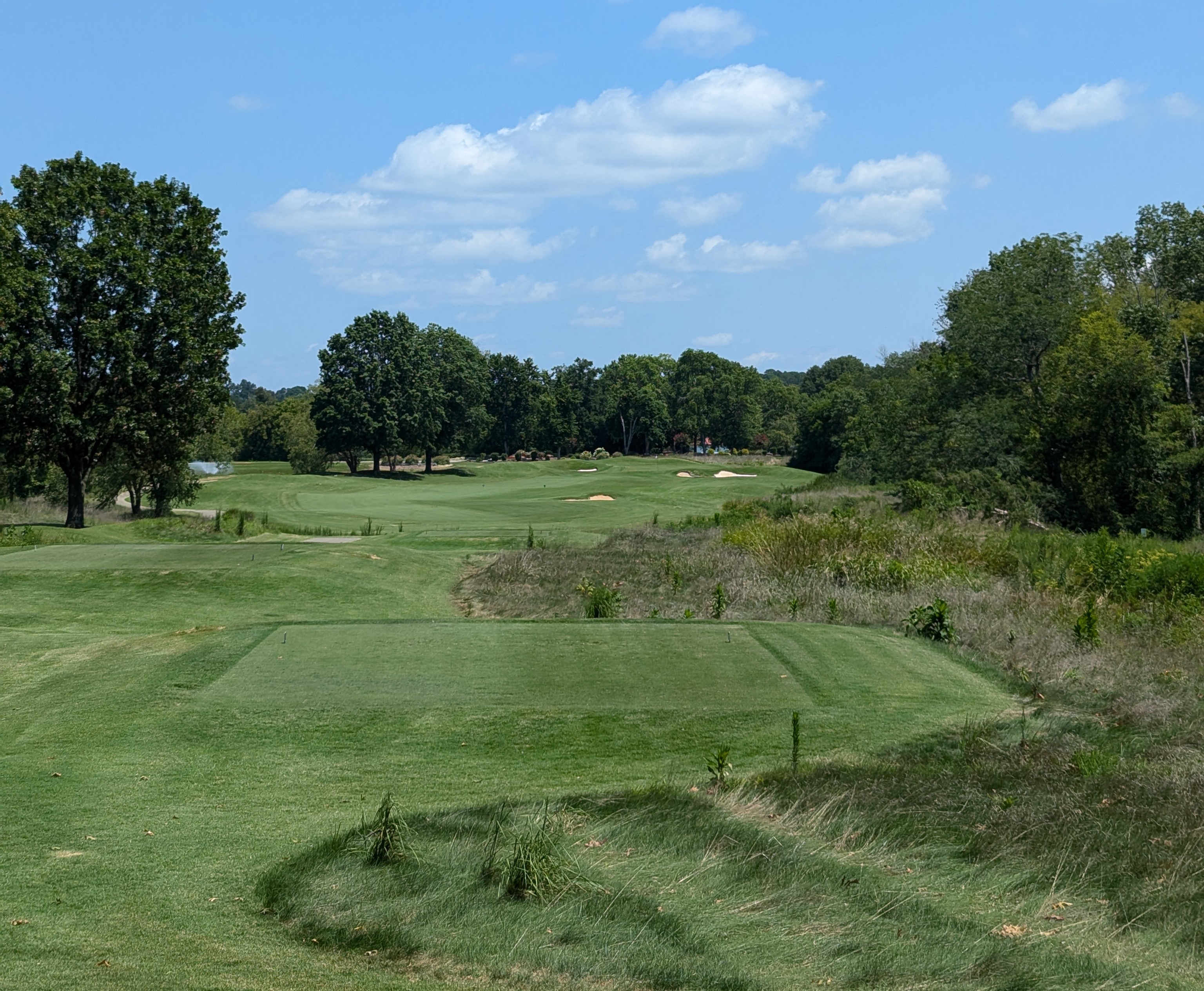
So long as the drive finds a safe landing area, which is largely unprotected, one of the shorter wedges in the bag will be able to attack the pin here. The green is protected by bunkers on either side, and is pitched significantly from back-to-front. Overspin is the primary defense of this hole, as a harder struck wedge onto the receptive greens may spin too far back. The challenge here for a birdie, particularly to back pins, would be controlling the spin to set-up an uphill look at birdie.
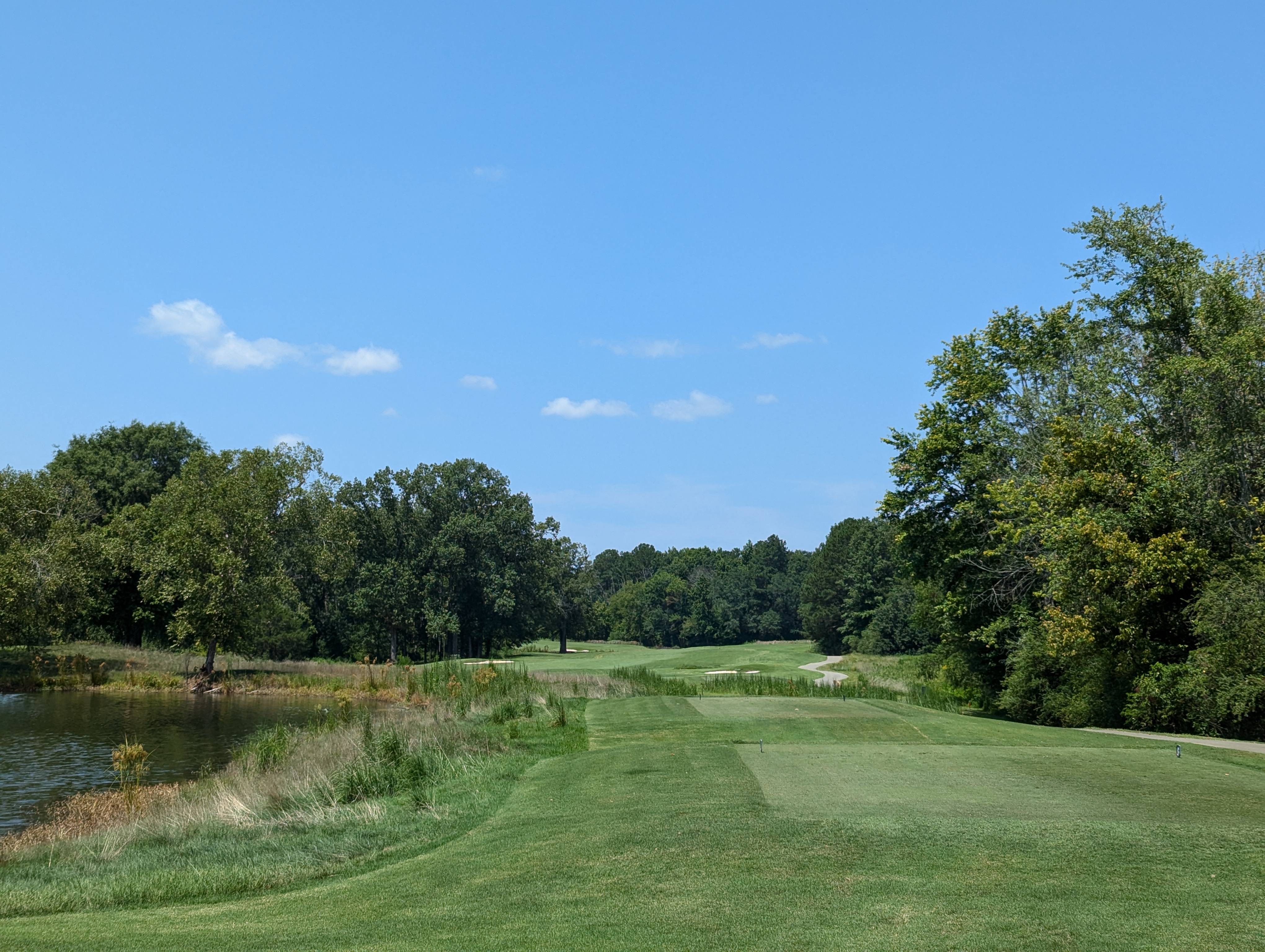
The par-5 sixth is a very unique, three-shot par-5 of considerable length. The tee shot is played into a relatively narrow area of fairway. Right of the fairway is basically unplayable and. while some room exists left, anything left of the fairway may be blocked out by the protruding tree line.
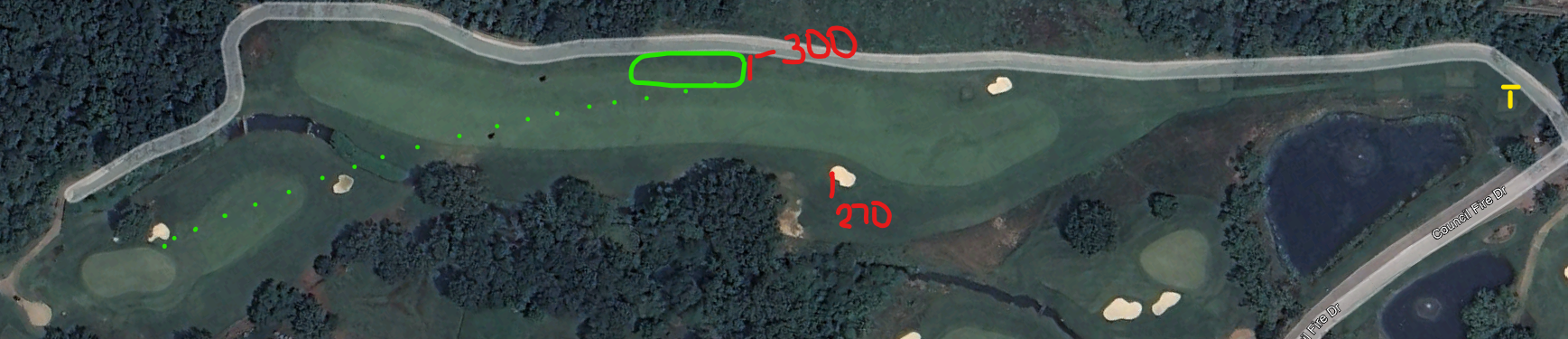
With only 270 yards to clear the bunker on the left, it presents an interesting option off the tee. The only material advantage that could be gained on the hole is if the drive lands in the right half of the fairway, past 300 yards from the tee. This spot, circled in green, is the green-light area, and a player can attempt to clear the meandering creek, frontal bunker, or greenside bunker and attempt to reach the green in two. A dangerous proposition, because the area 300-yards from the tee is only 40-yards between tree line and cart path, meaning a very accurate tee shot must be struck to avoid a penalty shot or pitch out. The reward of being able to go for the green will only be realized on less than half of tee shots landing in this shot pattern (those that specifically come to rest beyond 300 yards and right of center.
Alternatively, and perhaps more popularly, the strategy may be to lay up off the tee in between the fairway bunkers, layup short of the creek, and have a wedge into the elevated green. This still requires three relatively accurate shots however, and is not risk free. The layup is a bit awkward due to the last bit of the fairway moving to the right, away from the green.
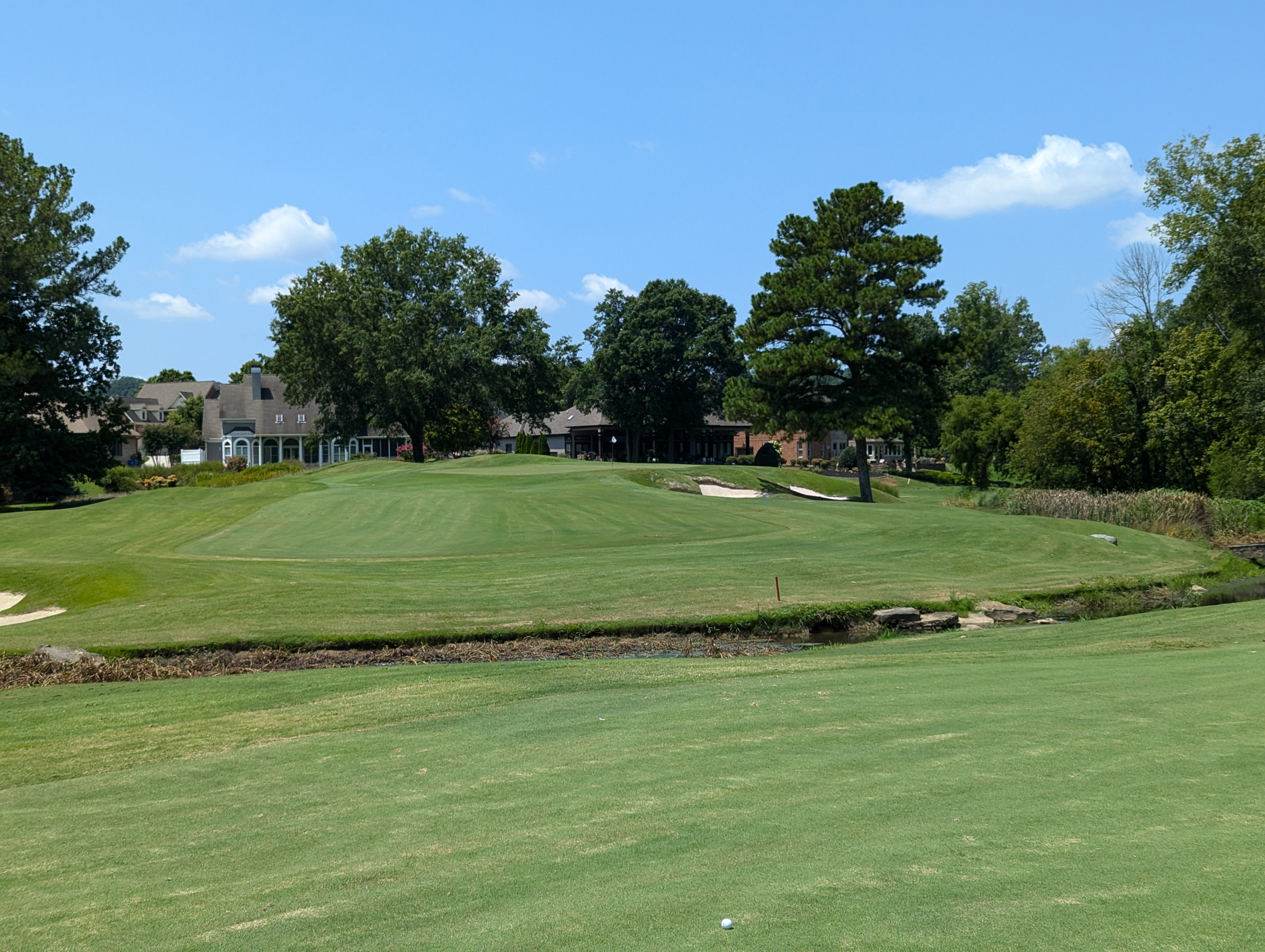
If the player elects to layup, a shot of around 125-yards remains to the elevated green protected by two deep greenside bunkers on the front right, and a swale off the back left and right. An accurate wedge is required, but the green is a bit larger than average due to the length of this par-5.
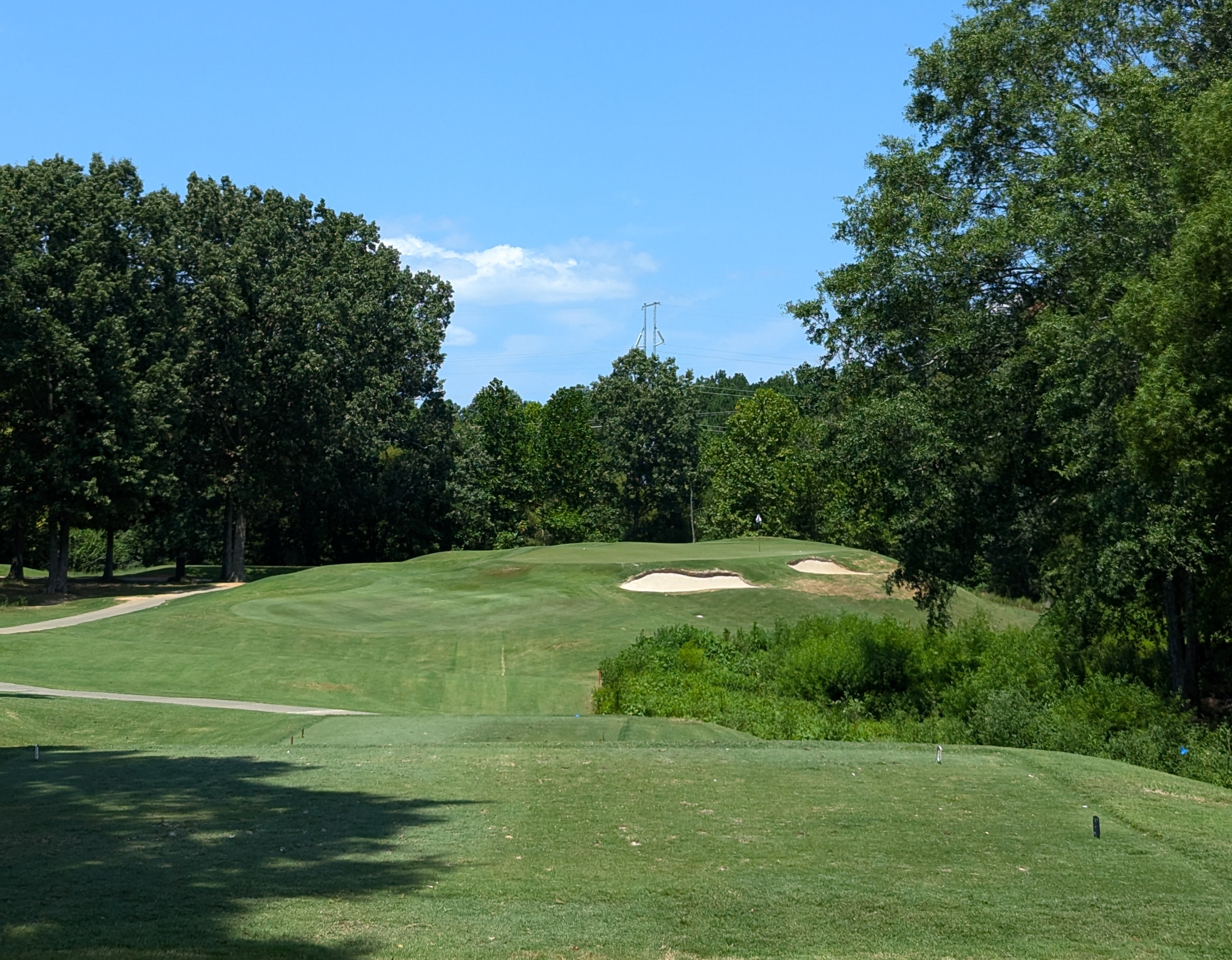
The seventh is a bit of a sneaky par-3. It is not overly long or difficult and the green is large, but the hole is quite penal to the miss, as again for the second hole in a row, the green is perched with runoffs on all sides. The short right miss can be particularly difficult in the two deep frontal bunkers and right of the bunkers is likely a bad kick and a lost ball. These types of par-3 holes are so dangerous: they represent a reasonable chance at par, and an uncomfortable chance for double bogey.

The eighth was, admittedly, my least favorite hole on the course. From the tee, the mid-length par-4 gently bends to the right, and features a singular fairway bunker on the left to frame the shot. The drive is somewhat tight due to the presence of penalty hazards or out of bounds on both sides of the hole. Otherwise, this hole was lifeless and exists as a connecting hole back to the ninth.
To this point, Council Fire is not a hard golf course, but it is unique in its routing that it seems the course progressively gets harder. Take a look at the scorecard and you’ll find that the par-4s played are all below 400-yards from the back tees, but for the eighth, which is around 440-yards. In today’s era of golf, it is unique to play 7 holes of golf before encountering a par-4 longer than 400-yards. But, that ends now, because stepping to the ninth tee, the course features four more par-4 holes (the back is 3/3/3 of each par). The yardage of each: 472, 454, 498, and 472. Each of them realistically play as a half-par hole, each more like par-4.5s. No hole better kicks this stretch off than the ninth.
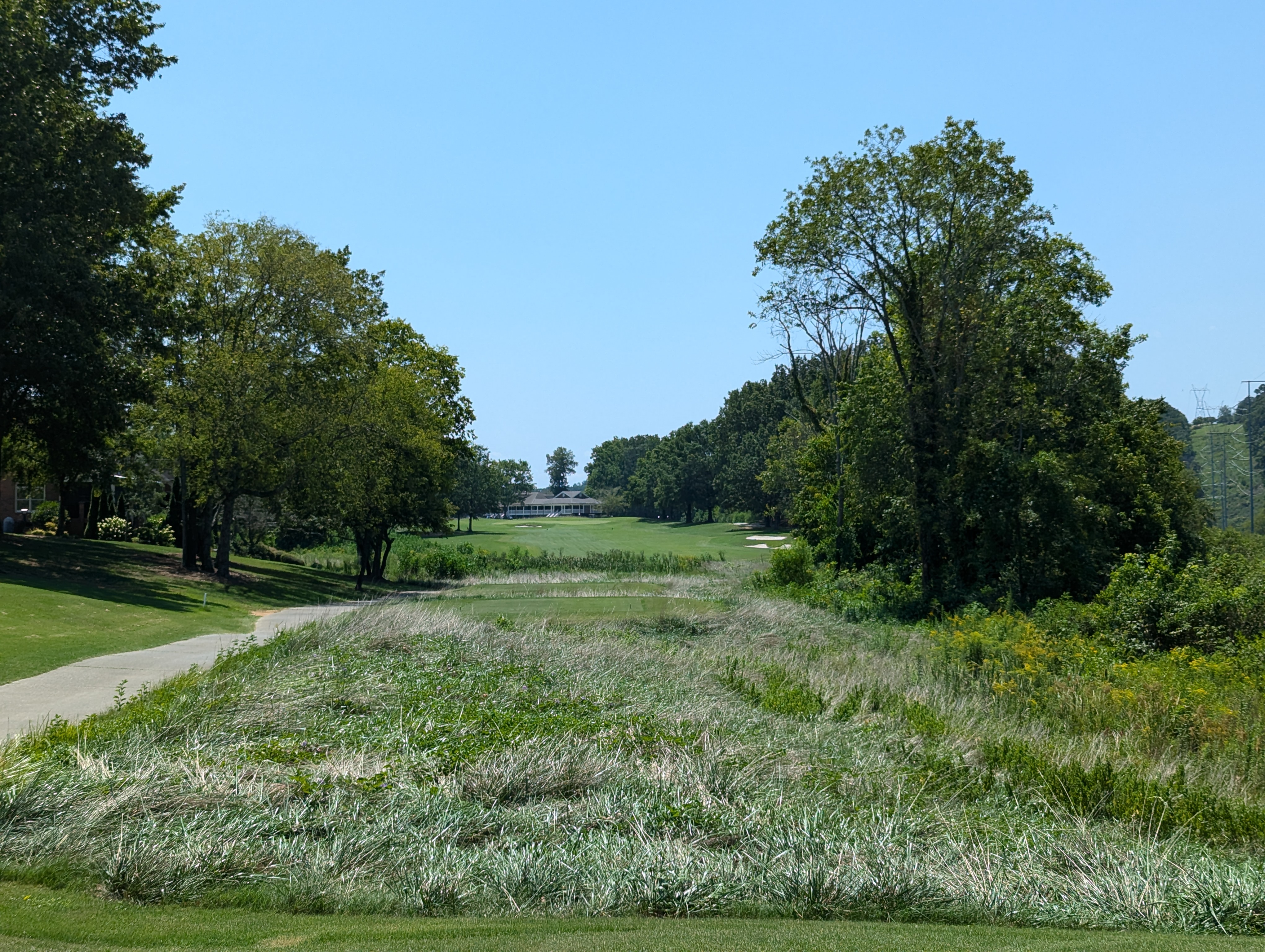
The ninth is a long par-4, capable of playing even longer than pictured, to a devilishly narrow landing area. No shot at Council Fire yet played has the demands of this tee shot. From the furthest back tee (which my host ensured me was rarely used), a carry of over 260-yards is required to make the fairway, and the landing area of that fairway narrows to just 25-yards. From there, the hole plays uphill to a large green, significant in its undulation from back-to-front and right-to-left. The ninth is not the number one handicap hole at Council Fire, but it certainly would be in the conversation for the most challenging on the course, and is certainly that on the front nine, in my opinion.
Making the Turn
After a short stop at Council Fire’s halfway house (a Sugar Shack of sorts with candies and libations), and a trip across state lines into Georgia, another long par-4 awaits. I am not being factitious about the length of the drive – its not long at all. Council Fire actually occupies the property on the state line between Tennessee and Georgia, and the tenth represents the first time we entered Georgia. The entire back nine remains in Georgia, and the next time we’d see the Volunteer State was at lunchtime. A long, uphill bunkerless par-4 with a narrow fairway awaited our arrival.

The green on the tenth may possess the most undulation on the course, particularly in the back left quadrant. This hole, despite being bunkerless, is a very difficult par.
Judging solely on aesthetics, the par-5 eleventh may be the best hole on the course. It is also the most fun and probably the easiest.
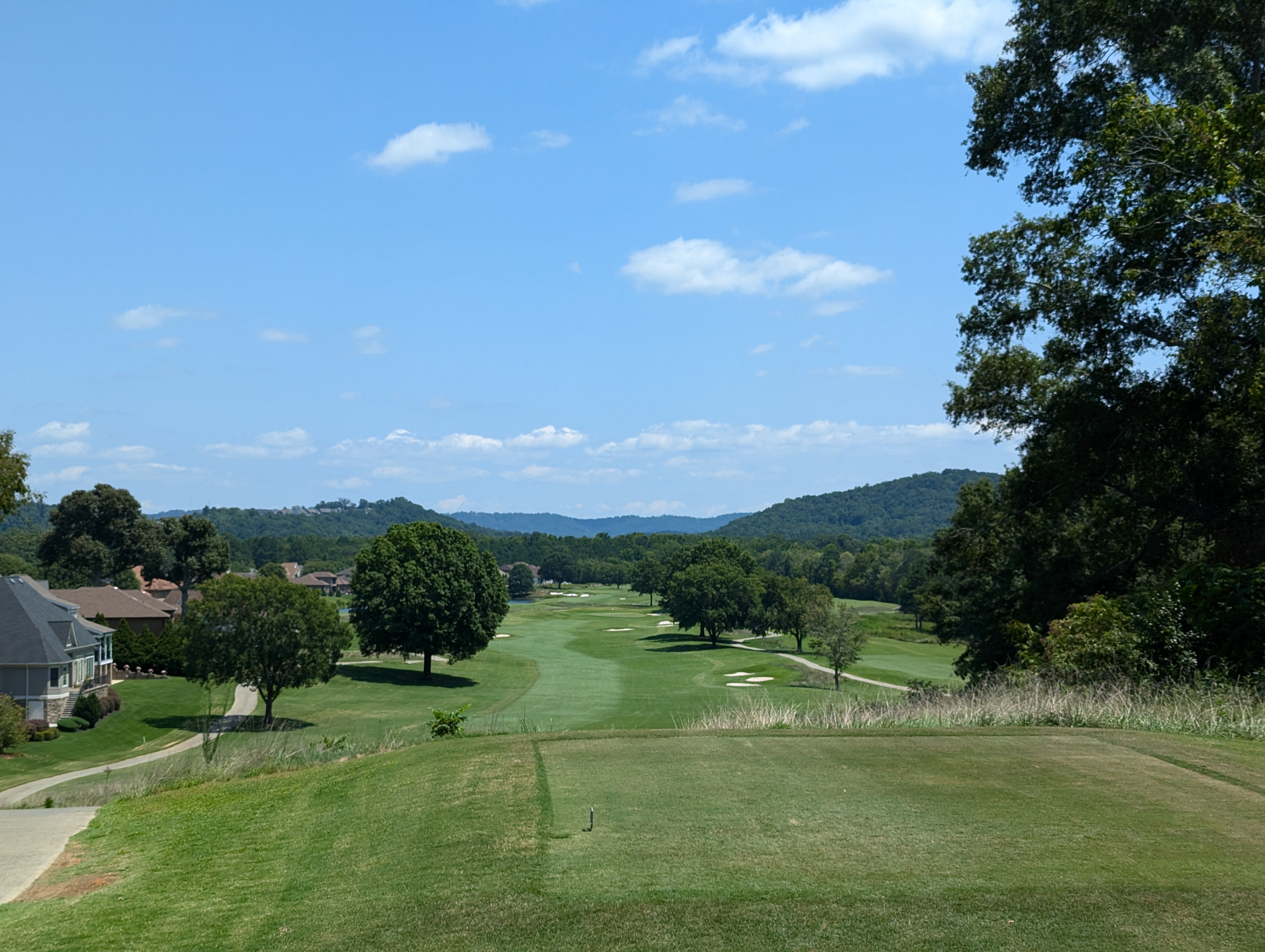
Standing atop a large hill, the fairway sits down in the valley and is “protected” by a hodgepodge of three bunkers on the right. I put that word in quotes because I hit my worst drive of the day here and found myself 70-yards right of the fairway, in the parallel sixteenth hole’s fairway. It was a great spot to find. This hole is short already, and with the elevation change, most golfers will have a chance to get a green under regulation on this par-5. A par-5 in name only, this par 4.5 is probably less challenging than the two preceding par 4’s on a shot-for-shot basis.
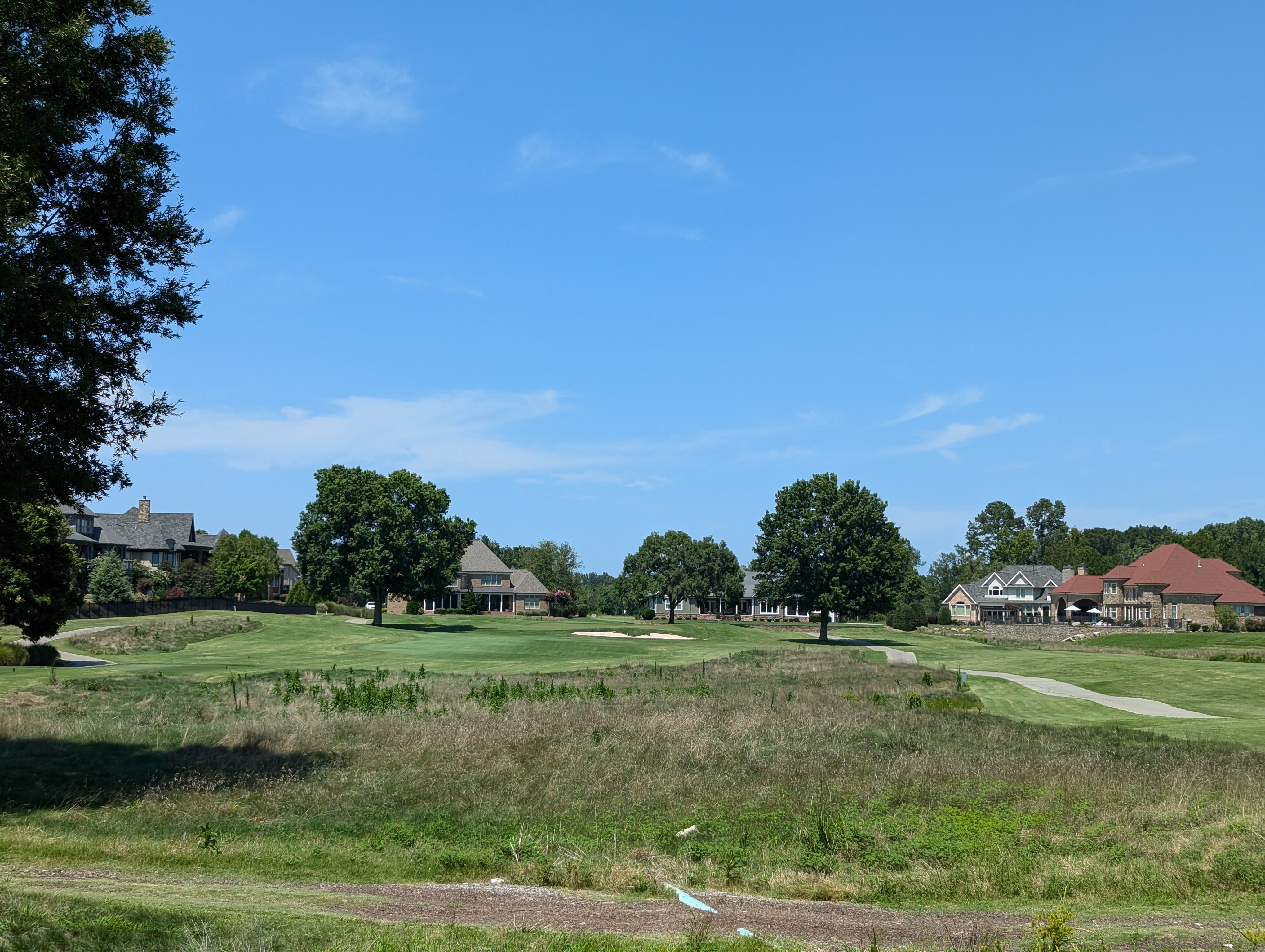
We played the twelfth hole, a long par-3, from the psycho tees, just off the eleventh green. These were not in play on this day, but for the experience, we played them. The hole is a monster from back here: around a 230-yard par-3 playing into the wind on the day we played. More reasonable players may choose to play from the regular tee boxes, all of which play under 200-yards. The hole is only guarded by a fronting bunker on the right, and an awkwardly placed tree on the right that has a tendency to block out the recovery of a wiped shot. You could easily consider this a half-par hole when played into the wind from the back tee box.
The course turns 90-degrees to another half-par hole, the par-5 thirteenth, a shorter par-5 that mirrors the second and allows a player to pick off as much as possible from a lake running to the left of the fairway.
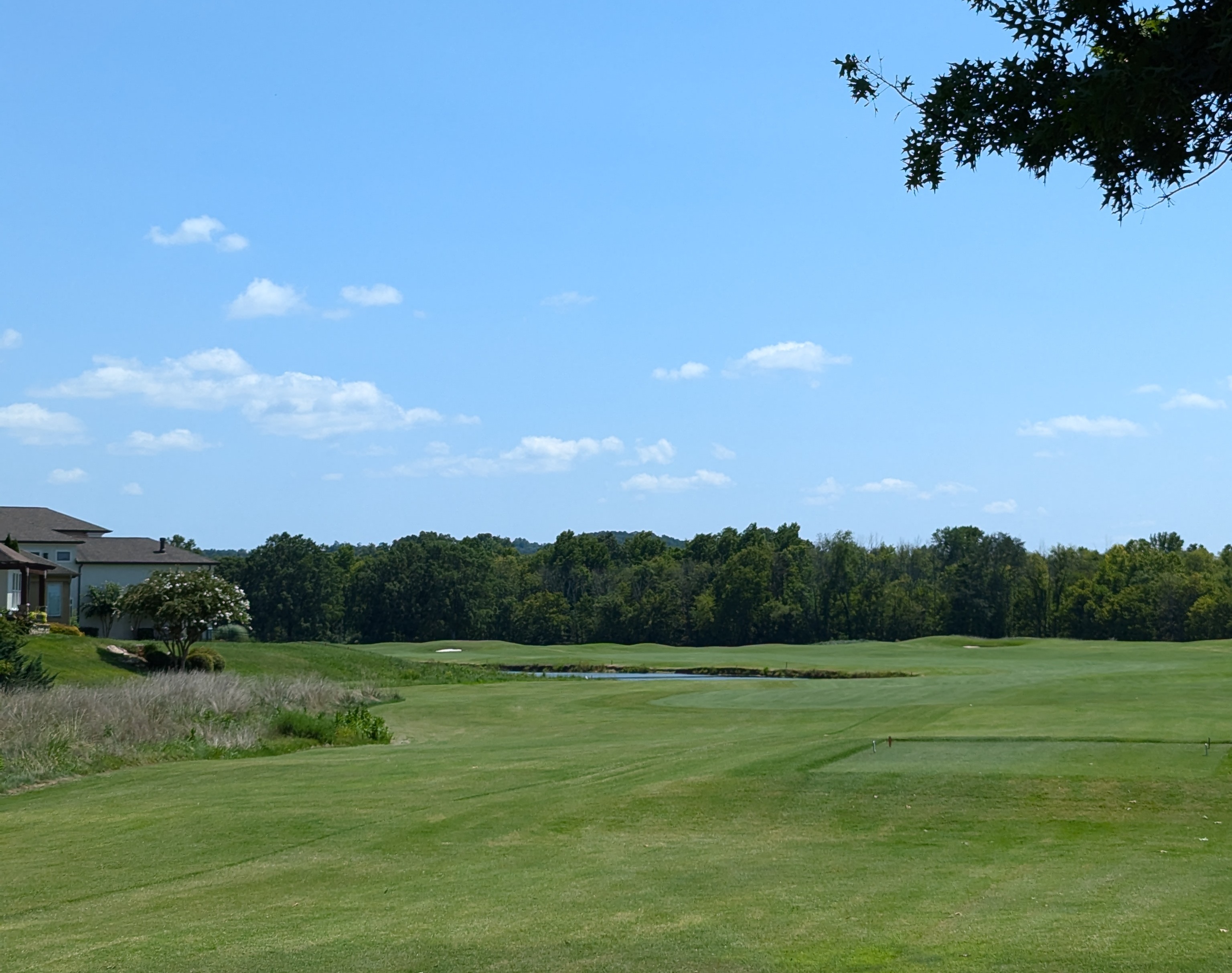
This time, unlike the second, the lake cannot be fully taken out of play, but the longest hitters may have a mid-iron or less into the green, and even the shortest players should have a reasonable shot of hitting fairway metal on (or close to) the green.
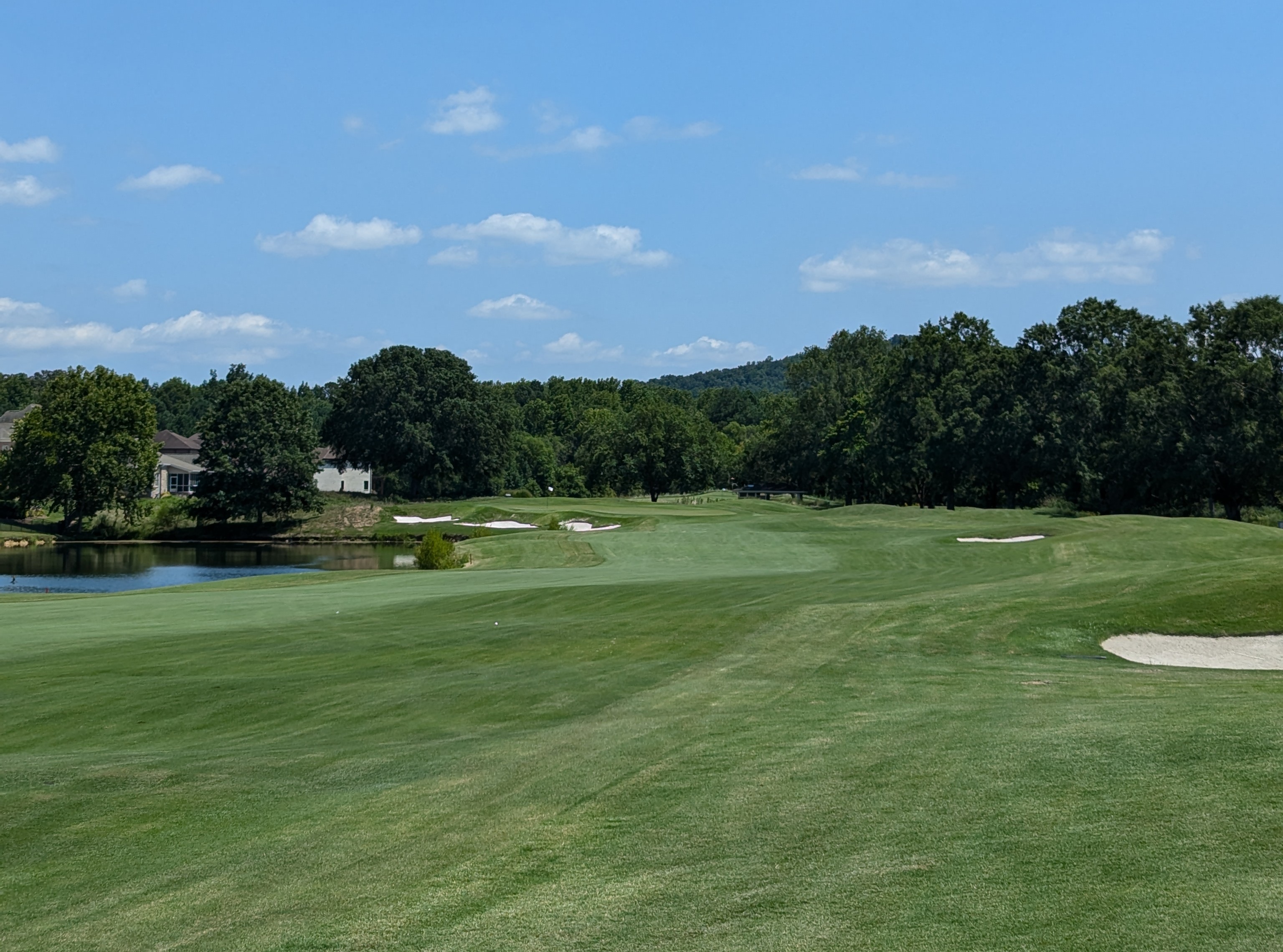
Complicating that shot is three deep frontal bunkers that guard the green, as well as the protruding lake that will gobble up any mishit approach shots. I found this green to be relatively benign compared to most at Council Fire, and therefore a player should have a reasonable look at birdie with a few well played shots.
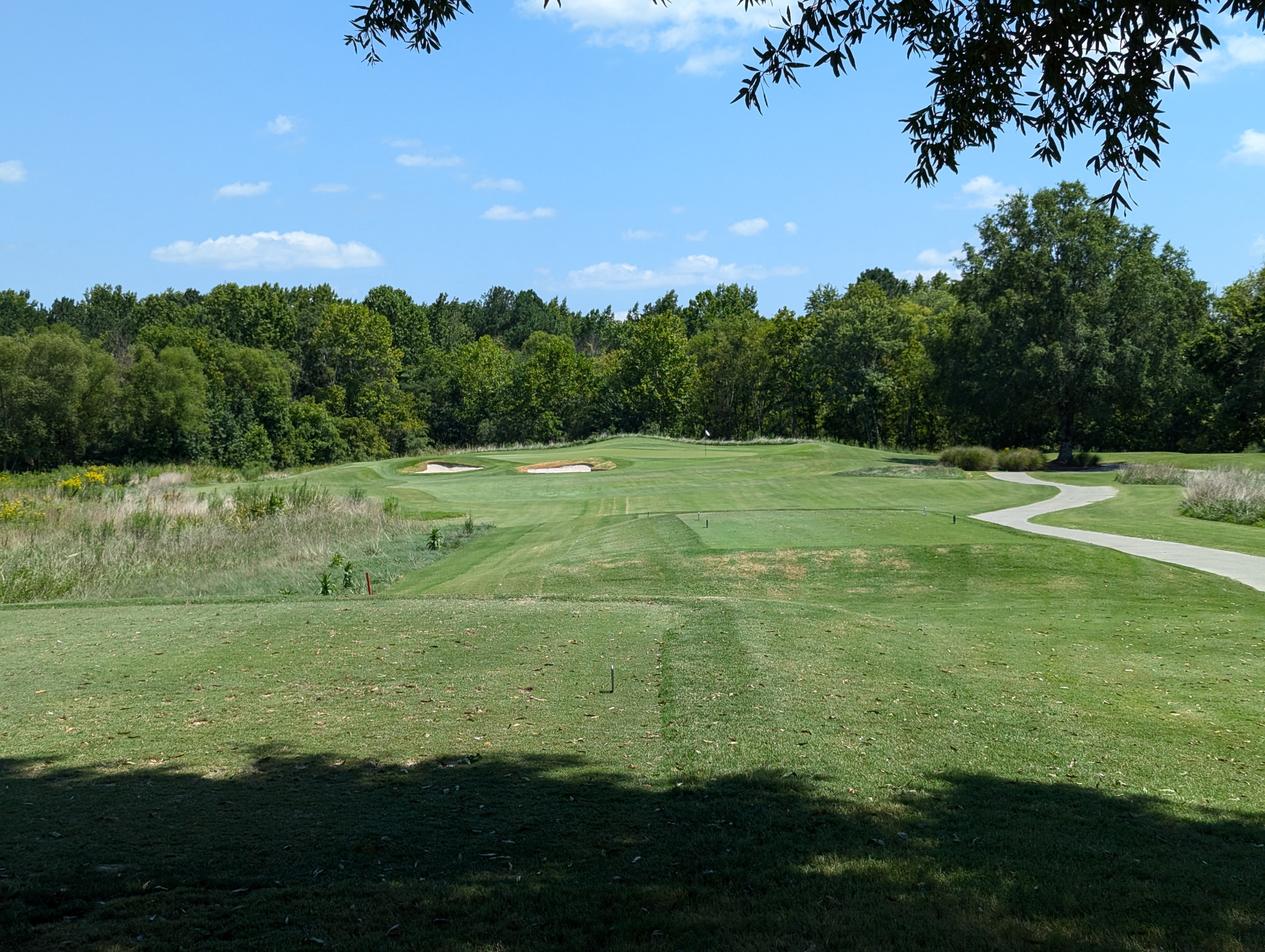
The fourteenth hole is a nice, straightforward mid-length par-3, again using flanking frontal bunkers as its main defense. This green features a bit of a ridge bisecting the green into left and right, and the green is quite wide compared to its depth.
The fifteenth hole, while tough in its length, is probably not the toughest hole on the course. The straightaway par-4 presents a significantly wide landing area off the tee.
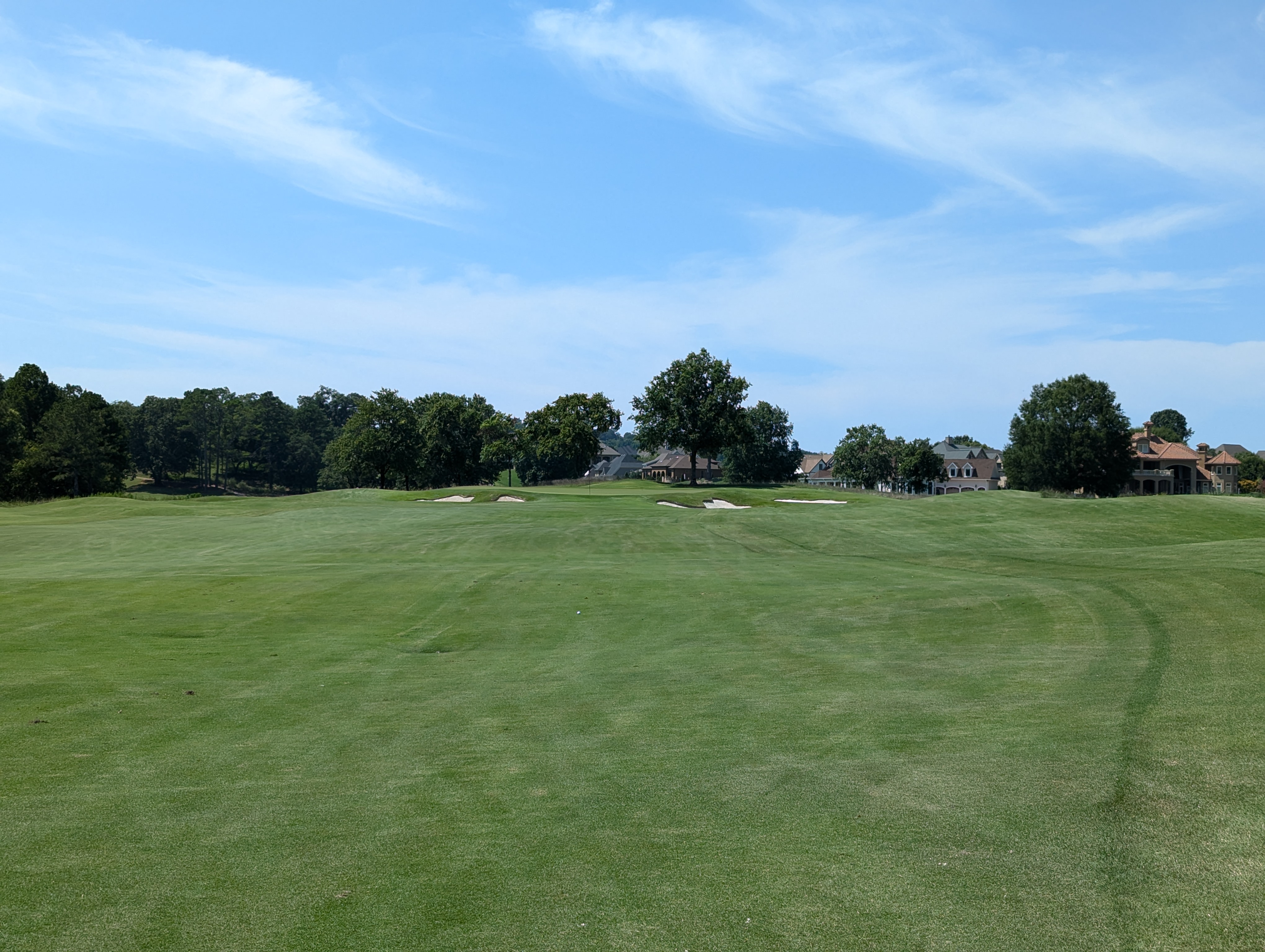
The approach shot at the fifteenth is played to a relatively large green, but one that possesses significant fortification. I appreciated the break from monotony from the single sided fronting bunkers, as this hole gives two deep fronting bunkers on either side of the green, and a strip of fairway right between them that theoretically could be used to run a ball up on the green. This green possesses significant slope in basically all quadrants of the green and will likely leave a testy par putt for any player miscalculating their first putt or missing the green.
The sixteenth is the hardest hole at Council Fire in my opinion. The long par-4 has a tighter landing area for the drive, with a grassy hazard running the length of the hole left.
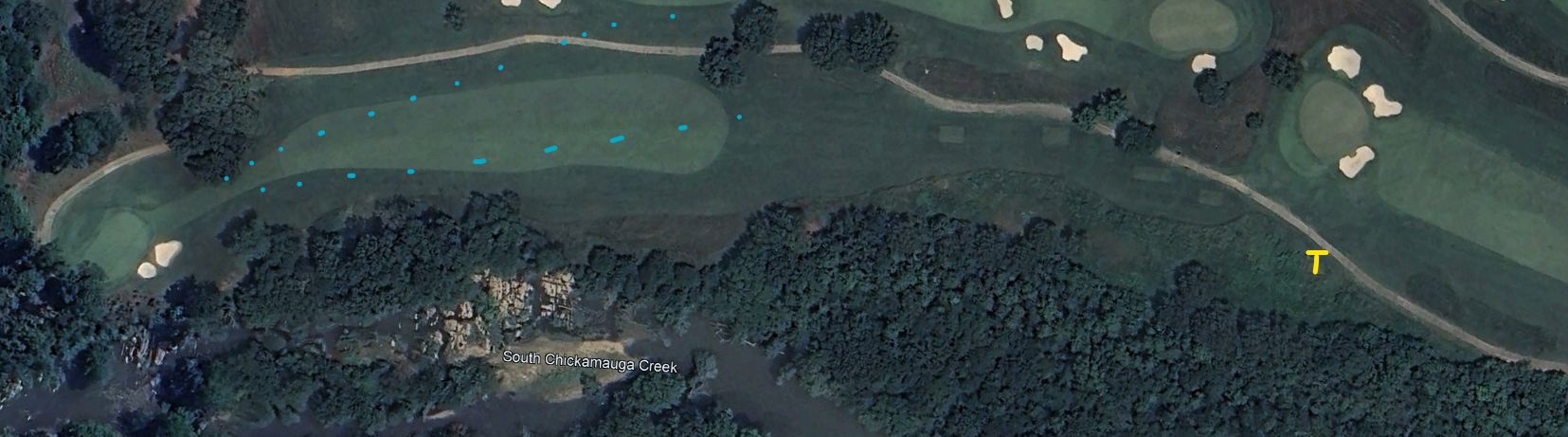
The difficulty here is the placement of the tee shot, as the drive must be placed in this blue cone in order to not be blocked out by two trees that pinch the approach window to the green. The second shot will likely be played with a long iron, uphill, to a green carved into the hillside. The two fronting fairway bunkers sit deep below the green, and anything missing those bunkers will bound into the hazard. The green is significantly sloped from back-to-front leaving a treacherous putt to front pins. It would be quite easy to putt a ball off the front of this green and down the hill when green speeds are high.
Sixteen also represents another half-par hole, and in amateur tournaments, I would expect this hole to play nearly a stroke over par.
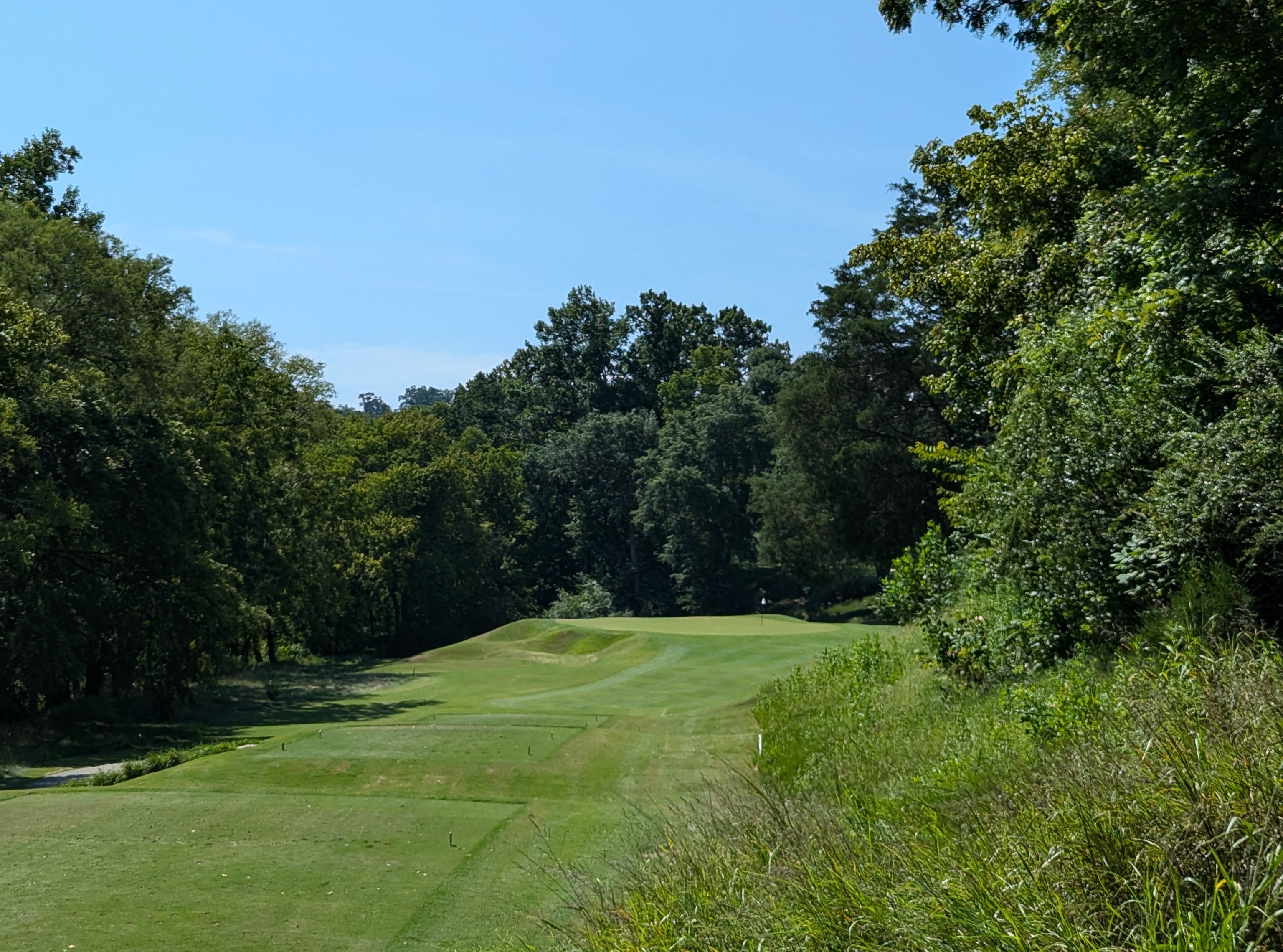
The seventeenth and last of the five par-3s is a simple but longer par-3 that features some fronting grass bunkers on the left. However a wide approach on the right and a large green means a well judged shot should have a good chance of a favorable result. The only real danger here is left and below the putting surface, which would make for a difficult save from the thick bermuda rough.

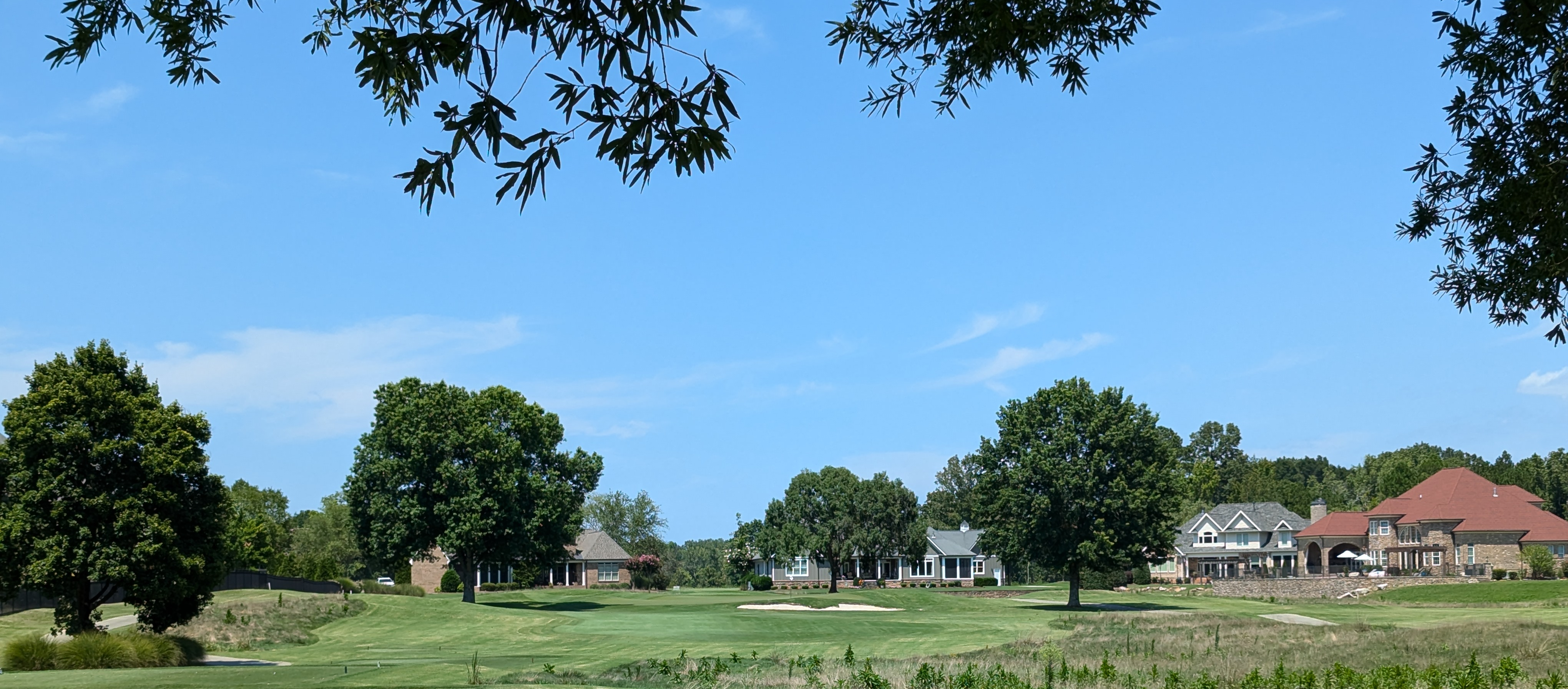
The eighteenth hole is a fun and simple way to finish off a two-hour stay in Georgia, as the straightforward and shorter par-5 plays from an elevated tee. On all days but those directly into the wind, the fairway bunkers are easily carried by most players. The green is approachable but protected on the left. Right pins should present an easy birdie on this, the last of the half-par holes at Council Fire.
Final Thoughts
All of this talk of half-par feels so technical, but in practice, this really just means that Council Fire provides a round with a lot of highs and lows. The result is that Council Fire is a really fun course and will present different outcomes each time one plays the course. I always love layouts that feature more than four par-3s or more than four par-5s or both, and variety is on display at Council Fire, particularly on the back-nine.
Also, it must be noted, there weren’t any bad holes. If you read my content regularly, you must know I am not afraid to wield the power of the pen (or keyboard) and roast a poor design choice or poor hole (or poor course, sorry Shingle Creek). None of the holes at Council Fire commit any great error. Council Fire is a solid golf course that should be considered among the best courses in Tennessee, from adequate conditioning, fun design, and a great environment.
But Cupp’s design here also does not do anything great. The holes are somewhat monotonous in the use of two frontal bunkers protecting the side of a green. There’s nothing flashy or particularly memorable about the course at Council Fire. And that is okay; not every course needs to have the gimmicks of TPC Sawgrass or the views of Pebble Beach.
Bob Cupp did a fantastic job of designing Council Fire to stay within itself. It maximizes the use of the land Cupp was given, which has nice elevation changes, but is not a particularly prized piece of land with an abundance of natural features. The staff does an adequate job at maintaining the course to meet expectations.
Let that not have any negative connotation, because in today’s world, products and services that actually meet expectations are few and far between. Council Fire delivers the best of itself, and itself is just enough to be a ranked course in Tennessee.
F1C’s Final Rating:
Shot Options: 8
Challenge: 6
Layout Variety: 8
Distinctiveness: 7
Aesthetics: 7
Conditioning: 7
Character: 8
Fun: 8
Total: 59/80
Read More: How We Rate Courses
Rating Scale Details
> 70: Top-50 U.S.
65-70: Top-200 U.S.,
60-65: Best-in-State List
57-60: Best-in-State List Contender
53-57: Very Good
48-53: Good
40-48: Average
> 40: Poor
Author: Jaxon MacGeorge
Jaxon is the founder and lead course reviewer at First1000Courses.com. Jaxon has been playing golf for over twenty years, is a scratch handicap, and actively competes in USGA and Tennessee Golf Association (TGA) amateur events. By trade, Jaxon is an attorney and lives in Gallatin, TN, a suburb of Nashville.

 First 1000 Courses
Leave a comment