
Time to Read:
|
This Tennessee National Golf Club course review is based on a round played on June 9, 2024.
Tennessee National Golf Club is a private course in Loudon, TN, a suburb of Knoxville, TN. The guest fee is around $100/round.
F1C’s Final Score: 57/80 (Best-in-State List Contender)
Learn More: How We Rate Courses
No man’s land: that awkward yardage between your shortest wedge and the green, where a golfer must to hit a wedge with uncomfortable force, somewhere between a pitch and a full swing. Or, perhaps you are faced with the dreaded 50-yard bunker shot. These half shots are often the toughest shots in golf and some players avoid them at all costs. While I’m not sure that “laying up to your yardage” is the best strategy decision on the course, facing a 40, 50 or 60-yard shot, from of a tight lie, can be eerie, unnerving, and uncomfortable; like you are caught in a no man’s land.
Tennessee National finds itself caught in a no man’s land of its own. Built just before the great recession, Tennessee National had grand plans of being a residential community with clubhouses, restaurants, a Greg Norman signature golf course, a marina with lake living, among other amenities. It is now 17-years later, and while the vision is still there – and some would say being executed – to me, it was still eerily empty.
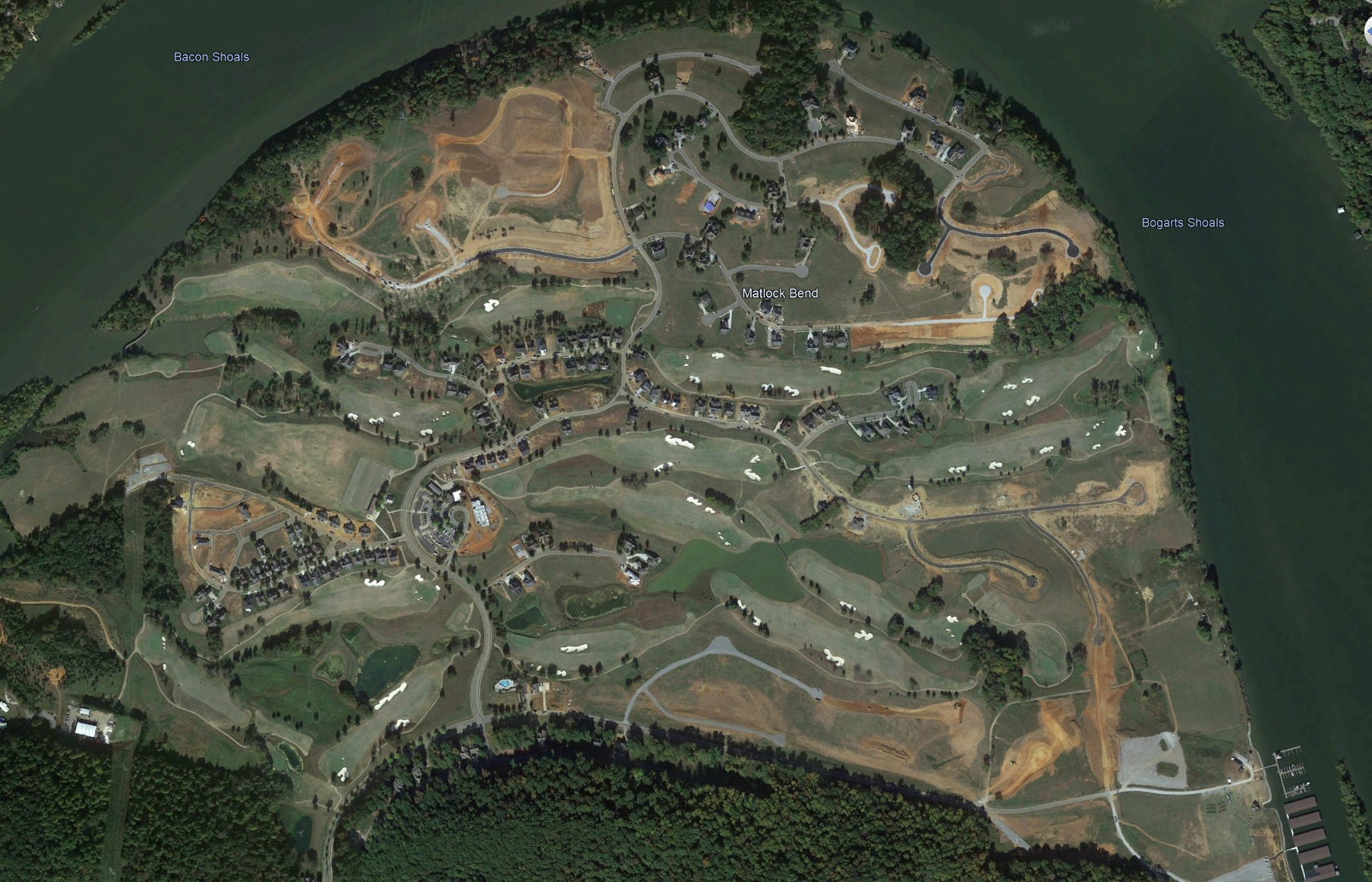
As you can see from the overhead image taken in 2022, after 17 years, there’s still some open lots. Like, a lot of them. From the picture, I’d estimate the “vision” has been roughly 40% completed. There are multiple factors (some speculative and some confirmed) as to why this vision has not played out. First, prices are high, and the course is a bit of a long journey from the sprawling city of Knoxville. Second, Knoxville’s money is largely old money, not new money, and the old money in Knoxville seems to prefer the centrally located Cherokee Country Club as their hub. These types of residential golf developments typically turn into one of three things: (1) new money clubs, with professionals moving their families to the suburbs, (2) retirement communities, or (3) a club which never develops as a residential community, but where the golf is good enough to woo a national membership roster.
My impression of Tennessee National was more of the second, as most everyone encountered on the visit were either retirees or individuals too young to have paid for their own membership. I’m sure it is a mix of both, however, but that mix is far from complete as the overhead image shows.
Maybe the vision was to have the best of both worlds: a residential community for locals with a robust national membership with cottages and the like. The name “Tennessee National” certainly implies such dual objective. Unfortunately, Tennessee National is instead caught in a no man’s land of its own. It is a course and community too far away from a city too small, and a city without the young professional base to support the prices commanded. Yet unfortunately, it is also a course not strong enough to attract a truly national membership.
“Build It and They Will Come” was clearly the business strategy here. That is still the strategy today, as evidenced by the recently completed (and quite impressive) clubhouse. But 17 years of evidence indicates that, perhaps, they aren’t coming, at least not in the quantities originally expected.
The First Tee
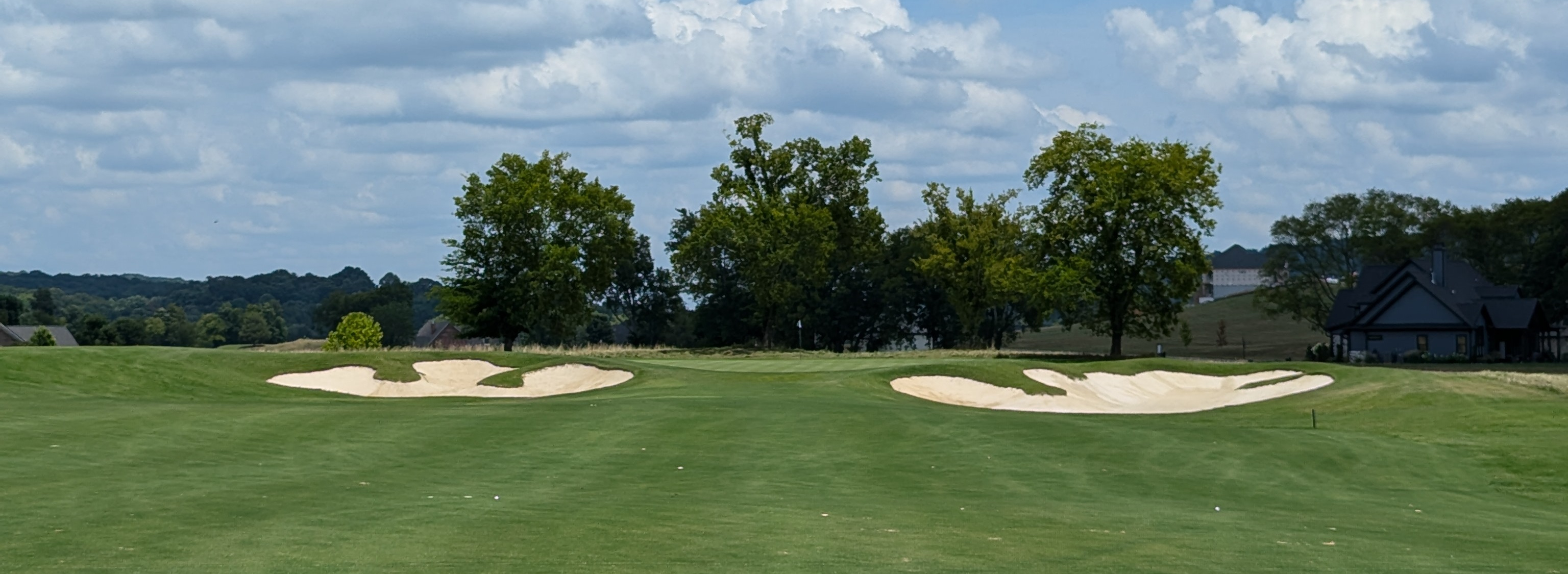
After a warmup on the practice facility, which was quite nice, we headed to the first tee. The first hole is a straightaway, shorter par-4. Likely a driver and a wedge for most players, the second shot plays to a well protected green.
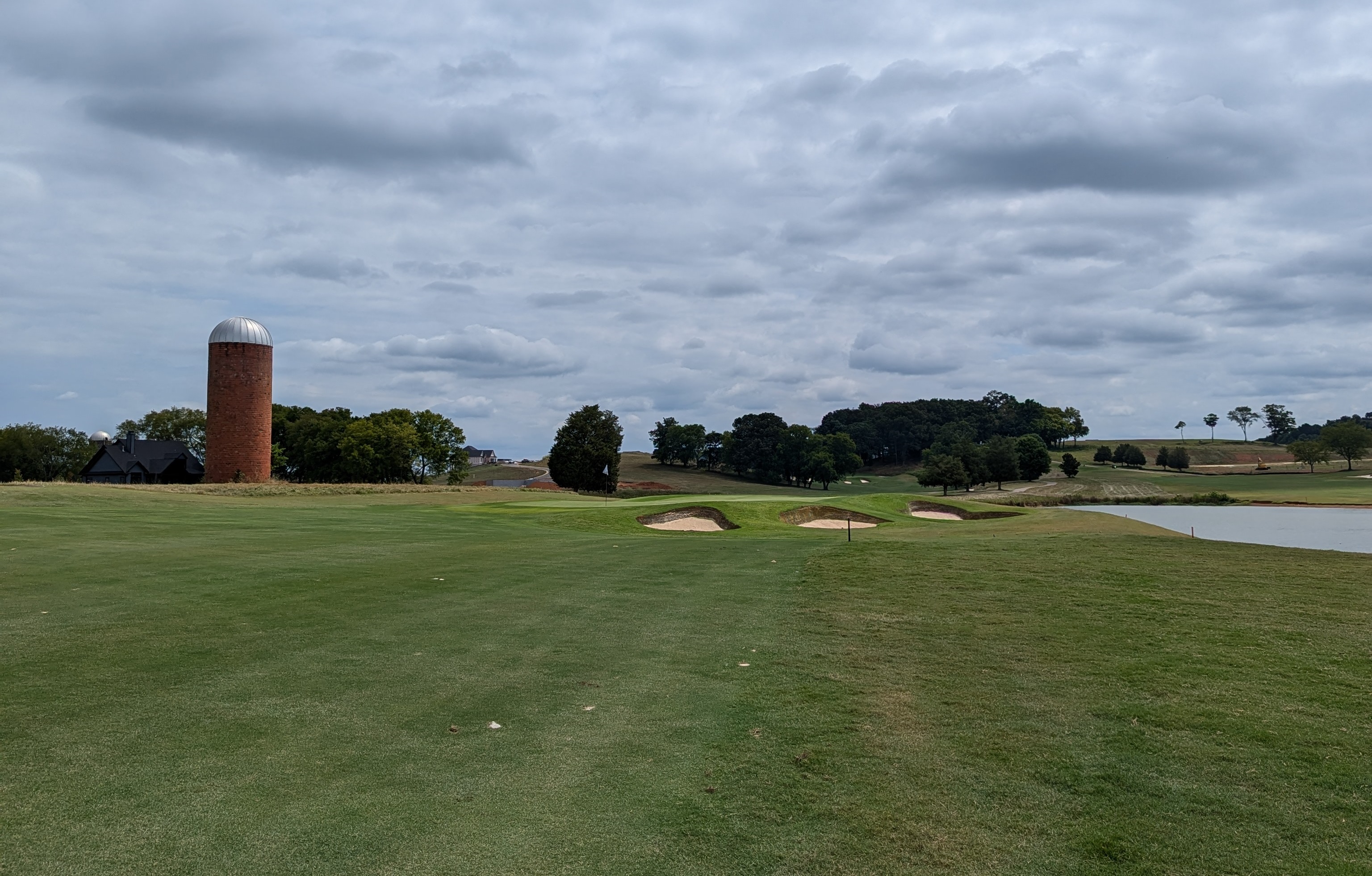
This introduces the player to an oddity of Tennessee National: most of the greenside bunkers are sod-faced (or revetted) pot bunkers; however, the fairway bunkers are typical bunkers, shaped and styled in a way that would make Arnold Palmer proud. The course features no pot bunkers other than greenside bunkers, in case the revetted faces fooled you into thinking this might be a links layout. The first is probably the easiest hole on the course, but the second shot can be a bit awkward over these deep bunkers from inside 100-yards to a narrow green.
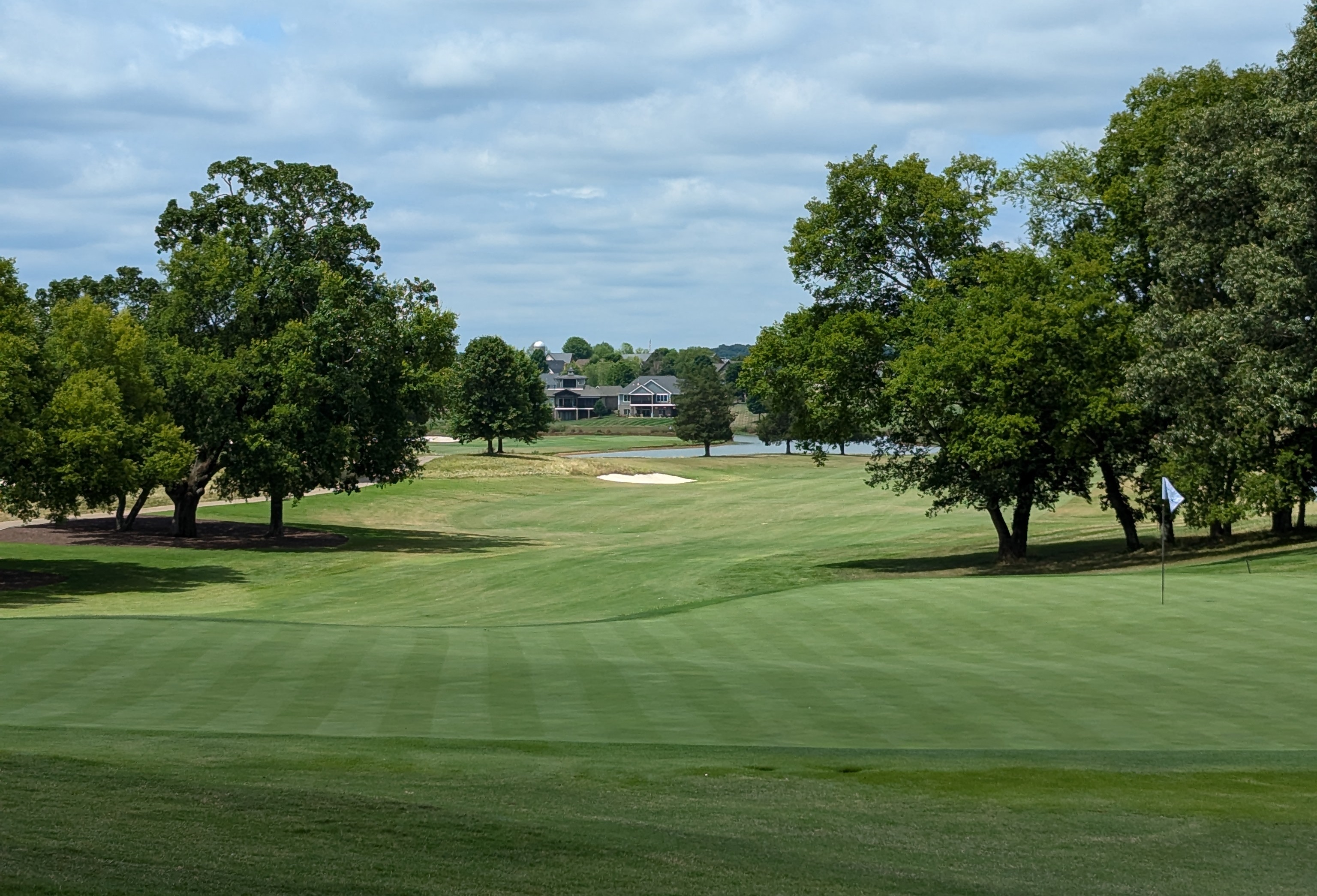
The second is a short uphill par-5 that should yield a reasonable chance at birdie or better. A fairway bunker frames the right of the fairway, before the hole ascends up the slope to a green perched on a flat on top of the hill, protected by some fronting greenside bunkers. The challenge is low here, but the fun-factor is high, as longer players will have a reasonable chance at eagle, with very little danger dissuading a player from going after this green in two.
The third is an odd one. There are two disgustingly terrible holes on this golf course: three and sixteen, and this is the worst. A long, bunkerless par-3 with a green carved into a manmade, flattened area of a right-to-left sloping hill.
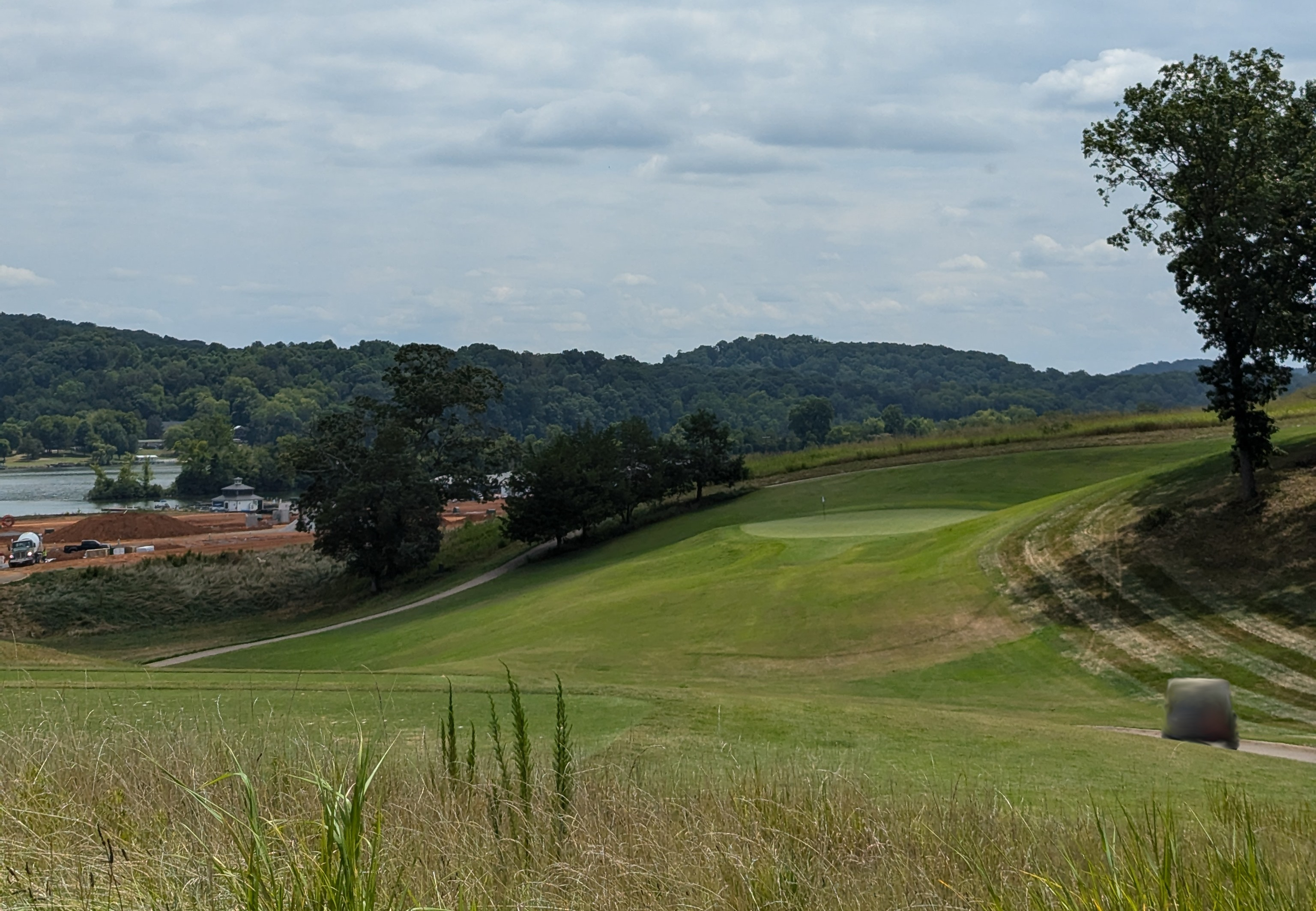
These types of designs tell me one of two things: either Norman was lazy with the design, or this was a cost cutting hole. It does not fit into the theme of the course in any way, and the design of this hole should be revisited in short order. I referred to this hole as the “hillside lottery” while on the green, because the prevailing strategy appears to be to hit it somewhere short and right on the hill and let the ball bounce down onto the green. The prospects of missing left, and being some 20 or 30 feet below the green, is not a reasonable option when such an easy route exists of simply bouncing it off the right hill. I hit one of the worst shots I hit on this course, 25 yards right of my intended target, and I had a 4-foot birdie putt. My playing partner hit the same shot and had 35-feet instead. The hillside lottery is a poor, poor golf hole.
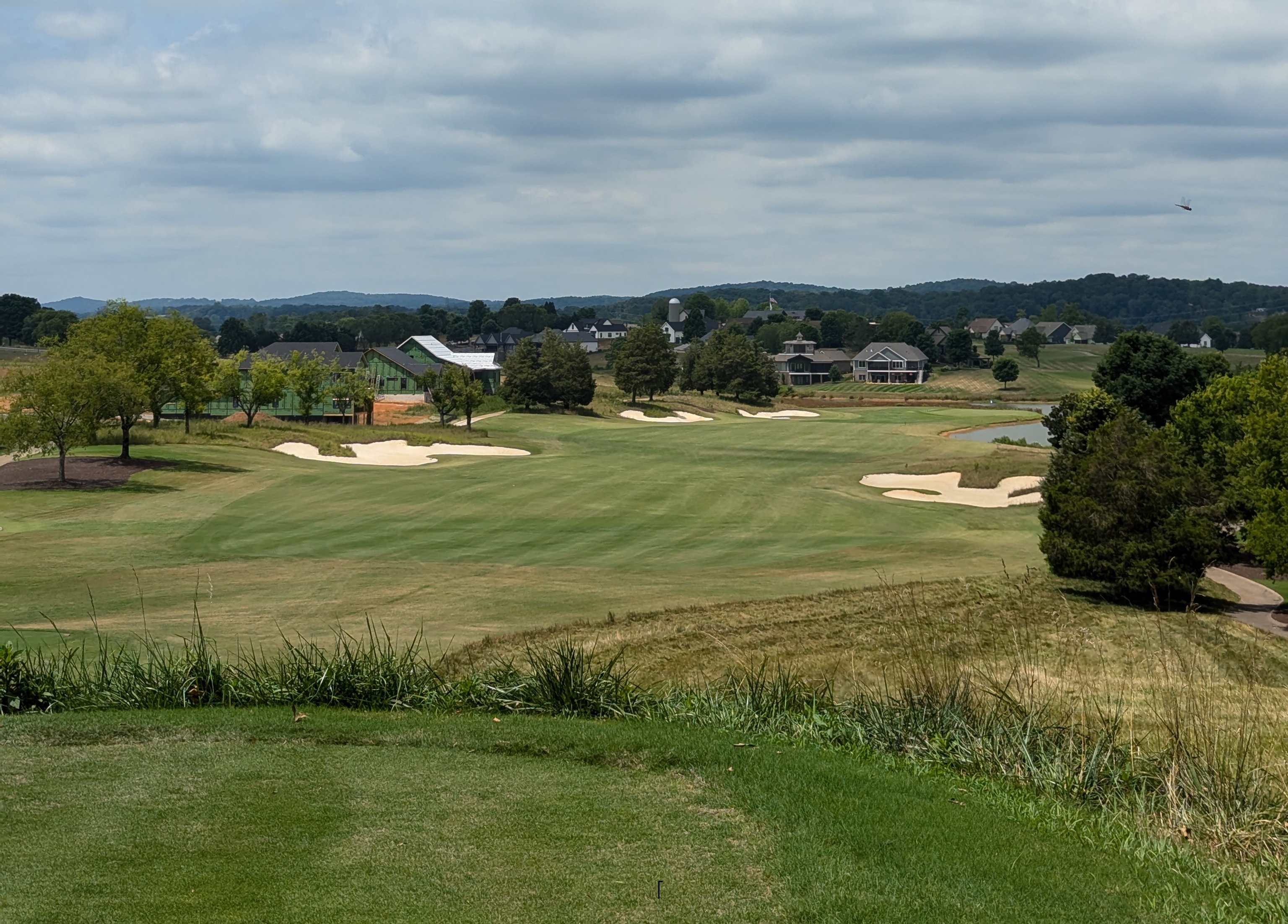
Fortunately, Norman rebounds quickly with a great, aesthetic par-5 fourth hole. The tee is perched on top of a hill, providing a depth-deceiving view of this entire medium-length par-5. Two fairway bunkers slightly squeeze the landing area, and the second shot works towards a green protected on the right and behind by a lake. Two bunkers push laid-up approach shots towards the green (and the water). While not an incredibly unique design, the fun-factor is again high on this par-5.
Norman went with a short, option-based short par-4 on either nine. The fifth hole is the front’s side, tempting the heroic player to play for the green (if downwind), and challenging the prudent safe play with a very difficult tee shot to properly place.
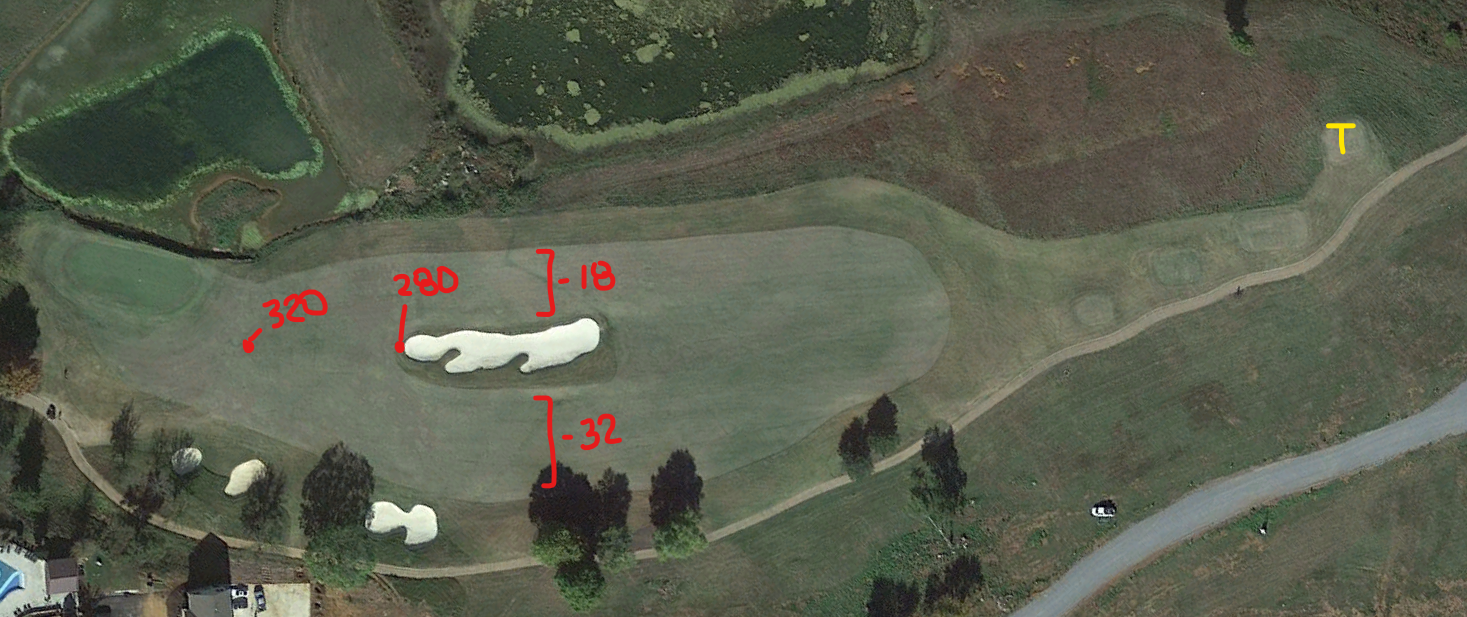
From the back tee, on a downwind day, most players can clear the long centerline bunker with a driver, played into a narrowing landing area. However, on a day into-the-wind or a more conservative play regardless of the wind, the layup from the tee is very complicated, requiring the player to choose a side of the bunker. The right is just 18 yards wide, the left (and higher side) just 32 yards wide. The longest of hitters may be able to hit the downhill area, some 320 yards from the back tee, and bound the ball down towards the green. Regardless of the strategy chosen, this short par-4 is uncharacteristically difficult, particularly for players who do not have the length or confidence to carry the centerline bunker.
The sixth hole is a mid-length par-4 that presents some options off the tee: a driver, well struck, presents no challenges. The less confident player could also elect a fairway metal here, as the landing area for a driver is significantly narrower, pinched by two fairway bunkers, than the landing area for a three wood.
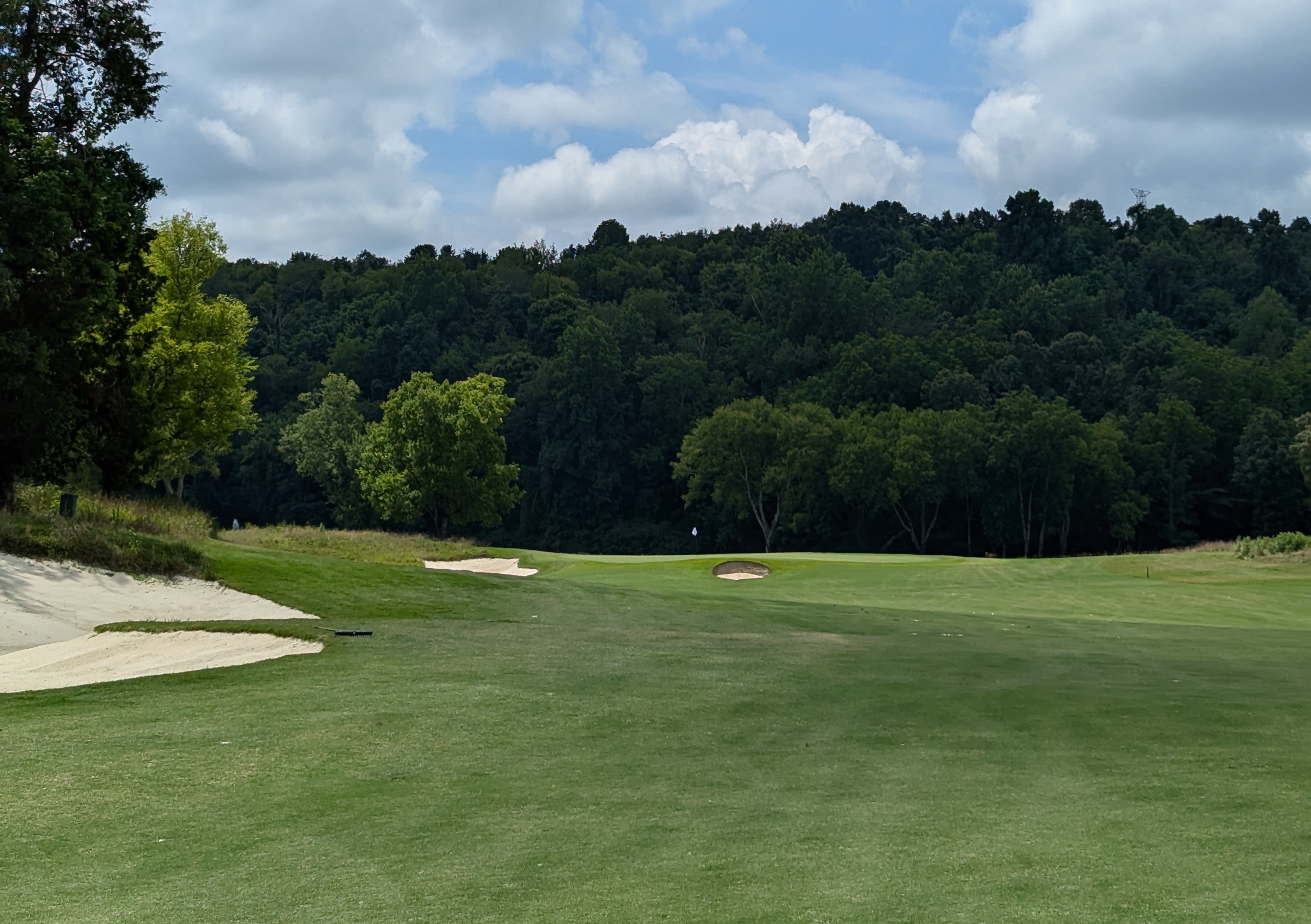
Once in the fairway, the second shot plays to an elevated, tabletop green protected by a lion’s mouth, sod-faced pot bunker and a flanking (non-revetted) greenside bunker to the left. This is certainly one of the tougher holes on the course.
The seventh hole is the second par-3, but it may as well be the first, because its the first of three great par-3 holes at Tennessee National. I’m not sure what Norman was thinking with the third, but the other par-3 holes are the highlight of the course!
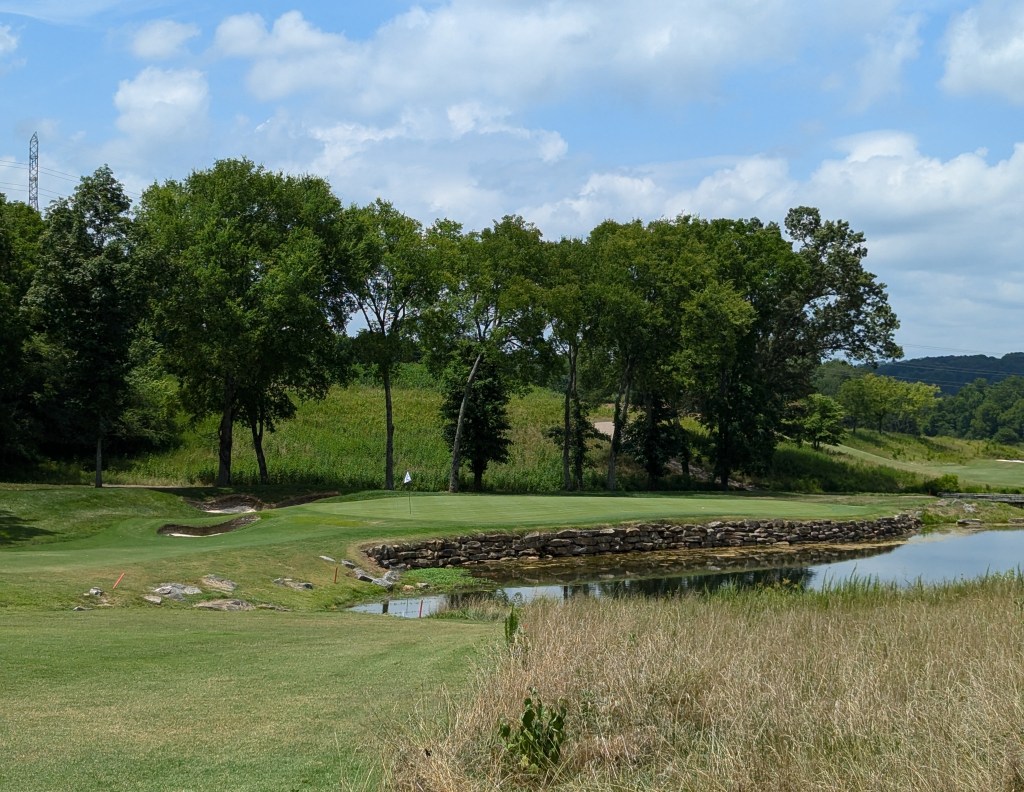
The seventh is a short par-3, playing just 119 yards on our day, and well fortified by the angled lake on the right, and two deep pot bunkers on the front left on the green. The surface of the green is large for the length of the hole however, so a conservative play is available. That is the difficulty of this hole. The conservative play is available on a green this large – there is simply no reason to find yourself in trouble on this hole. Yet, because of the yardage, the seventh suckers you in to firing right for the pin. The water claimed all three tee shots from our group to this front pin.
I also must note that, during our visit, large hornets appeared to be nesting under this green. As a full time attorney, I’d advise the club to fix this problem in short order, and would advise you to be careful fixing what you think is your ball mark.
The eighth is a nice par-4 that meanders through what we in east Tennessee may call a small “holler” and is a shorter, flat par-4 in the valley of a hill to the left.
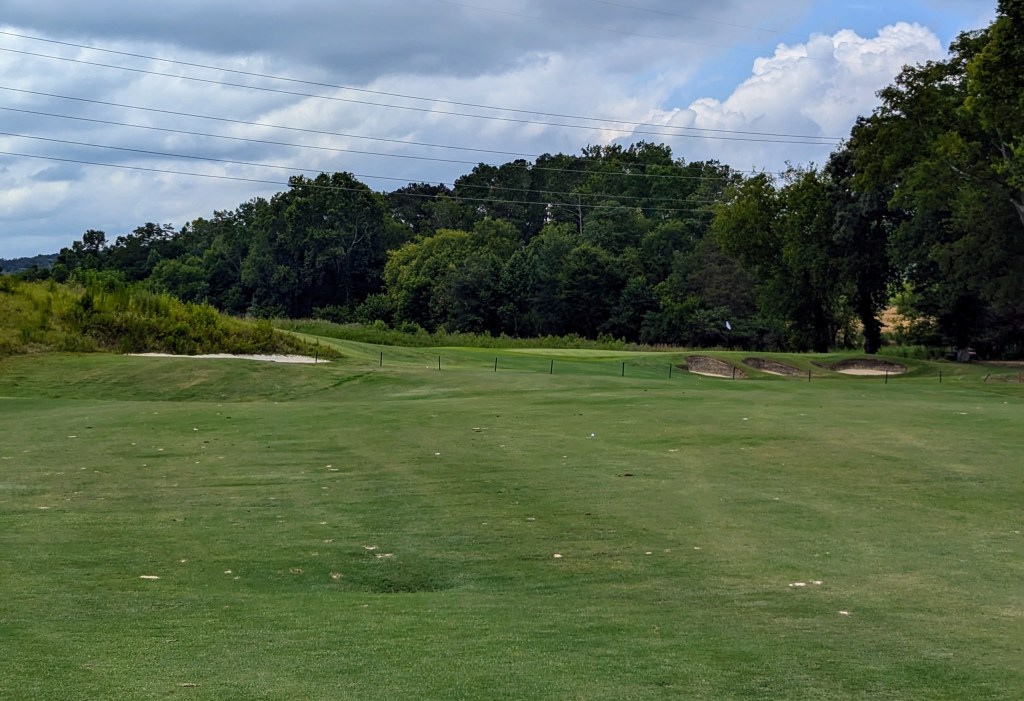
The tee shot, like the sixth, can be played with either driver or fairway metal, depending on preference, and the second shot is protected by three very deep greenside pot bunkers. The green gently slopes from left-to-right, allowing the conservative player to use slope or spin to get closer to right-hand pins.
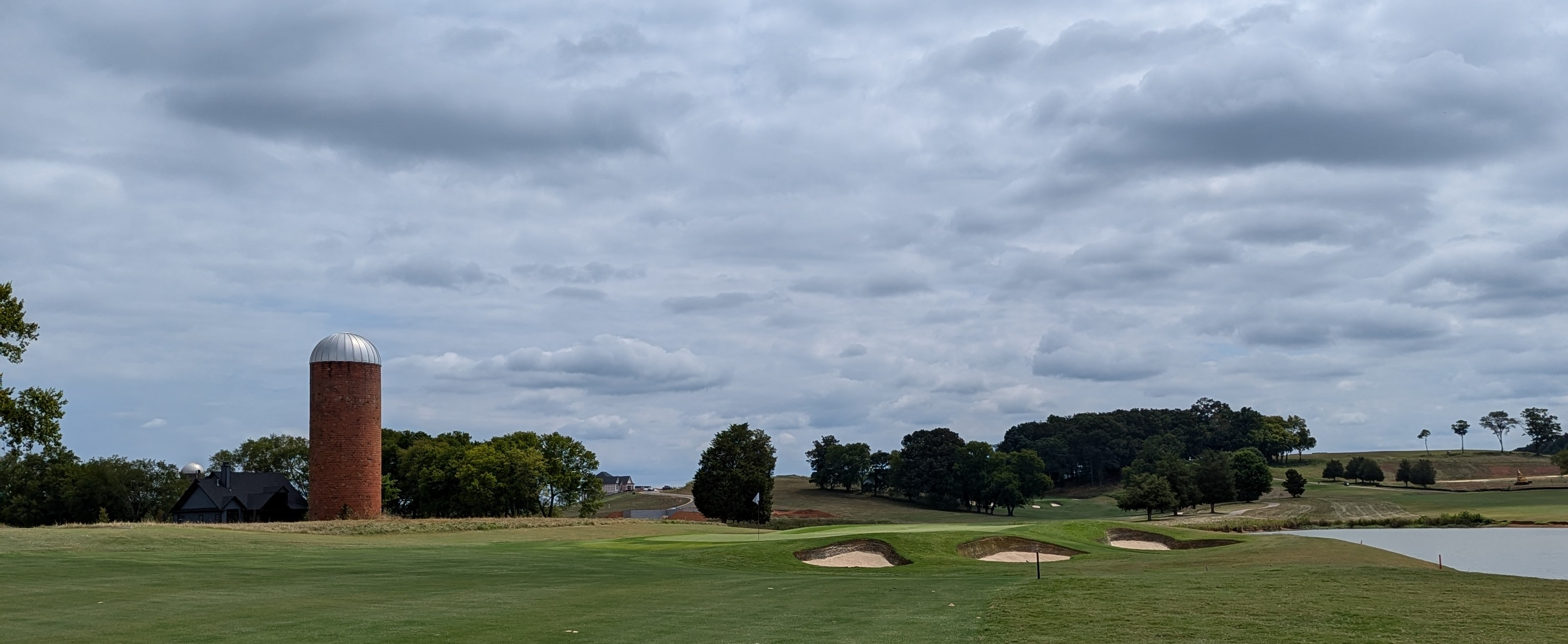
Finally, the ninth pivots back towards the clubhouse as a gently uphill, mid-length par-4, that slightly works right from the tee. A good drive is necessary on the ninth, as the uphill nature of the hole will limit roll-out on mishit drives. The green is protected by a few deep centerline pot bunkers, as well.
Making the Turn
The tenth hole at Tennessee National is one of the longer par-4s on the course. A stiff challenge from the back tee was somewhat muted on our visit, as the course (and area) is currently very dry.
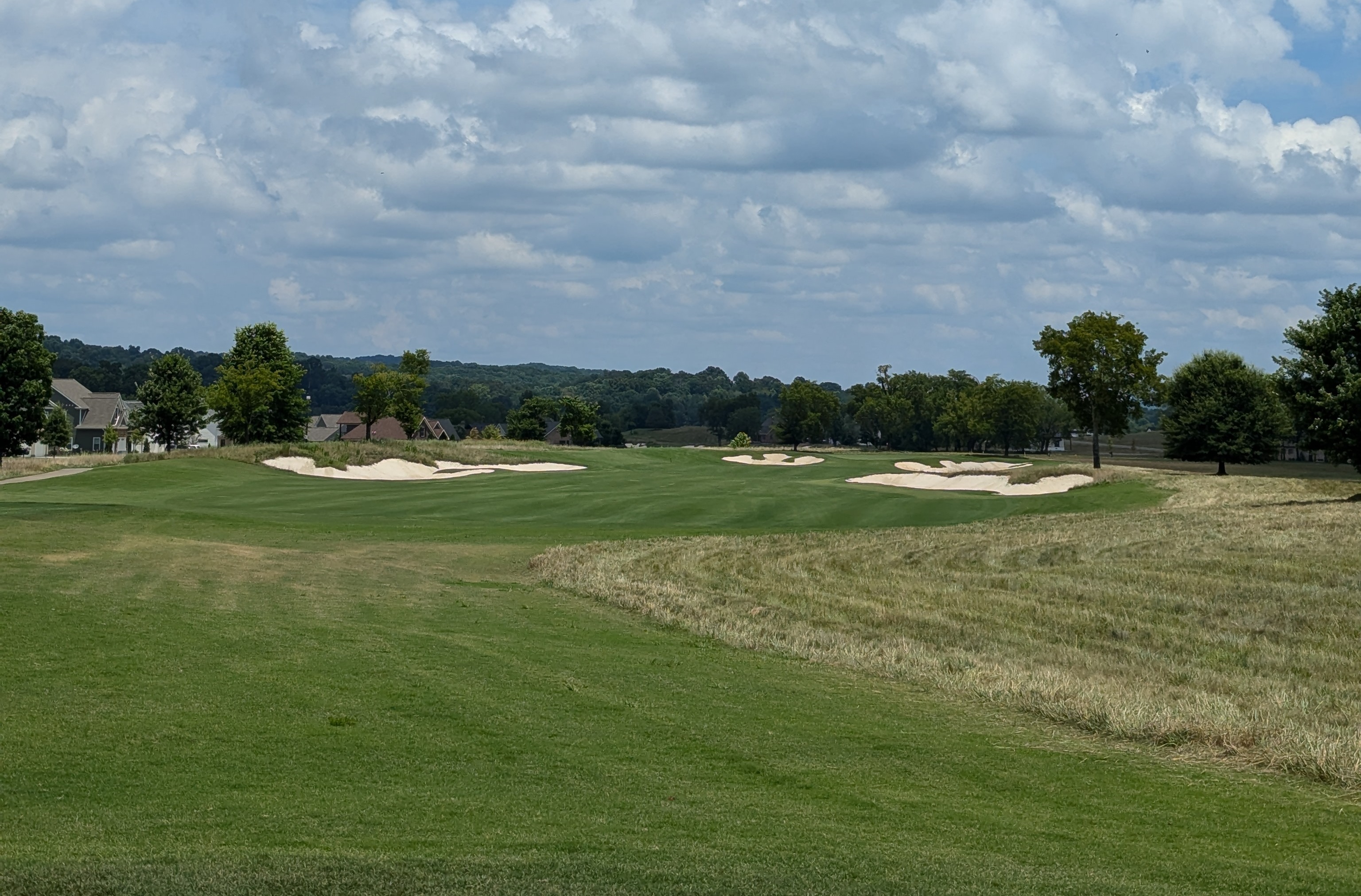
Nonetheless, a pretty driving hole that could have been designed by Arnie himself. The second shot plays to a green sandwiched between Palmer styled (rather than the revetted Tennessee National styled) greenside bunkers. This hole, while pretty, is a touch out of character with the rest. To my count, this is the only hole where the all of the greenside bunkers are not sod-faced pot bunkers. This hole could have been picked up off of any course in Orlando and planted here.
Compare and contrast this hole with an Arnold Palmer designed Governor’s Club in Brentwood, TN.
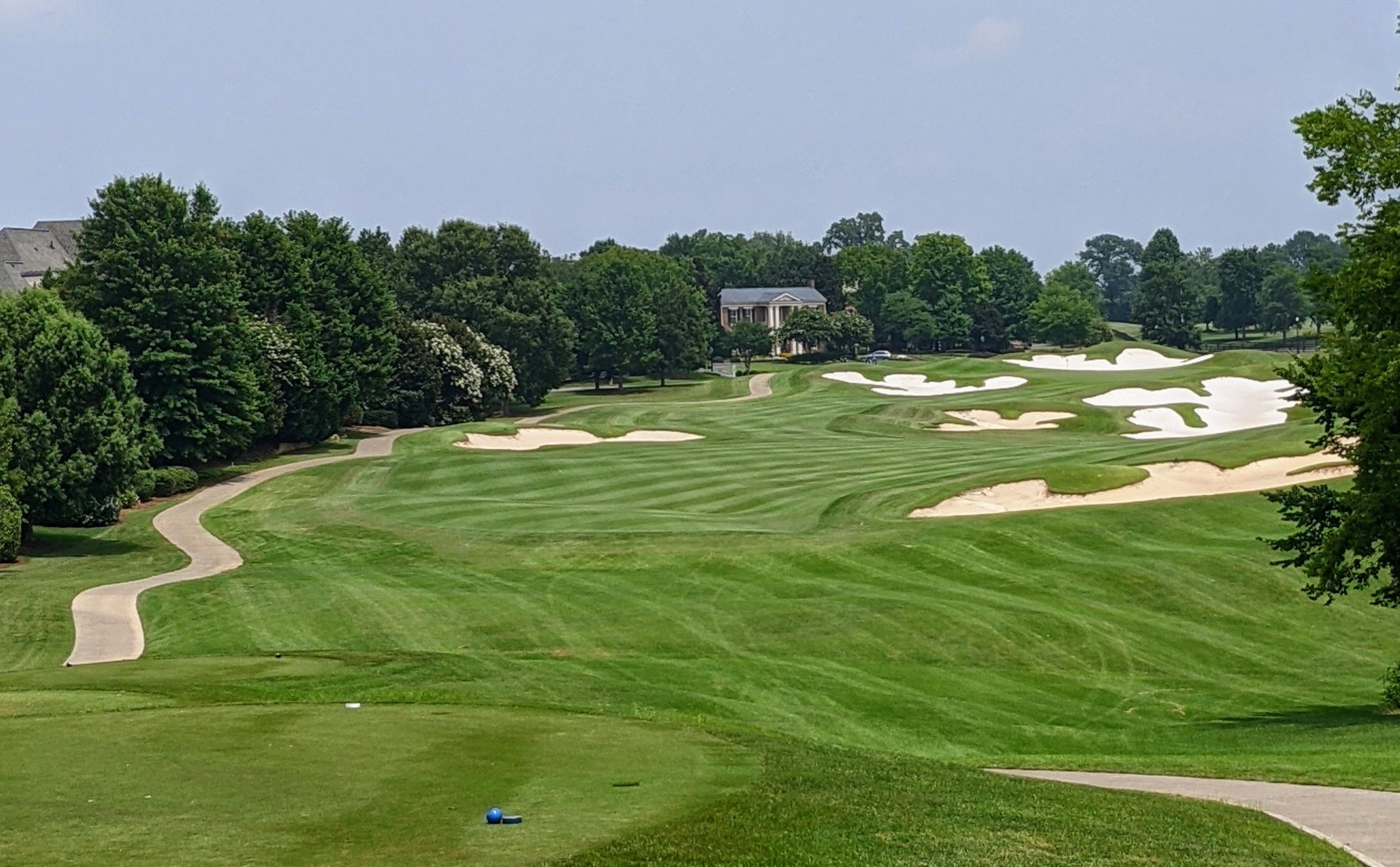
These “Mickey Mouse” style bunkers certainly are visually striking, but many clubs have been removing them recently, due to their cost to upkeep. Sand routinely washes down the face of the bunker with every rain, requiring someone to manually push the sand back up the sand flashed faces of the bunker. The Better Billy Bunker system, with a gravel and polymer underlay, is designed to help with this, and almost every club concerned with cost (particularly labor cost in this instance) has converted to the Better Billy Bunker system, or converted these Palmer-style bunkers to grass faced or sod faced bunkers. Based on overhead images, Tennessee National renovated their bunkers around 8-10 years ago, and removed a handful of bunkers in the process. They have also converted to the Better Billy System as well, per my host.
But for some reason, these bunkers on the tenth have stood the test of time, and I have probably talked about the greenside bunkers on the tenth more than any person living has ever talked them this in this review. Moving on.
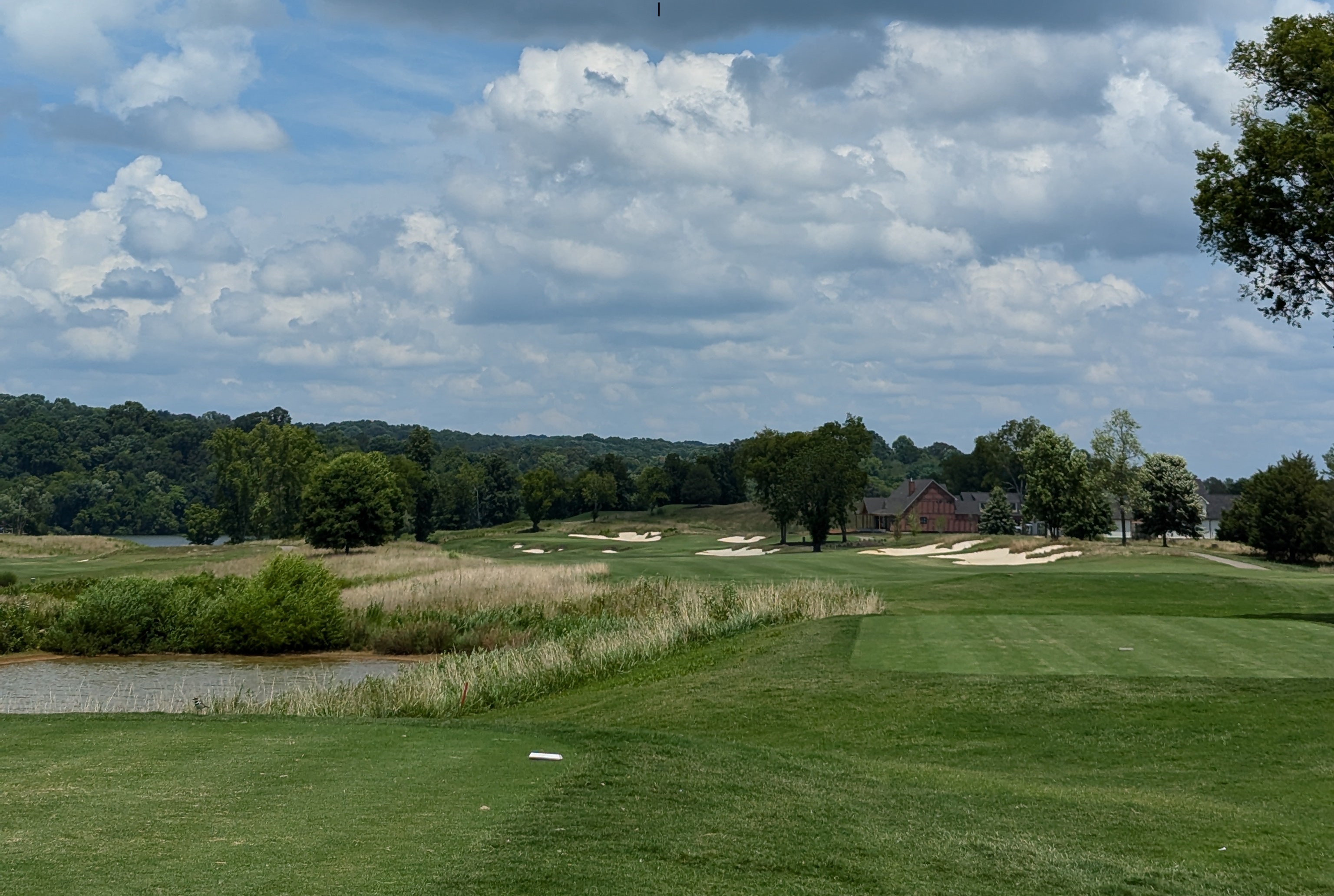
The eleventh is a shorter par-5, also with a flare of Arnold Palmer, that works downhill at first, and then slightly back up to a lightly elevated green. The tee shot has plenty of room, although tightened by the bunkers on the right, but the second shot is where the real decision must be made.
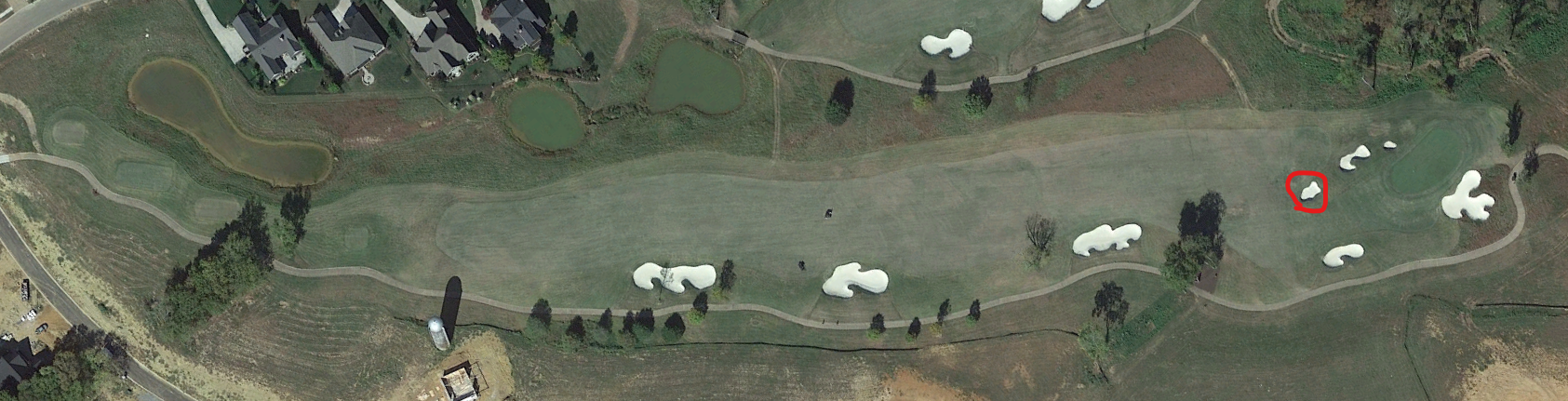
The bunker I have circled in the image above is N-A-S-T-Y. A revetted faced bunker, at least 5-7 feet below the surface of the fairway, waiting to gobble up any low runners drawing in to the front edge of the green – a green that is canted from right-to-left away from the fairway. If the player decides to go for the putting surface in two, he must take enough club to ensure that this bunker is not in play, even on a mishit. Conversely, if laying up, the player must be aware of the distance and roll, and not accidentally run out into this bunker. If a player ends up in the front of this one, the only way out is likely backwards.
Provided this is successfully avoided, the eleventh should provide a reasonable birdie attempt.
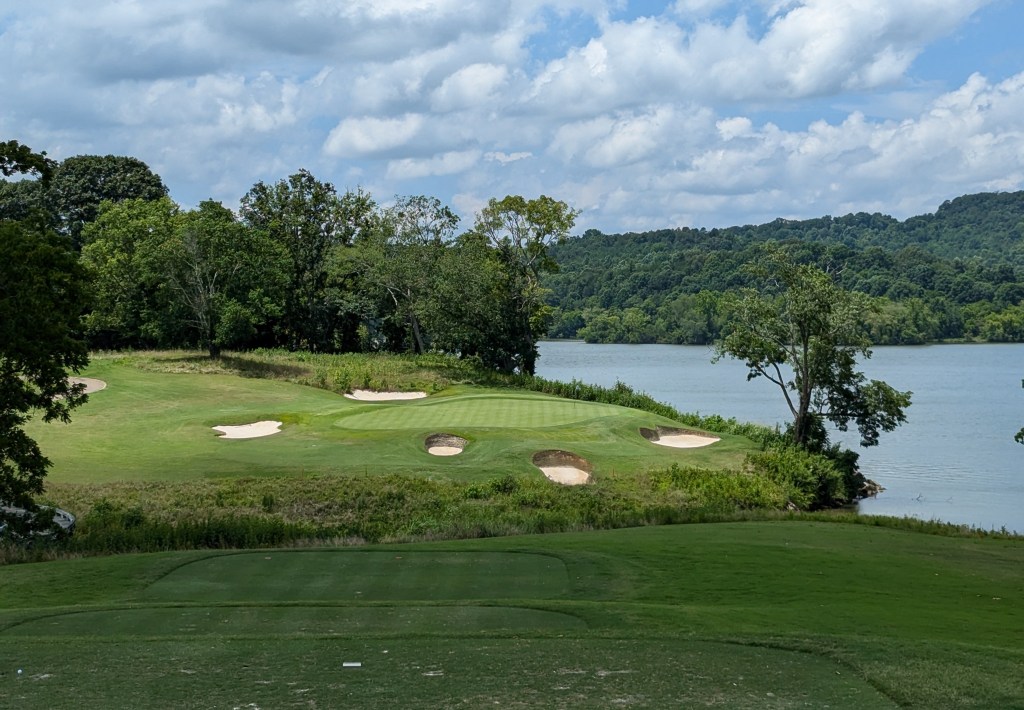
The twelfth plays along the river as a mid-length par-3 and is probably the hole deserving of the most photogenic award at Tennessee National. What you see is what you get here: a large green, three incredibly deep bunkers, and a river to avoid (which I am sad to report, I did not).
The thirteenth hole is the back-nine’s homage to the fifth hole, a short par-4 with options, again tempting the heroic player to give it a go.

Lots of option for driver and various fairway metals or irons from this tee. The risky player finds wider landing areas, whether going for the green or staying left of the small stream, but takes on more risk with the stream. The hole would probably be better without the fronting bunker to deter players from taking a risk, since the stream is ever-present. The layup is complicated too, with only 27 yards of width between the pinching bunkers. I personally live for these holes; I enjoy thinking on the course.
I also must talk a bit about wind design too, particularly with “easy” holes. The par-5 eleventh and par-4 thirteenth play oppositely parallel to one another, ensuring that one will be downwind and one will be into the wind. That is particularly critical when designing scoring holes, so that both of them aren’t particularly easy, or both aren’t lacking excitement. A player should have a good chance to either go for the green on the eleventh in two OR attempt to drive the green on thirteen, but usually, not both or neither.
The fourteenth plays the same direction as the thirteenth, and is a medium length par-5 that meanders the edge of the course.
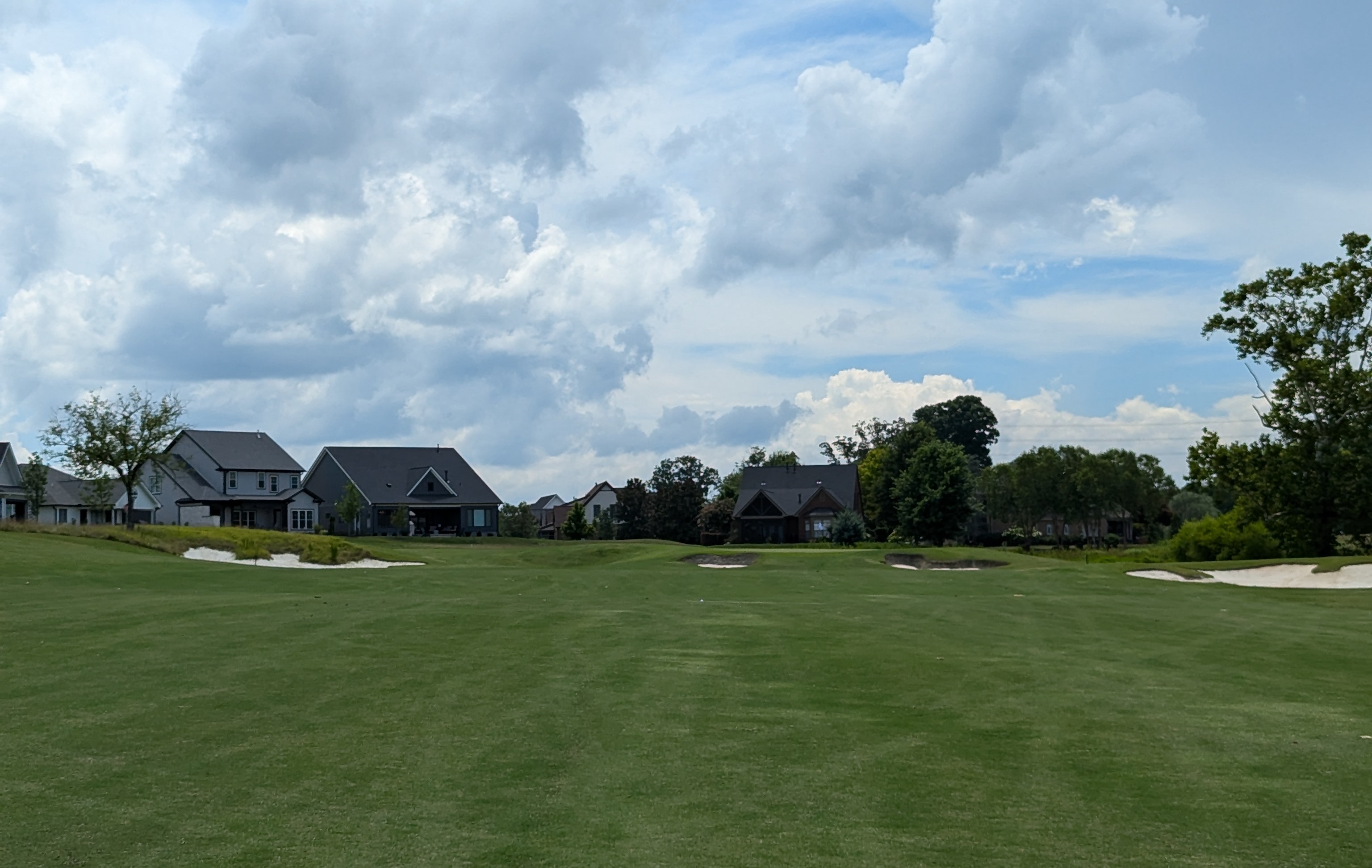
There wasn’t much particularly exciting about this hole, and it played stout due to it being into the wind on our day of play. A reasonable golf hole, largely flat, with several bunkers complicating wayward balls. Out of bounds runs the length of the hole right.
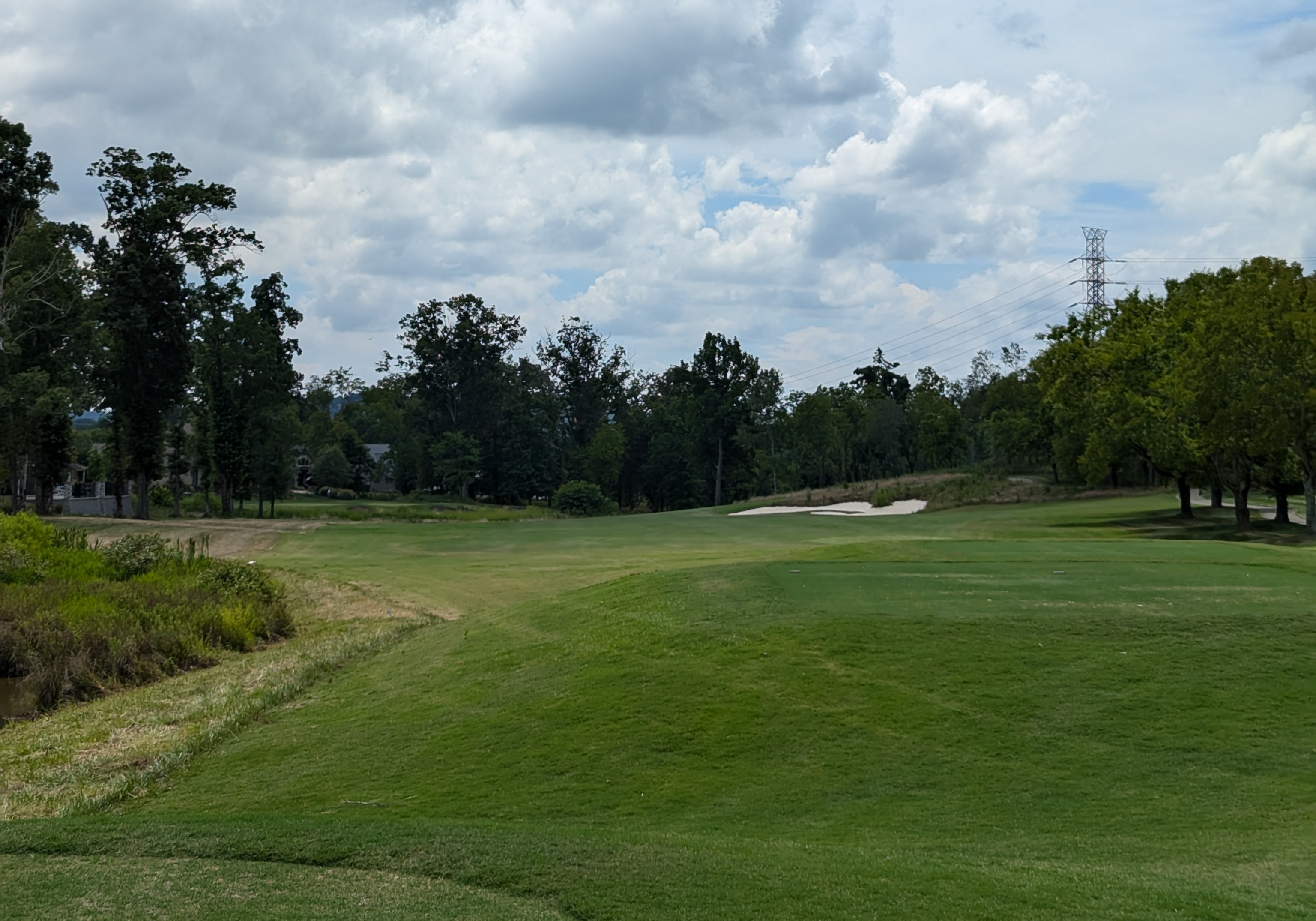
Then we arrived the fifteenth, a shorter par-4 with a green disconnected again by a fronting stream. This time, unlike the thirteenth, there is no driveable aspect to this green. Rather the choice here is whether to hit driver into a narrowed part of the fairway squeezed by the bunker on the right, or lay up short of the bunker into the wider part of the fairway and have a longer approach.
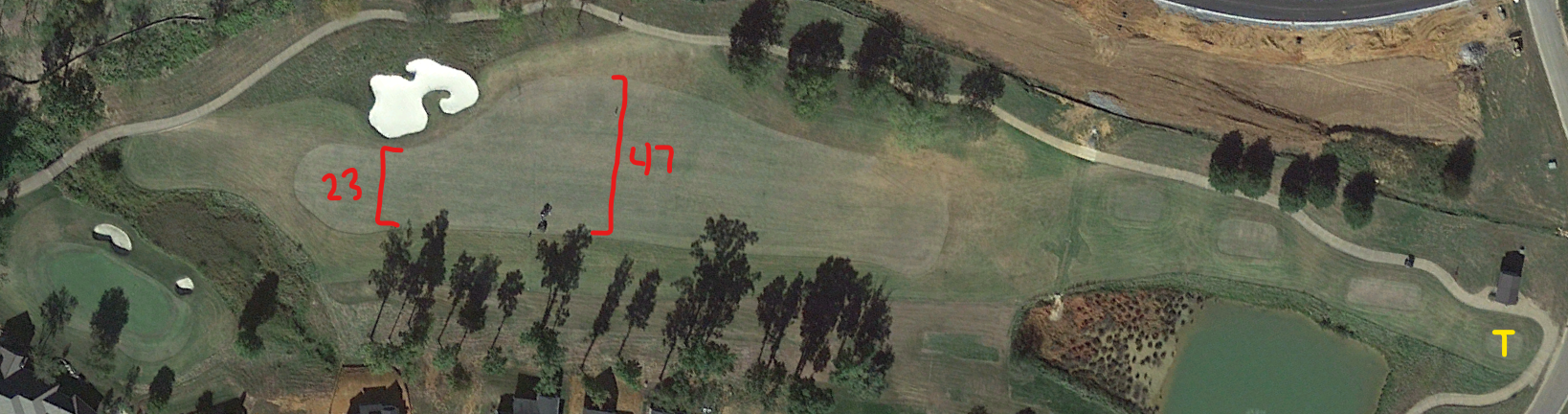
As the image illustrates, the fairway narrows to half its width once the bunker is introduced, but the reward for pulling it off is a wedge into a vulnerable green. However, a house, and associated out of bounds, sits uncomfortably close to the back of this green, complicating a mishit wedge shot.
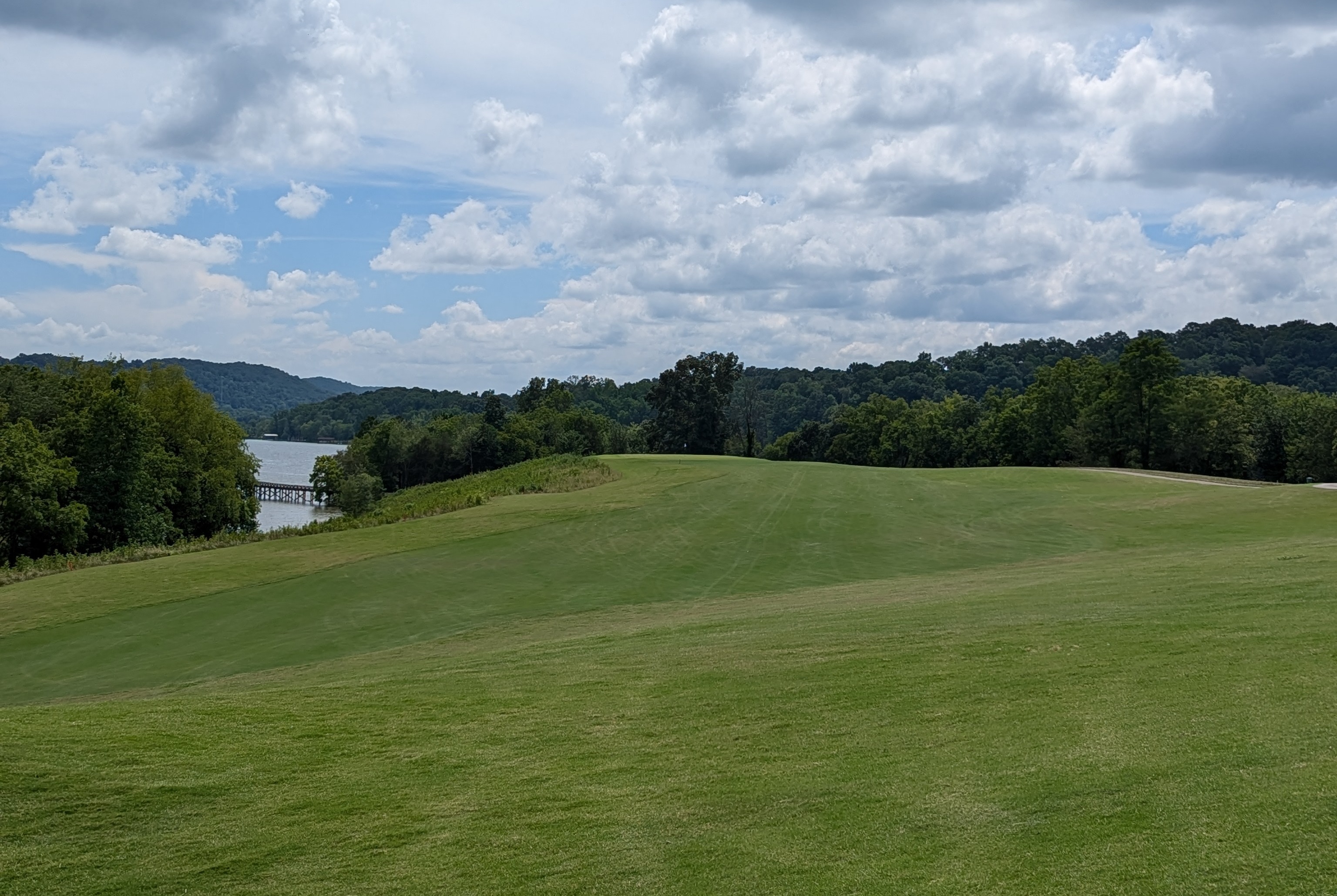
The third is the worst hole on the course, but the sixteenth is a close runner up. The only hole that was originally designed bunkerless by Norman, the sixteenth plays up a large ridge, and flattens along the top of the ridge. This hole is once again incredibly out of character, provides very little in the way of guiding the golfer on depth, and could have been plucked out of any municipal course in the southeast. It is a long hole, and a poor one, and one that should be the subject of a redesign soon.
But again, as with the third and fourth, Norman quickly rebounds with a good hole – this time the last par-3 of the day.
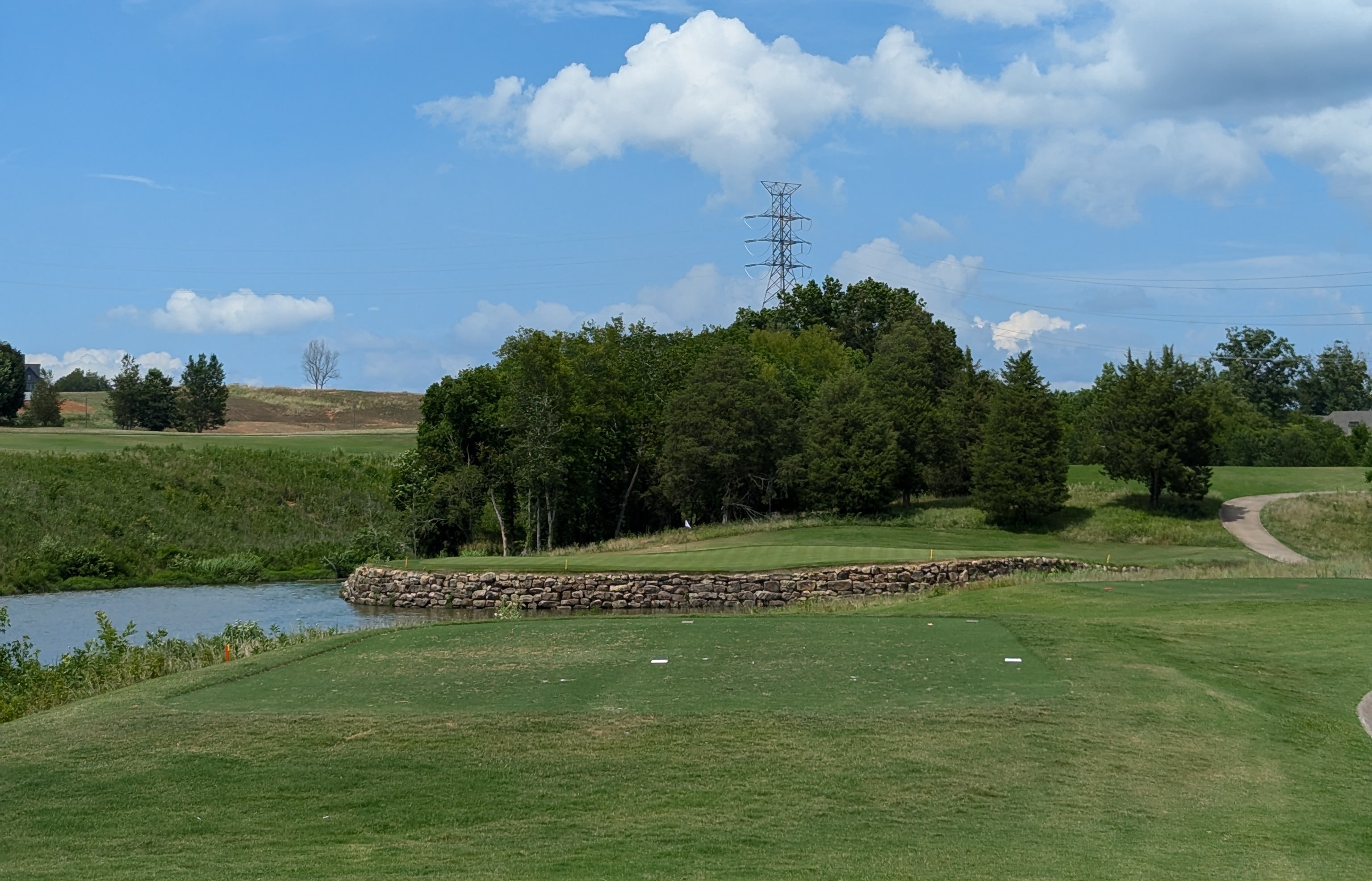
Of course, this mid-length par-3 does not have an exactly unique design, but sometimes the cookie cutter peninsula par-3 is just what a round needs, and this feels appropriately placed. The rock retaining wall is also a very nice touch, far superior to the wooden retaining walls often used for these types of holes.
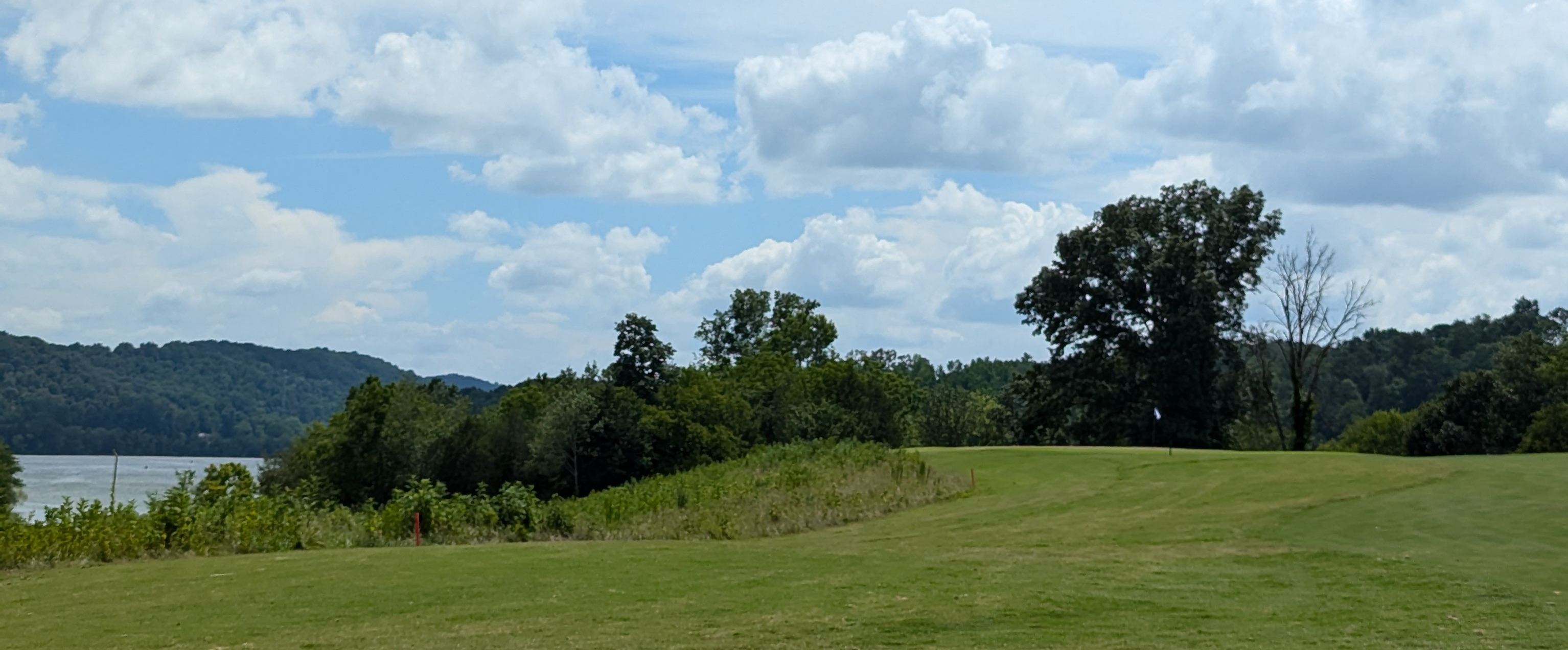
Lastly, the eighteenth at Tennessee National, a mid-length par-4, is a fun hole, featuring a centerline bunker.

Players must navigate the mess of bunkers on the right, and choose to either lay up short of the centerline bunker, or challenge it, before playing to an elevated green protected by a few deep, deep pot bunkers. The eighteenth is a worthy challenge, and worthy finishing hole.
Final Thoughts
Tennessee National is a nice course and I found the fun-factor of the golf to be very high. I was also quite impressed by the facilities at the course: mostly new and very high-end. The conditioning of the golf course was a bit average. The greens are bentgrass, but I’d speculate a bermuda conversion is coming (as has many other courses in Tennessee in recent years). The bent was in surprisingly good shape considering the Tennessee Amateur was recently contested at the facility. Ball marks were abound, but the greens were still acceptably fast and not too soft, considering the 90+ degree weather lately; huge shout-out to the greenskeepers on that front. However, the tee boxes were unacceptably thin in some spots, and the bermuda was a touch underwhelming considering it is prime bermuda weather in Tennessee at this moment. So, work to do on the conditioning front, but the opposite of what I had anticipated. Lastly, the course really only has 16 holes, as the third and sixteenth are simply unbecoming of a golf course wishing to find itself on Best-in-State lists.
Unfortunately, this course does find itself at #13 on Golf Digest’s best courses in Tennessee. I’m not quite seeing that at Tennessee National. It is close to ranked-course quality, but it is unfortunately not better than similarly unranked courses and clubs like Westhaven Golf Club in Franklin, TN, Blackthorn Club in Johnson City, TN, The Governor’s Club in Brentwood, TN, and Hermitage Golf Course’s President’s Reserve. For me, this course would be below each of those courses, but to each their own.
All in all, and my commentary be damned, Tennessee National is a course I would consider joining if I lived in the Knoxville area. However, the juxtaposition of time and place has certainly been a strain on Tennessee National. It is evident by the surrounding, the incompleteness, the perceived lack of demand coupled with the ample supply. I found the atmosphere to be welcoming, yet eerie.
The best is yet to come at Tennessee National, but its high time that yet should have already came.
F1C’s Final Rating:
Shot Options: 8
Challenge: 6
Layout Variety: 7
Distinctiveness: 6
Aesthetics: 8
Conditioning: 6
Character: 7
Fun: 9
Total: 57/80
Read More: How We Rate Courses
Rating Scale Details
> 70: Top-50 U.S.
65-70: Top-200 U.S.,
60-65: Best-in-State List
57-60: Best-in-State List Contender
53-57: Very Good
48-53: Good
40-48: Average
> 40: Poor

Author: Jaxon MacGeorge
Jaxon is the founder and lead course reviewer at First1000Courses.com. Jaxon has been playing golf for over twenty years, is a scratch handicap, and actively competes in USGA and Tennessee Golf Association (TGA) amateur events. By trade, Jaxon is an attorney and lives in Gallatin, TN, a suburb of Nashville.


 First 1000 Courses
Leave a comment