
Time to Read:
|
This Sultan’s Run Golf Club course review is based on a round played on May 15, 2024.
Sultan’s Run Golf Club is a public course in Jasper, Indiana. The maximum green fee is $85/round.
F1C’s Final Score: 56/80 (Very Good)
Learn More: How We Rate Courses
Admittedly, I think the phrase “hidden gem” is a bit overused. In the internet-era, nothing is really hidden, very few things are private, and little is left to the imagination. Pine Valley is no longer shrouded in mystery; you can watch a flyover of every hole online. The imagination doesn’t have to wonder who is a member at Augusta National; you can find a list online that lists most of the known members. Of course, this lack of privacy, imagination, and hidden-ness extends far beyond golf into basically every reach of our lives, because of the internet. Perhaps I am part of that curtain lifting by photographing and writing about golf courses that are really meant to be seen and experienced in real life, and not via the internet. But, I digress.
Sultan’s Run is not hidden, nor really a gem, despite seeing it mentioned on random social media posts calling it just that. I think the term “hidden gem” really means that a course is: (1) in the middle of nowhere, (2) cheap, (3) public, and (4) slightly to moderately above average. If that is also your definition of a “hidden gem,” then Sultan’s Run fits the billing. It is firmly in the middle of nowhere. I drove a few hours north (to go to Canyata) and did not hit a fast food restaurant for nearly an hour and a half. It was the cheapest round I have played this year, playing a twilight rate for under $60 for 18 holes. It is very public (and quite busy). Lastly, it was an enjoyable course, and one that I would definitely play again if I were in the area.
Conditions were not great the day I played – to no fault of the golf course though. The grass was green and plentiful and the putting surfaces were nice, but the course – and the entire area of Southern Indiana – had essentially been flash flooded the day before we played. It was nothing short of miracle the course was even open for our round, and there was not a single shot I played that was not out of casual water. However, I was still able to evaluate the overall course, and the weather was nice, and waterlogged course be damned, I had a fun time!
Sultan’s Run was designed by Tim Liddy. Liddy, according to his website, is a Pete Dye understudy for many years and has completed a few solo designs throughout Indiana and other parts of the midwest, as well as a few in the Southeastern U.S. The course originally opened in 1992, but was remodeled in 1996 by Liddy. Sultan’s Run sits on a very hilly plot of land, especially considering its venue in the relatively flat farmlands of Southern Indiana. There is a surprising amount of elevation change all throughout the course that is steep enough to almost certainly been natural. It seems as Liddy, in this design, may be more closely a Tom Doak disciple than Pete Dye, as the course uses the land and natural topography much more than Dye’s earth moving projects.
Ultimately, what the team at Sultan’s Run has accomplished is becoming rare in the golf world, and especially the realm of public golf: a tee time at an interesting course with above average conditions for less than $100. It seems that every new course built in the last few years has been a destination resort course or a high-end private club – which is certainly where the money may reside, but probably not best for the game of golf over time. In my opinion, golf needs more courses trying to be Sultan’s Run and less courses trying to be Pine Valley or Bandon Dunes.
The First Tee
We did not get to visit the practice facilities at Sultan’s Run as we were already warm from an 18-hole round at another course, so right to the first hole we went, and discovered a mid-length par-4 with significant elevation change.
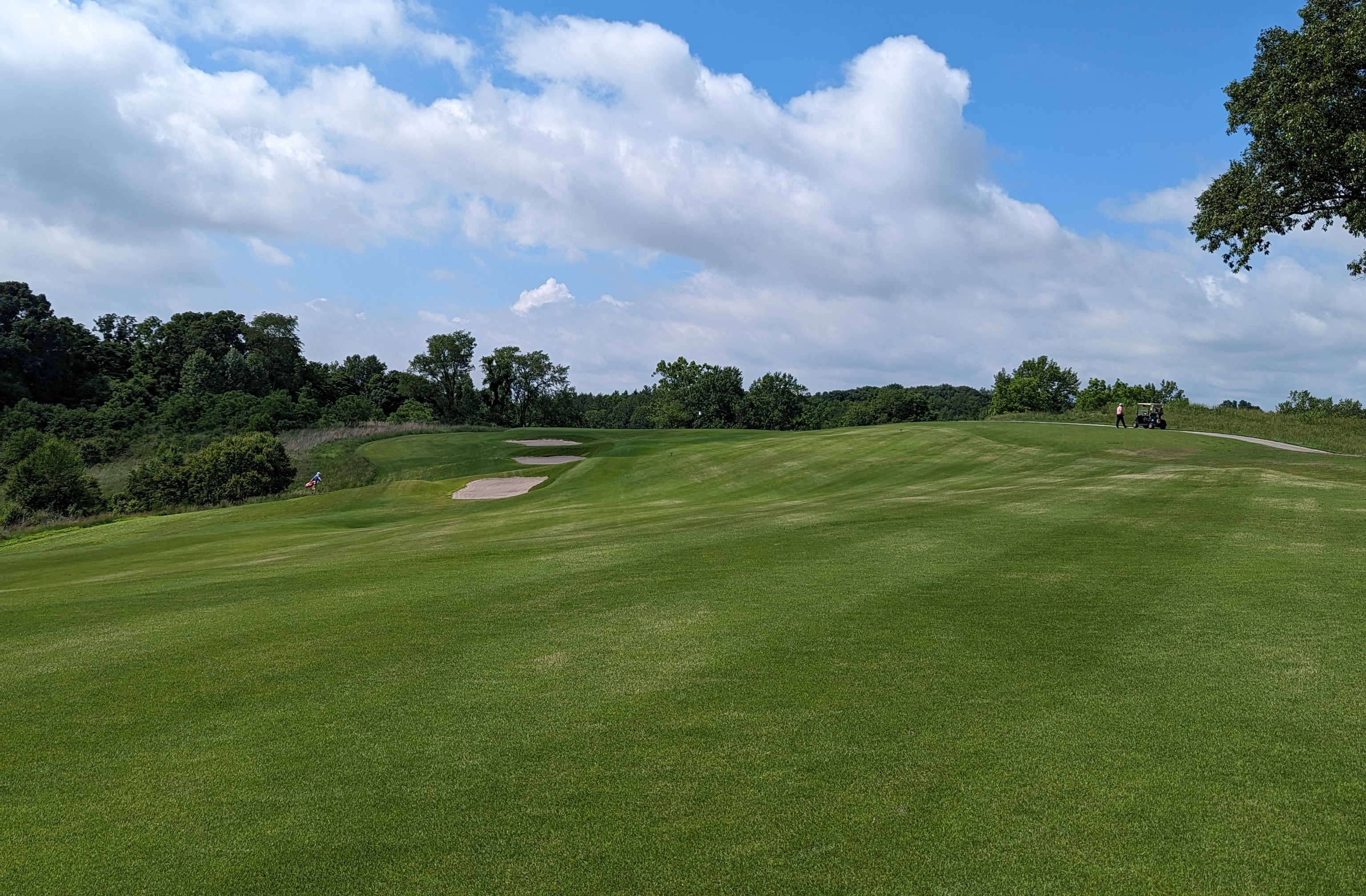
Many of the holes at Sultan’s Run play downhill, but what goes down has to go up, and the first works slightly up a hillside to an elevated green. The drive is simple and the fairway generous, and the green only protected by a singular greenside bunker (and two cascading fairway bunkers that are largely in flyover territory). The defense to this hole is just a touch of length, but if a good drive is struck, a short iron approach may yield a birdie chance.
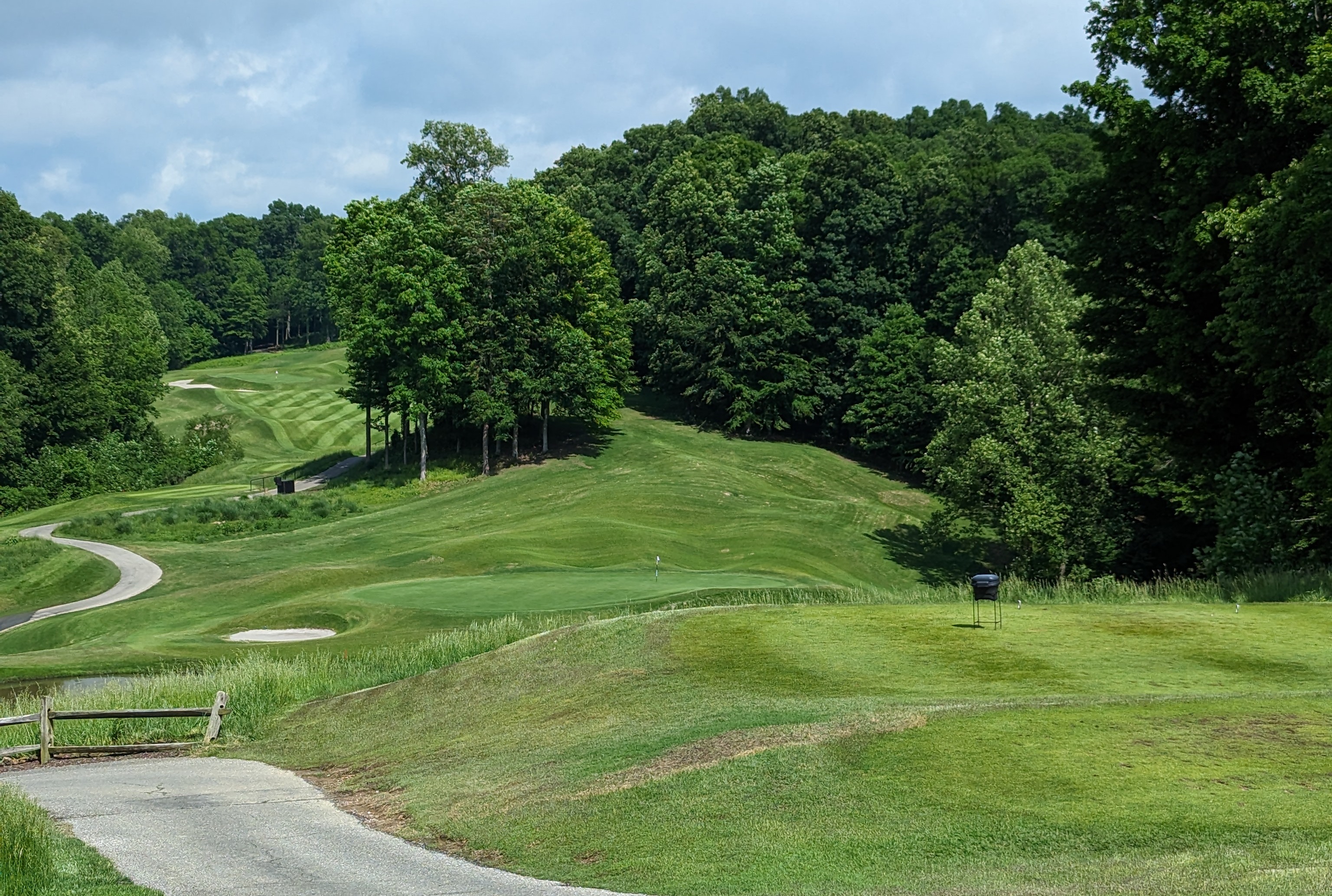
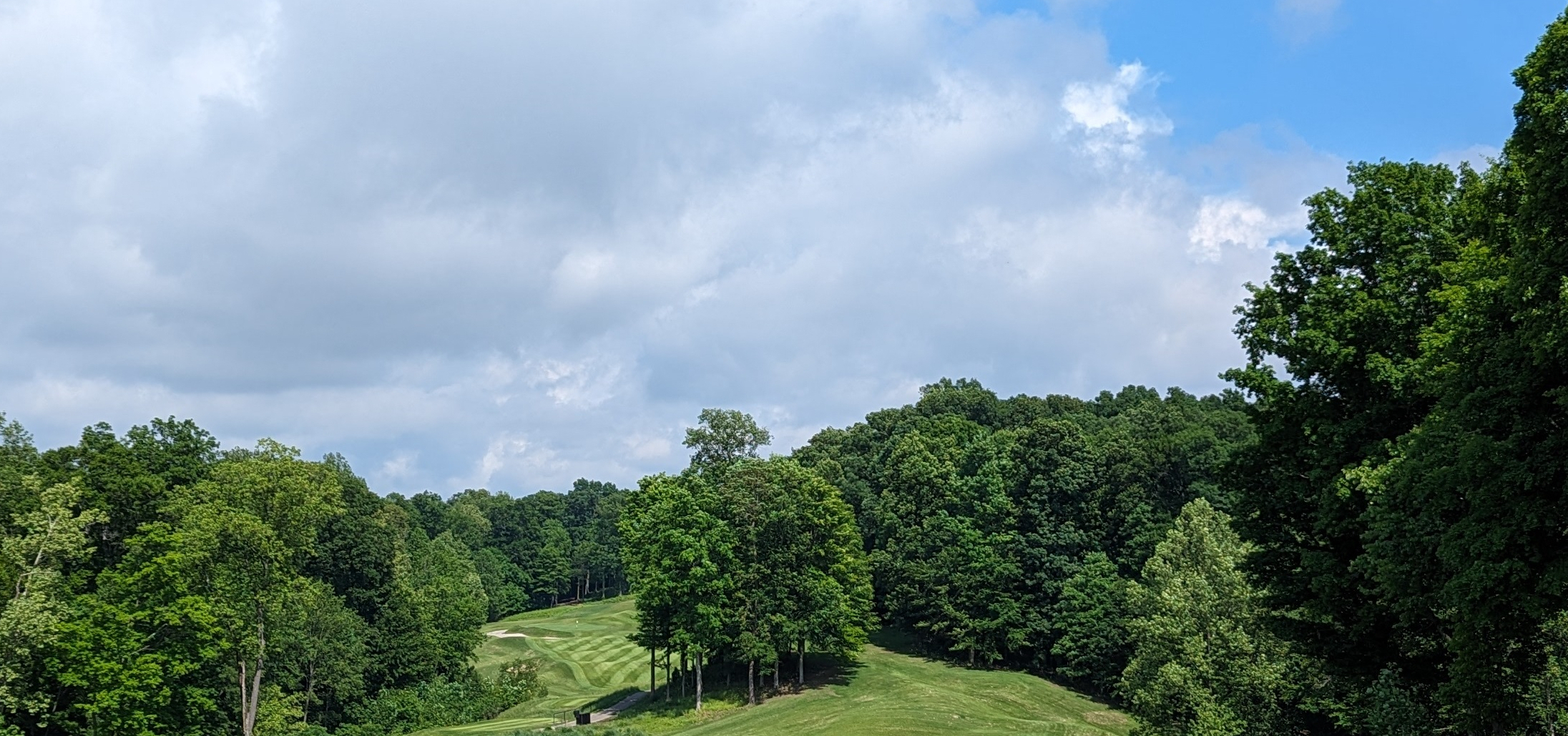
The second hole is a downhill par-3 of considerable length that plays around 15 to 20 yards downhill. Hidden behind the hill is a pond that fronts most of the green and wraps around to protect the right side as well (you can barely see it poking out in the picture above on the bottom left). The front left bunker, while not in play to right pins, would be diabolical to left pins as the bunker is quite deep and very short-sided from a slope perspective. A large, benign hill will backstop any balls hit long or thin, so the with the lake short, it is certainly best to be long on the second.
In the photo of the second, you can also see the fairway and tee shot into the third. From the back tee, a draw is required. As a person who fades the ball, I really dislike holes that force you to play a draw, and to get into the middle of the fairway on the third, a large draw around some considerable trees and vegetation is required. If you are like me and occasionally double cross the draw, a power fade off the trees on the right with a hard enough bounce to kick the ball back into the fairway will work if it is indeed YOUR day.
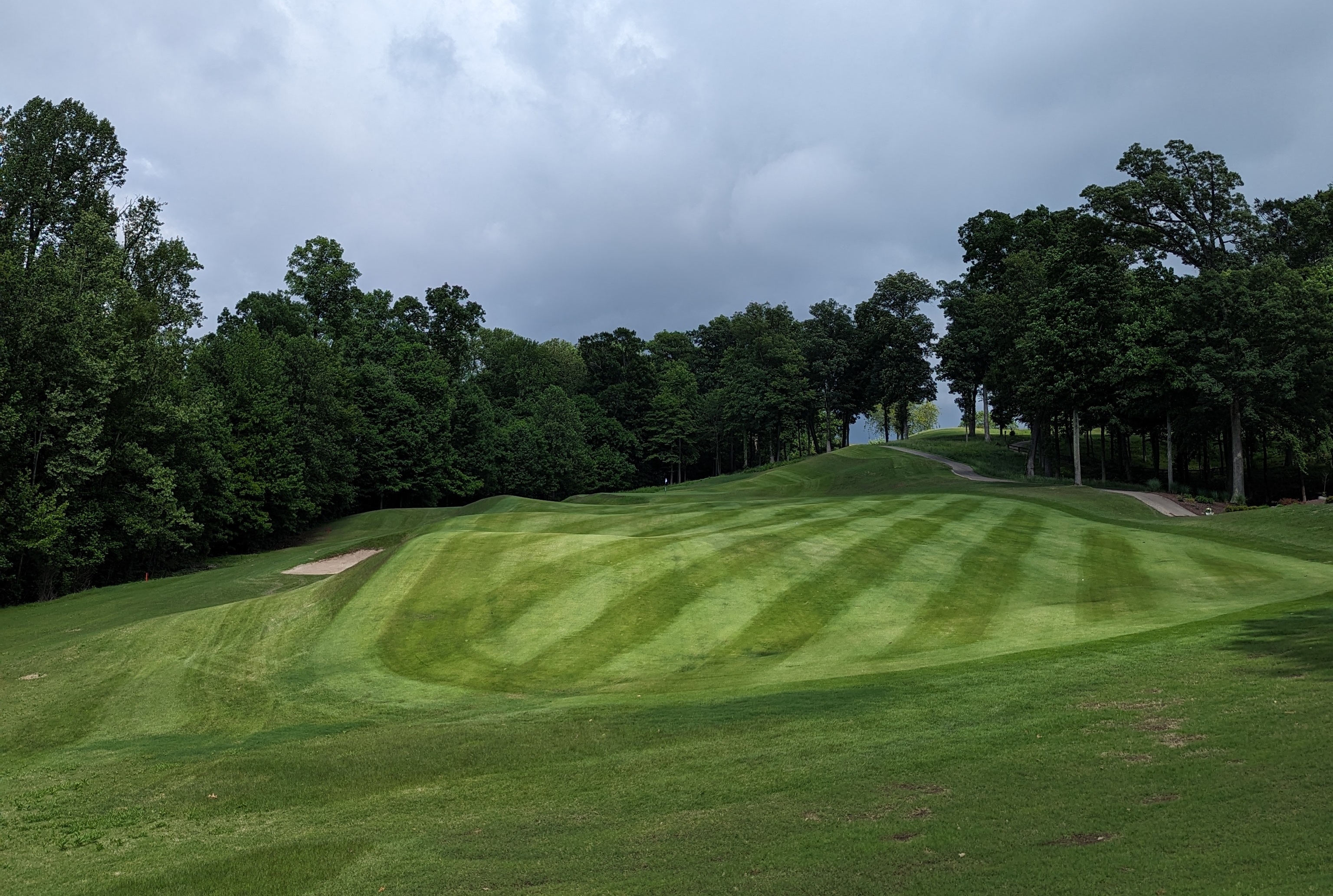
Once in the fairway, a moderately uphill approach awaits with likely a short iron or wedge in-hand. The green slopes somewhat significantly back-to-front, like the overall hole, particularly on the front half of the green. It is best to be below the pin on this hole, as is on most uphill holes.
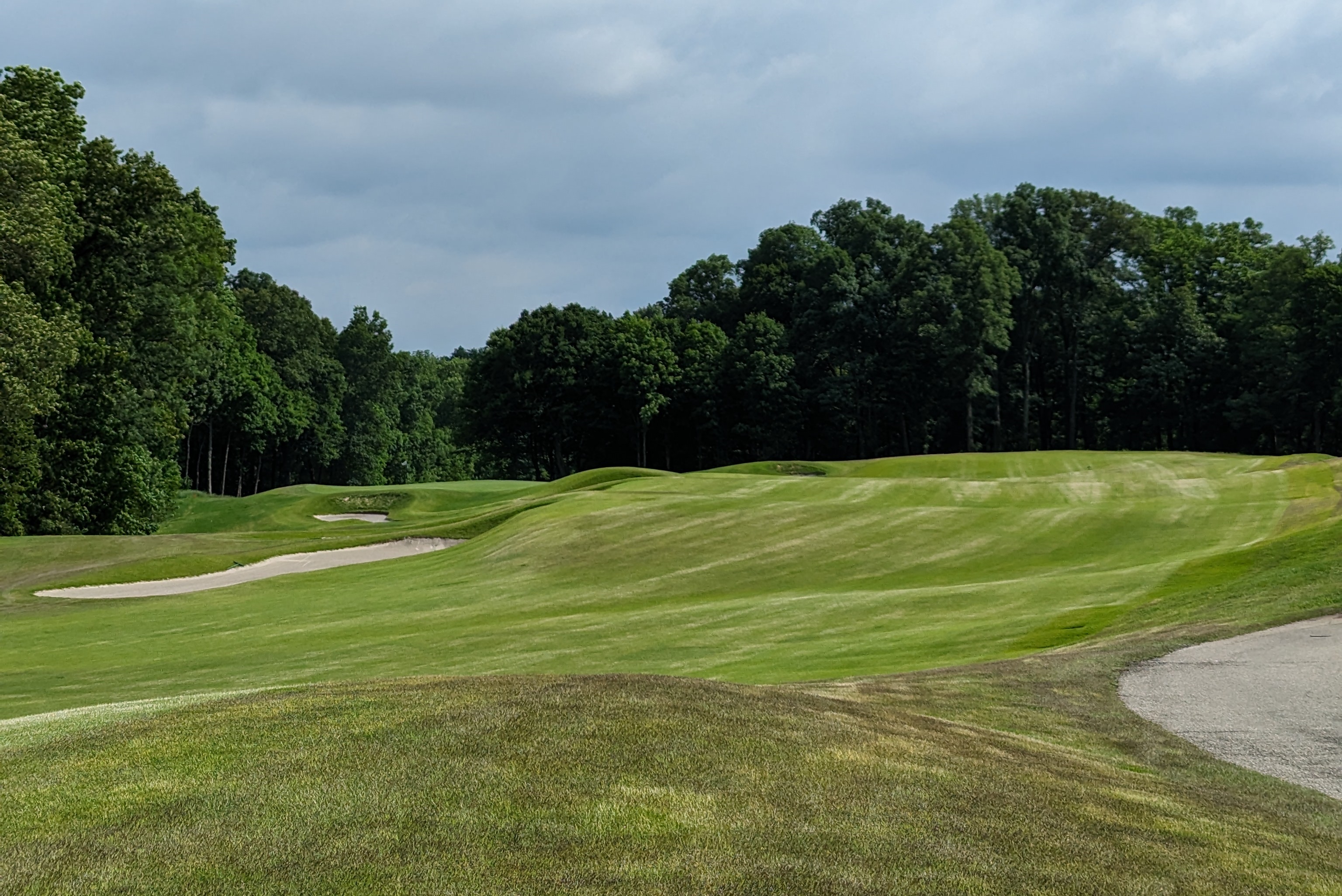
The fourth is an interesting par-5 that is blind from the tee. The landing area is somewhat hard to distinguish, but visible, while the rest of the hole sits above a small ridge and is not visible from the tee. The tee shot must navigate a trio of bunkers on the right on the tee shot. Once in the fairway, the hole opens up to the right, and a series of deep fairway bunkers sit below the fairway off a ridge to catch a pulled ball and bound it down into the pit. Going for this green in two seems illogical due to the length and height required on the second shot, and the green rather strangely slopes from front-to-back in a significant way. Wedge shots are hard to stop on this green, and I’d imagine anything with a longer club may well be impossible.
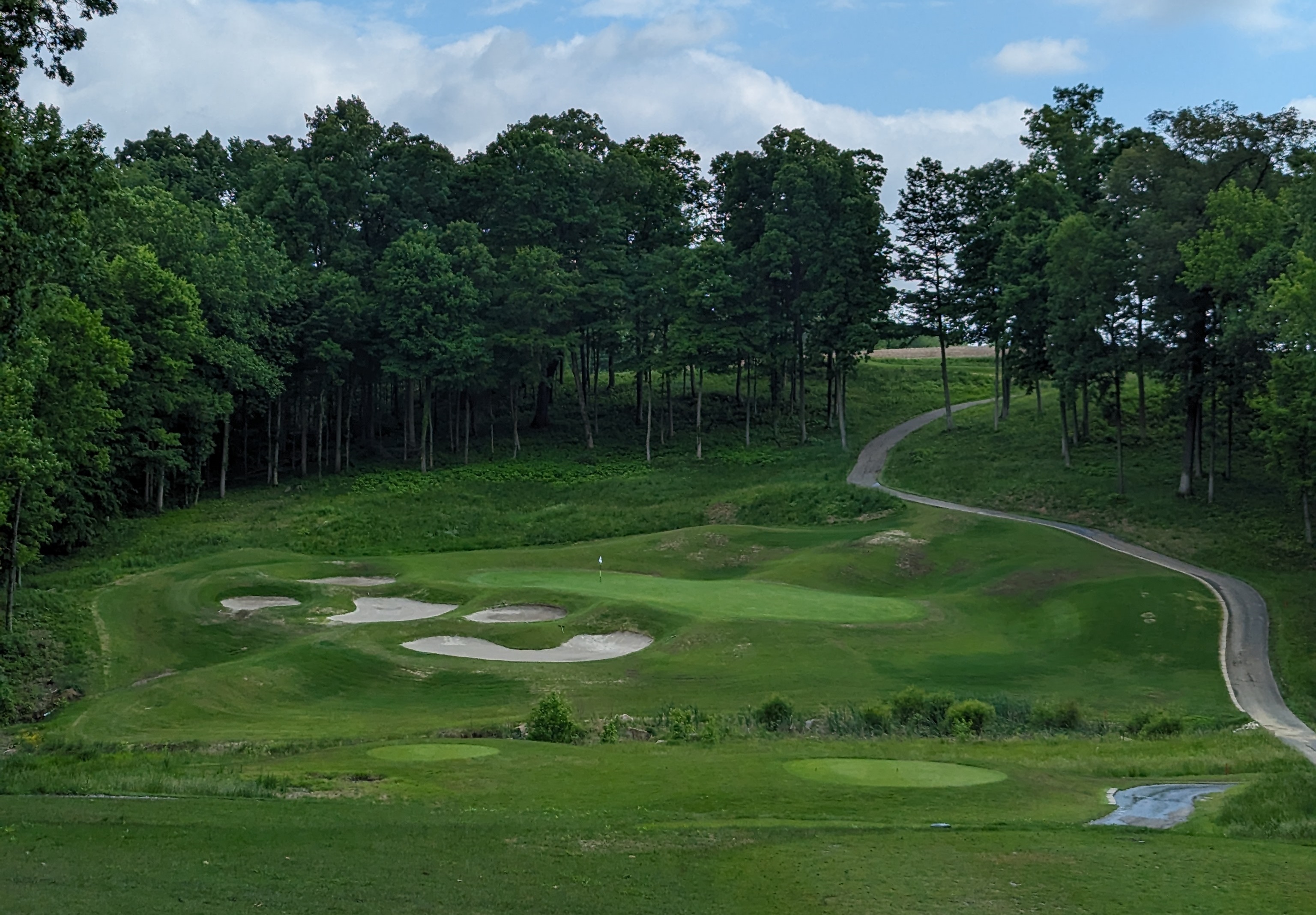
The fifth hole, in my opinion, is one of the most visually appealing holes on the course, again a moderate length par-3 playing some 10-15 yards downhill. A plethora of shotgun spread bunkers litter the left of the green, and the green is largely cast into a flattened section of the hillside. This green has considerable, random slope throughout the green and will leave a tough putt.
The sixth hole is the second of the par-5s on the front nine and is a very awkward hole, although somewhat reachable in two for longer hitters. The tee shot aggressively bends around a fairway bunker on the right at around a 45-degree angle. The second shot plays uphill to an elevated green protected by two bunkers on the right that sit well below the putting surface.
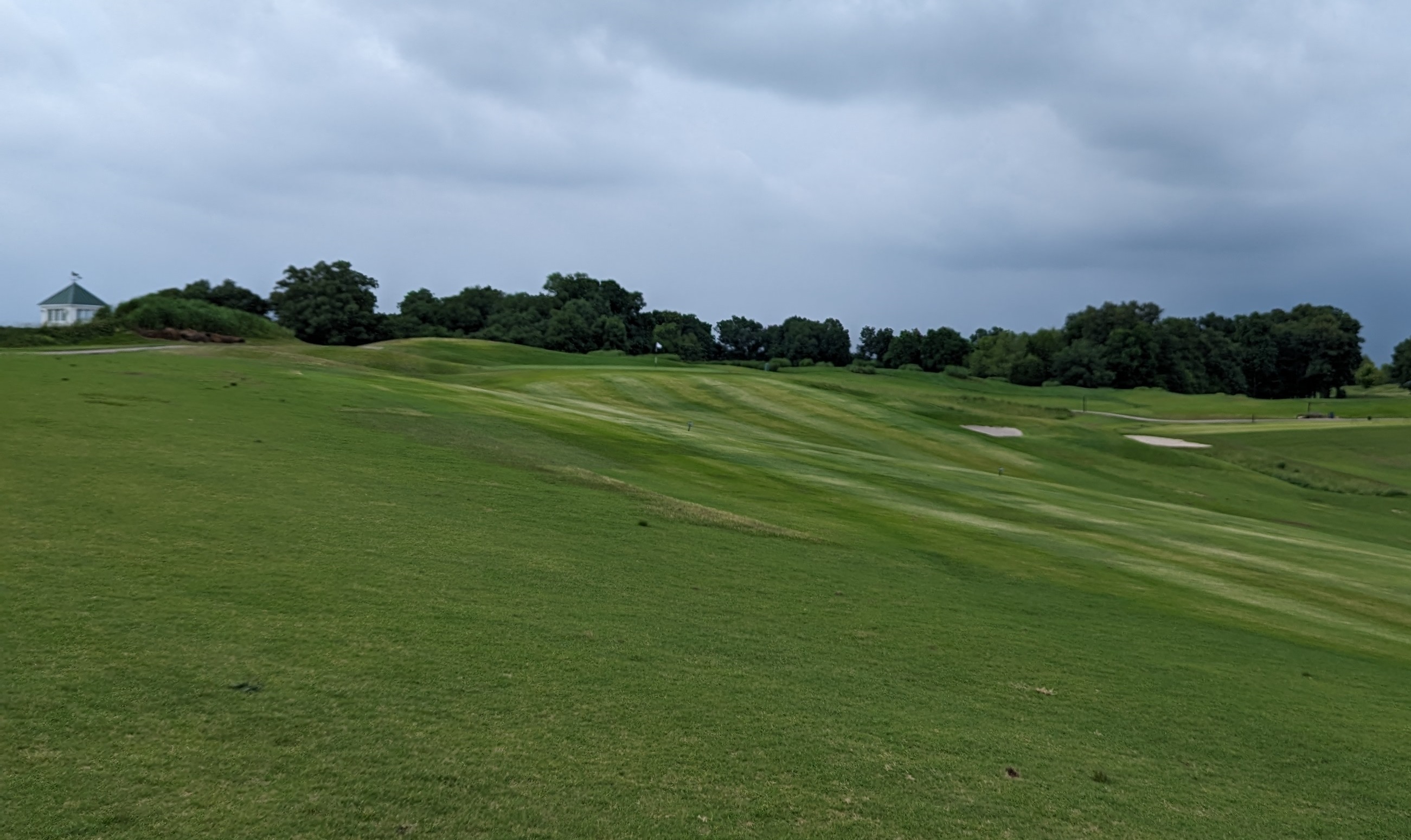
Somewhat awkwardly, the sixth hole finishes at the clubhouse, in case you need a quick water fill up or a snack before heading to the three hole loop to finish the front nine. The seventh is a shorter par-4 plays a bit downhill and requires a layup off the tee, as the fairway pinches to just 15-yards or so in the landing area for a driver. A set of taller trees block the right of the fairway, so the layup cannot be too far right, or it will be at risk of being slightly blocked out. However, for the most daring and longest players, the green is only a 300-yard carry downhill, and would be achievable for those with tour level distance and control.
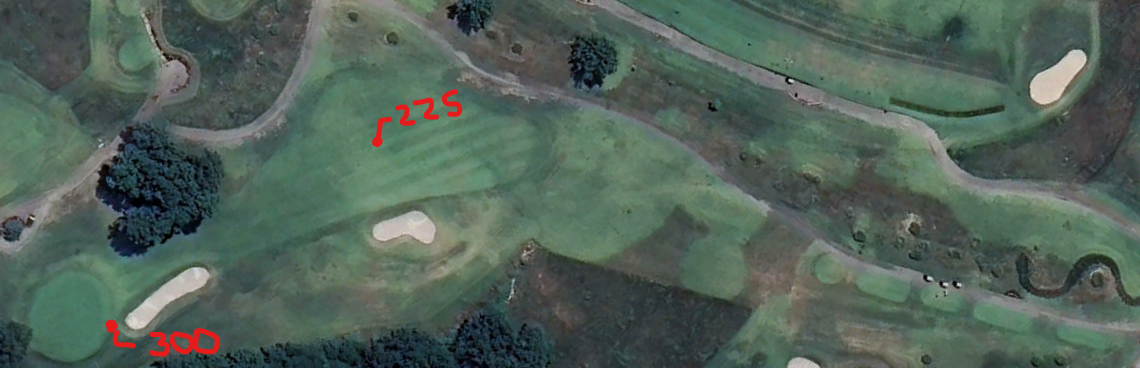
The eighth is likely the worst hole on the course, an uninteresting shorter par-4 that is basically dead straight and bunkerless. Short and left of the green are some undulating hills, and the green has significant slope, but this was my least favorite hole on the course.
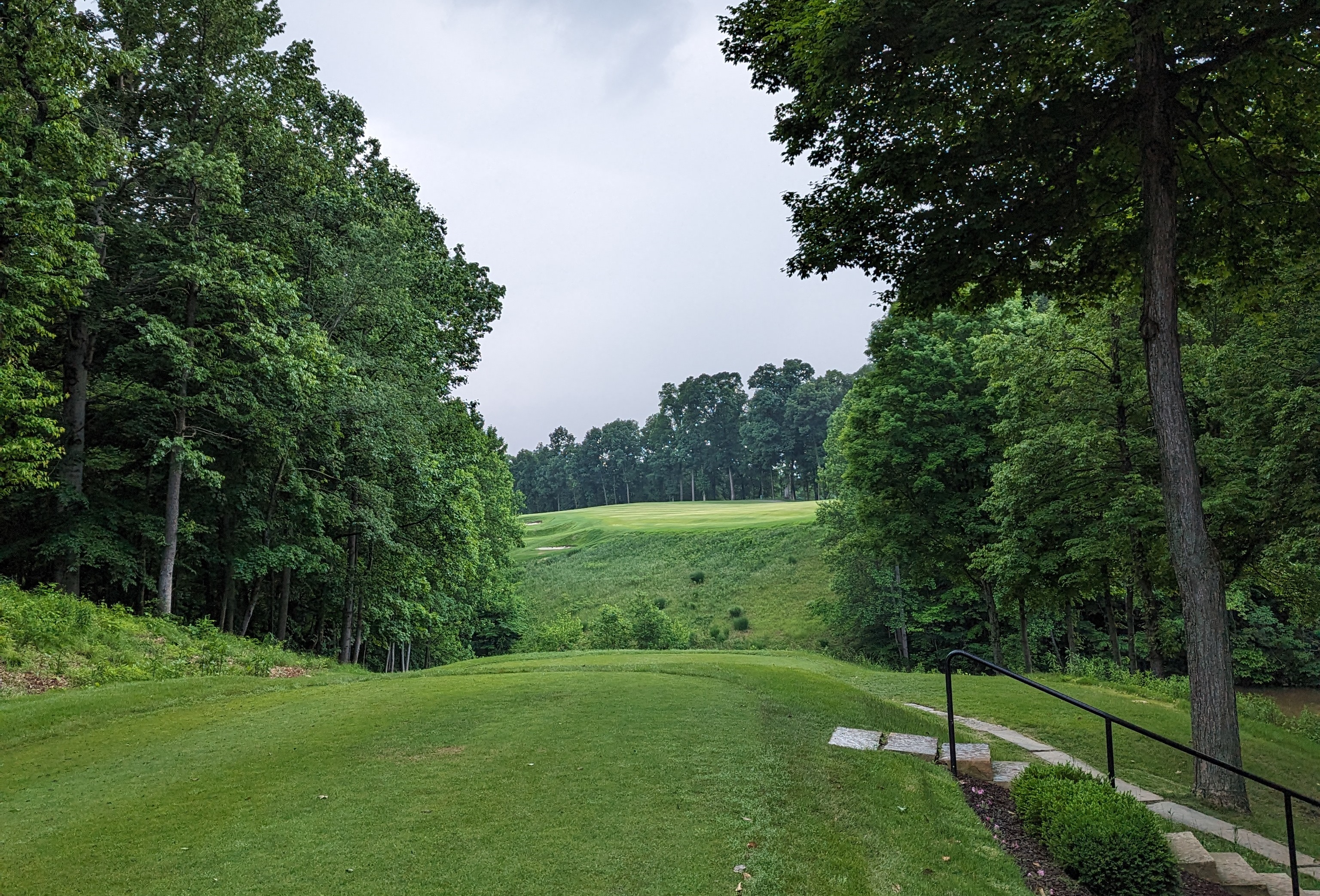
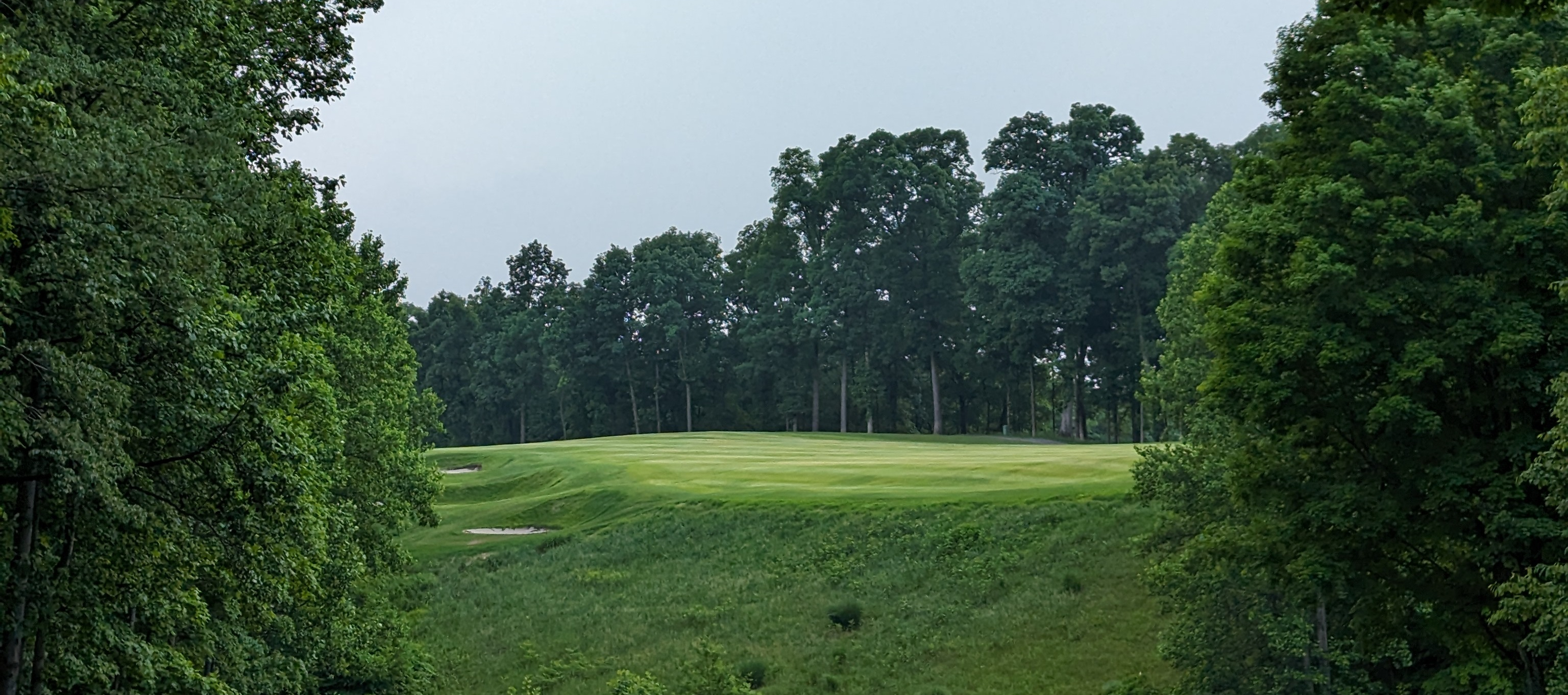
The ninth hole is a medium-length par-4 with a significant forced carry off the tee. Three cascading bunkers protect the fairway on the left, and they are significantly below the level of the fairway. A heavy wooded area protects this hole on the right, meaning an accurate drive is required to find this fairway. The approach shot plays slightly uphill, to a green with three greenside bunkers left, and a slope to the right to kick away any pushed approach shots. Before you realize, the front nine is finished and you are back at the clubhouse for your second water fill-up.
Making the Turn
The tenth hole starts on a small hill above the clubhouse and works downhill the entire way a a medium-length par-5. I struggle to imagine this one is reachable after playing it, but I am sure there are some out there that may be able to reach in two with two perfect strikes. The drive plays downhill over a large flanking bunker on the right. The fairway then cuts around that bunker, narrows significantly, and works down a hill to the green angled from short right to long left. For a par-5, the green size on this hole is generous and only protected by two bunkers, neither of them forcing a carry to find the green.
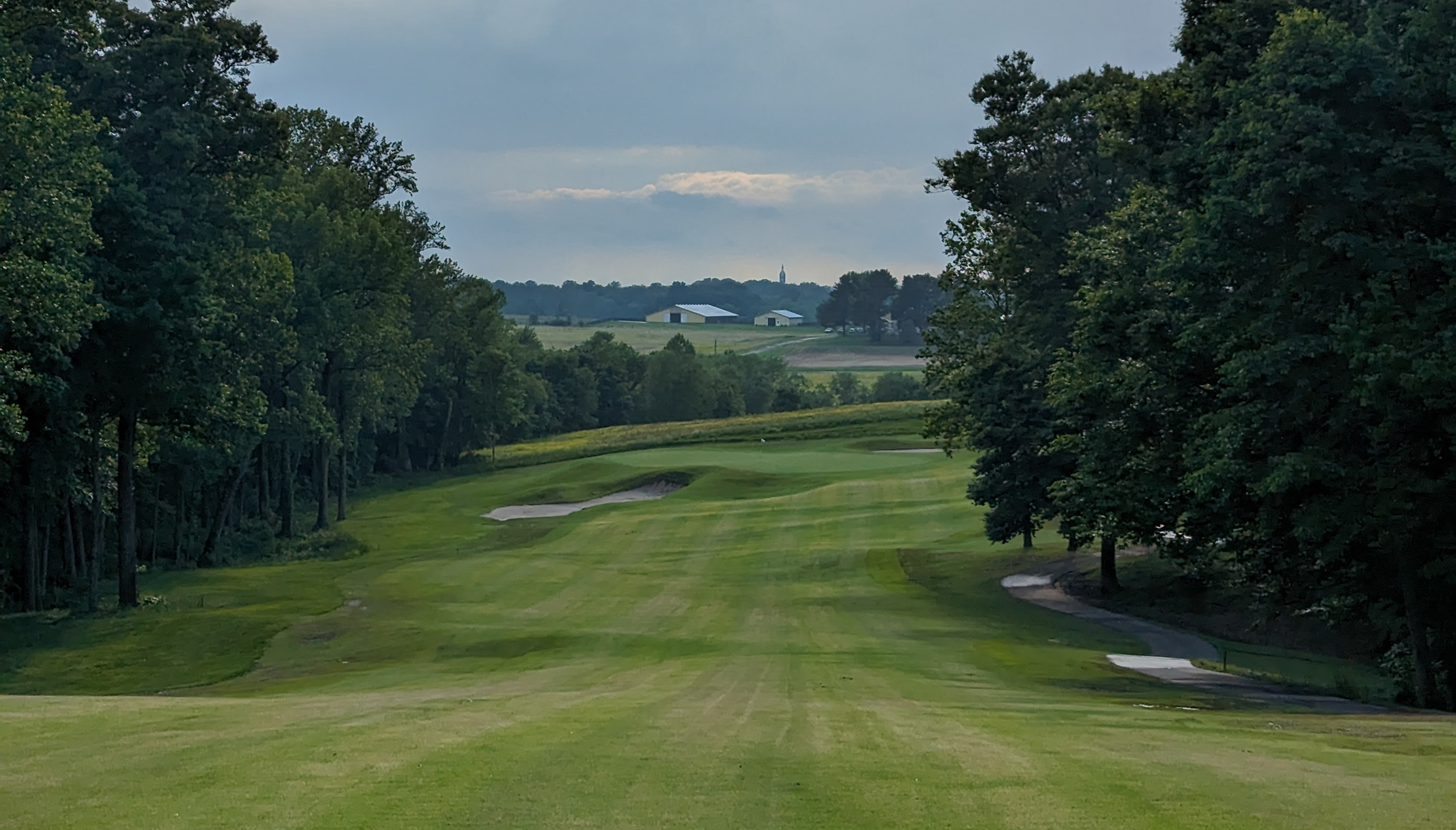
The eleventh hole is a bit of an awkward hole, a dogleg-right, shorter par-4 that almost coaxes you to take less than driver off the tee. What you cannot see from the tee, however, is a large tree that will block out any tee shot to the left of the fairway that is played with less than driver.
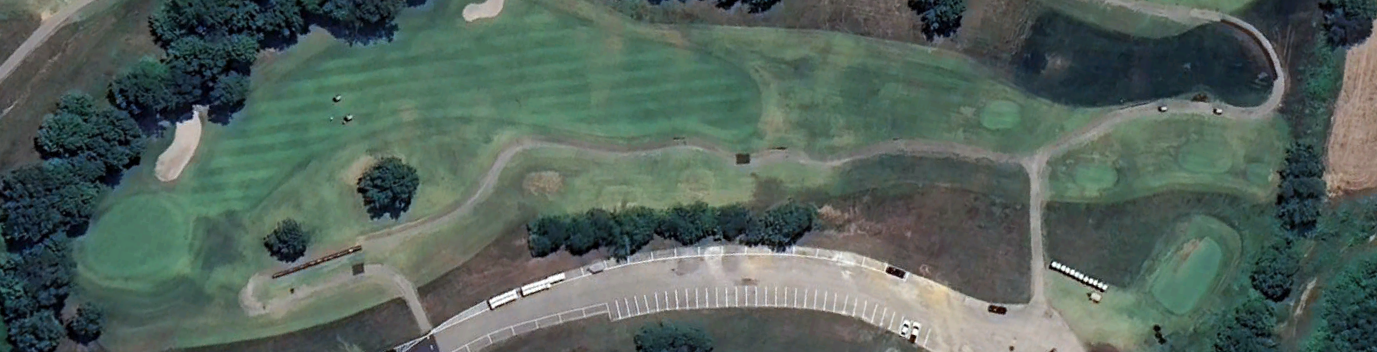
The tree is a bit larger than it looks in this photo, and my layup beside the cart path, while only 115 or so yards, was completely blocked out by this tree. With the advantage of hindsight, driver is clearly the play here to push it past the tree and have a clear look of the green.
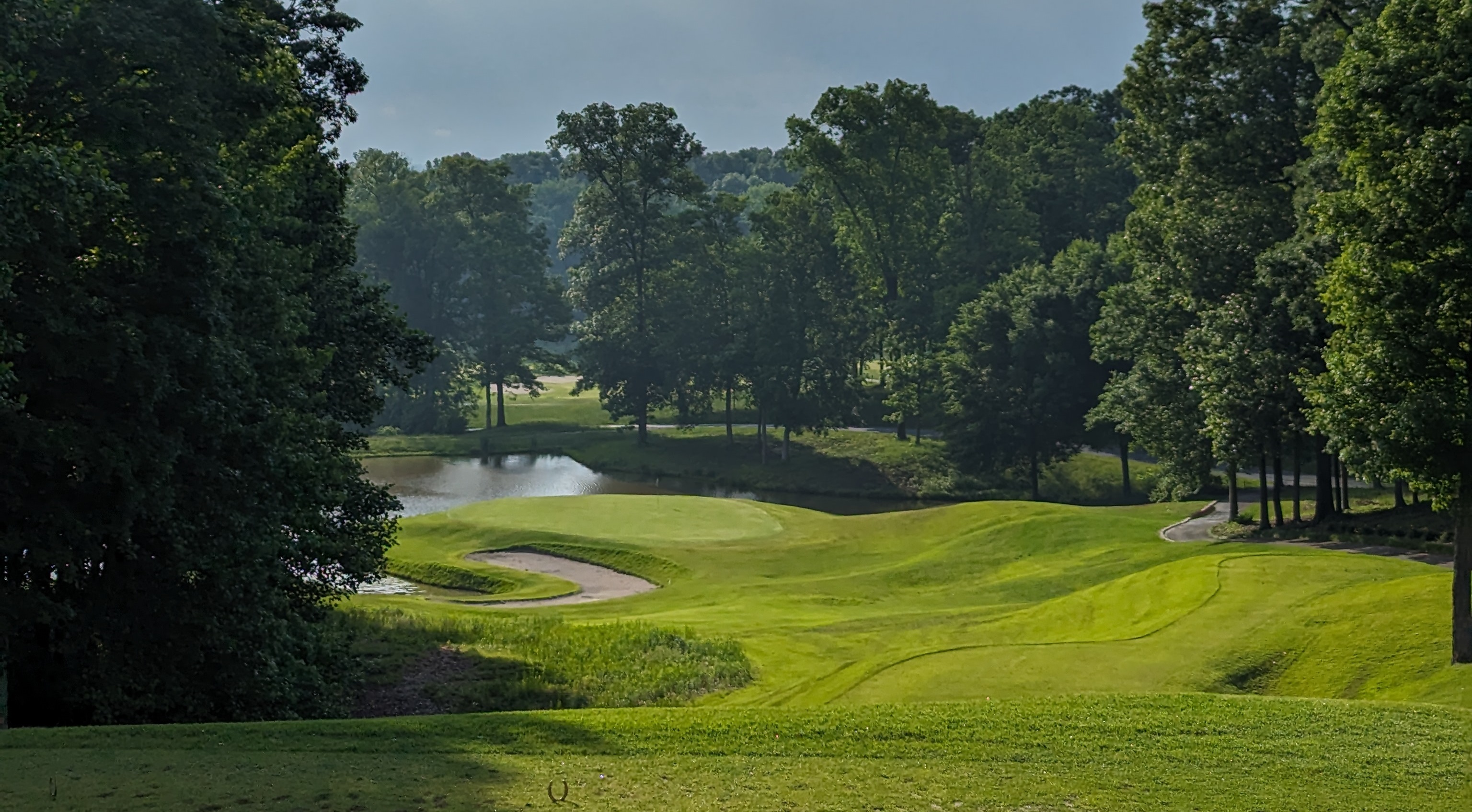
The twelfth hole, also starting near the clubhouse, is a gorgeous long par-3 that plays around 15 yards downhill as well, a theme at Sultan’s Run. The hole has a large green, but the green peninsulas into a surrounding lake, requiring an exact long-iron shot to find the putting surface. There is some bailout room short right that higher-handicap players can utilize if they do not feel comfortable challenging the protected green.
The thirteenth hole is probably the most interesting hole on the golf course, a long downhill and then back uphill par-5 that is feels a touch out of place at Sultan’s Run.
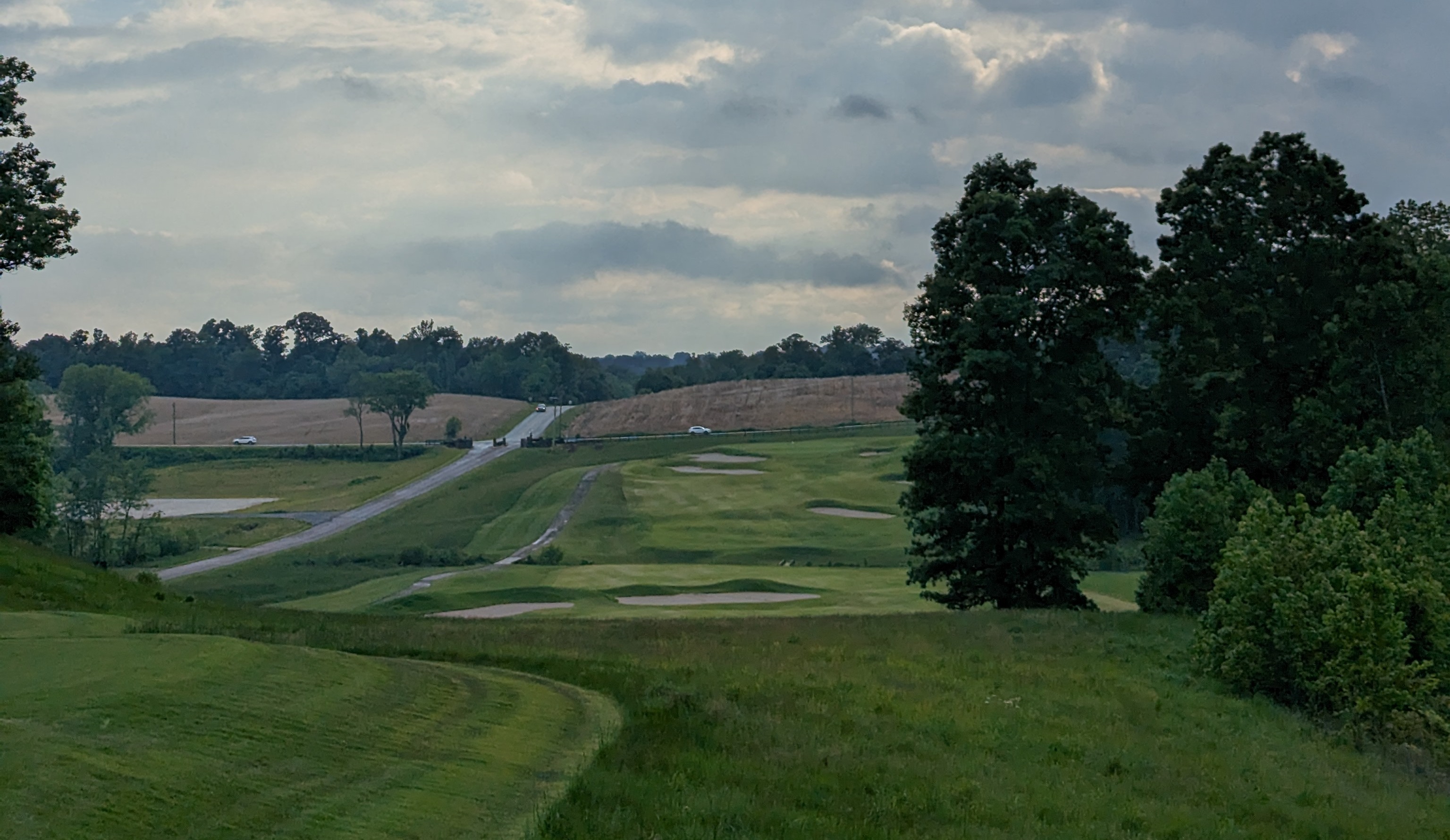
The thirteenth looks very geometric with two rectangular bunkers bisecting the fairway on the left. On the extremely wet day that we played, these bunkers were not entirely reachable, but on a more firm day, I could see the cross bunkers being in-play from the tee. Then, an extremely difficult layup shot awaits, as the player must take enough club to clear the ravine but also manage to navigate the bunker across the ravine that pinches the fairway on the right. Lastly, a tough wedge shot plays uphill to a larger green with a small false front.
I say this hole is a bit out of place, because to this point, Sultan’s Run does not use bunkers to cross the fairway’s centerline – but on the thirteenth, it happens twice. While a great design concept, because it forces a player to try a heroic golf shot or pay a significant distance penalty to lay up short, it is just not a concept used on any other hole at Sultan’s Run.
The course then turns to a fourteenth hole, a mid-length par-4 with a flat tee shot and a steeply downhill approach to a small green in a small valley. I enjoyed this hole, but came away with no picture due to an awful drive and a bit of scrambling in the woods.
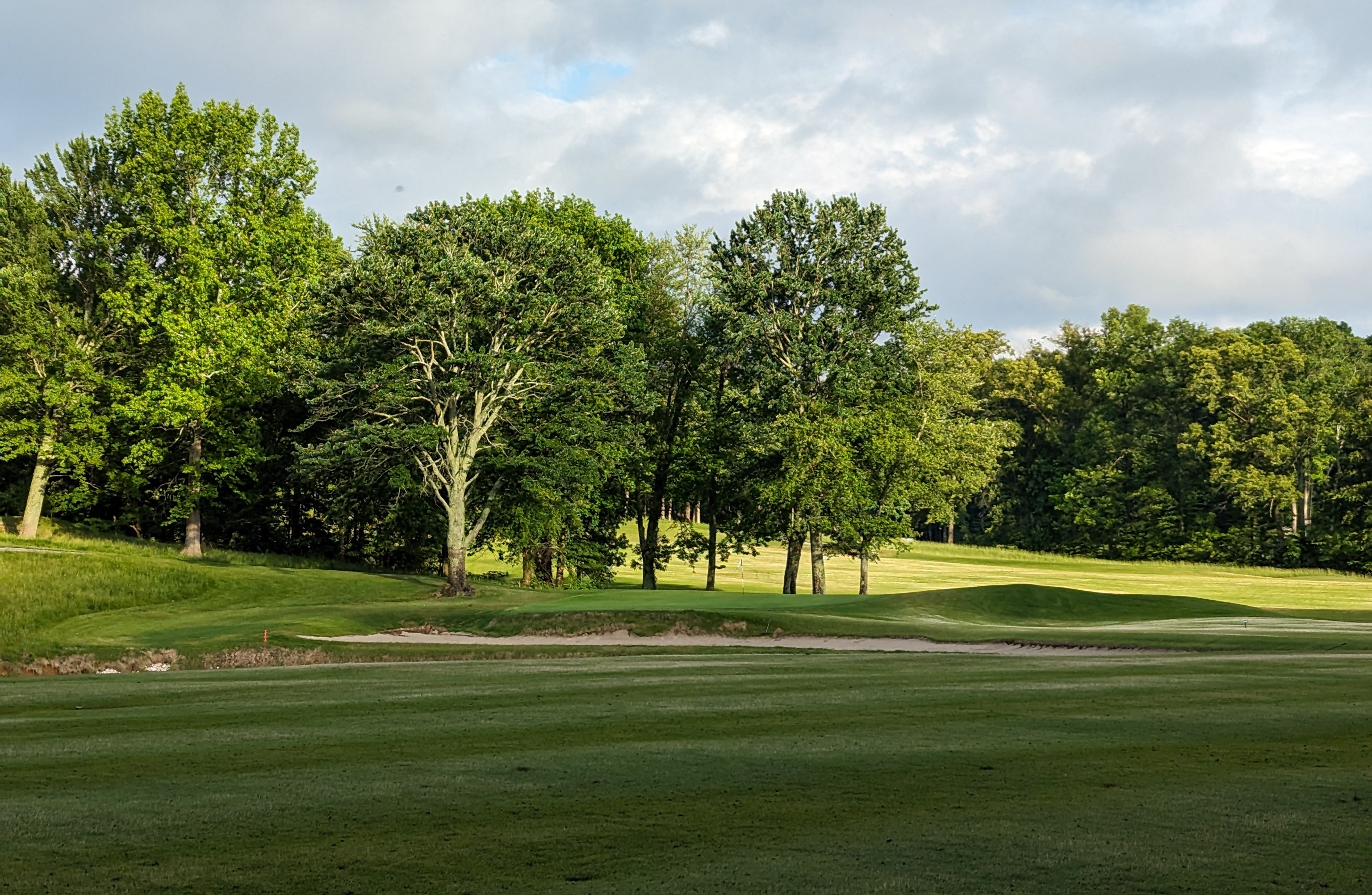
The fifteenth hole is another out of character hole for Sultan’s Run, inasmuch as it is largely flat and also somewhat geometric. The shorter par-4 doglegs around a lake (and a Harbour Town style bunker) on the left. The bunker wraps around and ends up fronting the green.
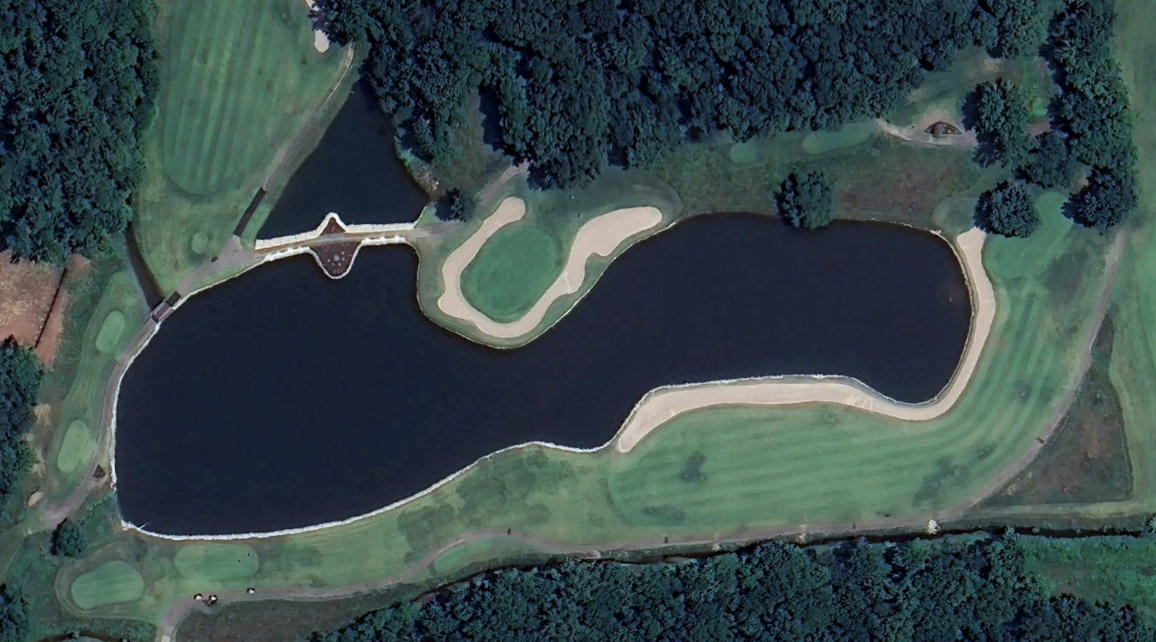
This fifteenth hole feels very much Pete Dye, Liddy’s mentor, in both aesthetics and playability, as does the neighboring sixteenth hole, a medium length par-3 that also plays a few yards downhill with a similar bunker wrapping around the green.
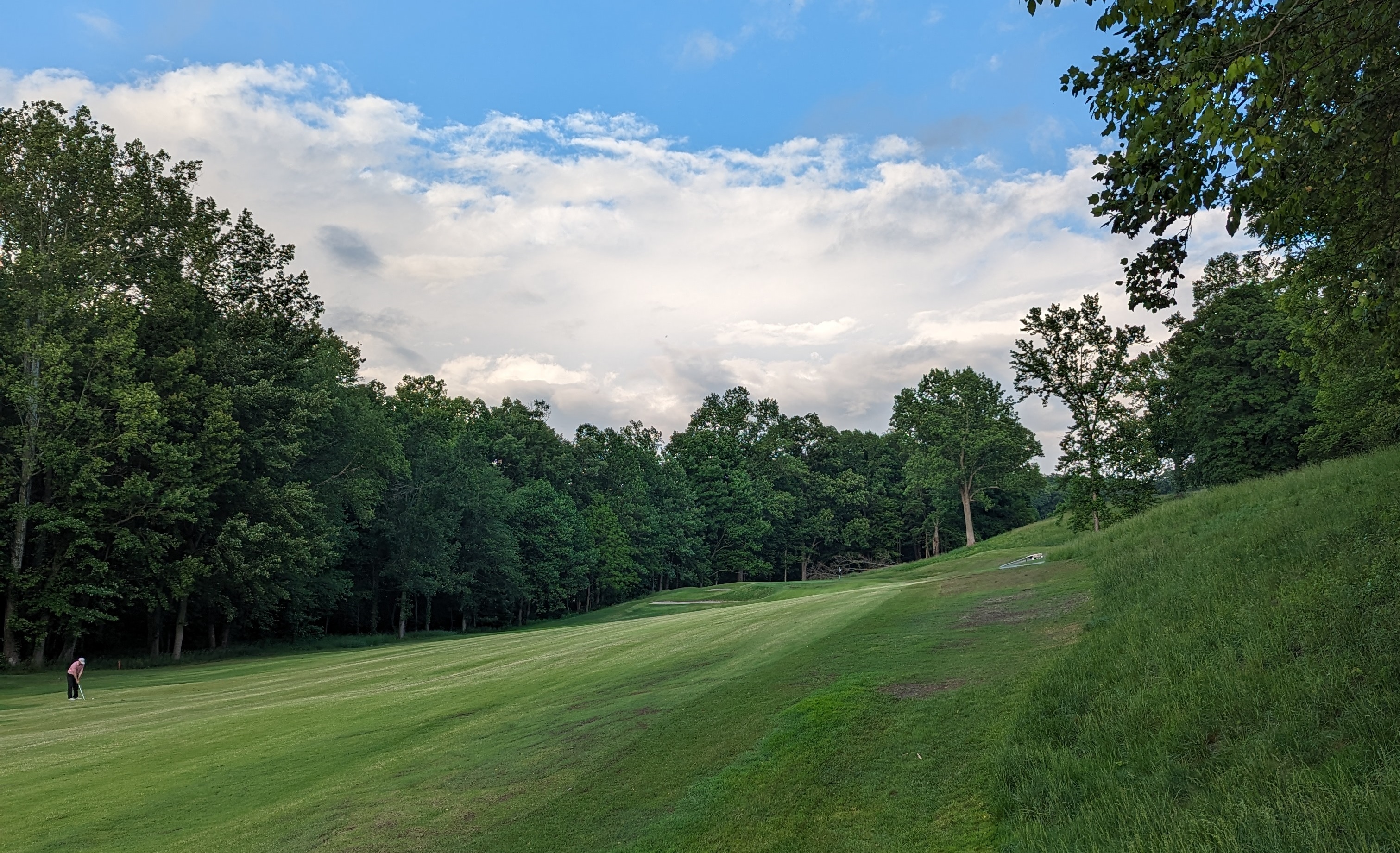
The seventeenth is a slight dogleg-left par-4 of average length. The first shot plays into a narrow fairway pinched by two fairway bunkers on the right. The approach is uphill and played to a green that rests in the flattened part of a slope that moves from right to left. Left of the green, a very deep set of bunkers await for pulled approaches that sit nearly 8-10 feet below the surface of the green.
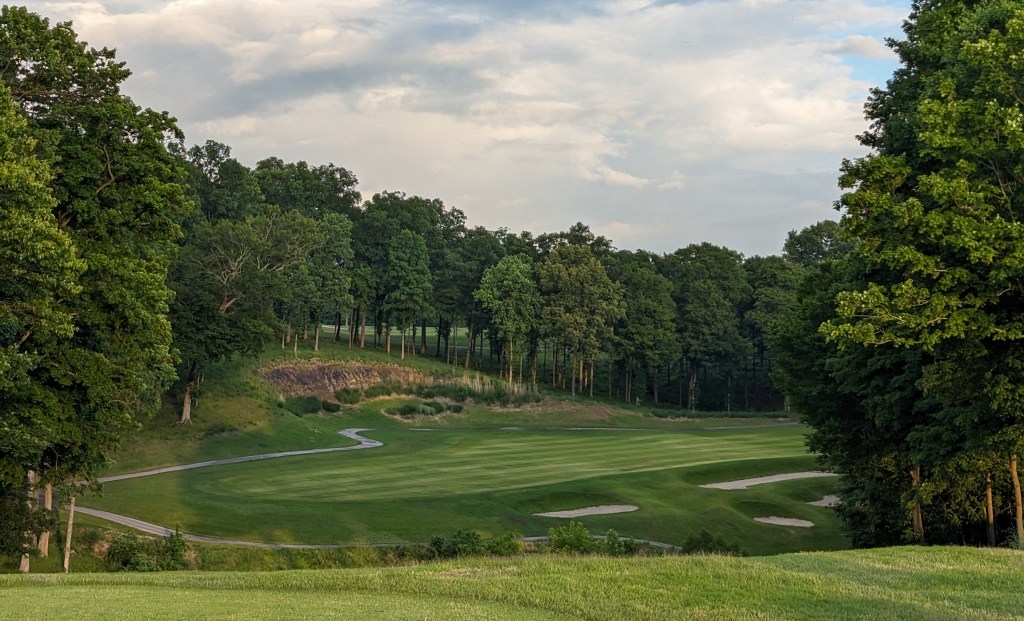
Finally, we arrive at the eighteenth hole, which would essentially be a straight, mid-length par-4 if the tee boxes were further left. Instead, the tee boxes are canted an an angle to the fairway, requiring the drive to navigate multiple deep fairway bunkers in order to find the fairway. This is a drive that tempts a player to bite off as much as they can to the right, but the wider part of the fairway is directly over the first bunker on the left. Whichever line is chosen, the tee shot must be well struck to clear the valley and vegetation before the fairway.
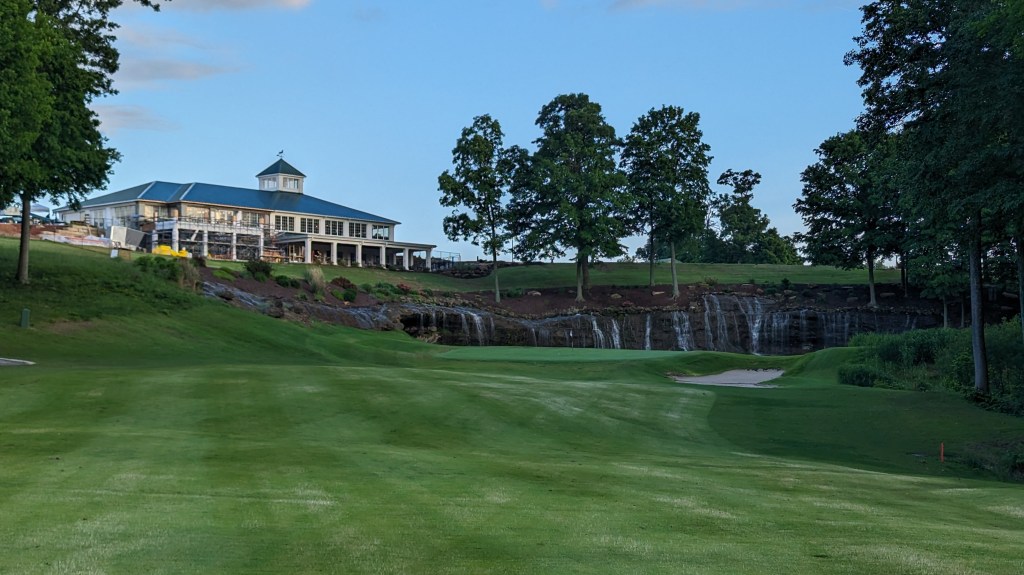
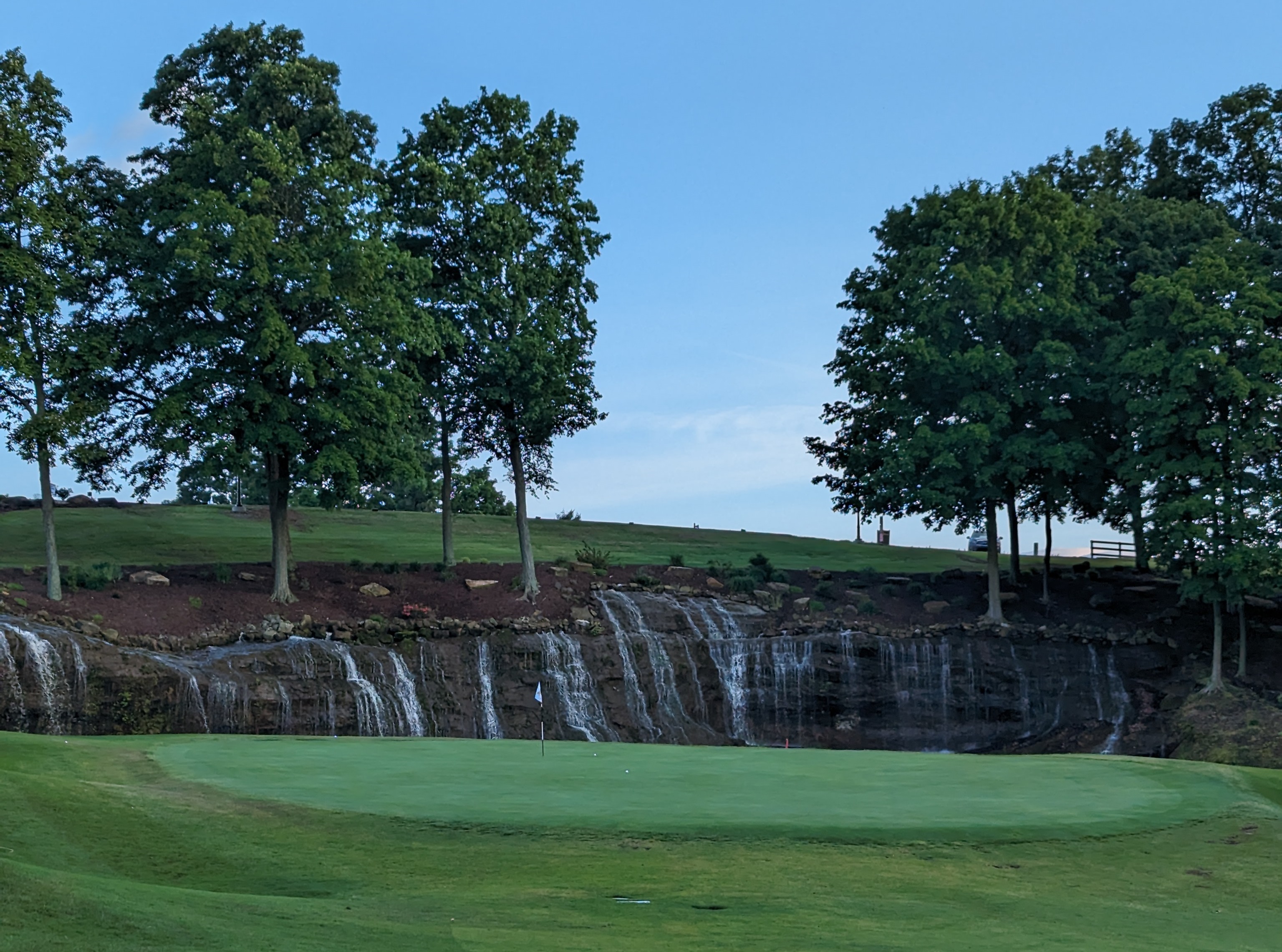
Discovering the eighteenth hole was a pleasant surprise since I hadn’t seen any pictures of Sultan’s Run beforehand. If I had, I’m sure this would have been the photo.
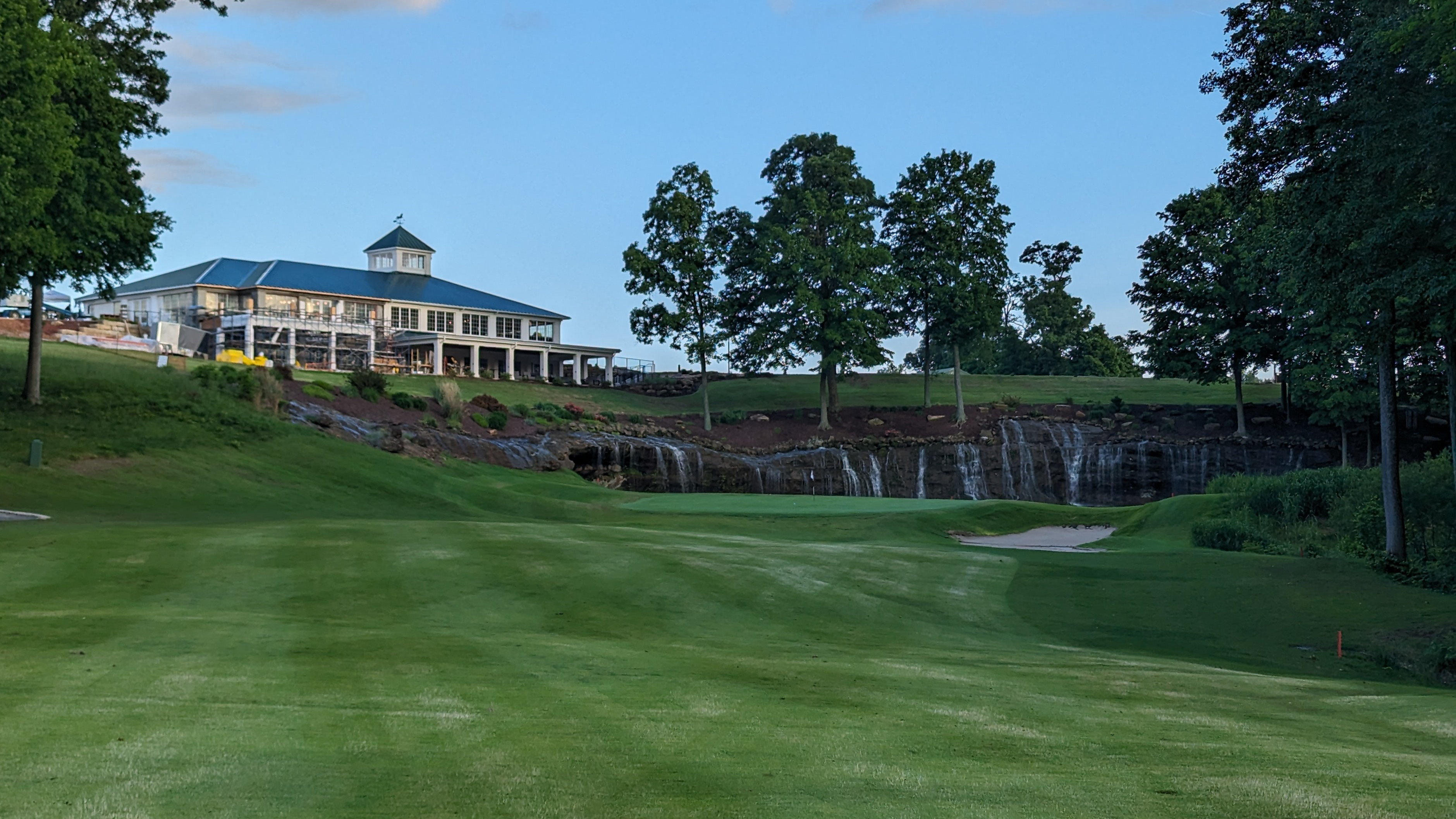
The second shot, rather wildly, plays directly below the clubhouse and a large, expansive waterfall feature that is very cool (and very out of character). This large of a waterfall on the eighteenth really surprised me, not having known it was there, and added a memorable finish to the round. The actual approach is played slightly uphill to a green that has significant back-to-front pitch, and a moderately deep bunker on the right. The cart path actually ends about 70 yards before the green, which is a great touch, as it forces the player to walk the last 50-yards of this hole and allowing the time to take in the beauty of the surround.
Final Thoughts
As you’ve seen, Sultan’s Run is a worthy round of golf at a great value. The flood conditions were challenging for the course when I played, but the course was still in great shape and provided a fun round of golf. Two things will always stand out to me about Sultan’s Run: the natural elevation changes that are seemingly nowhere to be found in Southern Indiana and the man-made waterfall that encapsulates the eighteenth. While Sultan’s Run faces the same challenges as most public golf courses with regards to conditioning, I have no doubt that Sultan’s Run is in the upper tier of public golf in Indiana. So, maybe Sultan’s Run isn’t a hidden gem, but it is a quality golf course that is a bit of a drive from . . . anything.
F1C’s Final Rating:
Shot Options: 6
Challenge: 6
Layout Variety: 7
Distinctiveness: 8
Aesthetics: 7
Conditioning: 6
Character: 8
Fun: 7
Total: 56/80
Read More: How We Rate Courses
Rating Scale Details
> 70: Top-50 U.S.
65-70: Top-200 U.S.,
60-65: Best-in-State List
57-60: Best-in-state List Contender
53-57: Very Good
48-53: Good
40-48: Average
> 40: Poor

Author: Jaxon MacGeorge
Jaxon is the founder and lead course reviewer at First1000Courses.com. Jaxon has been playing golf for over twenty years, is a scratch handicap, and actively competes in USGA and Tennessee Golf Association (TGA) amateur events. By trade, Jaxon is an attorney and lives in Gallatin, TN, a suburb of Nashville.


 First 1000 Courses
Leave a comment