Time to Read:
|
This Point Hardy Golf Club course review is based on a round played on March 19, 2024.
Point Hardy Golf Club @ Cabot Saint Lucia is a private course in Cap Estate, St. Lucia. The course is allowing limited non-member VIP play at around $525/round.
F1C’s Final Score: 76/80 (Top-50)
Learn More: How We Rate Courses
Much of life seems dependent upon timing. Who we love is often dependent upon the intersection between place and time, random happenstance turning into a defining feature of life. Of course, this can extend to our careers, where we live, our travels, and so much more. Many times, we find ourselves in the wrong place at the wrong time. But for me, I found myself a beneficiary of life’s timing, as all the pieces came together to allow a stop at Cabot Saint Lucia on an already booked vacation to the island. Point Hardy, one of Cabot’s newest creations, just opened in December, and debuted in GOLF’s top-100 world course rankings once opened. As my stars aligned, I found myself turning right (from the left hand side of the road) from a potholed filled road into Cabot’s newly constructed gate in a 20-year-old, rented Suzuki Jimny.
Point Hardy is Cabot’s first foray into private courses and homesites are actively being sold at the course. However, there are few, if any, currently built – including the club’s home (the clubhouse is expected to be completed sometime in 2026). What currently exists upon arrival is a small trailer, some washrooms, and a small pavilion with a handful of carts. Many golf courses have incredible entrances that set the stage for what’s to come. I feel confident that the drive into Point Hardy, with its unbelievable views, is the most beautiful drive in to any golf course in the world.
Our caddie greeted us on arrival and quickly we were on the range for warmup. The range is cut into a large hillside and plays directly uphill and downwind. Let’s go ahead and talk about that wind: every day we were in St. Lucia, the wind blew a single direction, west-to-east across the island at a pretty consistent 20 mph. Point Hardy was no different, as the wind relentlessly blew around 20 mph off the ocean for the entire round, never wavering in direction.
After a short warmup, we were off to the practice green, located before the first tee. A few warmup putts later, and it was time to take on Bill Coore & Ben Crenshaw’s tropical masterpiece at once.
The First Tee
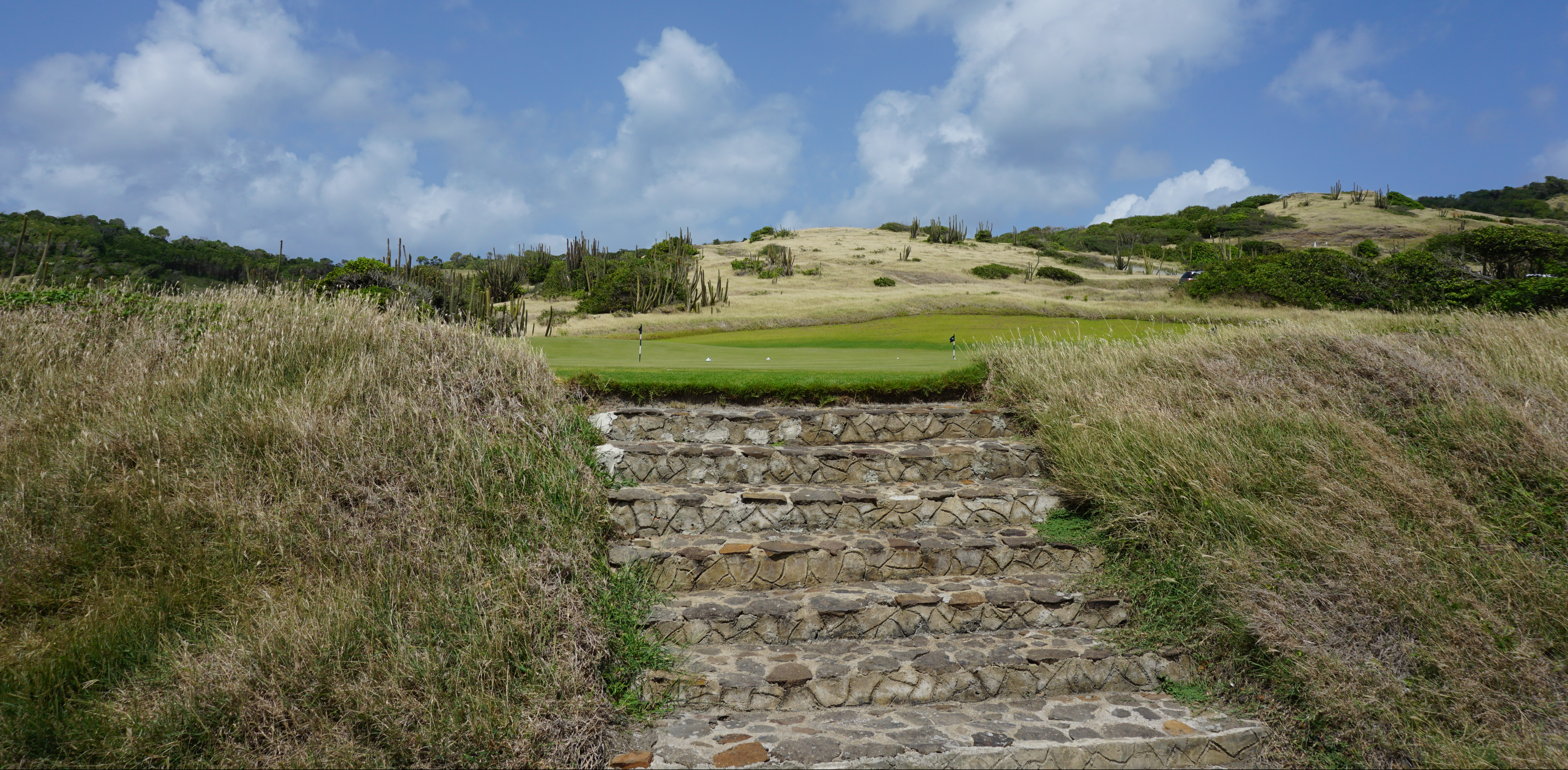
The first hole is a short, downwind par-5 with a crossing ravine that bisects the fairway landing zone at about 290 yards from the back tee. This is the first lesson in the wind, because that 290 actually plays about 260. My well struck three-wood nearly reached the crossing hazard. The ravine makes its way up the right side of the hole to the green. The fairway on the tee shot largely moves right to left, and two fairway bunkers sit on the right of the fairway, almost as guideposts to start. Land in front of those, and your ball will bounce down for the perfect look at the par-5 green in two.
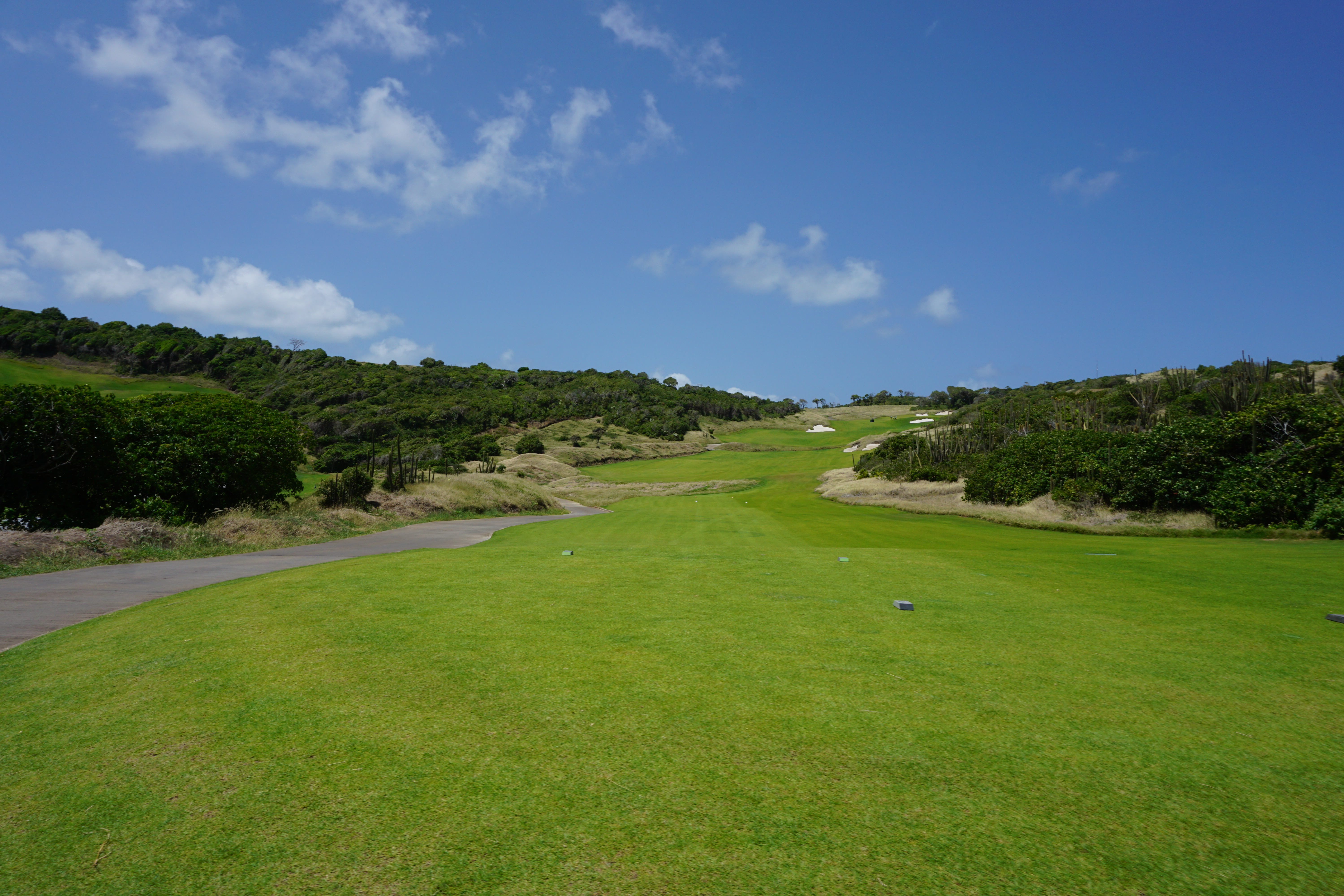
The second shot is quite complicated, as the hole works uphill to a green protected by a centerline bunker fronting the green, and a deep one at that due to the steep uphill nature of the hole. It is quite difficult to pull off an uphill hole, but in theory, this one works. However, it is quite the demanding green area, especially if the second shot comes to rest beyond the hole – the natural bail out area for an uphill hole. I found myself above the hole with a shot that may have been impossible to stop, and suddenly, I was pitching my fourth (and fifth) (and sixth from the same spot) some 50-yards away and straight downhill. An absolutely rude wake up call on the first hole, and a bit too punishing for my taste.
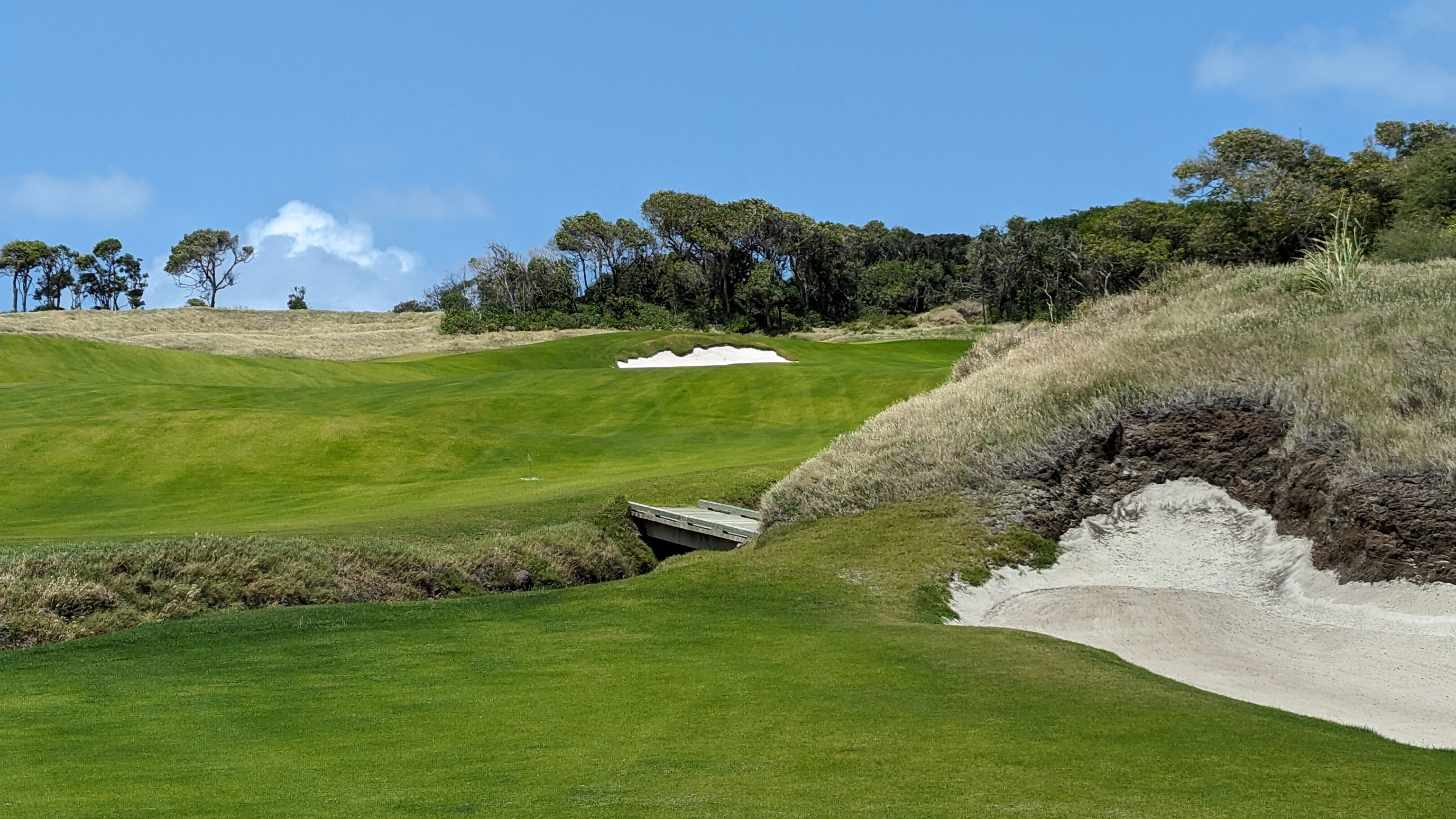
I’m not sure the punishment is intended, though. As you drive around St. Lucia, and particularly this property, you will note how extremely hilly/mountainous the topography is on the island. The highest point of this property is likely the entrance, with everything working downhill to the sea from there. In order for holes to come down, some holes have to go up. Unfortunately, the first has to go up (as well as the tenth), but perhaps Coore and Crenshaw could have done better here by better assisting a player who uses the natural bailout area long of the green. I’m not sure deep bunkers and long grass is the appropriate amount of punishment for a ball a bit long. A long approach shot is always going to leave a tricky chip back down the hill without the extra difficulties. Rethinking this green complex may be needed in the future. I’m no professional golfer, but I am a scratch golfer with a decent short game, and if I am chipping 4 times on the same hole, some amateurs may chip until they pick up, and that truly isn’t the spirit of the game.

That’s the only uphill hole on the front nine though, and coincidentally, the only hole I’ll complain about on the front nine too.
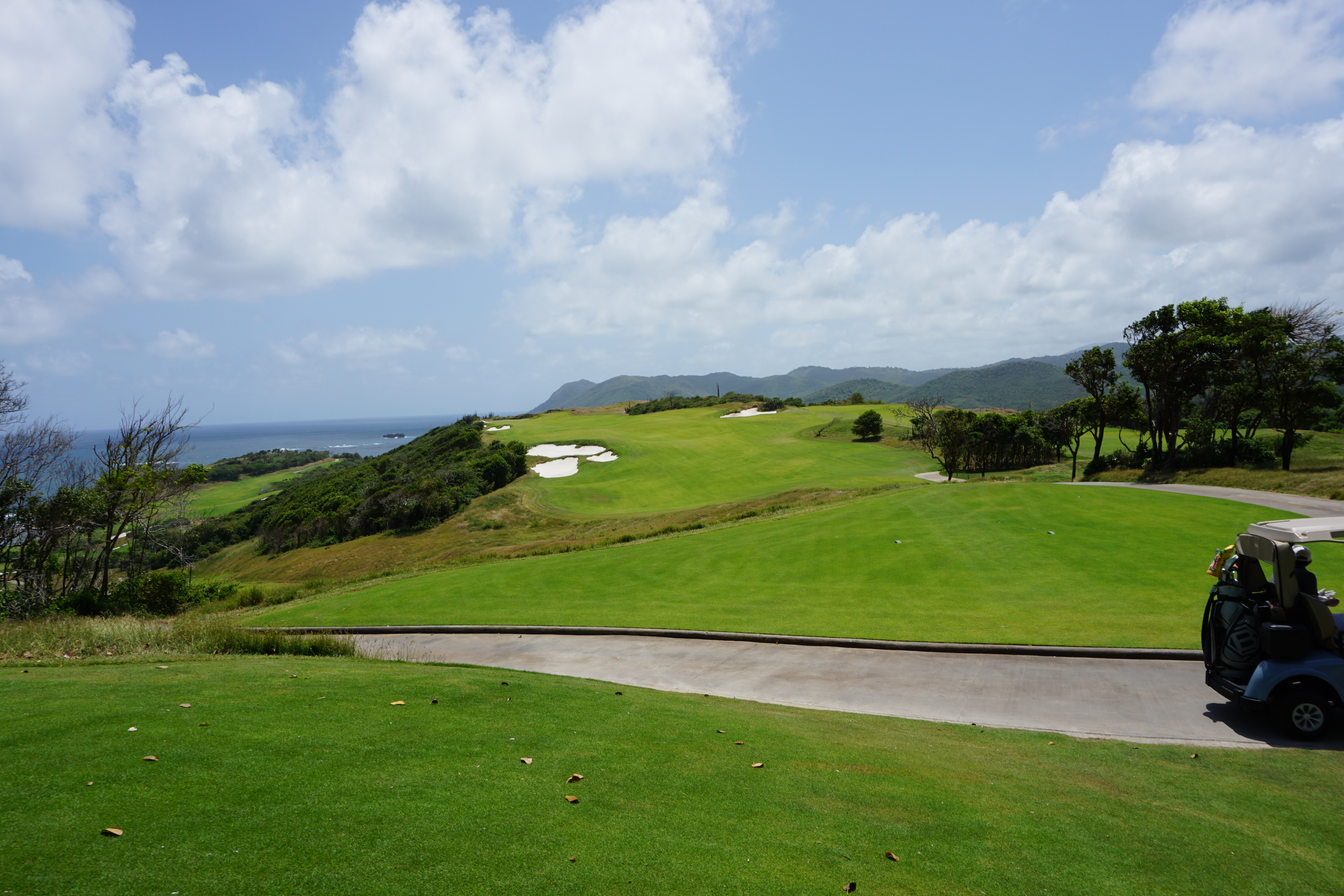
The second hole is a long par-4 that plays into the prevailing wind from a quartering angle, and produces the only long, into-the-wind par-4 on the course. This hole’s fairway feeds everything slightly left, so the bunker on the right is a great starting point. The group of bunkers on the left are easily-carried eye-candy for most groups, serving to push the player further right, as there is plentiful room right of the fairway.
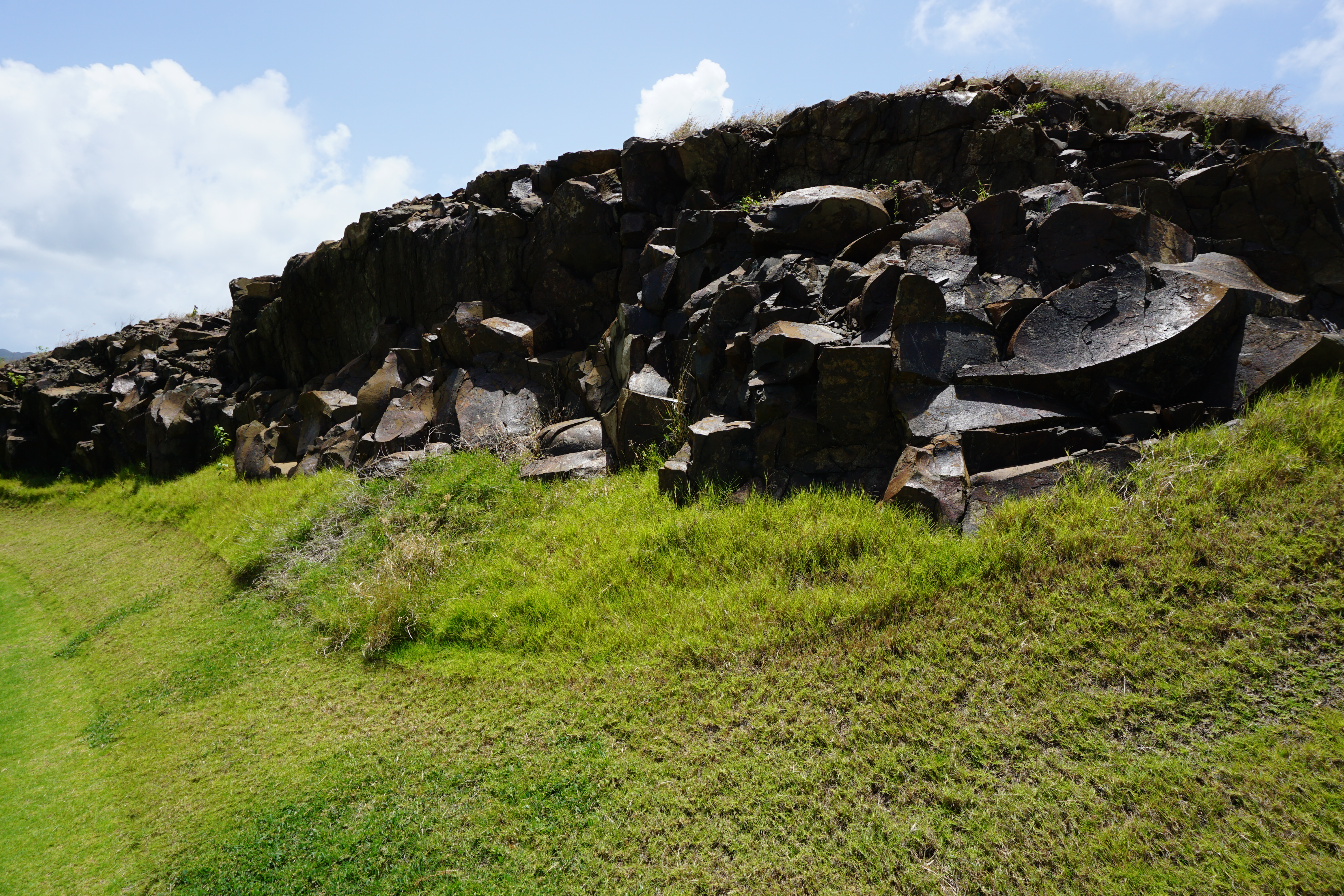
The second shot, undoubtedly a long iron, plays to a table top green, well protected by bunkers, and an odd rock formation right of the green, that seems to serve as a natural retaining wall. I can only imagine that a few balls faded just right of the green may be served a the fate of a terrible bounce off the rock faces and into the heavy rough.
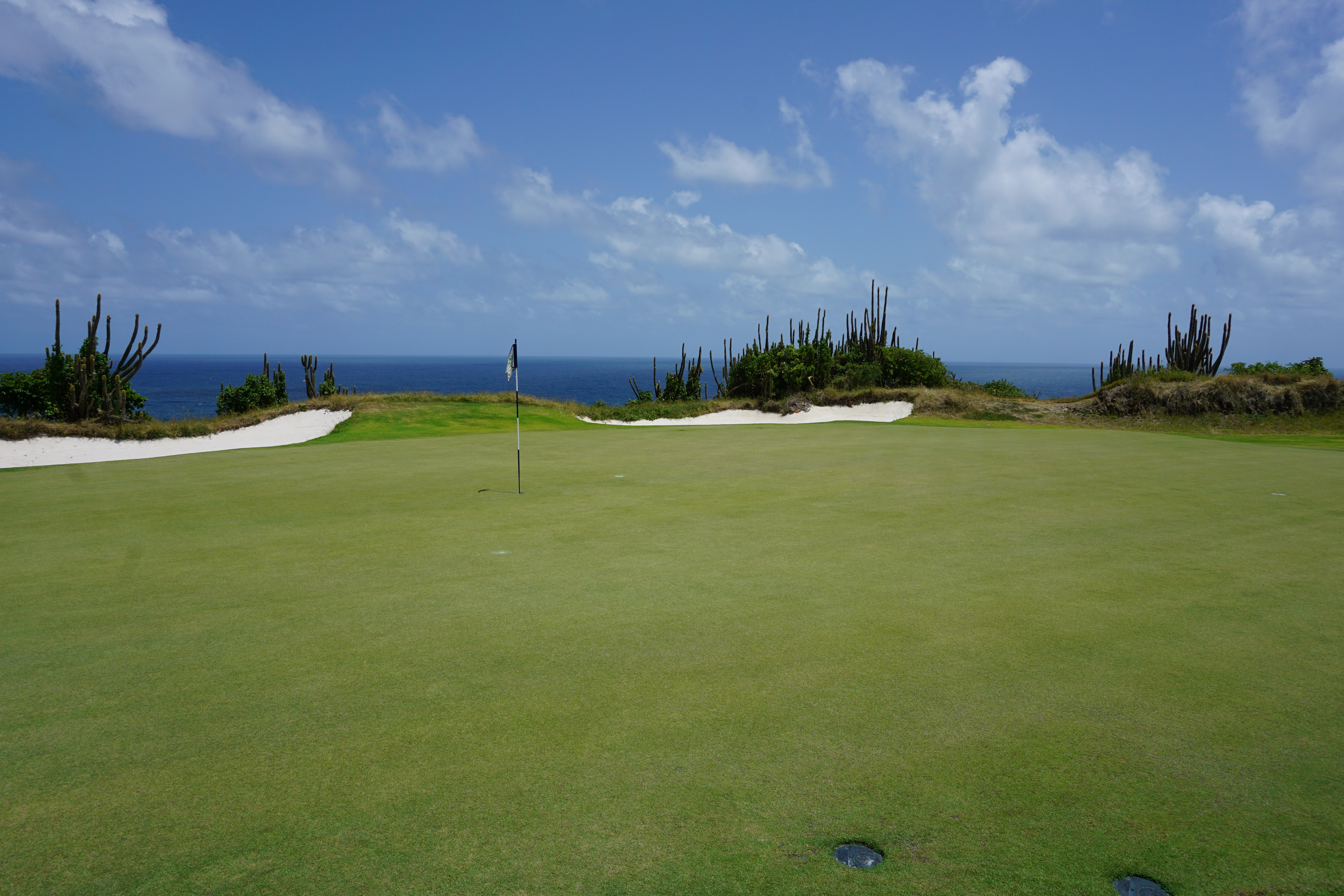
I’d be remiss if I didn’t tell you to walk from the second green to the third tee box, as some of the best views on the island of St. Lucia are found off the back of the second green.
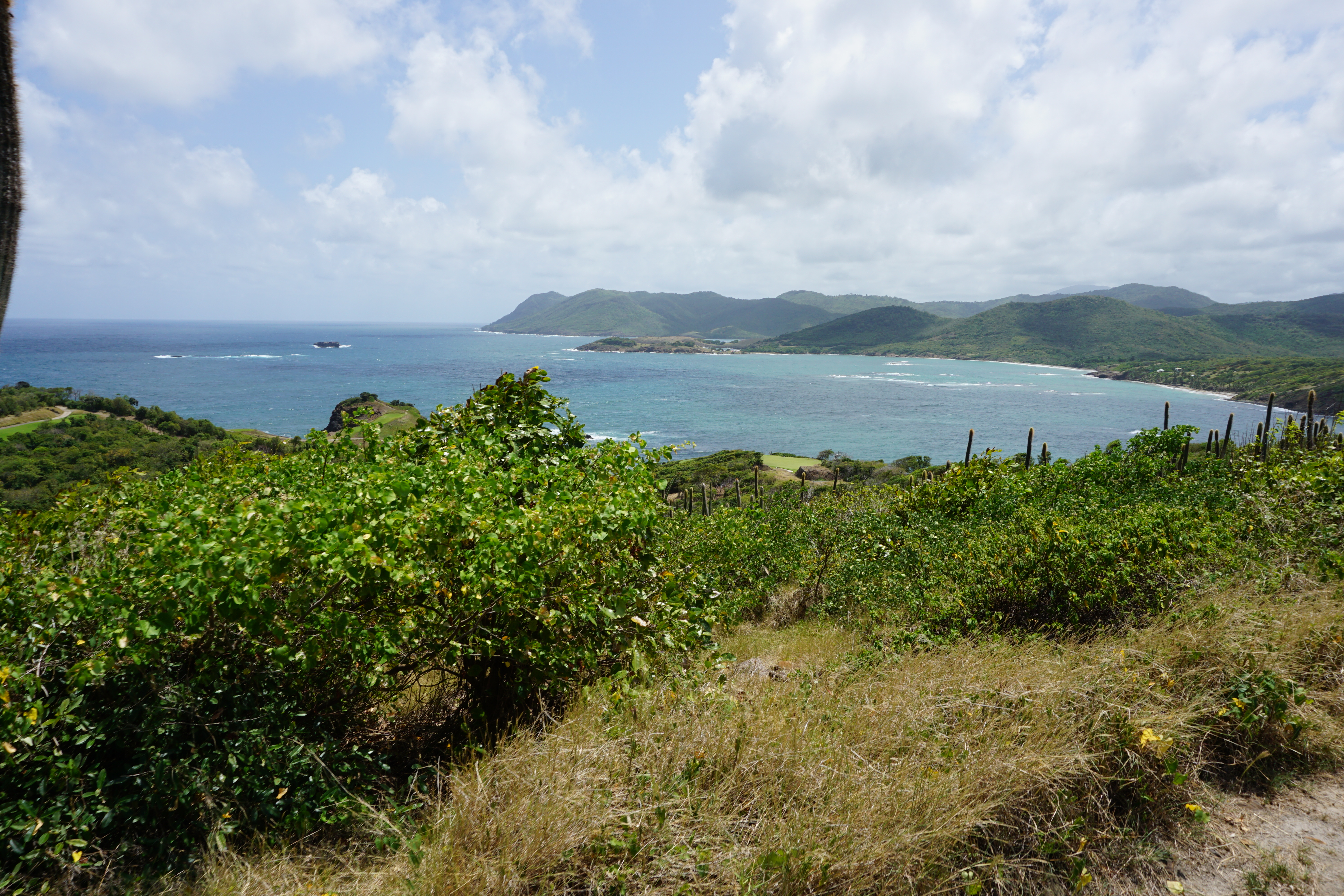
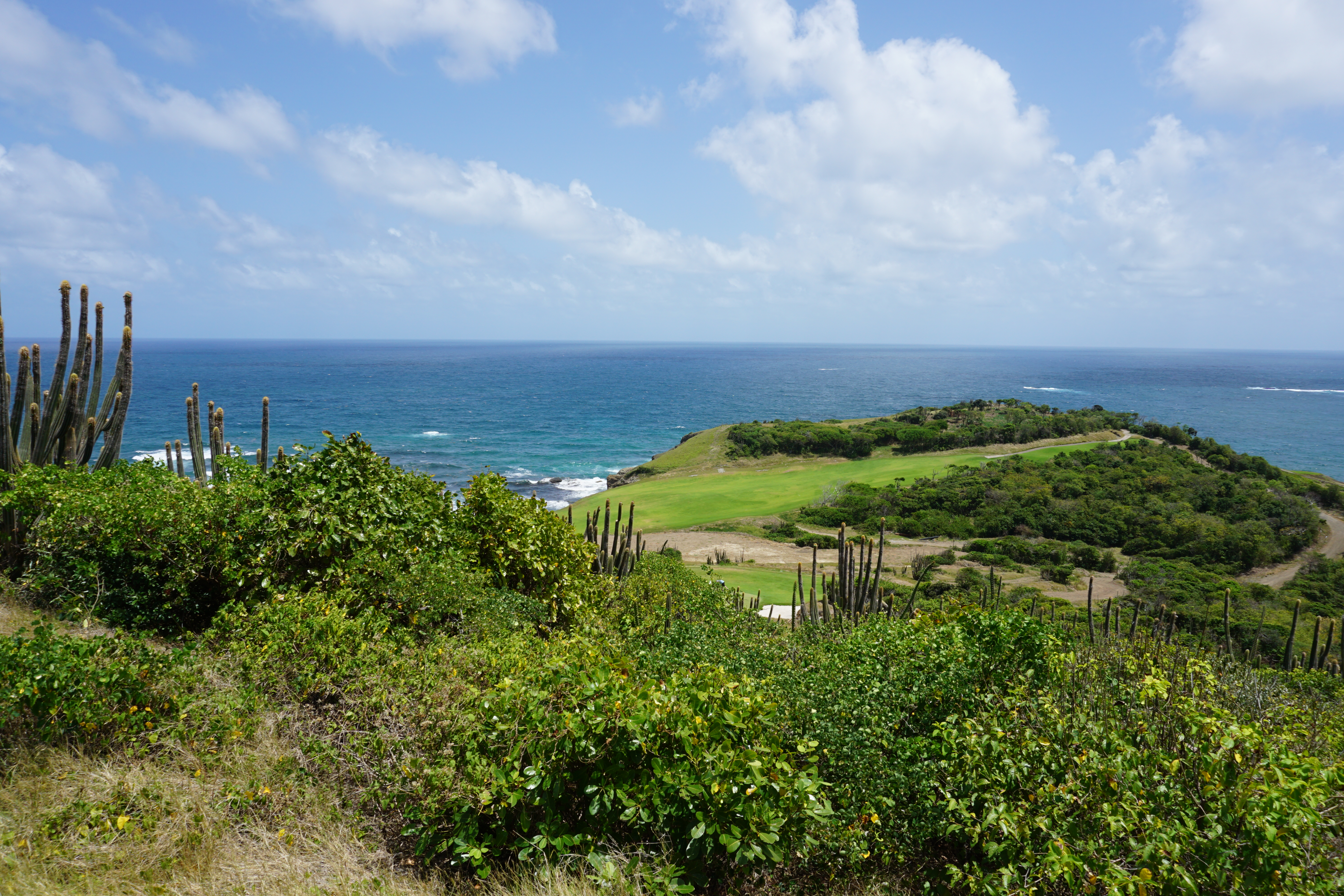
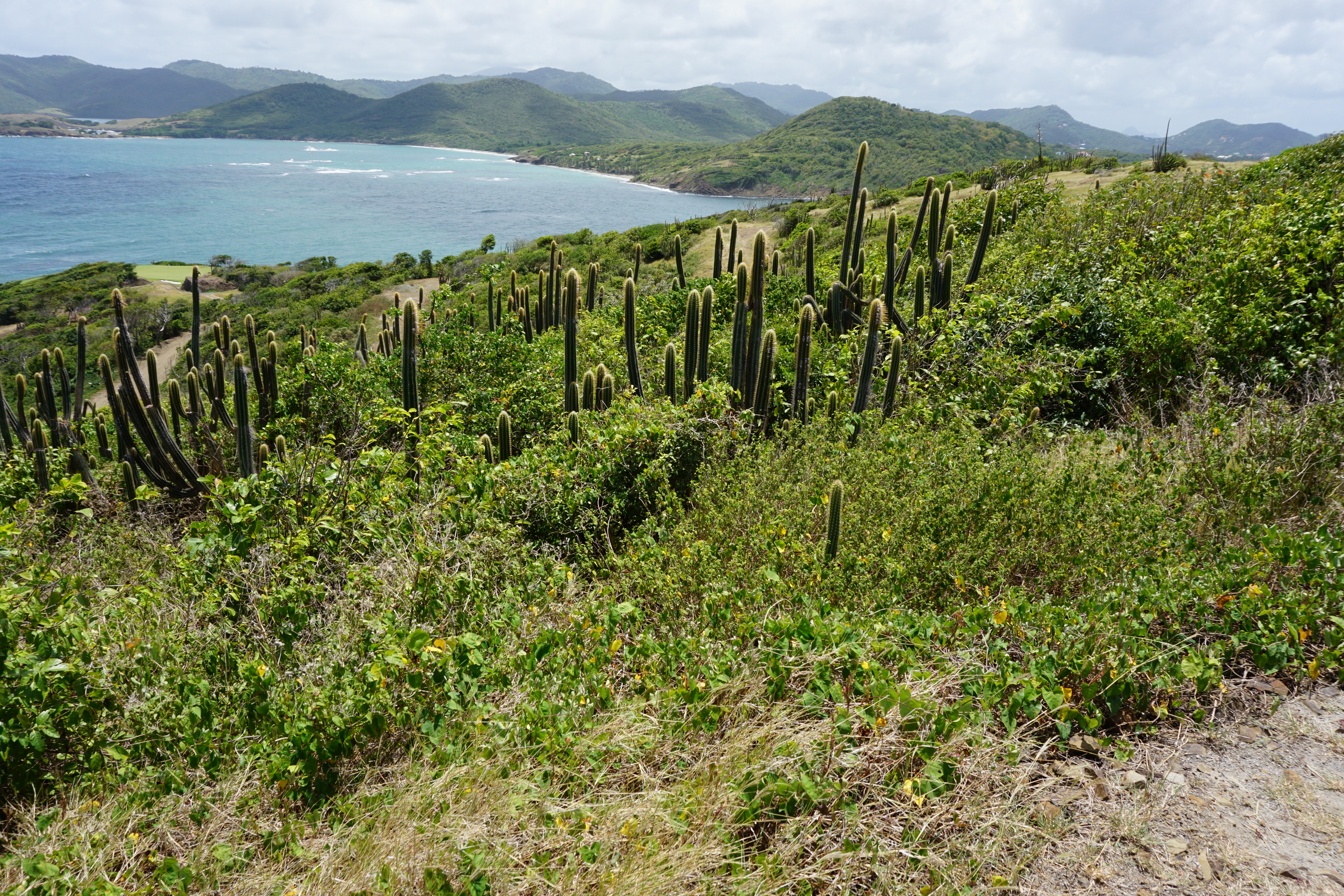
The scorecard at Point Hardy may start 5 – 4 – 5, but it may as well read 4.5 – 4.5 – 4.5, as it was undoubtedly Coore & Crenshaw’s intention for this course to start with three par-4-and-a-half holes. The third is a very reachable par-5 that plays directly downwind without significant trouble in sight.
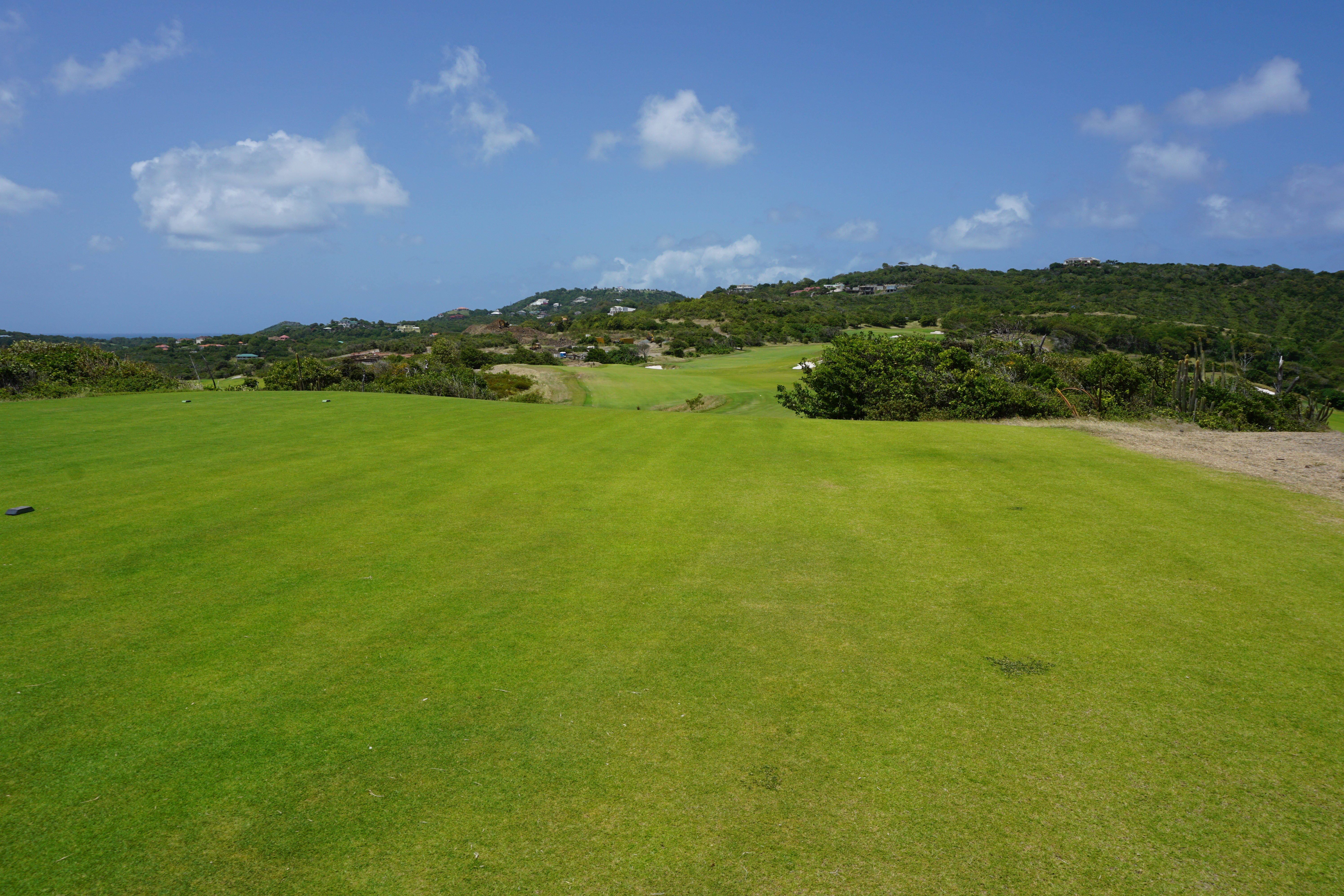
Its very difficult to knock this course for anything, but the third is probably the most uninteresting hole on the golf course, but this course is not short on interesting holes. Once in the fairway, the green is protected by a lion’s mouth bunker on the centerline and the green features a significant ridge in the middle of the green, separating a higher left side from a lower right side.
The fourth hole begins a truly incredible stretch of golf. This course has two significant stretches of mind-boggling, fantasy golf that words and pictures are truly not capable of doing justice: the fourth through the ninth, and the fourteenth through the eighteenth. The fourth, on the card, is a long par-3, but due to the downhill nature of the shot and the prevailing wind at the players back, this 210 yard par-3 played just 150-or-so yards on our day. The green funnels almost like a redan from right-to-left. March is dry season in St. Lucia, and the ground was very firm and fast from fairway through the greens, meaning the ball must be landed short of the hole to account for some roll out. Both frontal bunkers were deep, and the green almost rolled directly into the back bunker a-la-Royal-Melbourne. Most hole locations would be receptive to a tight draw starting at the right edge of the green.
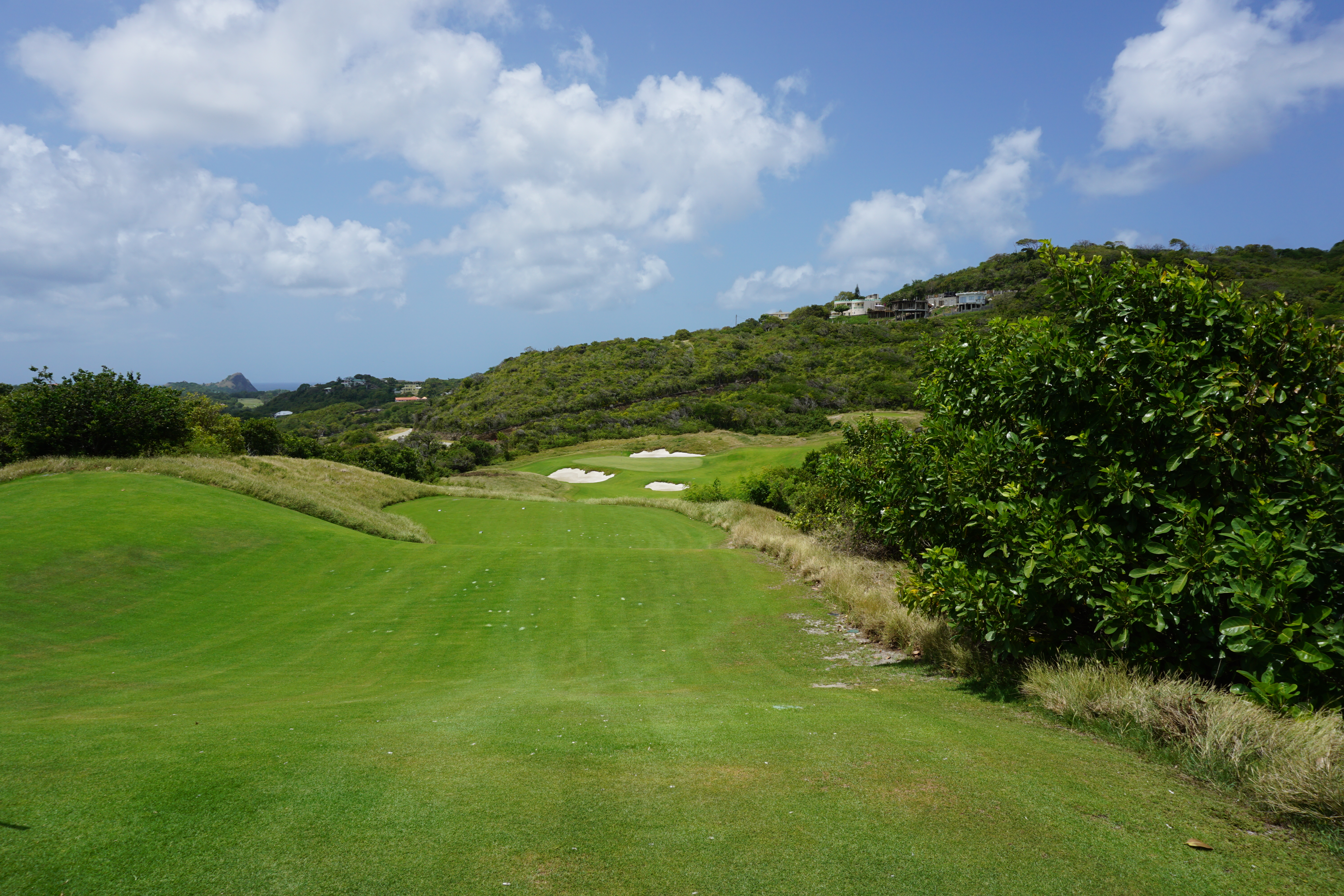
After the fourth, a small “comfort station” awaits with some free packaged and homemade snacks, a well stocked bar and bartender. Then, the walk up to the fifth tee begins. Probably the highest point on the course, the fifth tee allows for a panoramic view of the next few holes, a stretch of holes that run straight downhill from the rainforest to the ocean.
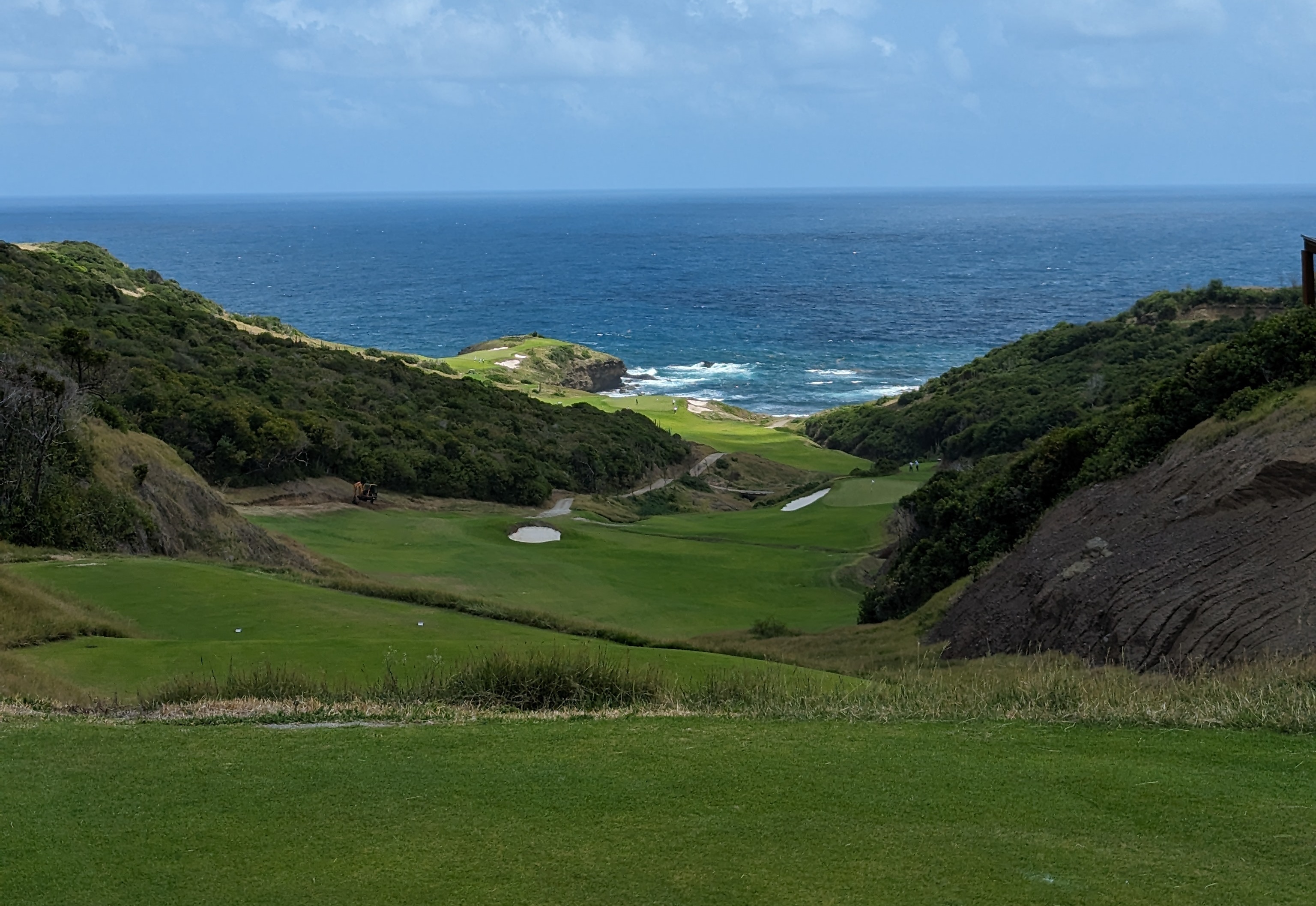
This is the most impressive view I have ever seen on a golf course; 600-yards of weaving golf course, three holes and the eighth tee, and the expansive Atlantic Ocean in the background – a sight I will never forget. The fifth hole is actually a short par-4, but the wind on these holes essentially cancels out the elevation loss, as the fifth, sixth, and seventh turn directly into the prevailing wind, now requiring two or three additional clubs to account for the wind. The centerline bunker here is around 300-yards out, which is basically unreachable into the wind, and serves as a great aiming point.
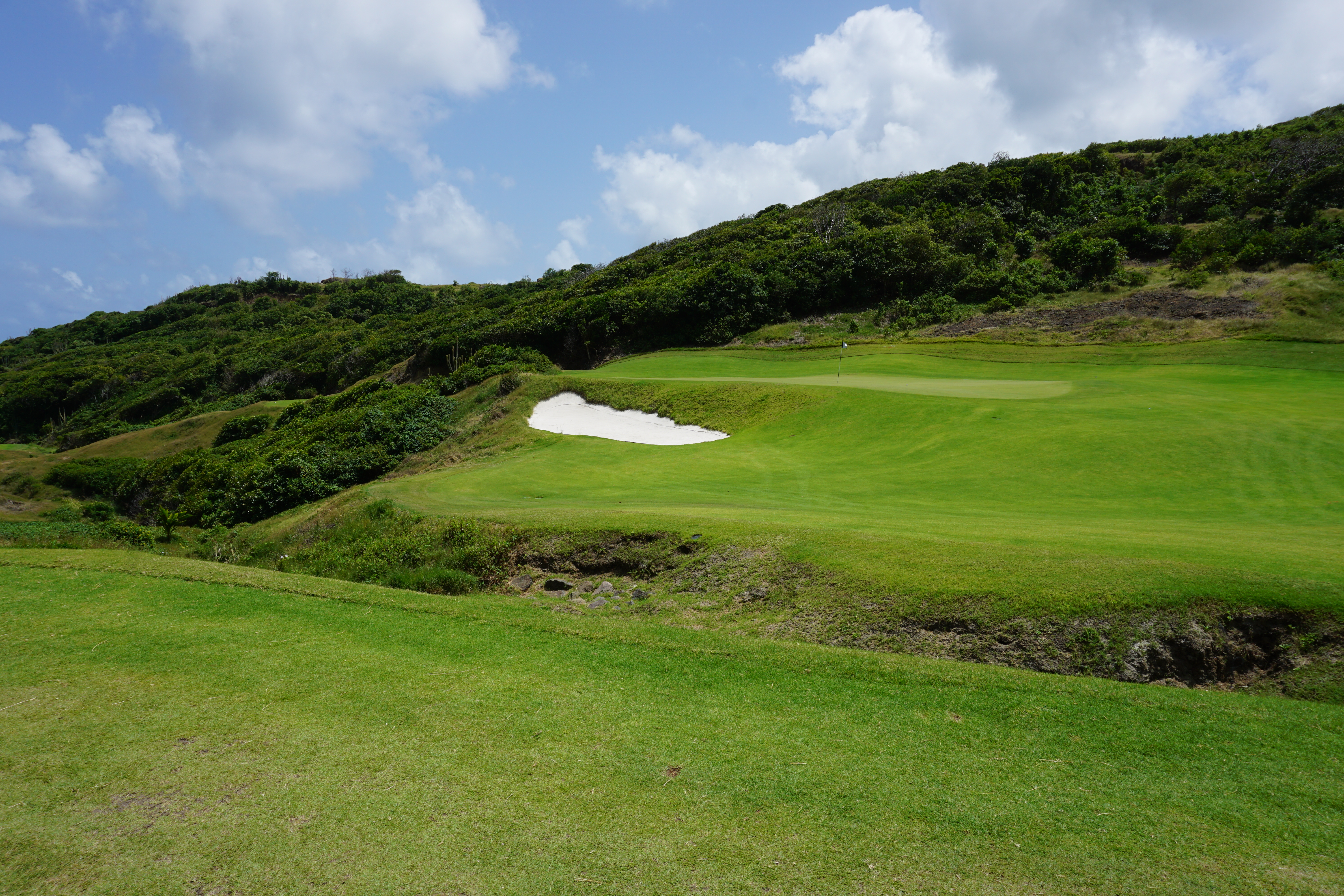
Once in the fairway, the hole works across a small ravine to a green cut into the hillside. This hole undoubtedly required significant earth moving to perch this green into the steep slopes of the hillside, and accordingly, is one of the smaller greens on the course.
This course, due to its nature along a rocky coast, will be compared to Pebble Beach, but a significant difference at Point Hardy is the size and square footage of the greens. Apart from this specific hole, this course is not small target golf. Most of the greens are relatively expansive and are surely much larger than Pebble Beach, allowing for a bit more use of the ground in windy conditions than the smaller targets at Pebble would allow.
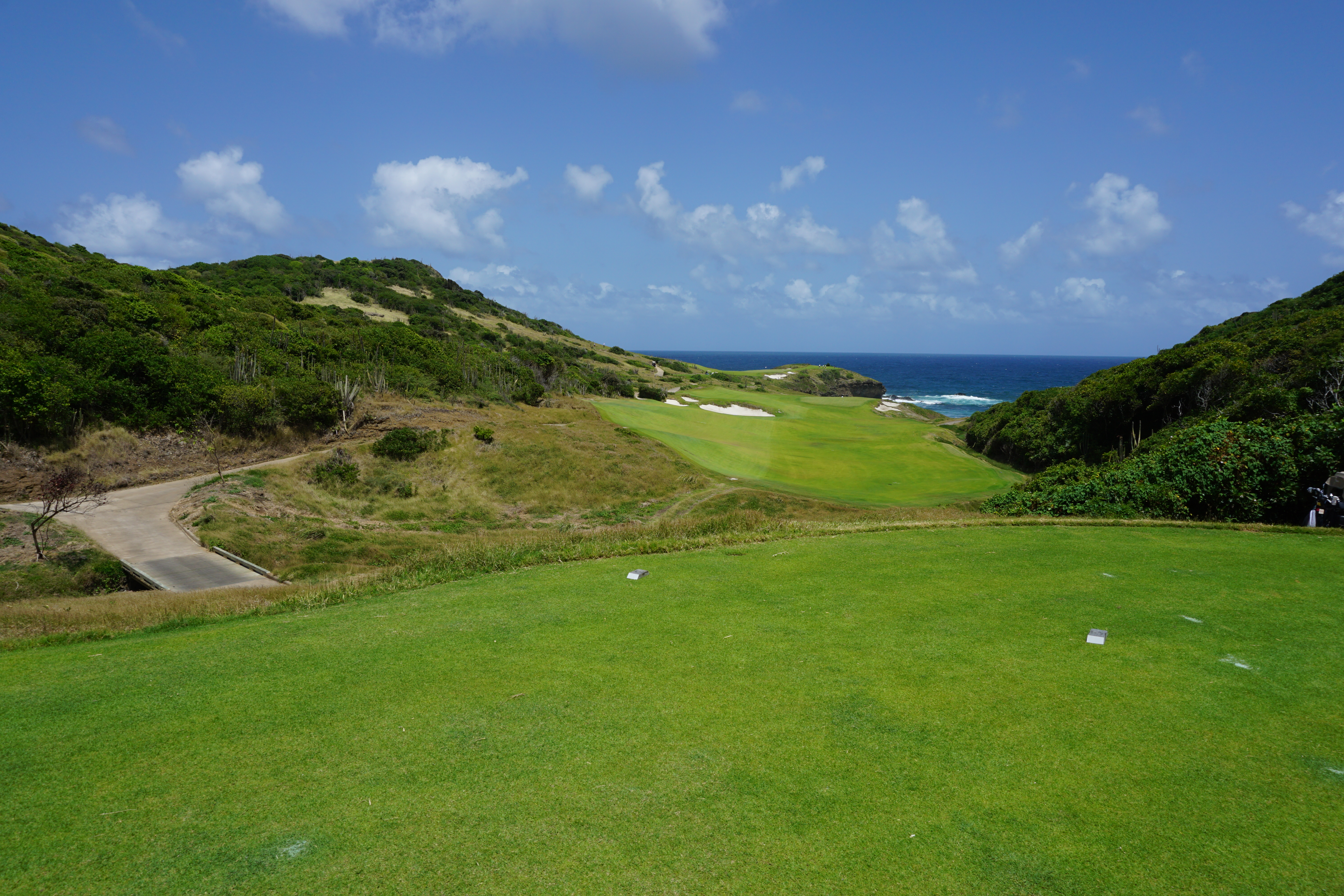
The sixth hole, another short par-4 on the scorecard, actually plays as a mid-length par-4 with the wind blowing. The fairway is canted from left to right, and with a set of bunkers that pinch the landing area for a well struck drive into the wind. Fortunately, a rolling ball will roll away from the bunkers towards the flatter right side of the fairway, which is flanked by the vegetation on the right. The tee shot presents a few options, because a well struck driver will bring the bunker into play and leave a wedge into the green, whereas a 3-wood may leave a mid iron, but takes the crossing bunkers completely out of play.
Like the fairway, the approach into the green is very tricky as there is a prevailing slope from left-to-right, with a significant false front for the first few paces on the green. Front pins can be particularly devilish. My ball landed a few feet right of the pin and finished 15 yards right below the bunker. Balls to the left of the green and short sided also may leave an impossible chip, and two bunkers hug the right of the green tight well below the surface on the right.
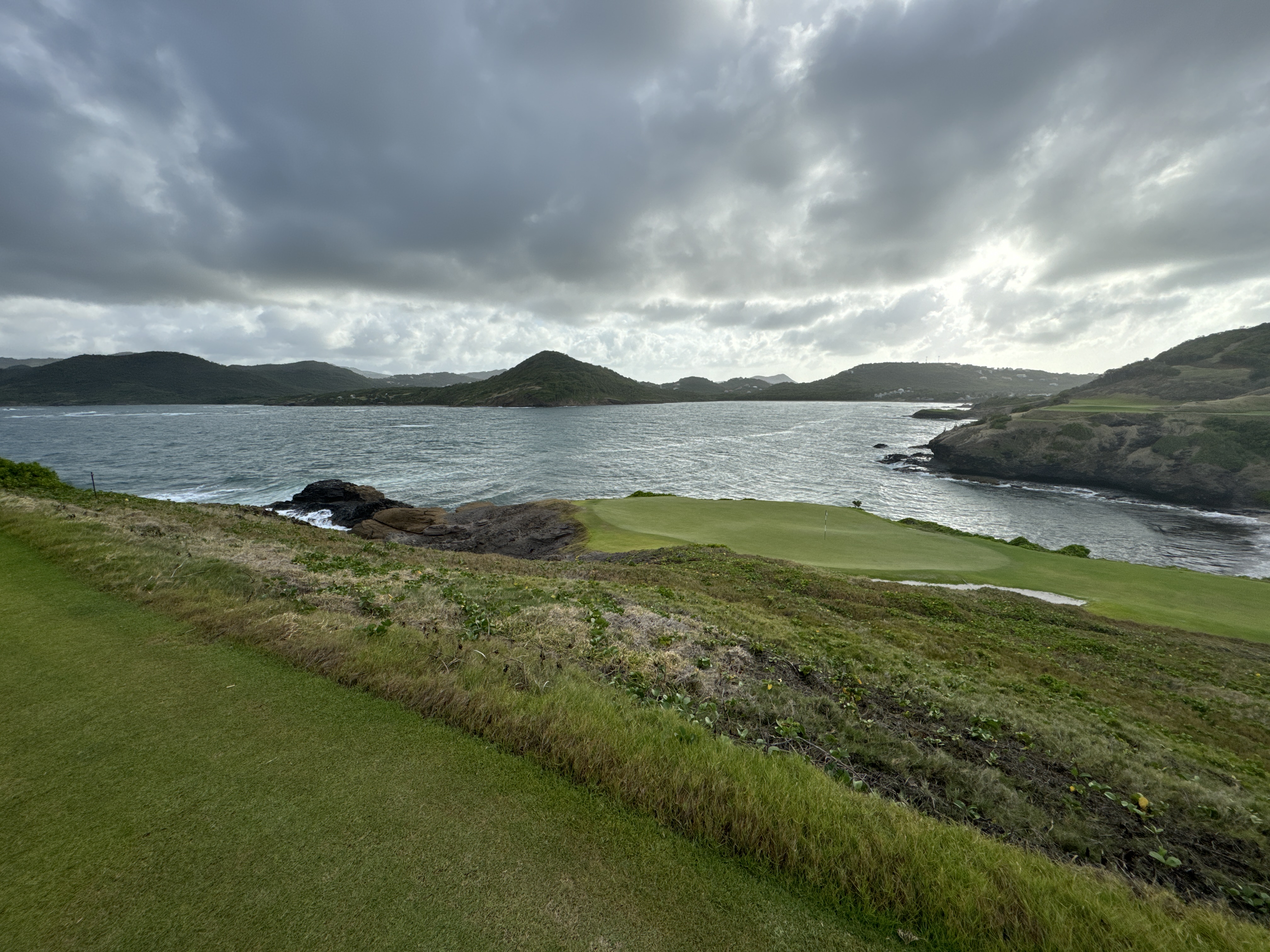
A short walk later, and Point Hardy presents you with one of the best short par-3 holes in the Western Hemisphere.
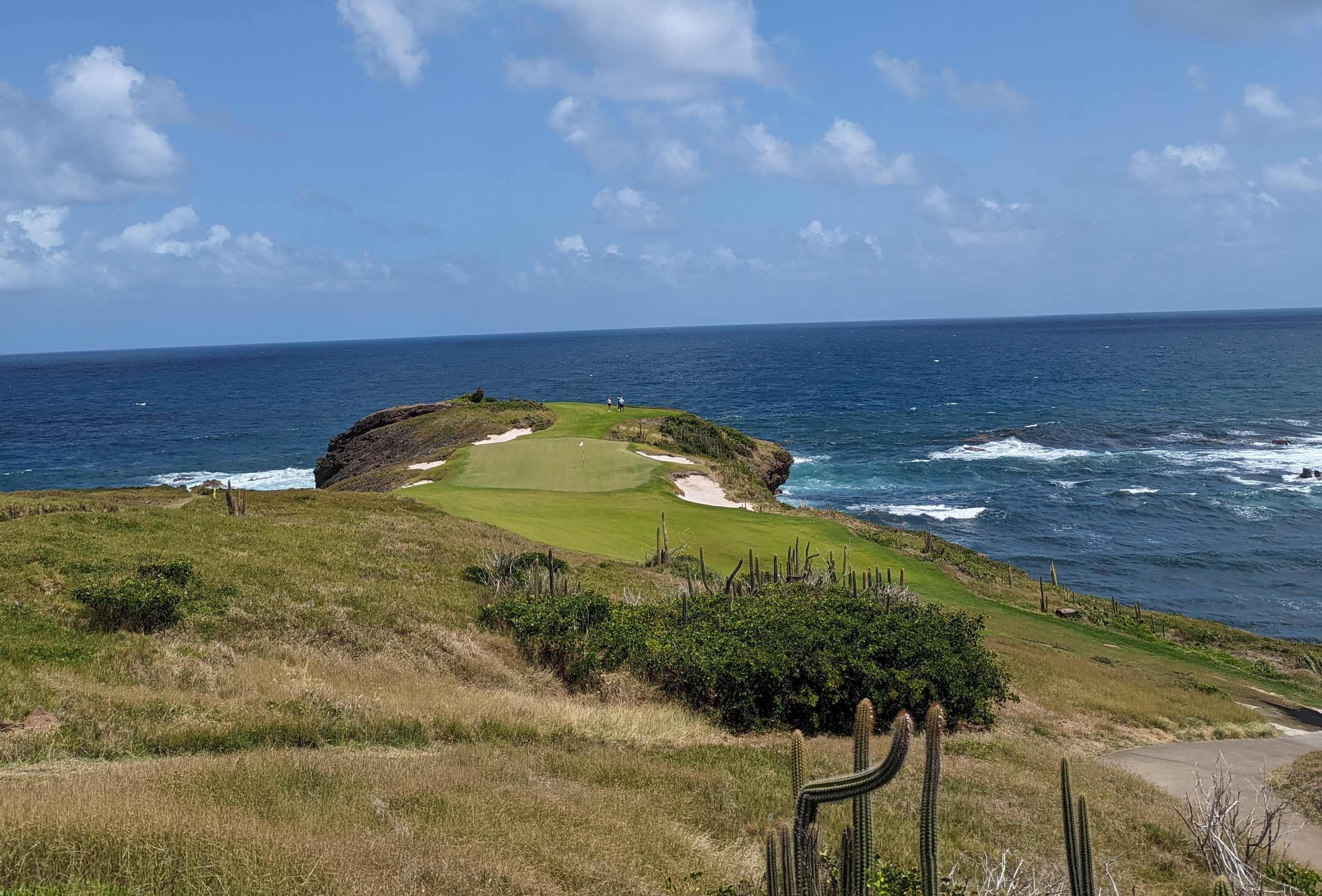
The seventh hole has a variety of tee locations, with the back tees playing straight down the green, but the forward tees play to the green from a tough angle where the left is shorter than the right. Multiple bunkers flank a relatively flat green that gently slopes from back to front. The view from this peninsula green is spectacular in all directions. In a weird quirk, the eighth tee sits behind the seventh green, and you may find yourself waiting on the seventh tee as people transverse back over the seventh green to the upcoming eighth fairway.
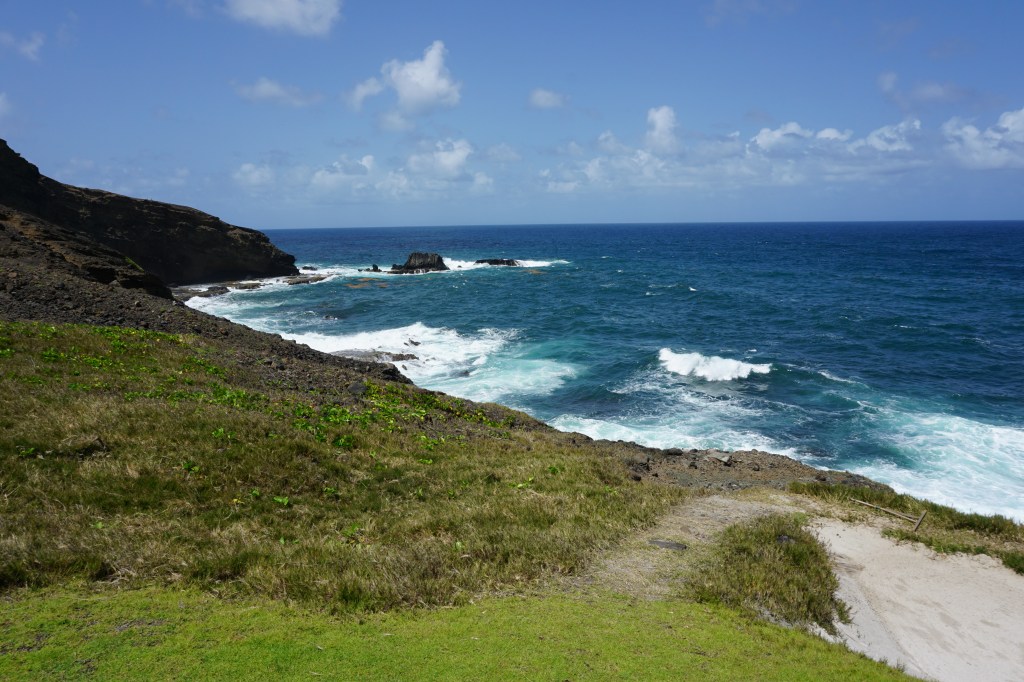

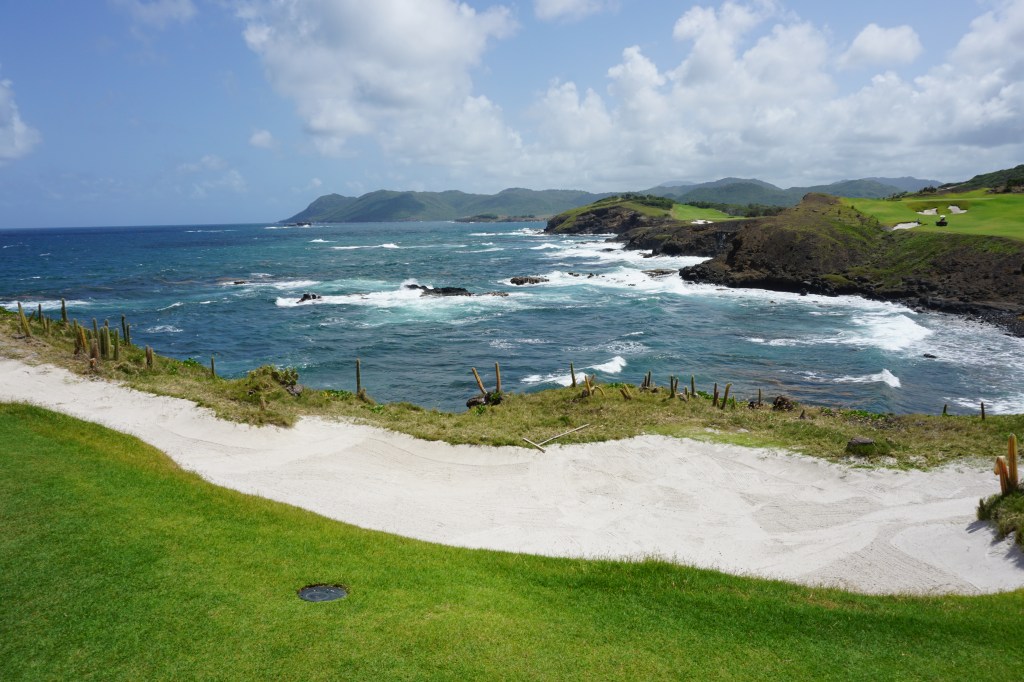
Speaking of that eighth hole, the eighth is a absolute devil of a hole, with the wind blowing off the left of this shorter par-4. The drive takes a well struck drive straight over a bay of the Atlantic Ocean, needing a carry of 230-yards to a narrowing fairway. This tee shot is certainly a heroic design feature, providing a visually long carry over the bay, but not prohibitively long for shorter-hitting players. For the absolute longest hitters, the left side of the green may actually be reachable with a good bounce, but the margin for error is non-existent.
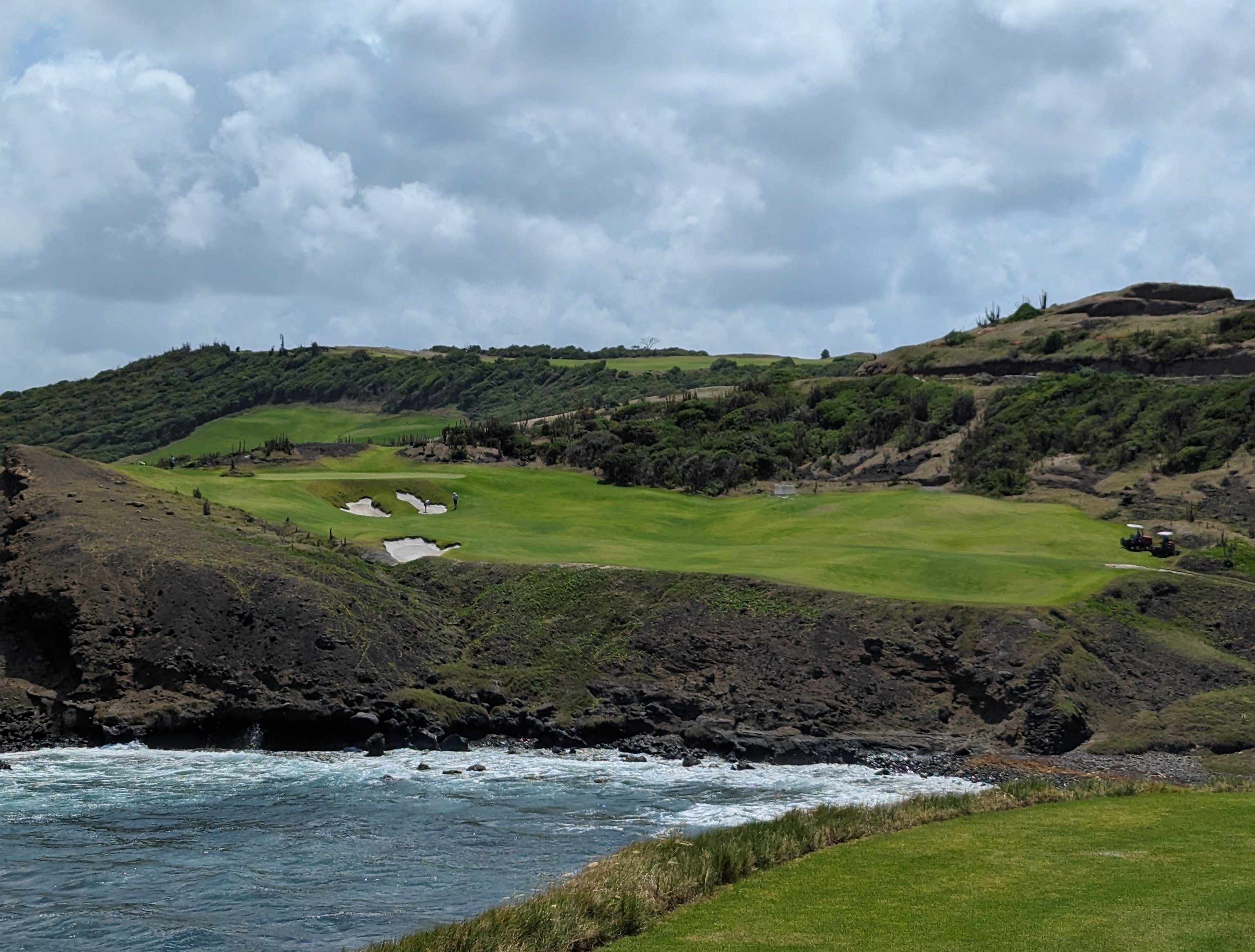
Once in the fairway, nostril shape bunkers guard an elevated, tabletop green that features a significant spine that meanders through the middle of the green. Additionally, a small patch of long grass and cactus create a faux bunker on the back left of the green. The green is significantly uphill and the pin is barely visible from close but more visible from further away.
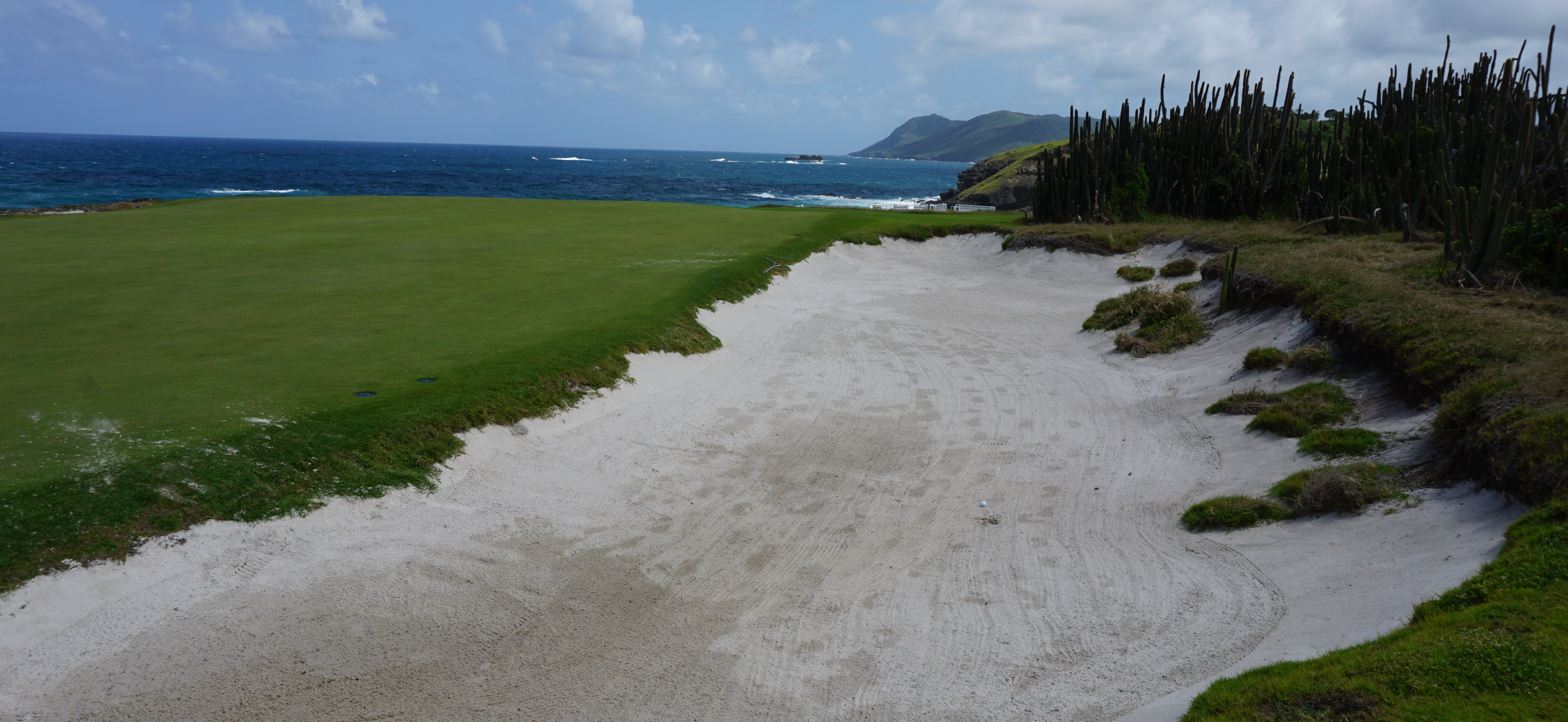
The ninth tee boxes sit on either side behind the eighth green, providing a few varying angles for play into the ninth hole, a mid-length par-3 that plays into a quartering wind.
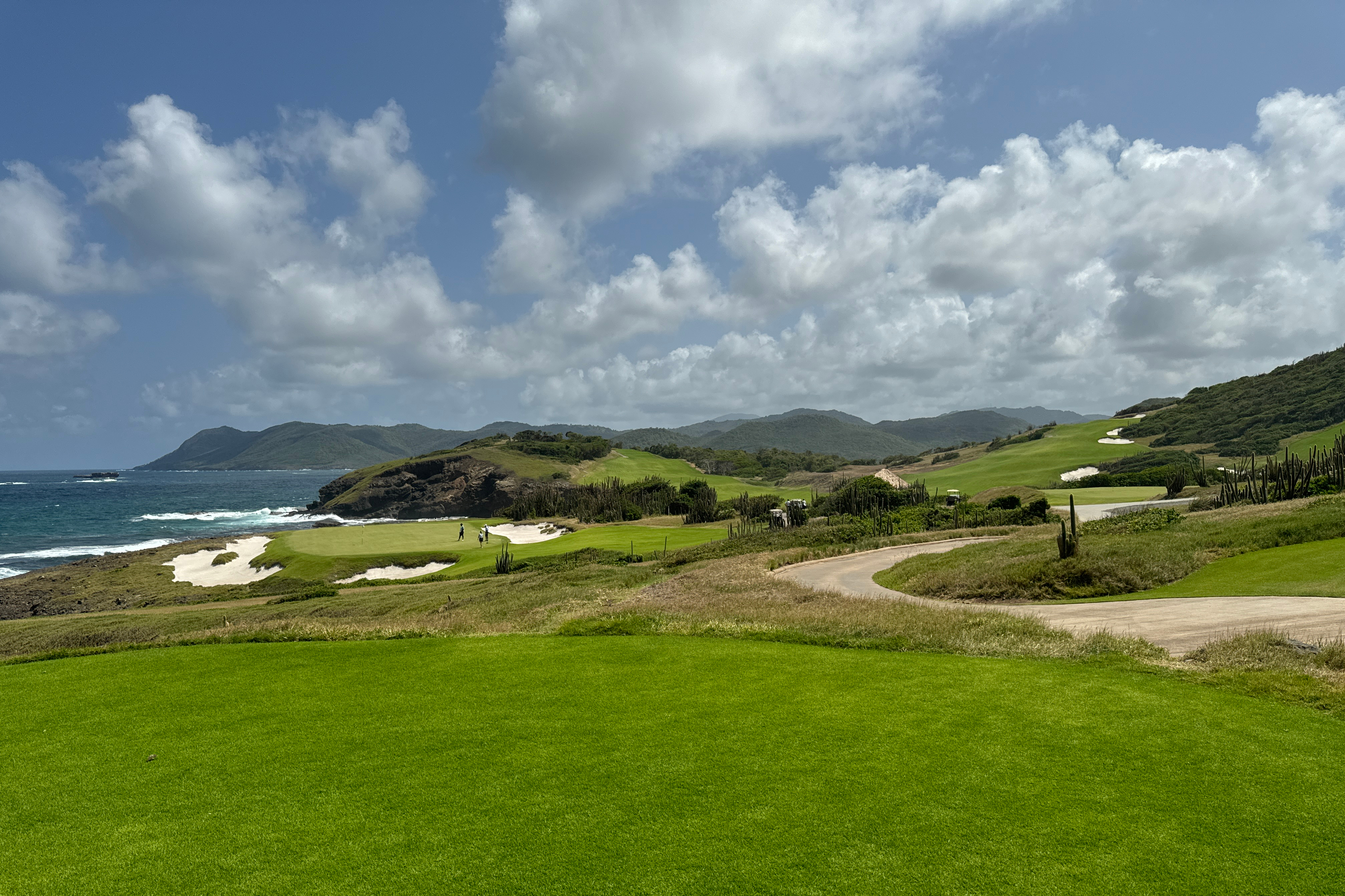
The hole plays significantly different from the right sided tee boxes than the left, which require more of a carry over the right greenside bunker. The green gently slopes from right to left, towards the ocean and seems to sit on the most natural green site on the property, with a stunning view behind the green.
Making the Turn
After a tasty boxed lunch (chicken wrap and salad, for me) provided by the staff, we were off to the tenth hole, which is probably the most controversial hole at Point Hardy, and a hole that may well hold it back from the absolute top spots in upcoming world golf course rankings. The first uphill hole since the first, the tenth is VERY uphill, gaining around 70 feet-or-so of elevation over the 350 yard par-4, around a 6-7% grade throughout the hole, and that includes the flatter greens and tee boxes. I’d estimate the fairway to be around a 9% grade, which makes it the steepest hole I believe that I have ever played. It is dangerously close as to whether a ball would stay where it stops, rather than roll back down the fairway.
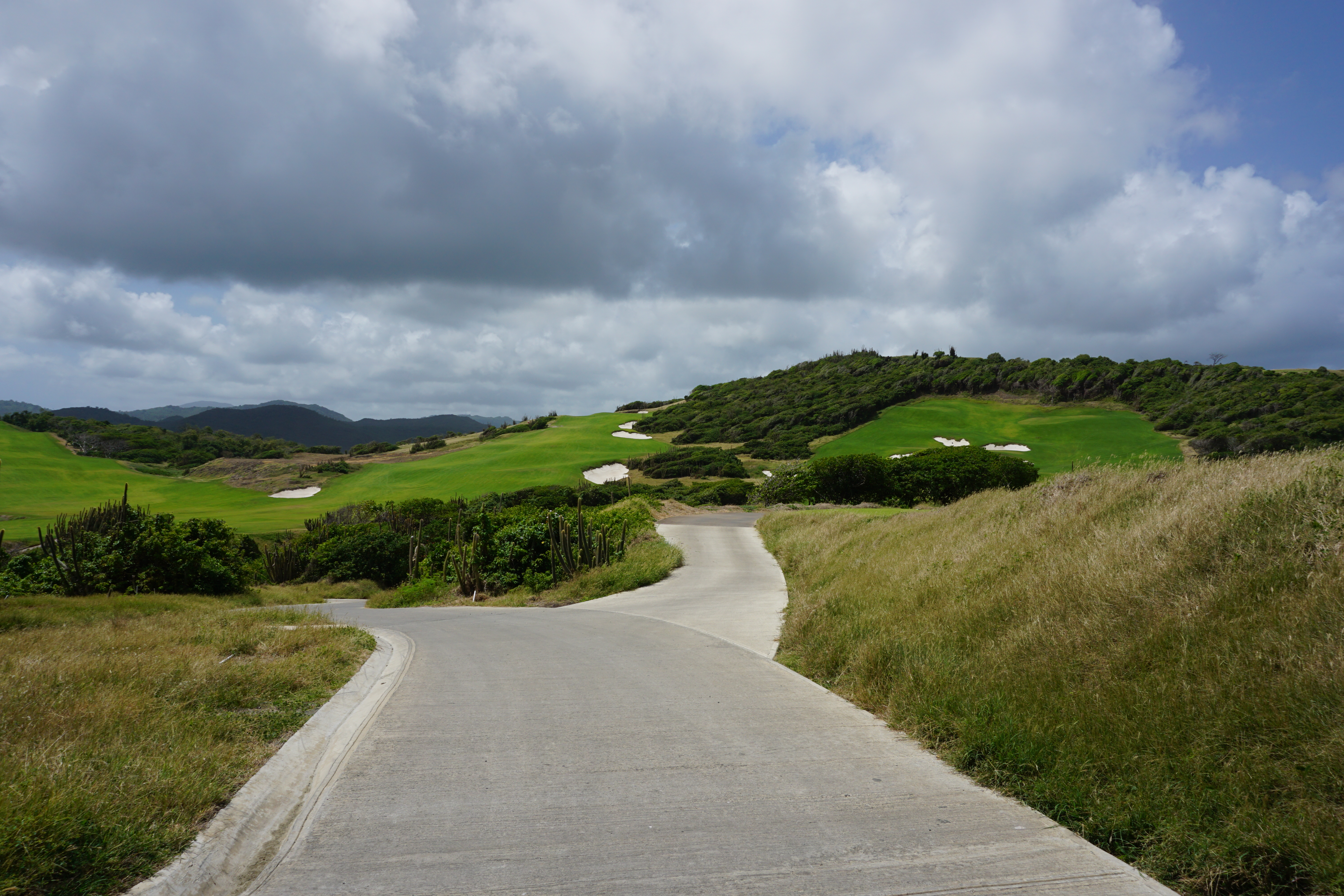
A few fairway bunkers dot the right side of the tenth, as well as some heavy vegetation. The pin is barely visible here from any spot in the fairway, and the green features a steep ridge creating an upper and lower tier of the green. I am all for steep, bisecting ridges on putting surfaces, but something seems a bit unfair about a ridge that cannot be properly seen, or any carry yardage properly calculated. No part of the putting surface is visible on any part of the hole until your arrival at the green, and while I definitely understand that some holes must go up for others to go down, this hole’s elevation is a bit too much. Our caddie mentioned that changes are planned for this hole, as it has not been well received, and space seems to exist to the left to flatten the hole a bit, so I am interested to see if those changes come to fruition in the coming years.
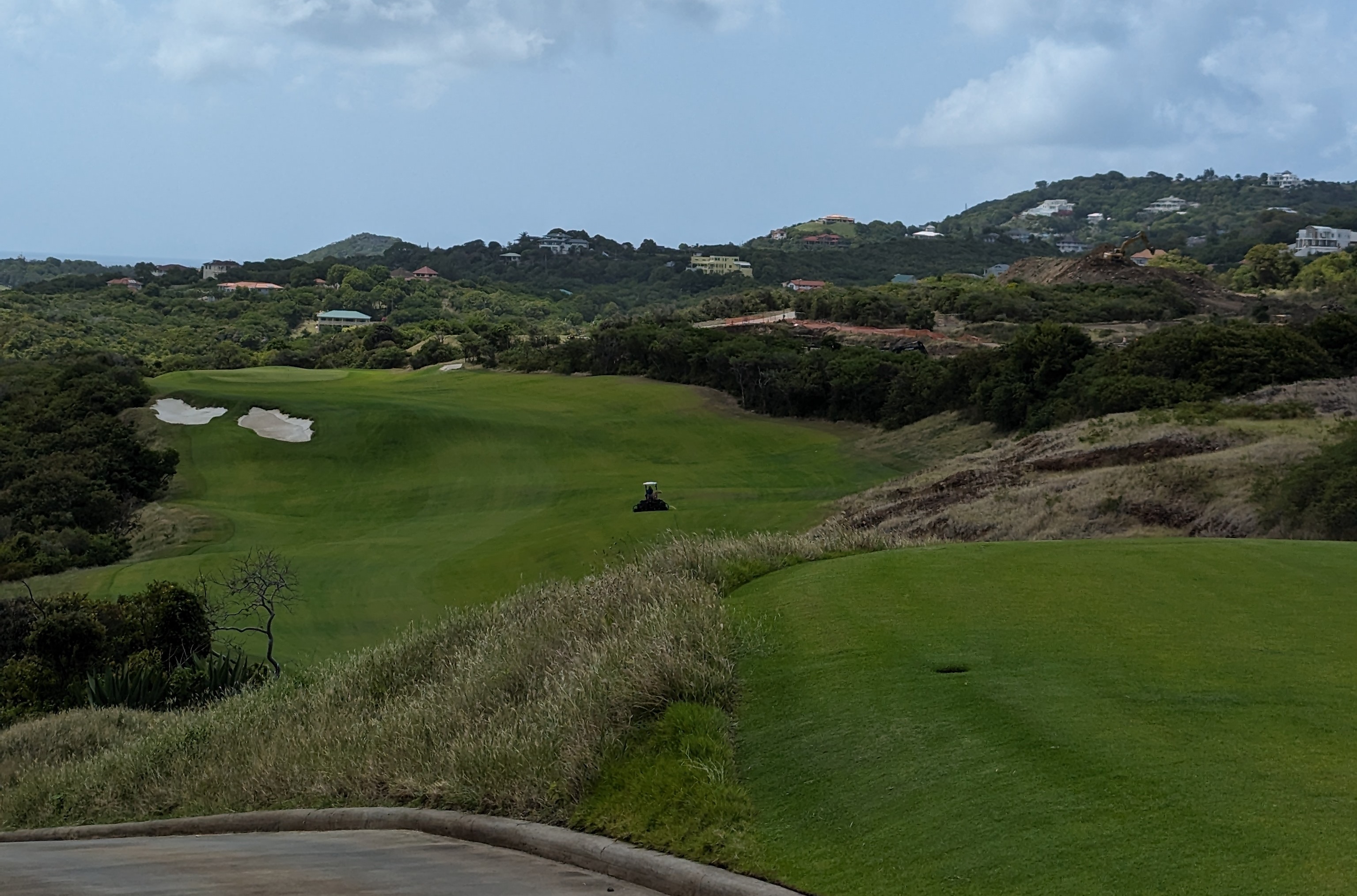
The eleventh hole starts a run of inland holes, as the eleventh through the fourteenth play through the higher parts of the property away from the ocean. Often, ocean courses like Point Hardy can lose their steam on the inland holes, using a few eye grabbing feature holes along the ocean to attract visitors, but inland, the holes are sometimes lack character or distinctiveness. This kind of happens at Point Hardy, but I quite enjoyed all of the inland holes at Point Hardy.
For example, the eleventh is quite an ingenious design, as the hole plays straight down the prevailing wind and down a significant slope as a 524-yard par-4. However, don’t let the distance fool you: I hit driver, 9-iron well over the green, meaning it plays something less than 400-yards. The fairway slopes aggressively up to the fairway bunkers, where it flattens back out all the way to the large, bunkerless green. The green features a lot of internal movement, as to be expected on a putting surface so exposed, and a very deep 30-yard shaved run-off exists behind the green to catch and filter away balls bounced over the green.
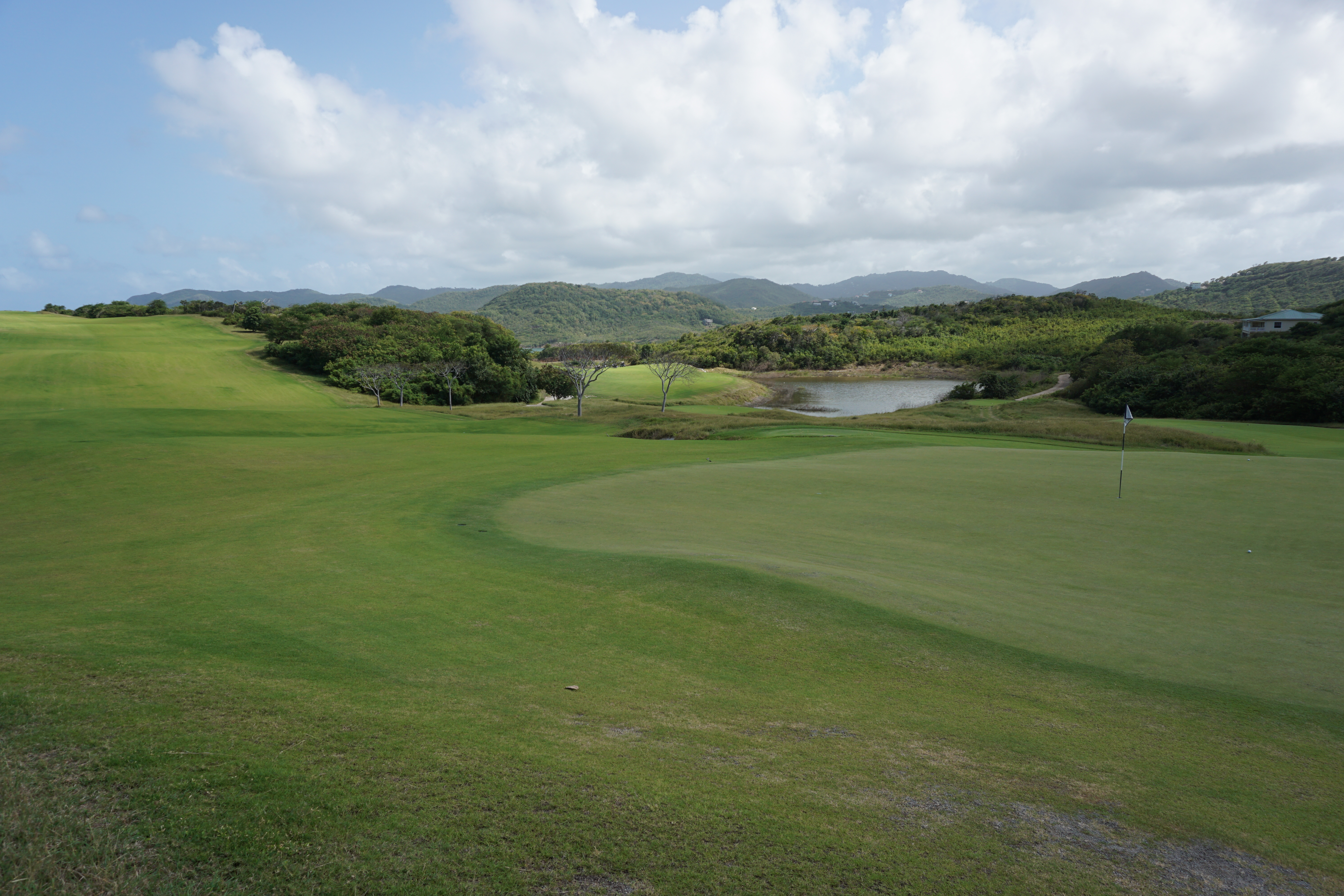
The hole I cared for the least was likely the twelfth, as it seemed a bit too close to the design of the eleventh. Another largely straightaway, downhill, and downwind par-4. I felt like the twelfth lacked a touch of distinctiveness and did not feature the same quirks of the eleventh that made it interesting.
Not to worry though, as the inland thirteenth and fourteenth would really pick back up the steam, starting with the longer par-4 thirteenth that plays into a quartering wind. Two ponds are present on this dogleg left: one short right of the fairway, and another right of the green. An additional crescent bunker flanks the front right of the green with plenty of bailout room left, for the unwise: the green is significantly sloped from left-to-right and features a large spine about ten paces from the left edge. Left of the green and short sided is a sure bogey.
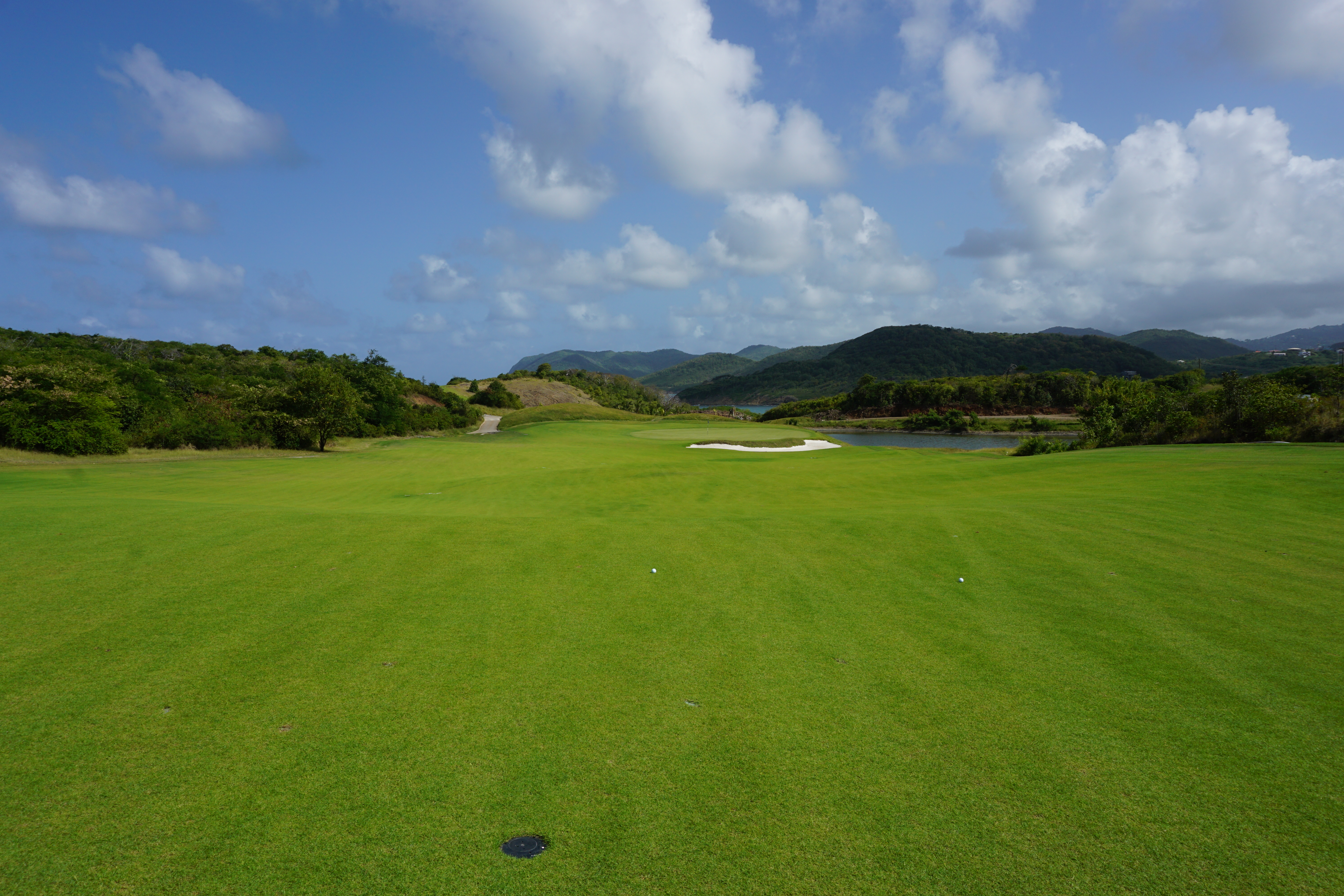
I must also mention the gorgeous mountain background of the thirteenth green. There are just so few courses of this caliber in the world in which one hole plays along the coast, and three holes later, you might think you are playing in the mountains of Appalachia. St. Lucia is an incredible mountainous island, and perhaps this musing is more a review of the island of St. Lucia than Point Hardy, but the island provides a fantasy setting where both mountain golf and ocean golf are possible within the same round.
Between the thirteenth and fourteenth hole is another comfort station, again fully stocked to prepare you for what has to be the best 5-hole stretch to finish a golf round in the world (I said it, Cypress Point).
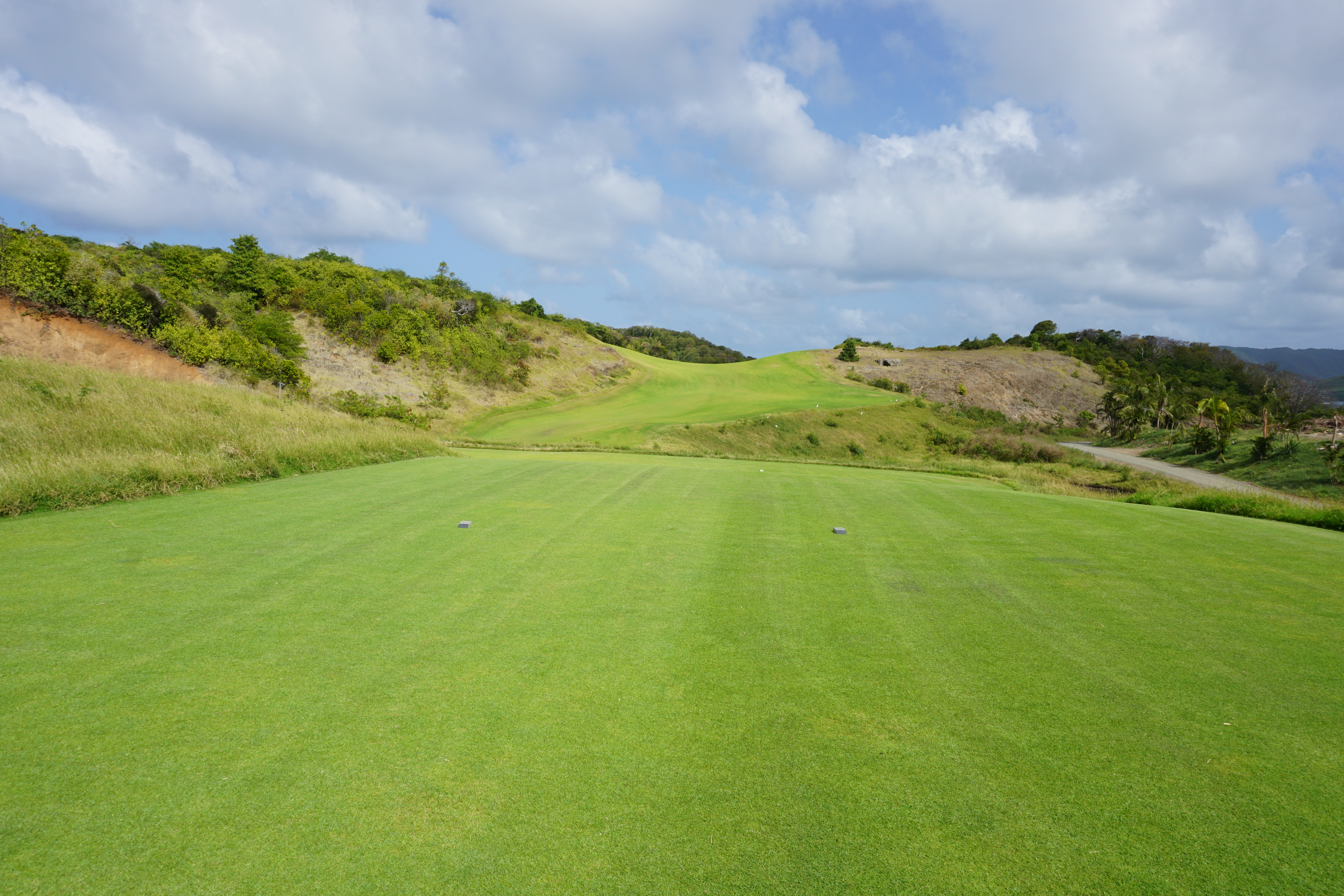
The fourteenth hole is a brutally long, 600+ yard par-5 that plays into the wind. The drive rises through a channel before opening up to a flattening landing area that is largely unprotected. Once on top of the hill, the fun begins, as the fairway quickly drops and then rises to the green. After the drive, there’s still more than 350 yards into the wind remaining.
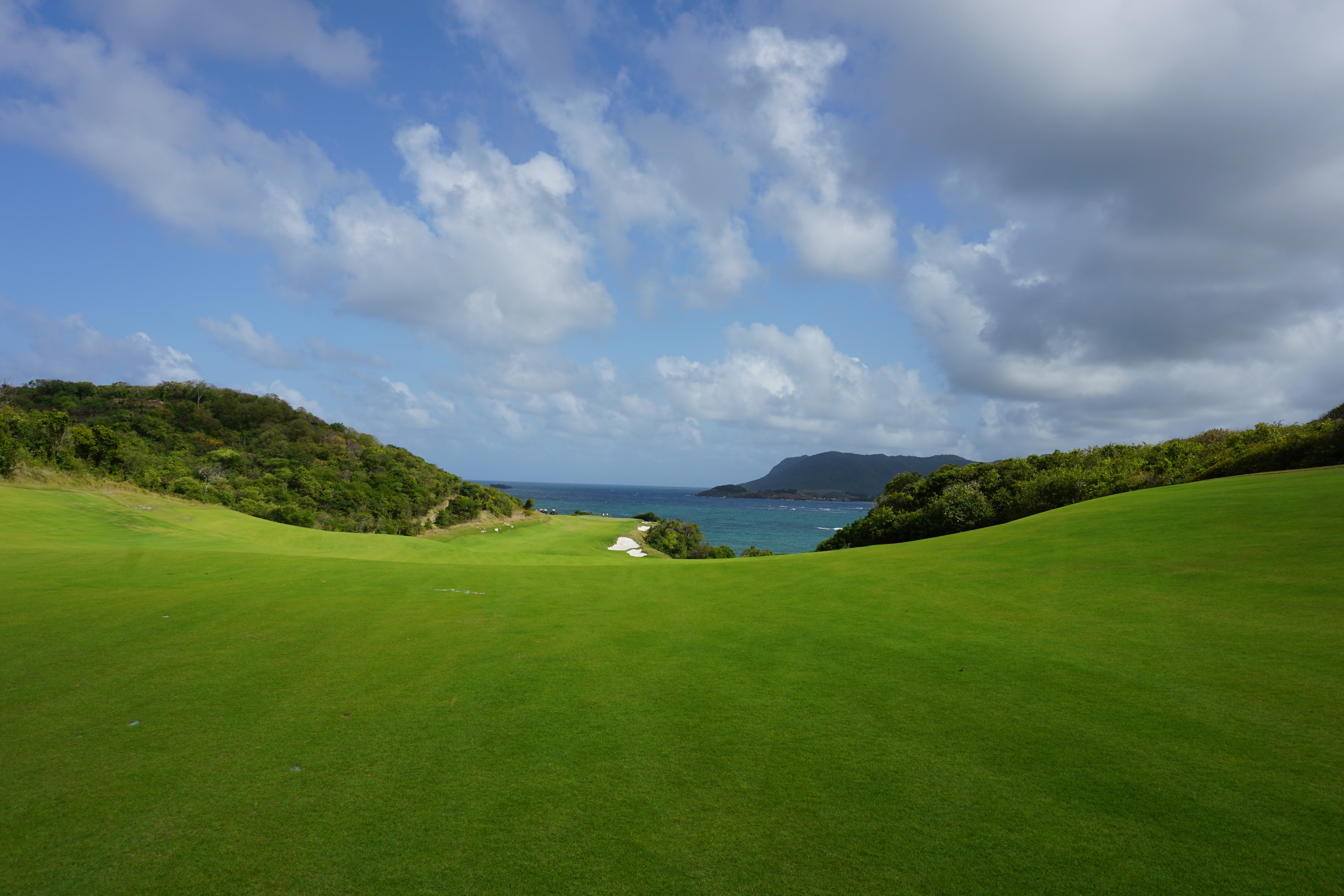
Eventually, from the bottom of the hill, the third shot is still sizable and largely blind to the green, which sits on a thumb of St. Lucian soil in the Atlantic Ocean. Coore & Crenshaw have designed a demanding and true three-shot par-5 to compliment the short par-5s found elsewhere on the course. All of the other par-5s on the course play more as par-4.5s, but the fourteenth is truly a par-5.5.
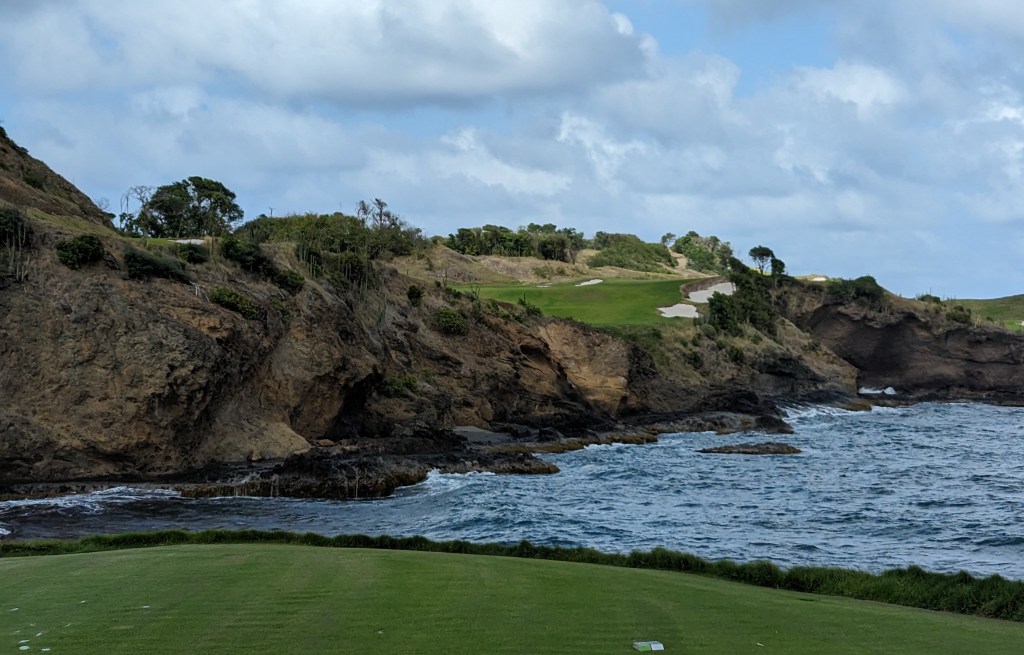
The fifteenth is an absolutely breathtaking, heroic shorter par-4 hole, which gives the player the option to hit a higher lofted wood on top of the rock bluff left (barely visible is the bunker on the top left of the hill) or to try for a Driver played into the valley of the rocks below the hole. Playing shorter, and further left, provides a view of the putting surface from the fairway, where a ball lying on the right side of the fairway is nearly completely blind. The putting surface slopes from back-to-front more than most at Point Hardy, so controlling spin on softer days may be required.

Then, a la Cypress Point, Point Hardy provides two back-to-back par-3 holes of varying distances. The sixteenth, a shorter par-3, again plays directly into the prevailing wind, requiring at least an extra club (if not two). A ridge bisects the green left from right, left higher than right, with a strip of fairway cut perpendicular to the tee box from the left of the green to the cart path. That left strip has a touch of redan-style effect, and will bounce a ball into the left side of the green, as the entire landscape slopes from the cart path down towards the ocean.
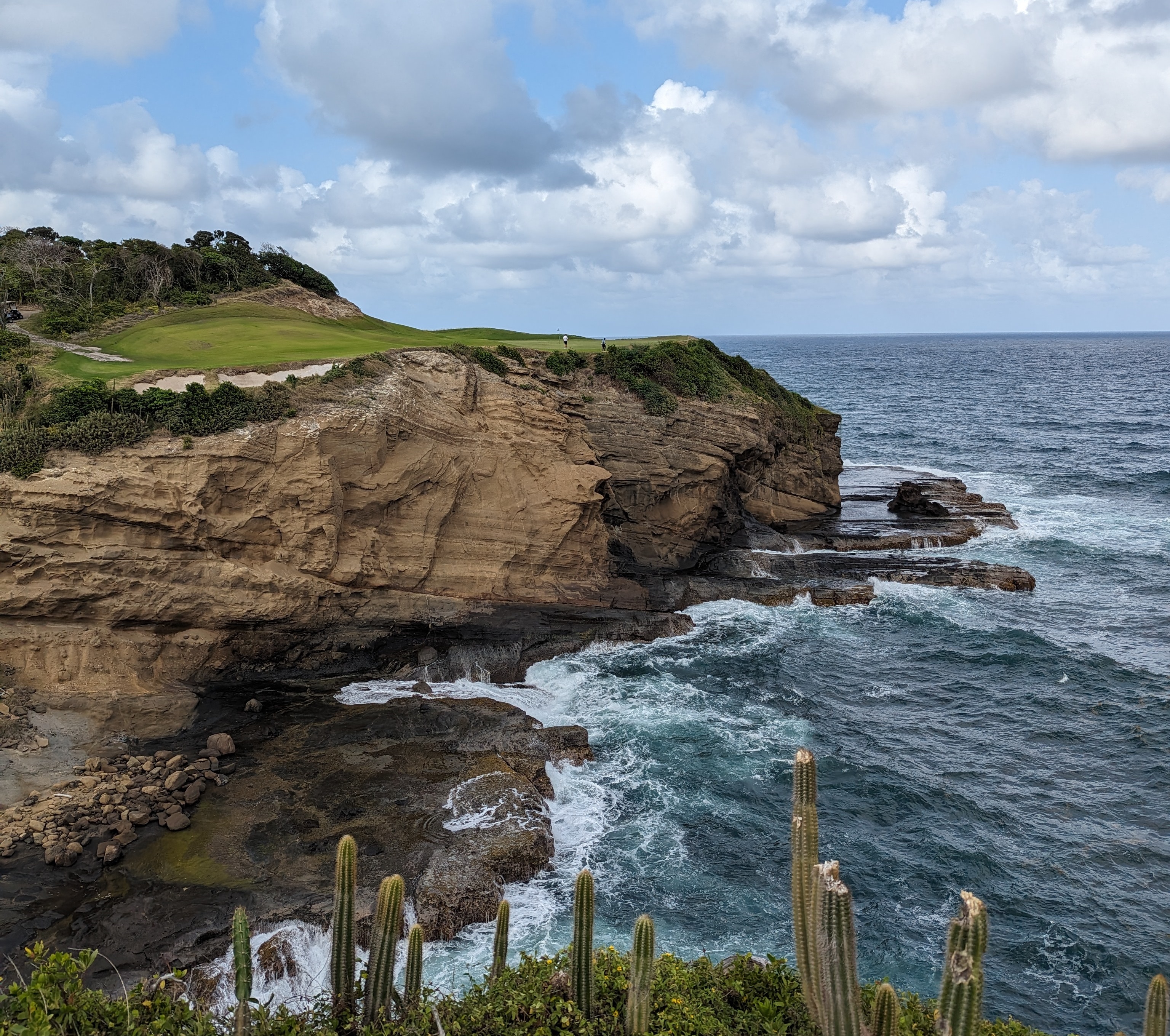
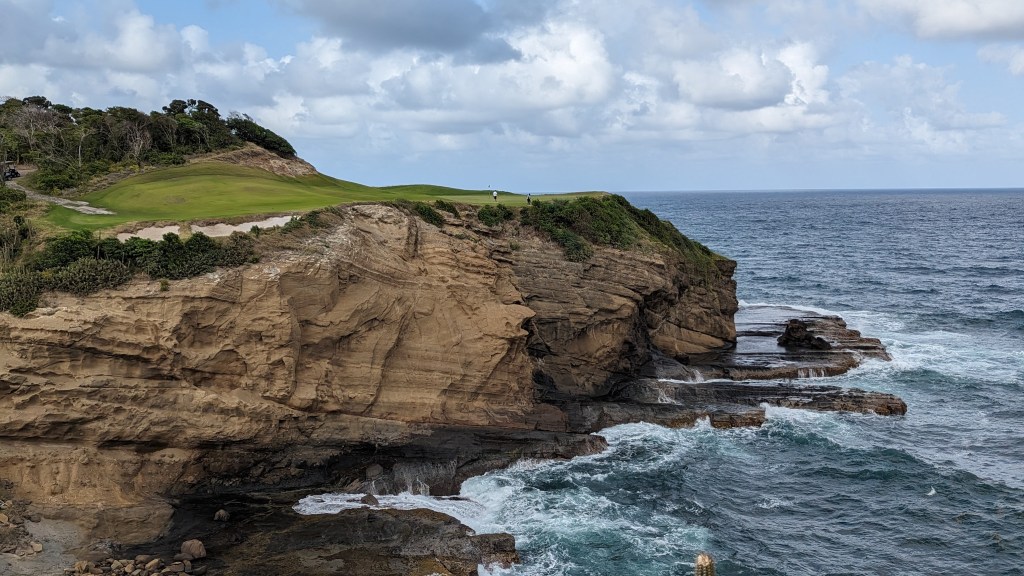
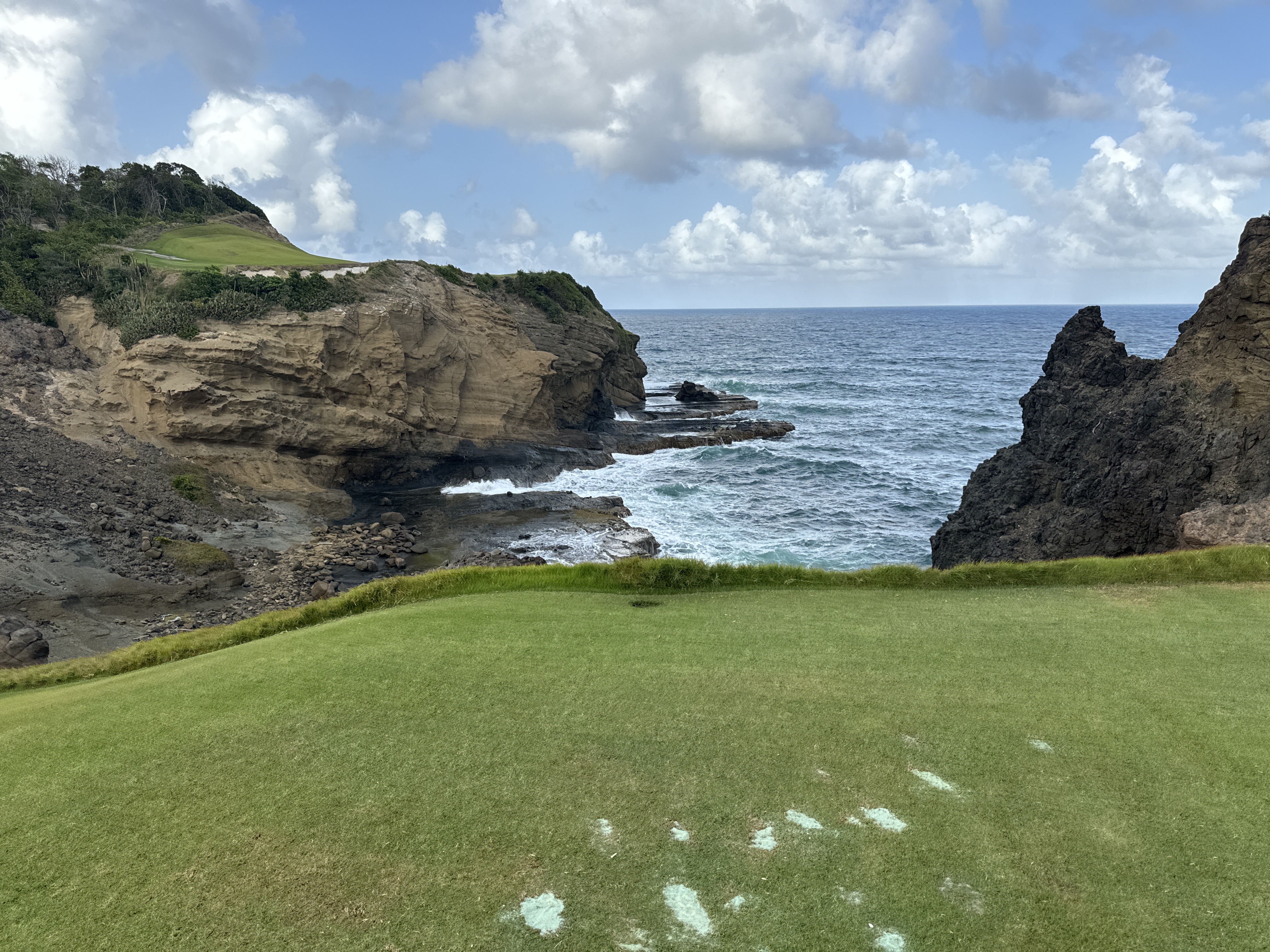
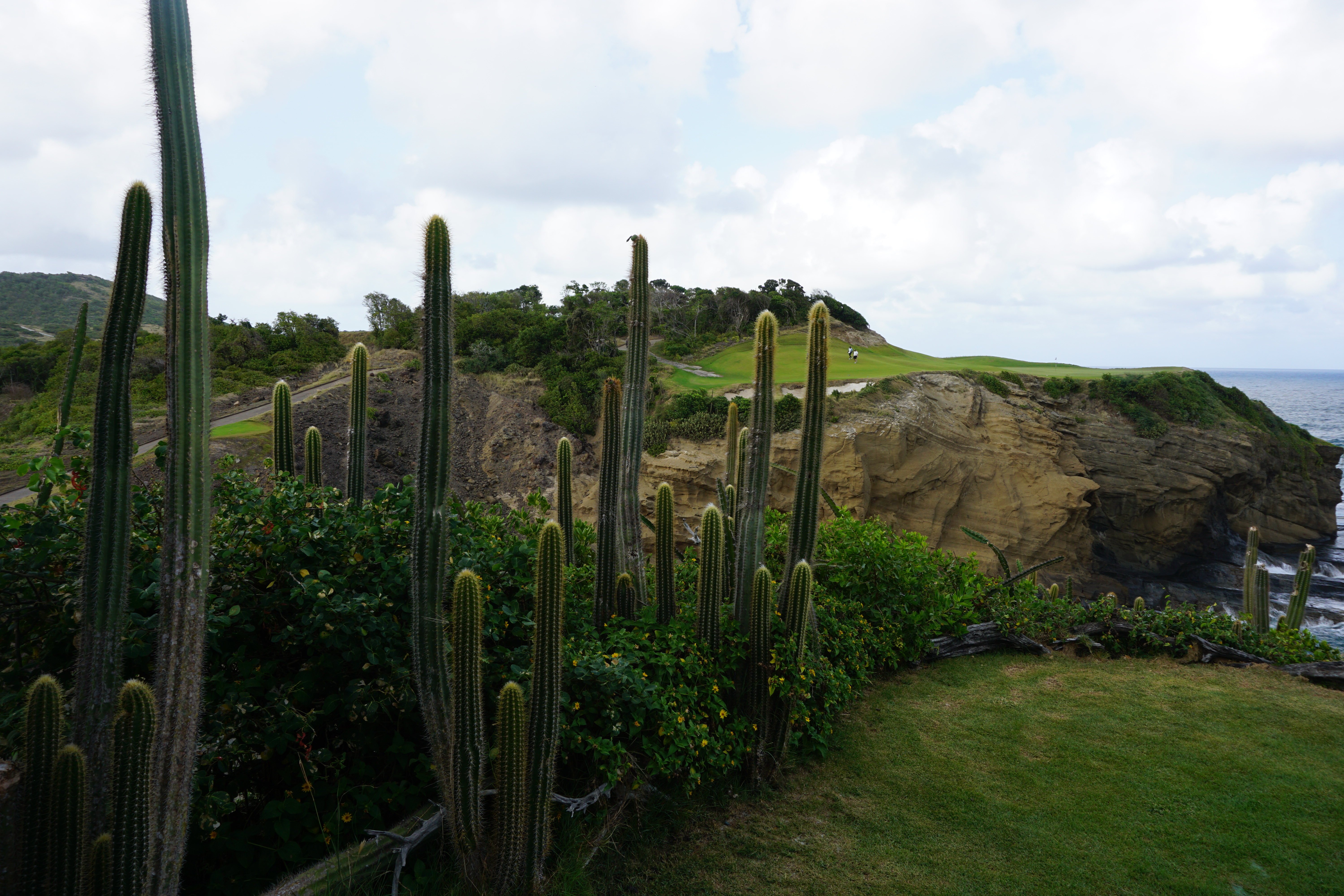
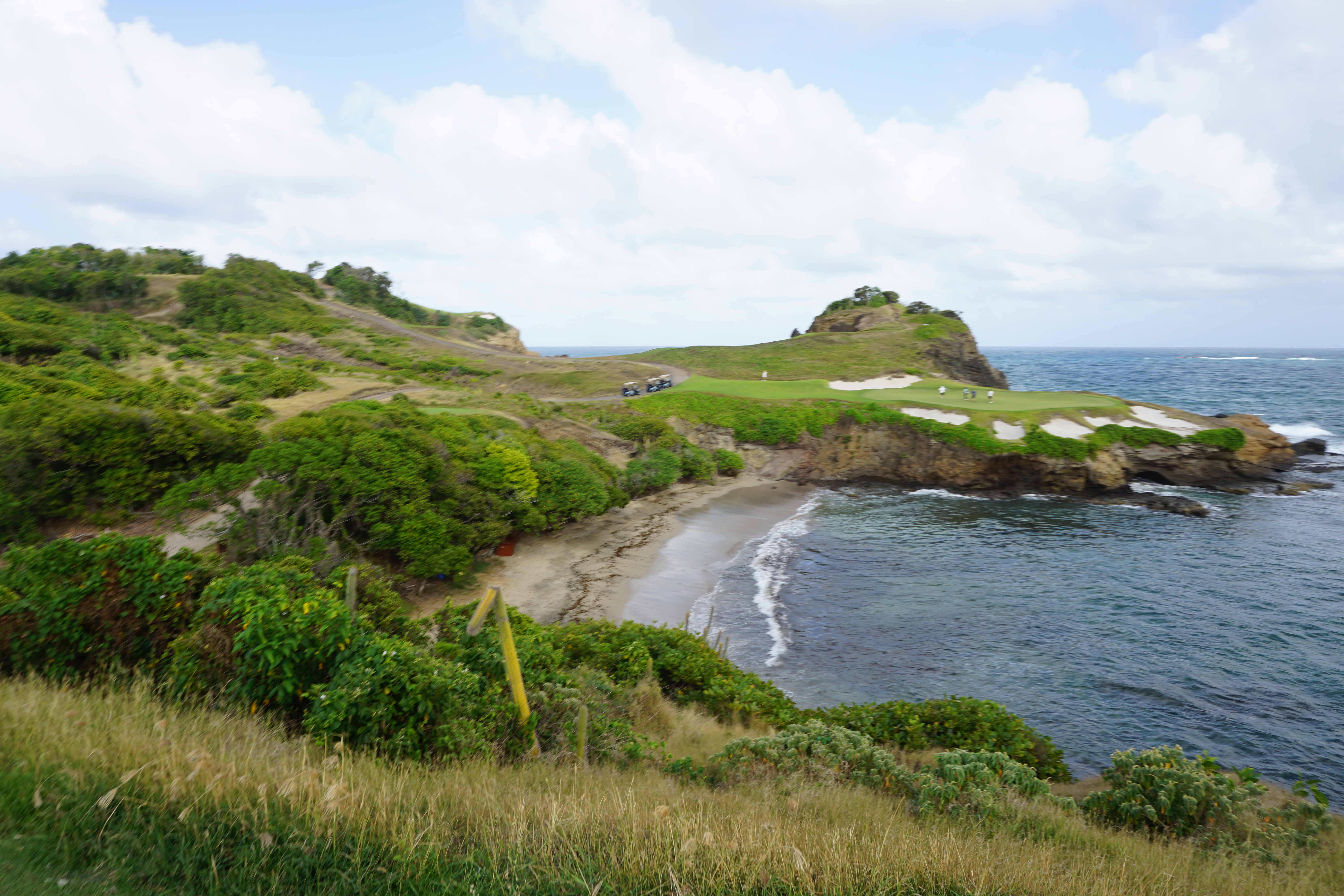
The seventeenth, a bit of a longer par-3 than the sixteenth, is so unbelievable, the human brain wants to think it is fake. It is a fantasy come true. Many golf designers would have recognized this green site and the teeing grounds as existing naturally, but Coore and Crenshaw may have been the only designers capable of convincing someone to let them actually build this ridiculous hole, and the Cabot group the only owners to be convinced. The only comparable hole in the world is likely at Cabot Cliffs.
Be there no golf course, a person could stand where the seventeenth tee is and be amazed that they were lucky enough to be there and to see such natural beauty. It is incredible to simply be present on this piece of oceanfront property where the seventeenth lay; it is even more incredible – if not simply preposterous – to be playing golf on this piece of property. I hope I am not coming off hyperbolic when I say, the seventeenth tee box was the best experience I have had playing the game of golf.
However, words truly cannot describe the beauty of the dual par-3s, but pictures are worth 1,000 words
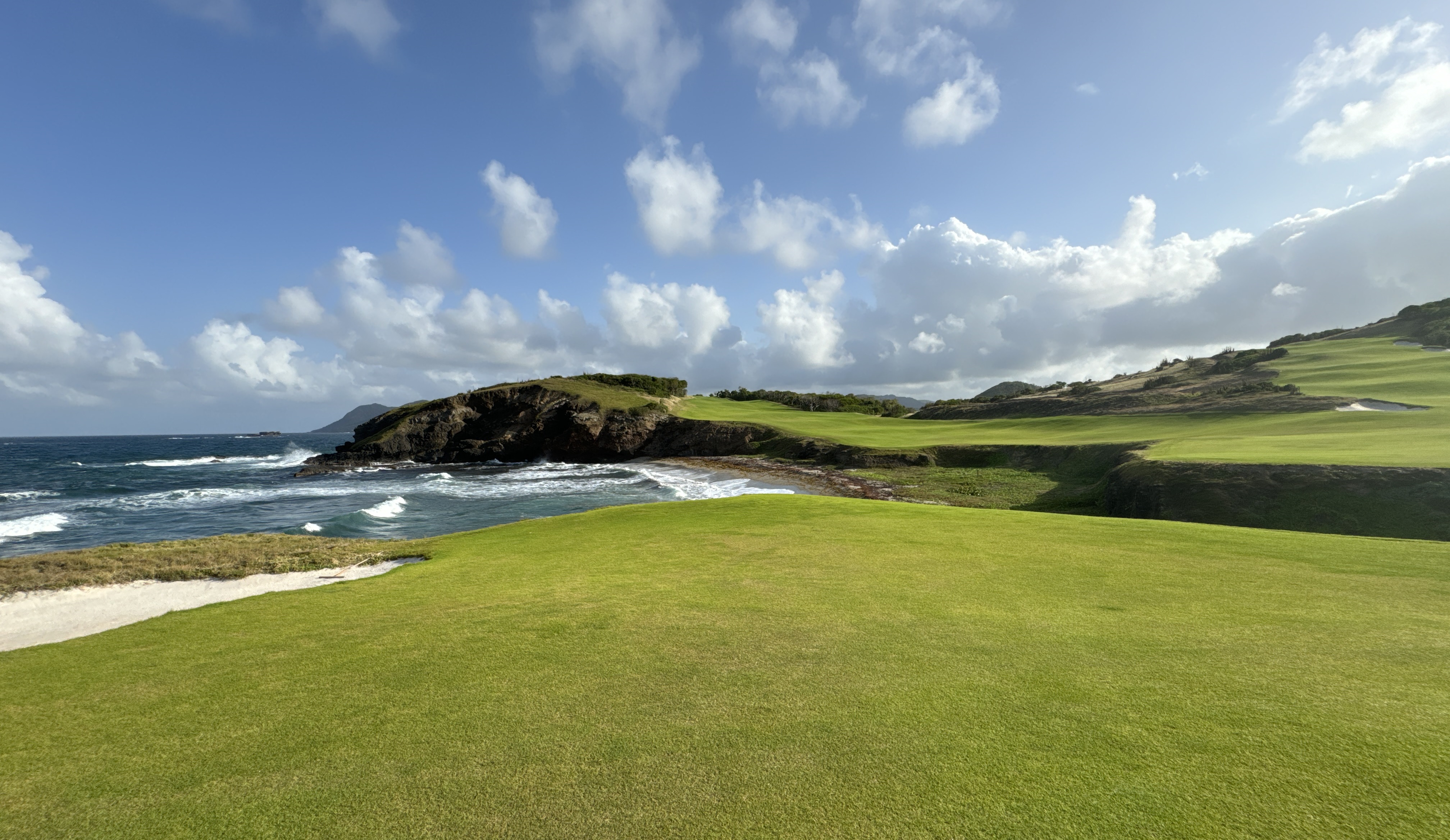
Leaving the seventeenth green is almost sad, and if the eighteenth was a characterless hole, this course would leave you wanting something more. The eighteenth is not that hole, but rather, a super fun, downhill, short par-5 which gives everyone the hope of finishing with a birdie or better. The ocean works in from the right, and the green sits on a island across a beach that could have just as easily been a cove on an all-inclusive resort.
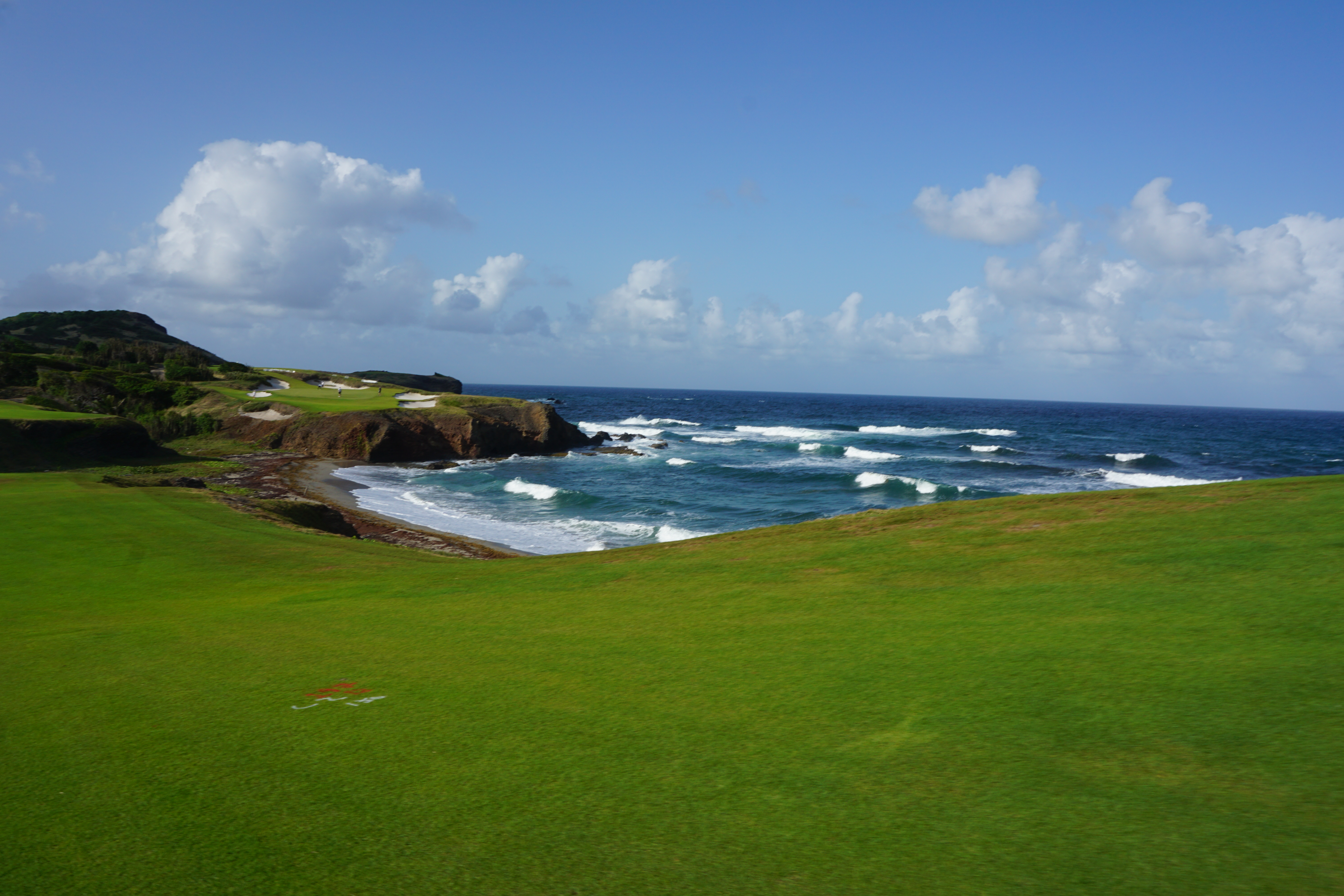
The crashing waves create a perfect soundtrack for the last iron shot of the day, likely a mid-iron across the bay to a well bunkered green. The green possesses a significant ridge, and my three-putt was not the first and will not be the last on this hole – the only protection this hole has from a certain birdie. This is a fantastic and incredibly unique finishing hole that puts a bow on the best 5-hole finishing stretch of golf currently constructed.
Final Thoughts
Point Hardy may be the among the most beautiful courses in the world, but it is as much brains as it is beauty. It combines strategic and heroic golf design with expert execution. It is mountain golf sometimes but also oceanfront golf most of the time. It is a unicorn in that sense, but this unicorn – somehow – isn’t just fantasy. This unicorn is real, and its one of the best golf courses in the world.
F1C’s Final Rating:
Shot Options: 10
Challenge: 8
Layout Variety: 10
Distinctiveness: 10
Aesthetics: 11
Conditioning: 7
Character: 10
Fun: 10
Total: 76/80
Read More: How We Rate Courses
Rating Scale Details
> 70: Top-50 U.S.
65-70: Top-200 U.S.,
60-65: Best-in-State List
57-60: Best-in-state List Contender
53-57: Very Good
48-53: Good
40-48: Average
> 40: Poor
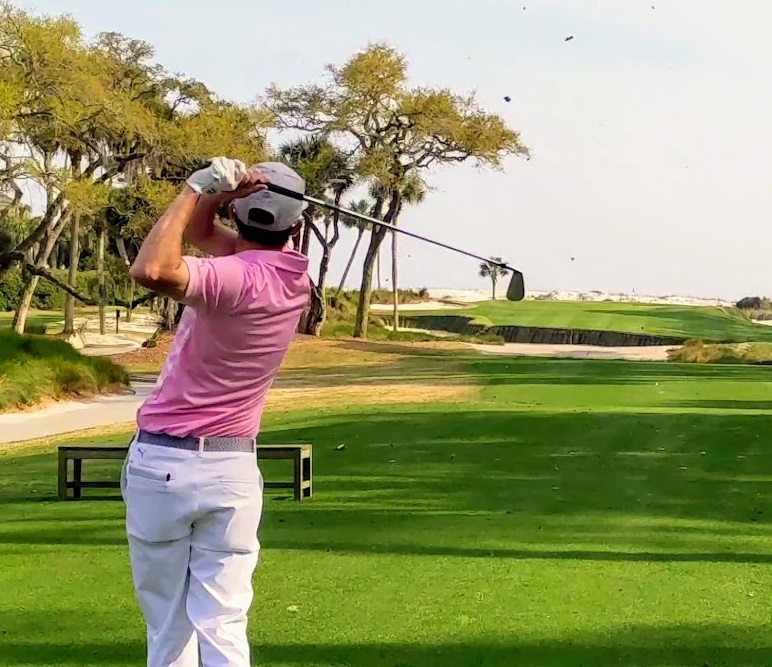
Author: Jaxon MacGeorge
Jaxon is the founder and lead course reviewer at First1000Courses.com. Jaxon has been playing golf for over twenty years, is a scratch handicap, and actively competes in USGA and Tennessee Golf Association (TGA) amateur events. By trade, Jaxon is an attorney and lives in Gallatin, TN, a suburb of Nashville.

 First 1000 Courses
Leave a comment