
Time to Read:
|
This Gaylord Springs Golf Links Course Review is based on a numerous rounds played between 2018 and 2023.
Gaylord Springs Golf Links is a public course that is in Nashville, TN. The maximum green fee is around $95/round.
F1C’s Final Score: 52/80 (Good)
Learn More: How We Rate Courses
Gaylord Springs Golf Links sits in a busy area just east of downtown Nashville. This area includes the famous Gaylord Opryland Hotel as well as the Grand Ole Opry, where you can catch a concert after your tee time. This area is very tourist friendly with the large Opry Mills mall as well. Being only about a mile away from all of that, Gaylord Springs is the home of the most tourist golf rounds in Nashville, and was undoubtedly built as an amenity to the Gaylord Opryland Hotel.
Larry Nelson, a former tour professional and major champion, designed Gaylord Springs and it was built in the late-1990s. An old newspaper article in the Oklahoman stated:
“Nelson said Opryland officials told him they wanted a course good enough to attract three U.S. majors, the PGA, the U.S. Open and the LPGA.”
The Oklahoman
In the history of Nashville, maybe this makes more sense than it makes today, because this course was built while the LPGA was making Hermitage Golf Course’s General’s Retreat layout a yearly stop for the Sara Lee Classic.
In golf, great coaches often preach about expectation management. I would have given that same advice to whomever these “Opryland officials” were when they hired Larry Nelson to design their course. Nelson completed only six designs in the U.S., and while an accomplished competitive golfer, none of Nelson’s designs are highly regarded as best-in-State level designs, much less the type of design that would attract a professional event.
Gaylord Springs is cut from the same cloth as Nelson’s other designs, which is perfectly fine (if not Opryland’s entire objective). That quote above is likely more propaganda than reality. Given its location amongst a tourist-trap in Nashville, this course was not designed for major championship play, but rather, major tourist play. Nelson accomplished that goal, and created a very open, American links design that is relatively tough, yet has ample space to keep the ball in play for the mid-handicap.
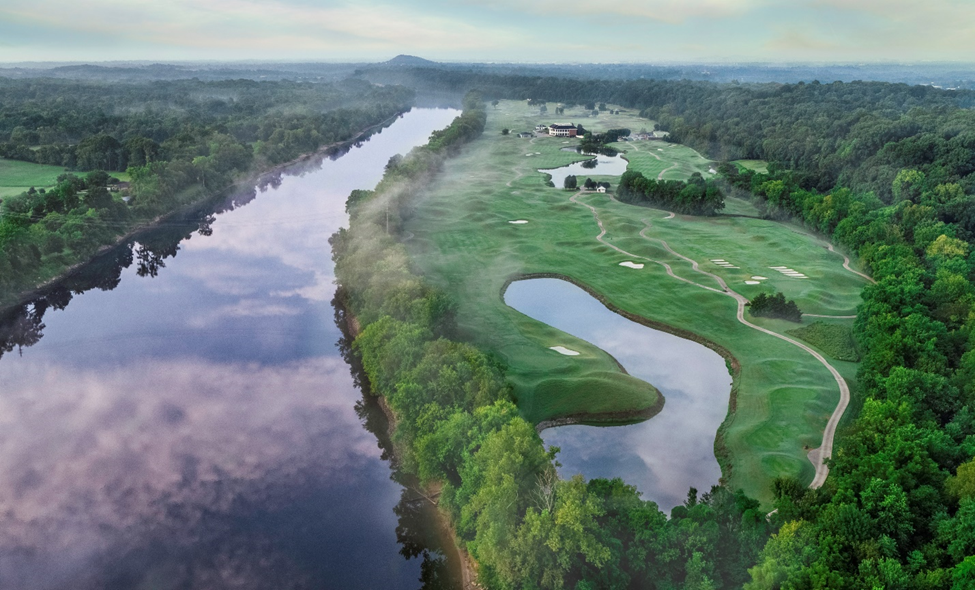
Gaylord Springs is not a traditional links course, however it does share some characteristics with traditional links course that makes this course undoubtedly American Links. It borders the Cumberland River, but never uses it as a hazard, like a traditional links course uses the ocean. Further, the landscape has had most of the trees on the internal part of the course removed, and 17 of the 18 holes on the course run either north or south. Lastly, despite being in such a busy area, Gaylord Springs is set at the foot of one of the larger hills in Nashville. The entrance to Gaylord Springs is straight downhill and the course sits in the valley between the raised ridge and the river, providing a very windy environment with no trees, and the river’s wind bouncing off the ridge, like ingredients in a bowl. The wind, the openness, and the frontage of water make this an American Links. However, unlike a traditional links course, there is a bit of internal water to navigate, as water comes into play on about 10 of the holes, negating the ability to truly play the ball along the ground the entire way.
Perhaps the status of Gaylord Springs as a links course is debatable, but the stated goal of it being a major championship venue is far less debatable.
The First Tee
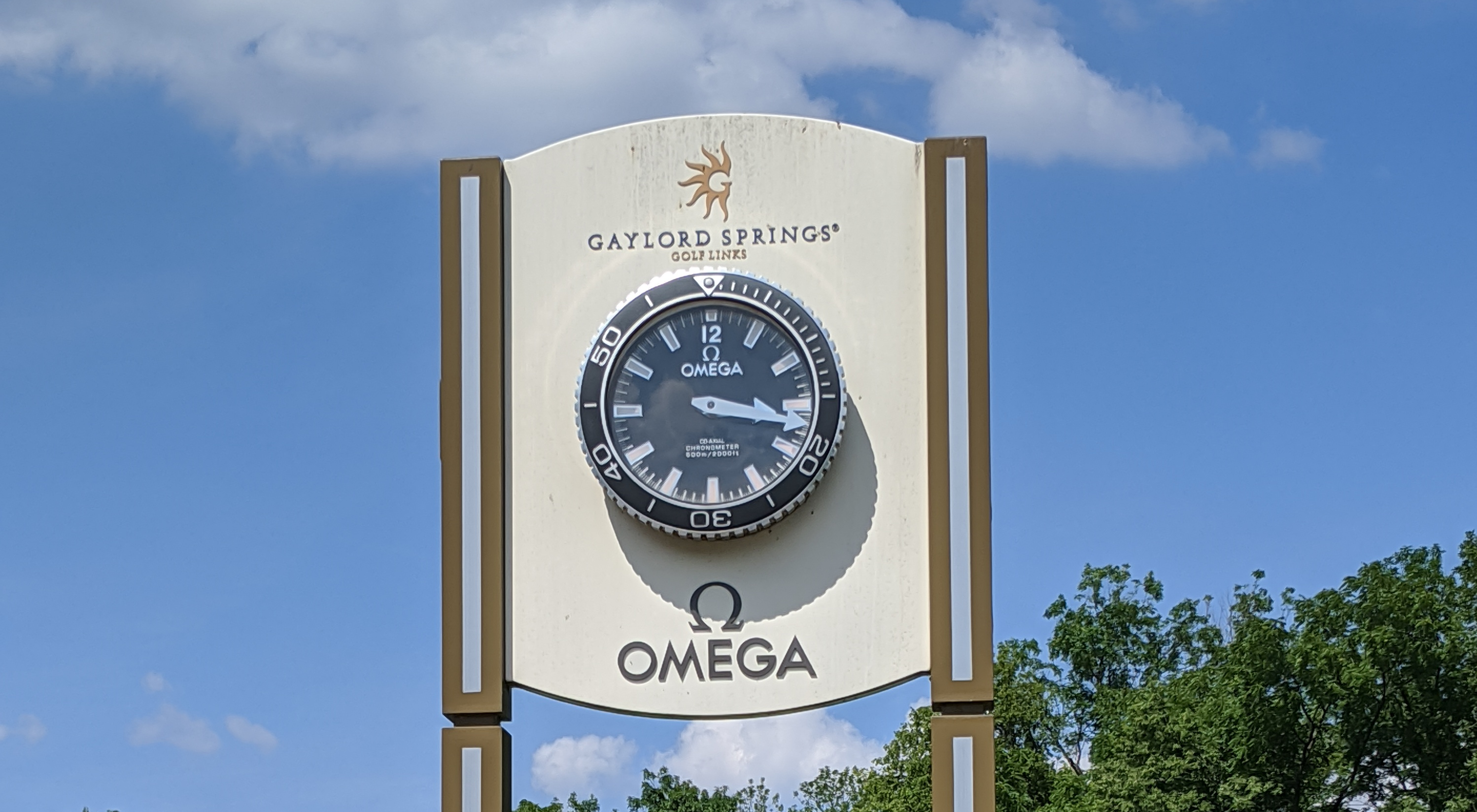
Gaylord Springs has a nice driving range, but the driving range is always mats only. In the twenty something rounds I have played there, I’ve never once hit a driving range ball off of grass. However, it is a nice range, chipping, and putting area that I once practiced at when I lived in the area.
The first hole is a shorter, straightaway par-5 that gives a player a reasonable birdie chance right out of the gate. The hole is rather unremarkable as short, straightaway par-5s can often be, but we have to talk about design faux pas number one for me: trees lining a natural water hazard or viewpoint.

The first hole, and every other hole that fronts the river on this course, has a tree line blocking the view of the river. Except for a rare peek at the water through the trees, the river largely cannot be seen at Gaylord Springs, despite five holes playing directly parallel with the river. Sometimes this happens because the local wildlife agency owns the shoreline and prevents the trees from being cut down, which may be the case here. But for whatever the reason may be, its a shame that the course is not able to provide the plentiful views of the Cumberland River of which it is theoretically capable.
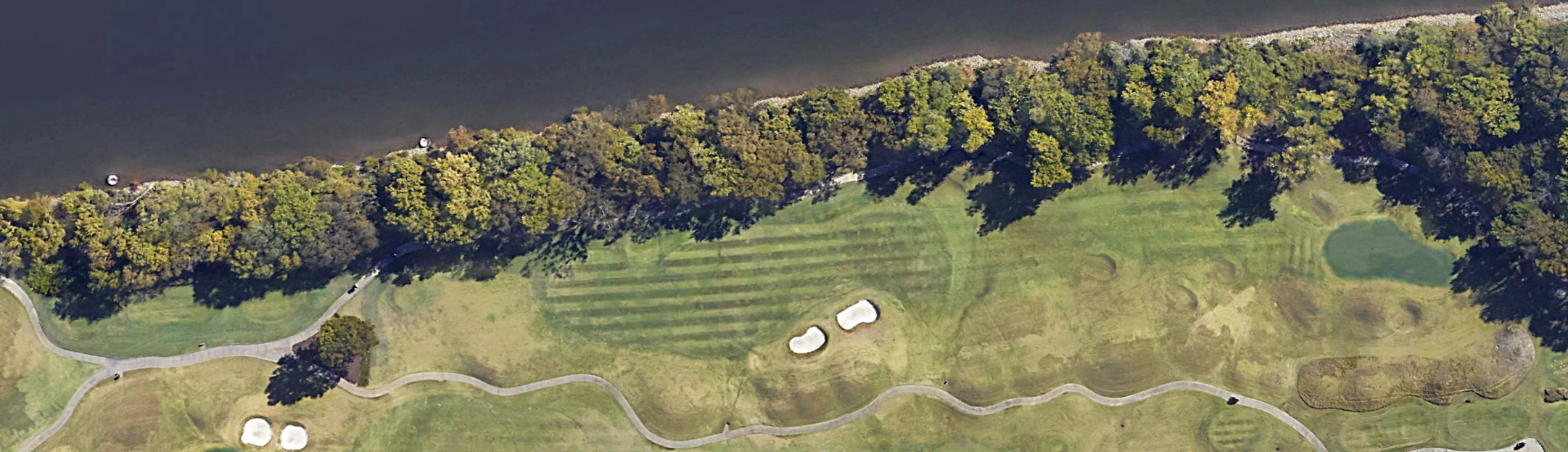
The second hole might be the hardest hole on the course. The longer par-4 runs the same direction as the first, and features a split fairway, with the first half of the fairway being slightly elevated compared to the second half. The hole is quite difficult due to the tee shot. The large tree that sits some 90-yards in front of the back tee chokes the gap in the trees to just 18-yards wide, and in the landing area of the fairway, the short grass thins to just 28 yards between the rough and the deep bunkers on the right. These bunkers on the right may be the worst of the fairway bunkers on the course, due to the length of the next shot, as the steep lips can block any iron shot from a club longer than around a 7-iron. Even the best drive will leave a mid-iron into a relatively long, narrow green that has significant sloping from back-to-front, and that features steep fall-offs into grass bunkers on either side.
Gaylord Springs underwent a significant bunker renovation in 2020 and the shorter par-3 third shows off the result of that work nicely. Gaylord Springs really accentuated the American links style, and installed circular revetted face bunkers for some of their greenside bunkers, and I think this was a fantastic change.
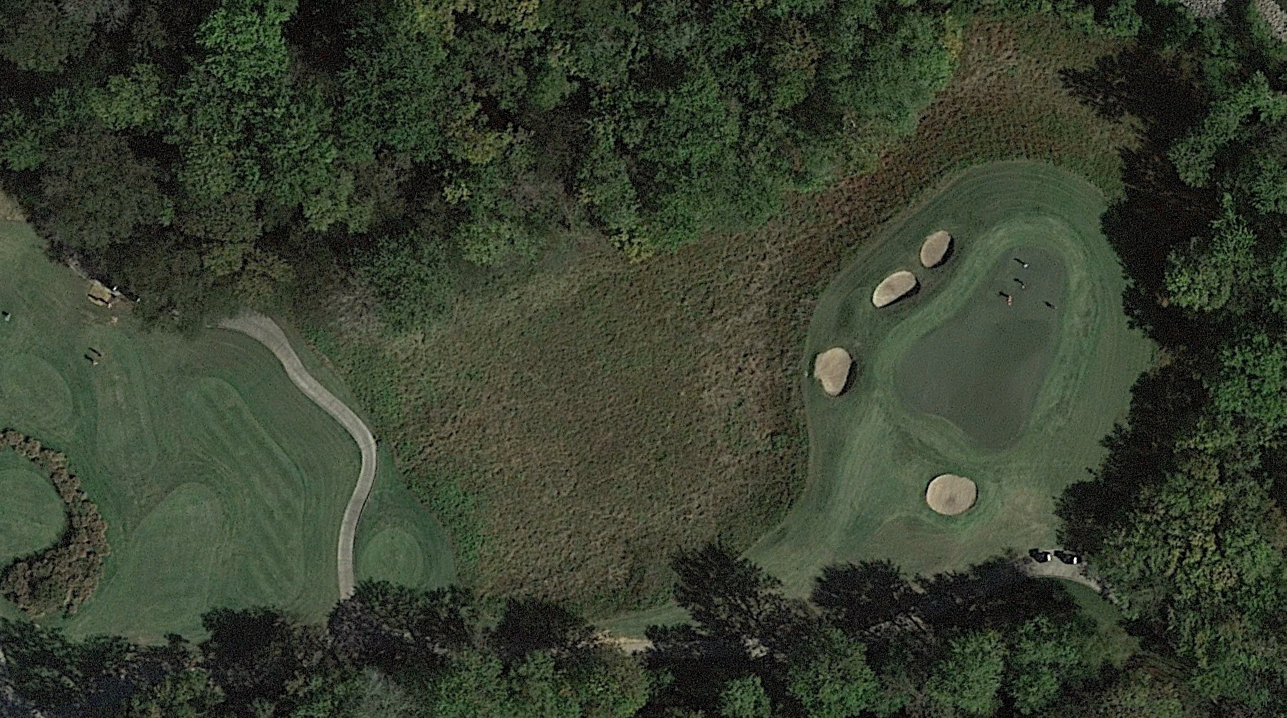
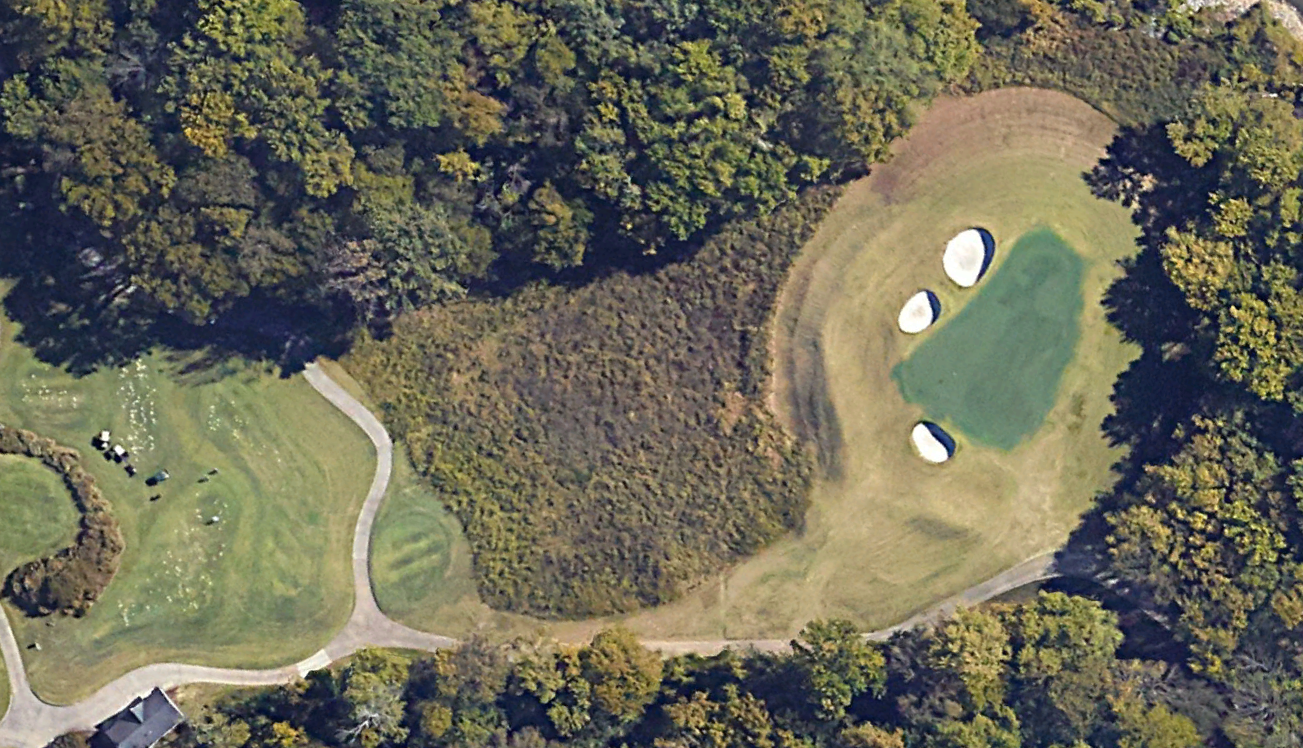
By undertaking this renovation, Gaylord Springs also reduced the number of bunkers on the course, meaning less maintenance for the golf course. If you recall back to my Shingle Creek Golf Course review, I was very critical of the work Shingle Creek did to reduce their bunker count. However, Gaylord Springs should serve as a model of how to reduce bunker count and square feet of sand, but still maintain or increase the shot values and the aesthetics of the golf course. Golf Course Architecture wrote an article about the bunker renovation which detailed some of the objectives of the changes.
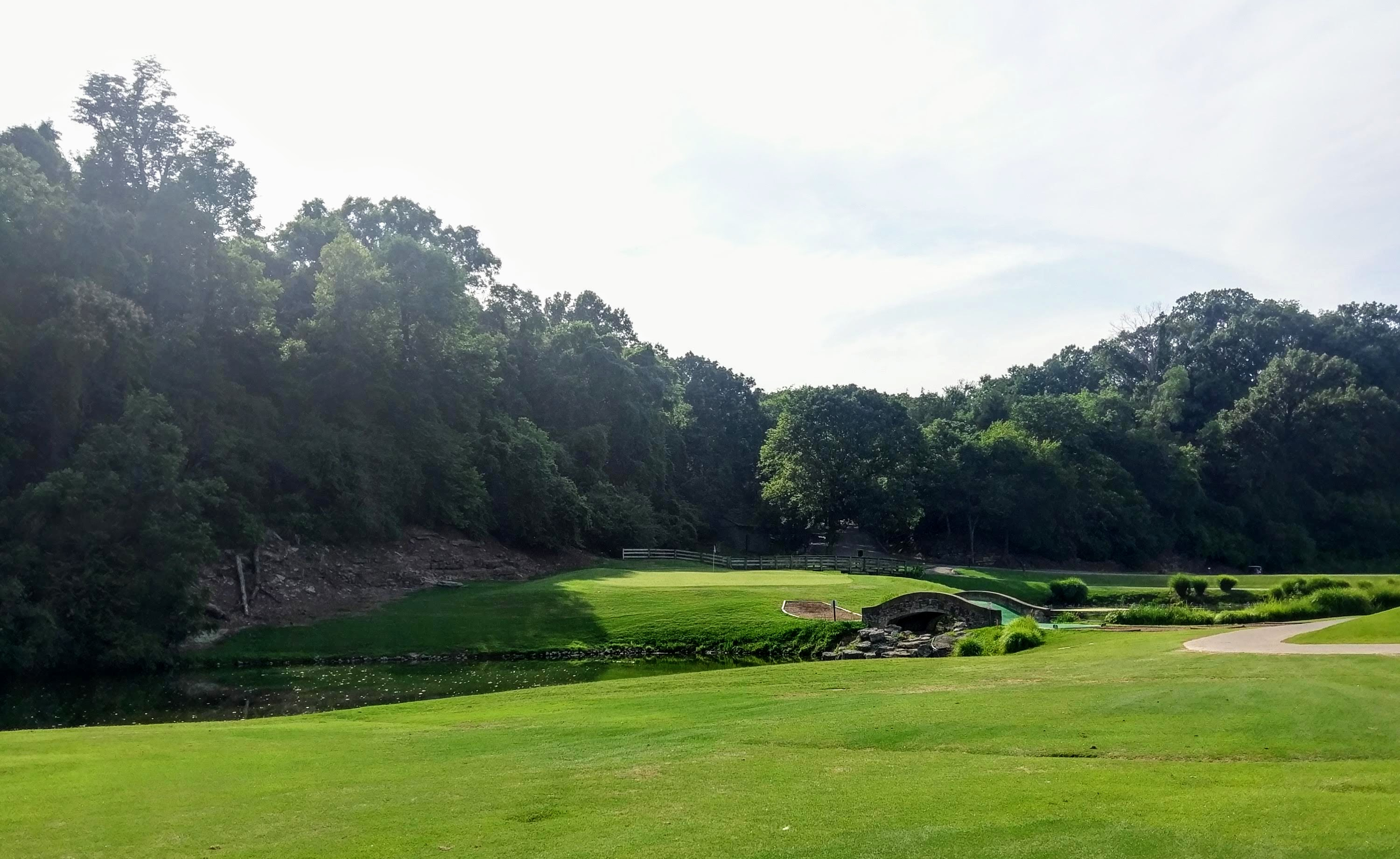
The fourth and fifth holes are the feature pair of holes at Gaylord Springs, two par-4s that play around some internal ponds. The fourth is short par-4 that requires something less than driver for the longer hitters.
Most players will lay back with a three wood or low iron to the generous fairway, and then fire back across the pond to a very goofy green. The green here is sloped too much from back-to-front, likely in a 6%+ area throughout the green. Additionally, the new bermudagrass greens at Gaylord Springs are often quick, meaning that a putt from above the hole is nearly unstoppable on this green. Further, it is not unheard of for a newcomer to spin a ball off this green and into the water with a wedge, as the approach yardage lends itself to an over-spun, hard wedge. The fourth is a pretty hole, and the green lays just to the right of a large rock wall (one of several on the anti-river side of the course), but this green is mickey mouse putt-putt golf and needs a windmill installed to complete the vibe.
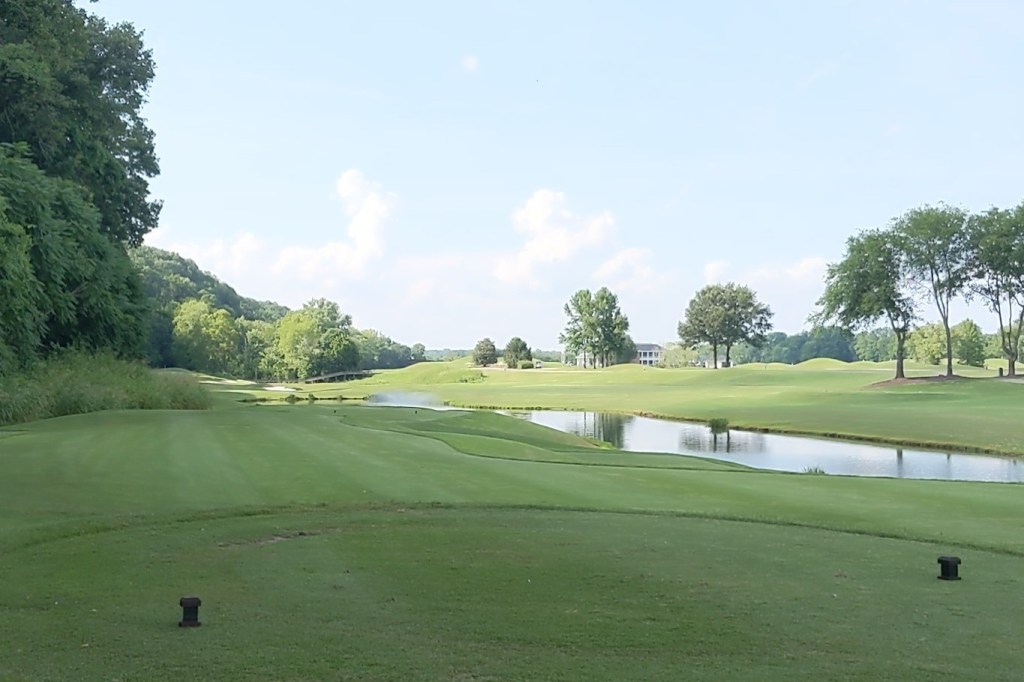
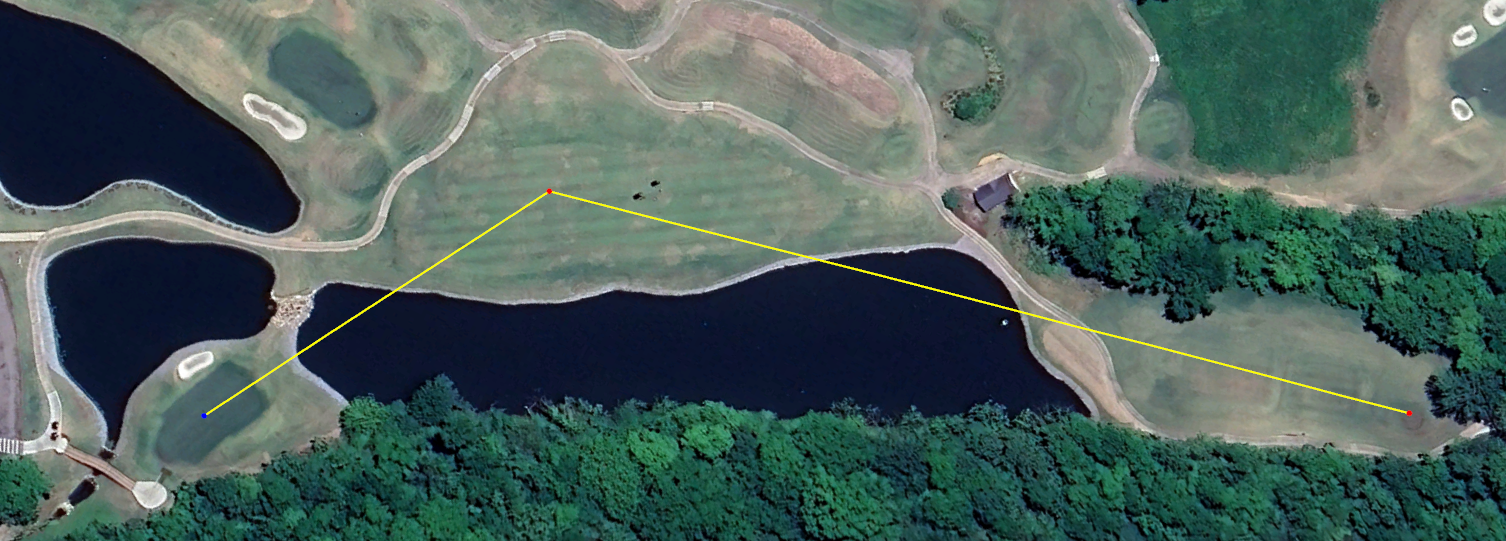
The fifth hole is a longer par-4 that also presents a strategy element off the tee, as a large pond is centered on this hole, with the fairway wrapping around it from right to left. From the tee, the pond is less than 240-yards to cover from the back tee. Driver still may not be the correct play, as the very wide 88-yard fairway narrows to a third of that width as the hole moves towards the green and is narrowed by a ravine that works to the right of the green. That narrowing happens right at the end of the driving area, but on a dry day, balls can find that ravine from the tee. The challenge from the tee is correctly judging the wind and turf conditions to carry the lake, but stop the ball in this wide area of the fairway.
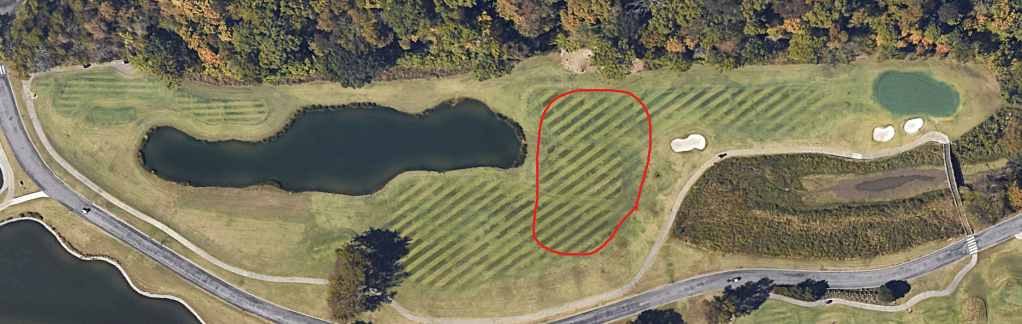
Unfortunately, one of the more engaging tee shots on the course is muted by another putt-putt green, this one again sloped too severely from back-to-front to be reasonable. While not as bad as the fourth, this green is also in the 5% slope range, and it is quite difficult to stop the ball if above the hole. At the speeds the greens are maintained, the fourth and fifth greens are not fun, and Gaylord Springs would be well served in investing to rebuild them to fix the extreme grade.
If this course loses its intrigue in any section of the course, it would be the sixth and seventh holes, which are a medium length par-5 and a longer par-4. Both the sixth and the seventh are relatively straight holes, with the former bending slightly to the right on the tee shot. Gaylord Springs is a links course, at least in layout, and it makes sense that the sixth and seventh are the least interesting on the course. On the front nine, only three of the holes are internal to the property. The first five holes all border an property line, with the first three the neighbors to the Cumberland River, and the fourth and fifth neighbors to the large hill that runs parallel to the river on the other side of the property. However, the sixth through the eighth are internal holes, with the eighth being a par-3. It is much easier for designers to create a visually intriguing par-3 hole without any real natural green site or hazards in play.
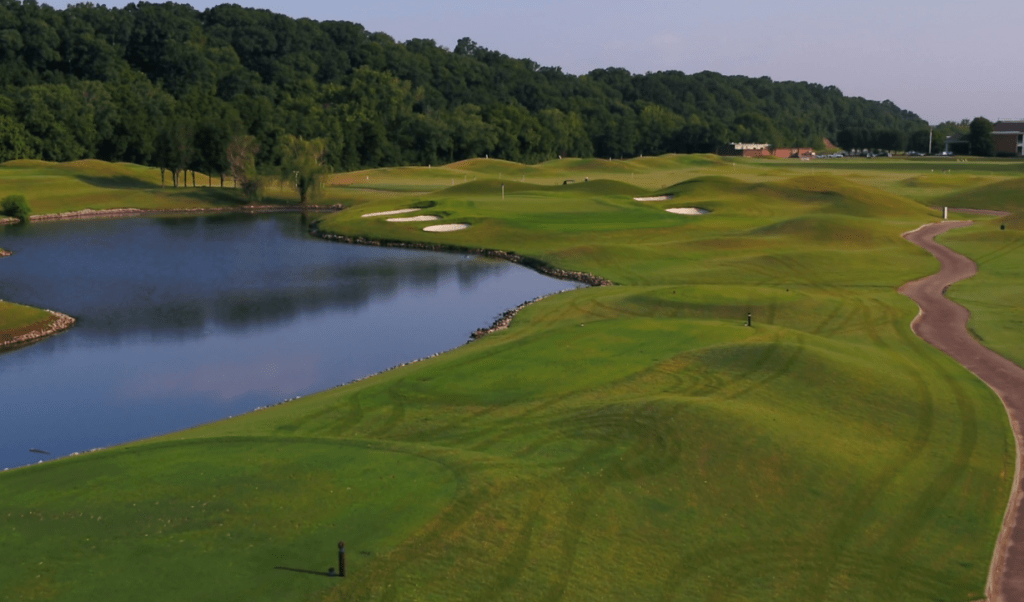
The eighth hole manufactures a good, mid-length par 3 over a pond to a green angled at a 45-degree angle from the tee. This was another hole that underwent significant bunker renovation. Formerly, the hole had three bunkers on the left and four to the right of the green, but the area to the right was significantly simplified with just the two remaining bunkers that accentuate the mounding to the right of the green.
Lastly, the ninth hole works back to the anti-river side of the property, but has a small stream to its left. This small stream sits at the base of the large hill to the left of the hole. The tee boxes are significantly elevated to the fairway on this shorter par-4. Perhaps no hole at Gaylord Springs was more altered by the bunker renovation than the short ninth, and again, I praise their work. The former hole did not quite fit the character of the course, but the new bunkers make the bunker styling a bit more consistent with most of the other holes on the course.
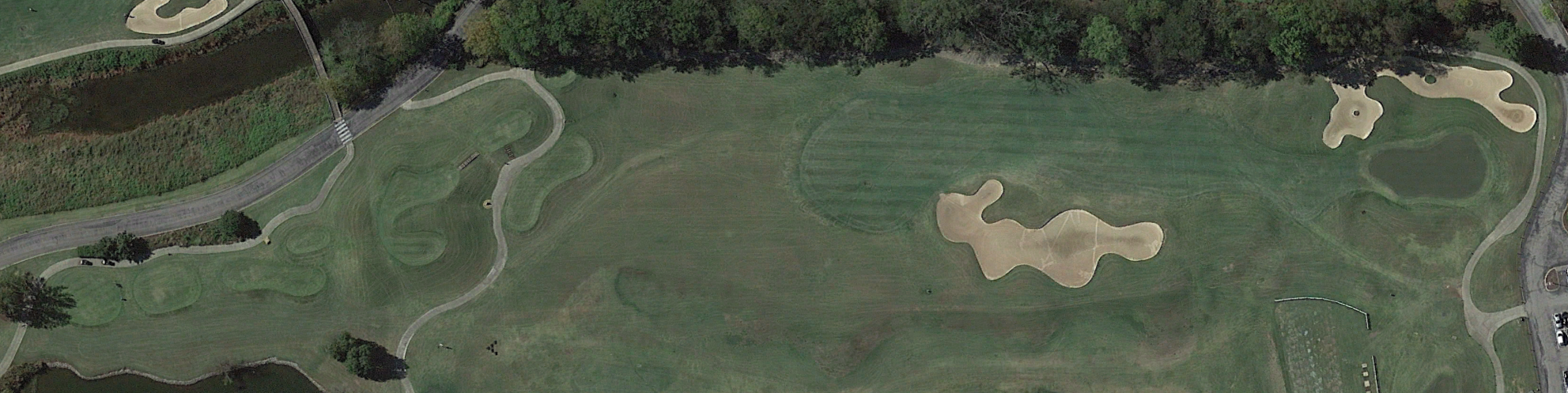
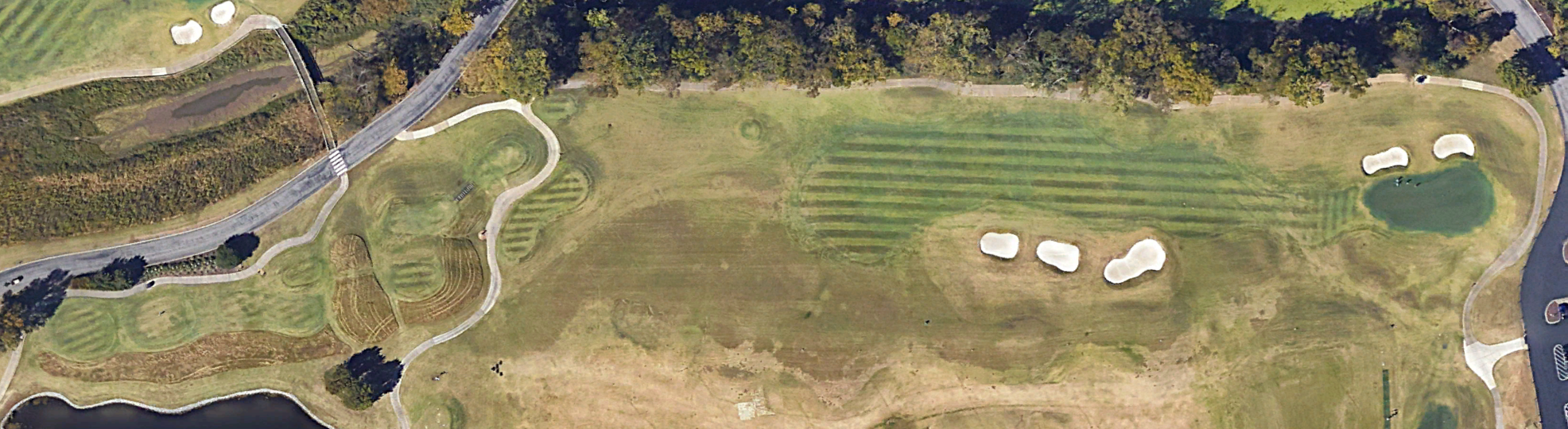
The ninth has multiple strategy options, but getting as close to the green as possible is certainly one of the options. Should the player choose to lay back due to the narrowness of the hole and the body of water to the left, the three fairway bunkers pinch the finishing area for anything less than driver.
Making the Turn
The tenth hole crosses back to the river side of the property and is nearly a mirror of the first hole. Teeing off right behind the first, the tenth is a medium-length par-5 that is basically a straight shot, complicated by the tree-line bordering the river to the right. Where the front nine is largely a clockwise loop around the property, the back nine is a counter clockwise loop. This means the front nine is punishing to a hook, as the property edges are to the left of the holes. But on the back, all the property edges and significant trouble are on the right-hand side of the holes, punishing to the mid-handicappers slice.
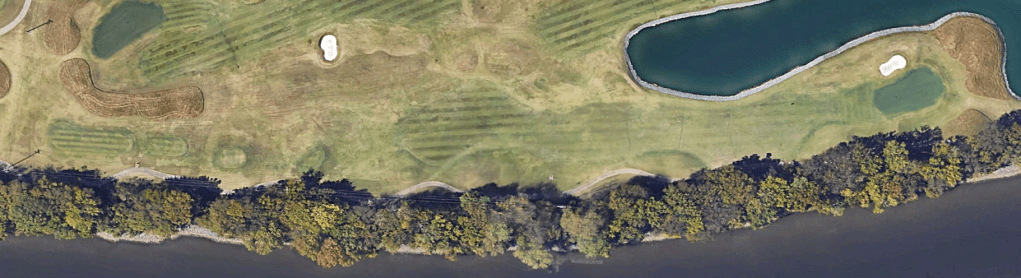
The eleventh is a longer par-4 that looks relatively benign from the tee. A player cannot see the protruding pond from any of the tee boxes, and the corner of the pond is reachable from any tee box except the furthest back. However, it is only reachable at the very end of a long drive. This creates a tough choice: laying back to take the pond out of play with a three wood makes for a very long second shot, yet going with driver comes with the risk of the last bounce of a pulled drive being into the water. The area between the tee line and the lake on the left is a relatively narrow 36-yards wide, but the player laying back with less than driver has infinite bail out room to the left.
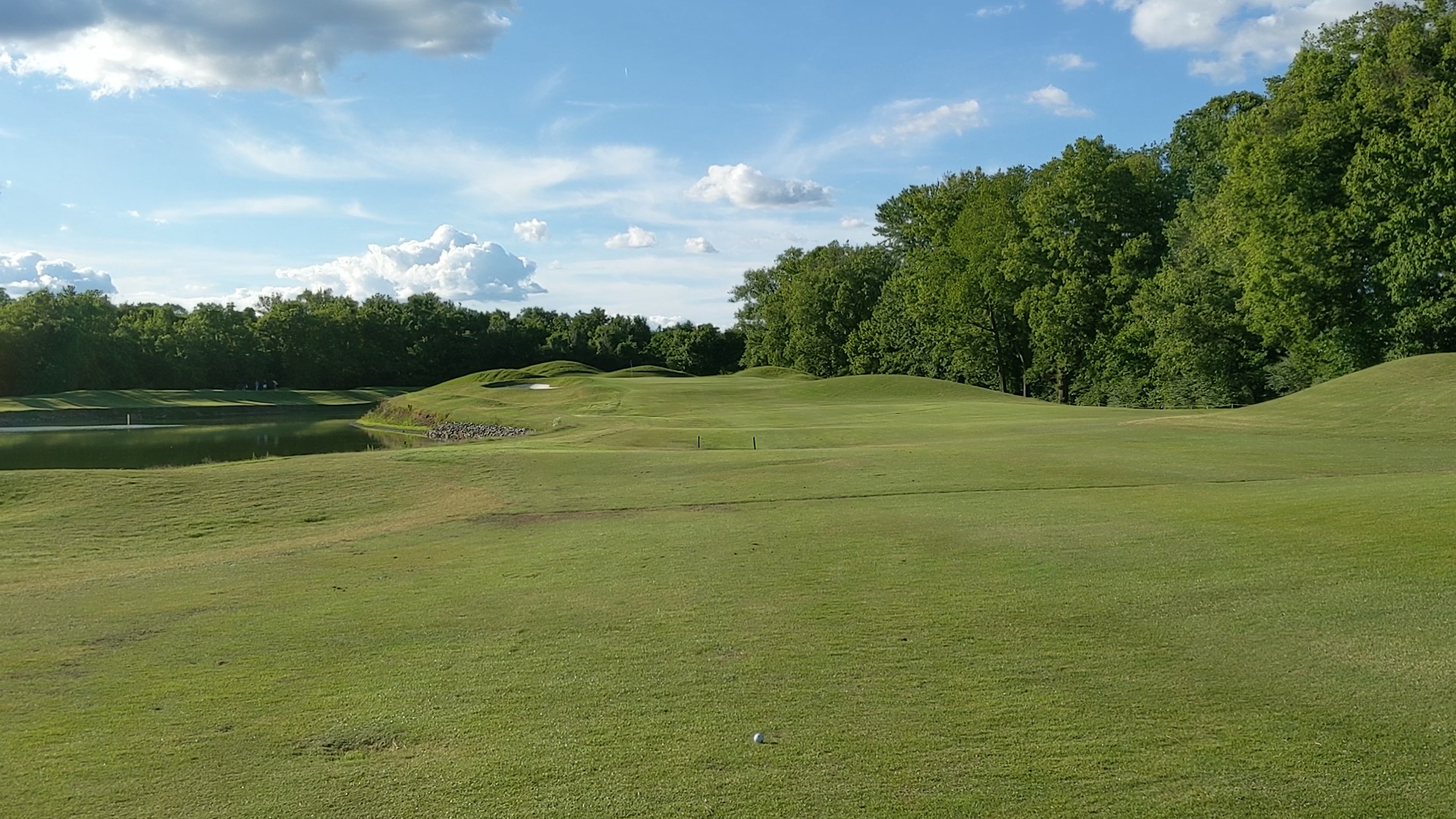
Once in the fairway, the approach will likely be with a mid-iron to a slightly elevated green, protected by the bunker and wrap around lake on the left and behind the green, as well as the dense tree-line to the right. This may be the hole and the shot best served by the aforementioned tree removal along the shoreline of the river. This shot would provide a magnificent view of the river without the large trees on the right.

The twelfth hole is actually the last par-5 on the course, a mid-length hole with an elevated green that forces the player to contend with the greenside lake from the eleventh hole, as the twelfth turns to play parallel to the eleventh. The green is elevated on a ridge, with a fairway nearly parallel to the green below the ridge. A miss left of the green results in a tight lie that requires some elevation to get above the ridge and onto the putting surface.
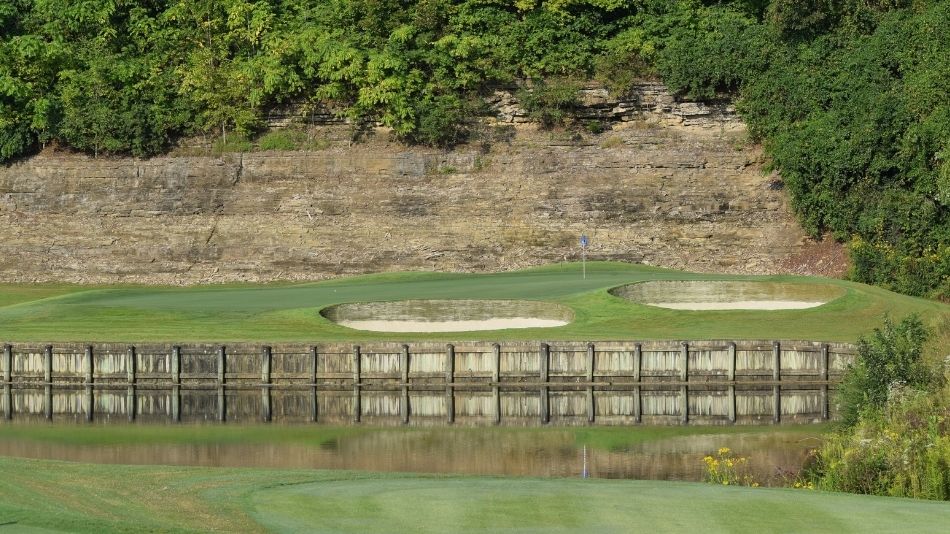
The thirteenth is the unicorn hole at Gaylord Springs as it is the only hole not oriented in a North-South direction. This singular westward facing hole might quite possibly the feature hole of the course, as a longer par-3 requires a significant water carry to a green now fortified by two deep, revetted face bunkers. Behind the hole is the same hill and rock walls that define the fourth and fifth holes, and like the greens on the fourth and fifth, the green on the thirteenth is also quite sloped, with areas exceeding 5% of slope. In my opinion, this is another great hole that is muted by a green that is simply too sloped. That is the theme of Gaylord Springs: the best holes are tainted by greens that feature too much grade and very little actual undulation. These holes all look fantastic from the tee box but result in the player leaving the green feeling a bit cheated that their 10-foot birdie putt slowly rolled off the green.
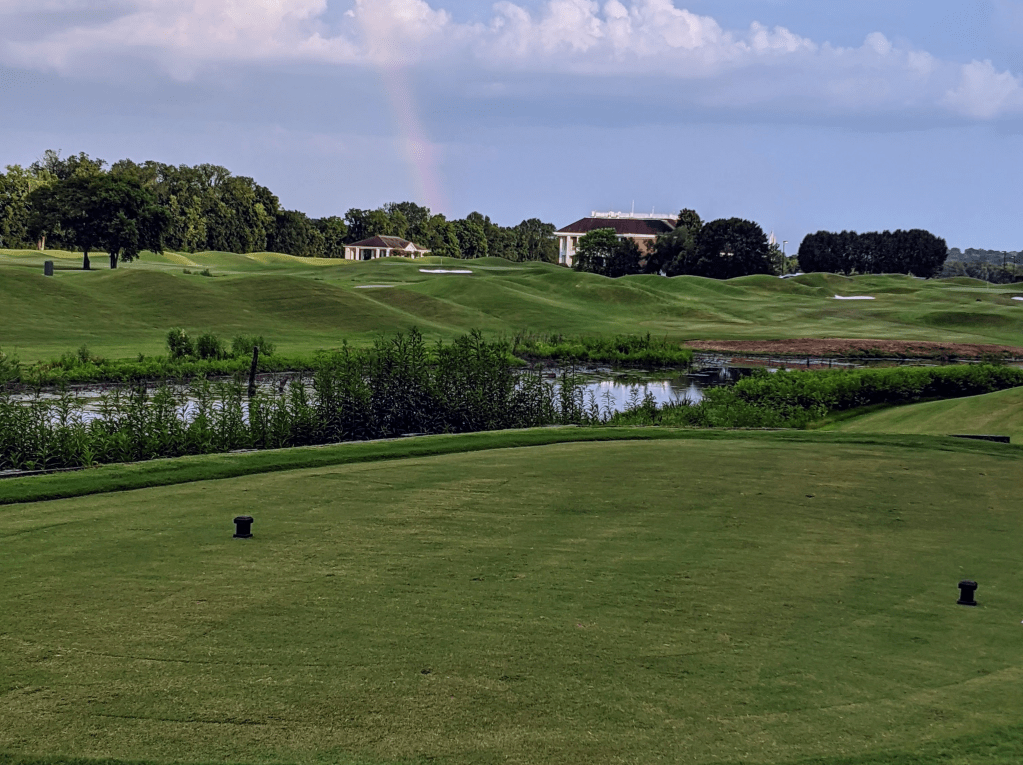
The fourteenth hole gets back to the north-south orientation and plays as a shorter par-4 that is narrow and slightly uphill. The drive must carry a small pond for its first 150 yards or so to find one of the narrowest fairways at Gaylord Springs. Overall, the fourteenth should provide the player that hits a good drive one of the best birdie chances on the course, as this putting surface has much less overall grade than many others.
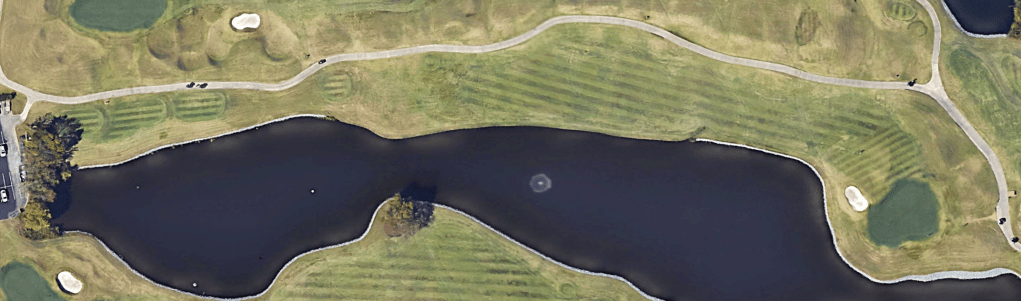
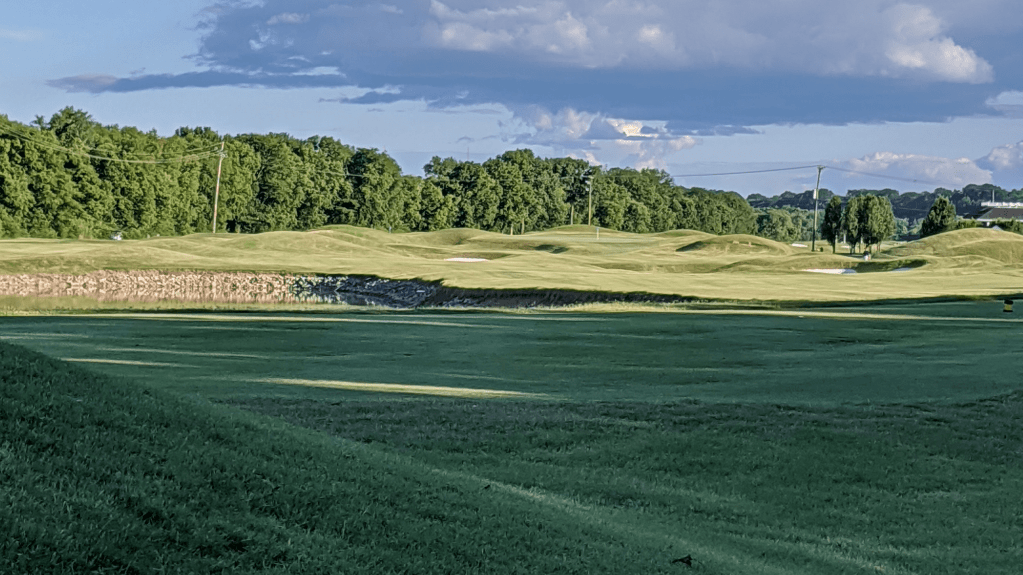
The fifteenth is a bit of a menace. The mid-length par-4 is not long, but works parallel to an internal lake on the right, shared between the fifteenth and eighteenth holes. The landing area is tight, and a pulled drive will bounce down the mounds seen to the left on the picture of the fourteenth hole. The green sits at an uncomfortable angle to the fairway, as the hole utilizes a late dogleg around to a semi-peninsula of the lake. This hole can produce a birdie chance, but a wayward drive will often end in a big number.
The sixteenth may be the most fun hole on the course. The short par-4 is driveable for the longer hitters, should the player dare to take on the newly installed church pew bunkers.
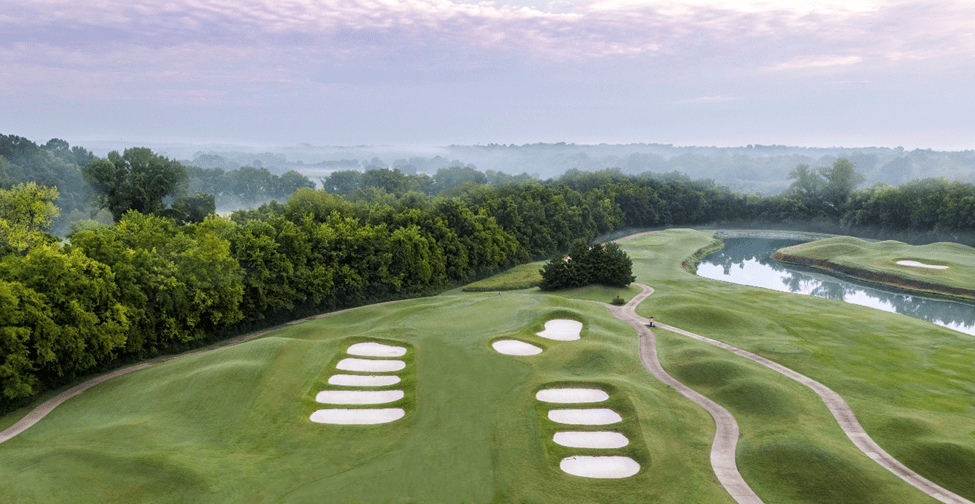
This green is extremely well protected and sits elevated at the top of a small mound, meaning any miss will bound away from the green. The bunkering around this hole is far and away the biggest change made in the 2020 bunker redesign, and I personally think it looks and plays fantastic. The player has the option of laying up in front of those bunkers with relative ease, but the hole for some reason seems to ask you to drive the green.
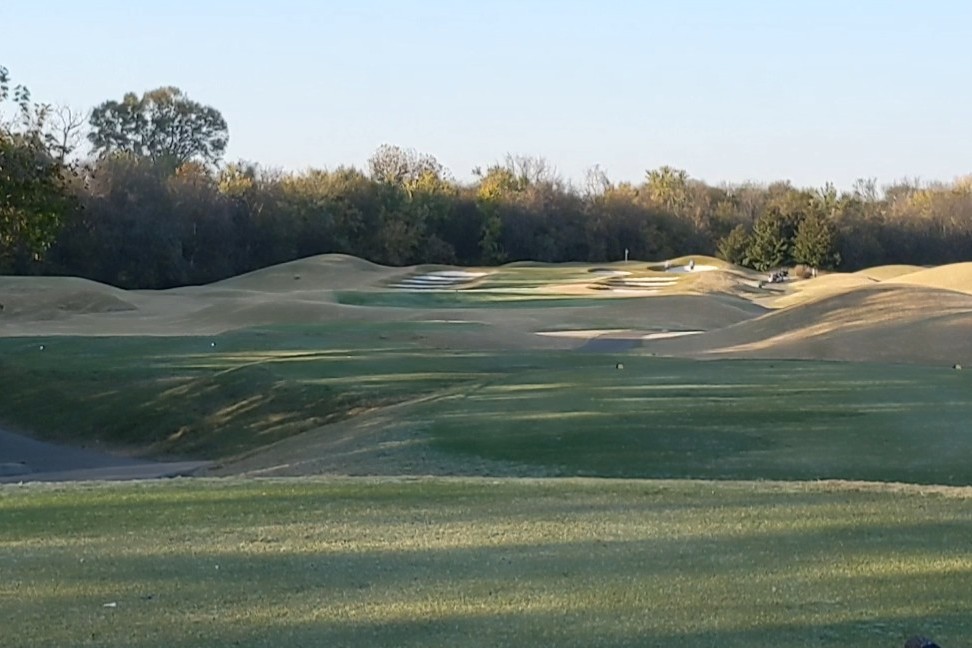
The seventeenth hole is a long, relatively uninteresting par-3 that crosses a small stream. This hole is quite target oriented as a long iron will be required, but if the target is acquired, the green is manageable. Of the holes that border the hill-side of the golf course, this green is the flattest and is the most scoreable.
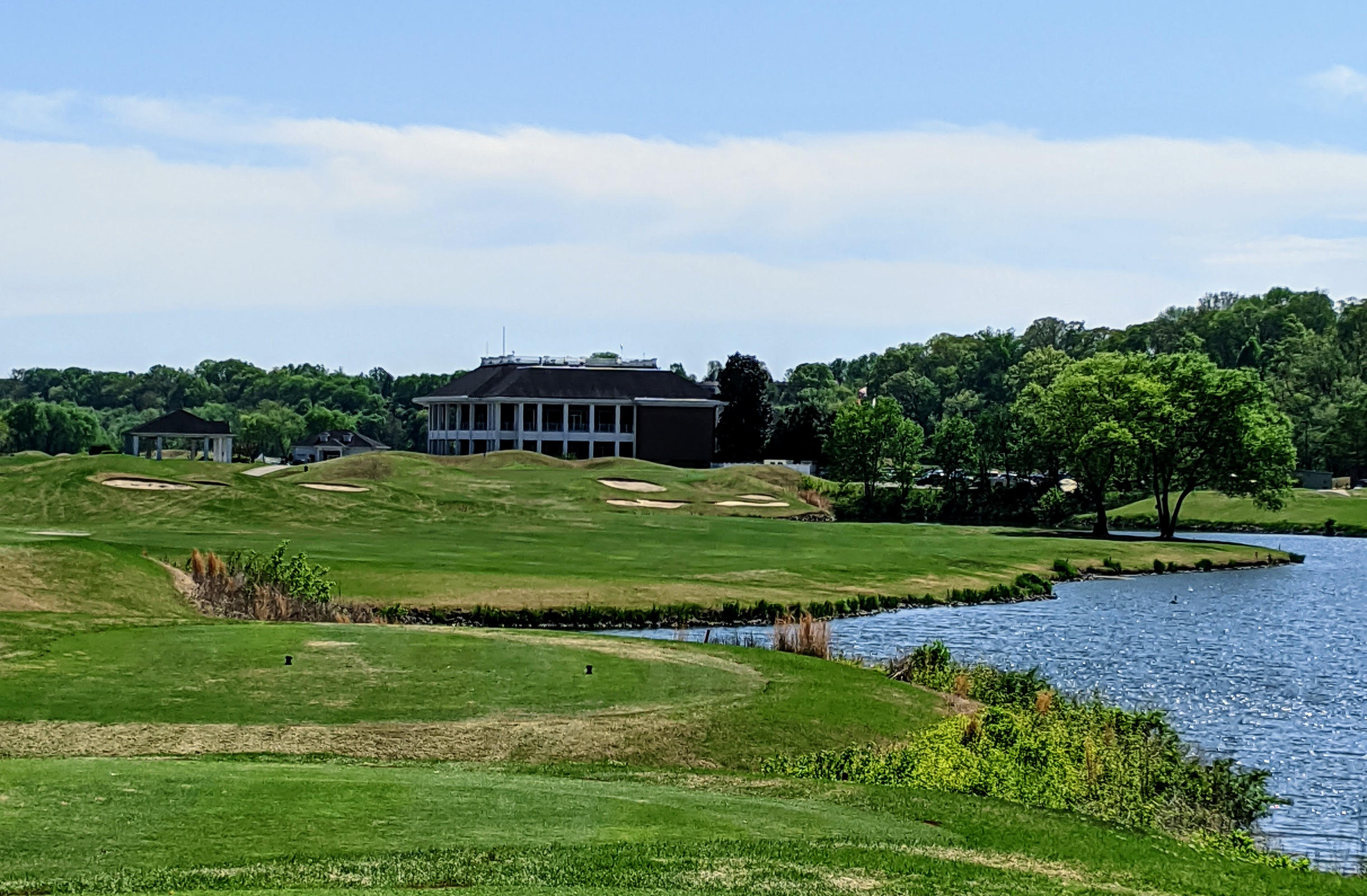
Lastly, Gaylord Springs finishes with a beautiful par-4 that works back to the clubhouse. As I’ve mentioned in my Shark’s Tooth review, I really like when a courses eighteenth works directly underneath its clubhouse, and Gaylord Springs understood the assignment here.
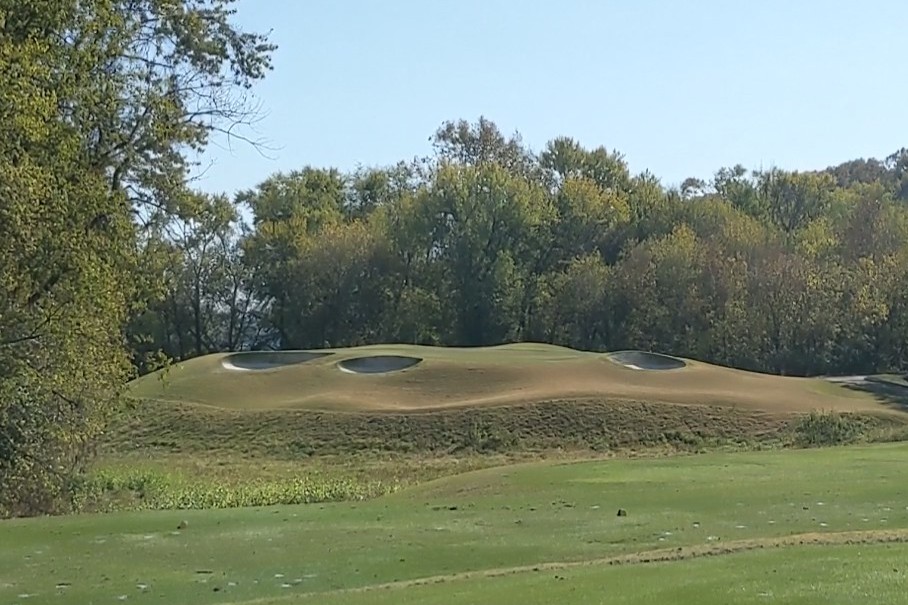
The eighteenth is also quite a tough hole, being a longer par-4 that is bordered by the pond on the right, and a mound littered with three circular bunkers on the left. The hole is as challenging as it is aesthetic, as the approach shot works to a slightly elevated green, now protected by a singular greenside bunker.

Final Thoughts
Gaylord Springs is a very enjoyable public course – likely the second best public course in the Nashville metro area, and very comparable to GreyStone Golf Club in Dickson, TN. Gaylord Springs is a strong course, but it does not quite live up to the developer’s major championship goals, or get particularly close for that matter. I am often torn on my opinion of Gaylord Springs, because I feel as if its best holes are neutered by green complexes that lack any character or undulation at all, and rather rely on comical grade for difficulty. The fourth, fifth, and thirteenth holes are all so strong and deserve better, more imaginative green complexes that are actually playable from above the hole. The golf purist in me cannot rate a course highly with major play-ability concerns on the putting surfaces of its best holes.
Gaylord Springs’ parts are better than the sum of its whole, and just a bit more investment to correct a few broken pieces would go a long way in improving this rating.
F1C’s Final Rating:
Shot Options: 6
Challenge: 7
Layout Variety: 7
Distinctiveness: 6
Aesthetics: 6
Conditioning: 7
Character: 7
Fun: 6
Total: 52/80
Read More: How We Rate Courses
Rating Scale Details
> 70: Top-50 U.S.
65-70: Top-200 U.S.,
60-65: Best-in-State List
57-60: Best-in-state List Contender
53-57: Very Good
48-53: Good
40-48: Average
> 40: Poor

Author: Jaxon MacGeorge
Jaxon is the founder and lead course reviewer at First1000Courses.com. Jaxon has been playing golf for over twenty years, is a scratch handicap, and actively competes in USGA and Tennessee Golf Association (TGA) amateur events. By trade, Jaxon is an attorney and lives in Gallatin, TN, a suburb of Nashville.

 First 1000 Courses
Leave a comment