
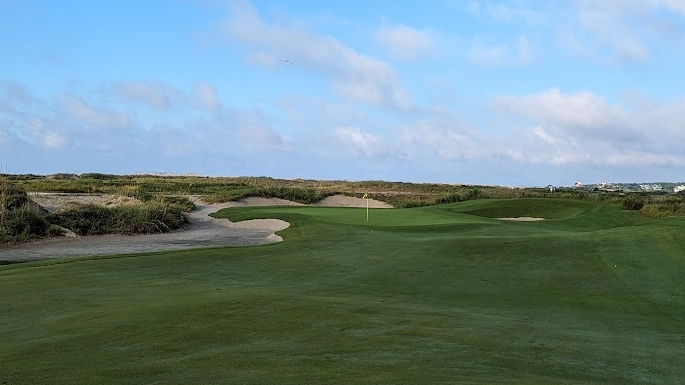
This Ocean Course at Kiawah Island course review is based on a round played on September 16, 2023.
The Ocean Course at Kiawah Island is a public course in Kiawah Island, SC. The maximum green fee at the Ocean Course is $600 per round, in peak season.
F1C’s Final Score: 73/80 (Top-50 U.S.)
Learn More: How We Rate Courses
Where to Stay? -> Check out F1C’s Charleston, SC Travel Guide
If you’ve read my reviews thus far, you may be here because you enjoy my snark. Perhaps you like to see more detailed breakdowns of where courses went right or wrong. This is not going to be that review. The word review might even be misplaced because (despite it not being), this may come off more like a sponsored post.
The reason for this is the genius of Pete and Alice Dye. Mr. and Mrs. Dye passed away recently, in 2020 and 2019 respectively. They left behind two lives’ work of designing and building some of the world’s greatest golf courses. Unquestionably in my mind, they are the most important golf course designers in modern golf history. I hope when I pass that I am so fortunate to be remembered by my life’s best work. The Ocean Course is a living, breathing monument to golf architecture’s power couple, and will for generations to come allow players to remember them by their best work.
The Ocean Course had a huge build up for me, partially because I knew the course very well for various reasons long before I booked the trip to Kiawah. The Ocean Course is rich in allure: a Ryder Cup, multiple major championships, and a rare spot just inside Golf Digest’s top-25 courses in the U.S. (including being #3 public). As a bit of a golf nerd, I was extraordinarily excited and the night before my expectations could not have been more elevated, outside of sleeping in Augusta, GA, Pine Valley, NJ, or the Del Monte Forest.
Most times in life, reality does not live up to my expectations. I think that is what makes me the right person to write these reviews.
But The Ocean Course delivers.
From the moment you drive up to this property, step out, walk through the beautiful clubhouse, and look out of the clubhouse windows at the Atlantic Ocean. Everything is how you imagined it would be in your dreams the night before; a delivery of the Dyes’ vision.
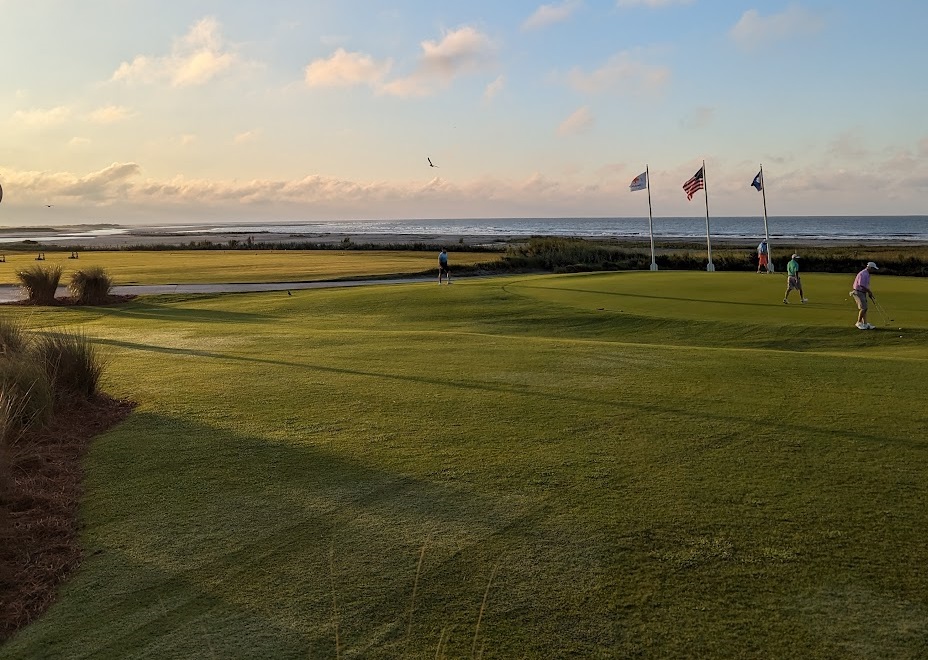
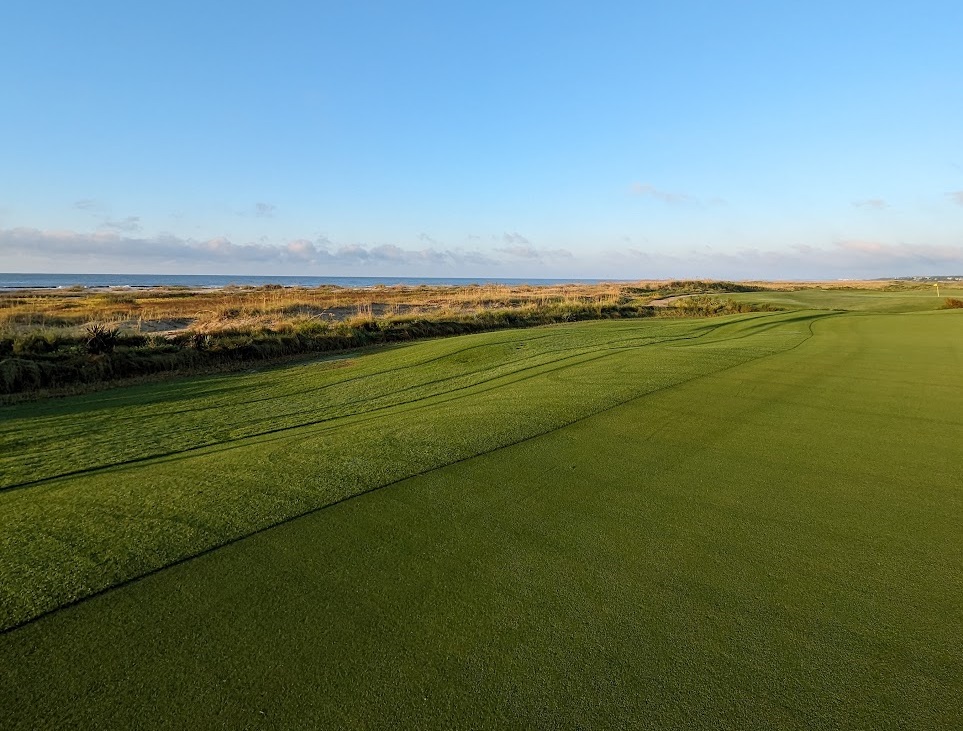
We arrived at 7:20 AM to the sight of the sun rising over the driving range. The dew on the paspalum had yet to be broken. The staff took our bags from our car and had them on the driving range awaiting our arrival. After gauging the speed of those paspalum greens (they are relatively slow, especially for a course of this stature), and a 30-minute warmup on the range, we were off to – the tenth tee?
We started on the back nine this day, due to a helicopter spraying for mosquitos on the front nine (we would soon find out why, when they bit us). However, for ease of reading this review, I will review from the first hole to the eighteenth, as always.
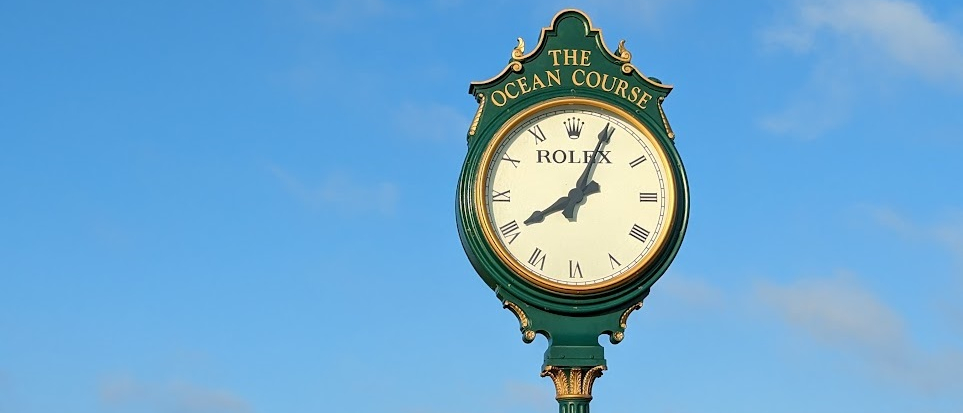
The First Tee
Pete Dye had a philosophy for his starting holes. They most always (1) are mid-length par-4s, and (2) mirror the tenth hole, particularly at venues he for which anticipated professional golf tournaments being held. The logic is that no competitor should gain an advantage starting on the front nine vs. the back nine, so as expected, both nines at The Ocean Course start exactly this way. The easiest two holes on the course: the first and the tenth, both par-4s. It continues; Dye routes both nines at the Ocean Course with exactly the same par layout: 4, 5, 4, 4, 3, 4, 5, 3, 4. So, starting on the back on this course wasn’t the worst thing.
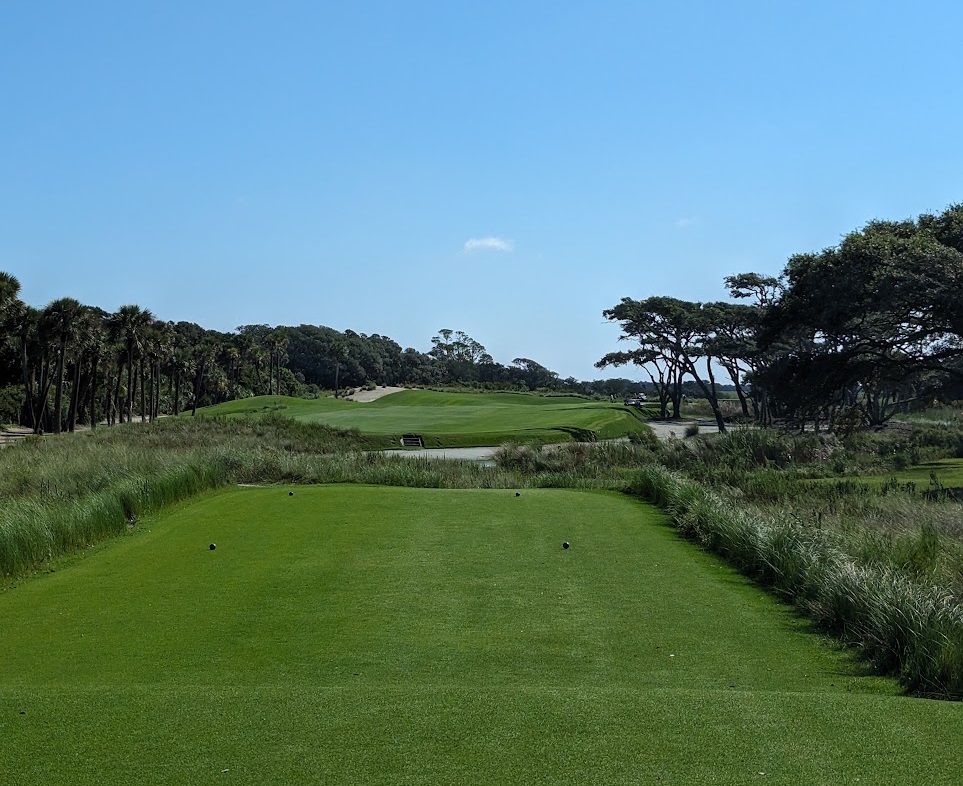
The first hole is almost a warmup hole compared to the rest of the course. A straightaway par-4 with a relatively wide fairway. A creek bleeds up the right and turns into a pond that quarters the front right of the green from around 110-yards. Players have an option to either hit a comfortable wood of the green, or challenge the pond on the right with a driver. A good drive here should leave a legitimate chance for an opening birdie.
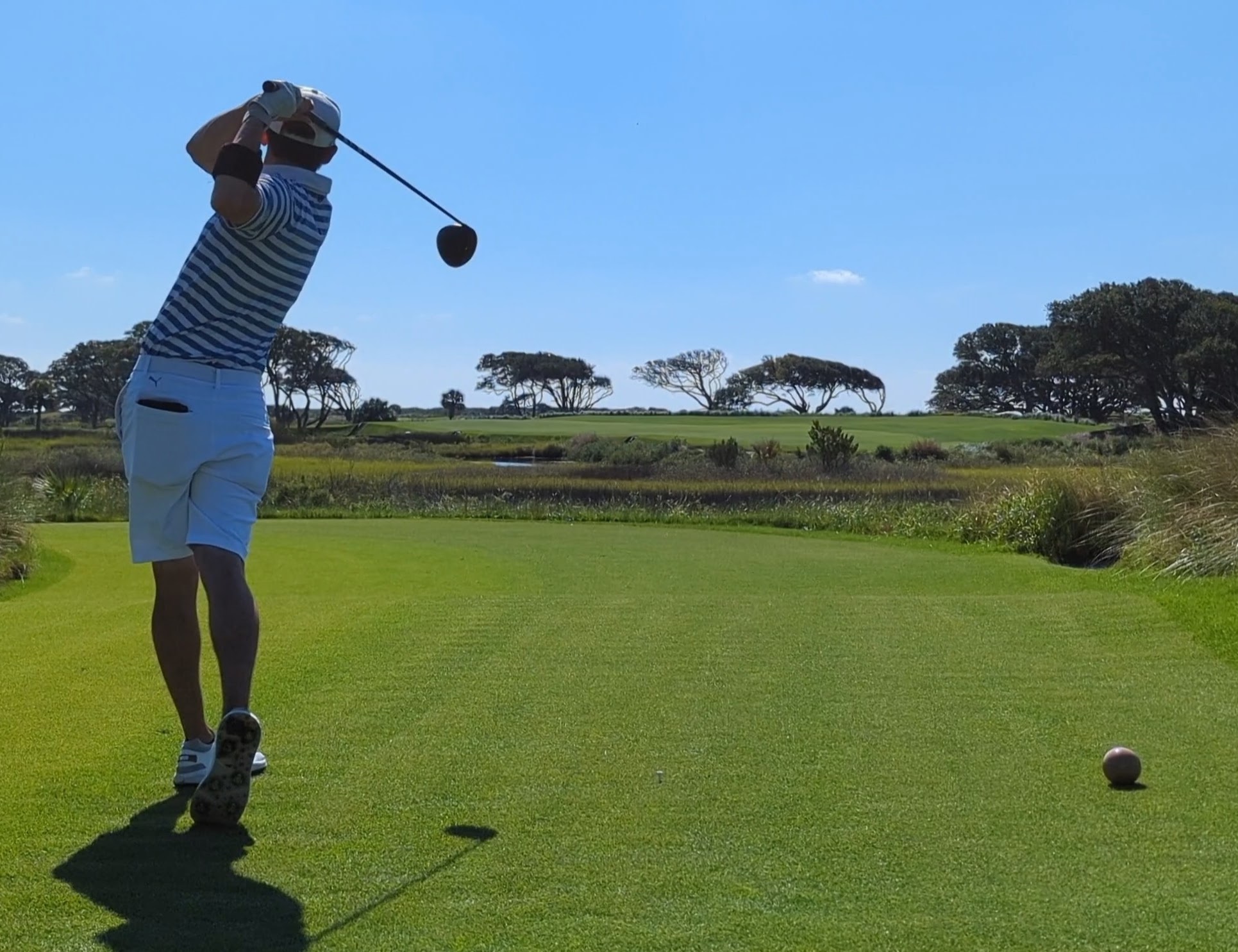
Of all the holes on the course, the second was the most surprising to me, mainly because it did not look like it does on TV. The tee shot looks similar, as you fire away over a marsh area to a fairway angled towards the dogleg-left hole. The angle taken off the tee will largely determine your success on this hole. Too much angle cut off will result in the ball finding the deep left hand bunker, but too little angle will bury you behind a tree and in the rough, taking away any chance at a green in two. The layup is complicated by a narrow marsh crossing that sits around 85 yards from the putting surface.
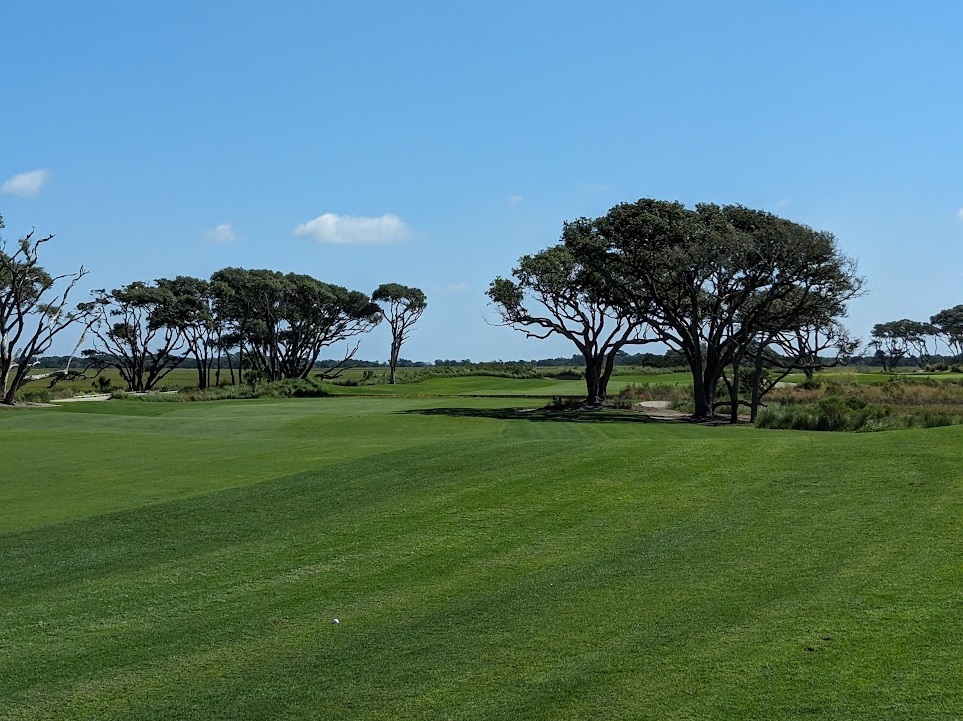
This was the view that shocked me the most on the entire course. This is much more narrow than it looks on TV, and more narrow than it looks here. Successfully navigating the trees on the right to find the fairway between the green and marsh area is a difficult task that makes this par-5 one of the tougher on the course.
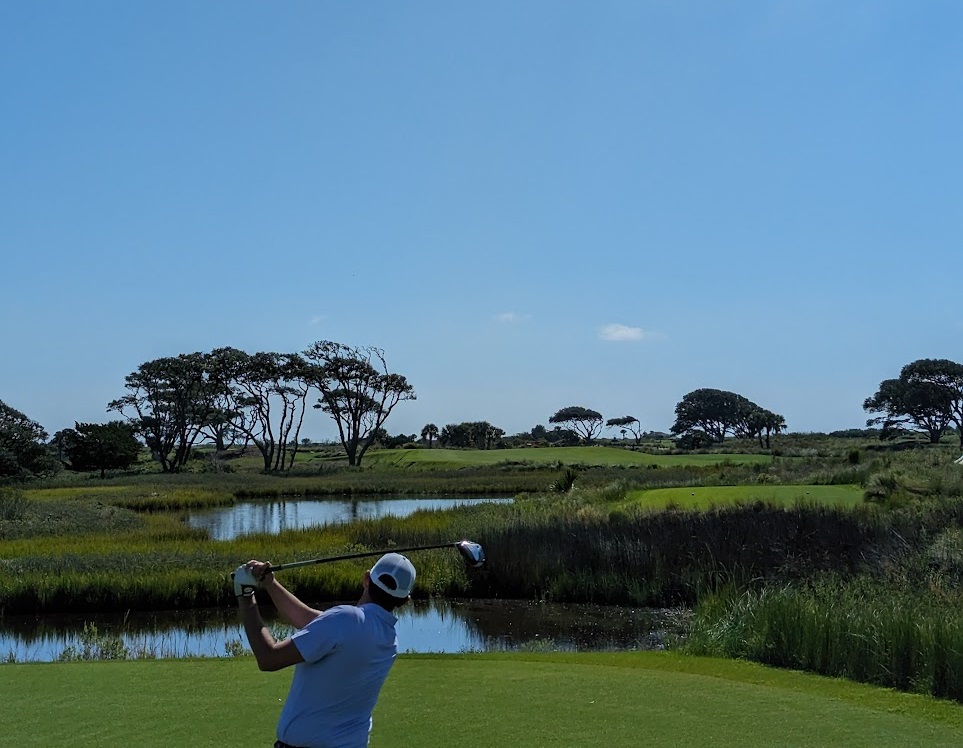
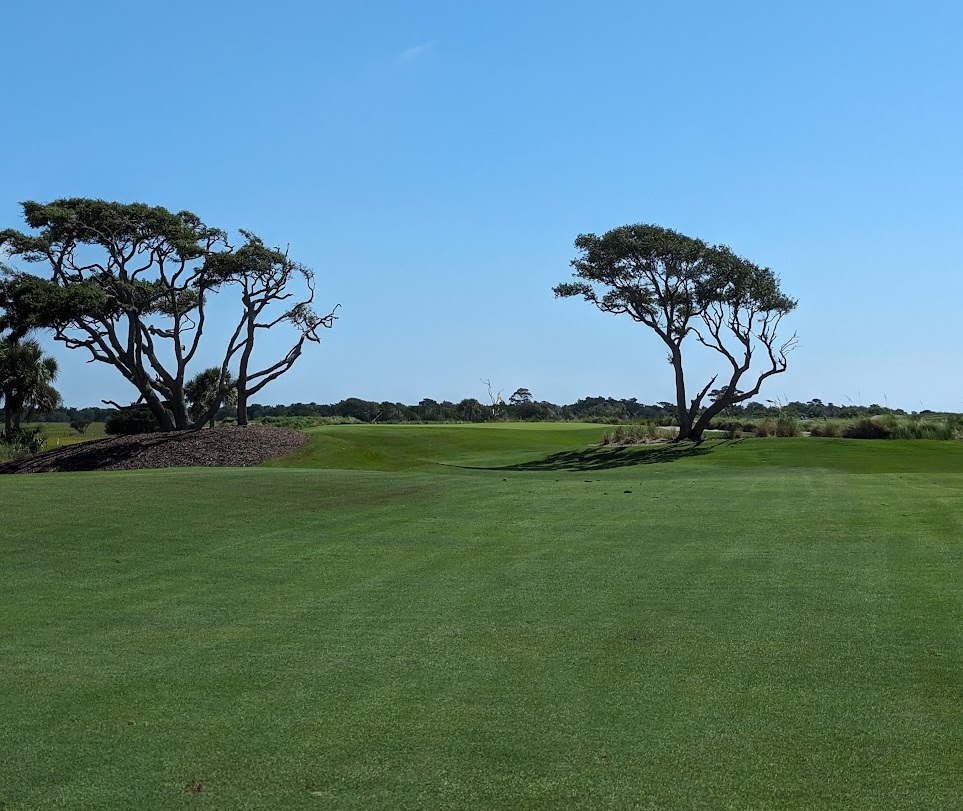
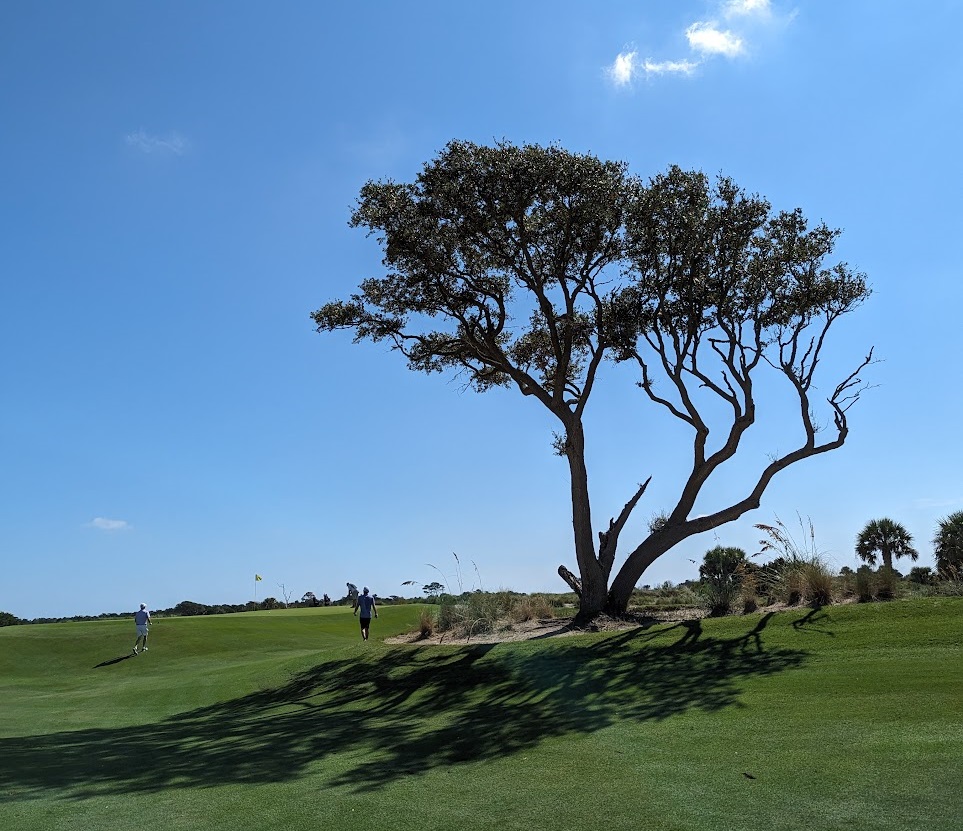
The third hole is the front-nine’s signature hole in my opinion. The tree in the middle of the fairway just short of the green really does it for me, and you have to take into account its position when selecting a club from the tee. The Ocean Course is notorious for the wind, so some days, when downwind, calculating whether a driver can get past the tree is the chief objective. Whereas into the wind, the calculation becomes whether a driver leaves enough room behind it or whether 3-wood will be required. The goal is not to leave the ball directly under the tree, because (again the genius of Dye), the green is particularly elevated with steep runoffs on each side; height on the approach shot is required to stick the landing on the green. So, truly, the only place that you cannot be is under (or in, Rory) the tree.
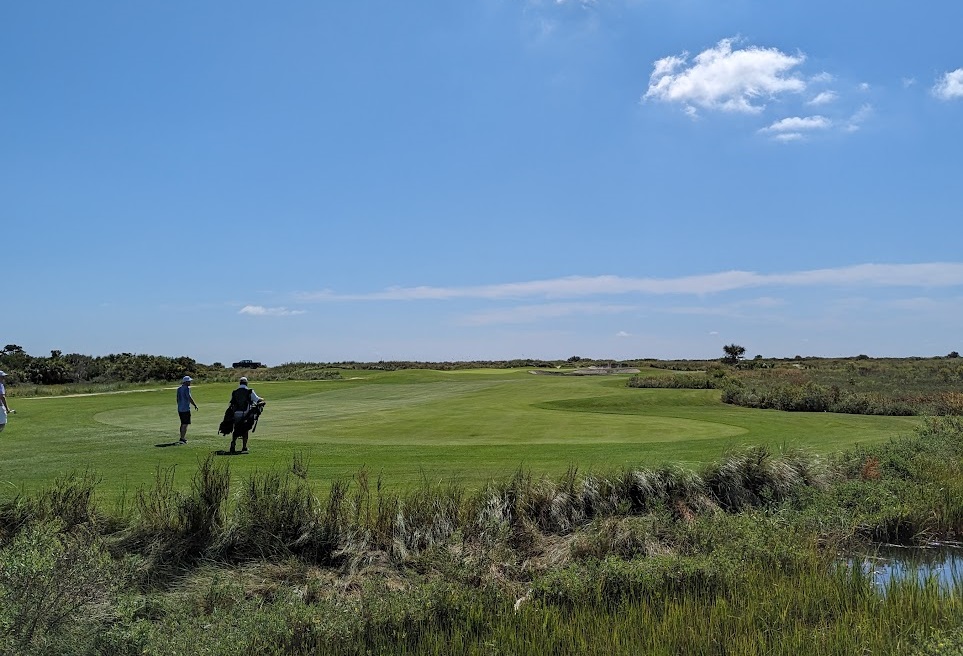
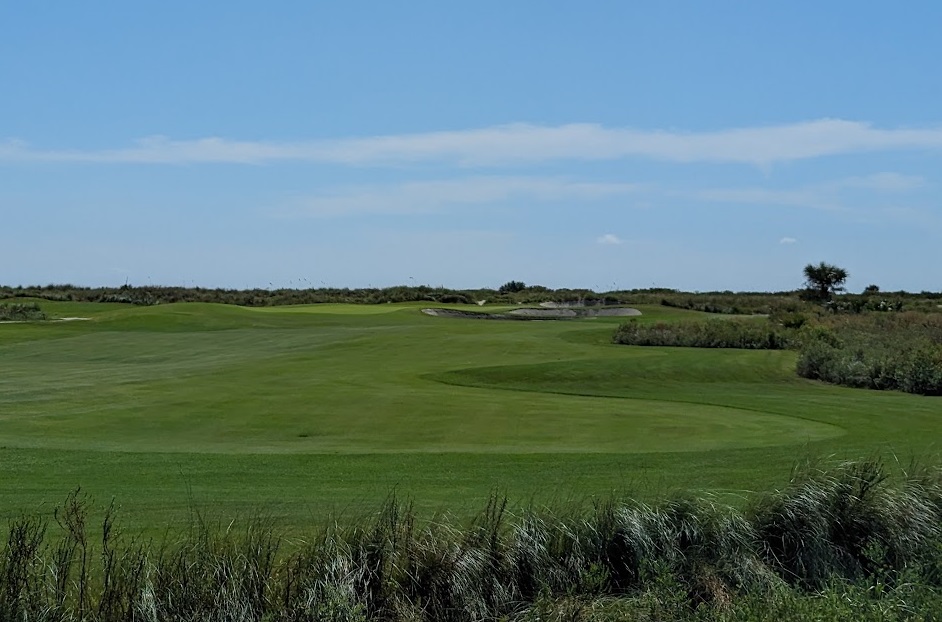
How a player navigates the fourth hole largely depends on if the hole is downwind or into the wind. If into, the decision is simple: send it with driver. But downwind, the runout of the fourth fairway and crossing marsh have to enter the player’s mind, as the runout is about 295-yards from the normal back tee (and 325 yards from the super back tee). Pot bunkers on the right of the fairway make this a narrow tee shot, and these pot bunkers are elevated into the air, like a floating pot bunker; almost elevated enough to be a UFO.
The approach is long from behind the marsh, but it is not the hardest on the course. Leaving this hole with par is a great score.
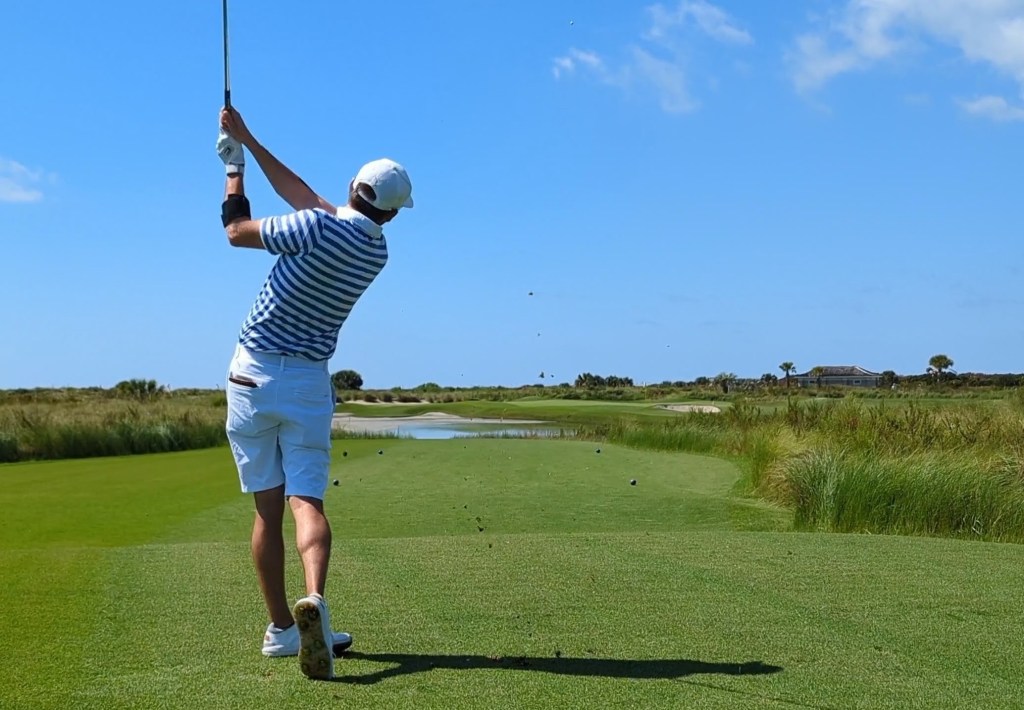
The fifth hole is the first par-3 on the course and site of a very famous Mickelson bunker hole out. A relatively long hole, the fifth provides a unique wind direction. 17 of the 18 holes run east or precisely parallel to in a westward direction. The fifth is the outlier and is the first time any other wind direction is seen, as the first four holes all run in the same direction, but the fifth turns south.
The fifth hole as a large green with the left being further from the tee than the right, but on a dry day, the ball will bound from the middle of the green onto the back tier. The short-left bunker is not a good place to be, unless you’re trying to win a PGA Championship in your 50s, I suppose.
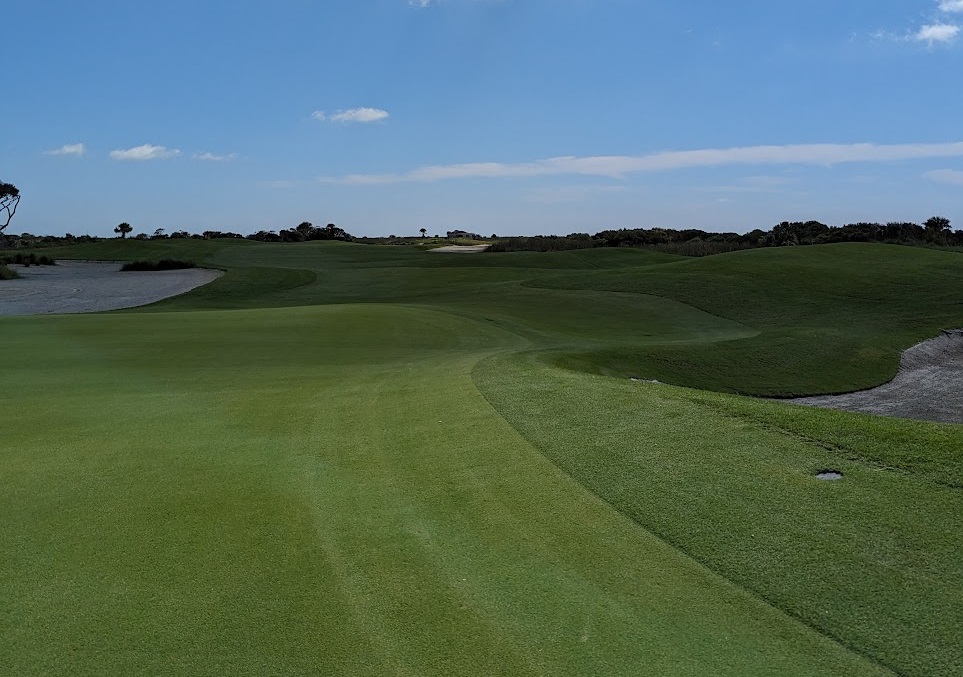
The sixth swings 90-degrees to the fifth as the begins to plot the way back to the clubhouse. Perhaps the simplest hole on the course, this hole can be set up in a variety of yardages, but typically plays as a longer par-4 that must carry a waste area that runs the length of the fairway left. This green surface is probably the flattest on the golf course, and presents a scoring opportunity if located.

The seventh hole is a very scoreable par-5 in the right wind condition, but this hole is all about picking the right club off the tee, a reoccurring theme to this front nine.
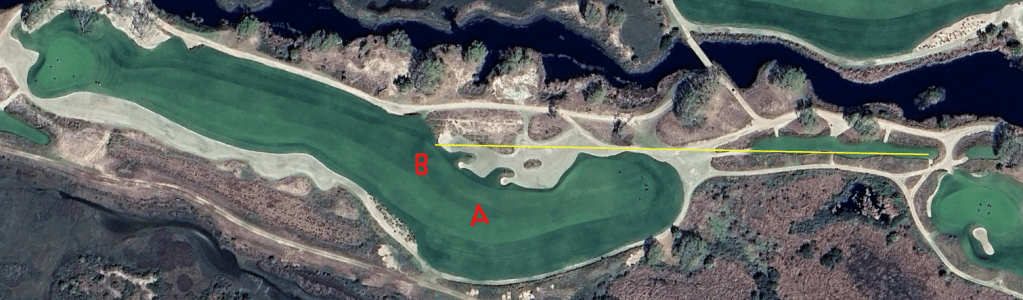
Option A, the safe option, is to take something less than driver into the fatter part of the fairway, but as you can see from the picture, the tee box is aiming you directly at Option B, which makes the play out to the right somewhat awkward.
Option B is to take on as much of the waste area bunker as possible. The yellow line in the above photo is 295-yards, all carry. Only the longest players can try that, but the normal player can still play slightly left of that with driver and bite off as much as possible.
Option A will make this hole a three-shot hole or a very long two-shot hole. Option B, if successful, will leave something like a hybrid into the green; if unsuccessfully hit into the waste area, the lips of those waste areas are quite high, meaning a pitch out is likely.
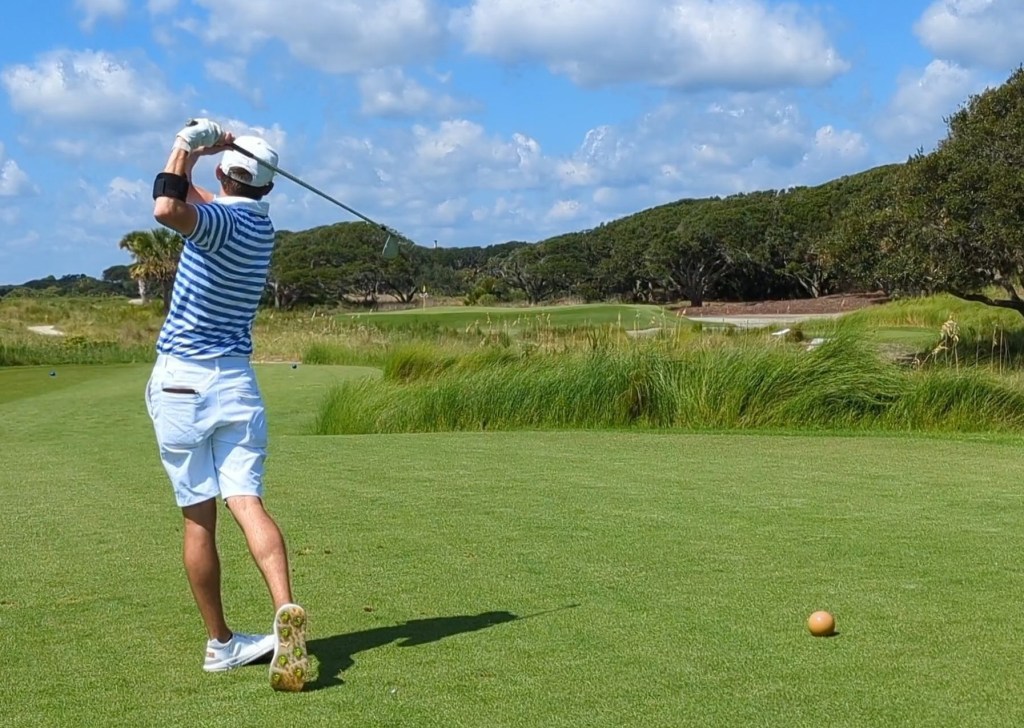
The eighth is a mid-length par-3 with a green that slopes from left-to-right, almost encouraging a rolling ball to find the waste area bunker right of the hole. Otherwise, what you see is what you get at this hole that plays between 170-190 yards, depending on the tee position that day.
The ninth is an interesting dogleg-left par-4 of considerable length. The interesting feature is a large, circular bunker that frames the tee shot, but is unreachable from the back tee that simply serves as eye candy. This hole gains its difficulty from its length, and the waste area that protects the inside of the dogleg.
Making the Turn
The front nine is a bit of a shuttle cart ride from the clubhouse, and on the way back, a small turn shack serves drinks and snacks, before hopping back on the cart to head to the tenth hole.
The tenth is an easy, relatively straight par 4, made complicated by the visuals from the tee box.
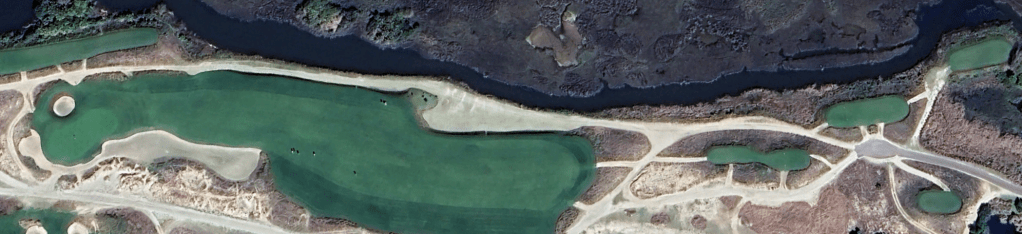
The tee boxes sit below the surface of the fairway, and the waste bunker on the right has a steep lip to carry with the drive that is around 260-270 yards from the back tee. The driving area is wide, but the blindness makes this shot feel tough.
The second shot on the tenth is gorgeous, to a small green nestled between a waste bunker on the left and a large, circular pot bunker on the right. Find the fairway on this hole, and this could be your chance to set up a birdie on the arduous Ocean Course.
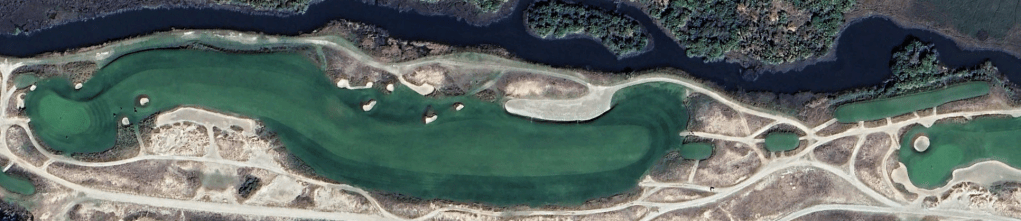
The eleventh is a straight par-5 that has a bend just in time for your second shot, and the layup here feels like you are aiming directly at the marsh, should you choose to layup. For the more brave, a largely blind 3-wood awaits to have a chance to attack the elevated green
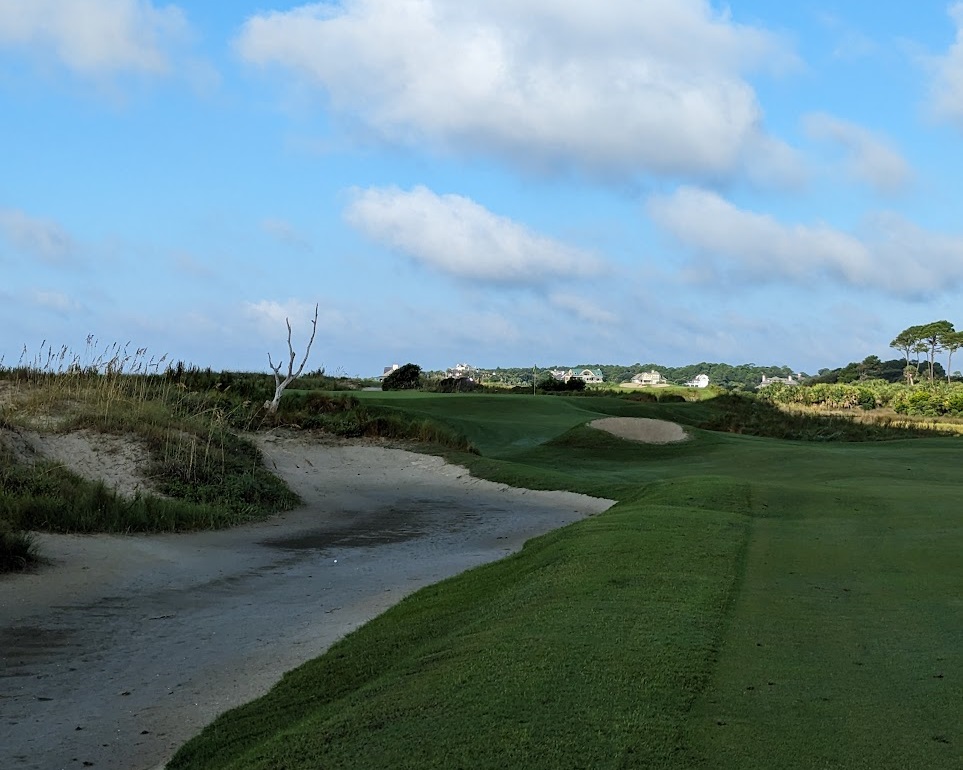
Before the green, this fairway also has another extremely elevated UFO-style pot bunker, just like those in the fairway on the fourth. Missing to the right of this green is simply not an option, as drop off is extremely severe, and short-sided here will be a sure bogey-or-worse.
The twelfth hole is a bit difficult to describe from the tee, because there are multiple different teeing grounds that can make this hole play drastically different depending on the setup.
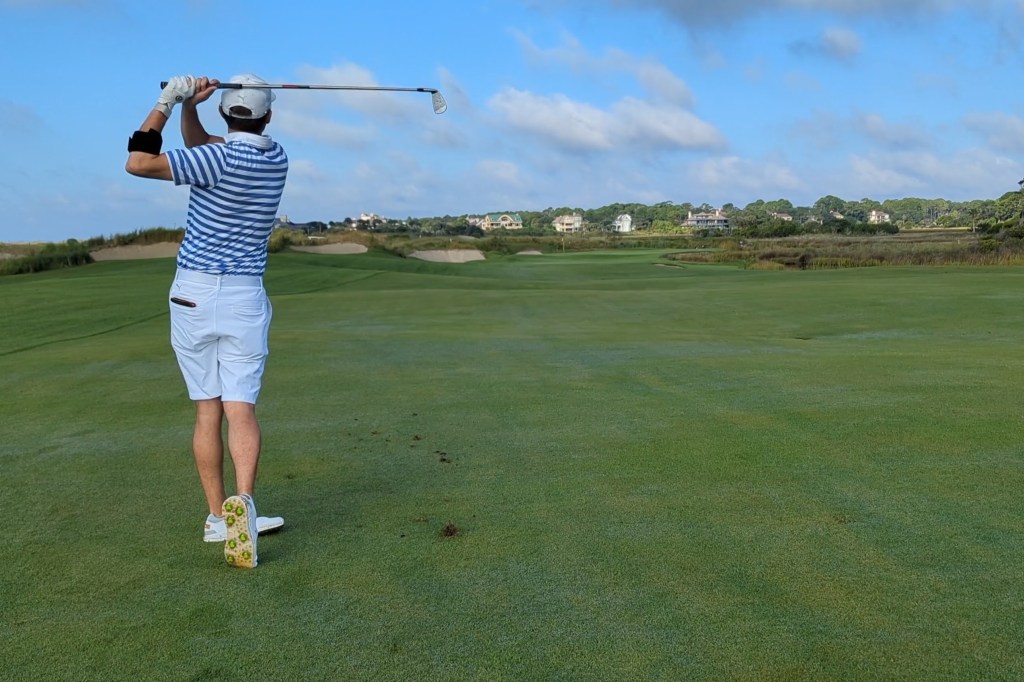
Once in the fairway, the second shot must challenge a marsh-filled pond on the right and a greenside bunker on the back left. The three bunkers you can see in the pictures are simply eye candy, with all of them more than 40-yards short of the green’s surface. Pete Dye was a master at using bunkers to create visual deception and using bunkers to steer a player towards the real hazard. These bunkers on the twelfth steer your eyes, and your ball, to the right – towards the lake just over the wooden retaining wall.
The thirteenth is like a harder version of the twelfth, but most of the tee boxes are across the marshy pond.
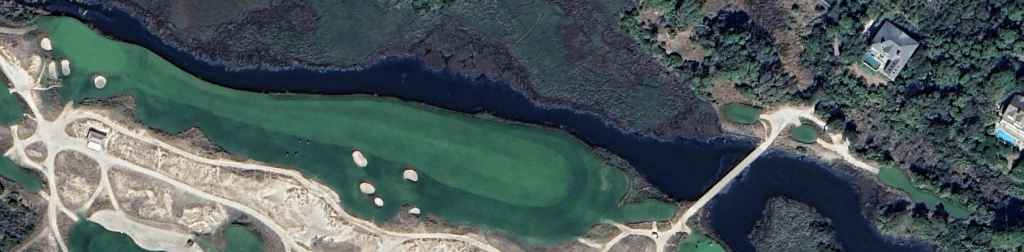
The player has a significant strategy decision here, because the area between the bunkers and the river is extremely narrow – only 30 yards wide. However, laying back off the tee with something less than driver leaves an approach over 200 yards, with a heavily fortified green – water right, and an array of bunkers left. This is the most difficult hole on the back nine, if not the course, due to its narrowness. Par here is quite an accomplishment.
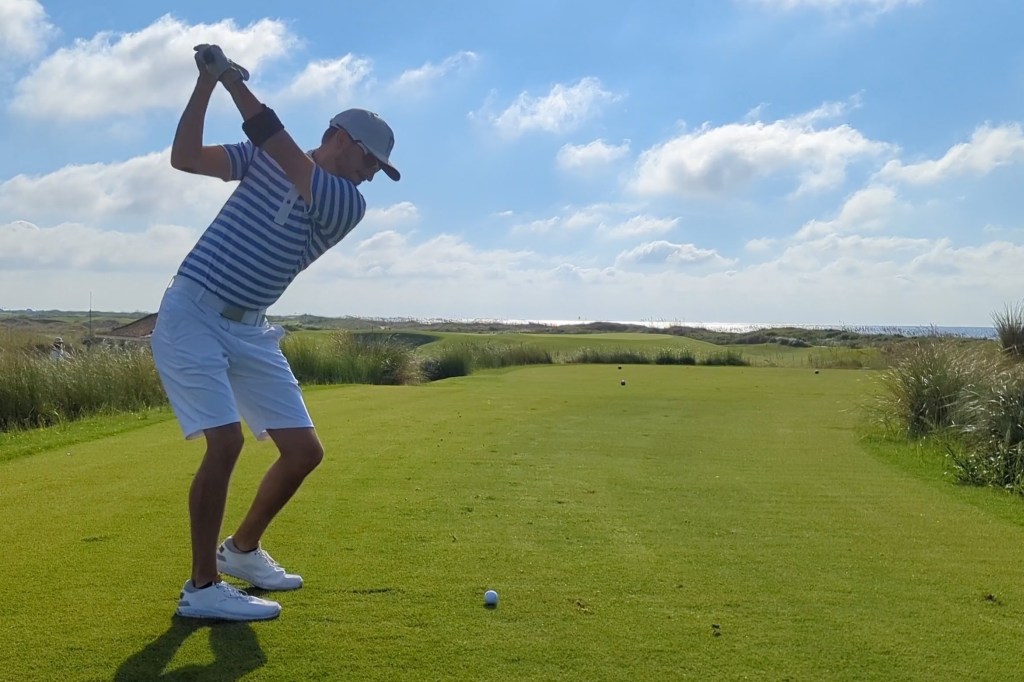
The fourteenth turns towards the ocean, and the next five holes all run directly parallel to the beach and the Atlantic. This par-3 can be setup as a short par-3 or a 254-yard par-3, depending on the mood of the staffer setting up the course that morning. The green sits perched 15-feet above its surroundings, and is largely bunkerless, with shaved runoffs taking any ball that misses, even slightly, many more yards away. The one bunker that exists is a waste bunker that comes in on the left side of the green from the waste area between the thirteenth and fourteenth holes. Again, par here is an impressive score.
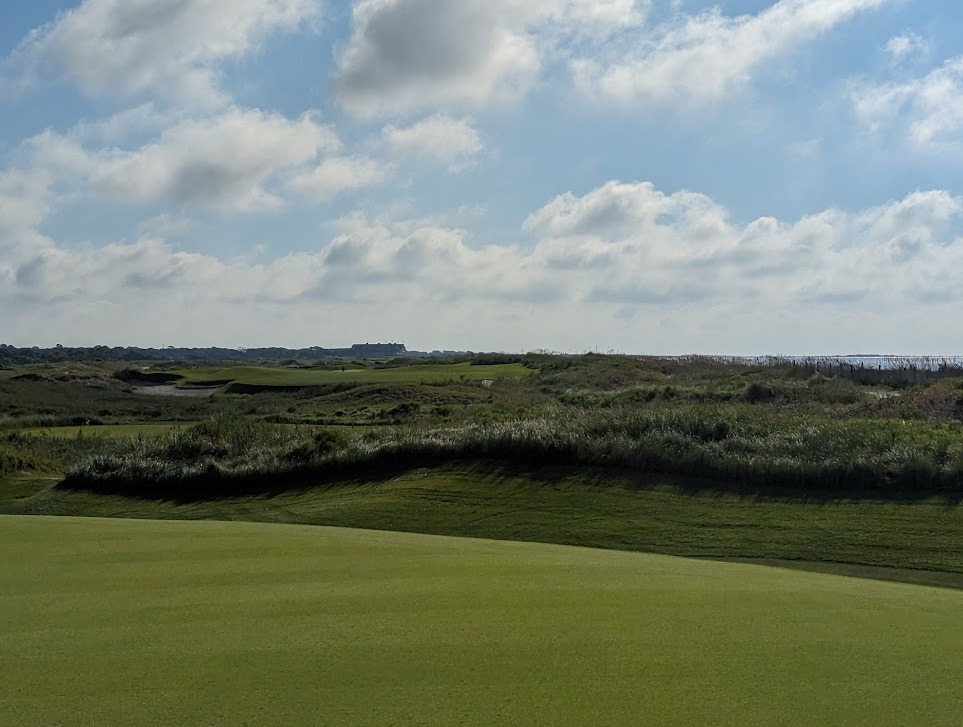
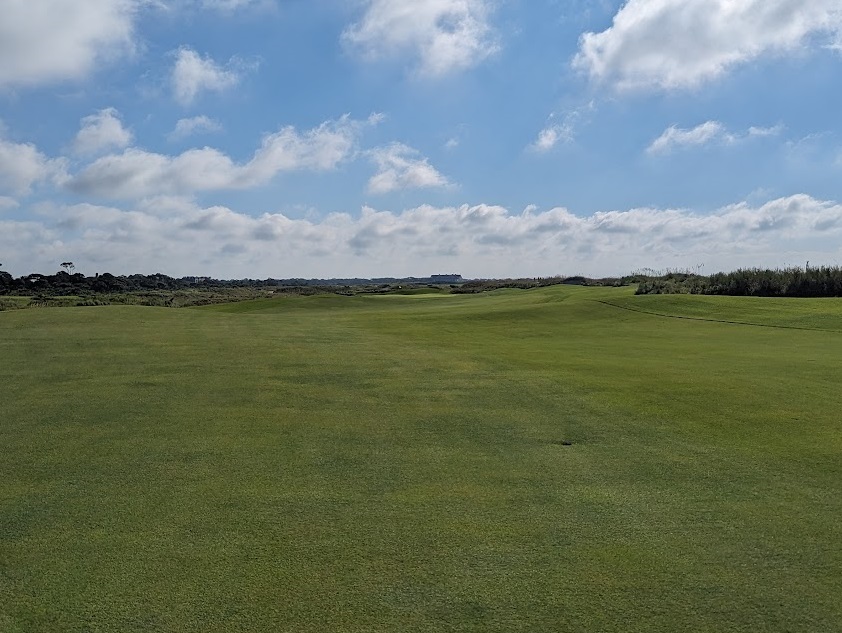
Fifteen is a medium-length par-4 and should provide a decent scoring opportunity if the drive is struck well. However, anything that comes up short-left of the green is in trouble, as the waste bunker that fronts is deep. The view here of the clubhouse is also amazing, as it seemingly hovers on the otherwise flat horizon.
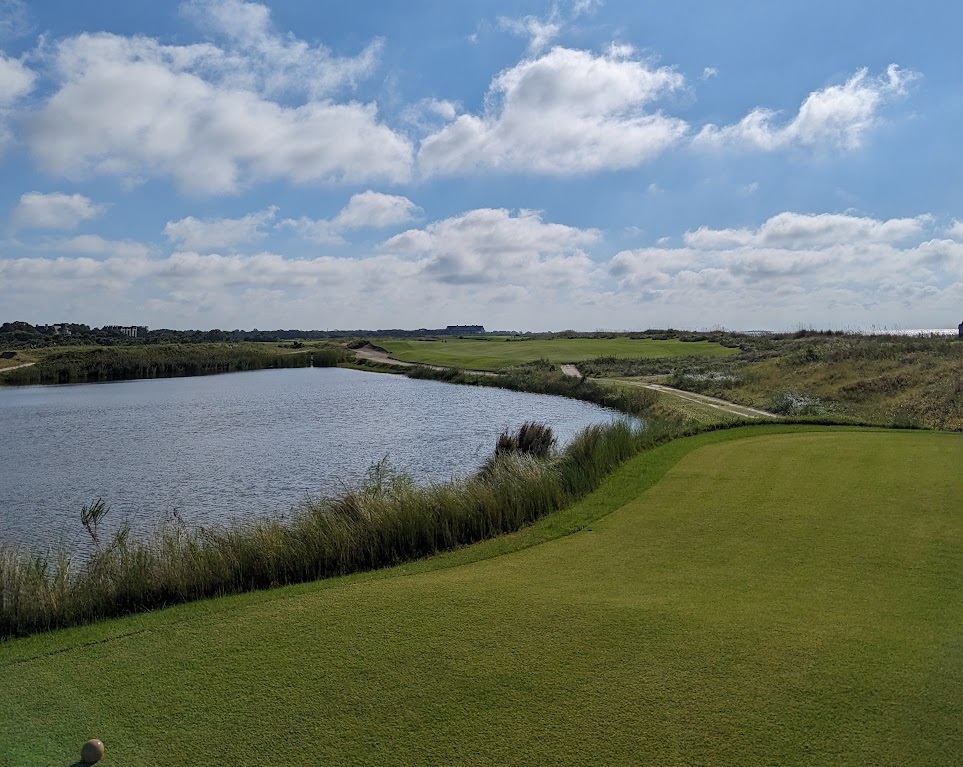
The sixteenth hole is almost a carbon copy of the fifteenth hole, just a longer par-5 version, with a deep bunker protecting the left front quarter of the green.
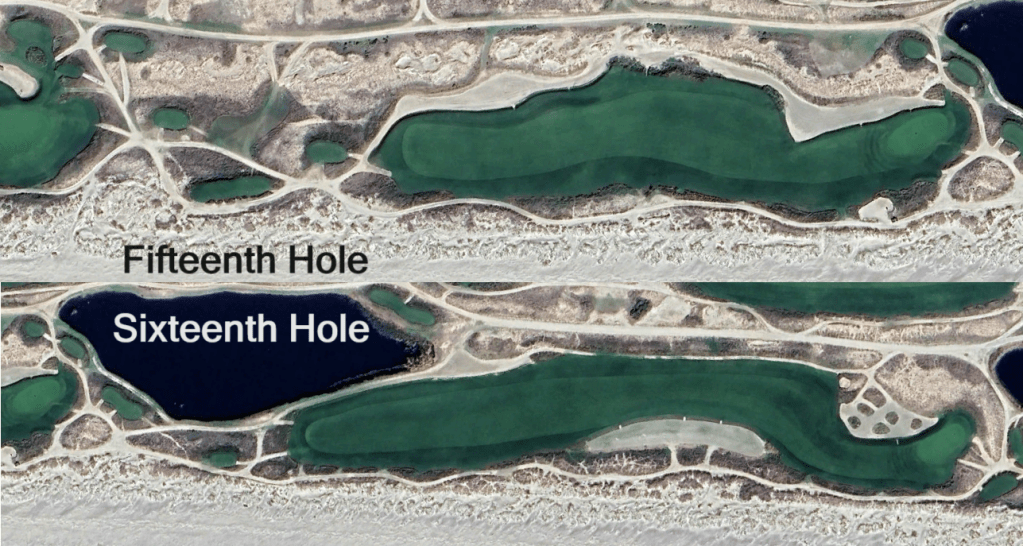
While the shape of the hole is largely the same, the sixteenth fairway has a large ridge in it, which angles shorter drives back towards the tee box. If the players drive can make it to the top of the hill, the player will have a much better chance at getting the green in two, and a much better chance of being able to see it.

The seventeenth hole, perhaps the signature hole at Kiawah, is a long par-3 that is all carry over the pond and wooden retaining wall to the green. The two bunkers on the left provide a safe area to bail out if the player does not quite have the intestinal fortitude to take on the water. Nonetheless, a beautiful par-3, playing in an angular manner away from the ocean.
The last hole, the eighteenth, is a long par-4 that works around a set of bunkers on the right, down a hill, and back up to an elevated green with a large waste bunker protecting the inside left corner of the green. Par here is a good score.
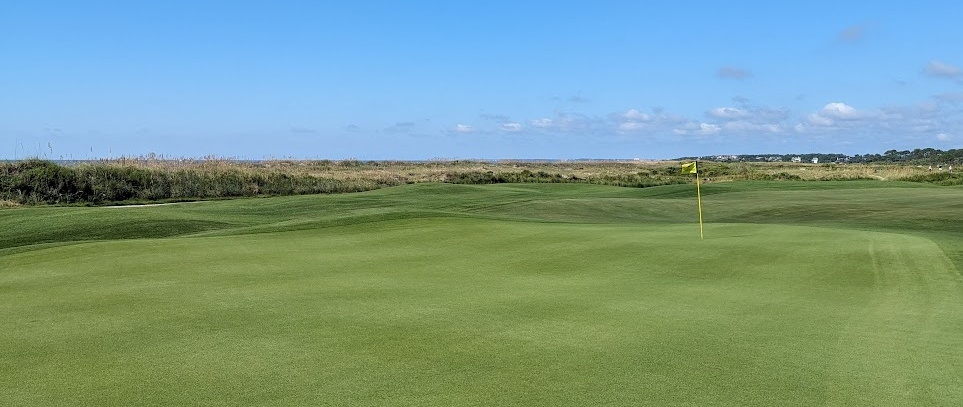
As you’ve finished your round, this will be your last look back at what you have just completed. You will have walked multiple miles over multiple hours, you will thank your caddie for carrying your bag for those miles and those four hours, and you might even take a picture with your group on the green. But in that very last moment before you hop on the shuttle cart to head back to the clubhouse, you will look back at the eighteenth green, at the beach, at the Atlantic, and you will smirk and shake your head. You’ll know, in that moment, that golf, and perhaps life, does not get much better than what you’ve just experienced.
Final Thoughts
The Ocean Course is a bucket list course for golfers all over the world. The fact that it is public and playable to the masses is incredible, and while $600/round seems an exorbitant fee for a round of golf, many people at very private clubs pay much more (even per round) for an experience that pales in comparison to The Ocean Course. You should play it tomorrow, and if you can’t, you should play it as soon as you can. Walking for four hours around this property with your caddie is an experience that every golfer should experience as many times as life allows.
F1C’s Final Rating:
Shot Options: 9
Challenge: 9
Layout Variety: 8
Distinctiveness: 10
Aesthetics: 9
Conditioning: 9
Character: 10
Fun: 9
Total: 73/80
Read More: How We Rate Courses
Rating Scale Details
> 70: Top-50 U.S.
65-70: Top-200 U.S.,
60-65: Best-in-State List
57-60: Best-in-state List Contender
53-57: Very Good
48-53: Good
40-48: Average
> 40: Poor

Author: Jaxon MacGeorge
Jaxon is the founder and lead course reviewer at First1000Courses.com. Jaxon has been playing golf for over twenty years, is a scratch handicap, and actively competes in USGA and Tennessee Golf Association (TGA) amateur events. By trade, Jaxon is an attorney and lives in Gallatin, TN, a suburb of Nashville.
 First 1000 Courses
Leave a comment