
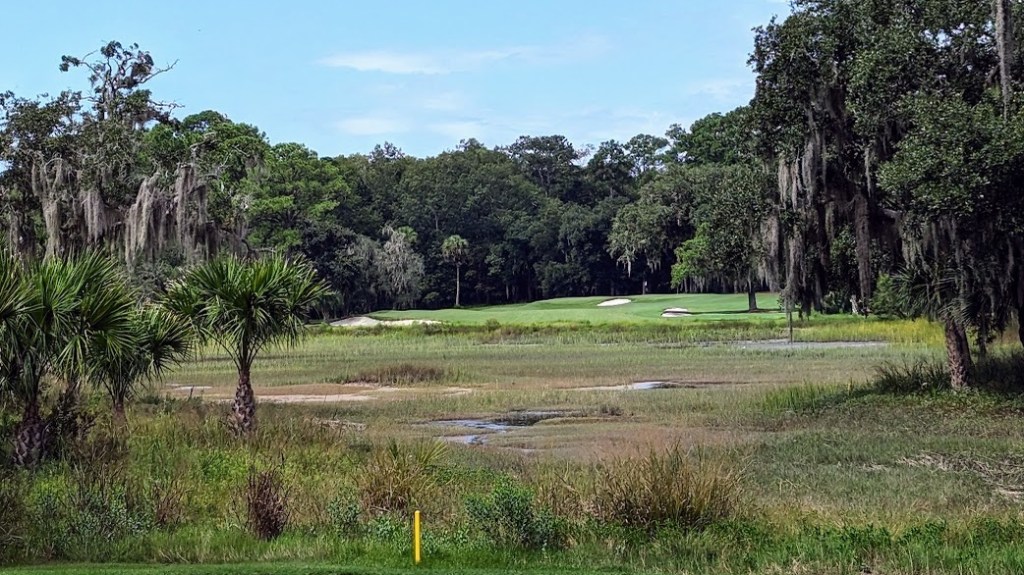
Chechessee Creek Club is a private course in Okatie, SC.
This Chechessee Creek Club course review is based on a round played on September 15, 2023.
F1C’s Final Rating: 59/80
Learn More: How We Rate Courses
Where to stay? -> Check out F1C’s Charleston, SC Golf Travel Guide
Chechessee. It might sound like a word that your weird relative intends to name her newborn child, but in this case, its a the name of creek that flanks a fantastic golf course in Okatie, SC. Chechessee Creek Club is a Coore & Crenshaw design that captures and embraces the local character in a way that some clubs fail to do. While on the property at Chechessee Creek Club (or C3 as some members call it), everything felt low-key and easy-going, with the culture decidedly southern.
The ability for C3 to keep the vibe so understated is an impressive feat; nothing is low-key about this club. My understanding is that the club has a large national membership and an equal-sized local membership. Clubs can sometimes lose their local flavor or vibe when it takes on a significant amount of rich non-local members. This club remains true to itself, as I grew up about as “southern” as possible, and I felt like I was back at home.
Undoubtedly, that is the vibe C3 accomplished for their national members: a southern home; for their local members: their southern retreat; and, for their guests: a very solid round of golf.
The First Tee
After getting warmed up on nicely-sized practice area and meeting our forecaddie, we were off to the first hole, a medium-length par-4. The first immediately presents the player with the option to go with a wood if that is a more comfortable club. It was very wet when we played, but if the course was dry, a driver could easily run through the right hand side of the dogleg-left. Laying back with my 3-wood was a bit penal though, because of the longer approach, as the first green is likely the smallest on the course: just 14-yards wide.
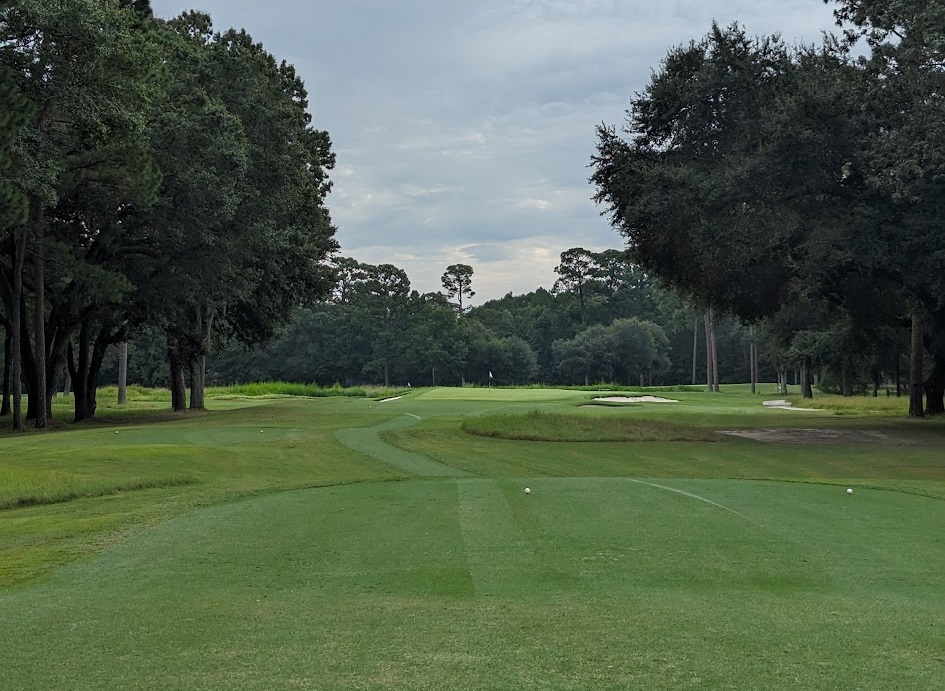
The second is a gorgeous mid-length par-3 with a deep bunker and collection area left, and two stacked bunkers on the right. As is obvious from the picture, the front third of this green is significantly pitched from back-to-front and left-to-right. This means that a tight shot will have to be placed between the pin and the bunker on the left, a genius design, because that left bunker is dead. If your ball finds it, the green slopes away too aggressively to stop the ball close, especially if short sided.
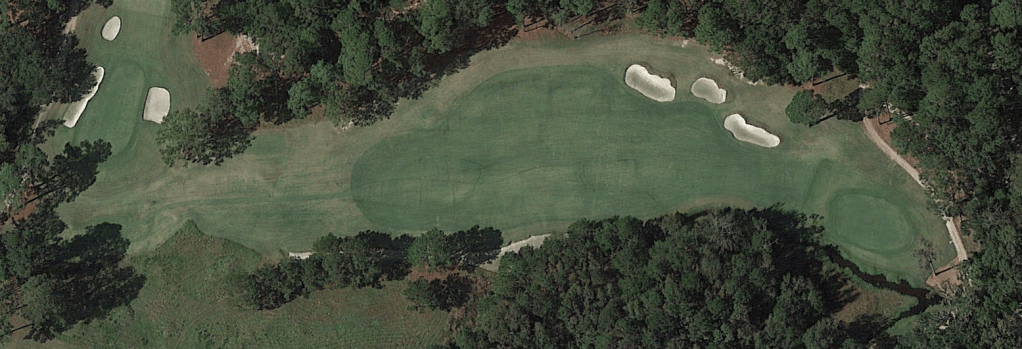
The third hole is a short par-4 with a small creek that meanders up the right side of the hole to the green. A thing I often complain about is designers using bunkers incorrectly – Coore & Crenshaw make no such mistake, which is why their courses all seemingly end up on Top 200 and Best-in-State lists. Here on the third, the bunkers squeeze the landing area and push the player’s target too far to the right, towards the creek, which the real hazard on this hole. The options are clear on the third: (1) layup in the fattest part of the fairway behind the bunkers, or (2) go with progressively longer clubs which become progressively more risky. Genius design and beautiful hole topped off with a aggressively sloped green.
The fourth is a connecting mid-length par-4 with trouble off the tee to the right. An elevated green awaits to collect approach shots with a miss to the left dropping steeply off a slope. Short-sided and left here is a sure bogey or worse.
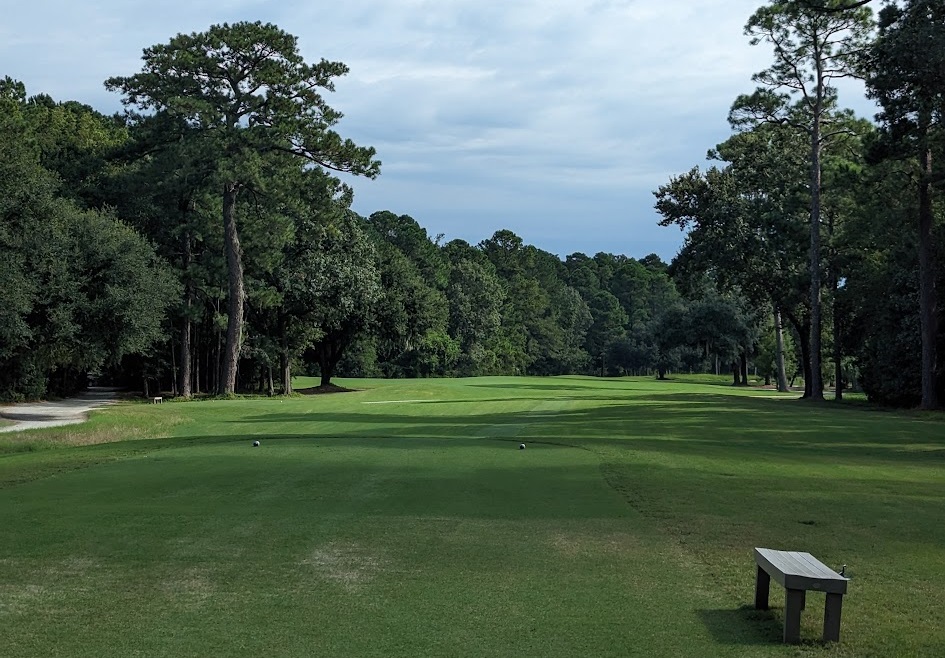
The fifth is a long par-5, tough from the tee due to the visual clutter that Coore & Crenshaw provide the player’s eyes, in an attempt to make the tee shot appear a bit more narrow than reality. The trees on the left, and small trees on the right, with their wide branches, create visual uncertainty about the correct target. After the drive, the hole is relatively straightforward with the wedge shot being a touch downhill.
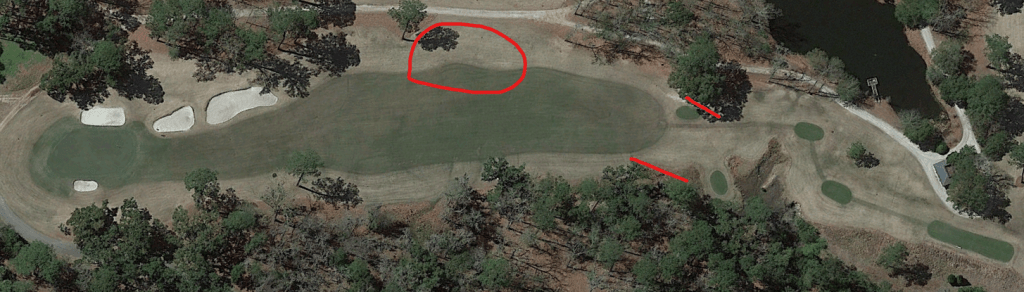
Visual clutter and uncertainty continue on the sixth hole, a mid-length par-4. As you can see from the overhead, the gap between the trees lure the players eyes over to the right of the fairway, where I have drawn the red circle. Further, this hole is so flat, that I asked for a yardages to the first greenside bunker and pulled my 3-wood instinctively. It looks easily reachable, despite being 350+ yards away. These are two competing thoughts: (1) the hole is pointing me to the right of the fairway but (2) the bunker, now left of target, appears reachable. In the 90 or so seconds that you have to make a decision, commit to it, walk to the tee, and swing, this is a lot of visual information to process. This lead everyone in our group to either send it into the right rough or take too little club off the tee; exactly Coore & Crenshaw’s intent, I’m sure.
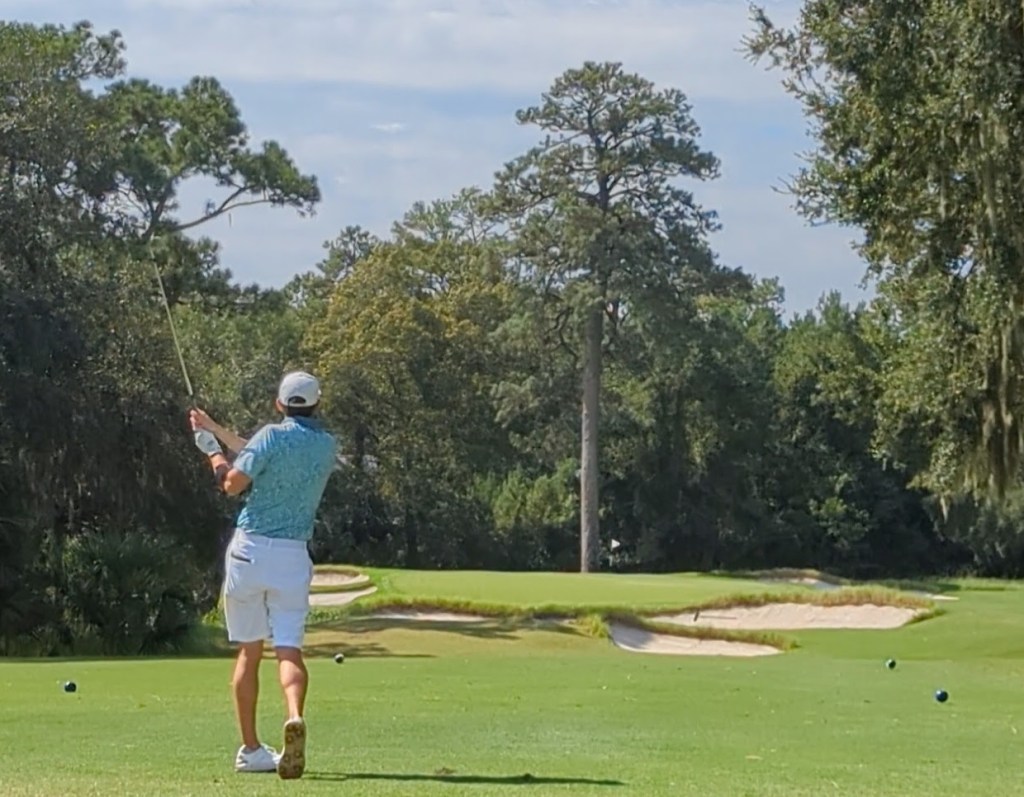
The seventh hole at Chechessee Creek Club
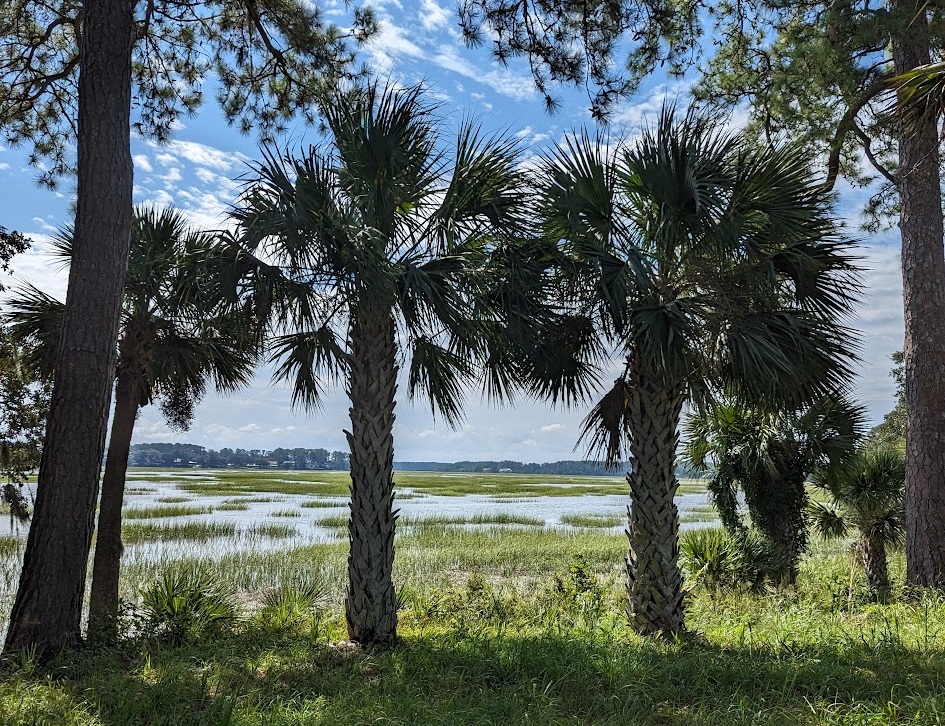
The seventh hole is the signature hole at Chechessee Creek Club, an incredible par-3 that plays with the marsh flanking on the right. On the green, a view of the Chechessee Creek comes into view. The genius of the design is in the bunkering, as the bunkers in front of the green appear to be greenside, but there’s actually about 50 yards between those bunkers and the front of the green.
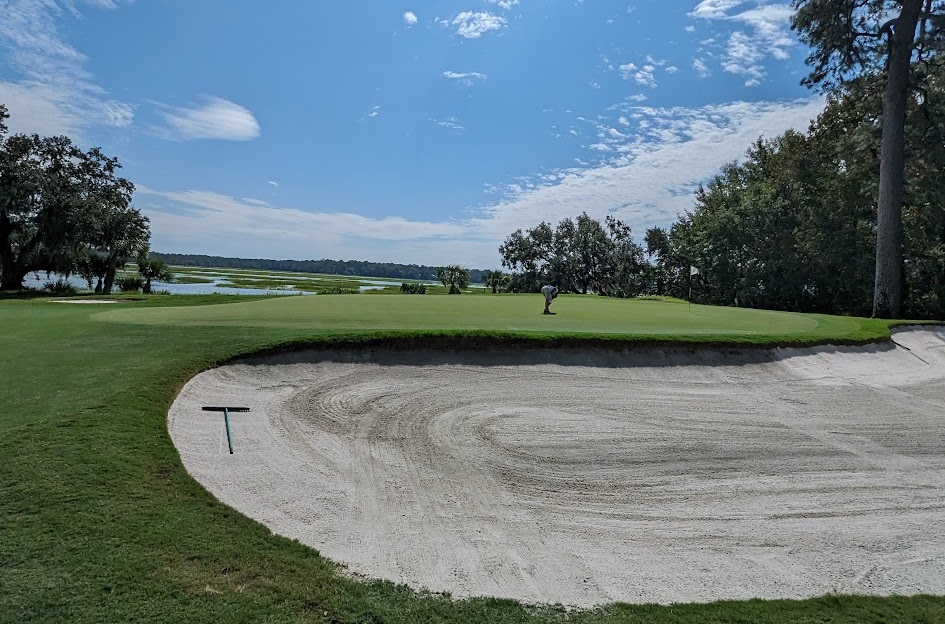
The eighth hole is a mid-length par 4 that gives the player a few options off the tee. It is a fantastic design on a largely flat hole that narrows with the bunkers right in the driver landing area. A wood off the tee is certainly the safer play, but will leave a longer approach into one of the most fortified bunkers on the course. Going with driver off the tee has elevated risk, because a pitch out of the pine straw or one of the fairway bunkers becomes complicated by the cross bunkers that split the fairway about 40-yards short of the green. The hole is wide and has safe plays, so naturally, any miss on the tee is likely to be punished.
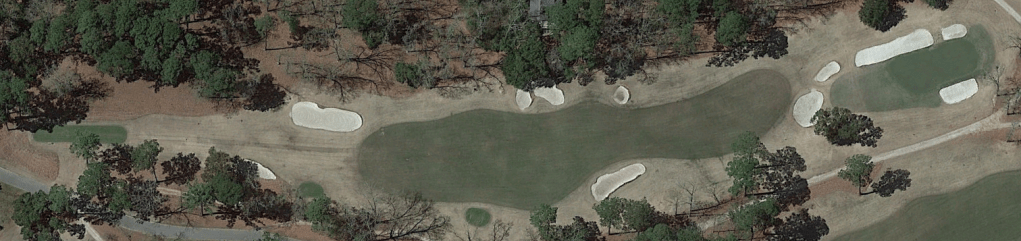
The shot from the middle of the fairway is complicated by the Raynor-style bunkers that flank these greens. Each of these bunkers are geometric with flat bottoms and steep grass lips, and sit several feet below the putting surface.
The ninth hole is a connecting par-4 that connects the front nine holes back to the clubhouse as a gentle dogleg to the right. A good drive will leave a reasonable chance at birdie on this hole, but the hole’s main defense is a green with a lot of slope.
Making the Turn
The tenth hole was one of the few holes that I did not enjoy at C3, partially because I feel like I had played it before. Maybe I had….
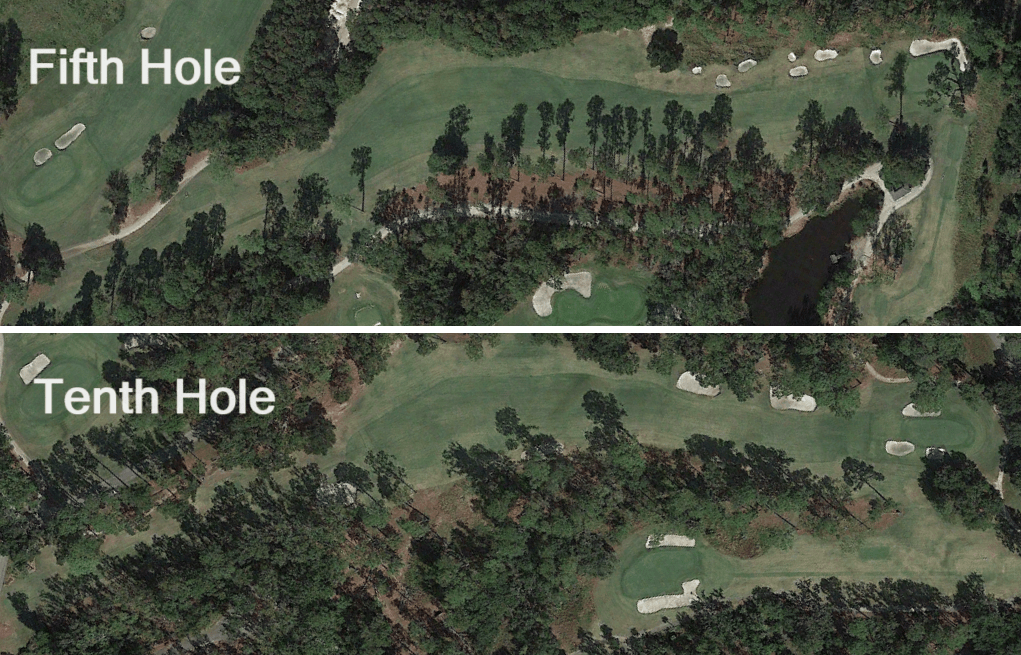
While their green complexes were certainly unique, the template of the fifth hole and the tenth hole are nearly identical. Coore & Crenshaw were designing a lot of amazing courses at the time C3 was built, so maybe there was an oversight in how excessively similar these holes are designed.
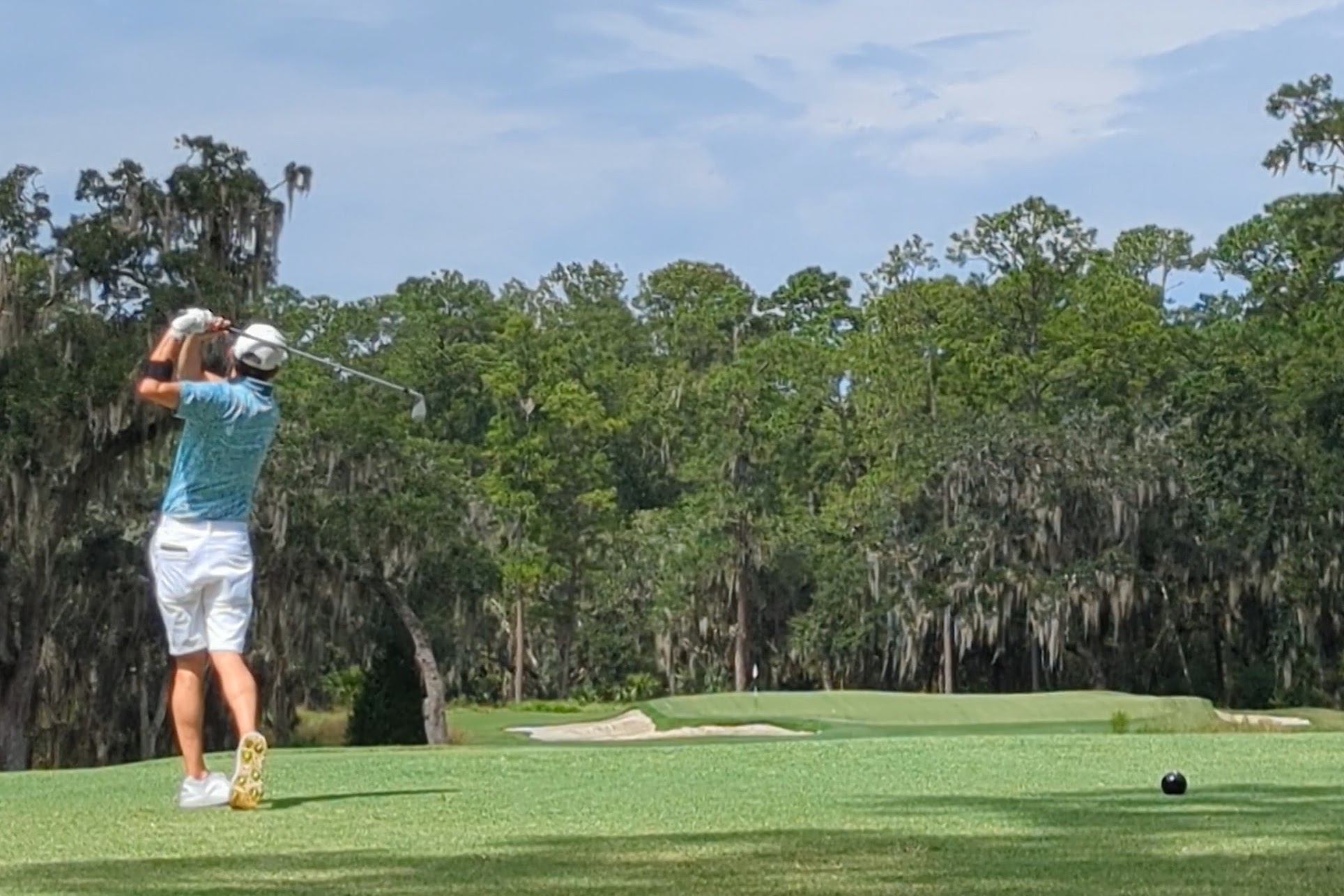
Fortunately, the eleventh hole begins a stretch of really strong holes. The eleventh is a longer par 3 played from an elevated tee. The front of the green is flat, but separated from the middle of the green by a steep ridge. If the pin is front left, it would be extremely easy to putt a ball into the left greenside bunker.
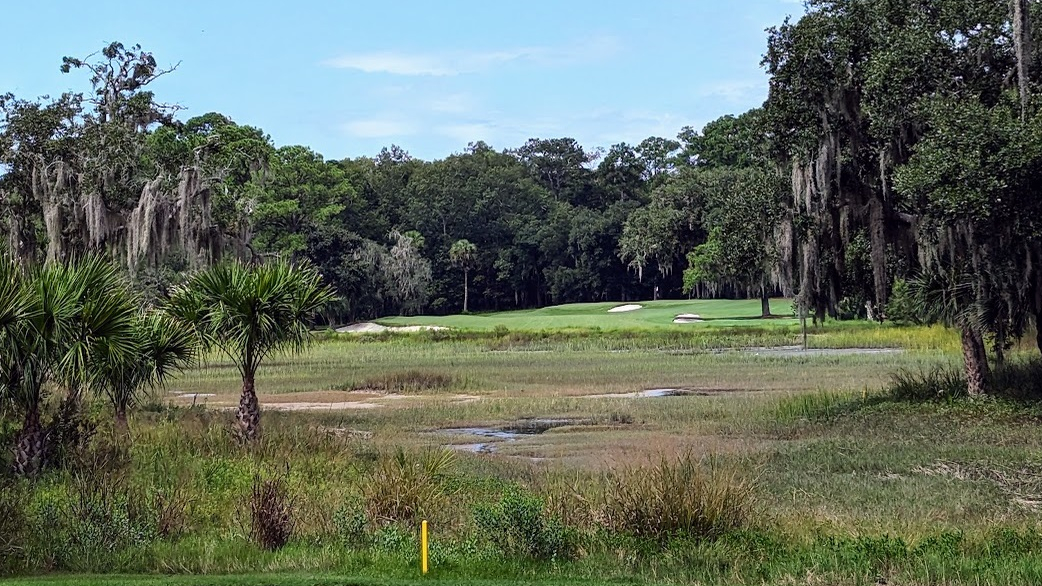
The twelfth may be the signature hole of the back nine, a short par-4 that must carry the marsh for 238 yards before reaching the fairway. Once there, a player must contend with a lion’s mouth bunker that centers a wide but short green.
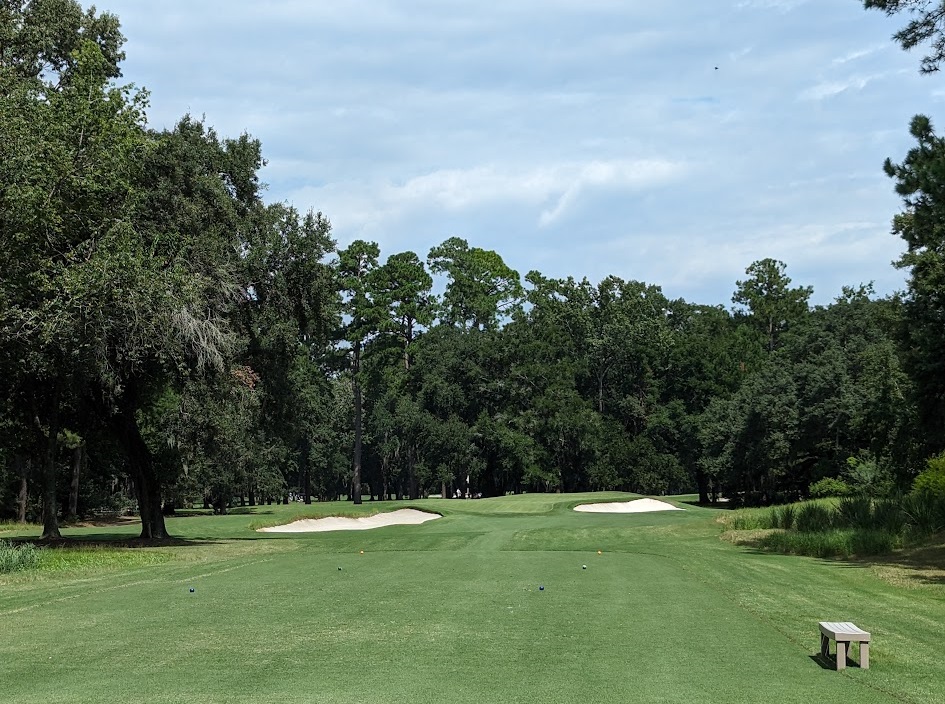
The thirteenth, the last of this really strong three hole stretch, is a short par-3 with a extremely difficult green (one member of our group recorded a three putt from nine feet, ouch). The thirteenth is a scenic, inland par-3 with a variety of pin options due to the short length of the hole. Who doesn’t love a short par-3?
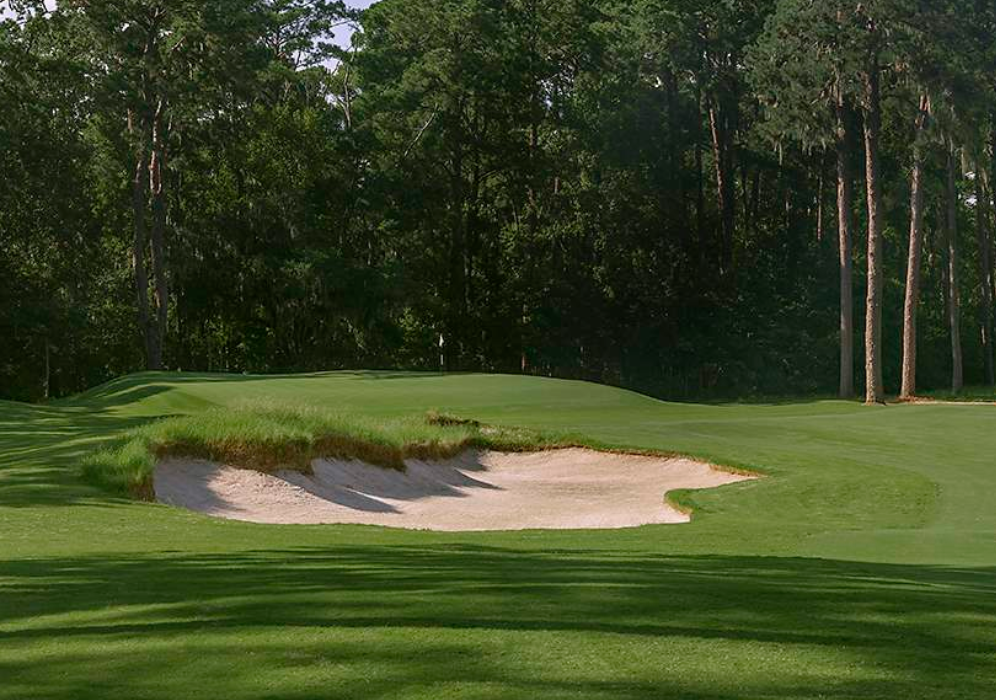
The fourteenth is a mid-length par 4 that is relatively straightforward, perhaps the weakest on the course, if not for a severe false front rejecting any ball short, and perhaps any putt that has to traverse it.
The fifteenth hole is very long par-5 of over 600 yards from the tips. A true three shot hole, but wide enough to yield a legitimate birdie opportunity if everything is kept in play.
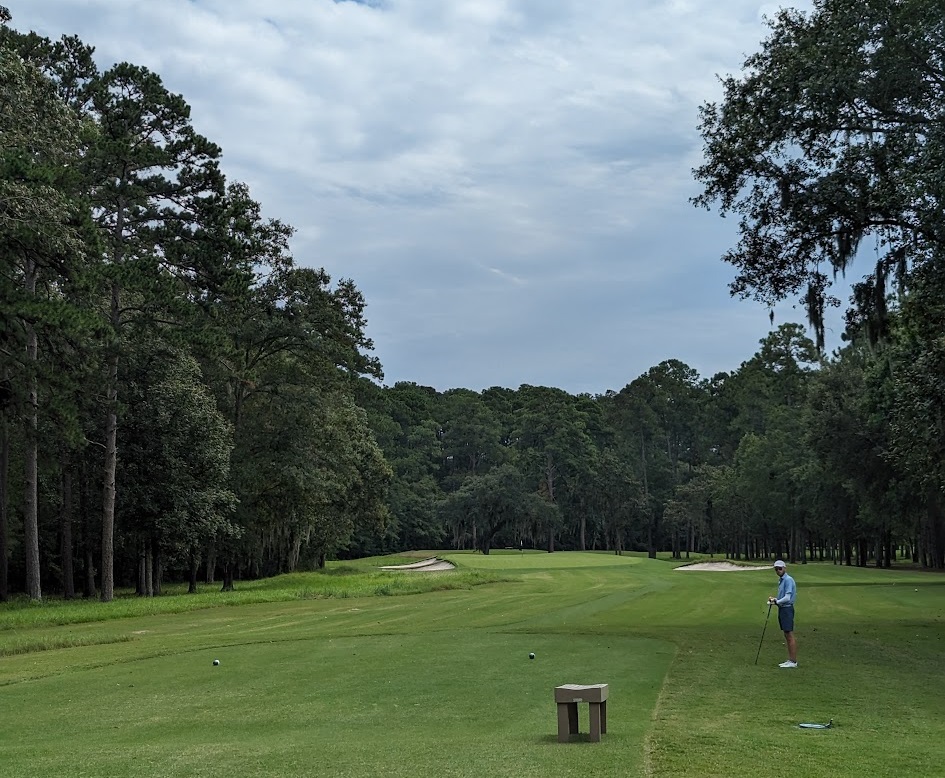
The sixteenth hole was a long par-3 that can play even longer depending on the pin position. The scorecard yardage from the tips is 243 yards, but the green is nearly 50 yards long, meaning this hole could play north of 260 yards with room to spare. Despite being relatively flat, the ball will bound into the hole on a dry day, but when played in the wet, is all carry. A big target on a long hole and the bunkers serve to make the target wider, as none of them appeared overly difficult, but may catch an offline ball before it got to the wooded area.
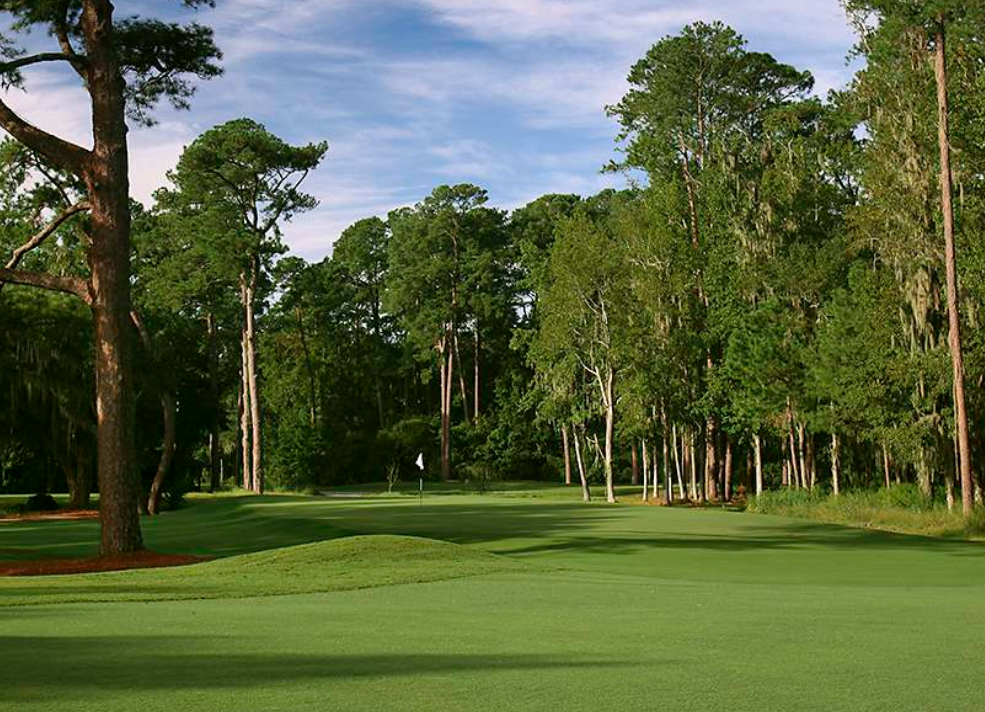
The seventeenth hole wins the “most-fun hole” award at C3. A driveable par 4 with lots of options.
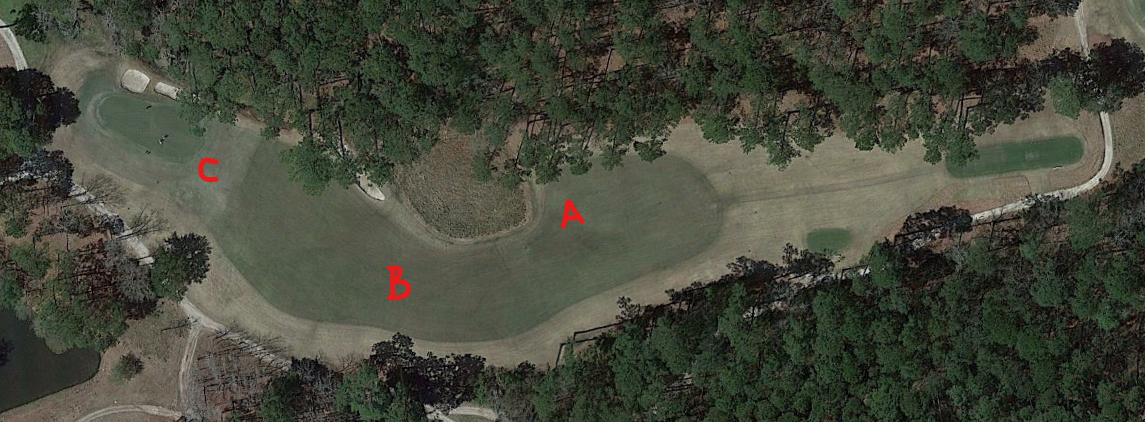
- Option A is the safest, clearly, but it leaves around 160 yards from an awkward angle to a green tucked and angled into the back right corner of the fairway.
- Option B has to take enough club to carry the dry creek, but not too much club as to run it through the fairway on the left, which would leave a terrible angle into the shallow direction of the green from the rough with reduced spin. Its 235 yards or so to carry the dry creek, but the ball must stop before 270 on this line; a tougher task on a dry day.
- Option C, otherwise known as send-it, has obvious risk, but is doable! Just 301 yards to the front edge of the green, without significant danger, and enough room to bail out to the left. Its a touch tighter than a player would like, but unless you’re having a career round and need to protect your score, I’d recommend option C. Just control that slice, or you might lose a ball in the process.
The eighteenth hole is a long par 4 finishing hole that winds left around a group of trees. If I have any complaint to this hole, and even this course, its that the ninth and eighteenth holes are probably the weakest par 4 holes on their respective sides.
Final Thoughts
We had a fantastic time at Chechessee Creek Club. Our host was nice enough to treat us to lunch, which was fantastic. Chechessee Creek Club has a good sized lunch menu with some interesting entrees. Just like my real southern home, this southern home also had good cookin’ on a covered porch. I think that wraps up the vibe of C3 perfectly: good golf, good food, and sitting in rocker on a covered porch. I can’t think of a better way to spend a Friday afternoon.
F1C’s Final Rating
Shot Options: 8
Challenge: 7
Layout Variety: 7
Distinctiveness: 6
Aesthetics: 7
Conditioning: 8
Character: 8
Fun: 8
Total: 59/80
Rating Scale Details
> 70: Top-50 U.S.
65-70: Top-200 U.S.,
60-65: Best-in-State List
57-60: Best-in-state List Contender
53-57: Very Good
48-53: Good
40-48: Average
> 40: Poor

Author: Jaxon MacGeorge
Jaxon is the founder and lead course reviewer at First1000Courses.com. Jaxon has been playing golf for over twenty years, is a scratch handicap, and actively competes in USGA and Tennessee Golf Association (TGA) amateur events. By trade, Jaxon is an attorney and lives in Gallatin, TN, a suburb of Nashville.
 First 1000 Courses
Leave a comment